



U.S. and Europe Digital Pathology Market Size, Key Companies, Company Market Share, Patient Volume, Treatment Adoption Rates, Pricing Analysis, Regulatory Landscape, Competitive Positioning, and Demand Forecast
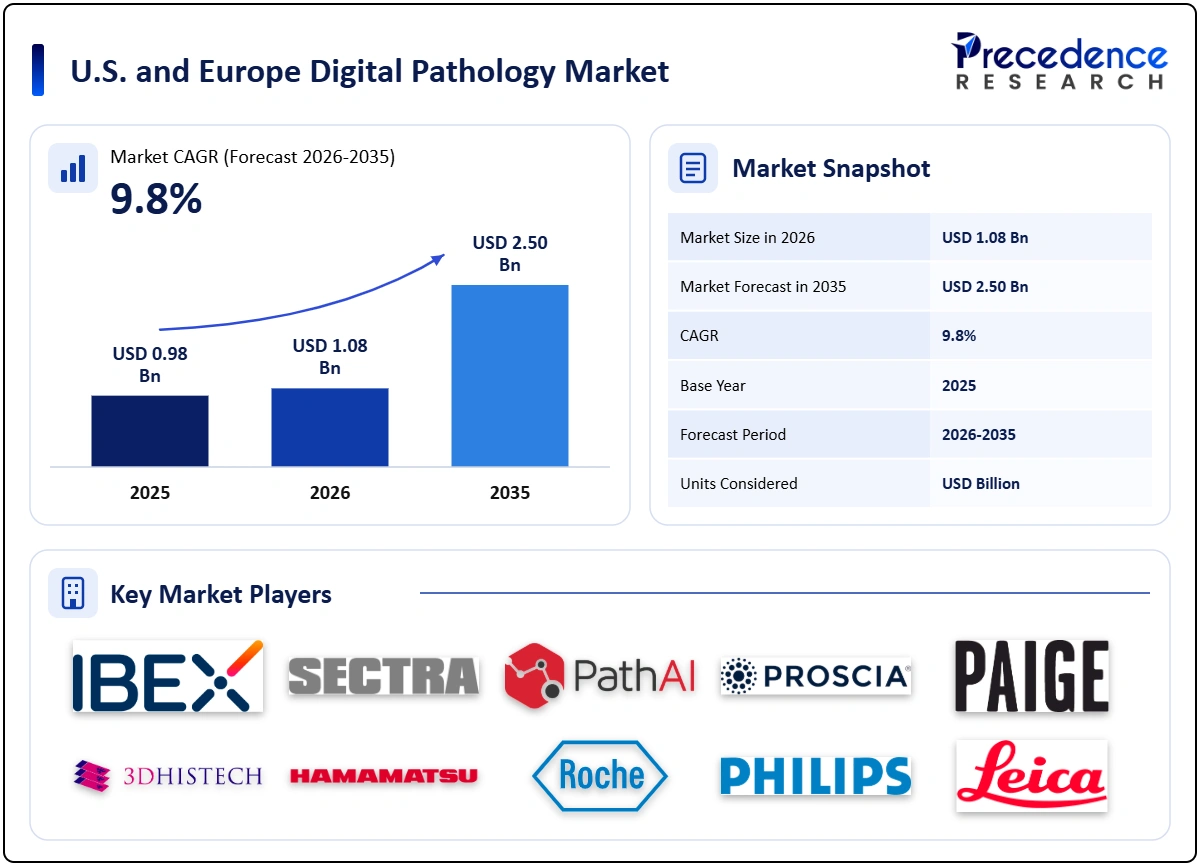
Payal Rabde a Healthcare Industry Expert, highlights that the U.S. and Europe digital pathology market has reached USD 1.08 billion in 2026 and is on track to reach USD 2.50 billion by 2035, advancing at a CAGR of 9.8%. Key U.S. and Europe digital pathology market companies shaping the market include Leica Biosystems, Philips, Roche, Hamamatsu while major growth segments span product, application, end-user.
Source: https://www.precedenceresearch.com/us-and-europe-digital-pathology-market
 Get a Sample
 Table Of Content
Key Takeaways
Market Size & Growth Outlook
- Market size in 2025: USD 0.98 billion
- Estimated market size in 2026: USD 1.08 billion
- Projected market size by 2035: USD 2.50 billion
- CAGR (2026-2035): 9.8%
Regional Market Spotlight
- The United States led the market in 2025, capturing 48% of total revenue.
- In 2025, the rest of Europe accounted for 19% of the market.
- The UK accounted for 12% of the market in 2025 and is projected to record the fastest growth, with a CAGR of 11.04% from 2026 to 2035.
Segmental Spotlight
- Scanners accounted for the largest product segment share at 42% in 2025.
- In 2025, Clinical diagnosis dominated the application segment, accounting for 44% of the market.
- Hospitals and reference laboratories captured the largest end-user segment share, representing 52% of the market in 2025.
U.S. and Europe Digital Pathology Market Size, 2025-2035 (USD Billion)
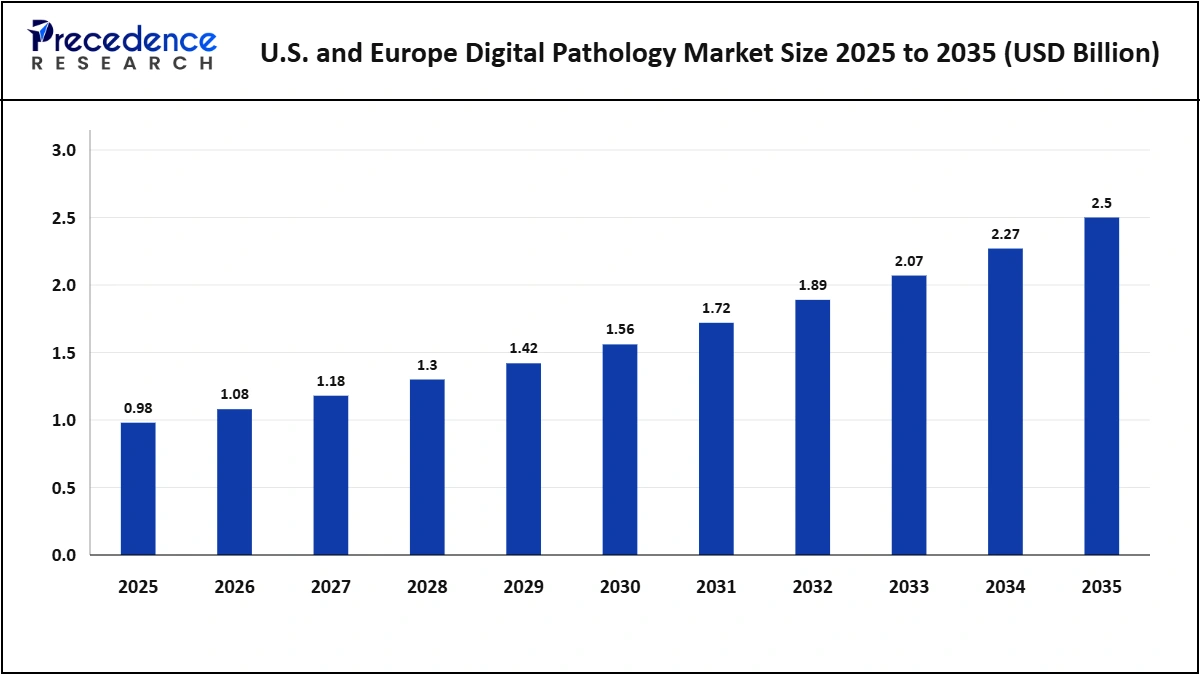
Note: 2025 is the base year; 2026-2035 values are forecasts.
Sources: Expert interviews, secondary sources, Precedence Research database, and Precedence Research analysts.
The U.S. and Europe digital pathology market is projected to grow from USD 0.98 billion in 2025 to USD 2.50 billion by 2035, registering a CAGR of 9.8% during the 2026-2035 period. Healthcare providers are increasingly adopting digital pathology solutions to improve laboratory efficiency, streamline diagnostic workflows, and support remote consultations. The market is expected to reach USD 1.56 billion by 2030, supported by growing investments in whole slide scanners, image management systems, and AI-powered diagnostic software. Additionally, expanding pharmaceutical research applications, regulatory clearances, and the development of interoperable digital pathology platforms are expected to support market growth during the forecast period.
Analyst View: Our market forecast is based on an assessment of whole slide scanner placements and pricing, software licensing and AI revenues, storage expenditure, and related services. We cross-check these estimates against company revenues, laboratory adoption data, and expert interviews to provide a comprehensive market outlook.
U.S. and Europe Digital Pathology Market Trends
- Primary digital diagnosis: The adoption of digital pathology for primary diagnosis enables laboratories to review and sign out cases using digital slides, improving diagnostic workflows and supporting remote access to pathology services.
- AI assistance: AI-powered software supports pathologists by identifying suspicious regions, detecting cancer-related features, and assisting with tumour grading. These capabilities improve workflow efficiency and support diagnostic decision-making.
- Open platforms: The development of interoperable digital pathology platforms allows laboratories to integrate software across different scanner systems. This flexibility reduces dependence on individual vendors and supports broader technology adoption.
- Cloud deployment: Cloud-based digital pathology solutions help laboratories manage large volumes of digital slide images while reducing the need for extensive on-site storage infrastructure. These platforms also support remote access and collaboration.
- Pharma AI: Pharmaceutical and biotechnology companies use digital pathology and AI tools in clinical trials, biomarker research, and drug development. These applications are expanding the role of digital pathology beyond routine clinical diagnosis.
U.S. and Europe Digital Pathology Market Dynamics
The U.S. and Europe digital pathology market is expanding as healthcare providers shift to digital diagnostic platforms due to increasing cancer cases and a shortage of qualified pathologists. This transition involves the adoption of whole slide imaging, image management systems, and AI-assisted tools, supported by regulatory clearances and pharmaceutical research. However, challenges include high initial investments, limited reimbursements, and integration complexities. Meanwhile, advancements in AI reimbursement and lab network digitization present new opportunities for market growth.
Drivers
Pathologist shortages
The shortage of qualified pathologists in the United States and Europe is driving demand for digital pathology solutions. The high diagnostic workloads and inadequate specialist workforce are prompting healthcare labs to enhance operational efficiency. Technologies like whole slide imaging and AI analysis allow pathologists to manage larger case volumes, prioritize suspicious samples, and collaborate remotely, leading to improved diagnostic workflows and encouraging investment in digital pathology infrastructure.
Rising cancer cases
The rising cancer incidence is boosting the demand for advanced diagnostic technologies in the United States and Europe. An estimated 2.1 million Americans will be diagnosed with cancer, heightening the need for precise pathology services. Digital pathology platforms enable laboratories to handle increased slide volumes, facilitate diagnostic collaboration, and enhance access to specialized expertise, reinforcing the adoption of these solutions during the forecast period.
Regulatory clearances
Regulatory approvals for digital pathology scanners and software are facilitating their adoption in the United States and Europe. These approvals boost healthcare provider confidence and promote a shift from traditional microscopy to digital methods. Additionally, the growth of cleared platforms enhances the viability of AI-assisted diagnostic applications, increasing the market potential for digital pathology technologies.
Pharma demand
Growing demand from pharmaceutical and biotechnology companies is driving the adoption of digital pathology. Drug developers utilize digital slide imaging and AI analysis for clinical trials and biomarker identification, enhancing pathology assessments, fostering collaboration, and managing large datasets. Investment in precision medicine and advanced research is anticipated to bolster long-term market growth.
Market Drivers - Impact & CAGR Contribution (2026-2035)
| Driver | Impact | ≈ CAGR Contribution | Time Horizon | Key Regions |
| Pathologist shortages | High | +3.83 pp | Short to long term | U.S. & Europe-wide, strongest in U.S. |
| Rising cancer cases | Medium | +3.23 pp | Medium to long term | U.S. & Europe-wide, fastest uptake in UK |
| Regulatory clearances | Medium | +2.75 pp | Short to medium term | U.S. & Europe-wide |
| Pharma demand | Low | +2.15 pp | Long term | U.S. and UK |
Note: Contributions are indicative estimates of each factor's effect on annual growth.
Sources: Expert interviews, secondary sources, Precedence Research database, and Precedence Research analysts.
Pathologist shortages, rising cancer cases, and regulatory advancements are key drivers of the digital pathology market in the United States and Europe. Increasing diagnostic workloads prompt laboratories to digitize operations, while AI tools enhance efficiency and address workforce challenges. Additionally, regulatory progress boosts clinical confidence in digital platforms, and rising pharmaceutical research applications create further demand.
Restraints
High up-front costs
The high initial investment required for digital pathology infrastructure, including whole slide scanners, software, and storage systems, constitutes a major barrier to market adoption. This financial challenge particularly affects smaller laboratories and healthcare providers, delaying technology adoption and limiting market penetration in cost-sensitive healthcare settings.
Limited reimbursement
Limited reimbursement for digital pathology and AI-assisted diagnostics hampers market growth, creating uncertainty for healthcare providers about justifying investment in new technologies. Laboratories struggle to recover costs, especially when integrating digital pathology with current workflows.
Workflow change
The transition from conventional microscopy to digital pathology involves significant changes in laboratory processes, including slide preparation, scanning, image management, diagnostic review, and reporting. Implementation challenges include staff training, integration with existing systems, resistance to workflow changes, and the time required for standardization, which can impede broader adoption in hospitals and reference labs.
Market Restraints - Impact & Negative CAGR Contribution (2026-2035)
| Restraint | Impact | ≈ Negative CAGR Contribution | Time Horizon | Key Regions |
| High up-front costs | High | -0.97 pp | Short to medium term | U.S. & Europe-wide |
| Limited reimbursement | High | -0.71 pp | Medium term | Smaller and price-sensitive markets |
| Workflow change | Medium | -0.47 pp | Short term | U.S. and other mature markets |
Note: Contributions are indicative estimates of each factor's effect on annual growth.
Sources: Expert interviews, secondary sources, Precedence Research database and Precedence Research analysts.
High initial investment requirements constrain the digital pathology market in the United States and Europe. Significant costs related to scanners, software, and storage limit adoption in smaller labs. Additionally, reimbursement uncertainties and the need for staff retraining and process modifications further hinder the transition to digital pathology.
Opportunities
AI reimbursement
The development of reimbursement frameworks for AI-assisted pathology analysis is creating opportunities for market expansion. Clearer payment structures and reimbursement codes could improve the financial viability of AI-powered diagnostic applications for healthcare providers. As AI tools become increasingly integrated into clinical workflows, improved reimbursement support may encourage laboratories to invest in advanced image analysis and decision-support technologies.
Network rollouts
The expansion of digital pathology across regional laboratory networks offers significant growth opportunities. Large healthcare systems and laboratory groups can deploy standardised scanning and image management platforms across multiple facilities, supporting centralised slide review and remote consultation. These network-based deployments can improve operational coordination, expand access to specialist expertise, and accelerate the adoption of digital pathology across geographically distributed laboratories.
Multimodal data
The integration of digital pathology images with genomic and other clinical data is creating opportunities for advanced diagnostic and research applications. Combining tissue imaging with molecular information can support more comprehensive disease characterisation and biomarker research. Pharmaceutical companies, biotechnology firms, and academic institutions can use multimodal datasets to strengthen clinical research, support precision medicine initiatives, and improve the development of advanced diagnostic approaches.
Market Segmentation: 2025 Share and Size
U.S. and Europe Digital Pathology Market by Product, 2025-2035 Share (%)
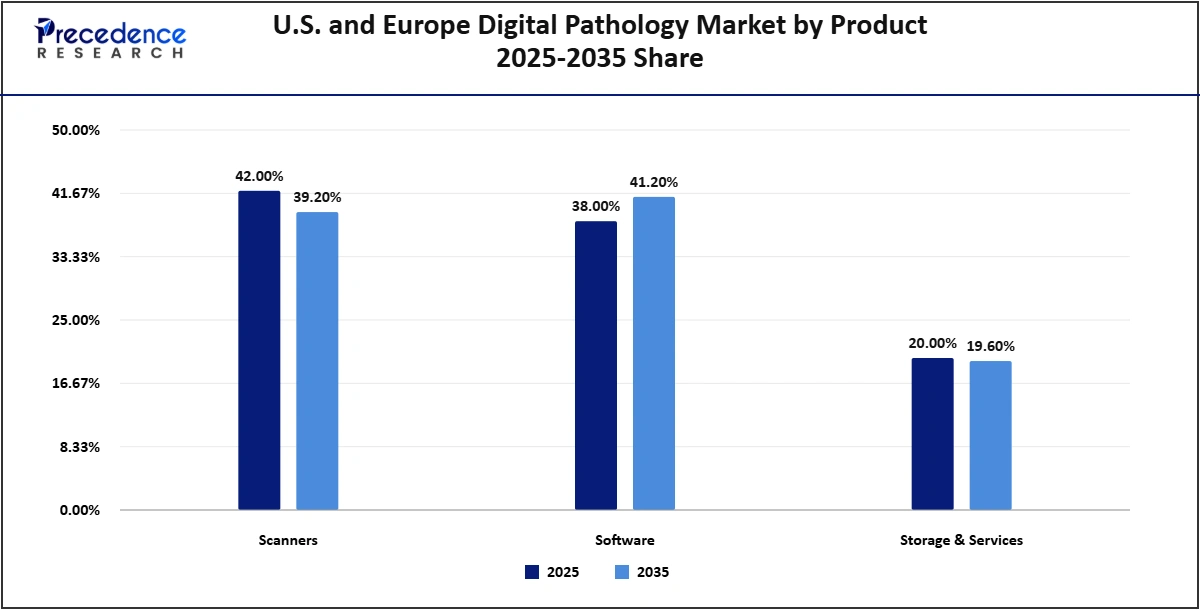
Note: 2025 is the base year; 2035 shares and CAGRs are forecasts.
Sources: Expert interviews, secondary sources, Precedence Research database, and Precedence Research analysts.
In 2025, scanners dominated the market, accounting for 42% of total revenue. Software represented the second-largest product segment, with a 38% share, and is projected to record the fastest growth during the forecast period. Storage and services accounted for the remaining 20% of the market, supported by the growing requirement to store, manage, and access large volumes of whole slide images.
Scanners accounted for the largest product segment share, at 42% in 2025, and are projected to grow at a CAGR of 9.09% through 2035. The segment includes whole slide imaging scanners used to convert conventional pathology slides into high-resolution digital images. Leica Biosystems' Aperio GT 450 DX, alongside products from Philips, Roche, and Hamamatsu, supports clinical digitisation across laboratories.
Software represented 38% of the market in 2025. The segment is expected to register the fastest CAGR of 10.69% from 2026 to 2035. The segment includes image management platforms, digital pathology workflow software, and AI-powered diagnostic applications. Solutions such as Proscia Concentriq AP-Dx and AI tools from Paige and PathAI help pathologists manage digital slides, identify suspicious regions, and improve diagnostic workflow efficiency. Increasing adoption of AI-assisted analysis and interoperable software platforms is expected to strengthen the segment's market position.
Storage and services captured the remaining 20% of the market in 2025 and are projected to grow at a CAGR of 9.49% through 2035. These services include digital slide storage infrastructure, cloud-based data management, implementation, integration, and technical support services. Growing adoption of cloud deployment and connected laboratory networks is expected to support demand for storage and related services.
U.S. and Europe Digital Pathology Market by Application, 2025 Share (%)
| Segments | 2025 Share | 2035 Share | CAGR 2026-2035 |
| Clinical Diagnosis | 44.00% | 46.40% | 10.35% |
| Pharma & Research | 40.00% | 38.40% | 9.35% |
| Teleconsultation & Education | 16.00% | 15.20% | 9.35% |
Note: 2025 is the base year; 2035 shares and CAGRs are forecasts.
Sources: Expert interviews, secondary sources, Precedence Research database, and Precedence Research analysts.
Clinical diagnosis dominated the application segment of the U.S. and Europe digital pathology market in 2025, accounting for 44% of total revenue. This lead reflects increasing adoption of digital pathology platforms in hospitals and diagnostic laboratories for primary diagnosis and routine case review. Pharma and research represented the second-largest application segment, with a 40% share, supported by the growing use of digital slides in drug development and biomarker research. Teleconsultation and education accounted for the remaining 16% of the market.
Clinical diagnosis accounted for the largest application share, at 44% in 2025, and is projected to grow at a CAGR of 10.35% through 2035. The segment includes digital pathology applications used for cancer diagnosis, tissue examination, tumour grading, and routine clinical reporting. Increasing diagnostic workloads and shortages of qualified pathologists are encouraging hospitals and reference laboratories to adopt digital primary diagnosis workflows.
Pharma and research represented 40% of the market in 2025. Pharmaceutical companies use digital pathology platforms to analyse tissue samples, standardise image assessments, and support research collaboration. Proscia serves 16 of the top 20 pharmaceutical companies, reflecting the growing importance of digital pathology software in pharmaceutical research workflows.
Teleconsultation and education held the remaining 16% of the market in 2025. The segment includes remote pathology consultations, digital slide sharing, specialist collaboration, and educational applications. Digital platforms enable pathologists and academic institutions to access and review pathology images remotely, supporting knowledge exchange and professional training.
U.S. and Europe Digital Pathology Market by End User, 2025-2035 Share (%)
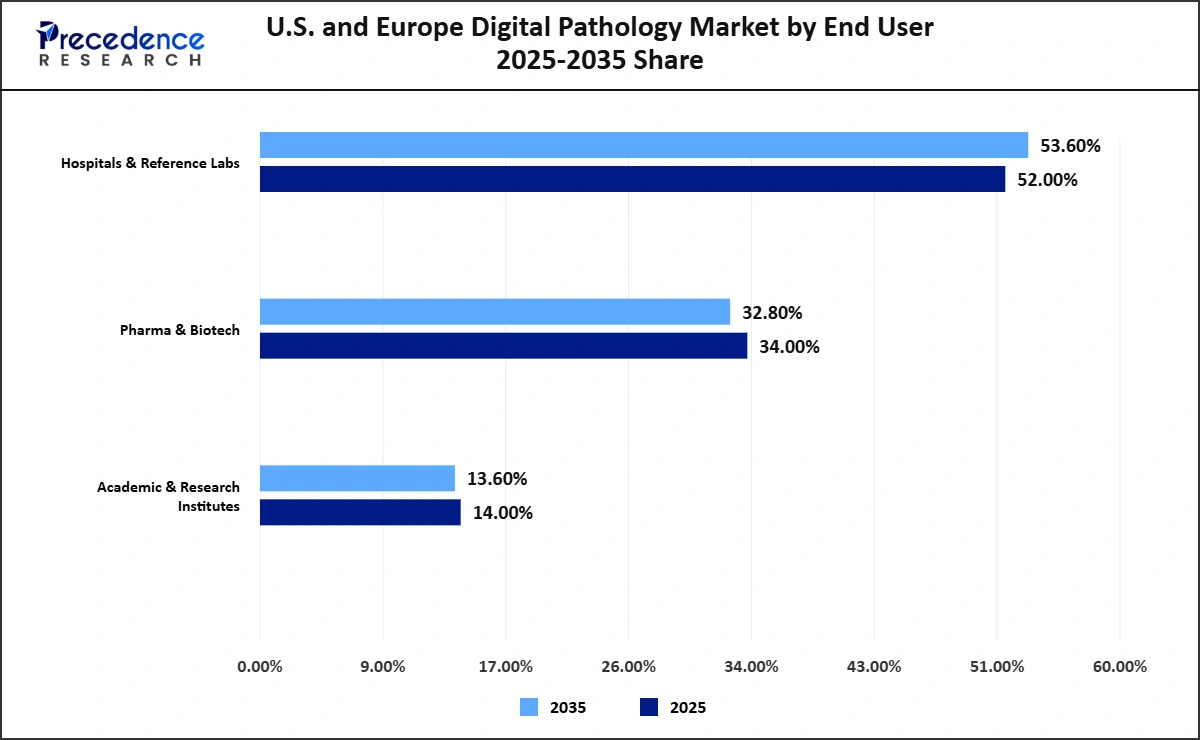
Note: 2025 is the base year; 2035 shares and CAGRs are forecasts.
Sources: Expert interviews, secondary sources, Precedence Research database, and Precedence Research analysts.
In the end-user segment, hospitals and reference labs accounted for the largest share of the market, at 52% in 2025, due to their diagnostic workloads and requirement for pathology infrastructure to support cancer diagnosis. Pharmaceutical and biotechnology companies represented the second-largest end-user segment, with a 34% share, driven by growing investments in digital research and clinical trials. Academic and research institutes accounted for the remaining 14% of the market.
Hospitals and reference laboratories accounted for the largest end-user share in 2025, at 52%. The segment is projected to grow at a CAGR of 10.08% through 2035. These facilities use whole slide scanners, image management platforms, and AI-assisted software to support routine diagnosis, cancer detection, and pathology reporting. Continued adoption of integrated diagnostic platforms is expected to strengthen the segment's market position.
Pharmaceutical and biotechnology companies captured a 34% market share in 2025. These organisations use digital pathology technologies in clinical trials, drug development, biomarker research, and tissue image analysis. Increasing research investments and the integration of AI-based image analysis into pharmaceutical workflows are expected to sustain segment growth.
Academic and research institutes represented the remaining 14% of the market in 2025. These institutions use digital pathology platforms for medical education, clinical research, disease analysis, and collaborative studies. Whole slide imaging and digital image repositories enable researchers and academic professionals to access pathology specimens remotely and support research collaboration.
Analyst View: Our analysis indicates that software and clinical diagnosis are poised to record the fastest market share gains, supported by adoption of AI-powered pathology tools and digital primary diagnosis workflows. In contrast, scanners, hospitals, and reference laboratories are expected to maintain their leading market positions, driven by substantial infrastructure requirements and growing clinical diagnostic workloads.
Country Analysis
U.S. and Europe Digital Pathology Market by Country, 2025 Share (%)
| Country | 2025 Share | 2035 Share | CAGR 2026-2035 |
| U.S. | 48.00% | 46.00% | 9.44% |
| Rest of Europe | 19.00% | 19.20% | 9.84% |
| UK | 12.00% | 13.60% | 11.04% |
| Germany | 9.00% | 9.20% | 9.84% |
| Netherlands | 6.00% | 6.00% | 9.84% |
| France | 6.00% | 6.00% | 9.84% |
Note: 2025 is the base year; 2035 shares and CAGRs are forecasts.
Sources: Expert interviews, secondary sources, Precedence Research database and Precedence Research analysts.
In the U.S. and Europe digital pathology market, the United States captured the largest market share at 48% in 2025, owing to established healthcare infrastructure and early adoption of digital pathology technologies across academic medical centres. The rest of Europe ranked second, representing 19% of the market, supported by adoption across the Nordic countries, Spain, and Italy. The UK accounted for 12% and is projected to register the fastest growth during the forecast period, driven by NHS digital pathology network rollouts. Germany represented 9% of the market, while the Netherlands and France each accounted for 6%.
Country Insights
The United States dominated the U.S. and Europe digital pathology market, accounting for 48% of revenue in 2025. The country is projected to grow at a CAGR of 9.44% through 2035. Its leading position in digital pathology is supported by a large diagnostic lab network and advanced healthcare infrastructure. Nevertheless, digital pathology adoption in the United States remains at an early stage, with fewer than 15% of healthcare organizations having selected a digital pathology vendor and progressing through different stages of deployment and adoption. This indicates substantial potential for further investment in whole slide imaging, image management platforms, and AI-enabled diagnostic infrastructure.
The rest of Europe accounted for 19% of the market in 2025 and is projected to grow at a CAGR of 9.84% from 2026 to 2035. The regional market includes countries such as the Nordic nations, Spain, and Italy, where digital pathology adoption is expanding across healthcare and research institutions. Investments in laboratory digitisation, remote pathology collaboration, and advanced diagnostic technologies are supporting regional demand.
The UK represented 12% of the U.S. and Europe digital pathology market in 2025 and is projected to record the fastest growth, with a CAGR of 11.04% through 2035. Adoption of digital pathology across NHS networks is supporting the country's market development. Continued implementation of digital pathology systems across healthcare networks is expected to increase the UK's market contribution during the forecast period.
Germany captured 9% of the market in 2025 and is projected to grow at a CAGR of 9.84%. Hospitals, laboratories, and research institutions in Germany are adopting digital imaging and pathology management solutions to improve diagnostic workflows. Continued investments in healthcare digitisation are expected to support market growth.
The Netherlands held 6% of the market in 2025 and is projected to grow at a CAGR of 9.84% during the forecast period. The country is recognised as an early adopter of digital laboratory workflows. Its established digital healthcare infrastructure and adoption of connected pathology platforms support market development. Increasing use of digital slide imaging and integrated diagnostic solutions is expected to sustain demand through 2035.
France represented the remaining 6% of the market in 2025. The country is expected to grow at a CAGR of 9.84% through 2035. The country's established healthcare and research infrastructure supports the adoption of digital pathology technologies. Growing demand for efficient diagnostic workflows, digital slide management, and AI-assisted analysis is expected to support market development throughout the forecast period.
Analyst View: Our analysis suggests that the United States will retain its leading position in the U.S. and Europe digital pathology market, supported by its extensive laboratory infrastructure and established adoption of digital diagnostic technologies. Meanwhile, the UK is expected to experience the fastest growth, driven by NHS network rollouts and investments in digital pathology infrastructure.
Competitive Landscape
Top 10 Companies in the U.S. and Europe Digital Pathology Market, 2025
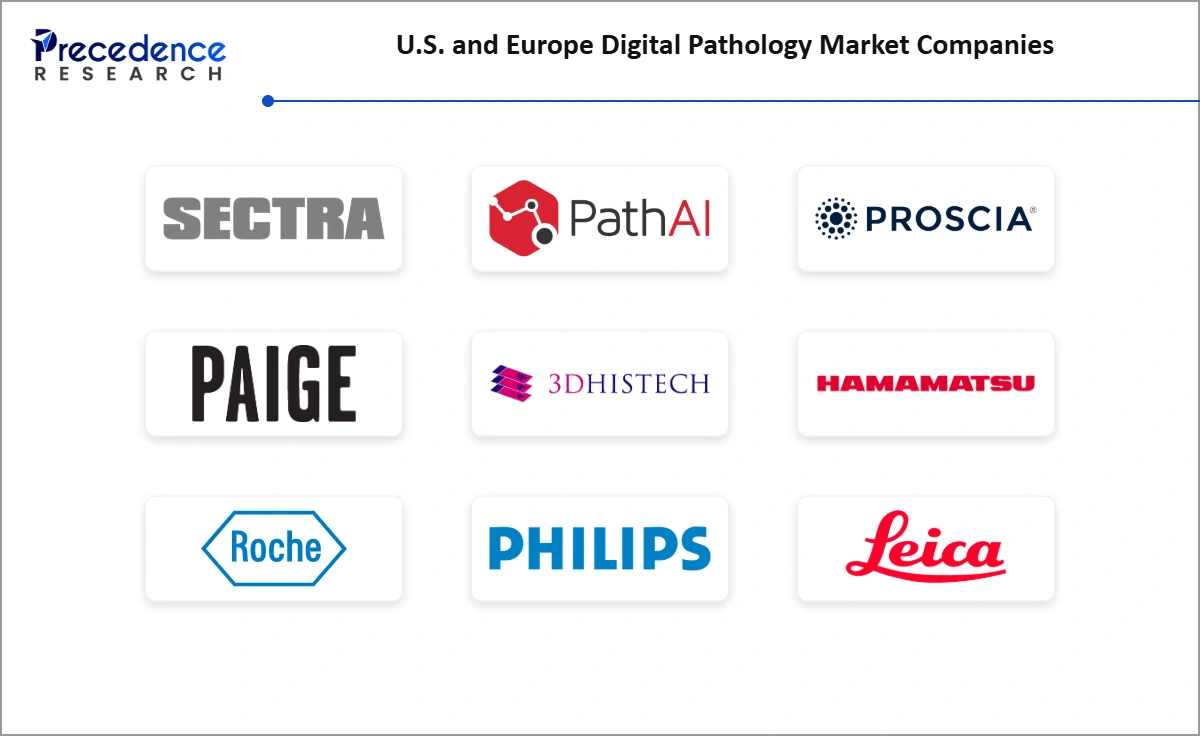
| Rank | Company Name | 2025 Share (%) | Key Products / Business | Headquarters |
| 1 | Leica Biosystems | 20.00% | Aperio scanners and image management | Germany |
| 2 | Philips | 12.00% | IntelliSite Pathology Solution | Netherlands |
| 3 | Roche | 10.00% | VENTANA DP scanners and navify Digital Pathology | Switzerland |
| 4 | Hamamatsu | 8.00% | NanoZoomer scanners | Japan |
| 5 | 3DHISTECH | 5.00% | Pannoramic scanners | Hungary |
| 6 | Paige | 3.00% | AI pathology software | United States |
| 7 | Proscia | 3.00% | Concentriq AP-Dx platform | United States |
| 8 | PathAI | 3.00% | AISight image management and AI | United States |
| 9 | Sectra | 3.00% | digital pathology module of its enterprise imaging | Sweden |
| 10 | Ibex Medical Analytics | 1.50% | AI cancer detection | Israel |
Note: Company shares are 2025 estimates.
Sources: Company press releases, expert interviews, secondary sources, Precedence Research database and Precedence Research analysts.
Leica Biosystems dominated the U.S. and Europe digital pathology market in 2025, accounting for an estimated 20% of total revenue, followed by Philips at 12% and Roche at 10%. These companies benefit from established scanner portfolios, digital pathology platforms, and strong positions in clinical imaging infrastructure.
Leica Biosystems competes through its Aperio scanners and image management solutions, while Philips offers the IntelliSite Pathology Solution. Roche participates through VENTANA DP scanners and navify Digital Pathology. Hamamatsu and 3DHISTECH compete through NanoZoomer and Pannoramic scanners, respectively. Paige, Proscia, and PathAI focus on AI-powered pathology software and digital image management, while Sectra offers digital pathology capabilities through its enterprise imaging platform. Ibex Medical Analytics competes through AI-based cancer detection solutions.
In 2025, the top 10 listed companies accounted for an estimated 68.50% of U.S. and Europe digital pathology market revenue, while the remaining 31.50% was shared among other software developers, technology providers, and market participants. The digital pathology market in the United States and Europe is moderately concentrated, with competition centred on scanner throughput, image quality, regulatory clearances, interoperability, and AI-powered diagnostic capabilities.
Company Snapshots
Leica Biosystems: Leica Biosystems held the largest estimated share of the U.S. and Europe digital pathology market, accounting for approximately 20% in 2025. Headquartered in Germany, the company competes through its Aperio scanners and image management solutions, positioning it as a Leader in the Precedence Research Companies Quadrant.
Philips: In 2025, Philips accounted for an estimated 12% share of the market. Headquartered in the Netherlands, the company competes through its IntelliSite Pathology Solution, positioning it as a Leader in the Precedence Research Companies Quadrant.
Roche: With an estimated 10% share of the market in 2025, Roche, headquartered in Switzerland, competes through VENTANA DP scanners and navify Digital Pathology solutions, positioning it as a Leader in the Precedence Research Companies Quadrant.
Hamamatsu: Headquartered in Japan, Hamamatsu accounted for approximately 8% of the market in 2025 and offers NanoZoomer whole slide scanners, establishing its position as a Leader in the Precedence Research Companies Quadrant.
3DHISTECH: 3DHISTECH focuses on Pannoramic whole slide scanners and digital pathology imaging solutions, thus accounting for about 5% market share in 2025, positioning the Hungary-based company as a Leader in the Precedence Research Companies Quadrant.
Paige: In 2025, Paige accounted for approximately 3% of the market. Headquartered in the United States, the company competes through its AI-powered pathology software and digital pathology analysis capabilities, positioning it as a Leader in the Precedence Research Companies Quadrant.
Proscia: Proscia held an estimated 3% share of the market in 2025. The United States-based company offers its Concentriq AP-Dx digital pathology platform, focusing on image management and AI-enabled pathology workflows, positioning it as an Innovator in the Precedence Research Companies Quadrant.
PathAI: PathAI accounted for approximately 3% of the market in 2025, focusing on its AISight image management platform and AI-powered pathology analysis solutions. It is recognized as an Innovator in the Precedence Research Companies Quadrant and is headquartered in the United States.
Sectra: Sectra held an estimated 3% share of the market in 2025. Headquartered in Sweden, the company offers digital pathology capabilities through its enterprise imaging platform, positioning it as an Innovator in the Precedence Research Companies Quadrant.
Ibex Medical Analytics: Headquartered in Israel, Ibex Medical Analytics accounted for approximately 1.50% of the market in 2025, focusing on AI-powered cancer detection and pathology analysis solutions. It is recognized as an Innovator in the Precedence Research Companies Quadrant.
Companies Ecosystem
The U.S. and Europe digital pathology ecosystem connects scanner manufacturers, software and AI developers, IT providers, hospitals, laboratories, pharmaceutical companies, and regulatory authorities. These stakeholders support image acquisition, diagnostic analysis, and data management. Pharmaceutical companies leverage digital slides for clinical trials, biomarker research, and drug development, while healthcare systems integrate pathology platforms with digital health records and intravascular imaging archives to streamline clinical workflows.
U.S. and Europe Digital Pathology Market Ecosystem
| Ecosystem Stage | Role in the Market | Key Companies |
| Scanner Makers | Digitise slides | Leica, Philips, Roche, Hamamatsu |
| Software & AI | Manage and analyse images | Proscia, PathAI, Paige, Sectra |
| IT & Storage | Store images | cloud providers, PACS vendors |
| Labs & Hospitals | Diagnose | hospitals, reference labs |
| Regulators | Clear devices | FDA, EU IVDR |
Sources: Company press releases, expert interviews, secondary sources, Precedence Research database and Precedence Research analysts.
Scanner Makers: Manufacturers provide whole slide imaging equipment, enabling laboratories to digitise pathology slides while influencing image quality, throughput, workflow compatibility, and digitisation costs.
Software & AI: Software and AI providers deliver image management platforms, digital workflows, and AI-powered diagnostic tools, improving interoperability and reducing vendor dependence.
IT & Storage: Providers supply scalable infrastructure to store, manage, and access large digital pathology images through cloud platforms and data management solutions.
Labs & Hospitals: Hospitals and diagnostic laboratories adopt digital pathology to improve diagnostic efficiency, support remote consultations, manage rising case volumes, and facilitate collaboration.
Regulators: Regulatory authorities oversee digital pathology scanner and software approvals, ensuring clinical compliance while enabling controlled system updates through established regulatory frameworks.
The U.S. and Europe digital pathology market value chain begins with scanner and technology suppliers and continues through software and AI developers, IT and storage providers, and healthcare institutions. Pharmaceutical companies also use digital pathology platforms for clinical trials, biomarker research, and drug development. Regulatory requirements influence product development, clinical adoption, and technology updates. Companies that integrate multiple stages or establish long-term relationships with laboratories and healthcare providers can strengthen their competitive positions.
Precedence Research Companies Quadrant
The Precedence Research Companies Quadrant positions key participants in the U.S. and Europe digital pathology market by market strength, reflecting revenue scale, market share, and geographic reach, and by innovation and growth strategy, reflecting product portfolio breadth, R&D intensity, and partnerships. Positions reflect each company's estimated 2025 share of the digital pathology market in the U.S. and Europe and our assessment of its product innovation, portfolio breadth, and partnerships.
Sources: Company press releases, expert interviews, secondary sources, Precedence Research database and Precedence Research analysts.
Leaders: Leica Biosystems, Philips, Roche, Hamamatsu, 3DHISTECH, and Paige combine high market share with broad product portfolios and strong innovation capabilities.
Innovators: Proscia, PathAI, Sectra, and Ibex Medical Analytics bring newer technologies and specialised products focused on digital pathology software, AI-powered analysis, and integrated imaging solutions.
Recent Developments
- August 2026: Proscia received FDA 510(k) clearance for Concentriq AP-Dx, including compatibility with Leica's Aperio GT 450 DX scanner, cloud deployment, and a Predetermined Change Control Plan (PCCP). The development strengthens interoperability and supports the expansion of digital pathology workflows.
U.S. and Europe Digital Pathology Market Segments
By Product
- Scanners
- Software
- Storage & Services
By Application
- Clinical Diagnosis
- Pharma & Research
- Teleconsultation & Education
By End User
- Hospitals & Reference Labs
- Pharma & Biotech
- Academic & Research Institutes
By Country
- U.S.
- UK
- Germany
- Netherlands
- France
- Rest of Europe
Research Methodology: The U.S. and Europe digital pathology market was evaluated using a bottom-up assessment of product demand, average selling prices, software licensing revenues, storage expenditure, and related service revenues across major product, application, end-user, and country categories. The market comprises whole slide scanners, image management systems, AI analysis software, storage infrastructure, and associated services used for clinical diagnosis, pharmaceutical research, teleconsultation, and education across the United States and Europe. The 2025 base-year estimate was developed by analysing scanner placements and pricing, software adoption and licensing revenues, storage requirements, and service demand across hospitals and reference laboratories, pharmaceutical and biotechnology companies, and academic and research institutions. It was validated against market-specific revenues of leading digital pathology companies, laboratory adoption data, and publicly available industry information. Company market shares were determined using estimated revenues attributable to digital pathology products and services. Key assumptions were cross-checked against company disclosures, regulatory and industry information, expert interviews, and third-party estimates. Estimates that could not be reconciled were excluded from the final assessment. All segment, country, and company estimates were reconciled to the same 2025 base year. The 2026-2035 forecast incorporates expected changes in scanner adoption, software and AI penetration, clinical diagnosis requirements, pharmaceutical research demand, laboratory digitisation, regulatory clearances, and storage infrastructure investments.
Analyst View: In our assessment, the U.S. and Europe digital pathology market is entering a transition from hardware-led digitisation towards integrated software, AI, and data-driven diagnostic ecosystems. Although scanners will remain the largest product category, software is expected to gain 3.2 percentage points in market share by 2035, reflecting increasing demand for image management, interoperability and AI-powered analysis. We believe vendors that combine scanner compatibility, regulatory-compliant AI applications, scalable storage and laboratory workflow integration will be better positioned to capture recurring revenue opportunities. The United States will remain the largest regional market, while the UK is expected to offer comparatively faster growth through healthcare network digitisation. The proposed Agilent acquisition of Proscia further highlights the strategic importance of integrating pathology software and AI capabilities with established life sciences and diagnostic portfolios.
Sources and References
- Proscia. "Proscia receives new FDA 510(k) clearance for Concentriq AP-Dx with Predetermined Change Control Plan". August 2026. Press release. (Source: proscia.com)
- AI2Work. "Proscia's new FDA clearance rewires digital pathology economics". August 2026. News. (Source: ai2.work)
For inquiries regarding discounts, bulk purchases, or customization requests, please contact us at sales@precedenceresearch.com
Frequently Asked Questions





Ask For Sample
No cookie-cutter, only authentic analysis – take the 1st step to become a Precedence Research client
 Get a Sample




 sales@precedenceresearch.com
 Schedule a Meeting
