



U.S. Nitrogenous Fertilizer Market Size, Key Companies, Company Market Share, Crop Production Volume, Yield Analysis, Export & Import Trends, Pricing Metrics, Competitive Positioning, and Demand Forecast
U.S. Nitrogenous Fertilizer Market (By Product: Urea, NPK Compound, Nitrates, Ammonium Phosphate, Others; By End-use: Agricultural use, Industrial use, Residential and consumer use) - Industry Analysis, Size, Share, Growth, Trends, and Forecast 2026 to 2035
Source: https://www.precedenceresearch.com/us-nitrogenous-fertilizer-market
 Get a Sample
 Table Of Content


What is U.S. Nitrogenous Fertilizer Market Size?
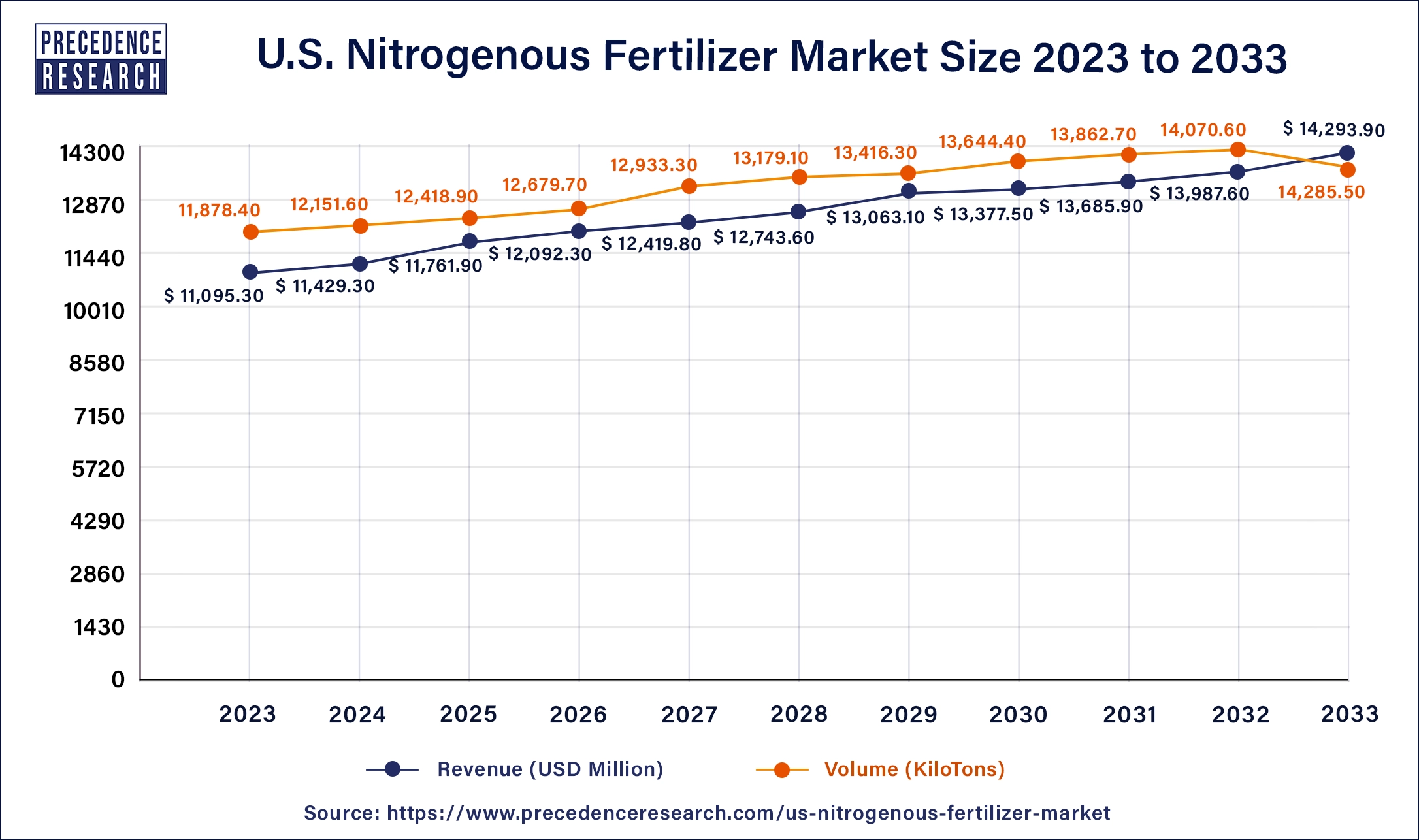
The U.S. nitrogenous fertilizer market size is valued at USD 12,092.30 million in 2026 and is anticipated to reach around USD 14,902.41 million by 2035, growing at a CAGR of 2.39% from 2026 to 2035. The increasing demand for nitrogen fertilizers in enhancing the quality of crops that driving the growth of the market.
Market Highlights
- By product, the urea segment dominated the U.S. nitrogenous fertilizer market with the largest share in 2025.
- By product, the NPK compound held the second-largest share in the market in 2025.
- By application, the agricultural use segment dominated the market in 2025.
- By application, the industrial use segment is expected the fastest growth in the market during the forecast period.
Market Overview
Nitrogenous fertilizers are one of the types of fertilizers that are used in the agriculture industry that is used in enhancing the growth of the crops and unlocking the yield production. It is a nitrogen rich substance which is either meat in the form of liquid or solid. Nitrogen is one of the common and most important parts in the production of crops and all types of plants, it helps in producing energy in the plant cell. There are two types of the nitrogenous fertilizers organic or natural, and synthetic or chemical. Nitrogen fertilizers come in the ammonia (NH3), nitrate (NO3), ammonium (NH4), or urea (CH4N20). The rising demand for the high-quality crops and increasing demand for the agricultural production is driving the growth of the U.S. nitrogenous fertilizers market.
AI is Transforming the Way Nitrogen Fertilizer is Used in the U.S.
Artificial intelligence (AI) is transforming how nitrogen fertilizers are manufactured and applied to crops in the U.S. Both agritech companies and established industry leaders (like Deere and Bayer) are leveraging AI technology to analyze variables such as soil condition, weather patterns, and crop behavior to develop precise nutrient management strategies, enabling growers to use less fertilizer while still achieving reliable crop yield under the current uncertain market conditions. Manufacturers are implementing AI technology for predictive maintenance, optimizing production processes, and using smarter logistics to support enhanced plant operations. The industry's strategic partnerships are also advancing this trend through data analytics and further enabling AI to build its competitive advantage through digital farming.
U.S. Nitrogenous Fertilizer Market Growth Factors
- The increasing worldwide population and the rising demand for the high-quality yield in the agriculture is driving the demand for the nitrogenous fertilizers that contributing to the growth of the U.S. nitrogenous fertilizers market.
- Nitrogenous fertilizers provide high-quality nutrients to the various crops like cotton, vegetables, and cereals. It helps in improving the quality of crops and accelerates the growth of the market.
- Nitrogenous fertilizers are essential materials to expand the growth of the crop to meet the demand of food and other crops in market that also contributing in the higher adoption of the nitrogenous fertilizers.
- The rising chemical and physician advancements in the fertilizers that drives the expansion of the U.S. nitrogenous fertilizers market.
- The increasing economic development in the several countries are positively influencing the agriculture industry is driving the growth of the U.S. nitrogenous fertilizers market.
Trends Influencing the Nitrogenous Fertilizer Market in the United States
- Precision Agriculture: Using GPS-enabled application tech, soil moisture measuring instruments and analytical tools are helping to better target nitrogen applications, reduce wastage and improve efficiency of nitrogen use through U.S. farms.
- Efficient Formulations: As more and more farmers turn to slow release or enhanced efficiency nitrogen fertilizers that provide less leaching or volatilisation of nitrogen, more nitrogen is available to crops and less is lost to the environment.
- Sustainability Focus: Increased regulatory pressure and sustainability targets are driving a demand for sustainable products that have little to no greenhouse gas emissions as well as bio-based alternatives to conventional nitrogen fertilizers.
- Demand Dynamics: Total demand for nitrogen fertilizers is growing at a steady rate; due to fluctuations in prices through supply chain disruption and increased economic strain on farmers, they are making purchase decisions by weighing input costs against potential crop returns.
Market Outlook
- Industry Growth Overview: The U.S. nitrogenous fertilizer market is growing due to rising demand for higher crop yields, precision farming, and biofuel production. Increasing demand for high-quality food, government support for modern agriculture, and biofuel growth also drive the market.
- Major Investors: Major investors in the market include large agribusinesses, chemical manufacturers, and investment firms, such as Nutrien, CF Industries, and Koch Fertilizer. They contribute by funding production capacity expansion, adopting advanced technologies for efficient fertilizer manufacturing, and supporting research in precision farming and sustainable application methods, driving overall market growth.
Market Scope
| Report Coverage | Details |
| Market Size in 2025 | USD 11,761.90 Million |
| Market Size in 2026 | USD 12,092.30 Million |
| Market Size by 2035 | USD 14,902.41 Million |
| Market Growth Rate | CAGR of 2.39% from 2026 to 2035 |
| Base Year | 2025 |
| Forecast Period | 2026 to 2035 |
| Segments Covered | Product and End-Use |
Market Dynamics
Driver: Rising demand for the high-quality crops
The increasing population of the country results in the higher demand for the quality and quantity production of crops. The higher dependencies on the agriculture for handling the rising demand for the food in the United States due to the rising population is driving the demand for the nitrogenous fertilizers for improving the crop production. Nitrogenous fertilizers are used to improve the nutritional quality of crops and it is used in enhancing the production capacity in agriculture.
The rising awareness about the nutritional food supply in the population drives the increased demand for safe, nutritious food that further drives the use of nitrogenous fertilizers in agriculture. Nitrogen fertilizers are used for restoration and maintenance of nutrition in soil which is necessary for high-quality crop production and growth in agriculture. Thus, the rising population and beneficial properties of nitrogenous fertilizers are collectivity driving the growth of the market.
Restraint: Environmental Impacts
The excessive use of nitrogenous fertilizers in the hazardous effects on the ecosystem drives the various impacts on the inhabited animals, and on environment is restraints the adoption of nitrogenous fertilizers and results in the restraining the growth of the U.S. nitrogenous fertilizers market.
Opportunity: Advancements in the nitrogenous fertilizers
Nitrogen fertilizers is gaining popularity in the agriculture industry due to its potential benefits to the crops and it is highly utilized by the farmers for higher quality and quantity of production yields. But the excessive use of nitrogenous products is leaving negative impacts on the environment and ecosystem and causing health hazards in the animals. There is increasing investment in the research activities for finding the advancement in the nitrogen-based fertilizers with the lower impact on ecosystem, such as amino acid biosynthesis, carbon metabolism, and targeted engineered genetics are driving the growth opportunity in the U.S. nitrogenous fertilizers market.
Segment Insights
Product Insights
The urea segment dominated the market with the largest share in 2025. The growth of the segment is attributed to the rising usage of urea in the agriculture sector for efficient crop management. Urea is a crystalline solid which is highly soluble in water. Urea used in agriculture is an organic compound with highly concentrated nitrogen. Urea had properties like water solubility, neutral pH and high nitrogen content which makes them the best choice for the various food processing and agricultural practices.
The urea is comparatively less expensive than the other nitrogen contained compound which makes them popular choice in agricultural application. Urea is used as a fertilizer, yeast nutrient, food processing aid, and animal feed additives. Majorly it is used as the fertilizers in agriculture, it used to provide the necessary nutrients to the crops for enhancing quality and quantity of crop yields.
The NPK compound segment held the second largest share in 2025. NPK compound is the combination of three different nutrients nitrogen (N), potassium (K), and phosphorus (P). NPK fertilizers are considered as the complete fertilizers though it provides all the essential nutrients for the plant growth. NOP compound is found in all three physical states (gas, solid, and liquid). With the three nutrients, NPK compound also contains zinc and iron to enhance the growth of plants. Thus, the rising adoption of the NPK compounds by regional farmers to promote crop production drives the growth of the NPK compounds in the U.S. nitrogenous fertilizers market.
End-use Insights
The agricultural use segment dominated the market in 2025. The rising adoption of nitrogenous fertilizers in agriculture due to beneficial properties is driving the demand for the nitrogenous fertilizers in agriculture. Nitrogenous fertilizers are found in solid and liquid physical states. Nitrogenous fertilizers are rich in nitrogen substances that are essential for plant growth and help in increasing quality of crops. Nitrogen produces energy in the plant cell and helps to promote the health of crops and productivity.
The rising investment in the promotion of agricultural activities in the United States and the increasing farmland for production of high-quality crop yields in the region due to the continues rising population and the demand for the high-quality food supplies that contributing in the demand for the nitrogenous fertilizers in the agriculture segment.
The industrial use segment is observed to grow at a notable rate in the U.S. nitrogenous fertilizers market. Government policies and subsidies aimed at supporting the agricultural sector indirectly boost the industrial use segment. These policies often include incentives for the use of fertilizers to increase crop production. Advances in precision agriculture technologies allow for more efficient and targeted application of nitrogenous fertilizers. This not only improves crop yields but also reduces environmental impact, making the use of these fertilizers more appealing for industrial applications.
Country Analysis
U.S
In the U.S., the nitrogenous fertilizer segment of the larger fertilizer sector represents a key component to the larger fertilizer industry, as it is mainly driven by the increasing need for agriculture to produce more crops to feed our world's growing population and replenish soil nutrients. Use of nitrogenous fertilizers, including urea, ammonium nitrate and anhydrous ammonia, is critical in producing corn, soybeans, and wheat. Continued growth in the nitrogenous fertilizer market is expected as a result of more advanced farming technology, sustainable innovations such as controlled release fertilizer formulations and government programs encouraging the efficient use of nutrients. While domestic production of nitrogenous fertilizers is important, the United States also imports nitrogenous fertilizers to supplement domestic production. Continued growth of this sector will continue into the next decade due to the ongoing demand for improved crop nutrition and improved agricultural practices
Value Chain Analysis
- Raw Materials Sourcing
This stage primarily involves sourcing nitrogen and natural gas, such as hydrogen, combined under heat and even pressure to create ammonia.
Key Players: CF Industries Holdings, Inc., Nutrien Ltd., Koch Industries, Inc., The Mosaic Company - Processing and Packaging
It includes a series of stages that convert raw materials into a stable, usable, and transportable product. Specific steps vary depending on whether the final product is powder, granular, or liquid.
Key Players: Nutrien Ltd., Koch Fertilizer, LLC, OCI N.V. - Distribution to Wholesalers/Retailers
It involves producers selling in bulk to wholesalers, who break, store, and distribute products to smaller farmers or dealers, manage logistics and credit, and bridge the gap between large-scale production and fragmented agricultural demand while earning intermediary margins.
Key Players: Nutrien Ltd., CF Industries Holdings, Inc., The Mosaic Company - Export and Trade Compliance
It involves navigating a complex network of national regulations, international standards, and licensing requirements, which differ between exporting and importing countries.
Key Players: The Mosaic Company, Nutrien Ltd., Koch Fertilizer, LLC, LSB Industries
U.S. Nitrogenous Fertilizer Market Companies
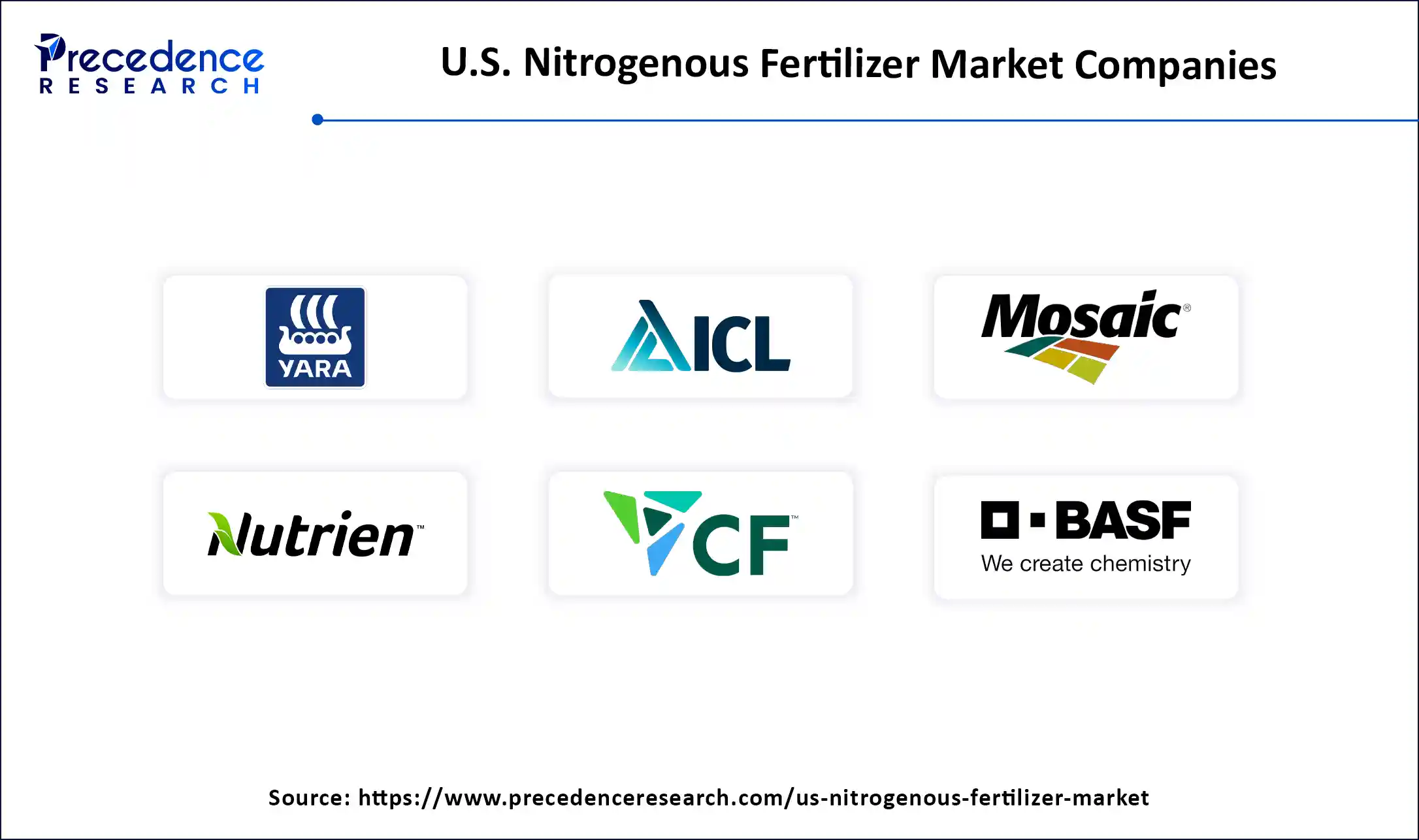
- Yara International ASA
- ICL Specialty Fertilizers
- The Mosaic Company
- Nutrien Limited
- CF Industries
- BASF
- Sigma AgriScience, LLC
- Scotts Miracle-Gro Company
- Intrepid Potash Inc
Recent Developments
- In April 2024, Nitricity launched its new field test with the collaboration of Elemental Excelerator, Olam Food Ingredients, and the Madera/Chowchilla Resource Conservation Districtat the Madera County event. The launch is results in the significant rise in scale from small delivers to the first tonnage delivery of Nitricity's produced liquid calcium nitrate product.
- In May 2024, American companies purchased fertilizers worth $174 million in March- end up 10% from the last February. Russia is become the second largest exporter of fertilizers to the United States followed by Canada with the supplies worth of $338 million commodity in March.
- In May 2024, The US Commerce Department (USCD), announced the increase in the import duty on Moroccan fertilizers. As per the US media, USCD announced the hike from 2.12% to 14.21% with reducing duties on Russian phosphate fertilizers to 18.83% from 28.5%.
Segments Covered in the Report
By Product
- Urea
- NPK Compound
- Nitrates
- Ammonium Phosphate
- Others
By End-Use
- Agricultural Use
- Industrial Use
- Residential And Consumer Use
For inquiries regarding discounts, bulk purchases, or customization requests, please contact us at sales@precedenceresearch.com
Frequently Asked Questions





Ask For Sample
No cookie-cutter, only authentic analysis – take the 1st step to become a Precedence Research client
 Get a Sample




 sales@precedenceresearch.com
 Schedule a Meeting
