



Wellness Apps Market Revenue, Leading Companies, Company Technology / Innovation, Service Utilization, Infrastructure Capacity, Sales Performance, Pricing Metrics, Competitive Positioning, and Growth Opportunities
The global wellness apps market is experiencing rapid growth, driven by rising adoption of digital health solutions, increasing awareness of mental and physical well-being, and the widespread use of smartphones and wearable devices. The market is projected to grow from USD 14.81 billion in 2026 to USD 51.12 billion by 2035, registering a CAGR of 14.79% during the forecast period. Key growth drivers include AI-powered personalized wellness experiences, telehealth integration, preventive healthcare initiatives, and growing consumer demand for fitness, nutrition, meditation, and mental health applications.
Source: https://www.precedenceresearch.com/wellness-apps-market
 Get a Sample
 Table Of Content


Why Is the Wellness Apps Market Growing So Rapidly Worldwide?
The global wellness apps market size is estimated at USD 12.87 billion in 2025, and is projected to hit around USD 14.81 billion by 2026, and is anticipated to reach around USD 51.12 billion by 2035, expanding at a CAGR of 14.79% between 2026 and 2035. The market growth is attributed to the increasing adoption of digital health solutions and a growing emphasis on wellness among consumers.
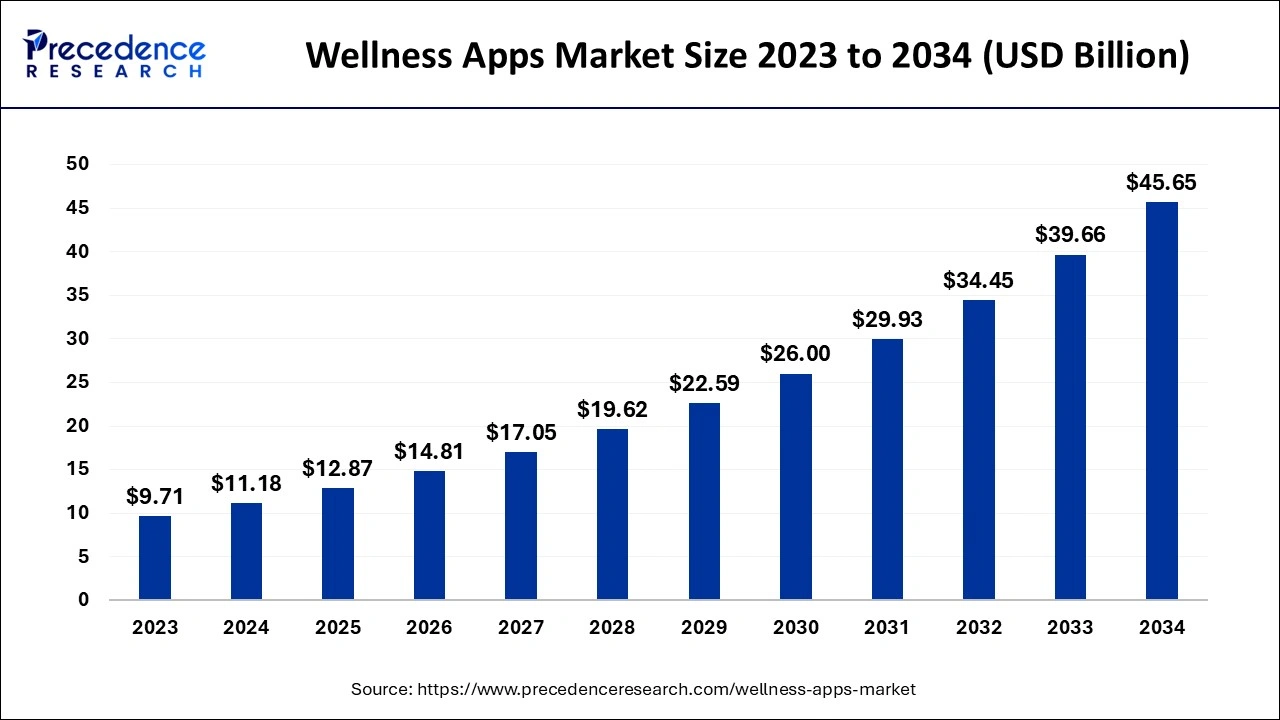
Wellness Apps Market Key Takeaways
- In terms of revenue, the wellness apps market is valued at $14.81 billion in 2026.
- It is projected to reach $51.12 billion by 2035.
- The wellness apps market is expected to grow at a CAGR of 14.79% from 2026 to 2035.
- North America dominated the market with the largest market share of 37% in 2025.
- Asia Pacific is projected to expand at the fastest CAGR in the coming years.
- By type, the exercise and weight loss apps segment contributed the highest market share of 59% in 2025.
- By type, the meditation management segment is expected to grow at the fastest rate during the forecast period.
- By platform, the iOS segment accounted for the largest market share of 53% market in 2025.
- By platform, the android segment is anticipated to grow at a significant CAGR over the studied period.
- By device, the smartphone segment has held the major market share of 67% in 2025.
- By device, the wearable devices segment is expected to expand at a significant growth rate in the coming years.
- By subscription, the paid (in-app purchase) segment contributed the highest market share of 68% in 2025.
- By subscription, the free segment is projected to grow at the fastest rate in the near future.
Market Overview
Rising knowledge of mental and physical health contributes to the significant expansion of the wellness apps market. Nowadays, consumers are looking for products and services that help them get health-related support. Thus, mobile applications are becoming essential tools, which include tracking physical activities and providing mental support. According to the World Health Organization (WHO), about one billion people worldwide suffer from different mental health disorders each year, creating a need for mental wellness solutions. Research from the National Institute of Health states that practical tools in digital health have become essential to health-promoting behavior, with over 60% of adults in the U.S. actively using mobile health apps in 2024. Furthermore, the growing demand for easily accessible and advanced wellness applications for preventive healthcare further fuel the wellness apps market growth in the coming years.
Impact of Artificial Intelligence on the Wellness Apps Market
Developers use Artificial Intelligence (AI) to analyze substantial user data to develop apps that personalize fitness routines, mental health exercises, and nutritional advice based on each individual's needs. AI is an advanced technology that enables wellness apps to track users' behavior effectively, make recommendations with progress, and respond to feedback in real time. Moreover, AI-driven chatbots and virtual assistants interact with users and transact with them round the clock for on-time responses to queries and encouragement to sustain the goal of maintaining wellness.
Market Trends
- AI and Machine Learning Integration: The market is witnessing an increasing use of AI and ML to provide personalized health recommendations, predictive analytics, and real-time feedback, which is propelling growth and fostering innovation.
- Wearable Device Integration: Enhanced connectivity with wearable devices such as fitness trackers, smartwatches, and health monitors for comprehensive health tracking and data synchronization is gaining traction, driving market growth.
- Mental Health Focus: The market is witnessing a growing emphasis on mental health support, including meditation, stress management, and therapy-based apps, which is reflecting rising awareness and de-stigmatization of mental health issues.
- Virtual Coaching and Telehealth: Another market trend is the increased incorporation of virtual coaching, live classes, and telehealth consultations, providing users with direct access to fitness trainers, dietitians, and healthcare professionals.
Wellness Apps Market Growth Factors
- The increasing use of wearable technology, which integrates real-time health monitoring with mobile platforms, is expected to drive wellness app usage.
- Rising focus on personalized health solutions is likely to enhance app features like customized fitness plans and mental health tracking.
- Growing demand for mental health support tools due to rising stress and anxiety levels among global populations is anticipated to spur app downloads.
- Advances in AI and machine learning are projected to improve app functionalities, making them more interactive and intuitive for users.
- Increasing partnerships between wellness app developers and healthcare providers are crucial in boosting credibility and integration with mainstream health services.
- The growing interest in gamification within health and wellness apps is anticipated to enhance user engagement by making health management more interactive and fun.
- The surging awareness of holistic wellness is projected to boost the use of apps for mental, physical, and emotional well-being across various demographics.
Market Report Coverage and Key Metrics
| Report Coverage | Details |
| Market Size by 2035 | USD 51.12 Billion |
| Market Size in 2025 | USD 12.87 Billion |
| Market Size in 2026 | USD 14.81 Billion |
| Market Growth Rate from 2026 to 2035 | CAGR of 14.79% |
| Largest Market | North America |
| Base Year | 2025 |
| Forecast Period | 2026 to 2035 |
| Segments Covered | Type, Platform, Device, Subscription, and Regions |
| Regions Covered | North America, Europe, Asia-Pacific, Latin America and Middle East, & Africa |
Market Dynamics
Drivers
Growing Awareness of Mental and Physical Well-being
Growing awareness of mental and physical well-being is expected to drive demand for wellness apps in the coming years. The adoption of wellness apps is increasing among the younger generations, who want easily available solutions to control stress and have a balanced lifestyle. According to research by the American Psychological Association, about 70% of adults say mental health resources in their lives have been becoming increasingly necessary, and a large number of people have started using digital wellness solutions. Additionally, 83% of users acknowledge that realistic health plans and interventions are what wellness apps have empowered them to attain better overall well-being. Apps that provide services such as mindfulness exercises, meditation guides, and sleep markers are in high demand among health-conscious individuals. Additionally, companies have started offering corporate wellness programs, with 64% of employers investing in digital health initiatives yearly, reflecting soaring mental health awareness among businesses for employees' well-being. Furthermore, the growing demand for such applications for preventive measures further boosts the market in the coming years.
| Year | Percentage of Adults Using Wellness Apps | Percentage of Users Reporting Improved Well-being | Percentage of Employers Investing in Digital Health Initiatives |
| 2023 | 40% | 83% | 64% |
| 2024 | 52% (Projected) | 90% (Projected) | 70% (Projected) |
Restraint
Limited Access in Low-income Regions
Limited access to advanced smartphones and reliable internet services in low-income regions is projected to hinder the market. Many wellness apps require users to have an Android or iPhone and a good internet connection to maximize the app's features. In developing countries where technologies are not so prevalent, the use of wellness apps is still low. Some of these solutions are rooted in the digital divide. Those who lack the means to access these solutions are often rural users.
Opportunity
High Adoption of Telemedicine and Digital Health Platforms
The high adoption rate of telemedicine and digital health platforms is expected to create immense opportunities for key players competing in the wellness apps market. Wellness apps are gradually embedded into telemedicine systems. This allows individuals to receive advice and get health services and consultations through mobile devices. According to the World Health Organization, the adoption of telemedicine services increased worldwide by 50% in 2024 and is expected to rise further in 2024. These changes present new prospects for wellness app developers, who evaluate the possibility of functioning with healthcare organizations to synchronize physical and mental well-being tracking products and services. Moreover, the growing number of individuals seeking technologies that effectively manage chronic diseases, mental health, and other lifestyle-related illnesses is expected to boost the market growth in the coming years.
Wellness Goes Digital: Where Mindfulness Meets Innovation
The wellness app market is experiencing a robust evolution driven by increasing mental health awareness, lifestyle-related diseases, and the growing preference for holistic well-being. A significant trend is the rise of AI-driven personalisation, where users receive custom fitness, sleep, and mindfulness routines based on real-time behavioural data. Additionally, integration with wearables like smartwatches and fitness bands has enabled seamless health tracking, making wellness a daily, data-backed pursuit.
Gamification of wellness is also on the rise, turning workouts, meditation, and healthy habits into engaging challenges. Corporate wellness programmes are increasingly being digitised as businesses focus on employee well-being. Furthermore, multi-functional apps that combine nutrition, mental wellness, fitness, and habit tracking into one interface are becoming the new standard, replacing single-purpose tools.
Market Segmentation Analysis
Type Insights
Which Type Segment Led the Wellness Apps Market?
The exercise and weight loss apps segment led the market in 2025, owing to the increasing cases of obesity. Busy lifestyles encouraged people to engage in physical activities like exercise and Yoga, leading to increased demand for exercise and weight loss apps. Moreover, with the rising obesity rates, there is a high demand for weight loss apps among health-conscious individuals, thus leading to segmental growth.
The meditation management segment is expected to grow at the fastest CAGR during the forecast period. Guided meditation and relaxation techniques are being used on these apps to manage stress, anxiety, and sleep problems. The adoption of meditation management apps is rising due to the increasing awareness about mental health, further fueling the segmental growth.
Platform Insights
Which Platform Dominated the Global Wellness Apps Market?
The iOS segment dominated the global market landscape in 2025. This dominance is mainly due to the increase in usage of iOS devices among the population, especially youngsters. Advanced technologies in these devices and the rising number of iPhone users worldwide contributed to segmental dominance. Furthermore, superior iOS app user experience further bolstered the segment.
The Android segment is anticipated to grow at the fastest CAGR over the forecast period. This is rapid growth due to its large user base and affordability. With the increasing usage of smartphones, the usage of wellness apps is rising. The open-source nature of Android creates an environment for a varied set of wellness apps to be created, raising the accessibility of these apps. Furthermore, the proliferation of low-cost smartphones contributes to segmental expansion.
Device Insights
How the Smartphone Segment Dominated the Wellness Apps Market?
The smartphone segment led the global market with the largest share in 2025, as mobile phones are the most prevalent platform for health and wellness apps. Smartphones' portability and continuous connectivity allow people to choose from various fitness tracking, meditation, and nutrition management apps. Furthermore, the growing number of smartphone applications being developed will further fuel the segment.
The wearable devices segment is expected to expand at the fastest CAGR in the upcoming years, owing to the increasing adoption of smartwatches and fitness trackers. These devices allow users to monitor their physical activity, sleep patterns, and heart rate in real time, enhancing the health-tracking experience. The inclusion of a wearable that connects to a wellness app enhances user engagement with the app through its ability to give valuable insights into the users' health through the wearable.
Subscriptions Insights
Which Subscription Segment Held the Largest Wellness Apps Market Share in 2025?
The paid (in-app purchase) segment held the largest market share in 2025. This is because users have become more willing to pay for premium features, such as personalized fitness plans and advanced meditation solutions. Paid apps offer virtual consultations with health professionals, enhancing user experience. Paid wellness apps typically provide a non-ad space, detailed analytics, and personalized recommendations. Moreover, the increasing demand for premium wellness services augmented the segment.
The free segment is projected to grow at the fastest rate during the forecasted years, owing to the high number of free app users. Free apps provide invaluable wellness services, including simple fitness tracking, basic meditation guides, and basic nutrition tips, making them available to the masses. These free apps offer basic features, attracting a wider user base. With the rising adoption of smartphones, the demand for free wellness apps is increasing, contributing to segmental growth.
Market Regional Analysis: North America, Europe, Asia-Pacific
U.S. Wellness Apps Market Size and Growth 2026 to 2035
The U.S. wellness apps market size accounted for USD 4.82 billion in 2026 and is expected to be worth around USD 17.02 billion by 2035, growing at a CAGR of 15.05% from 2026 to 2035.
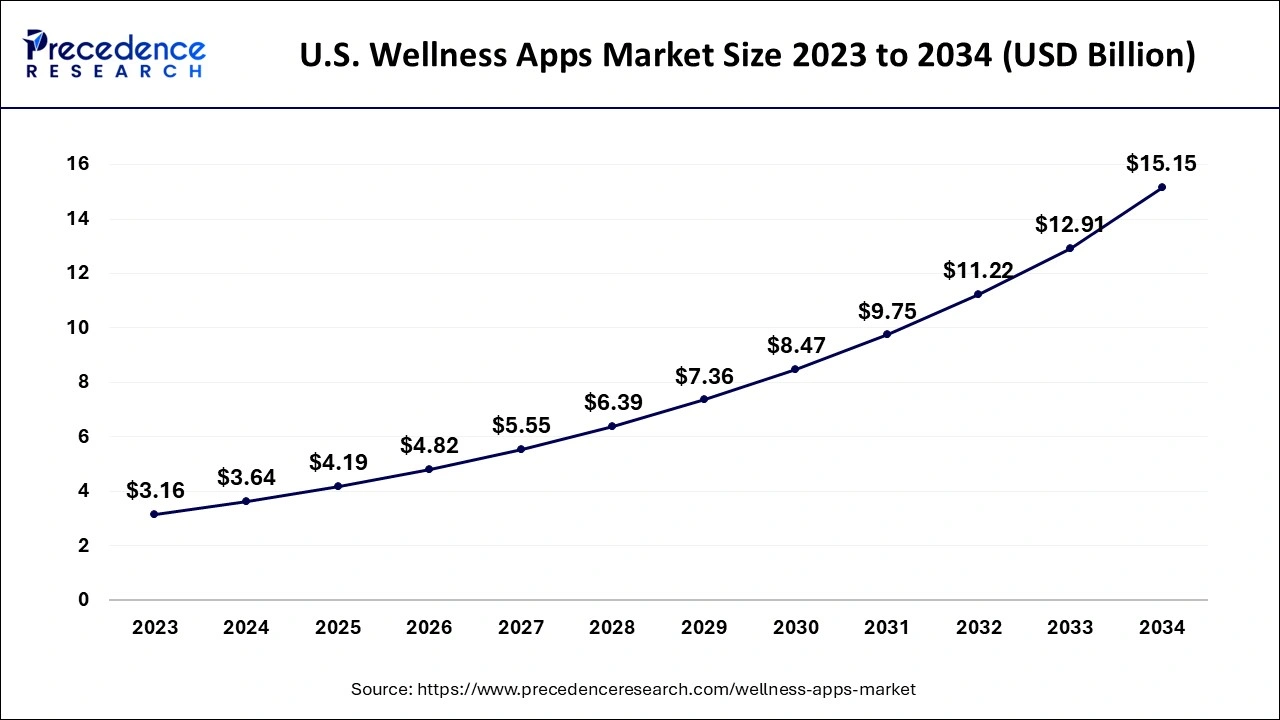
How is North America Dominating the Wellness Apps Market?
North America led the wellness apps market, capturing the largest share in 2025. This is mainly due to the growing consumer knowledge about digital health options. Due to the highly tech-savvy population in the U.S. and Canada, the demand for wellness apps that enable personal health management, fitness tracking, and mental well-being is on the rise. Government initiatives favoring preventive healthcare and telemedicine services acted as a stimulus to app adoption. According to the U.S. Department of Health and Human Services, the adoption of telemedicine in the U.S. soared by 154% during the early stages of the pandemic. Furthermore, the region's well-developed technology sector and high penetration of smartphones boosted the market.
North America leads the wellness app market, thanks to its tech-forward population, established digital infrastructure, and increasing investment in preventive healthcare. Key contributing countries include the U.S., driven by high smartphone penetration, consumer wellness spending, and home-grown global app players like Calm, Headspace, and MyFitnessPal, and Canada, Known for its supportive healthcare policies and rising adoption of mental wellness platforms.
U.S Market Trends
The region benefits from a high level of technological adoption and a strong focus on health and wellness, with significant investments being made in digital health solutions. The widespread use of smartphones and wearables, along with a growing consumer emphasis on preventive healthcare, is driving demand for wellness apps in the country.
Government initiatives like the U.S. Department of Health's “Healthy People 2030” strategy include a digital health component aimed at promoting behavioural wellness using technology. Additionally, several start-up incentives and health-tech incubators are funded by federal and private programmes to encourage innovation in mental health and lifestyle tracking platforms.
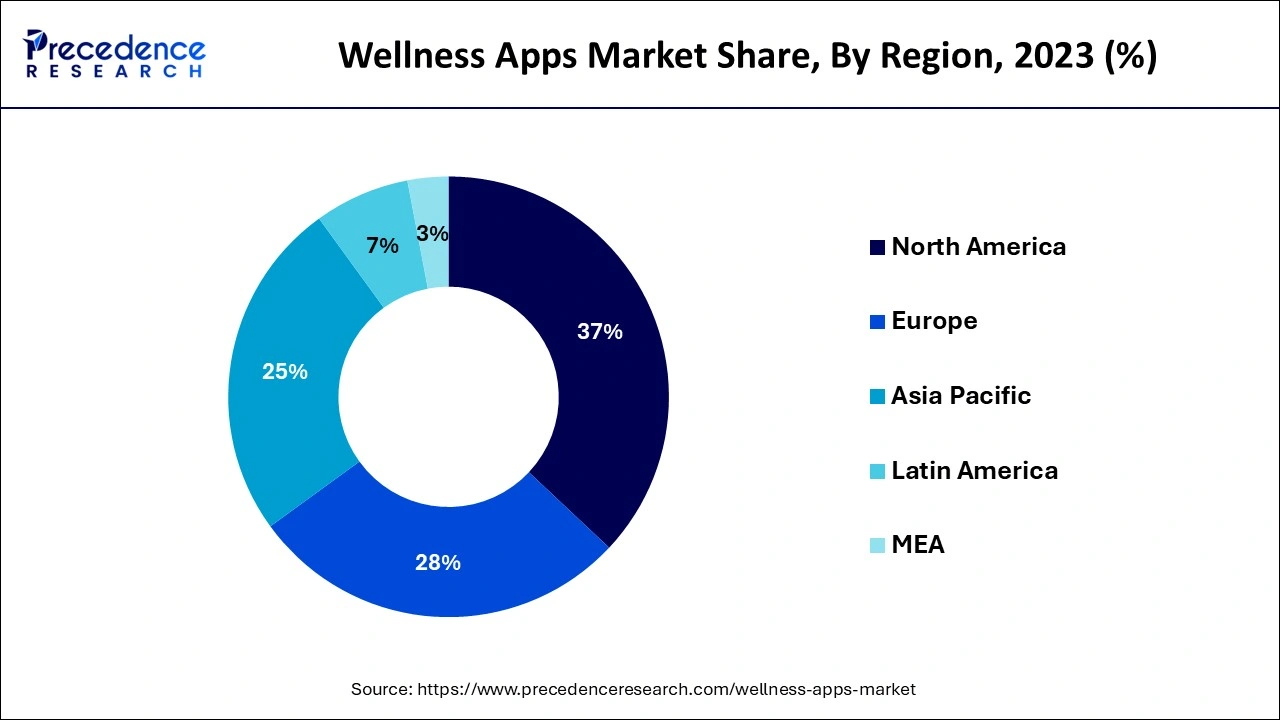
How is Asia-Pacific Growing Rapidly in the Wellness Apps Market?
The wellness apps market in Asia Pacific is projected to expand at the fastest CAGR in the coming years. Increasing awareness about mental and physical well-being is boosting the demand for health and wellness apps in countries such as China, India, and Japan. With the rising usage of smartphones, the demand for health and wellness apps is rising. Additionally, with the increasing incidence of chronic disease, more and more people are adopting fitness, stress management, and nutrition management apps, further boosting the market in this region.
Asia Pacific is witnessing exponential growth in the wellness app market, driven by a unique blend of ancient health philosophies and modern digital innovation. Countries like India, China, Japan, and South Korea are leading the charge with surging mobile user bases, urban lifestyle stress, and increasing middle-class health consciousness. The region is marked by a rise in homegrown wellness platforms combining local traditions like Ayurveda, traditional chinese medicine (TCM), and yoga with modern UI/UX frameworks. Demand is surging in Tier-2 and Tier-3 cities as affordable smartphones and mobile data reach rural populations.
China Market Trends
The region's market landscape is characterized by a well-developed healthcare infrastructure and high disposable incomes, which facilitate the adoption of advanced wellness applications. The presence of major tech companies and innovative startups in the region further accelerates the development and availability of advanced wellness apps.
What are the Advancements in the Wellness Apps Market in Europe?
Europe is expected to witness a significant amount of market growth in the forecast period. This growth and development are fueled by the increasing awareness about healthy lifestyles, a growing number of fitness centers and health clubs, and rising demand for wellness and workout apps by target user groups. The launch of new products and increased marketing and promotional activities by manufacturers are also additional factors that are expected to contribute to market growth. Countries like Germany, France, and the UK are leading players.
Germany Market Trends
Growing awareness among the population regarding the benefits of sleep patterns and monitoring their current state of health is leading to a rise in the demand for wellness applications in the country. Furthermore, as the number of smartphone users is rising, the adoption of wellness apps is also expected to grow.
What are the Key Trends in the Wellness Apps Market in Latin America?
Latin America is expected to witness significant growth in the market during the forecast period. The region has a large pool of healthcare human resources and tech entrepreneurs, which is one of the key factors driving the wellness apps market. In addition to that, increasing expenditure on electronic and mobile devices by buyers is contributing to market growth. Countries such as Brazil and Mexico are leading players in the region.
Brazil Market Trends
The country is anticipated to register significant growth during the forecast period. The increasing adoption of digital technology and the growing healthcare sector are some of the key factors that are boosting market growth and fostering innovation.
How is the Middle East and Africa Region Growing in the Wellness Apps Market?
The Middle East and Africa region is expected to grow significantly in the upcoming years due to various factors such as increasing smartphone penetration, improving internet connectivity, and government initiatives promoting wellness app adoption. Wearable devices, mHealth apps, and AI are key trends that are shaping the region's market landscape. Countries like South Africa, Saudi Arabia, and the UAE are leading players.
Saudi Arabia Market Trends
Key players in the region are seen increasingly focusing on creating and deploying innovative business growth strategies in the form of product portfolio expansions, partnerships and collaborations, mergers and acquisitions, and business footprint expansions.
Market Competitive Landscape: Leading Companies and Strategies
Key players in the global wellness apps market are demonstrating a diverse range of offerings within the global wellness app market, all the way from comprehensive health tracking and fitness solutions to mental health and stress management. This continued innovation and strategic positioning highlight the dynamic nature of the wellness app industry and its consistent evolution to meet the diverse needs of users.
The wellness app market is dominated by several key players that have successfully capitalized on the growing demand for digital health solutions. In terms of business tactics, the market appears to be moderately fragmented in nature. Several key players all over the world have leveraged their strong brand presence to expand into corporate wellness programs, making them leaders in the mindfulness and mental health space.
Wellness Apps Market Companies
- Mindscape
- Calm
- Headspace Inc.
- Appster
- Under Armour, Inc.
- Kayla Itsines
- Apple Inc.
- Sleepace
- Withings
Recent Developments in the Wellness Apps Market (2025–2026)
- In July 2025, Ambience Healthcare secured a massive $243 million Series C round at a $1.25 billion valuation, co-led by Oak HC/FT and Andreessen Horowitz, with continued participation from the OpenAI Startup Fund1. The San Francisco-based company's ambient AI platform is already transforming clinical workflows across 40+ U.S. health systems, generating real-time clinical notes and improving revenue cycle performance. (Source: https://www.ambiencehealthcare.com)
- In July 2025, Samsung Electronics announced its acquisition of Xealth, a U.S.-based healthcare integration platform, in a deal expected to close by year-end 2. While financial terms weren't disclosed, industry analysts estimate the transaction exceeds $1 billion based on Xealth's market position and Samsung's strategic priorities. Xealth operates a platform that enables hospitals and clinicians to deliver digital health tools directly to patients, working with approximately 500 hospitals and supporting around 70 digital health programs across diabetes, pregnancy, and surgical recovery. (Source: https://news.samsung.com)
- In October 2024, Deepinder Goyal, co-founder and CEO of Zomato, launched a new wellness startup called Continue. The company aims to focus on health tracking and mental wellness. Initially incorporated under Upslope Advisors, Continue represents Goyal's venture into health and wellness, having invested ?50 lakh of his own funds into the project. Goyal describes Continue as a platform that will serve as his personal health and wellness team, dedicated to researching and tracking methods to optimize performance and maintain peak health. Although details on the offerings are still scarce, Goyal expressed enthusiasm about developing innovative solutions that he hopes to share with the world in the future
- In June 2024, Equanima announced the upcoming release of its innovative wellness app and games to enhance emotional intelligence and mental health. The app, which incorporates AI for personalized mood monitoring and e-learning modules, will launch by the end of Q3 2024 and target Millennials and Gen Z who face mental health challenges.
- In January 2024, FOXO Technologies formalized a partnership with KR8.ai to launch the VITHAR AI Health Coach, a subscription-based wellness app. This application combines epigenetic biomarker analysis with machine learning to provide personalized health recommendations based on users' genetic insights and health statistics.
Segments Covered in The Report
By Type
- Meditation Management
- Exercise and Weight Loss Apps
- Stress Management
- Diet & Nutrition Apps
By Platform
- Android
- iOS
- Web-Based
By Device
- Tablets
- Smartphones
- Wearable Devices
By Subscription
- Free
- Paid (In-App Purchase)
By Region
- North America
- Europe
- Asia Pacific
- Latin America
- Middle East and Africa
For inquiries regarding discounts, bulk purchases, or customization requests, please contact us at sales@precedenceresearch.com
Frequently Asked Questions
Tags





Ask For Sample
No cookie-cutter, only authentic analysis – take the 1st step to become a Precedence Research client
 Get a Sample




 sales@precedenceresearch.com
 Schedule a Meeting
