



Fatty Acids Market Size, Key Companies, Company Market Share, Production Capacity, Raw Material Pricing, Export & Import Analysis, Manufacturing Cost, Competitive Positioning, and Demand Forecast
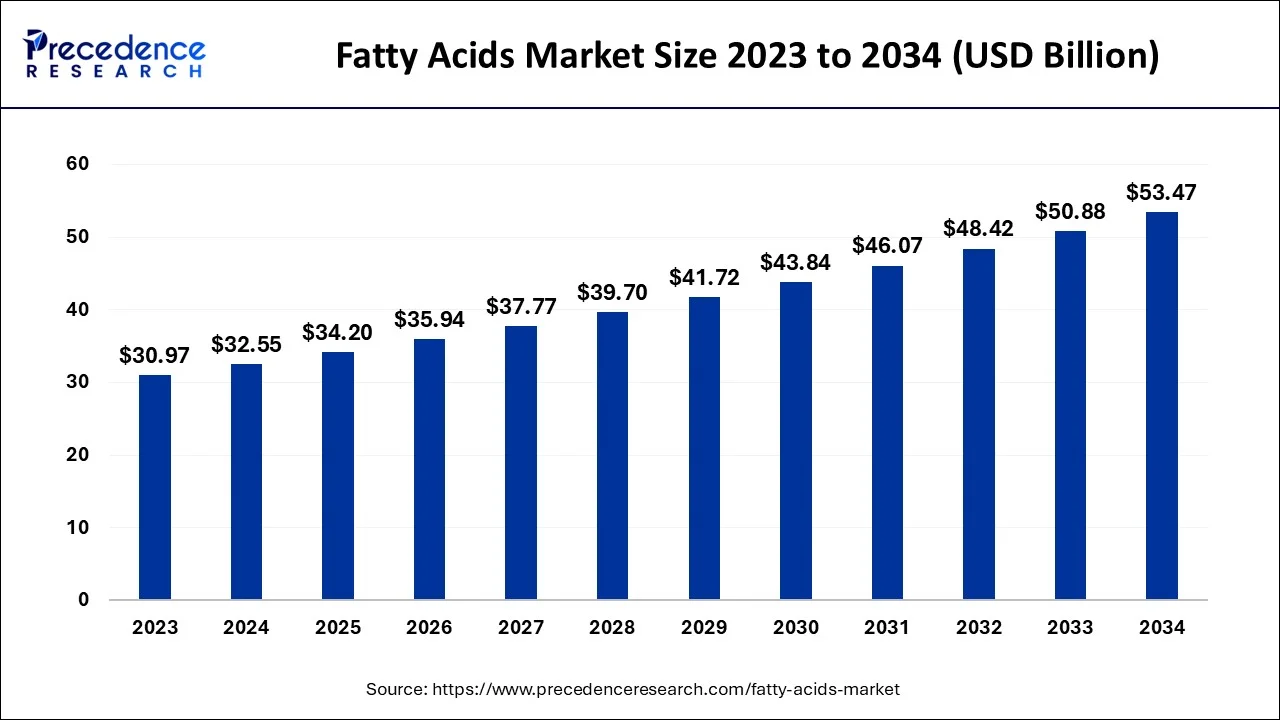
The global fatty acids market was valued at approximately USD 35.94 billion in 2026 and is projected to reach USD 55.97 billion by 2035, registering a CAGR of 5.05% from 2026 to 2035. The market growth is driven by rising demand for bio-based ingredients, expanding applications in food & beverages, personal care, pharmaceuticals, cleaning products, and biofuels, along with increasing demand for specialty fatty acids and health-focused nutraceutical products.
Source: https://www.precedenceresearch.com/fatty-acids-market
 Get a Sample
 Table Of Content


What is the Fatty Acids Market Size?
The global fatty acids market size was estimated at USD 34.20 billion in 2025 and is predicted to increase from USD 35.94 billion in 2026 to approximately USD 55.97 billion by 2035, expanding at a CAGR of 5.05% from 2026 to 2035. The fatty acids market is driven by rising demand across food, personal care, pharmaceuticals, and biofuels.
Fatty Acids Market Key Takeaways
- By Region, Asia Pacific accounted for the largest revenue share of the fatty acids market in 2025.
- By Region, North America is expected to grow at the fastest CAGR in the market during the forecast period.
- By type, the unsaturated segment registered its dominance over the global market in 2025.
- By type, the saturated segment is expected to witness the fastest growth in the market with a CAGR over the forecast period.
- By form, the oil segment dominated the global market in 2025.
- By form, the powder segment is expected to gain the highest market share with a CAGR between 2026 and 2035.
- By end-use, the household & industrial cleaning segment held the largest revenue in the market in 2025.
- By end-use, the food & beverage segment is expected to show the fastest growth with a CAGR over the forecast period.
Market Overview
Fatty acids are the building blocks of fats in the human body and in the food that is consumed. In the process of digestion, fats are broken down into fatty acids, which are then absorbed in the blood. The rising utility of fatty acids across industrial & household cleaning, and nutraceutical & pharmaceutical products is anticipated to drive the fatty acids market growth substantially. Also, the development of new products for floor care, dish care, surface care, and fabric care is creating remarkable scope for the market over the study period.
The usage of fatty acids is rising across numerous cosmetics & personal care products including detergents, soap, moisturizers, and many others. Additionally, evolving people's lifestyles, rising urbanization, and increasing disposable incomes have led to the growing use of personal care & cosmetics products. Thus, the demand for fatty acids is expected to rise exponentially in the rapidly expanding cosmetics domain over the forecast period.
Health consciousness among people across geographies such as China, India, and the Middle East countries is increasing, which, in turn, is accelerating the need for nutrient-rich beverages and food.
Growing awareness regarding the benefits of a healthy diet dominantly triggers the requirement for omega-3 and omega-6 fatty acids across the food & beverage sector. However, fluctuating supply and prices of raw materials can impact the market to some extent during uncertain situations such as the pandemic of COVID-19. During the COVID-19 pandemic, consumer expenditure on groceries, particularly food rose dramatically.
Fish is considered to be a notable source of omega-3 fatty acids as well as lean protein. As per CSIRO analysis, it is estimated that the domestic consumption of frozen and prepared packaged meals will rise from $2.7 billion in 2018 to $3.7 billion by 2030. This analysis also suggests that the export opportunity for frozen and prepared packaged meals will increase from $1.0 billion to $1.6 billion from 2018 to 2030. Thus, such high anticipated growth in the food industry is expected to support the fatty acids market growth consequently.
Key AI Integration in the Fatty Acids Market
AI solutions allow fatty acid producers to predict customer demand, model feedstock selections, and maximize yield. Predictive analytics can be used to determine the optimal conditions for processing, purifying, and fractionating fatty acids. Real-time quality monitoring and impurity detection can be provided by computer vision and AI-based sensors. Predictive maintenance can help minimize downtime in reactors, distillation columns, and other processing equipment.
Strategic Growth Opportunities
- High-Growth Commercial Opportunities: Public demand for specialty fatty acids in cosmetics, pharmaceuticals, nutraceuticals, food, and biofuels offers good commercial prospects. To capture growth, manufacturers must look at providing high purity, application specific and bio-based fatty acid applications.
- Emerging Technology Opportunities: AI, automation, advanced purification, and energy-efficient processing technologies can enhance the efficiency of fatty acid production and the quality of the products. Predictive maintenance, process optimization, and Digital quality control investments can lower costs and boost competitiveness.
- Geographic Expansion Opportunities: Emerging markets such as Asia-Pacific confirm expansion potential as industrialization and increasing demand in the food, personal care, pharmaceutical, and chemical sectors increase. Companies can enhance their regional distribution effort by producing in the region, into the region, and within regional capacity.
Market Scope
| Report Coverage | Details |
| Market Size in 2025 | USD 34.20 Billion |
| Market Size in 2026 | USD 35.94 Billion |
| Market Size by 2035 | USD 55.97 Billion |
| Growth Rate from 2026 to 2035 | CAGR of 5.05% |
| Largest Market | North America |
| Base Year | 2025 |
| Forecast Period | 2026 to 2035 |
| Segments Covered | Type, Form, End-use, and Region |
| Regions Covered | North America, Europe, Asia-Pacific, Latin America and Middle East & Africa |
Market Dynamics
Driver
Rising Demand for Bio-Based Ingredients
Increased consumption in detergents, cosmetics, food additives, pharmaceuticals, and biofuels is a significant driver for this market. The consumption of oleic acid, stearic acid, palmitic acid, and lauric acid is growing in various end-use applications. Demand is continually being driven by the increasing application of fatty acids as a raw material for biodiesel. The rise in bio-based chemicals is also driving growth in production capacity, as manufacturers seek to produce more of these substances.
Restraint
Volatility in Feedstock Prices
The reliance on agricultural commodities makes manufacturers vulnerable to weather elements, crop output, and geopolitical stability. Issues of environmental impact associated with palm oil production can lead to sourcing and compliance problems. The processing and refining of energy use can add to the price of production. The positive trend of substitution by synthetic products in certain applications can depress demand growth.
Opportunity
Growth of Specialty Fatty Acids
As awareness of fatty acids as substitutes for petroleum continues to grow, the demand for fatty acids as ingredients in a range of products is rising, including bio-based surfactants, lubricants and specialty chemicals, cosmetics, and some natural products. The increasing production of biodiesel can lead to more demand for fatty acid methyl ester feedstocks. High-purity and specialty fatty acids are a pathway for pharmaceuticals, nutraceuticals, and sophisticated personal care formulations.
Segment Insights
Type Insights
The saturated segment is projected to grow at a healthy pace due to their wide applications in food, personal care, and detergents. Functionally stable and versatile saturated fatty acids like stearic acid, palmitic acid, and lauric acid are readily available. Saturated fatty acids are also used within the food industry in the form of various products such as bakery products and processed foods.
The global fatty acids market is segmented into saturated and unsaturated. The unsaturated segment had the largest share of the global fatty acids market in 2024. The high share of the unsaturated segment type is attributed to its growing penetration across the pharmaceutical industry. The unsaturated fatty acids help in stabilizing heart rhythms, enhancing blood cholesterol levels, and can ease inflammation. The unsaturated fats are usually derived from avocados, nuts, olive oil, canola, and soybean.
Soybean fat contains a high content of polyunsaturated fatty acids. The production of soybeans in Europe accounted for 9.5 million tons in 2021, which is almost 6.4% higher as compared to the production in 2020. The production of soybeans under the Europe Soya (ES) or Donau Soja (DS) label raised by almost 49% in 2021, after a temporary decline in 2020. Farmers across 11 European nations certified under ES & DS soy standards produced around 715,000 tons of soy in 2021. Thus, the growing production of soybean in Europe is supporting the market from the supply side.
Form Insights
The global fatty acids market is segmented into oil, powder, and capsule. The oil segment had the highest revenue share in 2024. The oil segment is expected to dominate the market during the study period. The oil form segment type had a high market share owing to rising utility across the pharmaceutical and food & beverage domains. The distinct kinds of fatty acids such as omegas are derived from animals mostly in the oil form and are utilized across various end-use applications.
The powder form of fatty acids is utilized for household cleaning and industrial end-use applications. Medicines consist of fatty acids mostly in the form of powder in tablets. the powdered form of fatty acids is useful in energy bars, sports drinks, and bakery products.
Fatty acids are utilized in the form of capsules, particularly in nutraceutical, pharmaceutical, and personal care applications. The use of capsules remains on the rise owing to better absorption, no taste, and faster effect as compared to tablets.
End-Use Insights
The global fatty acids market is segmented into household & industrial cleaning, food & beverage, pharmaceutical & nutraceutical, personal care & cosmetics, industrial, and other segments. The household & industrial cleaning end-use segment had the highest revenue share in 2024. The household & industrial cleaning end-use segment is predicted to dominate the global fatty acids market during the study period.
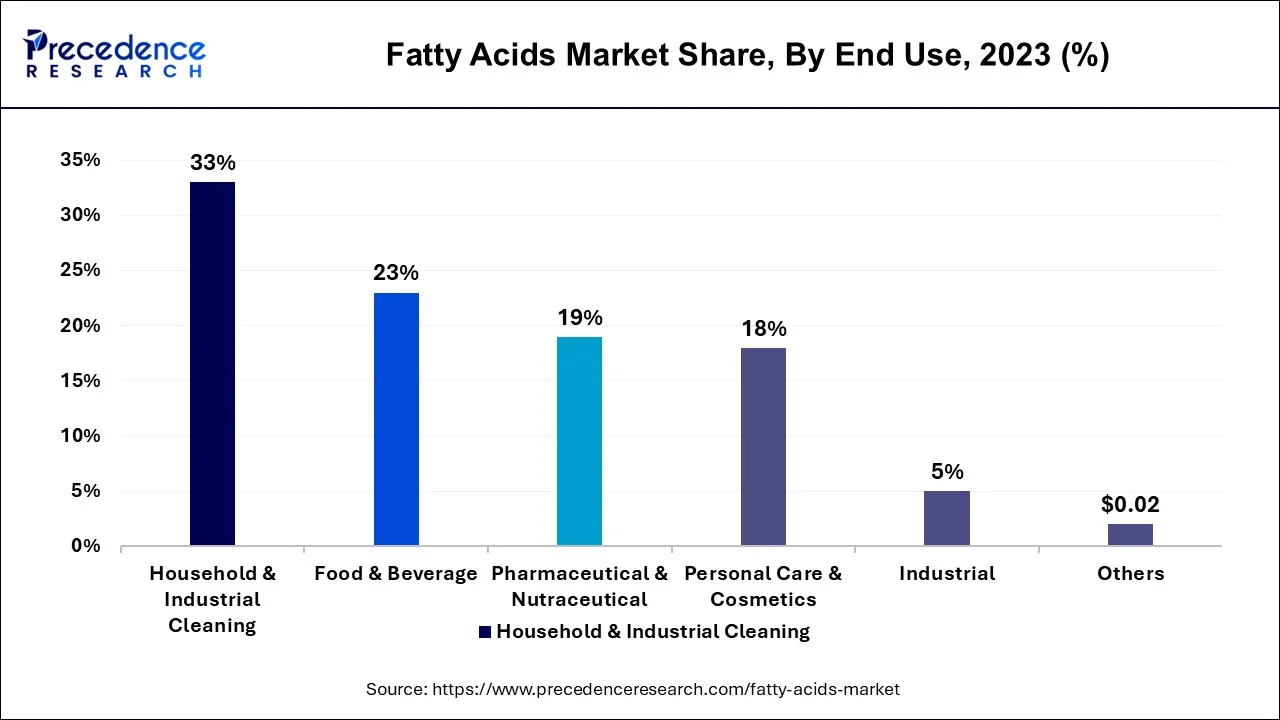
The high market share of the household & industrial cleaning end-use segment type can be attributed to exceptional properties such as antiviral, antifungal, and antibacterial. Fatty acids offer nutritional support for reducing body fat and enhancing lean muscle mass. Growing weight loss programs are anticipated to trigger the demand for fatty acids used in gym health products. Increasing awareness about a reduction in calorie intake among athletes and gym professionals in several nations including Italy, China, the U.S., and India is likely to propel the use of omega-3 in functional food products and sports supplements.
The food & beverage segment is expected to witness notable growth owing to rising applications for functional ingredients, emulsifiers and food processing. Fatty acids have a variety of applications in the food industry for texture, stability and processing qualities. The increasing demand for the consumption of specialty food ingredients is providing an opportunity for more high-purity fatty acid products.
The pharmaceutical & nutraceutical segment is expected to grow steadily, due to rising demand for fatty acids in drug formulation, supplements, and health-related products. Stearic acid and oleic acid are fatty acids that are used as excipients in pharmaceutical manufacture and as components of the formulation. The omega fatty acids have also emerged with significance in the fields of nutraceutics and dietary supplements.
The personal care & cosmetics segment is projected to witness stable growth during the forecast period as the demand for fatty acids grows in creams, lotions, soaps, shampoos, and other formulations. In cosmetic formulations, fatty acids are used for their emollent, moisturizing, thickening, and stabilizing effects. With skin care, hair care, and highhigh-qualitymetics products coming into the picture, there is an increased demand for specialty fatty acids.
Regional Insights
What is the Asia Pacific Fatty Acids Market Size?
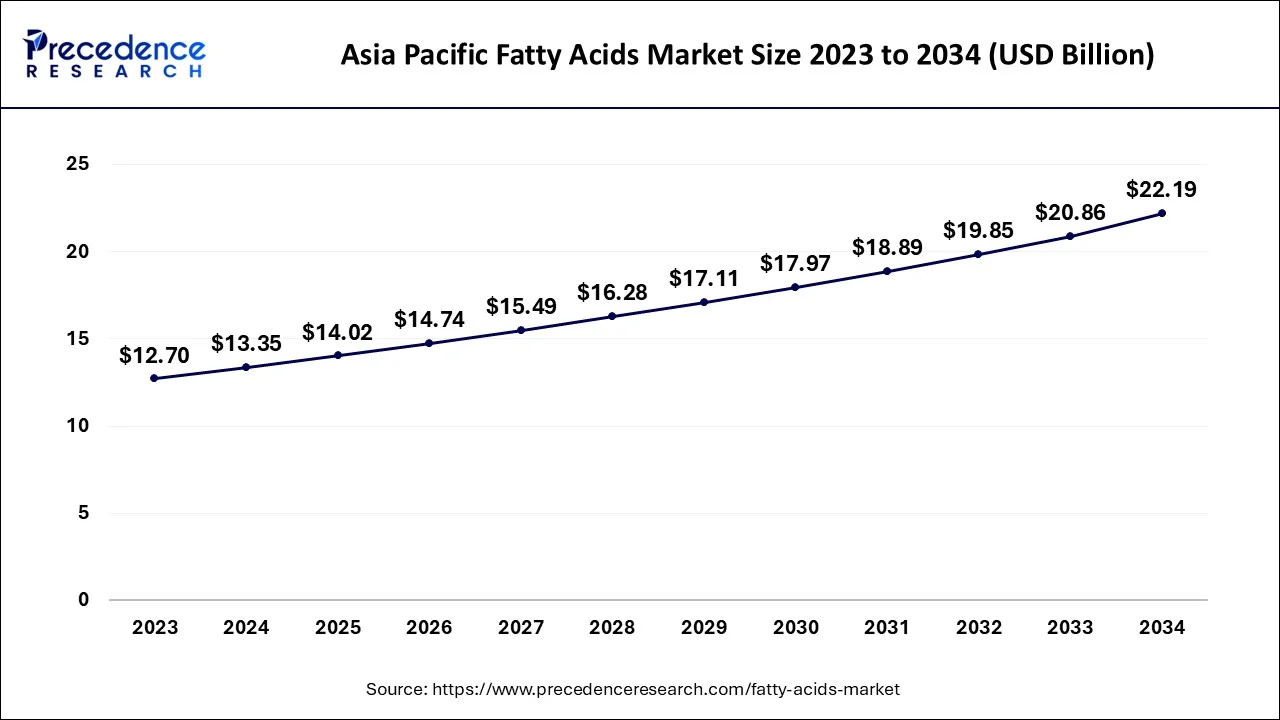
The Asia Pacific fatty acids market size reached USD 14.02 billion in 2025 and is predicted to be worth around USD 23.31 billion by 2035, growing at a CAGR of 5.22% between 2026 to 2035.
The fatty acids market is spread across North America, Europe, Asia Pacific (APAC), the Middle East and Africa, and Latin America. In 2024, North America held the largest revenue share in the fatty acids market. North America is the most developed continent owing to the presence of nations with early adoption of fatty acids products and high gross domestic product (GDP). The revenue in the food market in the United States is estimated to account for around $996.40 billion in 2023. The food market in the U.S. is predicted to grow at a compounded annual growth rate (CAGR) of 3.40%. Thus, the growing food industry is enhancing the opportunity for fatty acids across the North American region.
The increasing preference of people towards enhanced appearance is accelerating the demand for cosmetic products in the European region. The rising use of cosmetics among millennials is anticipated to support the fatty acids market expansion in the European Union (EU) region.
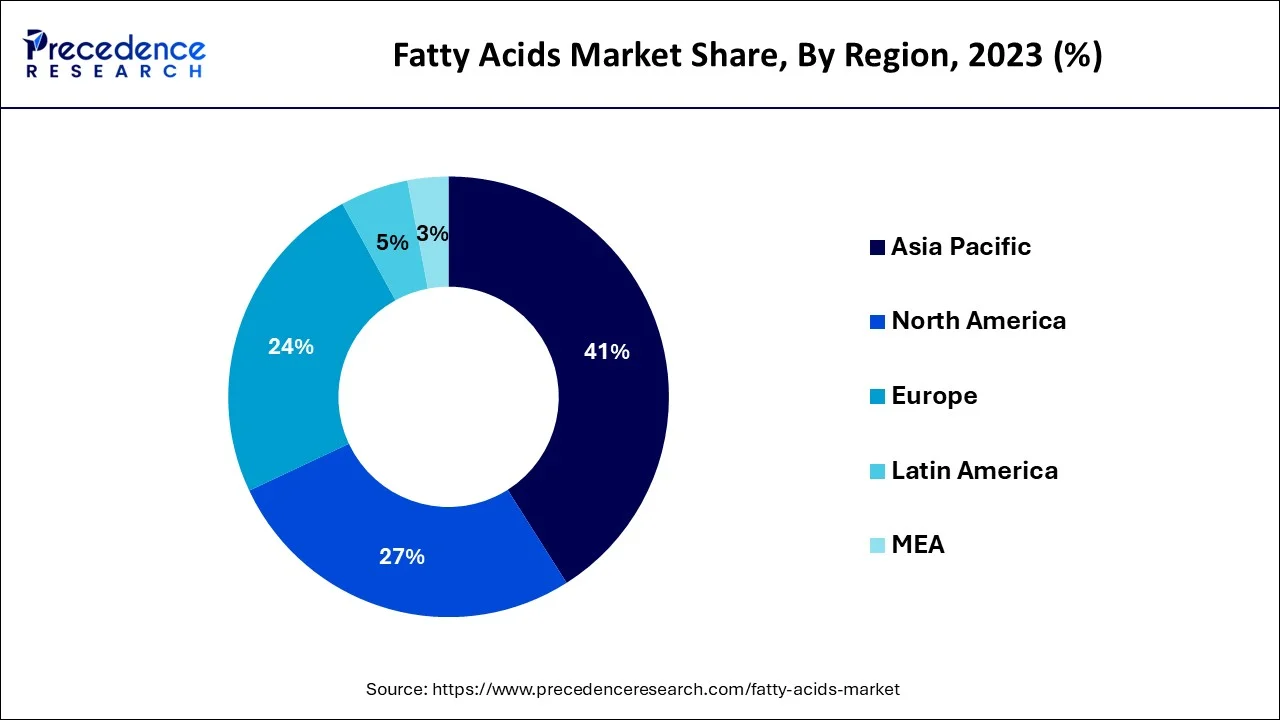
The Asia Pacific (APAC) region is experiencing notable industrial growth since the last few years. Fatty acids have significant use across industrial applications such as cosmetics, lubricants, and plastics. Owing to the presence of crucial raw material suppliers across the region, Asia Pacific (APAC) is considered to be a prominent market for fatty acids. The easy availability of raw materials combined with enormous industrial consumption is encouraging fatty acid producers to raise their production capacities across Asia Pacific (APAC).
Due to uncertainty, low literacy, and civil war in African nations, the fatty acids market in Africa is estimated to expand at a comparatively slow rate. Owing to high disposable income and well-developed infrastructure, the fatty acids market is anticipated to grow remarkably in the Middle East region in the coming years.
What are the Advancements in the Fatty Acids Industry in Europe?
Europe is expected to witness significant growth in the market, driven by the rising awareness of nutrition and preventive health. Countries such as Germany, the United Kingdom, and France are leading players. Strict EU regulations promoting clean-label and sustainable formulations are encouraging the adoption of plant-based and eco-friendly products. Additionally, the expansion of fortified foods and beverages creates various growth opportunities.
Germany Fatty Acids Market Trends
The country is witnessing an increasing focus on preventive healthcare, high purchasing power, and the presence of global supplement manufacturers, which is strengthening its position in the fatty acids market. Strong automotive and manufacturing sectors also support demand for fatty acids in lubricants, plasticizers, and specialty chemicals.
What are the Key Trends in the Fatty Acids Industry in Latin America?
Latin America is anticipated to witness substantial growth in the market. This growth is due to various factors such as growing health awareness, urbanization, and the rising prevalence of cardiovascular conditions. The region's expanding nutraceutical and dietary supplement industries strengthen growth and ensure steady adoption. Government initiatives promoting health and wellness further support market expansion, especially in Brazil and Mexico.
Brazil Fatty Acids Market Trends
The country is witnessing a rising demand from several end-use industries, including household cleaning, pharmaceutical, and food and beverages, thus expected to boost market adoption and consumption. Additionally, rising consumer interest in natural and eco-friendly products is encouraging innovation and adoption of greener fatty acid formulations.
How is the Middle East and Africa Region Growing in the Fatty Acids Industry?
The Middle East and Africa are expected to grow at a steady pace throughout the forecast period. The Gulf countries, especially Saudi Arabia and the United Arab Emirates, are seen to have rapid growth with strong demand. Furthermore, the region is supported by rising urban health awareness, rapid urbanization efforts, increasing disposable incomes, and a growing middle-class consumption.
Saudi Arabia Fatty Acids Market Trends
Shifting consumer preferences towards more natural, plant-based products, coupled with the rise in health consciousness and the increasing focus on renewable energy solutions helps propel the region's market landscape. Investments in local processing infrastructure and strategic partnerships with global suppliers are enhancing production capabilities and supply chain reliability.
Government Initiatives
United States
The Renewable Fuel Standard provides production incentives for renewable fuels and, as a result, demand for these feedstocks like animal fats and vegetable oils. USDA BioPreferred Program and the Inflation Reduction Act (IRA) also promote bio-products and low-carbon production.
Germany
Germany's National Bioeconomy Strategy suggests promoting renewable biological resources for making chemicals and promoting bio-based products. The push for circular economy and decarbonization programmes is promoting sustainable production all over the chemical sector.
China
The 14th Five-Year Plan supports green manufacturing, circular-economy manufacturing and bio-based material utilization in China. The transition to renewable energy and towards the development of low-carbon industrial processes are providing opportunities for sustainable fatty acid production.
India
The National Policy on Biofuels aims at R&D and utilization of alternative feedstock and less dependence on imports of biofuels for energy through more production of biofuels from fatty acids. The Bio-chemicals Market ecosystem continues to gain momentum following the promotion of renewable and waste feedstock projects.
Value Chain Analysis of the Fatty Acids Market
- Raw Material Sourcing
This stage deals with the sourcing of natural oil and fat feedstocks such as palm oil, palm kernel oil, coconut oil, soybean oil, and other animal fats.
Key Players: Bunge, Cargill, ADM - Manufacturing Process
In this stage, the raw materials undergo hydrolysis in order to break down the triglycerides into crude fatty acids and glycerin. They then undergo various processes to produce a variety of fatty acids.
Key Players: Wilmar, Oleon, Emery - Distribution Process
Here, the finished fatty acids are packed and distributed through bulk chemical supply agreements, specialty chemical distributors, or direct contracts.
Key Players: IMCD, Henkel, Unilever, Brenntag
Competitive Landscape
The fatty acids market is a competitive one featuring strong contenders such as Akzo Nobel, BASF SE, Ashland Inc., Eastman Chemical Company, and Dow. Companies are targeting product innovations, sustainability of feedstocks, production optimisation, and specialty fatty acid solutions to make an impact in the market. The rising demand for usage in food, personal care, pharmaceutical and industrial products is stimulating diversification of product offerings by manufacturers.
Capacity addition, strategic arrangement, acquisition and regional distribution networks are being leveraged to expand the market. Variation in feedstock costs, regulations and environmental concerns continue to be significant competitive pressures. Growing need for specialty fatty acids, bio-based chemicals, cosmetics, nutraceuticals, detergents, lubricants & biofuels is anticipated to further drive competition in the forecast period.
Fatty Acids Market Companies
- Akzo Nobel
- BASF SE
- Ashland Inc.
- Eastman Chemical Company
- DOW
- Croda International Plc
- Cargill Incorporated
- Oleon N.V.
- Vantage Specialty Chemicals
- Polaris
Investment Landscape
- In April 2026, IndianOil and Godrej Chemicals signed an MoU to co-develop and collaborate on Lubricant Additives to utilize the complementary technical expertise and Oleochemical competencies of IndianOil and Godrej Chemicals. The partnership goals are to produce value-added products for the lubricant industry. (Source: https://www.prnewswire.com)
- In July 2026, Godrej Agrovet launched the integrated oil palm plant with an investment of INR 300 crore in Telangana. The design of the seed-to-refinery process will reinforce the company's integrated value chain from oil palm and set a course for the future growth of the company. (Source: https://www.cargill.com)
- In March 2026, Cargill announced the investment of several million dollars in the new specialty fats production line in their Port Klang, Malaysia plant. It further extends its specialty fats food segment of business. (Source: https://godrejchemicalsbeta.azurewebsites.ne)
Collaboration Landscape
- In January 2026, Godrej Chemicals announced investment plans spanning over INR 750 crore in capacity additions across various divisions such as fatty alcohols, erucic acid, specialty products, glycerine, fermentation, and surfactants. (Source: https://godrejchemicalsbeta.azurewebsites.net)
Recent Developments
- In May 2024, Emery Oleochemicals partnered with LEHVOSS Functional Fluids to exclusively distribute its esters, polyols, carbon acids, and fatty acid products across Europe. The partnership is expected to expand Emery Oleochemicals' European distribution network and strengthen its market presence. (Source: https://www.lehvoss.de)
- In August 2022, Seraphina Therapeutics study discovered a new fatty acid, eyeing C15:0 supplement formulation. C15:0 is utilized by human bodies for making the 2nd-ever discovered full-acting endocannabinoid, known as PDC.
- In November 2022, Epax launched a long-chain monounsaturated fatty acid ingredient: Cetoleic 10. This ingredient consists cetoleic acid, an omega-11 marine lipid, and gondoic acid (omega-9). The extract is extracted from North Atlantic fish, which is lower in docosahexaenoic acid (DHA) and eicosapentaenoic acid (EPA).
Segments Covered in the Report
By Type
- Saturated
- Unsaturated
By Form
- Oil
- Powder
- Capsule
By End-use
- Household & Industrial Cleaning
- Food & Beverage
- Pharmaceutical & Nutraceutical
- Personal Care & Cosmetics
- Industrial
- Others
By Geography
- North America
- Europe
- Asia-Pacific
- Latin America
- Middle East and Africa
For inquiries regarding discounts, bulk purchases, or customization requests, please contact us at sales@precedenceresearch.com
Frequently Asked Questions
Tags





Ask For Sample
No cookie-cutter, only authentic analysis – take the 1st step to become a Precedence Research client
 Get a Sample




 sales@precedenceresearch.com
 Schedule a Meeting
