



Anthelmintic Drugs Market Size, Companies, Share, Patient Volume, Treatment Adoption Rates, Pricing Analysis, Regulatory Landscape, Competitive Positioning, and Demand Forecast
Anthelmintic Drugs Market (By Drug Class: Benzimidazoles (Albendazole, Mebendazole), Macrocyclic Lactones (Ivermectin, Moxidectin), Imidazothiazoles & Tetrahydropyrimidines (Levamisole, Pyrantel); By Application: Human Health, Veterinary Medicine; By Target Parasite: Nematodes (Roundworms), Cestodes (Tapeworms), Trematodes (Flukes); By Distribution Channel: Drug Stores & Retail Pharmacies, Hospital Pharmacies, Public Health Programs) - Global Industry Analysis, Size, Trends, Leading Companies, Regional Outlook, and Forecast 2026 to 2035
Source: https://www.precedenceresearch.com/anthelmintic-drugs-market
 Get a Sample
 Table Of Content


What is the Anthelmintic Drugs Market Size?
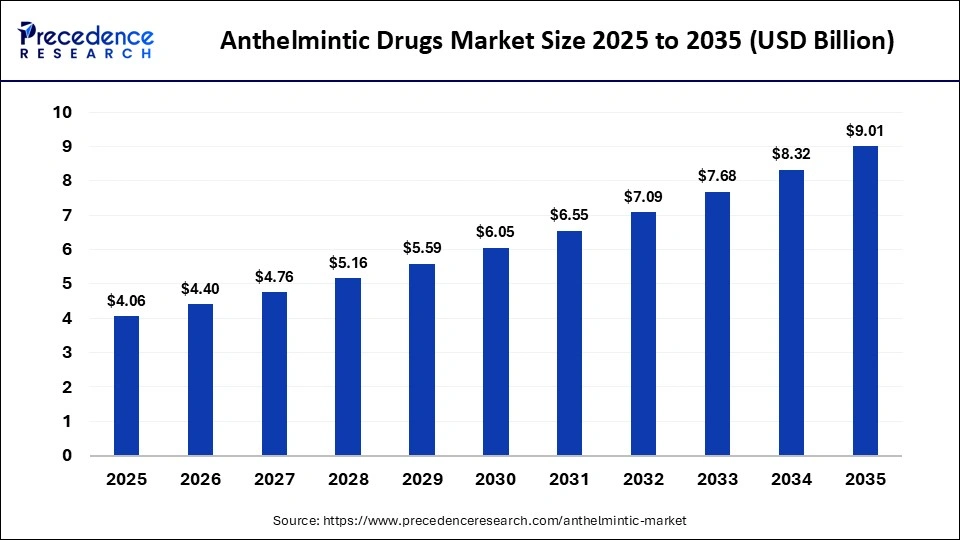
The global anthelmintic drugs market size was calculated at USD 4.06 billion in 2025 and is predicted to increase from USD 4.4 billion in 2026 to approximately USD 9.01 billion by 2035, expanding at a CAGR of 8.30% from 2026 to 2035.
Market Highlights
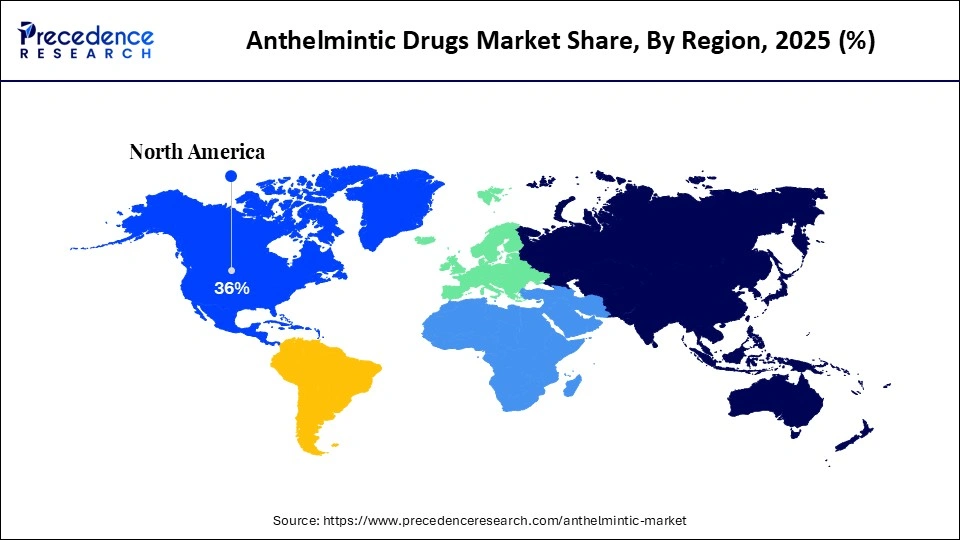
- North America dominated the market with the largest share of 36% in 2025.
- Asia Pacific is seen to grow at the fastest rate during the forecast period.
- By drug class, the Benzimidazoles held the largest share of 38% in the anthelmintic drugs market for year 2025.
- By drug class, the Macrocyclic lactones is observed to be the fastest growing segment during the forecast period.
- By application, the human health segment dominated the market with an approximate 55% share in 2025.
- By application, the veterinary medicine segment is expected to grow at the fastest rate during the forecast period.
- By distribution channel, the drug stores and retail pharmacies dominated with approximately 41% market share in 2025.
- By distribution channel, the segment, hospital pharmacies is the fastest-growing for foreseen period.
Market Overview
The anthelmintic drugs market encompasses pharmaceutical compounds specifically designed to prevent and treat parasitic worm infections in humans and animals. These drugs, including benzimidazoles, macrocyclic lactones, and imidazothiazoles, target a wide range of gastrointestinal and systemic parasites, addressing both clinical and veterinary needs. The market is driven by rising prevalence of parasitic diseases, expanding livestock farming, and growing awareness of preventive healthcare.
Anthelmintic drugs are distributed through pharmacies, hospital channels, and public health programs, supporting mass deworming initiatives and individualized treatments. Increasing investments in research and development, technological advancements in formulations, and government-led health initiatives are further fueling market growth globally. The market spans human health, veterinary medicine, and public health interventions, reflecting its broad and essential application.
Major Applications of Anthelmintic Drugs
- Treatment of Human Helminth Infections: Used to prevent and treat infections caused by intestinal worms such as roundworms, hookworms, whipworms, and tapeworms.
- Veterinary Medicine: Livestock Health Administered to cattle, sheep, goats, pigs, and poultry to control parasitic infestations, improve growth, and maintain productivity.
- Veterinary Medicine: Companion Animal: Used in dogs, cats, and other pets to treat and prevent worm infestations, ensuring pet health and wellbeing.
- Public Health Programs: Distributed in mass deworming campaigns in endemic regions to reduce parasitic disease prevalence and improve community health.
- Preventive Therapy: Applied as prophylactic treatment in both humans and animals to minimize risk of infection in high-risk populations.
- Research and Development: Used in pharmaceutical studies for testing new drug formulations, combination therapies, and resistance management strategies.
Technological Advancements in the Anthelmintic Drugs Market
Technological innovation is playing a key role in shaping the anthelmintic drugs market, improving efficacy, safety, and accessibility. Pharmaceutical companies are developing novel drug formulations, including combination therapies that target multiple parasitic species simultaneously, reducing treatment failures and resistance risks. Advanced drug delivery systems, such as sustained-release tablets, chewables, and injectables, are enhancing patient compliance and ensuring precise dosing in both humans and animals.
Anthelmintic Drugs Market Trends
- Growing Prevalence of Parasitic Diseases: Rising incidence of helminth infections in humans and animals continues to fuel demand for effective anthelmintic treatments globally.
- Shift Toward Combination Therapies: Combination drugs (e.g., multi‑active formulations) are gaining attention for broader efficacy, improved compliance, and reduced resistance risk.
- Increasing Veterinary Demand: Expansion of livestock farming and heightened focus on animal healthcare are driving adoption of anthelmintics in veterinary applications.
- Technological Advancements: Ongoing R&D in novel formulations, delivery mechanisms, and drug efficacy is enhancing treatment outcomes and expanding product pipelines.
- Public Health Programs: Government and NGO‑led mass deworming initiatives in endemic regions support sustained uptake, especially in low‑ and middle‑income countries.
Market Scope
| Report Coverage | Details |
| Market Size in 2025 | USD 4.06 Billion |
| Market Size in 2026 | USD 4.4 Billion |
| Market Size by 2035 | USD 9.01 Billion |
| Market Growth Rate from 2026 to 2035 | CAGR of 8.30% |
| Dominating Region | North America |
| Fastest Growing Region | Asia Pacific |
| Base Year | 2025 |
| Forecast Period | 2026 to 2035 |
| Segments Covered | Drug Class, Application, Target Parasite, Distribution Channel, and Region |
| Regions Covered | North America, Europe, Asia-Pacific, Latin America, and Middle East & Africa |
Segmental Insight
Drug Class Insight
Benzimidazoles held a dominant share of approximately 38% in the anthelmintic drugs market for year 2025. Their widespread use is driven by broad-spectrum efficacy against various parasitic infections, favorable safety profiles, and long-standing clinical acceptance. Albendazole and Mebendazole are preferred for both human and veterinary applications, supported by strong global availability and cost-effectiveness. The extensive use in mass deworming programs, especially in regions with high parasitic disease prevalence, reinforces their market dominance, making benzimidazoles a cornerstone of anthelmintic therapy worldwide.
Macrocyclic lactones is the fastest-growing drug class, experiencing rapid adoption due to increasing prevalence of parasitic infections and expanding therapeutic indications. These drugs, including Ivermectin and Moxidectin, are being increasingly used in both human and veterinary medicine. Technological advancements in drug formulations, rising awareness of parasite management, and growing government and public health initiatives are driving growth. Their high efficacy against resistant parasitic strains and broad application potential position macrocyclic lactones as a key growth driver in the global market.
Application Insight
The human health segment dominated the market with an approximate 55% share. This growth is fueled by the high prevalence of parasitic infections in both developed and developing countries. Increasing adoption of mass deworming programs, rising awareness about parasitic diseases, and government-supported healthcare initiatives drive demand. Human-targeted anthelmintic drugs play a critical role in reducing morbidity, enhancing quality of life, and preventing long-term complications, further solidifying this segment's dominance in the global market.
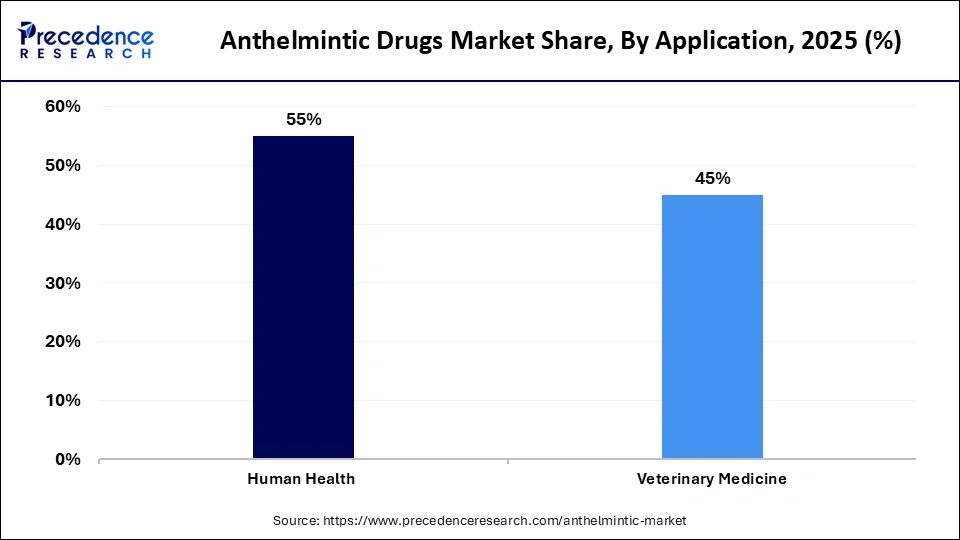
The veterinary medicine segment accounts for around 45% of the market and is the fastest-growing application area. Growth is supported by the rising livestock population, expanding companion animal care, and preventive healthcare initiatives in animals. Increasing awareness of animal health, productivity, and zoonotic disease prevention is encouraging the adoption of anthelmintic drugs in veterinary medicine. Technological advancements and formulation improvements are further accelerating the segment's growth in both emerging and mature markets.
Distribution Channel Insight
The drug stores and retail pharmacies dominated with approximately 41% market share in 2025, primarily due to their accessibility, convenience, and established trust among consumers. Over-the-counter availability of anthelmintic drugs and the ability to reach large patient populations support sustained growth in this channel. This segment benefits from strong supply chains, wide geographic coverage, and long-standing relationships with manufacturers and distributors.
Hospital pharmacies is the fastest-growing distribution channel, driven by increasing inpatient treatments, organized healthcare programs, and expansion of hospital infrastructure in emerging regions. Their growth is supported by rising awareness of proper dosing, therapeutic monitoring, and the increasing prevalence of hospital-administered anthelmintic therapies.
Regional Insight
How Big is the North America Anthelmintic Drugs Market Size?
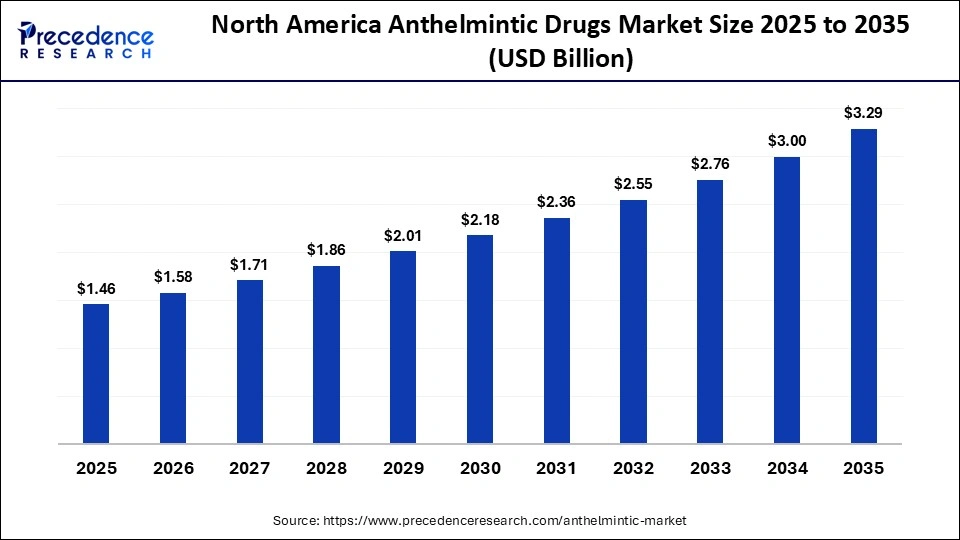
The North America anthelmintic drugs market size is estimated at USD 1.46 billion in 2025 and is projected to reach approximately USD 3.29 billion by 2035, with a 8.46% CAGR from 2026 to 2035.
North America Anthelmintic Drugs Market Trends
North America dominated the market with a 36% share, driven by advanced healthcare infrastructure, established regulatory frameworks, and high awareness of parasitic disease prevention and treatment. The presence of major pharmaceutical companies, organized healthcare delivery, and strong distribution networks further reinforce the region's market leadership.
In North America, the United States drives the majority of the market due to its advanced healthcare infrastructure, high awareness of parasitic infections, and well-established pharmaceutical distribution networks. Canada also contributes with growing government-led deworming initiatives and increasing adoption of veterinary anthelmintic products in livestock and companion animals. The presence of major pharmaceutical manufacturers and ongoing investments in R&D further strengthen market growth, supporting both human and veterinary applications across the region.
What is the Size of the U.S. Anthelmintic Drugs Market?
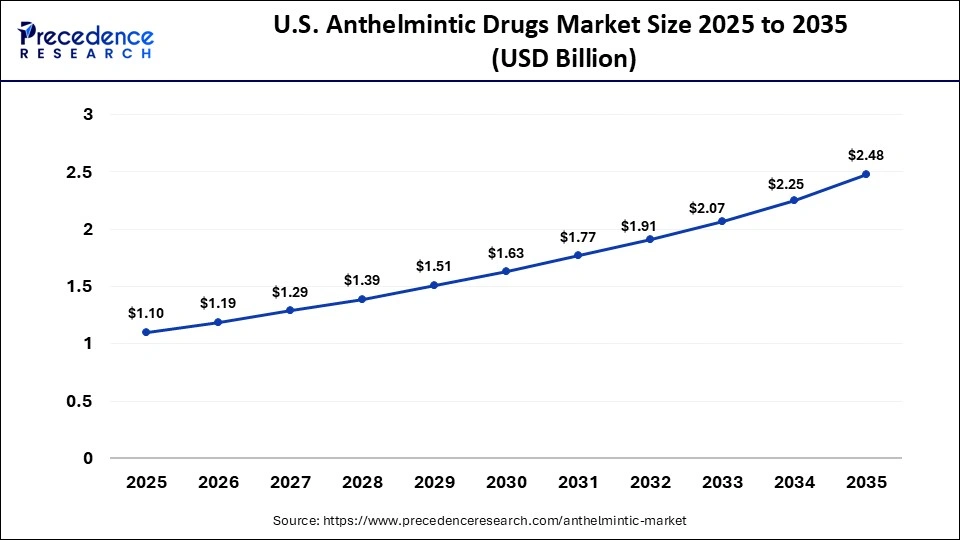
The U.S. anthelmintic drugs market size is calculated at USD 1.10 billion in 2025 and is expected to reach nearly USD 2.48 billion in 2035, accelerating at a strong CAGR of 8.47% between 2026 and 2035.
Country Level Analysis
The U.S., as the largest aviation market in the region, boasts a vast network of airports that continuously undergo upgrades to enhance efficiency and passenger experience. Canada and Mexico are also expanding their airport capacities to accommodate rising air traffic, with a focus on integrating advanced technologies and sustainable practices.
Asia Pacific Anthelmintic Drugs Market Trends:
Asia Pacific is the fastest-growing region with a CAGR of approximately 8.4%. Growth is fueled by increasing livestock farming, expansion of public health programs, rising awareness of parasitic infections, and improving healthcare infrastructure. Rapid economic growth, urbanization, and government initiatives supporting mass deworming are further accelerating the adoption of anthelmintic drugs in this region.
In Asia Pacific, India and China are key contributors to the fastest-growing market segment. Rising prevalence of parasitic infections, expanding livestock farming, and government-backed mass deworming programs in India drive strong demand for anthelmintic drugs. Similarly, China's growing awareness of animal health, modernization of veterinary practices, and urbanization are accelerating adoption. Emerging markets such as Vietnam, Indonesia, and Thailand are also witnessing increasing use of both human and veterinary anthelmintic therapies, supporting regional growth.
Europe Anthelmintic Drugs Market Trends
Europe represents a significant share of the global anthelmintic drugs market, driven by advanced healthcare infrastructure, high awareness of parasitic infections, and well-established veterinary and human healthcare systems. Increasing adoption of combination therapies, mass deworming programs, and preventive treatments in both humans and livestock is supporting market growth. Stringent regulatory frameworks, including EMA guidelines, ensure drug safety and quality, further strengthening market confidence. Additionally, rising demand for companion animal care and preventive veterinary healthcare, along with technological advancements in drug delivery systems, are expanding the market across key European countries such as the UK, France, and Italy.
Germany Anthelmintic Drugs Market Trends
Germany is a major contributor to Europe's anthelmintic drugs market, owing to its strong pharmaceutical industry, robust regulatory environment, and high healthcare expenditure. The country has seen rising adoption of both human and veterinary anthelmintic therapies, supported by preventive healthcare initiatives and livestock management programs. German pharmaceutical companies are increasingly investing in R&D to develop novel combination therapies and advanced drug formulations. Furthermore, the growing awareness of pet health, coupled with a strong veterinary services network, ensures steady demand for anthelmintic drugs, positioning Germany as a key market within the European region.
Latin America Anthelmintic Drugs Market Trends
Latin America is emerging as a high-growth region in the anthelmintic drugs market, driven by increasing prevalence of parasitic infections in both humans and livestock. Expansion of livestock farming, rising demand for preventive veterinary care, and government-led public health initiatives such as mass deworming programs are supporting market growth. The region also benefits from growing awareness of pet health and companion animal care. Countries like Mexico, Argentina, and Colombia are witnessing rising adoption of both human and veterinary anthelmintic drugs, while improvements in healthcare infrastructure and expanding pharmaceutical distribution networks further strengthen market penetration.
Brazil Anthelmintic Drugs Market Trends
Brazil is a key contributor to the Latin American anthelmintic drugs market due to its large livestock industry and high prevalence of parasitic infections in humans. Government-driven public health campaigns targeting intestinal worms and increasing adoption of veterinary anthelmintics in cattle, poultry, and swine are driving demand. The growing companion animal population and rising awareness of preventive pet healthcare are further supporting market growth. Additionally, domestic pharmaceutical manufacturers and multinational companies are investing in research and distribution, expanding access to advanced formulations, combination therapies, and innovative drug delivery systems across the country.
Middle East & Africa Anthelmintic Drugs Market Trends
The Middle East & Africa region represents a developing yet important market for anthelmintic drugs, driven by a high burden of parasitic infections and expanding livestock farming activities. Public health challenges related to soil-transmitted helminths and limited sanitation in parts of Africa continue to support strong demand for mass deworming programs. International organizations, governments, and NGOs play a crucial role in distributing anthelmintic drugs across endemic areas. In the Middle East, rising healthcare investments, improving veterinary services, and growing awareness of preventive treatment are contributing to steady market growth. Overall, increasing access to healthcare and expanding public health initiatives are expected to support long-term market expansion across the region.
United Arab Emirates (UAE) Anthelmintic Drugs Market Trends
The UAE is a key contributor within the Middle East anthelmintic drugs market, supported by a well-developed healthcare system and strong regulatory oversight. Demand is primarily driven by preventive treatment in human health, increasing companion animal ownership, and growing veterinary care standards. The country's focus on advanced healthcare infrastructure, disease prevention, and pharmaceutical imports supports consistent market growth.
Who are the Major Players in the Global Anthelmintic Drugs Market?
The major players in the anthelmintic drugs market include Novartis AG, Merck & Co., Inc., Zoetis Inc., Boehringer Ingelheim GmbH, Bayer AG, GlaxoSmithKline plc (GSK), Sanofi, Elanco Animal Health, Virbac S.A.
Recent Developments
- In October 2024, Elanco Animal Health received FDA approval for Credelio Quattro, a chewable canine parasiticide combining lotilaner, moxidectin, praziquantel, and pyrantel that provides broad protection against six parasites, marking a major product launch in veterinary anthelmintics.
- In January 2025, Ghana Health Service began large‑scale distribution of moxidectin in community treatment programs for onchocerciasis, following regulatory approval, representing a significant real‑world deployment of a key human anthelmintic drug.
- In September 2025, Elanco reported that Credelio Quattro hit blockbuster sales, exceeding $100 million in net sales less than eight months after launch, reflecting strong market adoption and commercial success.
- In July 2025, Medicines Development for Global Health announced regulatory clearance and launch of pilot moxidectin treatment programs in Ghana's Twifo Atti‑Morkwa district, advancing public health use of an anthelmintic product.
Segments Covered in the Report:
By Drug Class
- Benzimidazoles (Albendazole, Mebendazole)
- Macrocyclic Lactones (Ivermectin, Moxidectin)
- Imidazothiazoles & Tetrahydropyrimidines (Levamisole, Pyrantel).
By Application
- Human Health
- Veterinary Medicine
By Target Parasite
- Nematodes (Roundworms)
- Cestodes (Tapeworms)
- Trematodes (Flukes)
By Distribution Channel
- Drug Stores & Retail Pharmacies
- Hospital Pharmacies.
- Public Health Programs
By Region
- North America
- Asia Pacific
- Europe
- Latin America
- Middle East and Africa
For inquiries regarding discounts, bulk purchases, or customization requests, please contact us at sales@precedenceresearch.com
Frequently Asked Questions
Tags





Ask For Sample
No cookie-cutter, only authentic analysis – take the 1st step to become a Precedence Research client
 Get a Sample



 sales@precedenceresearch.com
 Schedule a Meeting
