



Artificial Pancreas Device System Market Size, Companies, Share, Patient Volume, Treatment Adoption Rates, Pricing Analysis, Regulatory Landscape, Competitive Positioning, and Demand Forecast
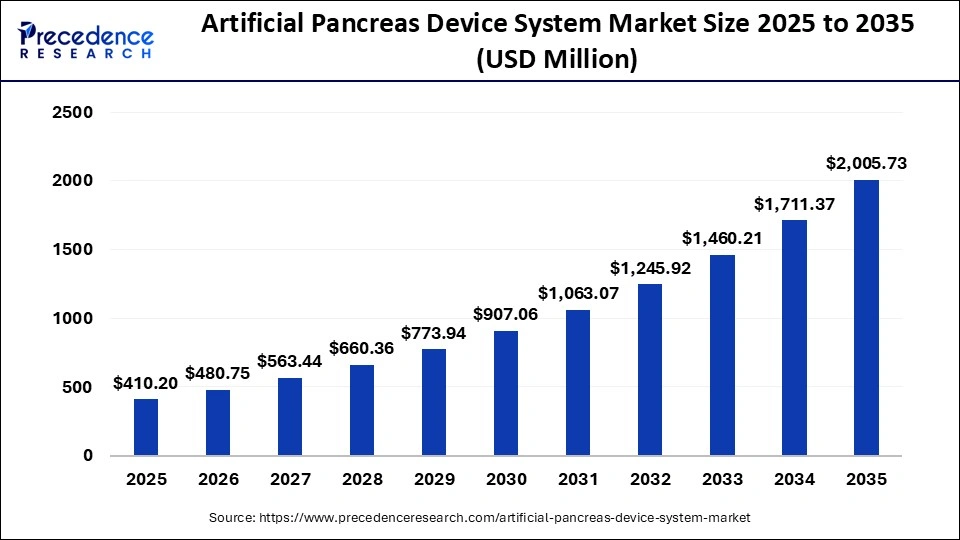
Rohan Patil, a Healthcare Industry Expert, highlights that the artificial pancreas device system market has reached USD 480.75 million in 2026 and is on track to reach USD 2,005.73 million by 2035, advancing at a CAGR of 17.20%. Key artificial pancreas device system market companies shaping the market include Medtronic, Insulet Corporation, Tandem Diabetes Care, Dexcom, Abbott Laboratories, while major growth segments span By Device Type, By Component, By Treatment Type, By End User, By Age Group, By Distribution Channel, By Connectivity and Integration, By Region.
Source: https://www.precedenceresearch.com/artificial-pancreas-device-system-market
 Get a Sample
 Table Of Content


What is the Artificial Pancreas Device System Market Size in 2026?
The global artificial pancreas device system market size was calculated at USD 410.20 million in 2025 and is predicted to increase from USD 480.75 million in 2026 to approximately USD 2,005.73 million by 2035, expanding at a CAGR of 17.20% from 2026 to 2035.The artificial pancreas device system is a paradigm shift in the treatment of diabetes and combines continuous glucose levels with automated insulin injection into the body to replicate pancreatic functions. With the increasing rate of diabetes across the world, there is a demand for accurate, real-time glucose control devices, which encourages the use of such systems.
Key Takeaways
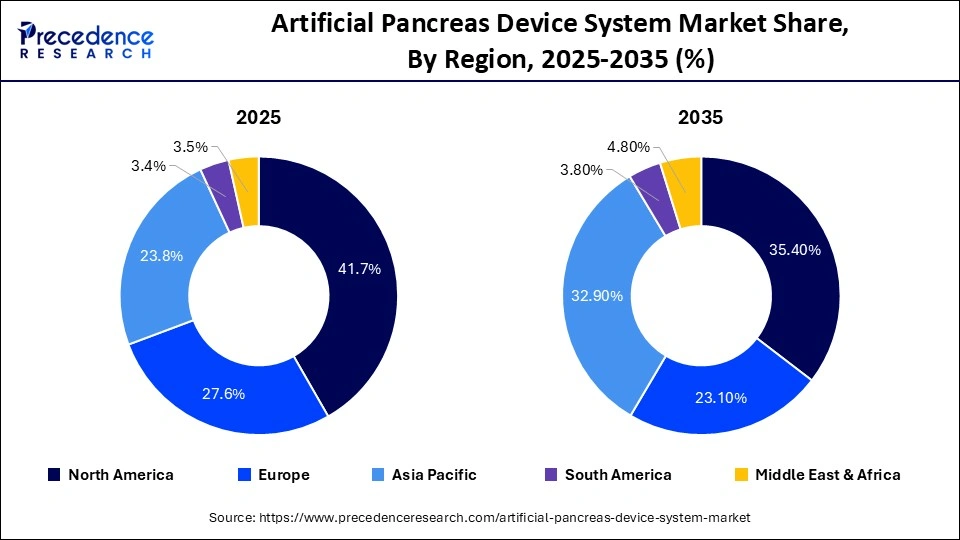
- North America dominated the global artificial pancreas device system market, holding a share of 41.7% in 2025.
- Asia-Pacific is expected to grow at the fastest CAGR in the market during the forecast period.
- By device type, the hybrid closed-loop systems segment held a dominant position in the market by holding a share of 38.4% in 2025.
- By device type, the fully closed-loop systems segment is expected to grow at the fastest CAGR of 19.4% in the market between 2026 and 2035.
- By component, the continuous glucose monitoring sensors segment led the global market by holding a share of 34.7% in 2025.
- By component, the control algorithms and software segment is expected to grow with the highest CAGR of 15.7% in the market during the studied years.
- By treatment type, the insulin-only systems segment held the largest market share of 86.8% in 2025.
- By treatment type, the bihormonal systems segment is expected to expand rapidly in the artificial pancreas device system market with a CAGR of 18.8% in the coming years.
- By end user, the home care settings segment contributed the biggest market share of 46.8% in 2025 and is expected to witness the fastest growth in the market with a CAGR of 12.7% over the forecast period.
- By age group, the adult patients segment registered its dominance over the market by holding a share of 58.7% in 2025.
- By age group, the pediatric patients segment is expected to gain the highest market share with a CAGR of 12.9% between 2026 and 2035.
- By distribution channel, the direct sales segment held a dominant market share of 41.6% in 2025.
- By distribution channel, the online pharmacies segment is expected to show the fastest growth with a CAGR of 15.9% over the forecast period.
- By connectivity and integration, the smartphone integrated systems segment accounted for the highest market share of 43.8% in 2025.
- By connectivity and integration, the cloud-connected systems segment is expected to account for the highest CAGR of 14.8% in the market during the predicted timeframe.
Unlocking Insights: A Dynamic Look at the Market Landscape
The artificial pancreas device system market is experiencing robust growth driven by the integration of medical technology with digital health and patient-centric care concepts. These systems substantially reduce the manual workload for glucose monitoring and insulin administration, thereby improving patient outcomes and quality of life. The market is expanding due to increased healthcare expenditure and the adoption of wearable technologies. Additionally, the growing adoption of personalized medicine and remote patient monitoring is further increasing the adoption of artificial pancreas systems worldwide.
What is the Role of AI in the Artificial Pancreas Device System?
The emergence of artificial intelligence (AI) is central to improving the artificial pancreas systems through predictive and adaptive provision of insulin. AI-based analytics predict changes and optimize insulin dosage based on real-time glucose data. Machine learning models are constantly being refined to be more accurate with the system, through learning patient-specific patterns, thereby improving glycemic control. Mobile integration and the use of cloud systems enable the exchange of data between patients and health providers without any difficulties. Moreover, AI-based decision support systems are enhancing patient safety by reducing the chances of hypoglycemia and hyperglycemia.
Artificial Pancreas Device System Market Trends
- Technological Advancements: Current advancements in sensor technology, insulin pumps, and wearable technologies are improving the accuracy of systems, their comfort, and usability. These improvements are rendering artificial pancreatic systems more stable and available.
- Hybrid Closed-Loop Systems: Hybrid closed-loop systems include automated insulin delivery systems with user feedback, and are becoming increasingly popular. They provide a compromise between automation and control, which is why they apply to a wider group of patients.
- AI and Data Integration: A combination of AI and improved data analytics is making it possible to treat patients in real-time and provide uniquely designed treatment plans. Such systems offer practical reporting, which enhances disease control.
- Homecare Focus: A positive change towards home-based diabetes management solutions is increasing due to the level of ease of use and affordability for patients. This trend is supported by artificial pancreatic systems that allow it to be continuously monitored outside of the clinic.
- Rising Prevalence of Diabetes: Increased prevalence of diabetes in the world is one of the driving forces behind the need to have sophisticated management solutions. This has been specifically so in the developing regions.
- Strategic Partnerships and Alliances: Businesses are becoming allies to improve product development, broaden market scope, and collaborate in complementary technologies. There are particularly noteworthy collaborations between medical device companies and digital health companies.
Market Scope
| Report Coverage | Details |
| Market Size in 2025 | USD 410.20 Million |
| Market Size in 2026 | USD 480.75 Million |
| Market Size by 2035 | USD 2005.73 Million |
| Market Growth Rate from 2026 to 2035 | CAGR of 17.20% |
| Dominating Region | North America |
| Fastest Growing Region | Asia-Pacific |
| Base Year | 2025 |
| Forecast Period | 2026 to 2035 |
| Segments Covered | Device Type, Component, Treatment Type, End User, Age Group , Distribution Channel, Connectivity and Integration, and Region |
| Regions Covered | North America, Europe, Asia-Pacific, Latin America, and Middle East & Africa |
Market Dynamics
Drivers
Increasing Diabetes Prevalence
The rising incidence of diabetes in the world is placing high expectations on high-technology and automated management systems. Insulin delivery systems and glucose monitoring devices are being constantly technologically innovated to improve the efficiency of treatment and results in patients. Also, the artificial pancreas systems are being adopted due to increasing awareness and favorable healthcare policies.
Restraint
High Cost
Artificial pancreas systems have significant barriers to their implementation, especially in low and middle-income areas due to the high prices of the systems. Reliability can be affected by technical difficulties, calibration of the device, sensor inaccuracy, malfunction of the system, etc. Moreover, some areas have low reimbursement policies that can limit access of patients to such sophisticated technologies.
Opportunity
Integration with Digital Tools
The development of digital health ecosystems opens massive prospects of incorporating artificial pancreas systems into telemedicine and remote monitoring systems. The new markets present an untapped potential with the growing healthcare spending and the growing awareness of diabetes. Also, the future innovation and adoption should be heavily influenced by the continuous development of fully automated closed-loop systems.
Segmental Insights
Device Type Insights
Which Device Type Segment Dominated the Artificial Pancreas Device System Market?
The hybrid closed-loop systems segment dominated the market with a share of 38.4% in 2025 because of their compromise in the insulin delivery between automation and user control. These systems are automatic systems that regulate the level of basal insulin and leave the user to add the dose at mealtime. They have a high level of clinical validation and regulatory approvals, which have increased their adoption among different patient groups. They are also more reliable and easier to use; hence, they are a favorite among healthcare providers and patients.
Artificial Pancreas Device System Market Share, By Device Type, 2025-2035 (%)
| Device Type | 2025 | 2035 |
| Threshold Suspend Systems | 14.6% | 8.3% |
| Predictive Low Glucose Suspend Systems | 21.7% | 15.6% |
| Hybrid Closed-Loop Systems | 38.4% | 34.2% |
| Advanced Hybrid Closed-Loop Systems | 18.6% | 23.7% |
| Fully Closed-Loop Systems | 6.7% | 18.2% |
The fully closed-loop systems segment is expected to show the fastest growth with a CAGR of 19.4% in the forecasted period, as these systems provide a fully automated insulin delivery experience. These systems are automatic and do not require manual intervention because the insulin is automatically adjusted depending on the effect of real-time glucose. They are being developed due to advancements in sensor accuracy and algorithm sophistication. These systems will be changing the way diabetes is managed as they continue to be brought nearer to commercial viability.
Component Insights
Artificial Pancreas Device System Market Share, By Component , 2025-2035 (%)
| Component | 2025 | 2035 |
| Continuous Glucose Monitoring Sensors | 34.7% | 32.4% |
| Insulin Pumps | 29.6% | 25.1% |
| Control Algorithms and Software | 14.3% | 22.6% |
| Infusion Sets and Consumables | 21.4% | 19.9% |
How the Continuous Glucose Monitoring Sensors Segment Dominated the Market?
The continuous glucose monitoring sensors segment accounted for the highest artificial pancreas device system market share of 34.7% in 2025 because they are needed for real-time tracking of glucose. Such sensors will deliver constant data, which will be used to deliver insulin accurately and turn the glycemic control into a better experience. Their higher accuracy and increased wear time are making them more convenient for patients. The frequent need to replace the sensors also makes this segment highly dominant.
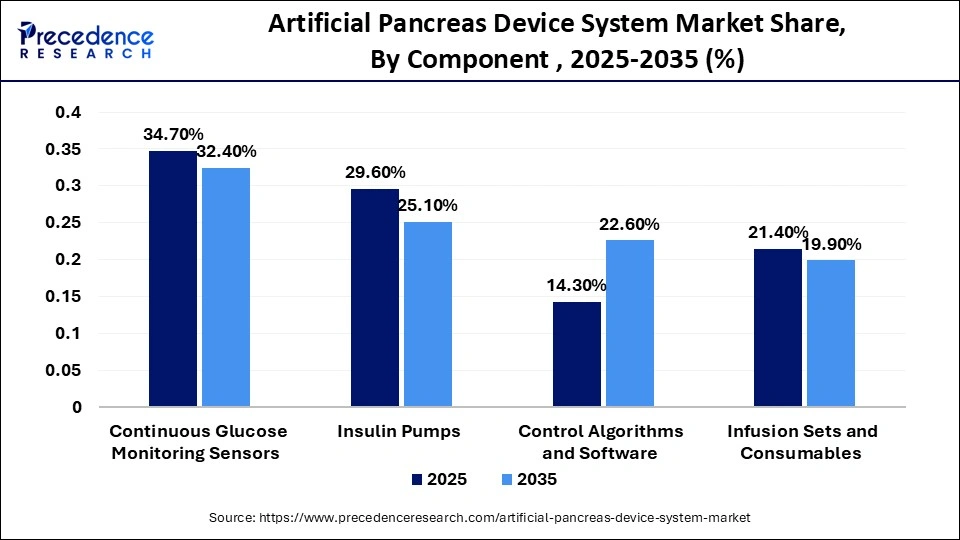
The control algorithms and software segment is expected to gain the highest market share with a CAGR of 15.7% between 2026 and 2035, which is enabled by the development of AI and data analytics. This type of system works with real-time information to optimize the dosing of insulin and enhance the outcomes of treatment. The ability to constantly update and learn improves the performance of the system with time. With the help of control algorithms and software, patients and healthcare providers can access patient data and suggest timely intervention.
Treatment Type Insights
Artificial Pancreas Device System Market Share, By Treatment Type, 2025-2035 (%)
| Treatment Type | 2025 | 2035 |
| Insulin-only Systems | 86.8% | 74.6% |
| Bihormonal Systems | 13.2% | 25.4% |
Why Did the Insulin-only Systems Segment Dominate the Market?
The insulin-only systems segment contributed the biggest revenue share of 86.8% in the artificial pancreas device system market in 2025 because insulin-only systems are simple, have a proven clinical application, and are accepted by regulatory bodies. These systems aim at providing insulin based on the levels of glucose so as to control most diabetes cases. Their high adoption is supported by the fact that they are highly available and compatible with the existing technologies.
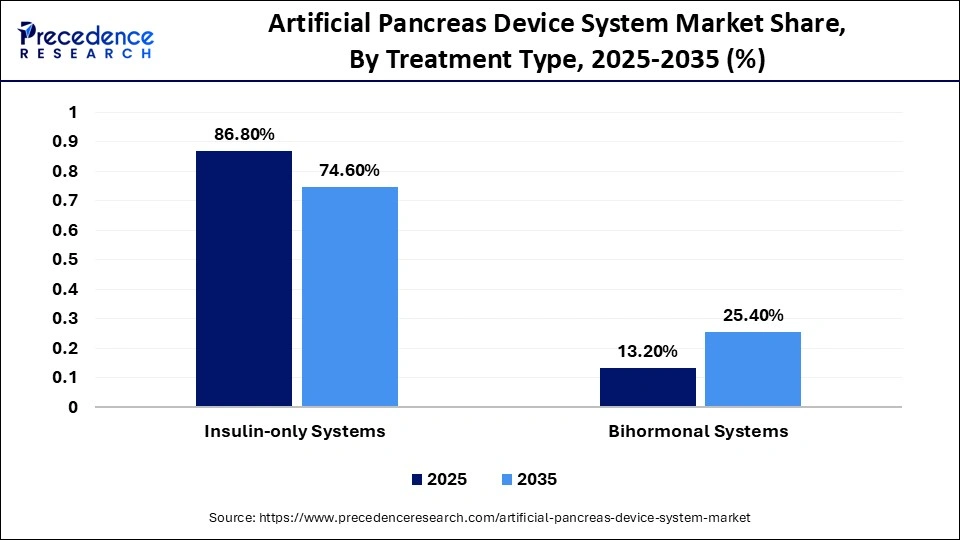
The bihormonal systems segment is expected to witness the fastest growth in the market with a CAGR of 18.8% over the forecast period because they combine insulin and glucagon to control the level of blood glucose. This dual-hormone system has a greater control level since it focuses on both hyperglycemia and hypoglycemia. They are still being developed and subjected to clinical trials to be commercialized.
End User Insights
Which End User Segment Led the Artificial Pancreas Device System Market?
The home care settings segment led the market with a share of 46.8% in 2025, and is expected to expand rapidly in the market with a CAGR of 12.7% in the coming years, as home care settings can enable the transition to patient-centric and decentralized healthcare. Pancreas systems can be kept constant and treated automatically in the natural setting, which is made possible by artificial pancreas systems. This saves time and increases patient convenience, eliminating the need for patients to visit the hospital regularly. The growing development of portable and advanced systems also contributes to the segment's growth.
Artificial Pancreas Device System Market Share, By End User, 2025-2035 (%)
| End User | 2025 | 2035 |
| Hospitals | 18.7% | 14.2% |
| Specialty Diabetes Clinics | 26.4% | 22.6% |
| Home Care Settings | 46.8% | 55.3% |
| Ambulatory Care Centers | 8.1% | 7.9% |
Age Group Insights
Artificial Pancreas Device System Market Share, By Age Group, 2025-2035 (%)
| Age Group | 2025 | 2035 |
| Pediatric Patients | 24.6% | 28.7% |
| adult Patients | 58.7% | 52.1% |
| Geriatric Patients | 16.7% | 19.2% |
What Made the Adult Patients Segment Dominate in the Market?
The adult patients segment held the largest revenue share of 58.7% in the artificial pancreas device system market in 2025, as adult patients have a high prevalence of diabetes. Adults tend to embrace mature technologies to have enhanced disease management and a quality of life. The existence of customized products for the adult consumer is another indicator of this segment. Moreover, the increased purchasing power leads to an increase in the rates of adoption.
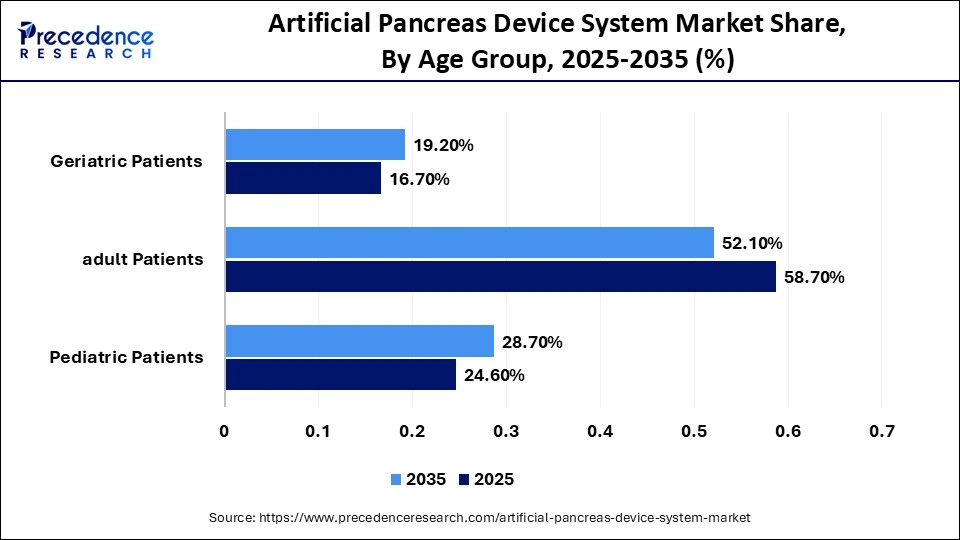
The pediatric patients segment is expected to grow with the highest CAGR of 12.9% in the market during the studied years, as more people are becoming aware of early diabetes treatment. Pediatric patients are more prone to type 1 diabetes and require advanced therapeutics to improve their quality of life. High-level systems give enhanced blood sugar management, eliminating risks posed by high and low blood sugar levels in children.
Distribution Channel Insights
Which Distribution Channel Segment Dominated the Market?
The direct sales segment registered its dominance over the global artificial pancreas device system market with a share of 41.6% in 2025 because manufacturers like to have close relations with healthcare providers and patients. This is a channel where the products are better trained, supported, and customized. It also helps companies to retain pricing and service quality control. This leadership is also supported by strong distribution networks.
Artificial Pancreas Device System Market Share, By Distribution Channel, 2025-2035 (%)
| Distribution Channel | 2025 | 2035 |
| Direct Sales | 41.6% | 35.2% |
| Retail Pharmacies | 21.3% | 18.6% |
| Online Pharmacies | 14.8% | 23.4% |
| Hospital Pharmacies | 22.3% | 22.8% |
The online pharmacies segment is expected to grow at the fastest CAGR of 15.9% in the market between 2026 and 2035, as digitalization in healthcare has been growing. They provide convenience, increased accessibility, and better pricing to the consumers. This is being facilitated by the increasing use of e-commerce websites through which artificial pancreas parts and supplies can now be accessed easily. This trend is especially intense in cities and areas with a high level of computer interconnection.
Connectivity and Integration Insights
Artificial Pancreas Device System Market Share, By Connectivity and Integration, 2025-2035 (%)
| Connectivity and Integration | 2025 | 2035 |
| Standalone Systems | 22.7% | 12.6% |
| smartphone Integrated Systems | 43.8% | 39.7% |
| cloud-connected Systems | 33.5% | 47.7% |
What Made the Smartphone-Integrated Systems Segment Dominate the Market?
The smartphone integrated systems segment held a dominant position in the artificial pancreas device system market with a share of 43.8% in 2025, as smartphones are being integrated into other devices. Through these systems, patients can track their glucose levels, receive notifications, and manage their insulin administration using mobile apps. Interaction with smartphones increases customer interaction and treatment compliance. This strategy is very effective due to the availability and familiarity of smartphones.
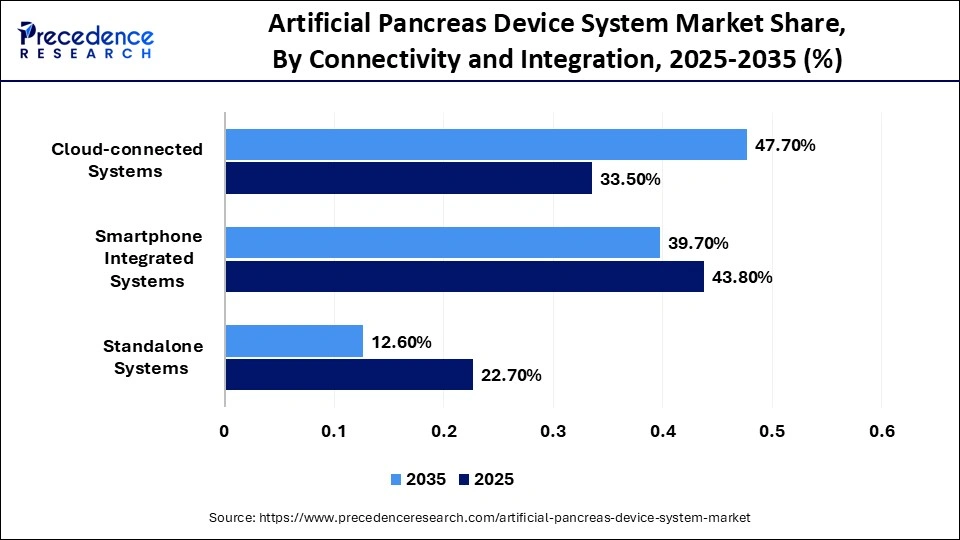
The cloud-connected systems segment is expected to grow steadily with a CAGR of 14.8% over the studied years, driven by the rising demand for remote monitoring and data sharing. With these systems, patients and healthcare providers can communicate in real time and help enhance treatment outcomes. A high level of analytics and data storage improves the process of decision-making and long-term disease management. With the increasing trend in the use of telehealth, cloud integration is gaining significance.
Regional Insights
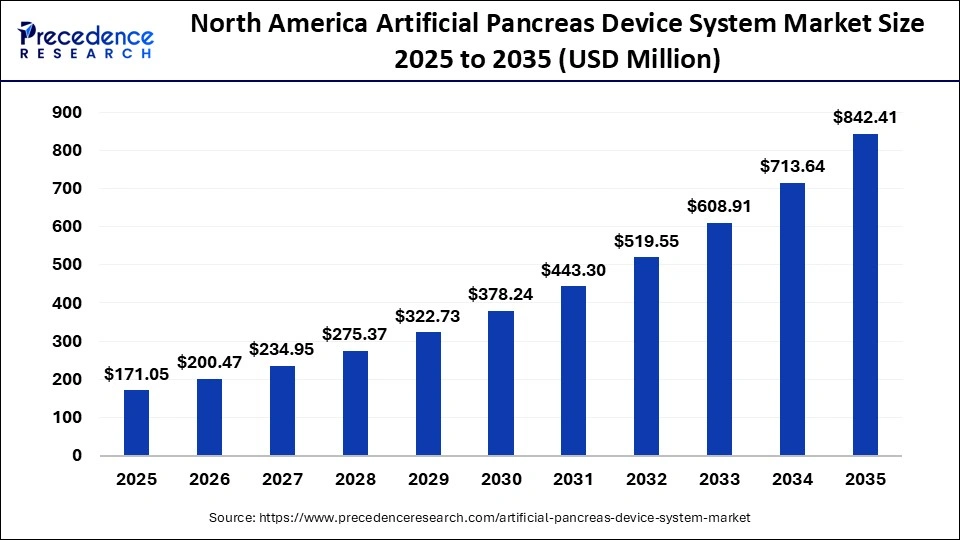
North America Artificial Pancreas Device System Market Size and Growth 2026 to 2035
The North America artificial pancreas device system market size is estimated at USD 171.05 million in 2025 and is projected to reach approximately USD 842.41 million by 2035, with a 17.28% CAGR from 2026 to 2035.
Why North America Dominated the Artificial Pancreas Device System Market?
North America held a major market share of 41.7% in 2025 because of its developed health care facilities and high level of adoption of innovative medical technologies. The area enjoys the advantages of good regulation and extensive investments in the field of diabetes care and research. The market is also reinforced by the existence of major medical equipment manufacturers and digital health pioneers. Furthermore, patients adopt it at a high rate due to high awareness rates and the availability of advanced forms of treatment. The rise in the prevalence of diabetes and an emphasis on patient outcomes are two factors that have arisen to support long-term growth.
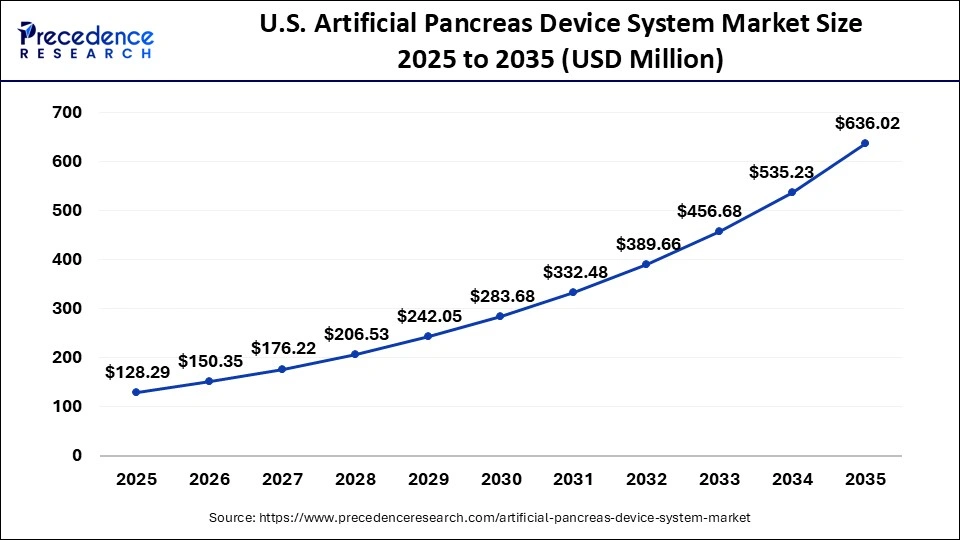
U.S. Artificial Pancreas Device System Market Size and Growth 2026 to 2035
The U.S. artificial pancreas device system market size is calculated at USD 128.29 million in 2025 and is expected to reach nearly USD 636.02 million in 2035, accelerating at a strong CAGR of 17.36% between 2026 and 2035.
Country-Level Analysis
The U.S. is the market leader because it has a high number of diabetics and a well-developed technological environment. Continuous glucose monitoring systems and insulin pumps have high usage in the country. Canada keeps playing its role in the development of the region through rising investments in health care and through government-facilitating programs. The U.S. continues to be an innovation and clinical research center in artificial pancreas technologies.
Why is Asia-Pacific the Fastest-Growing Region in the Market?
Asia-Pacific is expected to host the fastest-growing artificial pancreas device system market in the coming years, due to the increasing rate of diabetes and the rising awareness of healthcare. The reason behind the increased disease incidence is swift urbanization, alterations in lifestyles, and the ageing population. Governments are investing in health care facilities and encouraging modernized treatment methods in the region. They provide funding to support the development and deployment of advanced medical devices, enhancing accessibility and affordability for patients.
Country-Level Analysis
At the country level, China is the leader in the region because it has a substantial number of diabetic patients and a rapidly expanding healthcare system. India is becoming one of the major growth markets, and this has been spurred by the increase in awareness and use of high-technology medical equipment. Other major contributors include Japan and South Korea, with the support of technological advancements and good healthcare systems.
Artificial Pancreas Device System Market Value Chain Analysis
- R&D
The focus of research and development efforts is improving the accuracy of sensors, making the device smaller, and increasing the performance of the algorithm.
Key Players: Medtronic plc, Dexcom Inc., Insulet Corporation, and Tandem Diabetes Care
- Clinical Trials and Regulatory Approval
The effectiveness, safety, and dependability of artificial pancreatic systems are assessed through clinical trials. Regulatory approvals involve strict validation of the performance of equipment, especially when they are in actual field functions.
Key Players: Abbott Laboratories, Beta Bionics, and Sensorics Holdings
- Packaging and Sterilization
The process of artificial pancreas device safety and reliability depends critically on packaging and sterilization. Sensors, infusion sets, and cartridges are only required to be very sterile.
Key Players: Becton Dickson and Company, West Pharmaceutical Services, and Terumo Corporation
- Patient Support and Services
Patient support refers to guiding patients about the benefits and functions of artificial pancreas device systems and providing financial assistance.
Artificial Pancreas Device System Market Companies
- Medtronic
- Insulet Corporation
- Tandem Diabetes Care
- Dexcom
- Abbott Laboratories
- Beta Bionics
- Senseonics Holdings
- Roche Diabetes Care
- Ypsomed
- EOFlow
- Diabeloop
- Bigfoot Biomedical
- Cellnovo
- Novo Nordisk
- Eli Lilly and Company
Recent Developments
- In February 2026, Insulet launched its Omnipod 5 Automated Insulin Delivery System in the Middle East, aimed at transforming diabetes care. This innovative technology enhances patient management by integrating advanced features for real-time insulin administration. The system demonstrates strong glycemic outcomes by automatically adjusting insulin delivery every five minutes.(Source: https://www.biospectrumasia.com)
- In November 2025, Medtronic's MiniMed patch insulin pump received FDA breakthrough device designation, positioning the company to expedite product development. This innovative device aims to enhance diabetes management by providing patients with a less invasive, convenient option for insulin delivery, potentially improving adherence and overall treatment outcomes.(Source: https://www.drugdeliverybusiness.com)
Segments Covered in the Report
By Device Type
- Thresholds Suspend Systems
- Predictive Low Glucose Suspend Systems
- Hybrid Closed-Loop Systems
- Advanced Hybrid Closed-Loop Systems
- Fully Closed-Loop Systems
By Component
- Continuous Glucose Monitoring Sensors
- Insulin Pumps
- Control Algorithms and Software
- Infusion Sets and Consumables
By Treatment Type
- Insulin-only Systems
- Bihormonal Systems
By End User
- Hospitals
- Specialty Diabetes Clinics
- Home Care Settings
- Ambulatory Care Centers
By Age Group
- Pediatric Patients
- Adult Patients
- Geriatric Patients
By Distribution Channel
- Direct Sales
- Retail Pharmacies
- Online Pharmacies
- Hospital Pharmacies
By Connectivity and Integration
- Standalone Systems
- Smartphone Integrated Systems
- Cloud-connected Systems
By Region
- North America
- Latin America
- Europe
- Asia-pacific
- Middle and East Africa
For inquiries regarding discounts, bulk purchases, or customization requests, please contact us at sales@precedenceresearch.com
Frequently Asked Questions





Ask For Sample
No cookie-cutter, only authentic analysis – take the 1st step to become a Precedence Research client
 Get a Sample




 sales@precedenceresearch.com
 Schedule a Meeting
