



Asia Pacific Advanced Energy Materials Market Trends, Leading Companies, Company Revenue / Sales Performance, Installed Capacity, Production Output, Grid Expansion, Market Share, Technology Adoption, and Industry Outlook
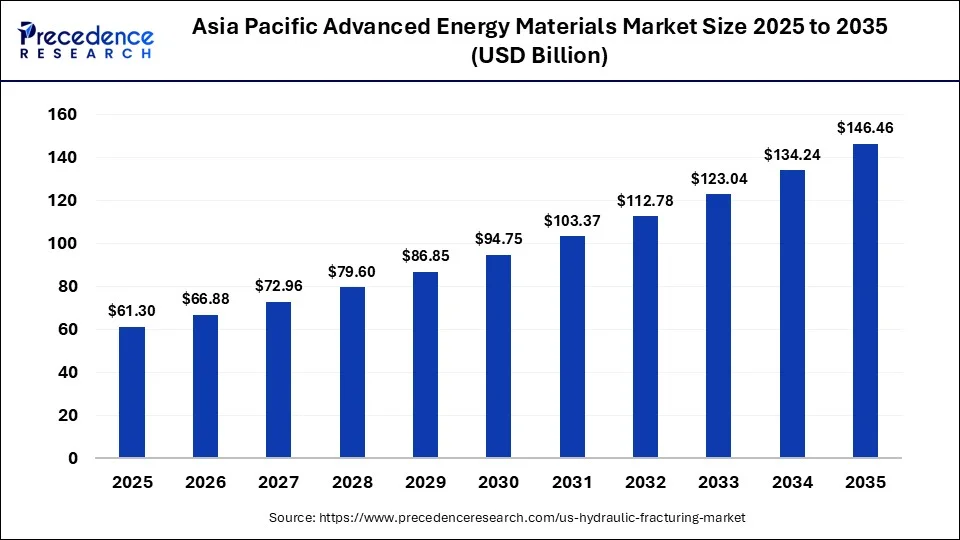
According to energy and power expert Laxmi Narayan, the Asia Pacific advanced energy materials market has reached USD 66.88 billion in 2026 and is expected to grow to USD 146.46 billion by 2035, registering a CAGR of 9.1%. The Asia Pacific advanced energy materials market with major opportunities emerging across by material type, by application, by technology, by end user, by country segments.
Source: https://www.precedenceresearch.com/asia-pacific-advanced-energy-materials-market
 Get a Sample
 Table Of Content


Asia Pacific Advanced Energy Materials Market Growth, Innovations, and Market Size Forecast 2035
The Asia Pacific advanced energy materials market is witnessing significant growth driven by the rising adoption of electric vehicles, battery storage, renewable energy, semiconductor manufacturing, hydrogen technologies, and industrial decarbonization. The Asia Pacific advanced energy materials market is forecasted to expand from USD 66.88 billion in 2026 to USD 146.46 billion by 2035, growing at a CAGR of 9.1% from 2026 to 2035. The report provides comprehensive insights into market size, growth forecasts, key material types, applications, emerging technologies, demand-supply dynamics, competitive landscape, manufacturing capacity, and investment opportunities. It examines battery materials, solar and photovoltaic materials, semiconductor and power-electronics materials, hydrogen and fuel-cell materials, and other advanced energy materials across China, Japan, India, South Korea, Australia, Taiwan, and Southeast Asia, highlighting technology advancements, supply-chain challenges, localization trends, and emerging growth opportunities through 2035.
Key Takeaways
- The Asia Pacific advanced energy materials market is projected to grow from USD 66.88 billion in 2026 to USD 146.46 billion by 2035, registering a 9.1% CAGR.
- The regional market is projected to approach USD 180-185 billion by 2033, implying an estimated 8.5-9.0% CAGR.
- The Asia Pacific lithium-ion battery-materials market was estimated at approximately in 2025 and is projected to exceed USD 74 billion by 2030, representing about a 14.6% CAGR.
- Asia Pacific energy-transition investment reached approximately USD 940 billion in 2023, representing more than 45% of global investment at that time.
- Global energy-transition investment reached approximately USD 2.3 trillion in 2025, with Asia Pacific accounting for approximately 47% of the global total.
- Battery materials represent the largest revenue pool, followed by solar/PV materials and semiconductor and power-electronics materials.
- LFP cathode and graphite/anode materials face greater oversupply risk, while high-nickel materials, lithium chemicals, advanced electrolytes, silicon-based anodes, and solid-state materials could face tighter supply.
- High-purity SiC/GaN semiconductor materials, solid-state battery materials, silicon-rich anodes, advanced electrolytes, and specialty hydrogen/fuel-cell catalysts command higher technical and pricing premiums due to stringent performance and qualification requirements.
Asia Pacific is Becoming the Core Manufacturing and Innovation Hub for Advanced Energy Materials
The Asia Pacific advanced energy materials market is estimated at approximately USD 61.30 billion in 2025, representing roughly 56% of the global market, and is projected to approach USD 180-185 billion by 2033, implying an estimated 8.5-9.0% CAGR. The region's scale is underpinned by its concentration across batteries, solar photovoltaics, semiconductors, hydrogen technologies, power electronics, critical-mineral processing and energy-storage manufacturing.
The market is structurally different from conventional specialty-materials markets, as demand is being created simultaneously by EV electrification, grid-scale storage, renewable generation, hydrogen production, semiconductor localization and industrial decarbonization. Battery materials remain the largest revenue pool, while high-performance materials for hydrogen, solid-state batteries, silicon carbide, advanced solar cells and next-generation energy conversion represent faster-expanding specialty opportunities.
China remains the dominant manufacturing center, while Japan and South Korea retain strong positions in high-performance materials, battery technologies and semiconductor inputs. India and Southeast Asia are increasingly important as governments seek localized supply chains. Southeast Asia, for example, is expanding its role in solar manufacturing and critical-mineral processing, while Indonesia has become a major nickel-processing hub.
Key Coverage
- 2033 opportunity approaching USD 180-185 billion
- Battery-related materials as the largest application pool
- China as the dominant production and consumption base
- India and Southeast Asia as emerging localization hubs
- High-growth opportunities in silicon carbide, solid-state batteries, hydrogen and advanced solar materials
- Market structure spanning commodity-scale materials and highly specialized engineered materials
Market Size & Forecast - Battery Electrification and Clean-Energy Manufacturing Expand the Regional Material Pool
The market is estimated to have expanded from approximately USD 66-70 billion in 2021 to about USD 66.88 billion in 2026, reflecting a high-single-digit growth trajectory. The base case indicates approximately USD 180 billion+ by 2033, creating an incremental revenue opportunity of nearly USD 85-90 billion during 2026-2035.
Battery materials account for a substantial portion of the opportunity, with the Asia Pacific lithium-ion battery-materials market alone estimated at approximately USD 37.5 billion in 2025 and projected to exceed USD 74 billion by 2030, equivalent to approximately 14.6% CAGR.
The report separates the broader advanced-materials opportunity into battery materials, solar materials, hydrogen or fuel-cell materials, semiconductor and power-electronics materials, nuclear materials, and other advanced energy applications, avoiding double counting across upstream and downstream markets.
Key Coverage
- 2021-2025 historical market development
- 2025-2033 revenue forecast
- Base, upside, and downside scenarios
- Revenue and volume contribution by material family
- Country-level market forecasts
- Incremental revenue opportunity
- Growth contribution by technology and application
Segmentation Analysis - Battery Materials Lead Scale, While Specialty Energy Materials Drive Value Growth
Battery materials represent the largest addressable segment, supported by EV production and stationary-storage deployment. The regional battery-materials market is increasingly shifting toward higher-nickel cathodes, LFP, silicon-enhanced anodes, advanced electrolytes, and recycling-derived materials, rather than simply expanding conventional material volumes.
Solar materials form another major pool, spanning polysilicon, wafers, cell materials, conductive materials, encapsulants and advanced photovoltaic materials. Semiconductor and power-electronics materials form a smaller but higher-value pool because material specifications become increasingly demanding at advanced nodes and in high-voltage applications.
Hydrogen and fuel-cell materials remain comparatively smaller but offer strong long-term growth potential through electrolyzer catalysts, membranes, bipolar plates and specialized coatings.
Key Coverage
- Material type and chemistry
- Battery cathode, anode and electrolyte materials
- Solar-grade materials
- Semiconductor and power-electronics materials
- Hydrogen and fuel-cell materials
- Nuclear and high-temperature materials
- Revenue, volume and CAGR by segment
- Largest, fastest-growing and emerging material categories
Market Dynamics - Energy Security Is Converting Materials Strategy into Industrial Policy
Asia Pacific's advanced-materials demand is being shaped by the intersection of energy transition and supply-chain security. Energy-transition investment in the region reached approximately USD 940 billion in 2023, representing more than 45% of the global total, while global energy-transition investment reached approximately USD 2.3 trillion in 2025. Asia Pacific accounted for approximately 47% of global investment in 2025.
The key growth drivers are EV penetration, battery-storage deployment, renewable-energy manufacturing, grid modernization, semiconductor localization, and critical-mineral processing. Countervailing pressures include commodity-price volatility, battery-material overcapacity, environmental permitting, water intensity, geopolitical fragmentation and technology substitution.
Key Coverage
- Quantified growth-driver impact
- Critical-material availability
- Technology substitution risks
- Manufacturing localization
- Raw-material volatility
- Capacity-overbuild risks
- Regional policy incentives
- Emerging white spaces
How Large is the Asia Pacific Advanced Energy Materials Market, and Where Will Future Growth Be Concentrated?
The Asia Pacific advanced energy materials market is estimated at approximately USD 94 billion in 2025 and is projected to approach USD 180-185 billion by 2033, representing an estimated 8.5- 9% CAGR. Asia Pacific accounts for roughly 56% of global demand, reflecting the region's concentration of battery manufacturing, solar production, semiconductor and power-electronics supply chains, and emerging hydrogen and energy-storage investments. Within this opportunity pool, battery materials represent the largest revenue segment, with the regional battery-materials market estimated at approximately USD 37.5 billion in 2025 and expected to exceed USD 74 billion by 2030, supported by rising electric-vehicle, energy-storage and battery-manufacturing capacity.
Our analysis indicates that market growth will be structurally uneven across material categories rather than being distributed proportionately across the overall market. Battery cathode and anode materials are positioned to capture a significant share of incremental demand, while advanced semiconductor materials, photovoltaic materials, hydrogen-related materials and high-purity specialty materials represent differentiated growth pockets. The underlying demand is also becoming increasingly linked to technology transitions, such as LFP and next-generation batteries, silicon-rich anodes, solid-state architectures, SiC/GaN power electronics and higher-efficiency solar technologies rather than simply expansion of conventional energy infrastructure.
In our view, the most significant strategic implication is that market attractiveness increasingly depends on the intersection of material growth, technology adoption and regional manufacturing economics. Large-volume commodity-oriented materials can provide scale but remain exposed to price cycles and capacity oversupply, whereas high-purity, performance-critical and application-qualified materials can offer stronger differentiation and potentially more resilient margins. Geographic segmentation is therefore equally important: China remains central to regional supply, while India, Japan, South Korea, Australia and Southeast Asia are becoming increasingly relevant for demand growth, localized manufacturing, critical-mineral processing and supply-chain diversification.
Where Are Demand-Supply Imbalances and Capacity Constraints Creating the Biggest Opportunities Across Asia Pacific Advanced Energy Materials?
Asia Pacific combines the world's largest concentration of advanced-energy-materials manufacturing with rapidly expanding downstream demand from batteries, electric vehicles, renewable power, energy storage, semiconductors, and hydrogen. The region represented approximately 56% of the global advanced energy materials market in 2025, while battery materials alone were estimated at around USD 37.5 billion. At the same time, supply remains geographically concentrated across selected countries and material-processing hubs, creating differences between headline regional capacity and locally available, qualified supply.
Our analysis indicates that the key supply-side issue is not simply whether sufficient capacity exists, but where that capacity is located, how efficiently it is utilized, and whether it matches the required material specification and technology. Large-scale capacity additions can create periods of oversupply in standardized materials, while high-purity, application-specific and technologically advanced materials may continue to face qualification constraints or localized shortages. Our assessment is that this divergence will become increasingly important as India, Southeast Asia, Japan and South Korea seek to strengthen domestic or regional supply chains while reducing excessive dependence on concentrated upstream and processing capacity.
In our view, the most significant strategic implication is that capacity expansion alone does not guarantee an attractive investment opportunity. The stronger opportunities are likely to emerge where demand growth, import dependence, technology requirements and available production capacity overlap. Companies therefore need to assess capacity utilization, planned additions, production economics, localization incentives and supply-chain concentration together rather than evaluating demand growth in isolation. This creates opportunities for regional manufacturing, processing, recycling, technology localization and strategic partnerships, while also exposing producers to risks from overcapacity, price pressure and underutilized assets.
Which Technology and Application Shifts Will Create the Next Major Growth Pools in Asia Pacific Advanced Energy Materials?
Asia Pacific's advanced energy materials demand is increasingly being shaped by technology transitions across electric vehicles, stationary energy storage, renewable generation, semiconductors, power electronics, and hydrogen. Battery materials already represent the largest identified market pool, with regional demand estimated at approximately USD 37.5 billion in 2025 and projected to exceed USD 74 billion by 2030. At the technology level, the transition toward LFP batteries, high-nickel chemistries, silicon-rich anodes, sodium-ion and solid-state architectures is changing the material intensity and specification requirements of batteries, while SiC/GaN power semiconductors, advanced photovoltaic architectures and hydrogen technologies are creating additional demand for high-performance materials.
Our analysis indicates that the most important technology opportunity is not necessarily the technology with the highest headline growth, but the technology capable of creating sustained demand for differentiated, performance-critical materials. Battery chemistry transitions can alter the mix of cathode, anode, electrolyte, and conductive materials required per unit of capacity, while advanced power electronics increase demand for materials capable of operating under higher temperature, voltage, and efficiency requirements. Our assessment is that commercialization stage, cost competitiveness, manufacturing scalability and material intensity will increasingly determine which emerging technologies translate into meaningful material revenue pools.
In our view, this creates a strategic shift from volume-led material growth toward technology-qualified material opportunities. Companies positioned early in materials required by emerging battery architectures, high-efficiency solar technologies, advanced semiconductors, hydrogen systems, and next-generation energy storage could gain access to higher-value applications, but must balance technology potential against commercialization timelines and qualification requirements. The key strategic question is therefore not simply which technologies will grow, but which technology-material combinations can achieve sufficient scale to create commercially addressable demand.
Which Competitive Capabilities Are Most Likely to Determine Leadership in Asia Pacific Advanced Energy Materials?
The competitive landscape is shaped by a combination of scale, technology depth, manufacturing capacity, vertical integration, geographic reach, and access to critical raw materials rather than market presence alone. Asia Pacific accounts for approximately 56% of the global advanced energy materials market, while battery materials represent an estimated USD 37.5 billion regional opportunity in 2025. Competitive differentiation therefore varies significantly by material and application: high-volume materials compete primarily on cost, scale, and supply security, whereas advanced and high-purity materials increasingly depend on qualification capabilities, process know-how, technology partnerships, and application-specific performance.
Our analysis indicates that competitive advantage is becoming increasingly multidimensional. Large production footprints can support lower unit economics and customer security, but excess capacity can simultaneously increase exposure to pricing pressure and utilization risk. Conversely, companies with smaller footprints may compete through specialized materials, proprietary processing technologies, higher-purity products, or strong positions in technically demanding applications. Our assessment is that vertical integration, from raw-material processing through advanced material production and downstream qualification, will remain an important differentiator, particularly where feedstock availability, quality consistency, and supply-chain resilience materially influence customer purchasing decisions.
In our view, the most significant strategic implication is that conventional revenue-based competitor comparisons can obscure where actual competitive strength resides. Companies should instead be evaluated across a consistent set of capabilities covering market exposure, product portfolio, capacity, utilization, technology, R&D intensity, geographic footprint, integration, customer relationships, cost position and strategic investments. This creates an opportunity to identify capability gaps, potential partnership areas, and competitive white spaces that may not be visible from headline market share alone.
Where Are the Highest-Value White-Space Opportunities Emerging Across the Asia Pacific Advanced Energy Materials Market?
The Asia Pacific advanced energy materials market is estimated at approximately in 2025 and is projected to reach around USD 180-185 billion by 2033, implying an estimated 8.5-9.0% CAGR and a substantial incremental revenue pool through 2033. However, this growth is unlikely to be distributed evenly. Battery materials currently represent the largest opportunity, with the regional market estimated at approximately in 2025 and expected to exceed USD 74 billion by 2030, while additional opportunities are emerging across advanced photovoltaic materials, semiconductor and power-electronics materials, hydrogen technologies, energy storage and high-purity specialty materials.
Our analysis indicates that the most attractive white spaces are likely to occur where strong demand growth intersects with supply-chain concentration, technology transition, or insufficient local production capability. This creates distinct opportunity pools across product, technology, application, and geography, including advanced battery chemistries, silicon-rich anodes, high-performance electrolytes, SiC or GaN materials, advanced solar architectures, hydrogen-related materials, recycling, and localized critical-material processing. Our assessment is that these opportunities should be evaluated not only by market size, but also by growth rate, import dependence, qualification barriers, technology maturity, competitive intensity, and the ability to achieve commercially viable scale.
In our view, the strategic implication is that white-space opportunities are increasingly shifting from simply “entering a growing market” toward solving specific supply, technology and localization gaps. India and Southeast Asia, for example, can represent opportunities where downstream energy-transition demand is expanding faster than established local material ecosystems, while mature manufacturing hubs may offer opportunities in higher-value, technically differentiated materials rather than additional commodity capacity. From our assessment, the strongest opportunities are therefore likely to combine structural demand growth with a defensible capability gap, rather than relying solely on attractive market CAGR.
How Will the Asia Pacific Advanced Energy Materials Market Evolve Through 2033, and Where Will Future Value Creation Be Concentrated?
The Asia Pacific advanced energy materials market is estimated at approximately in 2025 and is projected to reach around USD 180–185 billion by 2033, implying an estimated 8.5-9.0% CAGR. With the region representing roughly 56% of the global market, future expansion will remain closely linked to battery manufacturing, electric-vehicle adoption, renewable-power deployment, energy storage, semiconductor investment, and emerging hydrogen infrastructure. Battery materials are expected to remain a major growth pool, with the regional market estimated at approximately USD 37.5 billion in 2025 and projected to exceed USD 74 billion by 2030.
Our analysis indicates that the next phase of market growth will be characterized by a shift from broad volume expansion toward technology- and specification-driven value creation. Established materials are likely to continue generating substantial revenue through EVs, stationary storage and renewable-energy deployment, while emerging technologies, including silicon-rich and solid-state batteries, sodium-ion systems, advanced photovoltaic architectures, SiC/GaN power electronics and hydrogen technologies, could reshape the material mix. Our assessment is that the market's 8.5–9.0% base-case growth trajectory should therefore be interpreted as an aggregate outcome masking significantly different growth rates across materials, applications and countries.
In our view, the most significant strategic implication is that future competitiveness will increasingly depend on selecting the right technology-material combinations and geographic markets rather than simply pursuing overall market growth. An upside scenario could emerge if next-generation batteries, hydrogen, advanced solar, and supply-chain localization accelerate faster than anticipated, while downside risks include prolonged material overcapacity, pricing pressure, slower technology commercialization, and delayed infrastructure investment. This creates opportunities for companies that can combine high-purity or differentiated materials, scalable manufacturing, supply-chain security, and early access to emerging applications.
Asia Pacific Advanced Energy Materials Market Segments Covered in the Report
By Material Type
- Battery Materials
- Solar & Photovoltaic Materials
- Semiconductor & Power Electronics Materials
- Hydrogen & Fuel Cell Materials
- Energy Storage Materials
- Nuclear & Advanced Reactor Materials
- Thermal Management Materials
- Other Advanced Energy Materials
By Application
- Electric Vehicles
- Stationary Energy Storage
- Solar Power Generation
- Wind Power
- Power Electronics & Grid Infrastructure
- Semiconductors
- Hydrogen Production & Storage
- Fuel Cells
- Consumer Electronics
- Other Energy Applications
By Technology
- Conventional/Commercialized Technologies
- Advanced Lithium-Ion
- Sodium-Ion
- Solid-State
- Silicon-Rich Anodes
- SiC/GaN
- Perovskite/Tandem Solar
- Advanced Electrolyzers
- Other Emerging Technologies
By End User
- Battery & Energy Storage Manufacturers
- Automotive OEMs
- Renewable Energy Developers
- Semiconductor Manufacturers
- Power Electronics Manufacturers
- Hydrogen/Fuel Cell Companies
- Utilities & Grid Operators
- Industrial Manufacturers
By Country
- China
- Japan
- India
- South Korea
- Australia
- Southeast Asia
- Taiwan
- Rest of Asia Pacific
For inquiries regarding discounts, bulk purchases, or customization requests, please contact us at sales@precedenceresearch.com
Frequently Asked Questions





Ask For Sample
No cookie-cutter, only authentic analysis – take the 1st step to become a Precedence Research client
 Get a Sample




 sales@precedenceresearch.com
 Schedule a Meeting
