



Automotive Fuel Cell Market Revenue, Leading Companies, Company Production Capacity, Manufacturing Efficiency, Vehicle Sales Trends, Distribution Network, Production Volume, Company Market Share, and Growth Forecast
Automotive Fuel Cell Market (By Type: PEMFC, PAFC, Others; By Power Rating: Below 100 kW, 100 – 200 kW, Above 200 kW; By Vehicles: Passenger Vehicles, Light Commercial Vehicles (LCVs), Bus, Trucks) - Global Industry Analysis, Size, Trends, Leading Companies, Regional Outlook, and Forecast 2026 to 2035
Source: https://www.precedenceresearch.com/automotive-fuel-cell-market
 Get a Sample
 Table Of Content


What is the Automotive Fuel Cell Market Size?
The global automotive fuel cell market size is valued at USD 10.08 billion in 2025 and is predicted to increase from USD 14.29 billion in 2026 to approximately USD 289.49 billion by 2035, expanding at a CAGR of 39.90% from 2026 to 2035. The increasing advancement in fuel cell technology and the government support over the zero carbon emission policies drives the growth of the market.
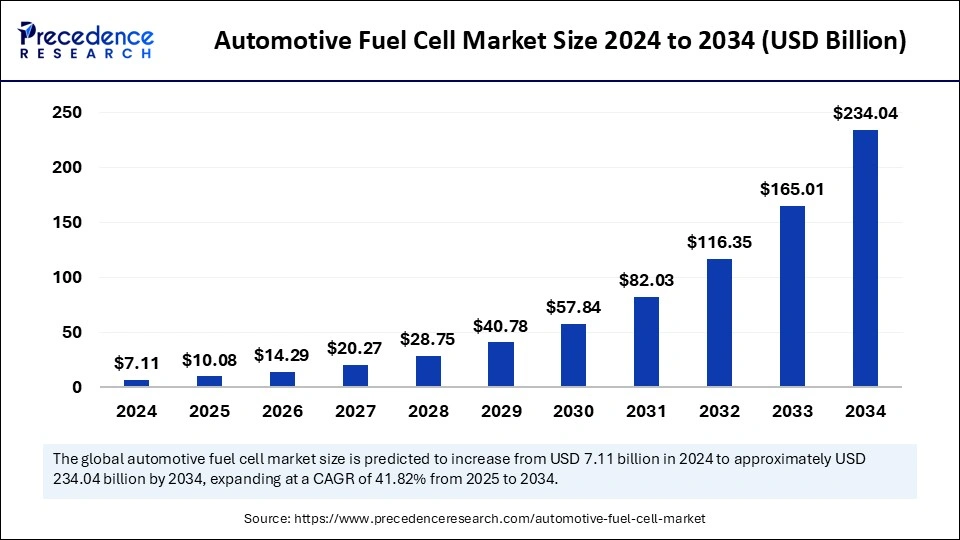
Automotive Fuel Cell Market Key Takeaways
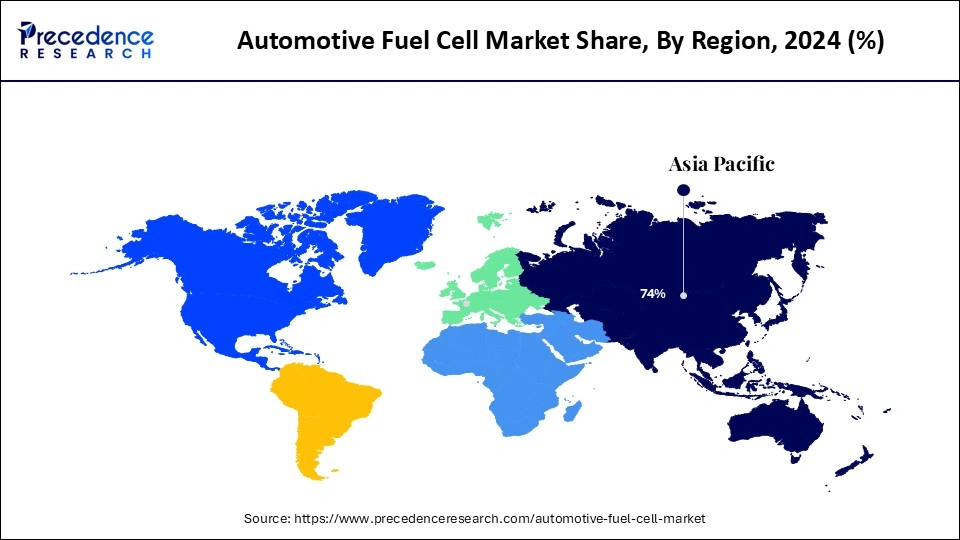
- Asia Pacific dominated the global market with the largest market share of 74% in 2025.
- North America is expecting substantial growth during the forecast period.
- By type, the PEMFC segment contributed the highest market share in 2025.
- By type, the PAFC segment expects notable growth during the forecast period.
- By power rating, the below 100 kW rated FC systems segment captured the biggest market share in 2025.
- By power rating, the 100 - 200 kW segment expects substantial growth in the market during the predicted period.
- By vehicles, the passenger vehicles segment generated the major market share in 2025.
- By vehicles, the buses segment expects significant growth during the predicted period.
Market Overview
Automotive fuel cells are the hydrogen power electric generation system that is deployed in electric cars as the advancement in the automotive industry. Hydrogen is one of the highly available elements on earth which is used in the automotive technologies for power generation. The fuel cell vehicle helps in lowering carbon emission by minimizing fossil fuel dependencies. The increasing awareness about the carbon emission on the environment is accelerating the growth of the market.
Artificial Intelligence (AI) Impact on the Automotive Fuel Cell Market?
The integration of artificial intelligence into the fuel cell technology for enhancing its performance, energy management, efficiency, and sustainability. The deployment helps in addressing the challenges associated with the automotive sector. AI technology optimizes resource utilization and energy management. AI promotes the eco-friendly driving approach with reducing the negative environmental impact.
- In February 2025, XPENG, a Chinese based global-orientated high-tech automotive company announced its entry to the United Kingdom with the launched the ultra-smart all-electric mid-size coupe SUV, XPENG G6, it is the first right-hand drive model pre-sale.
Automotive Fuel Cell Market Growth Factors
- Demand for the automotive industry: The increasing global population and the disposable income in the people inclined towards the increasing demand for luxury and lifestyle upgradation which accelerate the growth of the automotive industry.
- Awareness regarding the environment: The rising awareness regarding environmental pollution due to the increasing number of fuel-based vehicles which emits higher carbon into the environment drives the demand for the environment friendly solution drives the growth of the hydrogen fueled vehicles and accelerate the growth of the market.
- Government intervention: The rising government intervention on reducing the carbon emission from environment and the policies and subsidies implementing contributing to the expansion of the electric or fuel cell vehicles that further contributed in the growth of the automotive fuel cell market
Automotive fuel cell market outlook
- Industry Growth Overview: Between 2025 and 2030, this market is expected to rise significantly due to the rising demand for eco-friendly vehicles coupled with rapid investment by market players for developing a wide range of automotive batteries.
- Major Investors: Numerous market players are actively entering this market, drawn by partnerships, R&D and business expansions. Several battery manufacturers such as Horizon Fuel Cell Technologies, Nedstack Fuel Cell Technology, AVL, and some others have started investing rapidly developing high-quality fuel-cells for the automotive sector.
- Startup Ecosystem: Various startup brands are engaged in manufacturing fuel cells for the automotive sector. The prominent startup companies dealing in automotive fuel cells consists of Hyzon Motors, ZeroAvia, Loop Energy and some others.
Market Scope
| Report Coverage | Details |
| Market Size by 2035 | USD 289.49 Billion |
| Market Size in 2025 | USD 10.08 Billion |
| Market Size in 2026 | USD 14.29 Billion |
| Market Growth Rate from 2026 to 2035 | CAGR of 39.90% |
| Leading Region/ Dominated Region | Asia Pacific |
| Fastest Growing Market | North America |
| Base Year | 2025 |
| Forecast Period | 2026 to 2035 |
| Segments Covered | Type, Power Ratings, Vehicles and Regions |
| Regions Covered | North America, Europe, Asia-Pacific, Latin America and Middle East & Africa |
Market Dynamics
Driver
Benefits associated with the fuel cell
The rising adaptation of the fuel cell technology in the automobile owing to the benefits associated with the hydrogen gases over the other sources. Hydrogen is abundantly available on the earth, its affordability, limitless availability, and sustainability make it ideal for mitigating zero-carbon integrated demand for power and heat. Water and heat are the only by-product of hydrogen thus it is the cleaner form of energy that does not emit any type of environment polluting element, it has the greater productive capacity per kilogram of fuel. Other than that, it minimizes carbon residues, reduces sound pollution, visual pollution, and other advantages make it ideal for the different automotive applications that drive the growth of the automotive fuel cell market.
Restraint
Cost of energy
The increased cost of hydrogen energy as compared to other resources like solar energy limits the adoption of fuel cells. Additionally, hydrogen is a highly flammable fuel which apparently creates the hazardous conditions that collectively restraining the growth of the automotive fuel cell market.
Opportunity
Evaluation of electric vehicles
The advancements in the automotive industry with the rising demand for the low carbon emitting vehicles like electric and hybrid electric vehicles drive the demand for the fuel cell into the automotive fuel cell market. Fuel cell cars are the electric cars in which the hydrogen is reacting electrochemically for electricity generation into the cars. The hydrogen fuel cell electric cars offer several advantages including instant torque and smooth consistent power, high technology, faster refueling, low maintenance, zero carbon emission, high range, and attractive discounts on pricing with free fuel/maintenance. All these advancements attract consumers towards electric vehicles which contributes in the growth of the market.
Segment Insights
Type Insights
The PEMFC segment led the global automotive fuel cell market in 2025. The PEMFC is also known as the polymer electrolyte membrane fuel cells that provide several advantages in the vehicle. It provides high-power density and offers volume and weight compared to the other fuel cells. Polymer electrolyte membrane fuel cells are mainly used in a wide range of transportation applications like buses, cars, and heavy-duty commercial vehicles. It is also used in some of the stationary applications. It is considered as one of the ideal fuel cells for the different transportation applications due to the faster start-time, reduce operational temperature, increased efficiency, safer and easy handling.
The PAFC segment expects notable growth in the market during the forecast period. The PAFC which also referred to as phosphoric acid fuel cells using liquid phosphoric acid as an electrolyte. It is also known as the first generation of modern fuel cells. These types of fuel cells are used in commercial and private vehicles. The PAFC is mostly used in large commercial vehicles and stationary power generating applications.
Power Rating Insights
The below 100 kW rated FC systems segment dominated the automotive fuel cell market in 2025. The increasing demand for lightweight vehicles and the expansion of electric vehicles in the automotive industry is driving the demand for the below 100 kW rated FC system. The rising consumer demand for private vehicles for personal consumption boosts the demand for the 100 kw rated FC system segment.
The 100 – 200 kW segment expects substantial growth in the market during the predicted period. The rising adoption of the fuel cell from the heavy weight commercial vehicle as the replacement of old fleet. The fuel cell in the heavy weight commercial vehicle helps in addressing the challenges associated with the carbon emission on the environment. The increasing demand for the fuel cell based commercial vehicles drives the demand for the 100 – 200 kW fuel cell segment.
Vehicles Insights
The passenger vehicles segment dominated the automotive fuel cell market in 2025. The increasing demand for the passenger vehicles from the worldwide population due to the rising disposable income in the population and economic stability and the rising awareness of environmental pollution by the gasoline vehicles drives the demand for the fuel cell-based passenger vehicles. The rising inclination towards sustainability and the major automotive manufacturers are focusing on the development of fuel cell automobile production boosts the demand for the fuel cell passenger vehicles.
The buses segment expects significant growth in the market during the predicted period. The rising population worldwide drives the demand for commercial passenger vehicles like buses for efficient transportation. The rising government intervention on reducing the carbon footprint is driving the adoption of fuel cell buses on lowering carbon emission by transportation applications like buses. Additionally, the rising commercial applications drives the growth of the market.
Regional Insights
What is the Asia Pacific Automotive Fuel Cell Market Size?
The Asia Pacific automotive fuel cell market size was exhibited at USD 10.57 billion in 2026 and is projected to be worth around USD 215.78 billion by 2035, growing at a CAGR of 40% from 2026 to 2035.
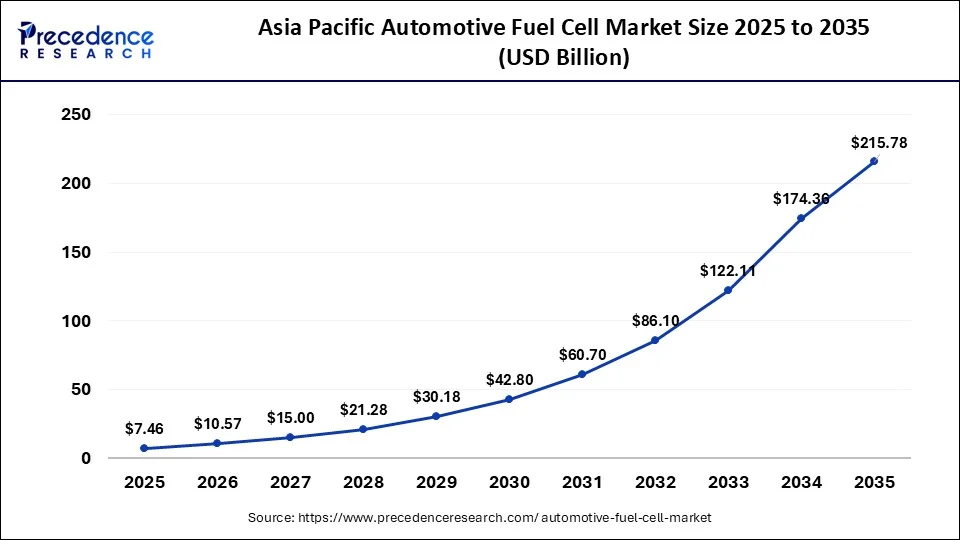
Asia Pacific dominated the global automotive fuel cell market in 2025. The growth of the market is attributed to the rising demand for the automotive industry owing to the population in the regional countries like India, China, and Japan. The rising deployment of the fuel cell vehicles due to reducing carbon emission into the environment drives the demand for the fuel cell vehicle. The rise in electric vehicles and the inclination towards the greenhouse gas reduction program and the rising research and development activities in the expansion of the advanced fuel cell system is collectively accelerating the growth of the market in the region.
- The electric vehicle battery market is reaching from USD 16.77 billion in 2023 to a expected to reach USD 27.70 billion by 2028. India will become the largest electric vehicle market by 2030 with the rising investment in the next 8-10 years.
North America is expecting substantial growth in the market during the predicted period. The growth of the market is attributed to the rising automotive infrastructure with the presence of the leading automotive players in the United States, and Canada working on the technological advancement and integration of advance fuel cell system drives the growth of the market. The region is known for its innovations and early adoption of technology and transformation which boosts the growth of the automotive fuel cell market across the region.
- The sales of the plug-in hybrid electric vehicles, hybrid vehicle, and battery electric vehicles (BEV) in the United States is increased to 16.3% of total new light-duty vehicle (LDV) sales in 2023.
What are the Advancements in the Automotive Fuel Cell Market in Europe?
Europe is expected to have significant growth in the market. This growth is due to the increased focus on reducing carbon emissions and transitioning to clean energy. As governments in the region push for greener transportation, automotive fuel cells are becoming a viable solution for long-distance travel and heavy-duty transportation. This market is also largely driven by government incentives, stricter emissions regulations, and technological advancements. Countries like Germany, France, and the UK are leading players.
Germany Market Trends
Technological innovations are transforming the region's market landscape, as companies are actively working on improving fuel cell efficiency to extend vehicle range. Collaborations between automotive companies and energy providers are also gaining traction.
What are the Key Trends in the Automotive Fuel Cell Market in Latin America?
Latin America is expected to have substantial growth in the market, driven by increasing government incentives for clean energy, rising consumer awareness of environmental impacts, and the strategic shift of automakers towards zero-emission vehicles. As the region seeks to reduce its carbon footprint and meet international climate commitments, the market presents a compelling opportunity for stakeholders aiming to capitalize on this momentum. Countries such as Brazil and Mexico are leading players.
Brazil Market Trends
Sustainability and ESG drivers are compelling automakers and investors in the region to prioritize fuel cell technology, aligning with global decarbonization goals. Macro-economic factors, including fluctuating fuel prices and economic recovery post-pandemic, further influence enterprise adoption and investment strategies.
How is the Middle East and Africa Region Growing in the Automotive Fuel Cell Market?
The Middle East and Africa are expected to have lucrative growth throughout the forecast years, driven by a combination of technological advancements and increasing environmental awareness. Countries like Saudi Arabia, South Africa, and the UAE are leading players as they are actively investing in fuel cell technologies as part of their broader strategies to diversify energy sources and reduce reliance on fossil fuels. Furthermore, the region's commitment to reducing greenhouse gas emissions aligns with the global push towards cleaner energy alternatives, fostering a fertile environment for market growth.
Saudi Arabia Market Trends
The country's market landscape is boosted by favorable policies and incentives for clean energy adoption. Industries such as transportation and power generation are increasingly integrating fuel cell technologies, enhancing the region's position in the global market.
Automotive Fuel Cell Market Companies
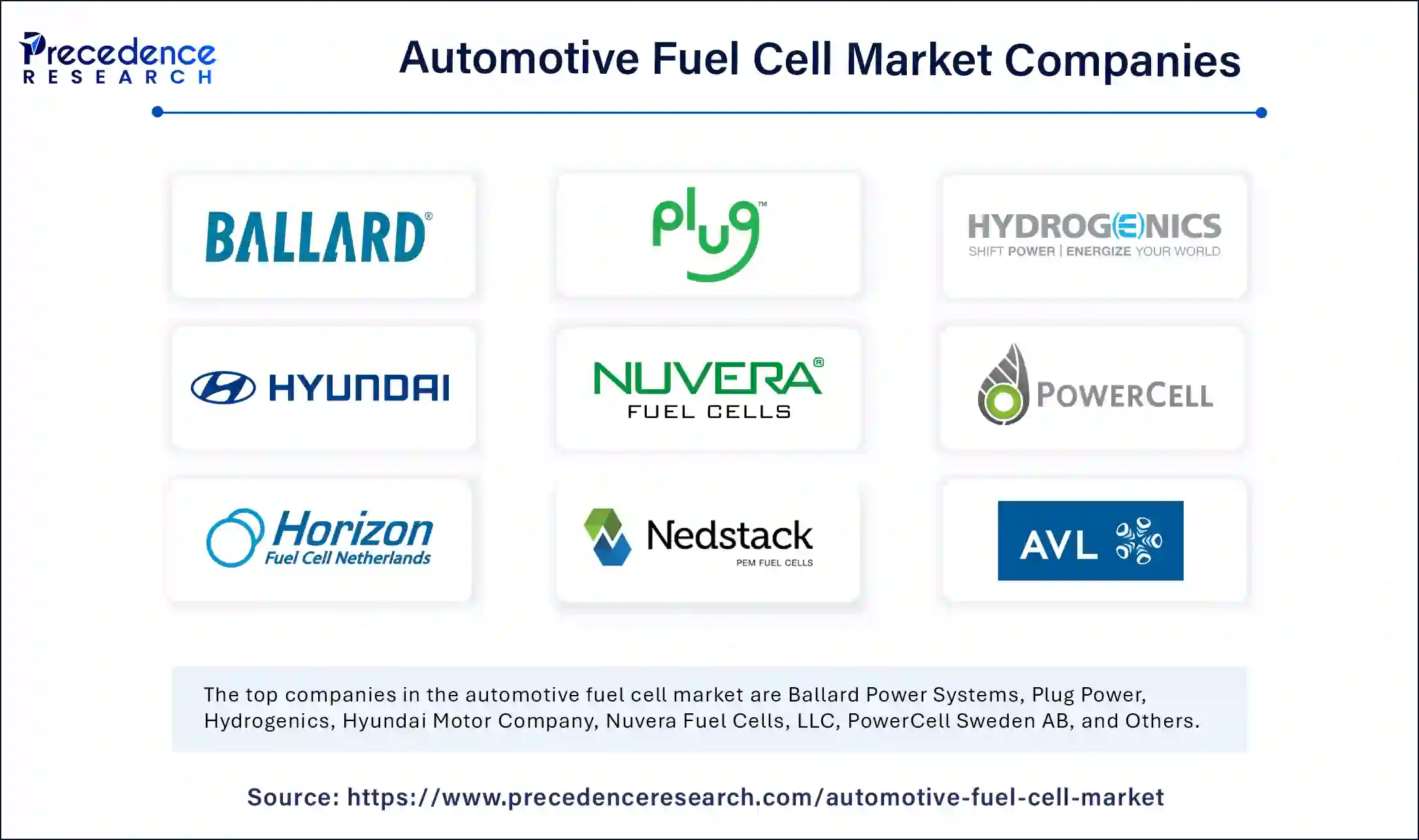
- Ballard Power Systems
- Plug Power
- Hydrogenics
- Hyundai Motor Company
- Nuvera Fuel Cells, LLC
- PowerCell Sweden AB
- Horizon Fuel Cell Technologies
- Nedstack Fuel Cell Technology
- AVL
- ElringKlinger
- Intelligent Energy
- Pragma Industries
- Umicore
- Valmet Automotive
- Air Liquide
Latest Announcement by Industry Leaders
In October 2024, Hyundai Motor Company launched the INITIUM hydrogen fuel cell electric vehicle (FCEV) at the event at the Hyundai Motorstudio Goyang.
Recent Developments
- In September 2024, Toyota and BMW collaborated to develop the next generation of fuel cell technology, BMW for launching the first-ever series production fuel cell vehicle in 2028. The automobile giants are efficiently promoting hydrogen infrastructure development.
- In December 2024, KPIT's Sentient Labs launched the hydrogen fuel cell bus, it is indigenously developed hydrogen mobility solution with the help of automotive-grade PEM (Proton Exchange Membrane) fuel cell technology.
- In October 2025, Hyundai Motor launched Nexo fuel cell electric vehicle (FCEV). This fuel cell vehicle is designed for the consumers of Japan.
(Source: https://www.automotiveworld.com) - In September 2025, BMW launched BMW X5. BMW X5 is a fuel cell vehicle designed for the people of Germany.
(Source: https://www.electrive.com) - In February 2025, Toyota launched a third-generation fuel cell system. This fuel cell system is designed for the consumers of various regions including Europe, North America, and China.
(Source: https://www.automotivepowertraintechnologyinternational.com)
Segments Covered in the Report
By Type
- PEMFC
- PAFC
- Others
By Power Rating
- Below 100 kW
- 100 – 200 kW
- Above 200 kW
By Vehicles
- Passenger Vehicles
- Light Commercial Vehicles (LCVs)
- Bus
- Trucks
By Regional
- North America
- Europe
- Asia Pacific
- Latin America
- Middle East and Africa
For inquiries regarding discounts, bulk purchases, or customization requests, please contact us at sales@precedenceresearch.com
Frequently Asked Questions
Tags





Ask For Sample
No cookie-cutter, only authentic analysis – take the 1st step to become a Precedence Research client
 Get a Sample




 sales@precedenceresearch.com
 Schedule a Meeting
