



Cancer Monoclonal Antibodies Market Size, Key Companies, Company Market Share, Patient Volume, Treatment Adoption Rates, Pricing Analysis, Regulatory Landscape, Competitive Positioning, and Demand Forecast
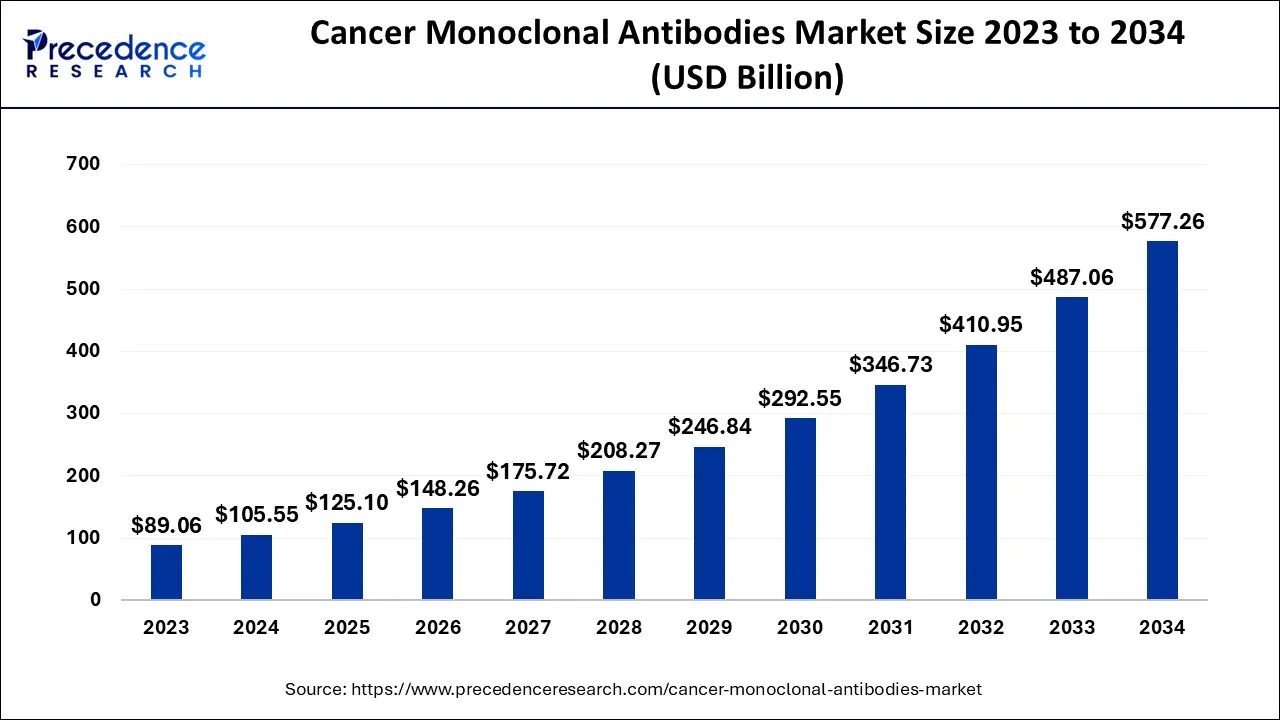
Deepa Pandey, a Healthcare Industry Expert, highlights that the cancer monoclonal antibodies market has reached USD 148.26 billion in 2026 and is on track to reach USD 658.07 billion by 2035, advancing at a CAGR of 18.06%. Key cancer monoclonal antibodies market companies shaping the market include Amgen Inc, Eli Lilly and Company, Merck & Co., Inc, Novartis AG while major growth segments span type, application, monoclonal antibody therapies, end-user, region.
Source: https://www.precedenceresearch.com/cancer-monoclonal-antibodies-market
 Get a Sample
 Table Of Content


What is the Cancer Monoclonal Antibodies Market Size?
The global cancer monoclonal antibodies market size was estimated at USD 148.26 billion in 2026 to approximately USD 658.07 billion by 2035, expanding at a CAGR of 18.06% from 2026 to 2035.
Cancer Monoclonal Antibodies Market Key Takeaways
- In terms of revenue, the global cancer monoclonal antibodies market was valued at USD 125.10 billion in 2026.
- It is projected to reach USD 658.07 billion by 2035.
- The market is expected to grow at a CAGR of 18.06% from 2026 to 2035.
- North America dominated the cancer monoclonal antibodies market with the largest market share of 39% in 2026.
- By Type, the humanized segment captured more than 41% of revenue share in 2026.
- By Application, the blood cancer segment contributed the biggest market share of 25% in 2026.
- By Monoclonal Antibody Therapies, the trastuzumab (Herceptin) segment is expected to expand at the fastest CAGR between 2026 and 2035.
- By End-user, the hospitals segment held the biggest market share of 41% in 2026.
Market Overview
The global cancer monoclonal antibodies market plays around the management and production of multiple treatments for cancer. Monoclonal antibodies refer to a form of targeted drug therapy that works by recognizing and finding specific proteins in cancer cells. For the treatment of cancer, there are several monoclonal antibodies present that work differently to destroy cancer cells and stop them from growing in the future. Monoclonal antibodies are observed as a type of immunotherapy for cancer patients. Such antibodies are laboratory-made and carry the ability to mimic the immune system's ability to target cancer cells specifically.
Researchers across the globe are focused on the development of monoclonal antibodies in a lab that work much like natural antibodies. Such antibodies are further injected into bodies to identify the cancer cells and attack them. Such therapies using monoclonal antibodies are targeted treatments as they are utilized for a specific purpose.
Monoclonal antibodies are further divided into two types, Naked MABs and Conjugated MABs. Naked MABs are utilized for cancer treatment without having radiation or any other drugs attached to them. They carry the ability to attack cancer cells in multiple ways. Whereas conjugated MABs are loaded antibodies for more precise therapies, they are often combined with radiation, drugs and other chemo drugs.
Monoclonal antibodies can also be modified further to be more effective in some cases. Monoclonal antibodies (MABs) work better on some types of cancer than others. Different monoclonal antibodies (MABs) treat different types of cancer. There are some cancers that can be treated with monoclonal antibodies (MABs) such as Lung, Breast, Prostate, Colorectal, Melanoma, and others. Monoclonal antibody drugs are created to work in various ways such as Immune system support, Cancer cell signal blockers, and Direct delivery of chemotherapy and radiation therapy. As monoclonal antibodies are man-made proteins. There are commonly four different ways, they can be made such as Murine, Chimeric, Humanized, and human. Monoclonal antibodies are used as the most effective drugs to cure severe diseases.
Cancer Monoclonal Antibodies Market Growth Factors
Millions of people across the globe receive benefits from monoclonal antibody-based therapies. The growing aging population and they are more vulnerable to various chronic disorders, especially cancer, are expected to enhance the demand for different antibodies, accelerating the expansion of the global cancer monoclonal antibodies market. The growth of the global cancer monoclonal antibodies market is driven by the increasing prevalence of cancer, increasing adoption of cost-efficient biosimilar mAbs by oncologists, increasing investment in R&D activities, an increase in population, and rising drug approvals. Additionally, the market has grown as a result of the increasing preference toward the specificity of monoclonal antibodies to target cancer cells.
The global cancer monoclonal antibodies market has witnessed significant growth factors in recent years. The penetration of targeted therapies, advancements in antibody engineering, and rising number of approvals for new monoclonal antibodies across the globe play a vital role in the market's growth.
Market Dynamics
Driver
Increasing prevalence of cancer
The increase in cancer cases across the globe is expected to boost the growth of the global cancer monoclonal antibodies market. For instance, Cancer is a leading cause of death around the world, in 2020 accounted for approximately 10 million deaths or nearly 1 in 6 deaths. In 2020, As per World Health Organization (WHO) cancer cases of the prostate (1.41 million cases), breast (2.26 million cases), and skin (non-melanoma) (1.20 million cases). Therefore, with increasing cases of cancer across the globe, the demand for effective treatment is growing which is anticipated to fuel the market expansion in the coming years.
Monoclonal antibodies constitute a class of targeted anti-cancer agents that improve a patient's natural immune system functions to suppress cancer cell activities and destroy cancer cells. Monoclonal antibodies are drugs that are developed to copy the advantage of natural antibodies and their ability to fight against cancer. These antibodies are widely used by oncologists for the treatment of different types of cancers patient. They are given to patients via infusion and can be used alone or in combination with other cancer treatments. Each monoclonal antibody works in one or several ways, it completely depends on the antigen that it is targeting.
Restraints
High costs associated with the treatment methods
The increasing costs associated with the treatment methods are projected to hamper the growth of the global cancer monoclonal antibodies market. Many of the treatments require high costs and it gets difficult for many people to avail of them, especially the ones in rural or underdeveloped areas. In addition, the lack of skilled professionals who are unaware of the knowledge of treatment methods for severe disorders is likely to limit the expansion of the global cancer monoclonal antibodies market during the forecast period.
Opportunities
Rapidly increasing healthcare awareness
As the cases of cancer are rising exponentially, healthcare awareness among patients as well as healthcare providers is increasing. Oncologists and cancer patients are now proactively participating in learning about the new therapies available for the treatment of these severe disorders. It is anticipated to create lucrative opportunities for global cancer monoclonal antibodies market expansion. In recent years, the US FDA has approved several monoclonal antibodies for the treatment of different types of cancer. Scientists have also discovered more antigens connected to cancer, and they are capable of developing more effective monoclonal antibodies to fight against several cancer types.
Segment Insights
Type Insights
The global cancer monoclonal antibodies market is segmented into Humanized, Human, Chimeric, and Murine. The humanized segment is expected to expand at a robust growth rate during the forecast period owing to the high availability, low cost, and rapid production time for mouse monoclonal antibodies. Humanized are made from minor parts of mouse proteins attached to human proteins. The humanization of mouse monoclonal antibodies has been extensively implemented, which has supported the growth of the market.
On the other hand, the human segment is projected to expand at a rapid rate owing to the increasing product launches of human MABs and the rise in the number of product approvals. Humans are fully human proteins. The introduction of advanced technologies has supported product development creation as well as discovery.
Application Insights
The global cancer monoclonal antibodies market is segmented into blood cancer, breast cancer, lung cancer, melanoma, colorectal cancer, liver cancer, and others. The blood cancer segment is expected to dominate the market over the forecast period owing to the increasing demand for hematological disorder treatments, which resulted in the development of novel medications such as cancer monoclonal antibodies.
The lung cancer segment is growing at a significant CAGR during the forecast period due to the rising prevalence of lung cancer. Small cell lung cancer (SCLC) and non-small cell lung cancer (NSCLC) are the most common types of lung cancer. As per the American Cancer Society's estimation for lung cancer in the US for 2023, nearly 238,340 new cases of lung cancer (120,790 in women and 117,550 in men). Lung cancer mostly occurs in older people. In addition, to cater to the growing burden of lung cancer, prominent market players are implementing innovative activities that are likely to create growth opportunities in the coming years.
Monoclonal Antibody Therapies Insights
Based on the Monoclonal Antibody Therapies, the global cancer monoclonal antibodies market is segmented into Bevacizumab (Avastin), Rituximab (Rituxan), Trastuzumab (Herceptin), Cetuximab (Erbitux), Panitumumab (Vectibix), and Other Monoclonal Antibody Therapies. The Trastuzumab (Herceptin) segment is expected to grow at a significant rate during the forecast period owing to the increasing approval of products and increasing cancer of breast cancer. Breast cancer is the most common type of cancer in women in the US. According to the American Cancer Society's estimation for breast cancer in the US for 2023, nearly 297,790 new cases of breast cancer are expected to be diagnosed in women, nearly 55,720 new cases of ductal carcinoma in situ (DCIS) are expected to be diagnosed, and nearly 43,700 women are expected to die from breast cancer in the estimated period.
Trastuzumab (Herceptin) is a monoclonal antibody used for the treatment of breast cancer. It is an approved first-line treatment for HER2+ metastatic cancer of the stomach or gastro-esophageal junction.
End User Insights
Based on the end user, the global cancer monoclonal antibodies market is segmented into hospitals, research institutes, and others. The hospitals' segment is expected to capture a significant market share over the forecast period due to the increasing prevalence of cancer, increase in the number of patient hospitalizations, the availability of novel drug therapies in hospitals that boosts patient preference, and the availability of skilled healthcare providers offering better-quality treatments.
On the other hand, the Research Institutes segment is expected to expand at a robust growth rate in the coming years owing to the increase in strategic collaboration. For instance, in 2019, In IRBM signed an agreement with The University of Texas MD Anderson Cancer Center. The agreement emphasizes the creation of therapeutic monoclonal antibodies (MABs) against novel immune checkpoint targets.
Regional Insights
North America Cancer Monoclonal Antibodies Market
North America accounted for the largest market share during the forecast period owing to the sophisticated healthcare infrastructure, increasing presence of prominent market player,s increasing prevalence of cancer, and increase in awareness regarding advanced therapies. The biotechnology and pharmaceutical companies have gained knowledge and skilled expertise in cancer monoclonal antibodies. For instance, the American Cancer Society, Inc., In 2022 the estimated number of new cancer cases and deaths, nearly there will be 1.9 million new cancer cases diagnosed and 609,360 cancer deaths in the US. Therefore, the high burden of cancer is expected to fuel the growth of the market in the region.
What is the U.S. Cancer Monoclonal Antibodies Market Size?
The U.S. cancer monoclonal antibodies market size was exhibited at USD 40.47 billion in 2026 and is projected to be worth around USD 183.86 billion by 2035, growing at a CAGR of 18.33% from 2026 to 2035.
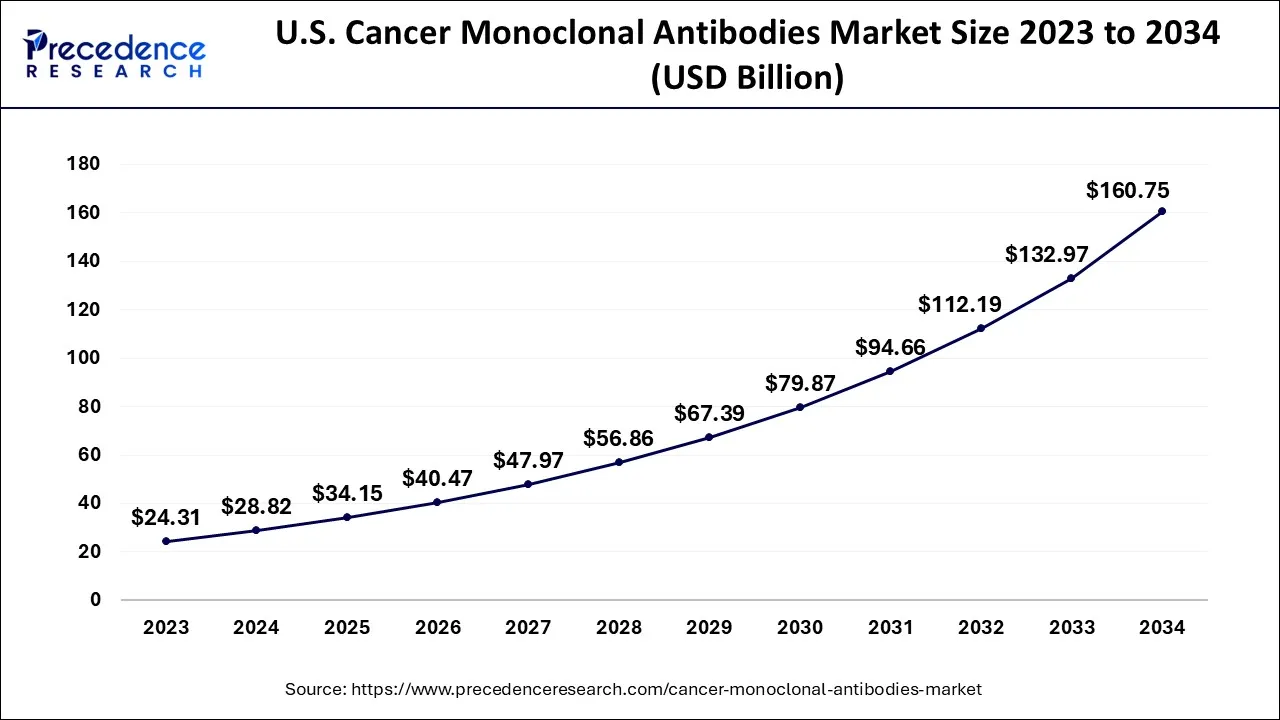
The U.S. has a high rate of adoption of newer monoclonal antibody therapies such as ADCs and bispecific antibodies. Precision immuno-oncology, AI-enabled drug discovery, and the growing number of subcutaneous formulations drive growth. The innovative nature and availability of therapies are supported by robust research and development, robust regulatory contribution, and high healthcare expenditure.
The Asia Pacific market is growing at a significant CAGR during the forecast period owing to the rapidly growing efforts by global market players to penetrate in the emerging market, the rising incidence of cancer, a rise in the adoption of biosimilars in the region, rise in national and international collaborations among key organizations, and the increase in healthcare expenditure.
China Market Trends
China is the most rapidly expanding market, which is fuelled by the speedy innovation and growing production of new monoclonal antibodies. Affordability is being enhanced by high biosimilar approvals, and global partnerships are supported by increased manufacturing capabilities. The presence of strong government backing and the increasing oncology demand accelerate the uptake of advanced antibody-based therapies in the region.
What are the Driving Factors of the Cancer Monoclonal Antibodies Market in Europe?
Europe is expected to grow at a significant CAGR during the forecast period. The area enjoys the advantage of modern healthcare systems, high regulatory measures, and wide coverage of reimbursements. The increasing cancer rates with ageing populations and solid ties between the public and the private serve as additional catalysts for the prevalence of advanced biologic therapies.
Germany Market Trends
Germany is a significant European market, and value-based healthcare and high uptake of biosimilars to contain healthcare costs are stressed. Growth is supported by the increasing clinical trials of novel immunotherapy approaches and resistance in solid tumours. High-tech healthcare facilities and emphasis on evidence-based choice of treatment encourage the use of innovative monoclonal antibody treatment.
What are the Driving Factors of the Cancer Monoclonal Antibodies Market in Latin America?
Latin America is expected to grow at a remarkable CAGR during the forecast period. Latin America is a developing market with the rising level of healthcare infrastructure and the growth in the use of cancer immunotherapies. Brazil and Mexico are the top performers, with growing public-sector access to biologics and growing chronic disease burden.
Brazil Market Trends
Brazil is becoming a regional center, and the use of biosimilars to improve patient access is on the rise. Local production of monoclonal antibodies is aided by government initiatives and collaborations. The increase in the number of oncology facilities and the demand for more specific drugs are driving the growth of the market in the public and private healthcare segments.
How is the Middle East and Africa Performing in The Cancer Monoclonal Antibodies Market?
The Middle East and Africa are expected to grow at a notable CAGR during the forecast period, as modernization of healthcare and access to complex cancer treatments are increasing. Key drivers include augmenting government investments, public-private collaboration, and medical tourism.
Israel Market Trends
Israel is one of the major innovation-oriented markets with an emphasis on highly monoclonal antibody-based therapies for complex cancers. Powerful research and involvement in international clinical trials justify the creation of new antibody pipelines. International biopharma partnerships are increasing the availability of state-of-the-art treatments and improving treatment outcomes.
Cancer Monoclonal Antibodies Market Companies
- Amgen Inc
- Eli Lilly and Company
- Merck & Co., Inc
- Novartis AG
- F. Hoffmann-La Roche Ltd.
- Bristol Myers Squibb Co.
- GlaxoSmithKline plc
- Johnson & Johnson
- AstraZeneca plc
- AbbVie
Cancer Monoclonal Antibodies Market Segments
By Type
- Humanized
- Human
- Chimeric
- Murine
By Application
- Blood Cancer
- Breast Cancer
- Lung Cancer
- Melanoma
- Colorectal Cancer
- Liver Cancer
- Others
By Monoclonal Antibody Therapies
- Bevacizumab (Avastin)
- Rituximab (Rituxan)
- Trastuzumab (Herceptin)
- Cetuximab (Erbitux)
- Panitumumab (Vectibix)
- Other Monoclonal Antibody Therapies
By End-User
- Hospitals
- Research Institutes
- Others
By Region
- North America
- Europe
- Asia-Pacific
- Latin America
- Middle East and Africa
For inquiries regarding discounts, bulk purchases, or customization requests, please contact us at sales@precedenceresearch.com
Frequently Asked Questions





Ask For Sample
No cookie-cutter, only authentic analysis – take the 1st step to become a Precedence Research client
 Get a Sample
.webp)



 sales@precedenceresearch.com
 Schedule a Meeting
