



Cell Dissociation Market Size, Share and Trends 2026 to 2035
Cell Dissociation Market (By Product Type: Enzymatic Dissociation, Non-enzymatic dissociation, Instruments & Accessories; By Tissue: Epithelial Tissue, Connective Tissue; By Dissociation: Cell Detachment, Tissue Dissociation; By End-User: Academic Institutes & Research Institutes, Biotechnology Companies & Pharmaceutical Companies) - Global Industry Analysis, Size, Trends, Leading Companies, Regional Outlook, and Forecast 2026 to 2035
Source: https://www.precedenceresearch.com/cell-dissociation-market
 Get a Sample
 Table Of Content


What is the Cell Dissociation Market Size?
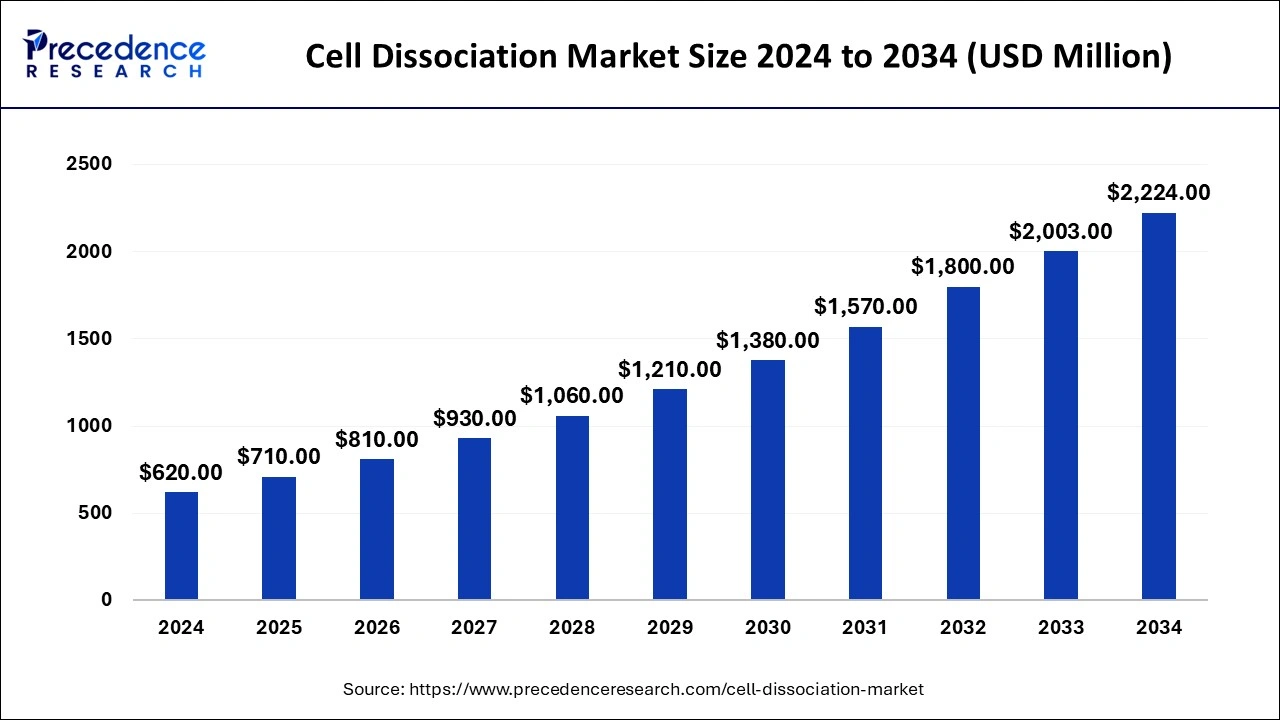
The global cell dissociation market size reached USD 710 million in 2025 and is predicted to increase from USD 810 billion in 2026 to approximately USD 2,433 million by 2035, poised to grow at a CAGR of 13.11% from 2026 to 2035.
Market Highlights
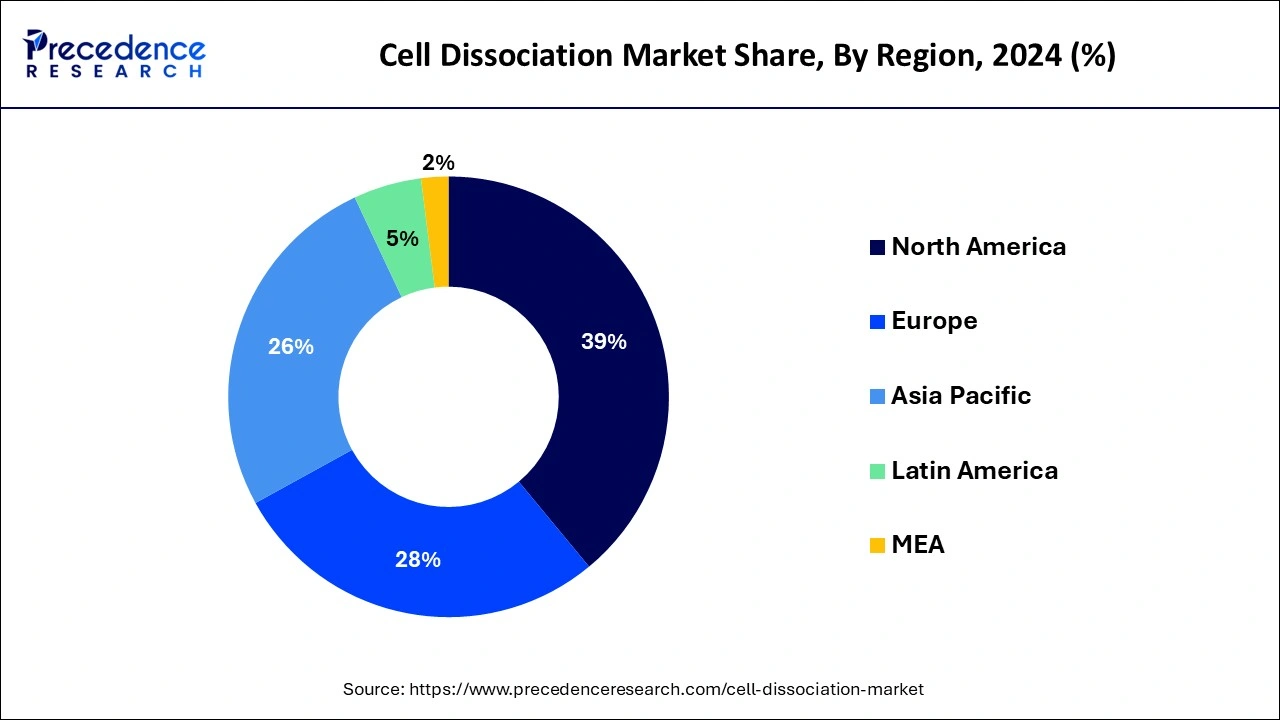
- North America generated more than 39% of the revenue share in 2025.
- Asia-Pacific is considered the fastest-growing region in the forecast period.
- By Product, the enzymatic dissociation segment had the largest share in the forecast period.
- By Tissue, the connective tissue segment will record maximum growth throughout the estimated period.
- By Dissociation, the tissue dissociation segment dominates with the highest CAGR during the projected period.
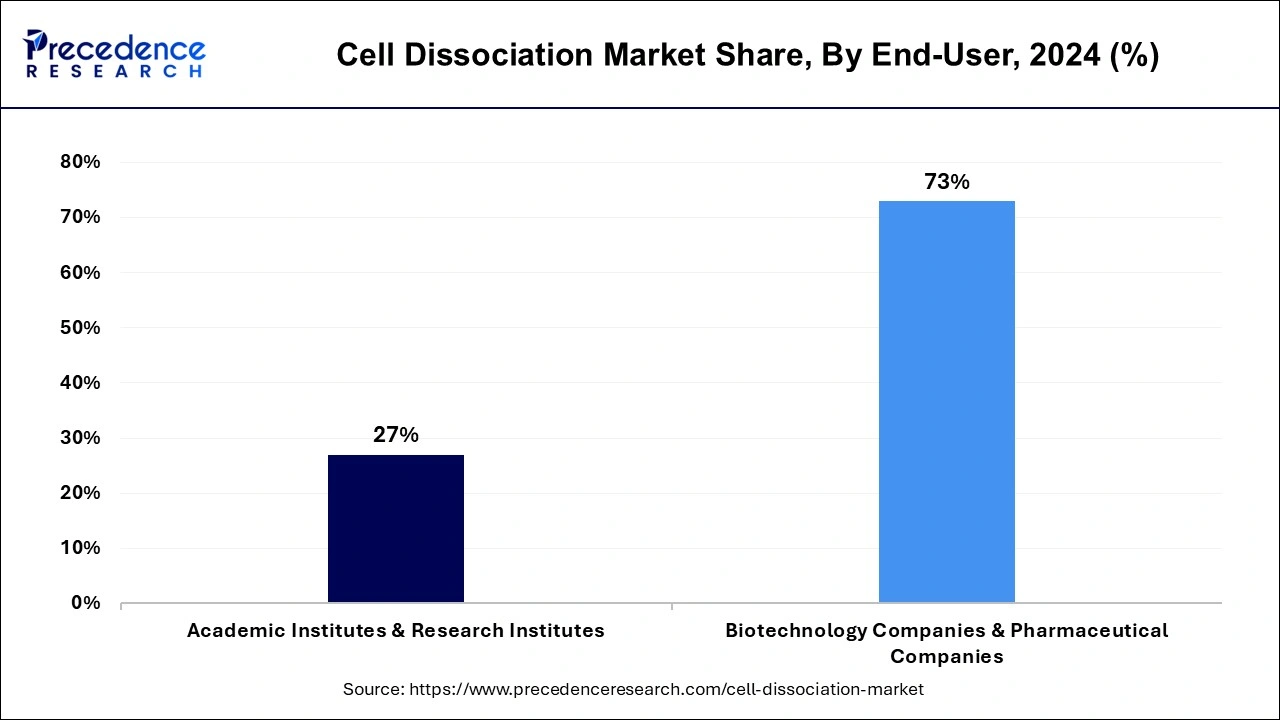
- By End-user, the biotechnology and pharmaceutical companies' segment captured more than 73% of revenue share in 2025.
Market Overview
The global cell dissociation key market players are involved in manufacturing different chemicals, equipment, research and distribution that supplement the growth of overall cell dissociation market. The cell dissociation market includes alternative procedures to enzyme-based dissociation solutions. The global market focuses on maximizing the production of functionally viable cells. This market includes three different methods of dissociation, i.e., mechanical dissociation, enzymatic dissociation, and chemical dissociation. Further, this market aims to grow with rising therapeutic applications.
How is AI Influencing the Cell Dissociation Industry?
Artificial intelligence is changing the cell dissociation industry from a manual, variable procedure into a standardized, high-throughput, and even automated workflow, crucial for applications such as cell-based therapy, single-cell RNA sequencing, and 3D organoid research. AI models determine large datasets to forecast the best enzymatic or non-enzymatic dissociation methods for specific cell types, enhancing yield and consistency.
Advanced AI algorithms can determine cell health, confluence, and even death using label-free, non-disruptive methods, thus preserving the natural state of sensitive cells.
Cell Dissociation Market Growth Factors
The cell dissociation market is anticipated to grow during the forecast period. The increasing use of cell dissociation products in animal cell culture, the production of pharmaceutical drugs and its screening are fueling the cell dissociation market. In addition, the continuous rise in customized medicine across the globe is observed as another factor to boost the market's growth. Customized medicine is considered for almost every disorder and drug discovery therefore it is a source for growing research and development.
For instance, at American Association for Cancer Research 2023 annual meeting in April 2023, it was declared by Function Oncology about the power of CRISPR-based personalized functional genomics to address patient-specific cancer and its drugs.
Market Outlook
The Future Growth Potential of the Cell Dissociation Market
- Industry Growth Overview: The cell dissociation market continues to show steady growth due to an increase in the use of cell-based research, advances in regenerative medicine, and a trend towards greater use of single-cell analysis techniques within the pharmaceutical industry and academic institutions.
- Sustainability Trends: Manufacturers are moving towards animal-origin-free enzymes and sustainable packaging options, as well as optimizing their formulations to reduce waste to support sustainable laboratory practices while complying with changing regulatory and ethical requirements worldwide.
- Global Expansion: An increase in biotechnology investment, global clinical trials, and growing networks of CRO's are facilitating and accelerating the global market penetration of cell dissociation solution providers.
- Startup Ecosystem: Several start-up companies have been created to develop niche products, unique enzymatic blends, and products that can be used in automated systems. These companies provide competitive products that will enhance the speed of technological developments in cell processing workflows.
What are the Emerging Trends in the Cell Dissociation Market?
- The rapid expansion of cell-based therapies is expected to drive the market's growth during the forecast period. Personalized cell therapies and regenerative medicine require the precise isolation and processing of living cells from primary tissues, which relies on standardized dissociation methods.
- The rapid advances in single-cell analysis are expected to bolster the market's growth in the coming years. Single-cell analysis technologies such as scRNA-seq, CITE-seq, and flow cytometry require the careful disaggregation of tissue while preserving the viability of individual cells and maintaining the integrity of genetic and surface marker expression.
- The rising expansion of drug discovery is anticipated to accelerate the growth of the cell dissociation market during the forecast period. Several biotech and pharmaceutical firms are increasingly utilizing cell-based assays for targeted therapeutics and personalized medicine.
- The streamlined regulatory pathways and approvals for Advanced Therapy Medicinal Products (ATMPs) by authorized bodies like the EMA and FDA contribute to the overall growth of the cell dissociation market.
- The rising adoption of automated tissue processing is anticipated to promote the growth of the cell dissociation market during the forecast period. Several laboratories, particularly in developed and developing countries, are increasingly adopting automated and scalable cell processing systems over manual protocols.
Market Scope
| Report Coverage | Details |
| Market Size in 2025 | USD 710 Million |
| Market Size in 2026 | USD 810 Million |
| Market Size by 2035 | USD 2,433 Million |
| Growth Rate from 2026 to 2035 | CAGR of 13.11% |
| Largest Market | North America |
| Base Year | 2025 |
| Forecast Period | 2026 to 2035 |
| Segments Covered | By Product Type, By Tissue, By Dissociation, and By End-User, and region |
| Regions Covered | North America, Europe, Asia-Pacific, Latin America, and Middle East & Africa |
Market Dynamics
Drivers
Development in drug screening practices
The advancements and developments in drug screening practices are observed to act as a driver for the market's growth. Cell dissociation plays a vital role in drug screening and development to test the cytotoxicity of a novel medication. The pharmaceutical and biotechnology sector relies on these cell-based assays for investigations and action. Even to determine the efficacy and safety of an unknown drug dose, also used to test new drugs.
Drug screening is done to understand the advantage and disadvantages of the drugs. For instance, a new way of testing medicines was introduced during the COVID-19 pandemic, i.e., fingerprint-based drug test, which is reliable, hygienic, and requires no prior preparation. It was even seen that fingerprint-based drug tests would replace ongoing tests like hair, urine test, etc.
Moreover, according to the World Drug Report 2021, it is seen that around 275 million people used drugs whereas 36 million suffered from disorders as per the United Nations Office on Drugs and Crime. The rising demand for advanced drugs are expected to propel the drug screening activities in upcoming years, this support the overall growth of cell dissociation market.
Restraint
Lack of skilled labor and instrumentation
Cell culture experiments require aseptic conditions, expensive instruments, and skilled labor. Moreover, there is a minimal number of dissociated cells, eventually making very few experiments. The latest research information, accurate and detailed market study about a particular laboratory technique and instruments, and introduction to the new ideas are the skills needed to perform an experiment. The scarcity of skilled labor hampers the market growth. For instance, in neuronal cell culture, handling such cell line requires an expert in this field to avoid contamination and damage to cell line as the neuronal cell line responds to different physiological conditions linked to neurotransmitters.
Opportunities
Rise in replacement of tissue or organ
Cell dissociation has enormous applications in pharmaceuticals and biotechnology sectors, which include genetic engineering, genetically engineered protein, drug screening, development, etc., propelling the growth of the cell dissociation market. Regeneration of organs and tissues can be achieved by using animal cell culture. Patients with ulcers and burns can benefit from creating skin using the replacement method.
However, research is being conducted on synthetic organ cultures, including the kidney, pancreas, and liver. Several ways are used in developing embryonic and adult stem cells, and numerous organs and cells can develop from these cells. Enormous medical disorders can be treated by managing the formation and differentiation of these cells. Thus, the rising requirements for replacement surgeries, especially for tissues and organs are observed to offer a plethora of opportunities to the market's growth.
Segment Insights
Product Type Insights
Enzymatic dissociation dominated the global cell dissociation market
Enzymatic dissociation helps in the single cell's exposure by releasing cells from the tissue, by increasing viability rates and maximizing cell dissociation. It is essential to increase the surface area of the tissue as much as possible by mincing the tissue with pieces of equipment like a scalpel which increased surface area and gives the tissue enriched exposure to the enzyme while minimizing the time required for digestion.
Non-enzymatic dissociation is the steadily expanding segment throughout the projection period
The absence of enzyme dissociation helps to preserve the structural and functional importance of surface proteins. It is beneficiary to fight against the cytotoxic effects linked with chelating agents. Rise in the usage of animal-based elements in most of the products in biopharmaceutical industries. Thereby, there is a demand to raise non-enzymatic products for cell culture that will drive segment growth.
Tissue Insights
Connective tissue accounted for the largest share of the cell dissociation market
Elastin is an extracellular matrix protein in the elastic fibers of connective tissues. Elastase, a serine protease, is required as the tissue dissociation enzyme (TDE) for cell separation in tissues with extensive intercellular fiber networks, such as lung and kidney tissue. The segment is growing because of increasing research on connective tissue.
For instance, the lifetime prevalence of groin hernias in females is about 3-6%, whereas, in males, it prevails at around 27-43%. There is a connective tissue disorder that inclines to hernias called lathyrism, which is treated by repairing weak connective tissues.
Dissociation Insights
Tissue dissociation dominated the cell dissociation market worldwide
During tissue injury, inflammatory chemical signs are released, hampering vasodilation, which worsens blood vessels. There is a need for tissue replacement which lately demands tissue dissociation to avoid the redness and heat increasing in the body. Increasing focus on research associated with cell culture drives the growth of tissue dissociation segment, as it is considered the most effective process to obtain the most viable cells during cell culture activity.
Cell detachment is the fastest increasing segment in the cell dissociation market
Cell detachment is quite smoother as compared to trypsinization, simply diluted with saline to detach from the vessels wall. Oxygen mediated stress can cause cells to round up and detach from their substrates.
End-User Insights
Biotechnology companies & pharmaceutical companies are the dominant end-user segment of the cell dissociation market. The increase in genetically engineered protein, cancer research, gene therapy, production of vaccines, and monoclonal antibodies drive the biotechnology and pharmaceutical companies' segment throughout the forecast period. These industries provide the safety and efficacy of new drugs. As the demand for research and development is growing, there is a rise in the cell dissociation market.
For instance, In September 2022, Thermo Fisher unveiled the Orbitrap Ascend TriBrid at the International Mass Spectrometry Conference hailing in Maastricht, Netherlands, which is intended for proteomic and biopharma applications.
Academic institutes & research institutes is the fastest growing segment throughout the forecast period
The significant focus on research and development activities fuels the market to expand. Moreover, the rising demand for personalized medicine, which requires the manufacturing of smaller batches of drugs, has increased demand for the cell dissociation market
Regional Insights
What is the U.S. Cell Dissociation Market Size?
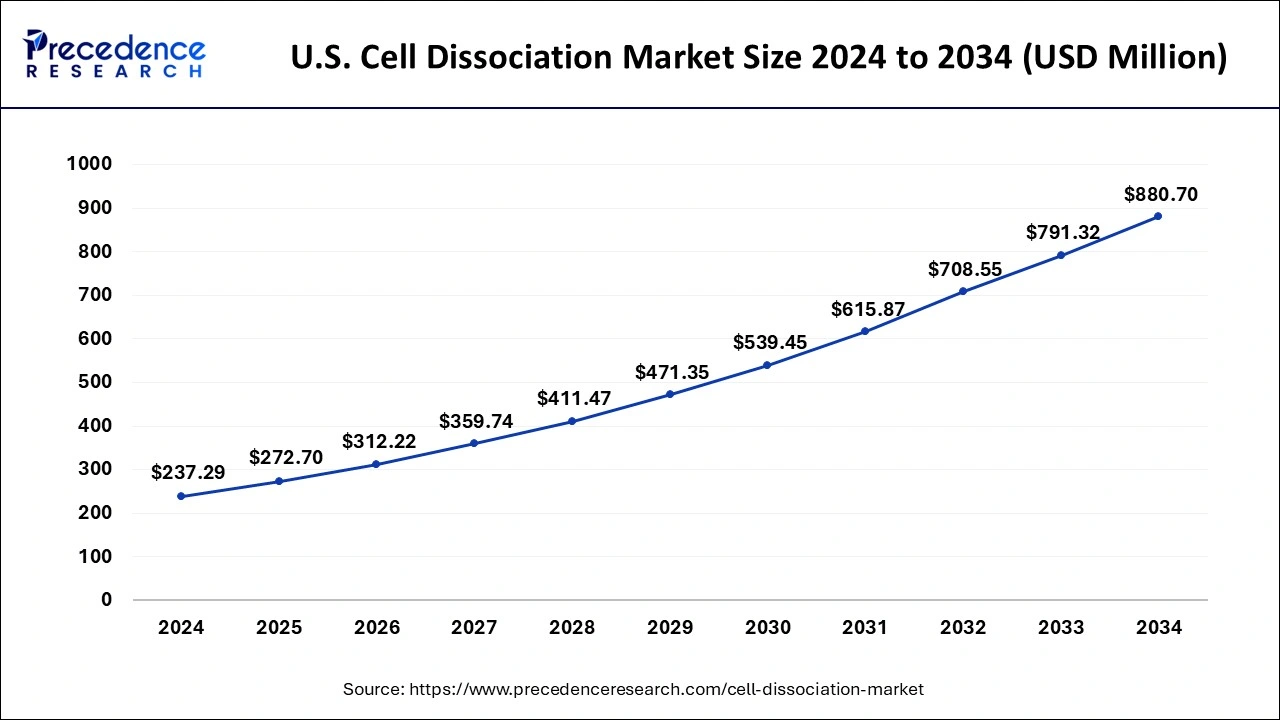
The U.S. cell dissociation market size was valued at USD 272.70 million in 2025 and is expected to reach USD 965.67 million by 2035, growing at a CAGR of 13.48% from 2026 to 2035.
U.S. Cell Dissociation Market Trends
The U.S. market is growing rapidly, driven by rising demand for regenerative medicine, cell therapy, and advanced biomedical research that requires efficient isolation of viable cells. Technological advancements in enzymatic and non-enzymatic dissociation reagents are improving cell viability and yield, allowing for gentler and more precise separation of sensitive cell types.
The expansion of stem cell, organoid, and tissue engineering research is fueling demand for specialized dissociation kits tailored to complex tissues.
North America dominated the global cell dissociation market
The escalating enormous research institutes and organizations and the presence of key players in North America, especially in pharmaceuticals and biotechnology along with government support, is expanding the cell dissociation market. The growing investment in therapeutic areas for better conduct and the ongoing technological advancements in personalized medicine in the United States and Canada are expected to grow the market.
For instance, In April 2023, Turnstone Biologics Corp announced two abstracts accepted for poster presentations at the American Association for Cancer Research annual meeting held in Orlando, Florida. The displays include preclinical data for TIDAL-01, assessed in two-phase trials, i.e., 1b in tumor-reactive T cell selection strategy.
The Asia-Pacific is the fastest-growing region during the forecast period
This is due to the increasing number of clinical organizations, increased demand for healthcare facilities, and growing demand for biopharmaceutical products in the region. Improved economic conditions, and increased infrastructure expansion in contract research organizations and research institutes, bolster market growth. Most biopharmaceutical companies fuel the market growth.
China Cell Dissociation Market Trends
China's market is expanding rapidly as investments in biotechnology, regenerative medicine, and cell therapy research increase across academic and commercial sectors. Demand for advanced enzymatic and non-enzymatic dissociation reagents is growing to support higher viability and yield in isolating cells from complex tissues. The rise of stem cell, organoid, and tissue engineering projects is driving the uptake of specialized dissociation kits tailored for delicate and hard-to-dissociate cell types.
Europe: Bioprocessing Hub Focused on Innovative Solutions
In Europe, a favorable climate for development is created by the presence of strong industry-academic partnerships, advanced pipeline medical solutions through cell therapy, and a well-defined regulatory environment for established methods of generating or using living cells for research purposes. The increased availability of funding for research, especially in the areas of regenerative medicine and stem cell-based research methods, helps foster demand for trustworthy solutions to dissociate cells from each other.
Germany has an extremely strong infrastructure for biotechnological development, coupled with rapidly increasing investment in personalized medicine, are likely to drive growth in the use of advanced technologies for dissociating cellular structures.
Latin America: Research Activity & Clinical Development Potential
Latin America's market is beginning to grow as a result of enhanced research infrastructures, a growing number of approved places for pharmaceutical manufacturers, and an increased number of organizations that are actively participating in clinical research on a global basis, particularly within academic research and publicly funded institutions.
Brazil's expanding biotechnology ecosystem and government-supported investment in research initiatives are expected to drive demand for laboratory consumables, including reagents used for dissociating cellular structures such as embryonic stem cells.
Middle Eastern and African Region: Long-Term Future Capability
The Middle East and Africa continue to witness steady progress in expanding biomedical research facilities, patient management, and biomedical research centers, and growth in healthcare investments has all produced increased interest in translation and diagnostic research in select countries throughout the region.
The United Arab Emirates' focus on developing biotech-related technological innovation and developing medical research centres is increasing the speed with which advanced laboratory technologies are being utilized.
Value Chain Analysis of the Cell Dissociation Market
- R&D for Raw Material and Reagents: The first stage of the value chain is the development of enzyme, chelating agent, and buffer formulations that have a high degree of purity to optimize cell dissociation efficiency.
Key Players: Thermo Fisher Scientific, Merck KGaA, and PAN-Biotech. - Manufacturing and Process Optimization: Manufacturers primarily approach the manufacturing of proprietary enzymatic and non-enzymatic dissociation solutions in a scalable manner while also ensuring that the finished products are of consistent quality within and between each production run pursuant to GMP regulations.
Key Players: STEMCELL Technologies, Miltenyi Biotec, and Lonza Group. - Distribution and Post Sales Support: Efficient and reliable global distribution systems coupled with comprehensive and ongoing product and technical support services create a bridge between the manufacturer of the products and those who purchase these products at research institutions, biopharma companies, and diagnostic laboratories.
Key Players: Bio-Rad Laboratories, Corning Incorporated, and HiMedia Laboratories.
Top Companies in the Cell Dissociation Market and their offerings
- Danaher Corp.: Danaher Corporation is a major key player in the cell dissociation market, providing a comprehensive portfolio of products for cell separation, isolation, and analysis, mainly through its Life Sciences and Biotechnology operating firms, including Beckman Coulter Life Sciences, Cytiva, and Molecular Devices.
- Sartorius AG: Sartorius AG offers specialized, animal component-free cell dissociation solutions programmed for gentle detachment of adherent cells in both research and manufacturing, which includes recombinant trypsin and enzyme-free solutions suitable for primary cells, sensitive stem cells, and cell therapy workflows.
Other Cell Dissociation Market Companies
- Miltenyi Biotec
- STEMCELL Technologies
- PAN-Biotech
- BD
- HiMedia Laboratories
- Merck KGaA
- Thermo Fisher Scientific
- S2 Genomics, Inc.
- F. Hoffmann-La Roche Ltd.
Recent Developments
- In June 2025, to assist scientists in accelerating their workflows, STEMCELL Technologies launched the STEMprep Tissue Dissociator System, a new benchtop instrument that automates, standardizes, and streamlines tissue dissociation, the process of breaking down tissue samples into single-cell suspensions for research purposes. (Source: https://www.businesswire.com)
- In February 2026, SeekGene, a biotechnology company, announced it had officially joined the Human Cell Atlas (HCA) Commercial Discount Program, providing eligible consortium members with exclusive commercial discounts on its single-cell platforms and assays to support large-scale cell atlas research worldwide. By participating in the program, SeekGene aims to lower cost and technical barriers to integrated single-cell analysis, enabling more research teams to generate consistent, high-quality multi-omics datasets at scale. (Source: https://www.newswise.com)
- In March 2023, the breakthrough electron capture dissociation (ECD) technology known as the ExD cell, a small apparatus for mass spectrometers that enables biological researchers to generate biotherapeutic compounds more swiftly to treat disease, was acquired by Agilent Technologies Inc. This is accomplished by more thoroughly and accurately breaking the chemical bonds of complex biomolecules, allowing for extracting more thorough, exact, and detailed structural information from them.
- In December 2022, to allow vaccination recipients to receive a certificate of immunization, Bharat Biotech asked the federal government to put their intranasal COVID-19 vaccine, iNCOVACC, in the COWIN portal.
- In March 2022, LevitasBio Inc. announced the launch of their LeviPrep™ and LeviSelect™ product lines. Developed to work with the LeviCell™ system, these solutions streamline the processing of human and mouse tissue and cell samples used in advanced biological research.
Segments Covered in the Report
By Product Type
- Enzymatic Dissociation
- Trypsin
- Hyaluronidase
- Elastase
- Papain
- Collagenase
- DNase
- Others
- Non-enzymatic dissociation
- Instruments & Accessories
By Tissue
- Epithelial Tissue
- Connective Tissue
By Dissociation
- Cell Detachment
- Tissue Dissociation
By End-User
- Academic Institutes & Research Institutes
- Biotechnology Companies & Pharmaceutical Companies
By Geography
- North America
- Europe
- Asia-Pacific
- Latin America
- Middle East and Africa
For inquiries regarding discounts, bulk purchases, or customization requests, please contact us at sales@precedenceresearch.com
Frequently Asked Questions
Tags





Ask For Sample
No cookie-cutter, only authentic analysis – take the 1st step to become a Precedence Research client
 Get a Sample



 sales@precedenceresearch.com
 Schedule a Meeting
