



Cell Surface Marker Detection Market Trends, Leading Companies, Company Revenue / Sales Performance, Procedure Volume, Healthcare Spending, Technology Adoption, Reimbursement Analysis, Competitive Landscape, and Growth Outlook
Cell Surface Marker Detection Market (By Product: Flow Cytometry, Hematology Analyzers, Reagents & Kits; By Application: Disease Diagnosis & Identification, Research & Drug Discovery, Others) - Global Industry Analysis, Size, Trends, Leading Companies, Regional Outlook, and Forecast 2026 to 2035
Source: https://www.precedenceresearch.com/cell-surface-marker-detection-market
 Get a Sample
 Table Of Content


What is the Cell Surface Marker Detection Market Size?
The global cell surface marker detection market size is accounted at USD 6.16 billion in 2025 and predicted to increase from USD 6.68 billion in 2026 to approximately USD 13.76 billion by 2035, expanding at a CAGR of 8.37% from 2026 to 2035. The global market growth is attributed to the increasing demand for precision medicine.
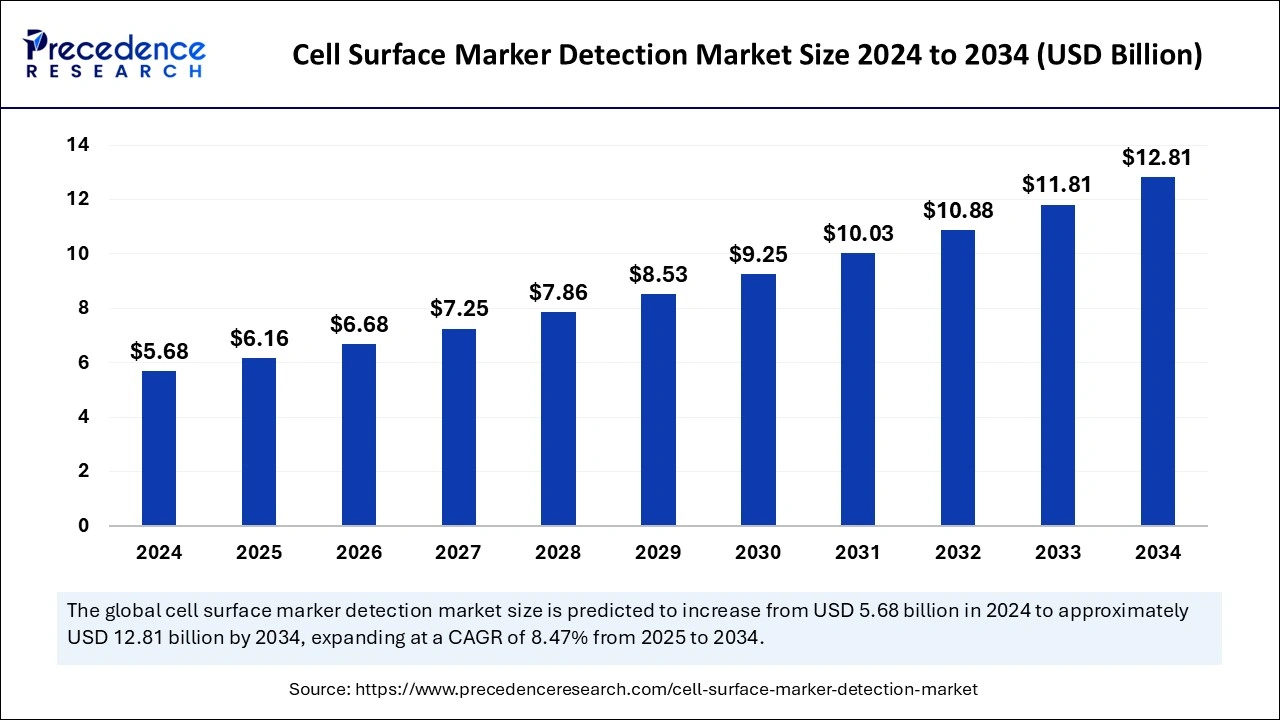
Cell Surface Marker Detection Market Key Takeaways
- North America dominated the market with the largest share of 40% in 2025.
- Asia Pacific is expected to grow at the fastest CAGR of 8.73% during the forecast period.
- By product, the reagents and kits segment contributed the biggest market share of 65% in 2025.
- By product, the hematology analyzers segment is projected to grow at a CAGR of 8.3% during the forecast period.
- By application, the disease diagnosis and identification segment held the biggest market share of 52% in 2025.
- By application, the research and drug discovery segment is expected to grow rapidly during the forecast period.
What is Cell Surface Marker Detection?
Cell surface markers detection market can be used to differentiate between different types of cells. Cell surface markers such as carbohydrates and proteins linked to the cellular membrane must function to play an important role in intercellular signaling. By analyzing the composition of the cell surface indicators present on a particular cell, one can recognize a cell and distinguish it from the neighborhood of cells. In addition, the increasing amount of research projects on molecular cell biology and biology techniques, the growing prevalence of chronic diseases, and the increasing need for early diagnosis are expected to drive the growth of the cell surface marker detection market.
How is Artificial Intelligence (AI) Changing the Cell Surface Marker Detection Market?
Artificial intelligence is changing various industries, and the chemical industry is no exception. The cell surface marker detection market is transforming rapidly with the integration of AI. AI can enhance production levels in the chemical setting, including quality control, process improvement, failure prevention or prediction, and safety monitoring.
Advanced AI technologies can control the variables of complicated reactions and ensure consistent quality, maximizing yield and enhancing safety by anticipating complex conditions. They can improve the cell surface process, reducing the trial- and error aspect significantly. By design, while meeting consumers' safety concerns and needs, materials improved through AI are more sustainable and durable. AI in the chemical industry points to a future where precision, efficiency, and innovation are at the forefront.
What are the Growth Factors in the Cell Surface Marker Detection Market?
- The rising advancements in diagnostic technologies are enhancing the efficiency and accuracy of cell surface marker detection, which is expected to drive market growth.
- The increasing adoption of in vitro diagnostics is contributing to market growth, as these diagnostics are significantly based on cell surface markers for disease monitoring and detection.
- The rising investments by major players in developing instruments with automated methods and solutions are also expected to drive the growth of the cell surface marker detection market.
- The market is experiencing rapid advancement in detection methodologies and technologies, with a particular focus on improving efficiency and accuracy, further enhancing the market demand.
Cell Surface Marker Detection Market Outlook
- Industry Growth Overview: The market will experience rapid growth from 2025 to 2030 as demand increases for highly precise immunology tools, advanced flow cytometry systems, and multiplex detection platforms. This growth will be driven by the increasing needs for clinical diagnostics, cancer research, and the broader field of personalized medicine, with the largest uptick in Asia-Pacific and North America.
- Sustainability Trends: The shift towards sustainability and eco-innovation is also affecting technology decisions, with a marked rise in the uptake of energy-efficient cytometers, less wasteful assay kits, and recyclable consumables. Leading manufacturers are increasing R&D funding for greener reagents and low-plastic workflows as labs are confronted with regulatory requirements related to environmental and safety concerns in Europe and the U.S.
- Global Expansion: With rising demand for diagnostic and research capabilities, companies are expanding into new regions, especially Southeast Asia, Eastern Europe, and LATAM. Companies are establishing localized manufacturing and service centers to improve access to devices and to facilitate deeper engagement and compliance with regional regulatory requirements.
- Major Investors: The activity of private equity and strategic investors is on the rise, driven by healthy margins, the developing clinical usage cases, and significant technical barriers to entry. Interest from various investment groups is being shown in companies focused on flow cytometry, antibody reagents, and technologies for cell-based diagnostics.
- Startup Ecosystem: The startup ecosystem continues to evolve, now led by disruptors in the areas of microfluidics, label-free detection, and AI-enabled analysis of cells. Emerging companies are obtaining significant venture capital funding because their solutions address slowdowns in cancer diagnostics, stem cell research, and immunotherapy workflows through faster, less expensive, and more automated technology.
Market Scope
| Report Coverage | Details |
| Market Size by 2035 | USD 13.76 Billion |
| Market Size in 2025 | USD 6.16 Billion |
| Market Size in 2026 | USD 6.68 Billion |
| Market Growth Rate from 2026 to 2035 | CAGR of 8.37% |
| Dominating Region | North America |
| Fastest Growing Region | Asia Pacific |
| Base Year | 2025 |
| Forecast Period | 2026 to 2035 |
| Segments Covered | Product, Application, and Regions. |
| Regions Covered | North America, Europe, Asia-Pacific, Latin America, and Middle East & Africa |
Market Dynamics
Drivers
The increasing demand for precision medicine
Precision medicine is finding adoption in cancer and inherited diseases and also in a range of subspecialties for both diagnosis and treatment, using next-generation sequencing. Precision medicine enhances the overall health of populations through the application of pharmacogenomics and brings down the total cost of care, which uses the data of patients to create effective and safe plans for patient medication.
In addition, precision medicine is an innovative method of modifying prevention approaches and disease treatment. It allows doctors and researchers to predict more accurately the proper treatment for a patient with data on their environment, lifestyle, genetic makeup, and makeup. Furthermore, precision medicine approaches are reducing the cost of healthcare and enhancing the outcomes of treatment.
- In October 2024, a proof-of-concept precision medicine clinical trial was launched by the National Institutes of Health (NIH) to test new treatment combinations targeting specific genetic changes in the cancer cells of people with myelodysplastic syndromes (MDS) and myeloid leukemia (AML). The aim behind this launch was to accelerate the discovery of more tailored treatments for these aggressive cancers of the bone marrow and blood.
Restraints
High cost of instruments
The high cost of instruments is the major restraining factor for the cell surface marker detection market. Due to the unclear cost-benefit relationship, pharmaceutical companies need to invest significantly in instruments, such as hematology analyzers and flow cytometers, to research cell surface markers, which may create major challenges in the market demand and further expected to restrain the growth of the market.
Opportunity
Development of novel products
Various governments and market players across the globe are focusing on developing innovative or novel products in the cell surface marker detection market due to the increase in the use of cell surface marker detection in technological advances and diagnostics. In addition, the rise in global disease burden has increased the demand for cell surface markers detection technologies for research diagnostics applications. These developments are likely to increase the demand for such technologies.
- In January 2025, Genovis launched two novel products to the market, which both enhance the modification, purification, and production of antibodies. The products are both easy to handle and more effective than any competing product on the market. Genovis expands and strengthens the company product portfolio within Antibody Engineering with the two novel products.
Segment Insights
Product Insights
The reagents and kits segment dominated the global cell surface marker detection market in 2025. The segment growth in the market is attributed to the growing adoption of in vitro diagnostics, the rising advancements in diagnostic technologies, and the increasing consumables in various detection techniques, such as Western blotting primarily, immunohistochemistry, and flow cytometry. These kits and reagents' non-reusable nature necessitate continuous reorders, further accelerating the market demand. In addition, the increasing prevalence of chronic diseases and the increasing focus on precision medicine have enhanced the need for reliable and accurate diagnostic tools, further driving the demand for these products.
The hematology analyzers segment is expected to grow at the fastest rate during the forecast period. The segment growth in the market is attributed to rising technological advancements in these analyzers, such as improved accuracy and enhanced automation, making them more reliable and efficient for clinical use. In addition, the increasing prevalence of chronic diseases and blood-related diseases necessitates advanced diagnostic tools. Furthermore, the increasing adoption of precision medicine is significantly based on accurate blood analysis.
Application Insights
The disease diagnosis and identification segment held the largest cell surface marker detection market share in 2025. The segment growth in the market is attributed to the increasing prevalence of chronic diseases such as autoimmune diseases and cancer. These diseases necessitate early and precise diagnosis. In addition, the rising advancements in diagnostic technologies, such as automation and high-throughput tools, have improved the reliability and efficiency of disease detection. Furthermore, the ability of cell surface markers to efficiently isolate and identify specific cell types makes them indispensable in clinical settings and revolutionizes diagnostic practices. In addition, the rising emphasis on precision medicine, which is significantly based on accurate disease diagnosis, is further expected to accelerate the demand for cell surface maker detection.
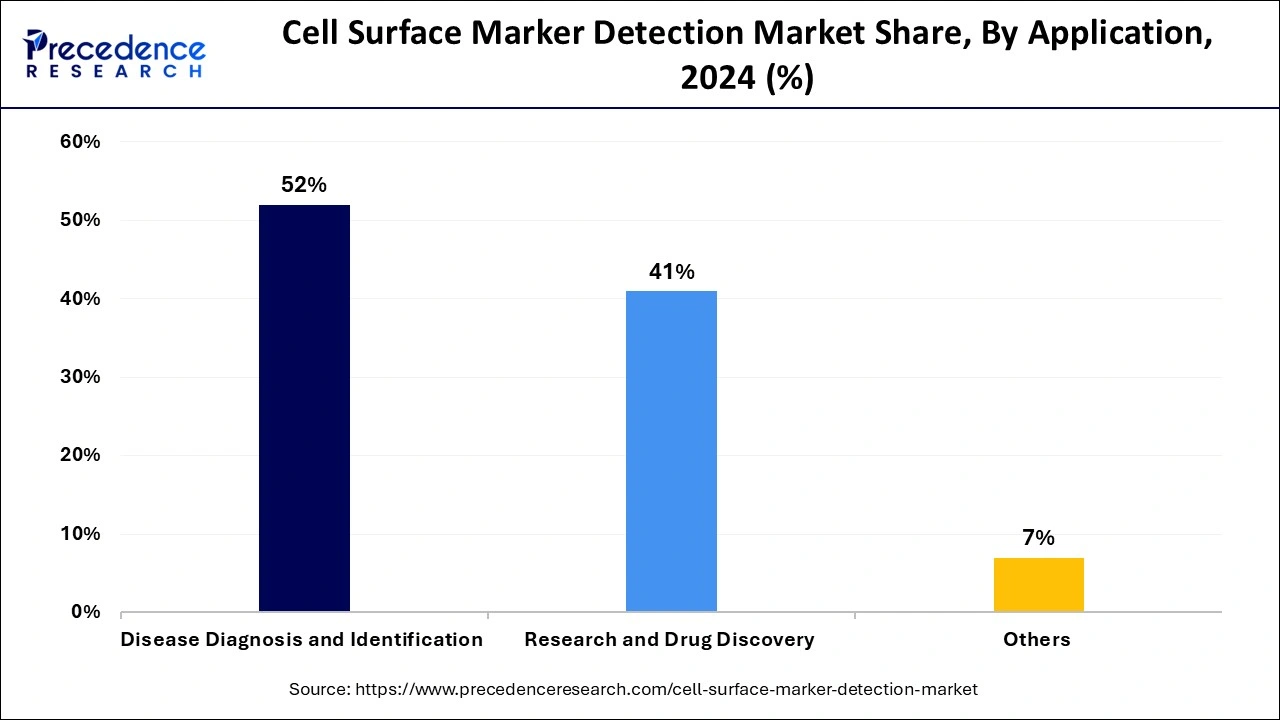
The research and drug discovery segment is expected to grow rapidly during the forecast period. The segment growth in the market is driven by the rising technological advancements in cell surface marker detection, such as automation and high-throughput screening. In addition, the growing emphasis on precision medicine, which is heavily based on identifying specific cell markers to improve targeted therapies, increasing collaborations between research institutions and pharmaceutical companies, and increasing the prevalence of chronic diseases are further expanding the application.
Regional Insights
U.S. Cell Surface Marker Detection Market Size and Growth 2026 to 2035
The U.S. cell surface marker detection market size is exhibited at USD 2.65 billion in 2026 and is projected to be worth around USD 4.95 billion by 2035, growing at a CAGR of 8.60% from 2026 to 2035.
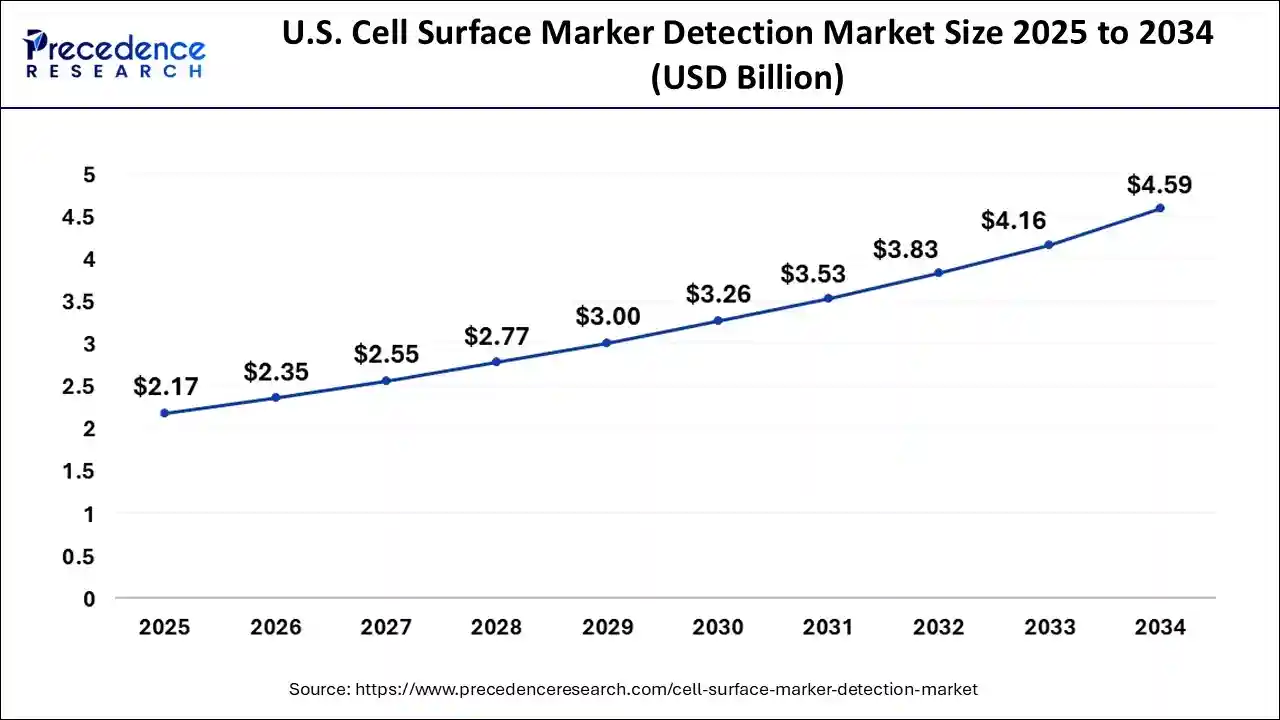
North America dominated the cell surface marker detection market in 2025. The market growth in the region is attributed to the increasing high adoption rate of innovative diagnostic technologies and rising advanced healthcare infrastructure. The U.S. and Canada are the major countries that dominate the market. The growing emphasis on precision medicine and the increasing prevalence of chronic diseases are expected to drive the growth of the cell surface marker detection market in the U.S. In addition, substantial funding for healthcare research and increasing supportive government policies are expected to drive market growth in the U.S.
- In June 2024, an innovative mass spectrometry platform was introduced by Thermo Fisher Scientific. This new mass spectrometer combines user-friendly features, high sensitivity, and rapid throughput, enabling significant discoveries more efficiently and accelerating translational omics research.
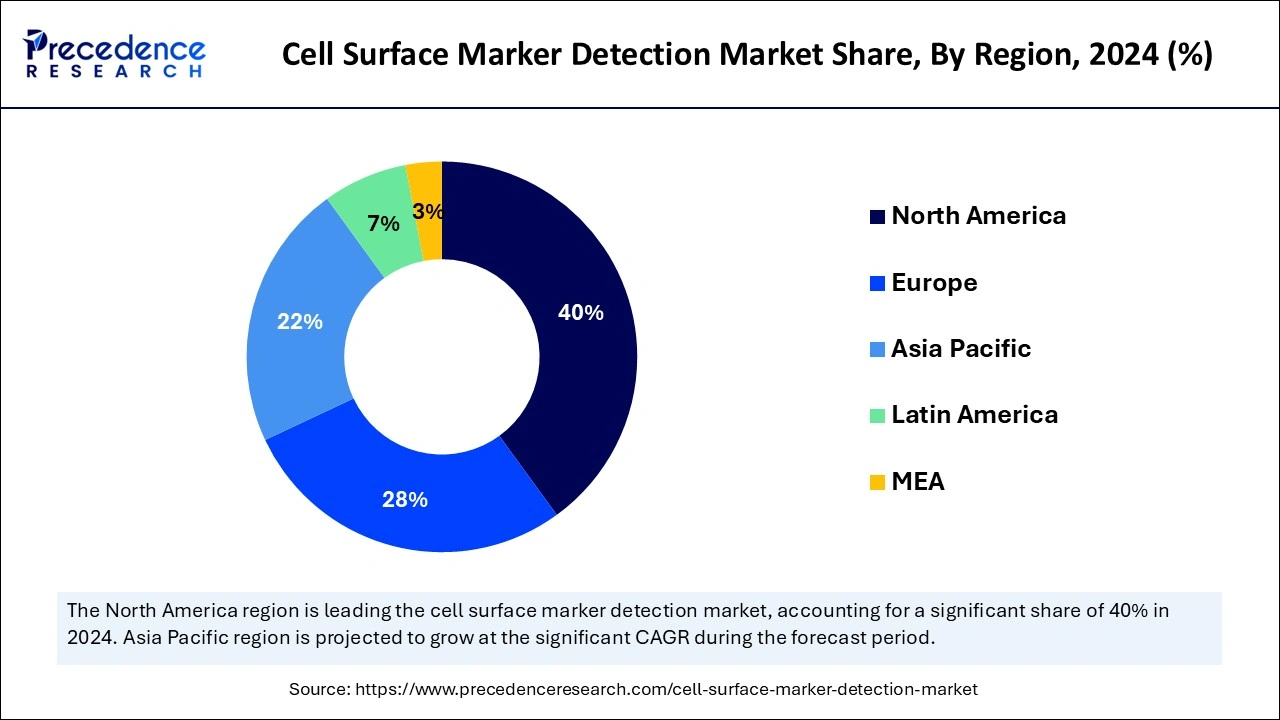
Asia Pacific is expected to grow at the fastest rate in the market during the forecast period. The market growth in the region is attributed to the growing investment in research and development and expanding healthcare infrastructure. In addition, the rising demand for advanced diagnostic tools and the increasing prevalence of chronic diseases are further anticipated to drive the growth of the cell surface marker detection market. China, India, Japan, and South Korea are the fastest-growing countries.
Why did Europe grow at a Steady rate in the Cell Surface Marker Detection Market?
Europe expanded at a steady rate in the cell surface marker detection market due to strong regulations, quality research institutions, and growing demand for immunology testing. Nations gave great emphasis to precision diagnostics, drug manufacturing expanded R&D efforts, and they rapidly embraced sustainable lab instruments while increasing spending in areas such as cancer screening, clinical research initiatives, and developments in imaging systems. Also, funding for the early-stage biotech community was being implemented to drive further demand for marker detection products.
Germany Cell Surface Marker Detection Market Trends
Germany had a leading position across Europe as one of the largest markets in the medical research landscape, a workforce of high-quality hospitals, and a large biotech industry. Germany saw substantial investment in immunology and oncology research, resulting in increased implementation of advanced cytometers and antibody kits across multiple clinical settings.
Why did Latin America grow at a Steady rate in the Cell Surface Marker Detection Market?
There was steady growth in Latin America due to healthcare access expansion and an increase in diagnostic laboratories. Additional investment in cancer screening programs and infectious disease research has fueled the demand for both biological and non-biological detection tools. Partnerships with global suppliers also improved access to equipment. Many opportunities existed within the area of affordable cytometry systems, as well as local reagent production and overall infrastructure improvement across health facilities in Brazil, Mexico, and Chile.
Brazil Cell Surface Marker Detection Market Trends
Brazil was by far the regional leader due to its large healthcare system and the growing health investment, specifically in diagnostic technologies. Hospitals were likely upgrading testing equipment, and research institutions expanded their capacity and studies in immunology. As state budget/financial support rolls out for cancer screening programs and disease control, implementation approaches will need biological detection tools as a strong need.
Why did the Middle East & Africa grow at a Steady rate in the Cell Surface Marker Detection Market?
The Middle East & Africa region grew rapidly in the cell surface marker detection market as countries in the region invested in modern hospitals, where they developed advanced research centers and innovative diagnostic technologies; thus, the region grew. With the rise of chronic diseases, there was a demand for accurate testing. Governments worked with global biotech firms to provide new systems. They're existed potential opportunities in developing low-cost technologies, increasing training programs, and building out existing diagnostic labs throughout the GCC countries, South Africa, and North Africa.
Saudi Arabia Cell Surface Marker Detection Market Trends
Saudi Arabia became the regional leader as it invested heavily in the modernized health system, as well as the modernized research facility systems. The hospitals were moving towards new cytometry and advanced imaging systems for improved diagnostics. The government's investment and initiatives allowed the development of the biotech sector and the improved laboratory infrastructure.
Cell Surface Marker Detection Market Companies
- Abbott Laboratories
- Danaher Corporation (Beckman Coulter Inc.)
- Becton, Dickinson, and Company
- Bio Rad Laboratories Inc.
- F. Hoffmann-La Roche Ltd
- Diasorin SpA (Luminex Corporation)
- Nihon Kohden Corporation
- Qiagen NV
- Siemens Healthineers
- Thermo Fisher Scientific Inc.
Recent Announcements by Market Leaders
- In January 2025, Waichiro Katsuda, Chief Executive Officer at ThinkCyte, announced that the expansion of their portfolio reflects their unwavering commitment to advancing life science research. They are also providing the tools to accelerate discoveries in disease understanding and drug discovery to improve lives by introducing innovative solutions that address the evolving needs of scientists across the globe.
Recent Developments
- In May 2024, Integral Molecular, a Philadelphia-based life sciences company, launched the biotech startup Cell Surface Bio, which manufactures antibodies for scientists, academic researchers, and industry.
- In June 2023, the single-cell spatial proteomics company Pixelgen Technologies announced the commercial launch of its first kit. The Pixelgen Single Cell Spatial Proteomics Kit, Immunology Panel I, Human (Pixelgen SCSP Kit) is the first product to convey spatial polarization and colocalization of proteins on the cell surface at high multiplex in 3D, offering new insights into biology in health and disease.
Segments Covered in the Report
By Product
- Flow Cytometry
- Hematology Analyzers
- Reagents & Kits
By Application
- Disease Diagnosis & Identification
- Research & Drug Discovery
- Others
By Geography
- North America
- Europe, Asia-Pacific
- Latin America
- Middle East
- Africa
For inquiries regarding discounts, bulk purchases, or customization requests, please contact us at sales@precedenceresearch.com
Frequently Asked Questions





Ask For Sample
No cookie-cutter, only authentic analysis – take the 1st step to become a Precedence Research client
 Get a Sample
.webp)



 sales@precedenceresearch.com
 Schedule a Meeting
