



Clean Label Ingredients Market Trends, Leading Companies, Company Revenue / Sales Performance, Food Production, Processing Capacity, Sales Volume, Distribution Performance, Competitive Landscape, and Industry Outlook
Clean Label Ingredients Market (By Form: Powder, Liquid, Others; By Type: Natural Colours, Natural Flavours, Fruits & Vegetables Ingredients, Starch & Sweeteners, Flour, Malt, Others; By Application: Food, Pet Food, Dairy, Non-Dairy, And Fermented Beverages, Others; By Distribution Channel: B2B, B2C) - Global Industry Analysis, Size, Trends, Leading Companies, Regional Outlook, and Forecast 2026 to 2035
Source: https://www.precedenceresearch.com/clean-label-ingredients-market
 Get a Sample
 Table Of Content


What is the Clean Label Ingredients Market Size?
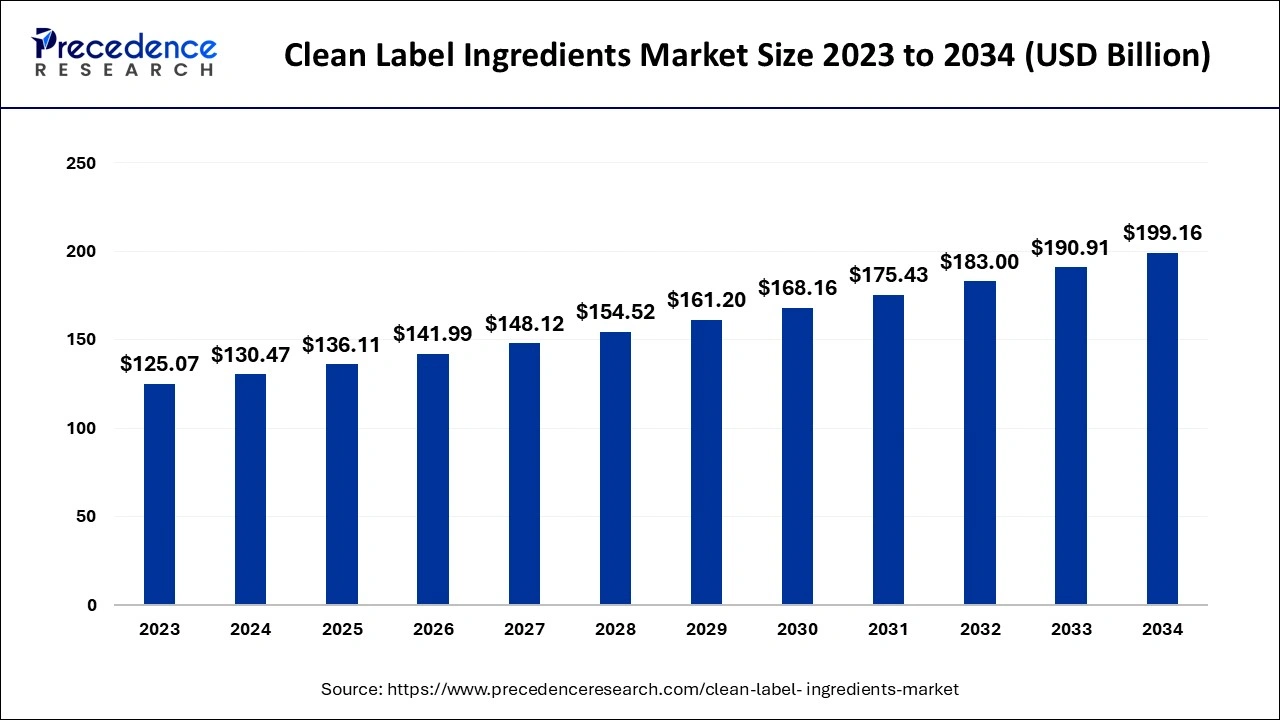
The global clean label ingredients market size is valued at USD 136.11 billion in 2025 and is predicted to increase from USD 141.99 billion in 2026 to approximately USD 207.18 billion by 2035, expanding at a CAGR of 4.29% from 2026 to 2035. The increasing demand of consumers to avoid artificial ingredients and incorporate natural flavors and stevia is raising the adoption of the clean label ingredients market.
Clean Label Ingredients Market Key Takeaways
- The global clean label ingredients market was valued at USD 136.11 billion in 2025.
- It is projected to reach USD 207.18 billion by 2035.
- The clean label ingredients market is expected to grow at a CAGR of 4.29% from 2026 to 2035.
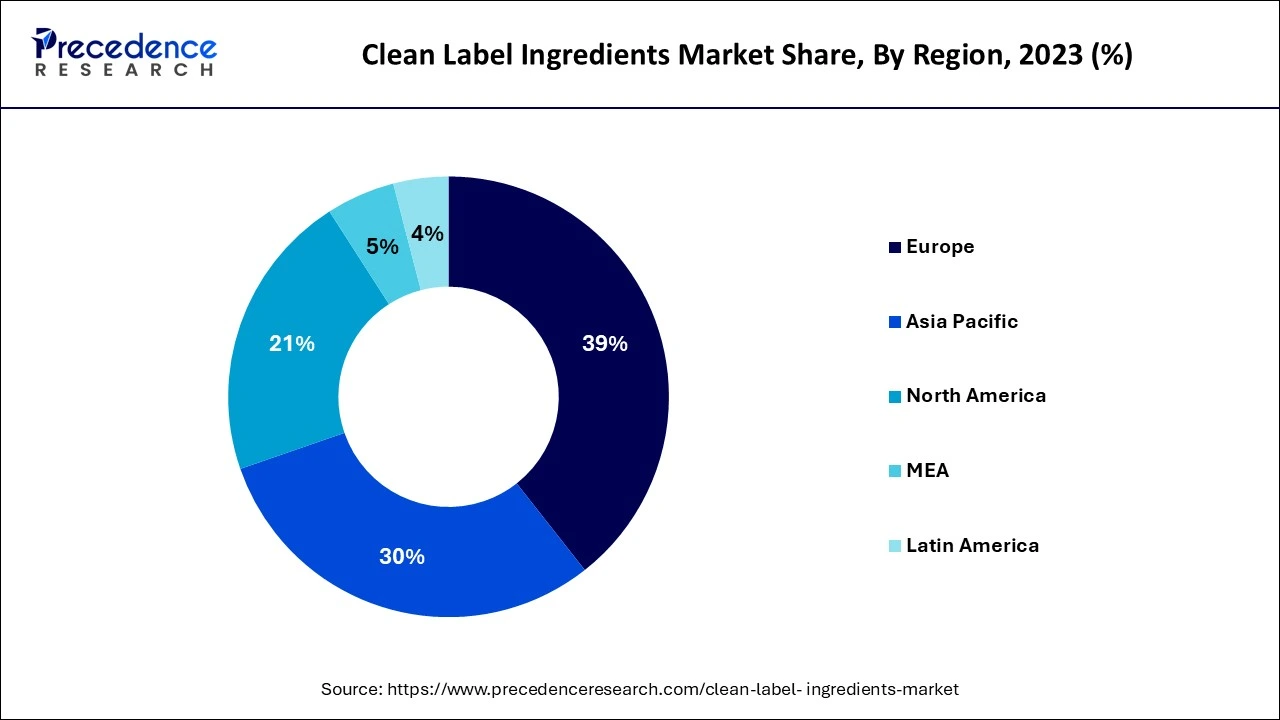
- Europe dominated the clean label ingredients market with the largest market share of 39% in 2025.
- North America is expected to grow at a notable CAGR of 4.82% during the forecast period.
- By form, the powder segment generated the biggest market share of 63% in 2025.
- By form, the liquid segment is projected to expand at a 3.92% during the forecast period.
- By type, the natural flavor segment contributed the highest market share of 21% in 2025.
- By type, the fruits & vegetables segment is expected to grow at a significant CAGR of 7.13% in the market during the forecast period.
- By application, the food segment recorded the highest market share of 41% in 2025.
- By application, the dairy, non-dairy, & fermented beverages segment is anticipated to grow with the highest CAGR of 4.93% during the studied years.
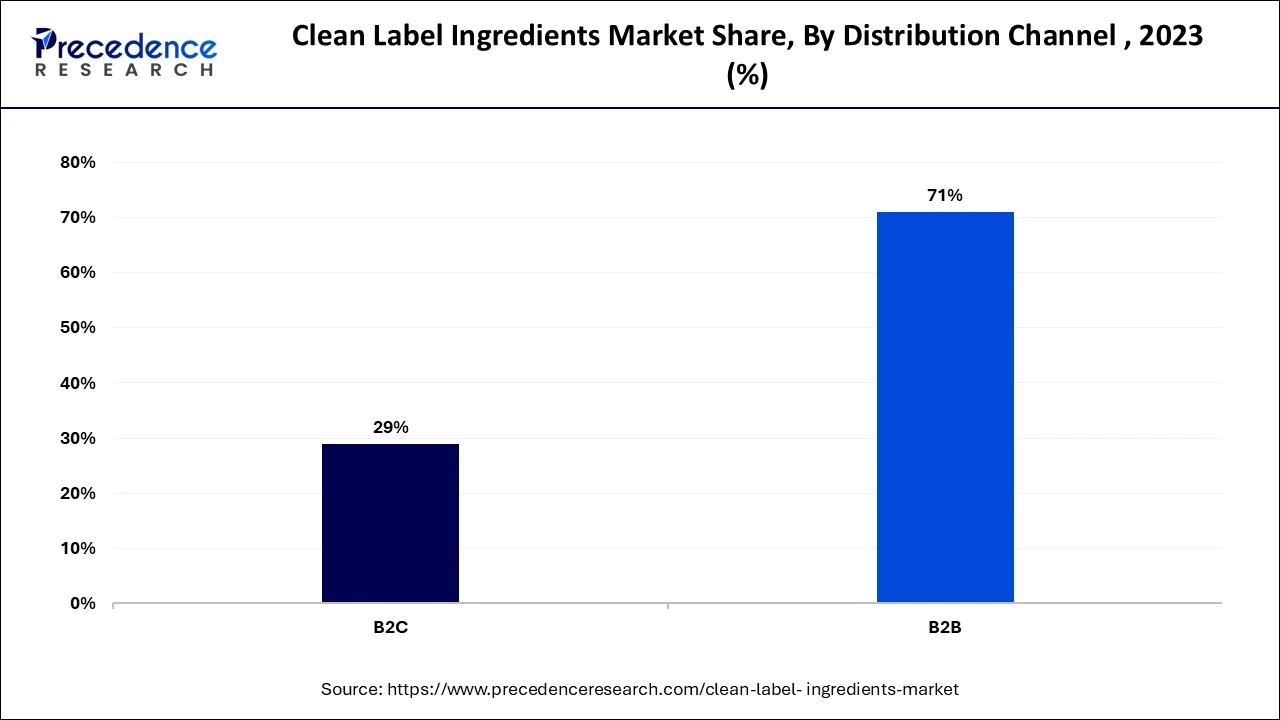
- By distribution, the B2B segment generated the highest market share of 72% in 2025.
What are the Emerging Advances in the Clean Label Ingredients?
Clean-label ingredients are manufacturing products with ingredients that are recognized and understood by the consumer instead of using chemical and synthetic ingredients. Through this action, the consumer becomes aware of the food content and develops trustworthy natural-based products. The incorporation of clean-label ingredients is achieved by harvesting crops using a physical processing method. Plants such as wheat, tapioca, maize, bamboo, and peas are utilized in this production. The clean label aims to remove or reduce unwanted ingredients such as artificial colors and flavors, no genetically modified organisms, and many more.
How is AI Changing the Clean Label Ingredients Market?
With the emerging trend of clean labels, manufacturers are focusing on more natural products. Implementation of artificial Intelligence in the clean label ingredients market offers an analysis of consumer preference, dietary needs, and purchase history. AI has the potential to operate a tailored shopping experience, achieve health goals, and recommend clean-label products as per individuals' preferences. This action will also educate people about the variety of clean-label products available. AI-based technology helps brands and retailers keep track of constantly changing trends and consumer preferences, which allows them to modify their marketing strategies.
Clean Label Ingredients Market Growth Factors
- Healthy lifestyle: Increasing health awareness among consumers about the intake of food is increasing the adoption of clean-label ingredients, which is a healthier choice.
- Develop trust: clean label promotes transparency between the consumer and producer. Brands with clean-label products are most trusted by the audience.
- Minimal ingredient list: Consumers consider products with few ingredients. Simplify the formulation by using fewer components.
- Sustainability: Renewable sources encourage natural food protection solutions that contribute to a sustainable supply chain.
- Regulatory governance: a brand with clean-label ingredients meets the regulatory standards and guidelines.
Clean Label Ingredients Market Outlook
- Global Expansion: The market is reshaping with escalating consumer demand for natural, recognizable ingredients, as well as growing health-consciousness, an emphasis on sustainability, and stringent regulations in some regions.
- Major Investors: Firms, including Cargill, ADM, Kerry Group, DSM, and Ingredion, and others, are leveraging investments to raise acquisitions, joint ventures, and new product lines to capitalize on the market's expansion.
- Startup Ecosystem: Kyomei, a UK-based startup, employs biotechnology to convert crop waste into functional food ingredients, such as egg and whey alternatives and a zero-calorie sweet protein.
Market Scope
| Report Coverage | Details |
| Market Size by 2035 | USD 207.18 Billion |
| Market Size in 2025 | USD 136.11 Billion |
| Market Size in 2026 | USD 141.99 Billion |
| Market Growth Rate from 2026 to 2035 | CAGR of 4.29% |
| Largest Market | Europe |
| Base Year | 2025 |
| Forecast Period | 2026 to 2035 |
| Segments Covered | Form, Type, Application, Distribution Channel, and Regions |
| Regions Covered | North America, Europe, Asia-Pacific, Latin America and Middle East & Africa |
Market Dynamics
Driver
Consumer awareness and preferences
Clean Label is a consumer-driven market, and with rising health hazards, consumers are becoming more conscious of their food choices. Clean and mindful eating has become a crucial practice among people since the pandemic due to the need to eat more natural and nutritious food. The popularity of clean labels is expected to grow continuously as consumers are greatly prioritizing products that contain recognizable ingredients that are minimally processed using familiar methods.
In present-day brands, being transparent with the customers means being open and honest about the whole food supply chain and all the ingredients used in the products. Some manufacturer formulates their products to align with customer preferences. Products that are free from additives such as artificial flavors and colorings. Products that fulfill dietary requirements, such as food allergies and intolerances, are also widely available.
Restraint
Challenges faced by food manufacturers
As consumer trends regarding clean labels change, they are majorly impacting the food industry. Food manufacturers are facing challenges in meeting consumer demand for clean-label products. They are in a predicament to fulfill consumer demand and stay competitive in the market. It is difficult to produce natural products with higher production costs. It is a struggle to maintain the same taste and texture with alternative additives. Not all additive has a natural alternative. Some functional additives such as preservatives or thickeners are added to get the desired texture, provide smoothness and uniformity, color, and flavor, extend shelf-life, and reduce food spoilage and browsing effects. These requirements cannot be guaranteed with natural alternatives.
Opportunity
Cutting-edge technology and innovations
Food manufacturing companies are incorporating cutting-edge technologies and extensive research to develop natural ingredient that offers the same functionality as artificial additives. These innovations are important to maintain product quality and consumer satisfaction. Plant-based proteins are catering to the increasing vegan and vegetarian market and provide an alternative to animal-based protein.
Natural preservative is another focus area. Traditional preservatives such as sodium benzoate and potassium sorbate are known to cause potential health problems. Therefore, they will be replaced with natural preservation that includes rosemary extract, vinegar, and fermented ingredients. Organic emulsifiers and stabilizers are rising in popularity. These ingredients aid in maintaining the consistency of the desired texture of the product. The natural alternatives to synthetic emulsifiers are lecithin from sunflower seeds or acacia gum.
Segment Insights
Form Insights
The powder segment generated the biggest share of the clean label ingredients market in 2025. Along with the clean label being a part of dietary supplements, it is also established in the pharmaceutical industry and reconsidering the use of synthetics. As consumers demand dietary supplements, they expect the same clean label system in medicines. The pharmaceutical companies are switching from silicon dioxide to bamboo powder, which has the same properties.
- According to researchers, bamboo powder contains 75% natural silica, which forms a thin layer around the product particles, just like silicon dioxide. Both substances are suitable as anti-caking agents.
The liquid segment will show significant growth in the clean label ingredients market during the forecast period. There is a wide range of clean-label, nature-friendly preservation options. The liquid form of clean labels is boosting the market. Vinegar is made from natural fermentation and is very demanding. Vinegar contains acetic acid, a powerful organic acid with antimicrobial properties. Consumers recognize vinegar as an ingredient often found in kitchen cupboards that can help food last longer. This offers optimum performance, taste, and nutrition profile in the application.
Type Insights
The natural flavor segment led the clean label ingredients market in 2025. Today's food manufacturers must understand key clean label terms to comply with ever-changing regulatory guidelines when adding fresh flavors on the clean label. Various organic flavors can be found in clean-label products, including milk, butter, cheesy, sweet dairy, masking, and cultured varieties - each setting new standards for taste impact and functional performance. The products should be 100% organic by USDA and contain no toxins, GMOs, growth hormones, antibiotics, color, or artificial flavors.
The fruits & vegetables segment is expected to grow at a significant rate in the clean label ingredients market during the forecast period. Organically and naturally grown fruits and vegetables without synthetic pesticides, herbicides, and artificial fertilizers should be chosen. Environmental Working Group (EWG) is a non-profit organization dedicated to educating the public about topics such as agricultural practices, natural resource protection, and chemical health effects. Annually releases a list of 12 fruits and vegetables with the highest pesticide residue levels. The current list includes strawberries, spinach, kale, and nectarines, among others. Consumers must educate themselves about post-harvest chemicals. Some commonly used post-harvest chemicals include sodium ortho phenyl phenate (SOAP) and thiabendazole (TBZ). They are used as fungicides, germicides, household disinfectants, and laboratory reagents.
Application Insights
The food segment recorded the highest share of the clean label ingredients market in 2025. Several food additives are added to the processed food to ensure it remains safe and in good condition throughout the manufacturing process and till the consumer's pantry. Additives are used to modify the sensory characteristics of food, such as taste, smell, and appearance. Artificial flavoring agents are synthesized chemicals that imitate natural flavors. Manufacturers do not that have the authority to add artificial flavors to products with deceptive names, such as synthetic vanilla or diluted cinnamaldehyde.
The dairy, non-dairy, & fermented beverages segment is anticipated to grow with the highest CAGR in the clean label ingredients market during the studied years. It is widely believed that dairy beverages (yogurt drinks, fresh or fermented milk) are excellent sources of probiotics. Modified additives, such as pectin, inulin, sodium alginate, and gelatin, enhance yogurt's physicochemical, textural, sensory, and rheological properties. Additives incorporated in dairy and fermented beverages may be natural or modified. Natural additives have been found in dairy formulations, including moringa, date palm, grape seed, and alger leaf extracts, cornelian cherry paste, mulberry fruit powder, lentil flour, different fibers, lemongrass and spearmint essential oils, and honey.
Distribution Insights
The B2B segment led the global clean label ingredients market in 2025. Clean-label products are frequently linked to superior quality. When B2B companies utilize clean ingredients, it convinces consumers about product integrity. Strict clean label regulations are established both domestically and internationally, which encourages businesses to promote clean labeling practices.
- The FDA in the United States has been recommending more transparent ingredient disclosures. The wellness movement has heightened the demand for natural and wholesome ingredients. B2B companies that meet these trends can achieve a competitive advantage.
Regional Insights
What is the Europe Clean Label Ingredients Market Size?
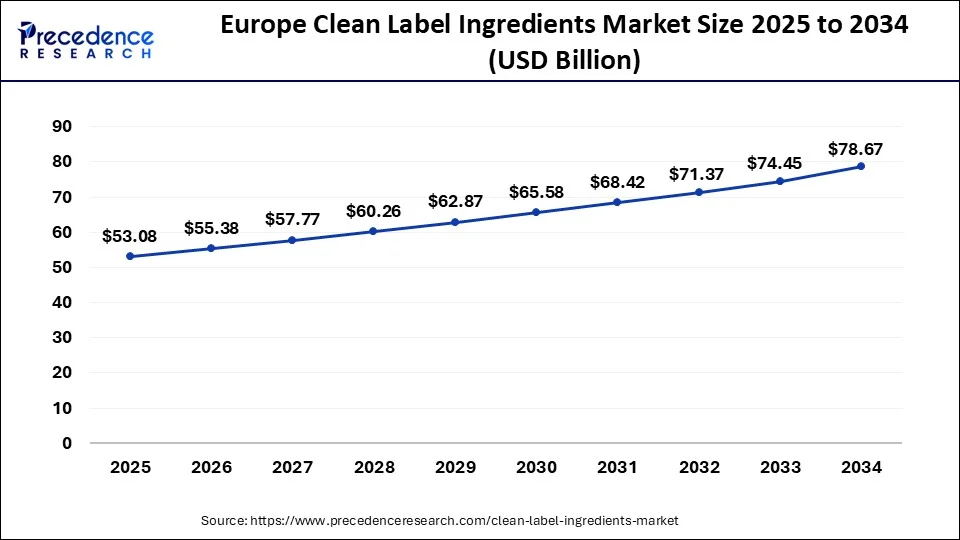
The Europe clean label ingredients market size is estimated at USD 53.08 billion in 2025 and is projected to reach around USD 82.13 billion by 2035, growing at a CAGR of 4.46% from 2026 to 2035.
How did Europe Dominate the Market in 2025?
Europe dominated the clean label ingredients market in 2025. Consumers across Europe are increasingly becoming more health and label-conscious. The increasing consumer demand for transparency and simplicity in ingredients is observed in the European food and beverage sector. The region's growing focus on reducing sugar content, particularly using low-calorie sweeteners derived from natural sources, considers the preferences of health-conscious consumers and encourages innovation in product development.
- A recent study claims that ATLAS was carried out in collaboration with Clear Seas Research. The findings revealed that 99% of manufacturers in Europe consider clean-label products for business strategies, with 87% having already integrated these products. This determines the industry's dedication to fulfilling consumer demand.
Rising Consumers' Demand for More Sustainable Products is Driving North America
North America will witness significant growth in the market during the forecast period. The market is expected to increase as a result of consumer's growing desire for products that are more sustainable, high-quality, and healthy. North American consumers are also concerned with supply chain safety regulations. Since they prefer locally made products with cleanliness and environmental friendliness.
IFT First 2024 in Chicago, Foodology presented its latest prototype solutions. The company provided insights into the potential evolution of protein fortification, clean-label products, and plant-based options while also highlighting its commitment to environmental sustainability.
Latest Immersive Launches: UK Market Trend
In the last, the UK market captured the largest share, due to the rising steps towards unveiling novel approaches. Firstly, in May 2025, Galactic introduced Galimax Flavor O-50, a natural solution derived from fermentation to add oregano flavor and freshness to both meat and plant-based products, exceeding natural preservation. Alongside, Marks & Spencer launched a line of cereals, date bars, bread, and oat-based milk alternatives.
Upgrading Regulations for Enzymes: Canada Market Trend
In the last year, Health Canada released the list of permitted food enzymes to enable enhanced flexibility in food manufacturing. Such as Lipase from Aspergillus niger PLR for use in baked goods, and Chymosin B and Glucose oxidase for a wide range of uses in the dairy and bakery sectors.
Spurring Advances & Strategic Acquisitions are Fueling the Asia Pacific
With a significant share, the Asia Pacific is leveraging major developments in fermentation, including Japanese firms are utilise fermentation with brown sugar and lactic acid bacteria to evolve functional ingredients from botanicals like plum, loquat leaf, and wakame. As well as many leading international companies are acquiring smaller, specialised local companies in Asia-Pacific to transform their portfolios and market access.
Emergence of Revised Nutrient Values: Japan Market Trend
In 2025, Japan updated its nutrient labeling standards, which include revisions for nutrients like protein, calcium, and dietary fiber, while downward revisions were made for others, especially zinc, sodium, and vitamin B1. These modifications are intended to facilitate increased transparency about the actual nutrient composition of foods, coupled with consumer demand for simple, understandable ingredient lists.
Latin America: “Nature-Driven Clean Label Ingredients Development”
Latin America shows consistent development in terms of the production of natural ingredients. It is due to the high natural potential of the region and agricultural activity that provides for an intensive production of natural sweeteners, colourants, and other ingredients derived from plants. Consumers in Latin America are becoming more health-oriented and seek simple, natural ingredient compositions in their food products. This factor stimulates the further development of the clean label segment.
Brazil Clean Label Ingredients Market Trends
Brazil's market is growing rapidly as consumers increasingly seek transparency, natural ingredients, and additive free products in foods and beverages, driven by heightened health and wellness awareness. Food manufacturers are responding by reformulating products with plant based, organic, and minimally processed ingredients to meet evolving consumer preferences and global clean label standards.
Middle East & Africa: “Growing Appetite for Authenticity and Halal Ingredients”
The growing popularity of clean labels in the Middle East & Africa is determined by an increasingly higher level of awareness about food safety. In addition, the consumers' appetite for natural ingredients with transparent label content prevails, especially those that can be considered halal-friendly. The factors that positively influence consumer behaviour include urbanisation and growing purchasing power. Moreover, a hot climate favours the consumption of natural preservatives.
Saudi Arabia Clean Label Ingredients Market Trends
Saudi Arabia's market is experiencing robust growth as consumers increasingly demand transparency, natural formulations, and additive-free products, driven by rising health awareness and lifestyle changes. Food and beverage manufacturers are reformulating products to include plant based, organic, and minimally processed ingredients to align with local preferences and global clean label standards.
Regulatory encouragement for safer and natural food systems, along with expanding retail and e commerce channels, is further accelerating market adoption. Additionally, strategic partnerships and investments by key food industry players are enhancing the availability and innovation of clean label ingredient offerings across the Saudi food sector.
Clean Label Ingredients Market: Value Chain Analysis
- Raw Material Procurement
This primarily includes defining "Clean Label" parameters, researching and selecting suppliers, requesting samples and documentation, auditing, and ultimately receiving and maintaining ongoing quality control.
Key Players: Axiom Foods, BI (Botanical International), Caltron Clays & Chemicals, etc. - Retail Sales and Marketing
The players are exploring product innovation to substitute synthetic additives with natural alternatives, implementing e-commerce and digital channels, and encouraging a brand's commitment to clean ingredients.
Key Players: Corbion N.V., Sensient Technologies Corporation, Tate & Lyle PLC, etc. - Waste Management and Recycling
This encompasses the reduction of waste at the source through robust processing, upcycling byproducts into new products, including biofertilizers or ingredients, and using environmentally friendly packaging that is easily recyclable or reusable.
Key Players: AgroGrIN Tech, Antony Waste Handling Cell, Attero Recycling, etc.
Top Companies and Their Contributions and Offerings in the Market
- Archer Daniels Midland (ADM): Focuses on R&D and partnerships to develop evidence-based, natural ingredient solutions and expand its plant-based protein portfolio.
- Cargill: Innovates in natural sweeteners (e.g., EverSweet stevia), texturizers, and oils, using fermentation and sustainable sourcing to provide recognizable alternatives to artificial additives.
- Corbion: Expands its plant-based portfolio and global market reach through strategic partnerships with companies like Nestlé and Azelis to offer natural preservation and functional ingredients.
- Dupont De Nemours and Company: Invests in R&D and acquisitions to develop innovative, label-friendly solutions, leveraging its expertise in biotechnology and advanced food processing.
- Frutarom: Specializes in natural flavors and extracts, expanding its offerings through strategic acquisitions (later acquired by IFF) to meet the demand for natural flavor profiles in clean-label products.
Clean Label Ingredients Market Companies
- Archer Daniels Midland (ADM): Focuses on R&D and partnerships to develop evidence-based, natural ingredient solutions and expand its plant-based protein portfolio.
- Cargill: Innovates in natural sweeteners (e.g., EverSweet stevia), texturizers, and oils, using fermentation and sustainable sourcing to provide recognizable alternatives to artificial additives.
- Corbion Inc.: Expands its plant-based portfolio and global market reach through strategic partnerships with companies like Nestlé and Azelis to offer natural preservation and functional ingredients.
- Dupont De Nemours and Company: Invests in R&D and acquisitions to develop innovative, label-friendly solutions, leveraging its expertise in biotechnology and advanced food processing.
- Frutarom: Specializes in natural flavors and extracts, expanding its offerings through strategic acquisitions (later acquired by IFF) to meet the demand for natural flavor profiles in clean-label products.
Other Major Key Players
- Ingredion Incorporated
- Kerry Group Plc
- Kerry Group PLC
- Koninklijke DSM N.V
- Sensient Technologies
- Tate & Lyle Plc
Recent Developments
- In April 2026, Ulrick + Short expanded its clean label range by launching avanté 25. It helped reduce sugar and increase fibre in sweet bakery products. The ingredient maintained texture, structure, and quality, while trials showed similar results to full-sugar recipes. (https://nutraceuticalbusinessreview.com )
- In April 2024, Cargill has teamed up with Voyage Foods to provide more sustainable alternatives to cocoa-based products. Products across bakery goods, ice cream, and confectionery will be made with this alternative. It is vegan and free from nut and dairy allergens. This partnership is a way of future-proofing our portfolio and meeting consumer demands and market regulations for sustainable options.
- In August 2023, Kemin Industries, a global ingredient manufacturer, has recently inaugurated its first-ever manufacturing facility in Verona, Missouri. To produce the Proteus line of clean-label functional proteins. These proteins play a crucial role in the meat and poultry industry by improving product quality and increasing yield.
Segments Covered In This Report
By Form
- Powder
- Liquid
- Others
By Type
- Natural Colours
- Natural Flavours
- Fruits & Vegetables Ingredients
- Starch & Sweeteners
- Flour
- Malt
- Others
By Application
- Food
- Bakery
- Confectionery
- Cereals & Snacks
- Processed Food
- Others
- Pet Food
- Dairy, Non-Dairy, And Fermented Beverages
- Others
By Distribution Channel
- B2B
- B2C
By Geography
- North America
- Asia Pacific
- Europe
- Latin America
- Middle East & Africa
For inquiries regarding discounts, bulk purchases, or customization requests, please contact us at sales@precedenceresearch.com
Frequently Asked Questions





Ask For Sample
No cookie-cutter, only authentic analysis – take the 1st step to become a Precedence Research client
 Get a Sample




 sales@precedenceresearch.com
 Schedule a Meeting
