



Contraceptive Drugs and Devices Market Size, Share and Trends 2026 to 2035
Contraceptive Drugs and Devices Market (By Product: Contraceptive Drugs, Contraceptive Devices; By Distribution Channels Outlook: Hospital Pharmacy, Retail Pharmacy, Clinics, Online Channels, Public Channels & NGOs, Other) - Global Industry Analysis, Size, Trends, Leading Companies, Regional Outlook, and Forecast 2026 to 2035
Source: https://www.precedenceresearch.com/contraceptive-drugs-and-devices-market
 Get a Sample
 Table Of Content


What is the Contraceptive Drugs and Devices Market Size?
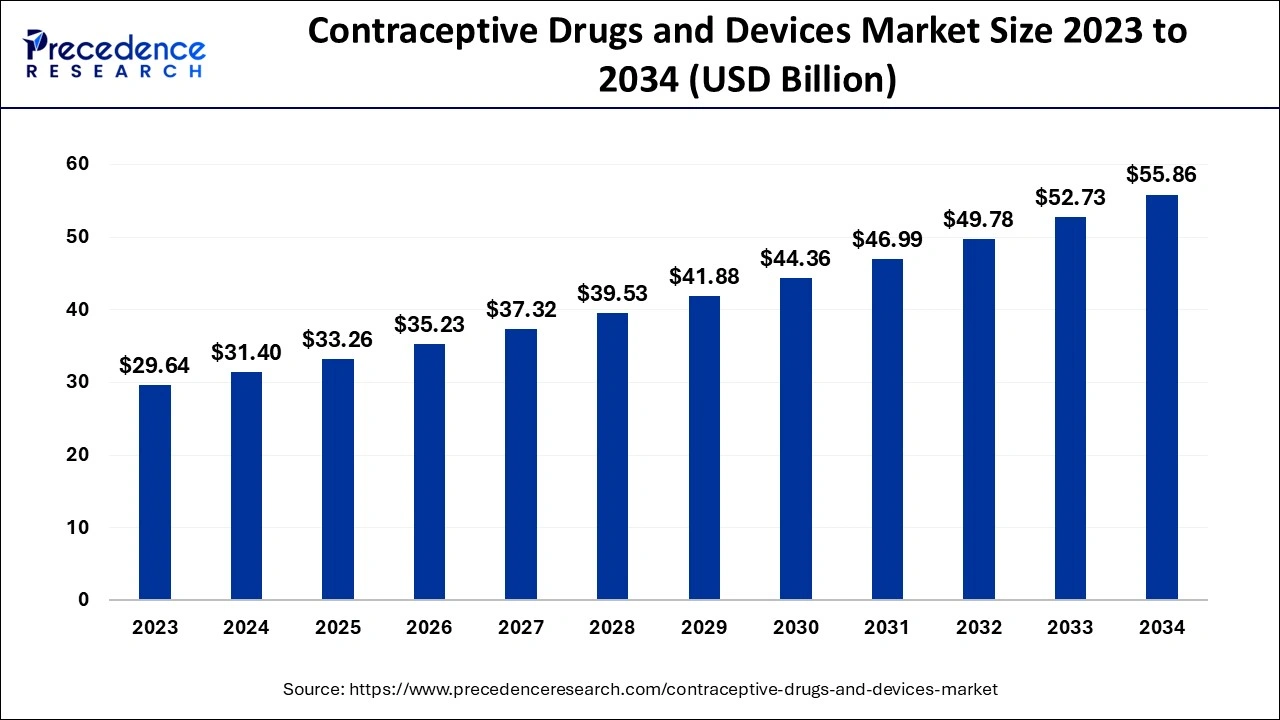
The global contraceptive drugs and devices market size was USD 33.26 billion in 2025, estimated at USD 35.23 billion in 2026 and is anticipated to reach around USD 58.87 billion by 2035, expanding at a CAGR of 5.88% from 2026 to 2035. The increase in the number of sexually transmitted diseases and unintended pregnancies is expected to drive market growth. Government efforts to spread awareness regarding contraception are also driving market growth. In addition, increasing government policies on controlling the population are further anticipated to enhance the contraceptive drugs and devices market growth
Contraceptive Drugs and Devices Market Key Takeaways
- In terms of revenue, the global contraceptive drugs and devices market was valued at USD 33.26 billion in 2025.
- It is projected to reach USD 58.87 billion by 2035.
- The market is expected to grow at a CAGR of 5.88% from 2026 to 2035.
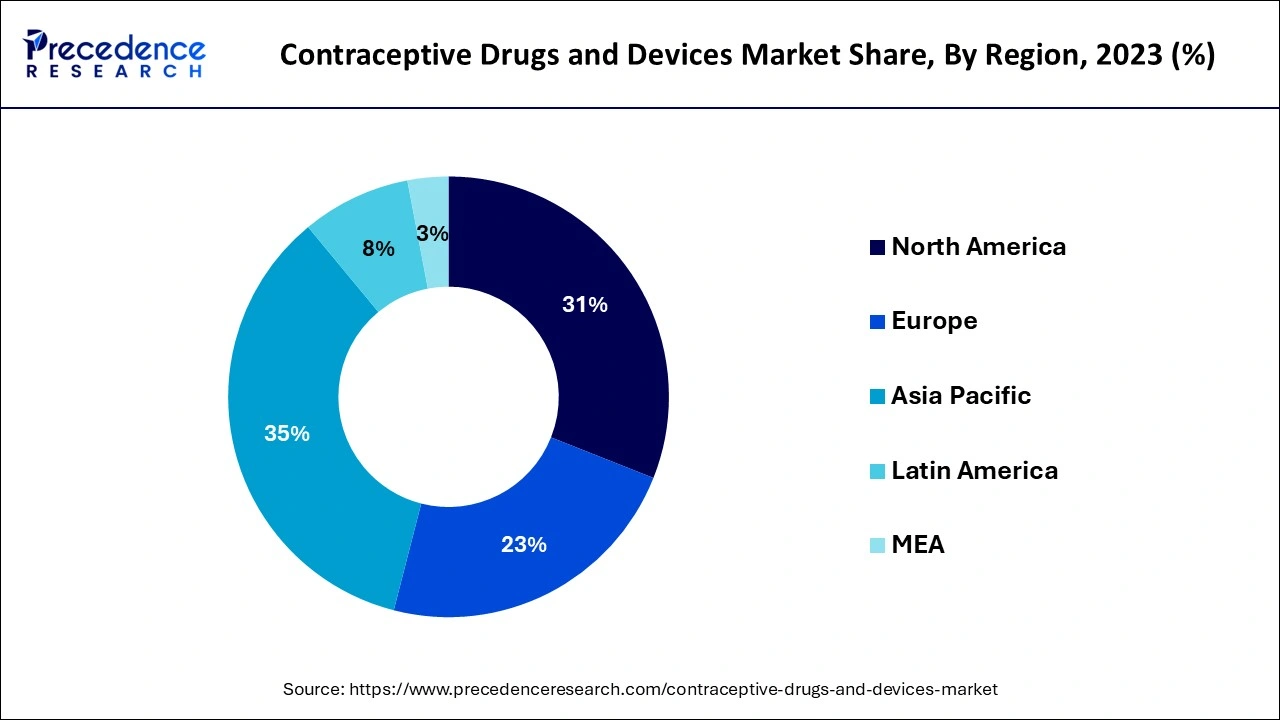
- Asia Pacific dominated the contraceptive drugs and devices market with the largest market share of 35% in 2025.
- North America is expected to grow rapidly in the market during the forecast period.
- The U.S. dominated the North American market with a market share of 85% in 2025.
- By product, the contraceptive devices segment contributed the biggest market share of 69% in 2025.
- By product, the contraceptive drugs segment is expected to grow at a CAGR of 3.51% during the forecast period.
- By distribution channel, the retail pharmacy segment dominated the global market in 2025.
- By distribution channel, the online channels segment is expected to grow rapidly in the market during the forecast period.
Market Overview
Contraceptive drugs and devices market deals with surgical treatments, medicines, and medical devices that are used to prevent pregnancy. Contraceptive devices and drugs are also working to keep sexually transmitted illnesses at STDs. It might be permanent or temporary, and both women and men could benefit from it. Sterilization for women and men is a permanent process, whereas non-hormonal and hormonal procedures are only temporary. In addition, increasing the number of women in the workforce, technological progress, and growing world population.
How is AI Changing the Contraceptive Drugs and Devices Market?
Artificial intelligence (AI) is changing the contraceptive drugs and devices market by providing innovative solutions beyond traditional methods of birth control. Diaphragms and smart condoms coupled with AI technology can offer potential risks, effectiveness, and real-time feedback on usage. It stands as an enhancing fore in generating a more inclusive, effective, and personalized approach to contraception beyond traditional birth control pills. Advanced algorithms provide personalized fertility window predictions by analyzing factors such as hormonal fluctuations, cervical mucus patterns, and basal body temperature. Thus aiding the development of non-hormonal contraceptive additives. Furthermore, AI-generated tracking techniques go beyond traditional methods. AI can assist in identifying non-hormonal methods tailored to individual preferences and health considerations by analyzing data related to fertility indicators and reproductive health.
Contraceptive Drugs and Devices Market Growth Factors
- The increasing focus of regional and national healthcare agencies and non-profit organizations on promoting women's sexual wellness and reproductive health contributed to propel the market growth.
- The increasing availability of favorable reimbursement policies in the developed and the increasing number of products being launched in the market by major domestic and global players are expected to drive the market growth.
- The rising NGO and government initiatives to improve the low costs of contraceptive drugs, easy use, and contraceptive methods are further anticipated to drive the growth of the contraceptive drugs and devices market.
Market Scope
| Report Coverage | Details |
| Market Size by 2035 | USD 58.87 Billion |
| Market Size in 2025 | USD 33.26 Billion |
| Market Size in 2026 | USD 35.23 Billion |
| Market Growth Rate from 2026 to 2035 | CAGR of 5.88% |
| Largest Market | Asia Pacific |
| Base Year | 2025 |
| Forecast Period | 2026 to 2035 |
| Segments Covered | Product Outlook, Distribution Channels Outlook, and Regions |
| Regions Covered | North America, Europe, Asia-Pacific, Latin America and Middle East, & Africa |
Market Dynamics
Driver
The growing emphasis of major healthcare organizations and manufacturers
The increasing prevalence of major healthcare organizations and manufacturers raising awareness of contraception options is the major driver of market growth. Various issues, including supply chain disruption, were blamed for his higher revenue drop. In addition, there have been significant disruptions of family planning and contraception services in various countries. A rise in government activities, the number of unplanned pregnancies, and the increasing prevalence of STDs are some factors fueling the market growth. Since they are growing more commonplace globally, unwanted pregnancies are a major concern. Due to this, the increase in unwanted pregnancies is expected to increase demand for contraceptive devices and medications.
Restraint
Side effects associated with drugs and lack of awareness
The long-term use of birth control devices and medications is related to various kinds of side effects such as weight gain, nausea, headaches, and bleeding. Various research studies have been published to highlight the long-term side effects associated with birth control drugs. In addition, social taboos and lack of awareness about contraception methods are accountable for the low adoption of drugs and devices in emerging countries. Furthermore, the availability of alternative contraceptive methods such as IUDs, condoms, and other physical barriers are effective side effects.
Opportunity
Rapidly growing product portfolio
The increasing number of new product launches and a rise in disposable income in developed and advancing countries are expected to offer significant opportunities for market growth in the coming year.
- In August 2023, Xiromed LLC today announced that it had received approval for its Abbreviated New Drug Application (ANDA) from the U.S. Food and Drug Administration (FDA) for the first generic version of Balcoltra, Joyeaux. Joyeaux is an oral contraceptive. Xiromed will launch the product in the U.S. immediately.
Segment Insights
Product Insights
The contraceptive devices segment dominated the contraceptive drugs and devices market in 2025. The contraceptive devices segment is further classified into diaphragms, subdermal implants, vaginal rings, condoms, and intrauterine devices. The segment growth is driven by increasing awareness regarding contraceptive devices as public and government welfare groups have been active in spreading awareness related to unwanted pregnancies. Contraceptive devices are effective in preventing unwanted pregnancies and the spreading of STDs. In addition, major market players are investing significantly in emerging advanced contraceptive devices such as subdermal implants, vaginal rings, condoms and intrauterine devices, and more.
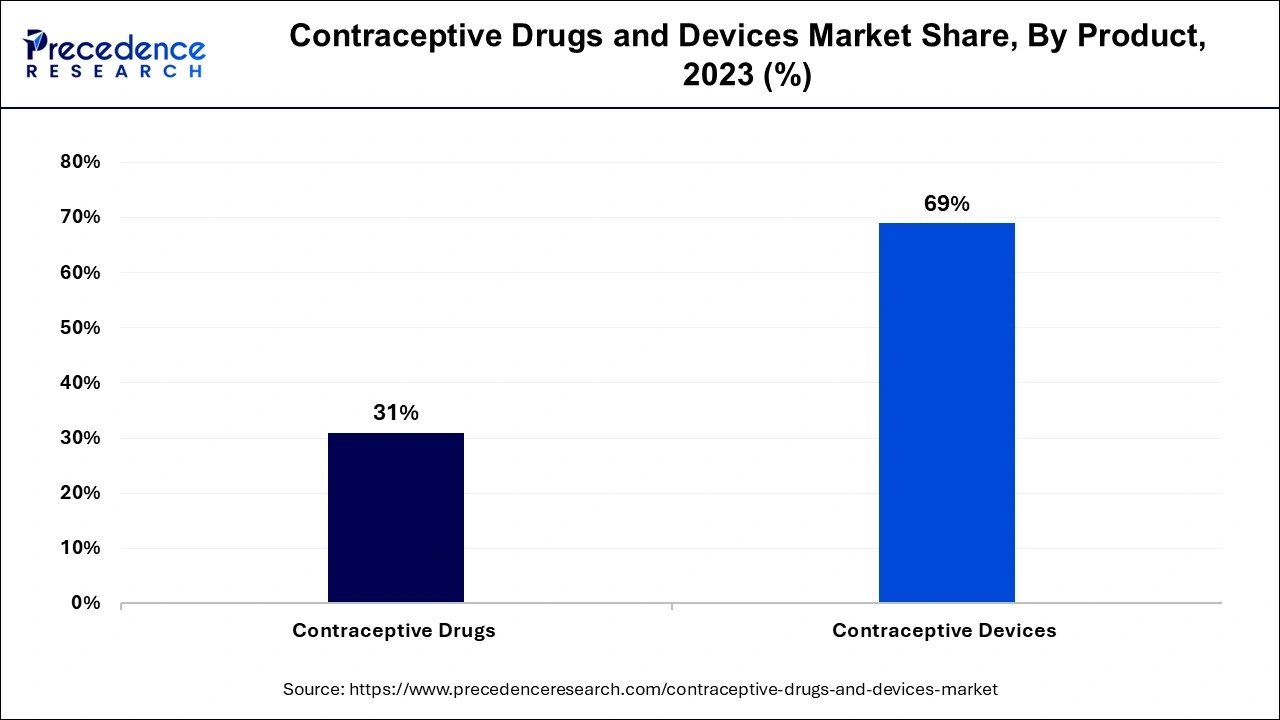
The contraceptive drugs segment is expected to grow at the fastest rate in the contraceptive drugs and devices market during the forecast period, leading to increasing awareness regarding preventive measures such as injectables, patches, and pills, and unwanted pregnancies. The growing acceptance and increased accessibility of contraceptive drugs across the urban population are fueling the market growth of this segment, as the population is giving higher importance to family planning and sexual health.
Distribution Channels Outlook Insights
The retail pharmacy segment dominated the global contraceptive drugs and devices market in 2025. Various countries such as India, China, Mexico, and Brazil allow birth control pills to be sold across the medicine shops. This factor has led to a significant shift of customers toward retail pharmacies for acquiring birth control pills. Also, the increasing awareness about various contraception methods and increasing demand for OTC contraception drugs across the general population.
The online channels segment is expected to grow rapidly in the contraceptive drugs and devices market during the forecast period. The segment growth is responsible for the increasing adoption of over-the-counter services coupled with various online discounts and offers to attract customers. In addition, the all-time availability of these drugs and a wide distribution channel such as patches, injectables, and oral pills of different brands.
Regional Insights
What is the Asia Pacific Contraceptive Drugs and Devices Market Size?
The Asia Pacific contraceptive drugs and devices market size was exhibited at USD 11.64 billion in 2025 and is anticipated to reach around USD 20.98 billion by 2035, growing at a CAGR of 6.07% from 2026 to 2035.
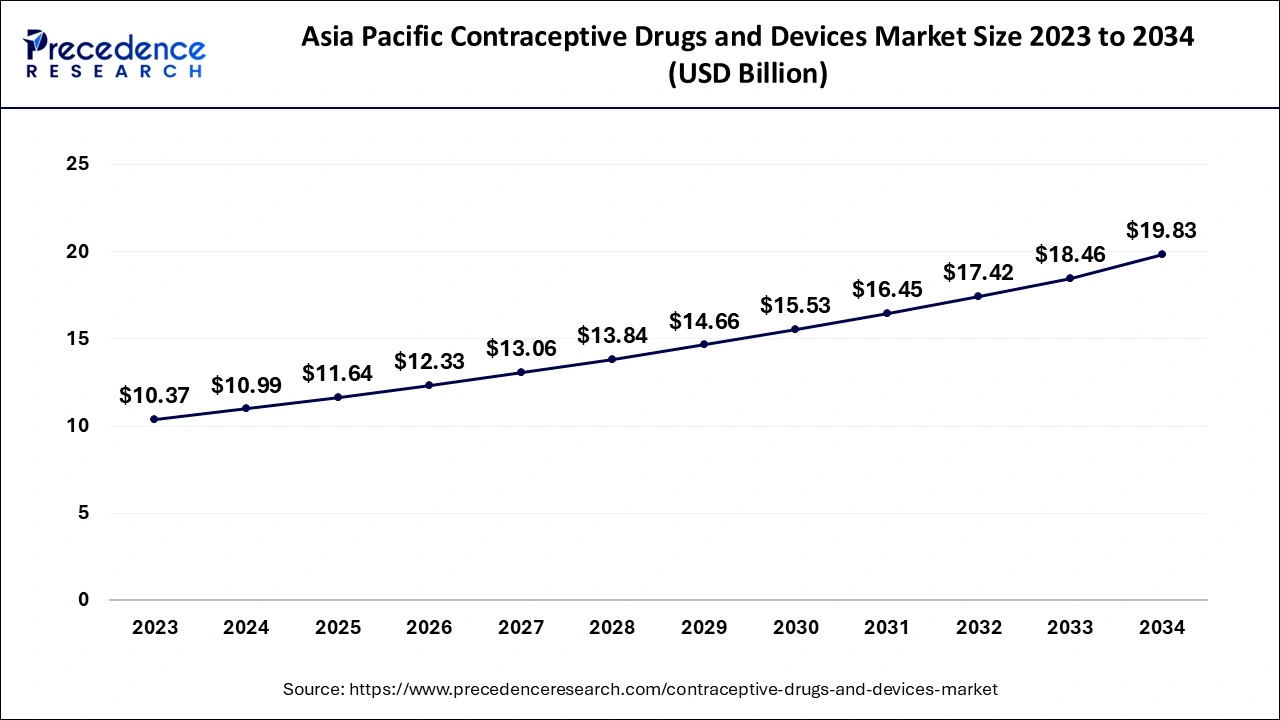
Asia Pacific dominated the contraceptive drugs and devices market in 2025. The market growth in the region is fueled by the increasing prevalence of unwanted pregnancies and STDs and the rising population. To mitigate problems such as STDs, abortion, and unwanted pregnancies, urban populations in the region have increased the use of contraceptive measures. In addition, increasing government initiatives and advanced healthcare infrastructure are further anticipated to enhance the market growth in North America.
The U.S. will dominate the North American contraceptive drugs and devices market in 2025. The major factors expected to the market growth in the U.S. are widespread access to an increase in the awareness of unwanted pregnancies and STDs and contraceptive measures. So many options for contraceptive measures are present in healthcare, making contraceptive devices and drugs more accessible to the population. In addition, increasing awareness by public and government welfare groups about abortions and STDs.
North America is expected to grow rapidly in the contraceptive drugs and devices market during the forecast period. The market growth in the region is attributed to the increasing initiatives taken by the government to make people aware of unwanted pregnancies and STDs. The government has also been active in offering contraceptive measures in the funded medical institutes of the government. In addition, the increasing focus on family planning by the rising population due to the rise in STDs and unwanted population has resulted in the increased sale of contraceptive devices and drugs in the Asia Pacific. China, India, Japan, and South Korea are the major countries in the region.
China is the major and fastest-growing country in the healthcare sector and held the Asia Pacific contraceptive drugs and devices market's largest share in 2023. The market growth is driven by growing awareness about unwanted pregnancies and STDs and the presence of major manufacturing companies. Due to the presence of a developed cheap labor and manufacturing sector, Major pharmaceutical companies can manufacture contraceptive products in huge numbers. In addition, due to the country's strong distribution channel, the products are deployed quickly to the customers. Additionally, the increased population has been due to the government putting more initiatives to educate the population about contraceptive measures.
What Are the Driving Factors of The Contraceptive Drugs and Devices Market in Europe?
Europe is expected to grow at a significant CAGR during the forecast period, driven by high use of modern methods and favorable government policies such as free contraceptives in France. The growth is stimulated by an increase in the demand for hormonal implants and IUDs, telemedicine development, and dispensing by pharmacists, and a growing interest in non-hormonal and sustainable contraceptives.
Germany Market Trends
The demand in Germany for non-hormonal contraceptive use, such as fertility trackers and traditional methods, is increasing. Long-acting reversible contraceptives and access to emergency contraception are becoming more and more innovative. Pharmacies are important in consultation and dispensing, which serve to make contraceptives more available and help grow contraceptive use among the demographics.
What Are the Driving Factors of The Contraceptive Drugs and Devices Market in Latin America?
Latin America is expected to grow at a remarkable CAGR during the forecast period. There is a robust growth in Latin America, backed by government programs of free contraception, especially in Brazil. The high numbers of unplanned pregnancies push the demand for long-acting contraceptive methods. Better sexual health awareness and education, coupled with enhanced emphasis on family planning among the younger populations, also enhance the adoption rates in the region.
Brazil Market Trends
The Brazilian market is also consumer-led by the government programs and campaigns that encourage free access to IUDs and implants within the public healthcare systems. Distribution is dominated by retail pharmacies, and e-commerce is growing at a rapid pace. The innovative barrier techniques, such as non-latex and hypoallergenic condoms, are on the rise as more people are becoming aware of the various needs of consumers.
How is the Middle East & Africa Performing in The Contraceptive Drugs and Devices Market?
The Middle East & Africa are expected to grow at a notable CAGR during the forecast period. The MEA region undergoes high growth because of growing investments in reproductive healthcare and new reimbursement plans. There is more access to contraception, especially in South Africa, through government awareness efforts and NGO efforts. There are emerging innovative solutions, such as vending machines, to provide discreet access to high levels of unintended pregnancies.
South Africa Market Trends
South Africa is promoting the supply of contraceptives with innovative distribution channels, such as vending machines, which offer free commodities. Good emphasis on policies related to reproductive health that meet international standards assists in accessibility. Specific attention is paid to rural and underserved groups to decrease unintended pregnancies and enhance overall reproductive healthcare outcomes.
Contraceptive Drugs and Devices Market Companies
- Abbvie, Inc.
- Afaxys, Inc.
- Agile Therapeutics
- Bayer AG
- China Resources (Holdings) Co., Ltd.
- Church & Dwight Co., Inc.
- Cupid Limited
- Helm AG
- Johnson & Johnson Services, Inc.
- Organon Group of Companies
- Pfizer Inc.
- Veru, Inc.
- Viatris Inc.
Recent Developments
- In January 2026, Organon announced FDA approval for NEXPLANON's supplemental New Drug Application, extending its contraceptive use duration from three to five years, with no reported pregnancies or safety issues during clinical trials. (Source: https://www.organon.com )
- In June 2025, Inne, a Berlin-based startup, announced that it received regulatory approval for its saliva-based fertility tracker, Minilab, for use as a contraceptive in Europe. The device is a non-invasive alternative to hormonal birth control methods that tracks daily changes in progesterone levels. (Source: https://thenextweb.com )
- In July 2023, the first daily oral contraceptive approved for use in the U.S. without a prescription, Opill (norgestrel) tablet for nonprescription use to prevent pregnancy, was approved by the U.S. Food and Drug Administration. Approval of this progestin-only oral contraceptive pill offers an option for consumers to purchase oral contraceptive medicine without a prescription at grocery stores, convenience stores, drug stores, and online.
- In December 2023, in the UK, researchers initiated the first phase of trials for a revolutionary non-hormonal male birth control pill. This pill is a hormone-free innovation named YCT-529, launched by a Nottingham-based drug development company, Quotient Sciences.
- In December 2024, Three Idaho Republican women launched an organization to preserve access to contraceptives. The aim of this launch was to address confusion between contraceptives and abortion.
- In September 2024, a global leader in women's healthcare, CooperSurgical, announced the launch of a new inserter designed for single-hand placement of Paragard. The new single-hand inserter improves the placement procedure for healthcare providers and makes Paragard an even more accessible contraceptive choice for both patients and healthcare providers.
Segment Covered in the Report
By Product
- Contraceptive Drugs
- Contraceptive Pills
- Patch
- Injectable
- Contraceptive Devices
- Condoms
- Male Condoms
- Female Condoms
- Subdermal Implants
- Intrauterine Devices (IUDs)
- Copper IUDs
- Hormonal IUDs
- Vaginal Ring
- Diaphragm
- Condoms
By Distribution Channels Outlook
- Hospital Pharmacy
- Retail Pharmacy
- Clinics
- Online Channels
- Public Channels & NGOs
- Other
By Geography
- North America
- Asia Pacific
- Europe
- Latin America
- Middle East and Africa
For inquiries regarding discounts, bulk purchases, or customization requests, please contact us at sales@precedenceresearch.com
Frequently Asked Questions





Ask For Sample
No cookie-cutter, only authentic analysis – take the 1st step to become a Precedence Research client
 Get a Sample
.webp)



 sales@precedenceresearch.com
 Schedule a Meeting
