



Elastography Imaging Market Size, Companies, Share, Patient Volume, Treatment Adoption Rates, Pricing Analysis, Regulatory Landscape, Competitive Positioning, and Demand Forecast
Elastography Imaging Market (By Modality: Ultrasound Elastography, Strain elastography, Shear wave elastography, Transient elastography, Magnetic Resonance Elastography; By Technology Type: Shear Wave Elastography, Strain Elastography, Transient Elastography, Other Elastography Technologie; By Application: Liver Disease Assessment, Breast Imaging, Other Applications; By End-User: Hospitals, Diagnostic Imaging Centers, Specialty Clinics, Research & Academic Institute; By Product Type: Elastography-Enabled Ultrasound Systems, Elastography Software/Platform, MRI Elastography Systems/Add-on Modules, Accessories & Consumables; By Portability: Cart-based/Fixed Imaging Systems, Portable/Handheld Imaging Systems; By Clinical Workflow: Radiology/Imaging Department-based Use, Point-of-Care Use) - Global Industry Analysis, Size, Trends, Leading Companies, Regional Outlook, and Forecast 2026 to 2035
Source: https://www.precedenceresearch.com/elastography-imaging-market
 Get a Sample
 Table Of Content


What is the Elastography Imaging Market Size?
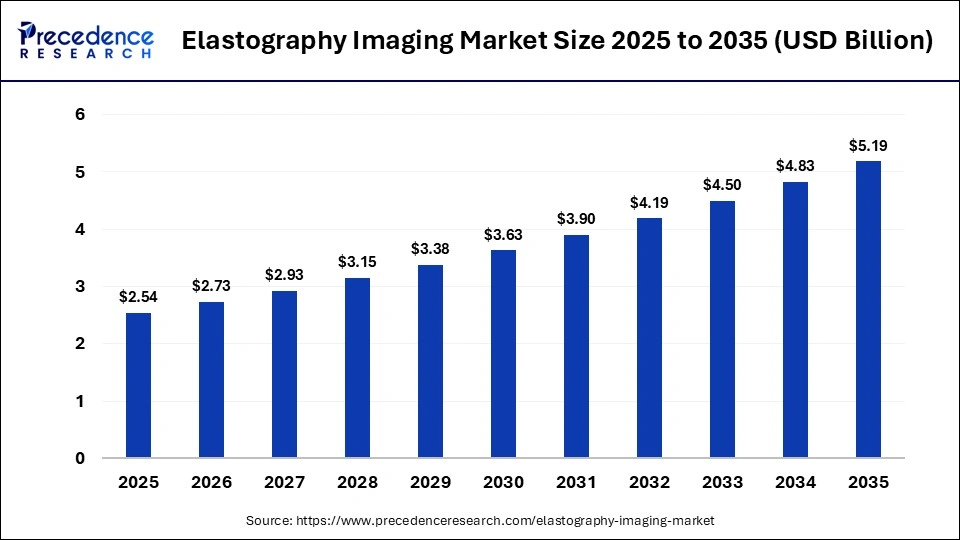
The global elastography imaging market size is predicted to increase from USD 2.73 billion in 2026 to approximately USD 5.19 billion by 2035, expanding at a CAGR of 7.41% from 2026 to 2035. The elastography imaging market is expected to grow due to the increasing prevalence of chronic liver and breast cancer, along with advanced technology in the elastography imaging industry. The market is also expected to grow with the help of artificial intelligence (AI) and machine learning (ML), which aid in automating diagnostic precision by enhancing tissue stiffness and reducing human error.
Market Highlights
- North America dominated the market, holding a share of approximately 36% in 2026.
- Asia Pacific is observed to be the fastest-growing region during the forecast period.
- By modality, the ultrasound elastography segment held the largest elastography imaging market share, accounting for approximately 79% in 2026.
- By modality, the magnetic resonance elastography segment is expected to grow at a remarkable CAGR between 2026 and 2035.
- By technology, the shear wave elastography segment held a major market share of approximately 42% and is expected to be the fastest growing segment between 2026 and 2032.
- By application, the liver disease assessment segment dominated the market with a share of approximately 46% in 2026.
- By application, the prostate imaging segment is expected to grow at the highest CAGR between 2026 and 2035.
- By end-user, the hospitals segment led the elastography imaging market with a share of approximately 47% in 2026.
- By end-user, the diagnostic imaging centers segment is expected to show the fastest growth in the forecast period.
- By product type, the elastography-enabled ultrasound systems segment contributed the biggest market share of approximately 58% in 2026.
- By product type, the elastography software/platforms segment is expected to grow swiftly between 2026 and 2035.
- By portability, the cart-based/fixed imaging systems segment held a dominant market share of approximately 71% in 2026.
- By portability, the portable/handheld imaging systems segment is expected to grow rapidly in the foreseen period.
- By clinical workflow, the radiology/imaging department-based use segment accounted for the highest market share of approximately 62 % in 2026.
- By clinical workflow, the point-of-care use (POCUS/bedside) segment is expected to witness the fastest growth in the coming years.
What is Elastography Imaging?
The elastography imaging market comprises diagnostic imaging technologies that measure tissue stiffness/elasticity to support the detection, staging, and monitoring of diseases such as liver fibrosis, tumors, and inflammatory conditions. Elastography is primarily integrated with ultrasound and MRI systems and is widely used in hepatology, radiology, oncology, and women's health.
The market is mainly driven by growing global prevalence of chronic liver diseases and breast cancer. Advanced technologies, coupled with non-invasive and alternative techniques to traditional biopsies, is fueling the market's growth. The technique is also highly preferred by patients and physicians due to its non-invasive characteristics and precise assessment of damaged tissue, allowing for the right treatment procedure to be followed.
What is the Role of AI in the Elastography Imaging Market?
Artificial intelligence plays a significant role in elastography imaging by introducing automation in complex tissue stiffness analysis, enhancing accuracy, efficiency, and accessibility. AI and ML algorithms analyze vast amounts of patient data and provide assisted classification and prognosis prediction. They also help reduce human error, along with faster detection of fibrosis, cancer, and musculoskeletal conditions. Personalized medication, facilitated by advanced analytics, enables a non-invasive procedure, further supporting the market's growth.
Elastography Imaging Market Trends
AI and Automation- The market is observing growth due to higher usage of AI algorithms along with advanced technology. Advanced technology enables predictive analytics, along with the quantification of tissue stiffness, which is helpful for market growth.
- For instance, In May 2025, a scientific report revealed that early detection of breast cancer with technologically advanced methods helps to enhance diagnostic accuracy and strengthen the reliability of breast cancer detection, improving patient treatment and prognosis.
Expansion of Handheld and Point of Care Devices- Higher usage of handheld shear-wave probes in regions with limited resource facilities is another major factor fueling the market growth.
Increasing Applications in the Healthcare Industry- Elastography imaging is increasingly studied to be used in other domains, apart from breast cancer and liver cirrhosis detection, fueling market growth.
- For instance, In February 2025, a new software release for Philips' EPIQ Elite and AFFIniti ultrasound imaging platforms helps to aid faster workflows and efficient diagnostic processes.
Market Dynamics
Drivers
Chronic liver diseases (CLD), which include non-alcoholic fatty liver diseases (NAFLD) and cirrhosis, are developing worldwide, which increases the demand for elastography imaging. Elastography is instrumental in tracking and diagnosing the progress of liver conditions, which mainly lowers the demand for the invasive biopsy process. Healthcare providers and patients alike are excessively shifting to non-invasive diagnostic procedures. Elastography's potential is to check tissue stiffness in a lower intrinsic manner, which has made it an attention-grabbing choice to regular biopsies, pointing to widespread acceptance.
The urge for stable and reliable elastography devices has developed, specifically in developing industries where there is a developing demand for mobile diagnostic and cost-effective solutions.
Restraints
One of the initial barriers to the wide acceptance of elastography imaging is the high cost of the technology. Advanced -end machines, particularly for MRI-dependent elastography systems, require a significant investment, which restricts their accessibility in lower-income regions and in smaller healthcare facilities. Though there is rising demand for elastography, restricted healthcare infrastructure and lack of investment are present in several growing regions that pose issues to industry development.
Opportunities
As the healthcare design develops in growing economies, there is a developing possibility for elastography imaging systems to enter such markets. The developing healthcare investments are present in countries like India, China, and Brazil, which are predicted to drive the main industry expansion in such regions. The current research into the latest uses of elastography, such as cardiology, ophthalmology, and neurology, is present in current growth possibilities. For instance, elastography is being discovered for brain constant measurements and for checking early-stage cancers, which stretches its capability beyond regular applications.
Segmental Insights
Modality Insights
Which Modality Segment Led the Elastography Imaging Market?
The ultrasound elastography segment led the market, accounting for approximately 79% of share in 2026, as it is a low-cost, portable, and real-time imaging method. Factors such as its ease of use, making it ideal for assessing liver disease, breast lesions, and prostate issues, further promotes the use of ultrasound elastography. The rising prevalence of chronic liver diseases and cancer further potentiates the demand for non-invasive treatment methods. Technological advancements in the form of AI and MRI elastography result in higher precision.
The magnetic resonance elastography (MRE) segment is observed to grow rapidly in the foreseen period, as MRE is known for its higher diagnostic accuracy to access deep organs such as the liver, brain, and pancreas. The segment also observes growth as it focuses on providing quantitative data beyond ultrasound's limitations. The segment provides 3D, high-resolution stiffness mapping, offering a superior non-invasive alternative to biopsies.
Technology Insights
How the Shear Wave Elastography Segment Dominated the Elastography Imaging Market?
The shear wave elastography segment dominated the market with a share of approximately 42% in 2026 and is expected to sustain its position in the foreseen period. This segment dominated because of the growing demand for non-invasive imaging techniques. Shear wave elastography can allow the quantification of mechanical and elastic tissue properties. It uses a higher intensity pulse to produce a shear wave.
The strain elastography segment is estimated to be the second-largest growing segment. Strain elastography is a primary tool for differentiating benign and malignant lesions by understanding the tissue stiffness, which increases in the case of later stages of cancer. It is also used to assess tendon and muscle elasticity, providing a low-cost alternative to MRI, which is helpful for sports medicine and physical therapy.
Application Insights
Which Application Segment Dominated the Elastography Imaging Market?
The liver disease assessment segment held the largest market share of approximately 46% in 2026, due to growing chronic liver issues such as fibrosis, fatty liver, and cirrhosis. A huge shift from invasive to non-invasive methods for the treatment of chronic health issues is another major factor fueling the segment's growth. Technological advancement, providing improved resolution, real-time imaging, quantitative analysis, and AI integration, also helps to propel the segment's growth.
The prostate imaging segment is expected to witness the fastest growth between 2026 and 2035. Prostate imaging helps to improve the detection and localization of prostate cancer by mapping tissue stiffness. Prostate cancer is the second leading cause of death in males globally, following lung cancer. Elastography is a non-invasive technique that offers numerous benefits, such as cost-effectiveness and high sensitivity for prostate cancer detection.
End User Insights
Why did the Hospitals Segment Dominate the Elastography Imaging Market?
The hospitals segment contributed the biggest market share of approximately 47% in 2026, due to the presence of a developed infrastructure, higher usage of advanced medical technologies, and high procedure volume for liver fibrosis, cancer, and other similar chronic health issues. Patients prefer technologically advanced non-invasive treatment methods. Hospitals have skilled professionals and favourable reimbursement policies, benefiting patients.
The diagnostic imaging centers segment is expected to expand rapidly in the forecast period. Specialized centers nowadays are adopting non-invasive methods. Diagnostic centers have the suitable capital investment to adopt innovative devices. They facilitate patient referrals and increase utilization. They have trained professionals to operate complex devices and provide personalized care to patients.
Product Type Insights
Which Product Type Segment Dominated the Elastography Imaging Market?
The elastography-enabled ultrasound systems held a dominant market share of approximately 58% in 2026, due to their cost-effectiveness, portability, real-time imaging, and non-invasive nature. Elastography-enabled ultrasound systems help identify chronic issues such as liver cirrhosis, breast lesions, and prostate cancer. A major shift of patients from large hospitals to small clinics with technologically advanced medical aids and imaging facilities is another major factor for the segment's growth.
The elastography software/platforms segment is expected to grow at the highest CAGR over the studied period. Software/platforms focus on advanced processing, AI integration, and user-friendly interfaces like 2D or 3D imaging. Such advancements enhance accuracy, speed, and workflow, thereby smoothing the entire diagnostic procedure. Healthcare professionals can generate reports and observe minute changes within a patient's body through software/platforms.
Portability Insights
How the Cart-Based/Fixed Imaging Systems Segment Led the Elastography Imaging Market?
The cart-based/fixed imaging systems segment contributed the biggest market share of approximately 71% in 2026, due to its higher adoption by hospitals and huge medical centers for the detection of liver fibrosis, musculoskeletal issues, and breast issues. Cart-based/fixed imaging systems are designed for intuitive operation and high performance across all clinical settings. They are particularly useful in inpatient settings, providing real-time patient data.
The portable/handheld imaging systems segment is expected to be the fastest-growing segment in the coming years. This is due to higher demand for point-of-care and non-invasive methods. Portable systems are comparatively cost-effective, efficient, and easy to use, deriving accurate results. They generate rapid results and eliminate the need for a specialized infrastructure for their installation, augmenting the segment's growth.
Clinical Workflow Insights
Which Clinical Workflow Segment Led the Elastography Imaging Market?
The radiology/imaging department-based use segment held a major market share of approximately 62% in 2026, due to high patient volumes, suitable infrastructure, and the presence of skilled professionals. Government and private bodies provide investment to adopt advanced medical devices in the radiology department. Patients have high trust in radiology-based diagnosis, as they provide accurate and precise results with appropriate guidance.
The point-of-care use (POCUS/bedside) segment is expected to account for the highest growth in the coming years. This is due to higher demand for the portable ultrasound system, AI integration, and the versatility of devices to detect major health issues. The easy usage of handheld devices in emergency settings, clinics, and rural areas due to their ease of use also boosts the segment's growth. They can be placed anywhere and eliminate the need for patients to travel between departments in healthcare settings.
Regional Insights
How Big is the North America Elastography Imaging Market Size?
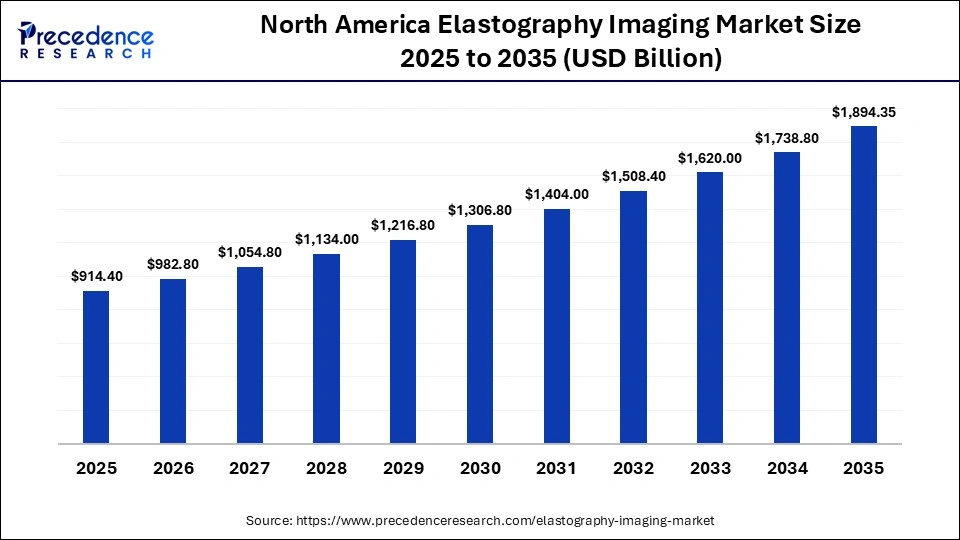
The North America elastography imaging market size is estimated at USD 982.82 billion in 2026 and is projected to reach approximately USD 1,894.35 billion by 2035, with a 7.56% CAGR from 2026 to 2035.
Which Factors Drive the Elastography Imaging Market in North America?
North America dominated the market with a share of approximately 36% in 2026, mainly due to factors such as developed medical infrastructure, high chronic disease rates, and the usage of advanced technologies such as MRI and ultrasound. North Americans are increasingly aware of screening and early diagnosis of cancer and other chronic conditions, potentiating the use of elastography imaging. Favorable government initiatives and regulatory policies also foster market growth.
What is the Size of the U.S. Elastography Imaging Market?
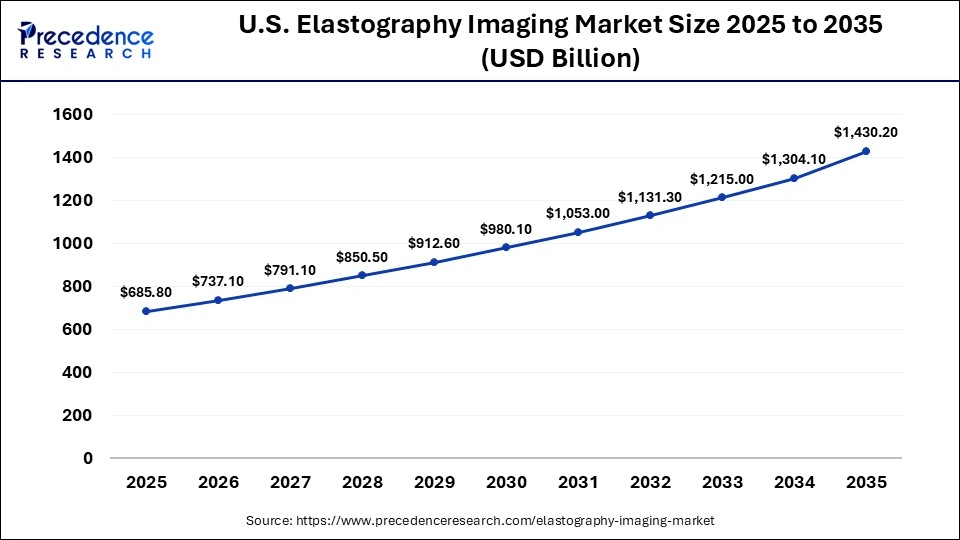
The U.S. elastography imaging market size is calculated at USD 737.10 billion in 2026 and is expected to reach nearly USD 1,430.20 billion in 2035, accelerating at a strong CAGR of 7.63% between 2026 and 2035.
U.S. Market Trends
The U.S. is a major contributor to the market due to the presence of a robust healthcare infrastructure, growing R&D, and higher usage of elastography imaging methods in different domains. Rising cases of liver diseases, cancer, and obesity also fuel market growth. It is projected that, by 2050, over 122 million adults will suffer from metabolic dysfunction-associated steatotic liver disease (MASLD).
How Will Asia Pacific Grow in the Elastography Imaging Market?
Asia Pacific is expected to be the fastest-growing region in the foreseen period, due to the growing population, burgeoning healthcare sector, increasing prevalence of chronic diseases, and higher demand for non-invasive treatment options. The region has a suitable manufacturing infrastructure for the domestic manufacturing of elastography machines at affordable costs. Supportive government medical facilities also help treat serious issues at low costs, enhancing accessibility and affordability for the rural population.
China Market Trends
China holds a major share, due to the growing prevalence of chronic issues and government investments. The Chinese government offers discounted loans for the adoption or upgradation of medical devices in hospitals/clinics. Higher healthcare awareness and the rising adoption of advanced technologies also contribute to market growth.
What Are the Driving Factors of The Elastography Imaging Market in Europe?
Europe is expected to grow at a significant CAGR during the forecast period. Europe's growth remained steady due to the prevalent use of non-invasive imaging in the public health care systems. Germany and France concentrated on early detection of liver diseases and fibrosis, with all hospitals implementing advanced elastography methods. An increase in liver-related disease and emphasis on early diagnosis and cost-effective testing mechanisms drove the growth.
Germany Market Trends
Germany emerged as one of the largest markets with widespread adoption of elastography for the early detection of chronic diseases. Hospitals across Germany utilize advanced ultrasound and MR elastography systems that are incorporated in everyday practice. Advanced research and development, primarily focusing on enhancing usage and improving diagnostic abilities for liver cancer and disease, significantly impacted Germany's segment.
What Are the Driving Factors of the Elastography Imaging Market in Latin America?
Latin America is expected to grow at a notable CAGR during the forecast period. Latin America grew steadily with the governments' push to use non-invasive diagnosis for liver diseases. Brazil and Argentina expanded their diagnostic facilities with enhanced imaging systems, and the awareness about early cancer diagnosis gained pace among both doctors and patients.
Brazil Market Trends
Brazil saw an increase in demand for elastography techniques due to the fact that they provide an effective alternative to biopsy. Awareness regarding its diagnostic capabilities escalated among healthcare practitioners across the segment. Private healthcare centers focused on enhancing their diagnostic equipment with high-end imaging systems, ultimately contributing to better testing of liver diseases with a quick diagnosis.
How is the Middle East and Africa performing in the Elastography Imaging Market?
The Middle East and Africa are expected to grow at a lucrative CAGR during the forecast period. The Middle East and Africa segment gained pace on the acceptance of elastography imaging, thanks to better healthcare infrastructure, especially in private hospitals investing in high-end diagnostics. A notable shift from invasive biopsy to less invasive elastography techniques marked growth in the Middle East & Africa. Increasing healthcare investment and growing awareness about liver diseases and cancer also contributed.
South Africa Market Trends
Through infrastructural advancement, South Africa marked growth in increased demand for elastography, owing to a rise in chronic diseases. Improvements in health care facilities and augmentation with modern imaging technologies have led to a high acceptance of elastography techniques.
Elastography Imaging Market Value Chain Analysis
- R&D: The R&D focuses on enhancing the diagnostic precision, including AI, and expanding its clinical utility beyond liver disease assessment.
Key Players: GE HealthCare, Philips Healthcare, and Siemens Healthineers. - Distribution to Hospitals & Clinics: Elastography imaging devices are distributed to hospitals/clinics either directly through manufacturers or distributors and wholesalers.
Key Players: Fujifilm Holdings and Mindray Bio-Medical Electronics. - Patient Support & Services: Patient support & services refer to guiding patients about benefits of elastography imaging and providing financial assistance.
Who are the Major Players in the Global Elastography Imaging Market?
The major players in the elastography imaging market include Canon Medical Systems Corporation, Esaote SpA, FUJIFILM Corporation, GE Healthcare, Hitachi, Ltd, Koninklijke Philips N.V., Mindray Bio-Medical Electronics Co., Ltd., Samsung Medison Co., Ltd., Siemens, and Toshiba America Medical Systems, Inc.
Recent Developments
- In March 2026, Esaote Group, an Italian medical imaging manufacturer, announced the showcasing of its innovations at the European Congress of Radiology 2026 in Vienna (March 4–8, Booth 505, Expo Hall X5). They emphasize ultrasound for interventional radiology, launching the MyLab E85 and MyLab C30 GTS Edition ultrasound systems. (Source: https://healthcare-in-europe.com)
- In November 2025, Canon Medical Systems obtained FDA clearance for advanced ultrasound processing algorithms, enhancing image quality, microvascular flow assessment, and elastography performance, set to debut at the 2025 RSNA meeting in Chicago. (Source: https://radiologybusiness.com)
- In November 2025, Canon Medical Systems received U.S. Food and Drug Administration (FDA) approval for its ultrasound processing algorithms to enhance image quality, microvascular flow assessment, and elastography performance. The system can extract higher-order harmonic components to improve spatial resolution and reduce noise.(Source: https://radiologybusiness.com)
- In April 2025, Royal Philips, a healthcare technology company, launched the Elevate platform upgrade for its EPIQ Elite ultrasound system. The platform involves the addition of Auto ElastQ for liver elastography, providing a non-invasive method to measure liver stiffness.(Source: https://health.economictimes.indiatimes.com)
Elastography Imaging Market Segments
By Modality
- Ultrasound Elastography
- Strain elastography
- Shear wave elastography
- Transient elastography
- Magnetic Resonance Elastography
By Technology Type
- Shear Wave Elastography
- Strain Elastography
- Transient Elastography
- Other Elastography Technologies
By Application
- Liver Disease Assessment
- Breast Imaging
- Thyroid Imaging
- Prostate Imaging
- Musculoskeletal Imaging
- Other Applications
By End-User
- Hospitals
- Diagnostic Imaging Centers
- Specialty Clinics
- Research & Academic Institutes
By Product Type
- Elastography-Enabled Ultrasound Systems
- Elastography Software/Platforms
- MRI Elastography Systems/Add-on Modules
- Accessories & Consumables
By Portability
- Cart-based/Fixed Imaging Systems
- Portable/Handheld Imaging Systems
By Clinical Workflow
- Radiology/Imaging Department-based Use
- Point-of-Care Use (POCUS/bedside)
By Region
- North America
- Europe
- Asia-Pacific
- Latin America
- Middle East & Africa
For inquiries regarding discounts, bulk purchases, or customization requests, please contact us at sales@precedenceresearch.com
Frequently Asked Questions
Tags





Ask For Sample
No cookie-cutter, only authentic analysis – take the 1st step to become a Precedence Research client
 Get a Sample
.webp)



 sales@precedenceresearch.com
 Schedule a Meeting
