



Food Allergy Market Size, Share and Trends 2026 to 2035
Food Allergy Market (By Allergen Type: Peanut Allergy, Milk Allergy, Egg Allergy, Tree Nut Allergy, Fish & Shellfish Allergy, Soy Allergy, Wheat/Sesame & Others; By Product/Treatment Type: Diagnostics (tests), therapeutics, Epinephrine Auto-Injectors, Antihistamines & Others; By End-User/Channel: Hospitals & Clinics, Diagnostic Laboratories, Home Care & Pharmacies, Research Institutes) - Global Industry Analysis, Size, Trends, Leading Companies, Regional Outlook, and Forecast 2026 to 2035
Source: https://www.precedenceresearch.com/food-allergy-market
 Get a Sample
 Table Of Content


What is Food Allergy Market Size?
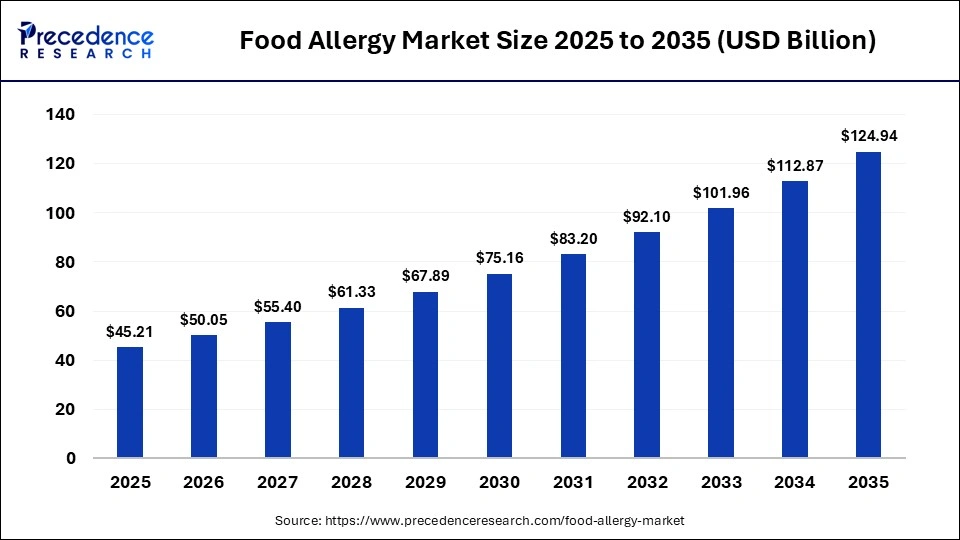
The global food allergy market size was calculated at USD 45.21 billion in 2025 and is predicted to increase from USD 50.05 billion in 2026 to approximately USD 124.94 billion by 2035, expanding at a CAGR of 10.70% from 2026 to 2035. The market growth is driven by the rising prevalence of food allergies, increasing awareness, advanced therapies, regulatory focus on labeling and safety, and expanding healthcare infrastructure globally.
Market Highlights
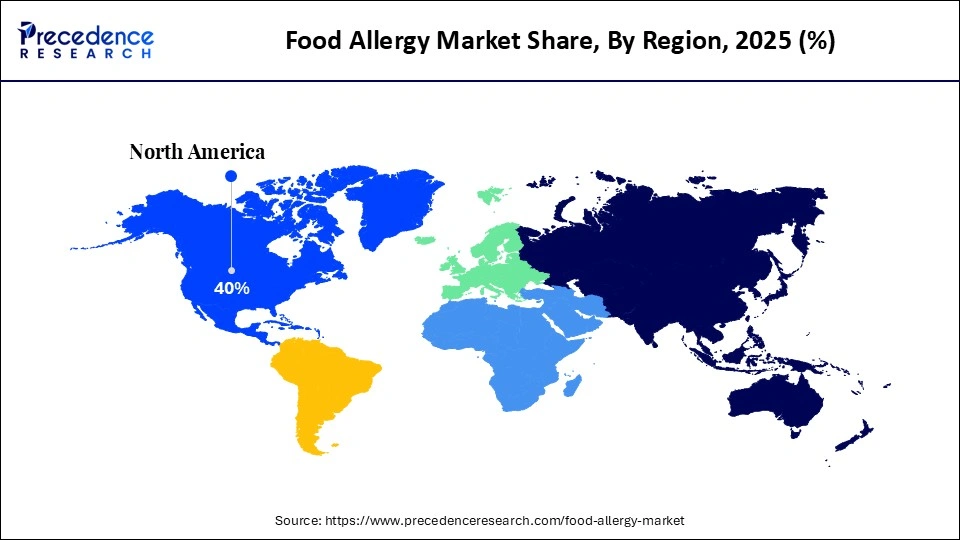
- North America dominated the global food allergy market with the largest share of approximately 40% in 2025.
- Asia Pacific is expected to grow at the fastest CAGR of 11.0% in the market during the forecast period.
- By allergen type, the peanut allergy segment held a dominant position in the market with the largest share of approximately 32% in 2025 and is expected to grow at the fastest CAGR of 9.5% during 2026-2035.
- By product/treatment type, the diagnostics segment held a dominant position in the market with the largest share of approximately 40% in 2025.
- By product/treatment type, the therapeutics segment is expected to grow at the fastest CAGR of 9.7% in the food allergy market between 2026 and 2035.
- By end user/channel, the hospitals & clinics segment held a dominant position in the market with the largest share of approximately 40% in 2025.
- By end user/channel, the home care & pharmacies segment is expected to grow at the fastest CAGR of 10.1% in the market between 2026 and 2035.
Market Overview
The food allergy market encompasses diagnostics, treatments, and related products/services used to identify and manage adverse immune responses to specific food proteins (e.g., peanuts, milk, egg). It includes diagnostic tests (skin prick, IgE blood tests), therapeutics (epinephrine auto-injectors, antihistamines, immunotherapies), and care settings (hospitals, clinics). Growth is driven by the rising prevalence of food allergies, increasing awareness, advanced therapies, regulatory focus on labeling and safety, and expanding healthcare infrastructure globally.
Key Technological Shift in the Food Allergy Market
The food allergy industry is undergoing significant technological changes due to the developments in immunology, diagnostics, and digital health. A significant change is the invention of next-generation diagnostics, such as component-resolved diagnostics and molecular allergy testing, that allow identifying allergic proteins more precisely instead of identifying them based on broad food categories. The oral, epicutaneous, and sublingual immunotherapy platforms, too, are changing, and better dosage control and safety monitoring systems are mitigating the extreme reactions. The other significant change is the incorporation of biologics, more specifically monoclonal antibodies, into the management of food allergies to alter immune response and improve tolerance.
The use of digital technology, including AI-based symptom tracking, wearable sensors, and mobile health applications, is becoming more relevant in the actual monitoring of allergic reactions and treatment adherence. Also, there are new food processing and allergen detection technologies enhancing the accuracy of allergen labels and cross-contamination prevention. Collectively, these technological changes are turning the allergy care of food allergy into more of a preventive management, where the treatment strategies applied are more personalized.
What are the Key Trends in the Food Allergy Market?
- The market of food allergies is influenced by the increasing prevalence of food allergies in the world, particularly in children, which is stimulating the need of diagnostics, therapeutic, and preventive solutions in the market.
- The increased awareness by consumers, care providers, and healthcare regulators has promoted early diagnosis and regular screening.
- The long-term treatment approaches show a market shift in that there is a tendency toward disease-modifying treatments, which is in place of the emergency-only management approach.
- The other trend is the growing importance of patient-centered models of care, such as home-based treatments and digitally enabled treatment plans.
- The regulatory agencies are becoming increasingly receptive to new treatments of allergy and speeding up the development and commercialization of products.
- The increase in the number of allergen-free food products and the tightening of labeling laws is affecting the larger market ecosystem, as well.
- All these tendencies suggest that there is a fast-paced market that is more attentive to innovation, safety, and better-quality lives of patients with food allergies.
Market Scope
| Report Coverage | Details |
| Market Size in 2025 | USD 45.21 Billion |
| Market Size in 2026 | USD 50.05 Billion |
| Market Size by 2035 | USD 124.94 Billion |
| Market Growth Rate from 2026 to 2035 | CAGR of 10.70% |
| Dominating Region | North America |
| Fastest Growing Region | Asia Pacific |
| Base Year | 2025 |
| Forecast Period | 2026 to 2035 |
| Segments Covered | Allergen Type, Product/Treatment Type, End-User/Channel and region |
| Regions Covered | North America, Europe, Asia-Pacific, Latin America, and Middle East & Africa |
Segment Insights
Allergen Type Insights
Why the Peanut Allergy Segment Dominated the Food Allergy Market in 2025?
The peanut allergy segment dominated the market with a revenue of approximately 32% and is estimated to be the fastest-growing with a CAGR of 9.5% in the market because it is the most prevalent, it starts in childhood, and severe, life-threatening reactions may develop. It is among the most screened food allergies, and this contributes to the long-term demand for diagnostics and monitoring instruments. The high level of enlightenment among the caregivers, schools, and the medical personnel has solidified routine testing and early intervention. The management of peanut allergy has also gained considerable importance due to regulatory concerns and the general concern about the health of people. The fact that the condition is long-term and is likely to persist into adulthood means that the market need will remain. This makes peanut allergy the most prominent allergen segment.
The most rapidly expanding segment in the food allergy market is also the peanut allergy that is backed by the rapid development of immunotherapy and biologic-based treatment. The increased acceptance of disease-modifying therapies is changing the management approach from strict avoidance to active desensitization techniques. More clinical studies are specifically on the allergens of peanuts, which is enhancing innovation. The increased diagnosis rate, especially among the child population, is widening the number of treated patients. Patient advocacy and support programs are powerful in enhancing the adoption of therapy. These forces are contributing to fast growth in this segment.
Product/Treatment Type Insights
Why Diagnostics Dominated the Food Allergy Market?
The diagnostics segment dominated the market by holding a share of approximately 40% in 2025, since the correct identification of allergens is the basis of successful control. The IgE testing on blood, skin prick tests, and molecular diagnostics are common methods of routine clinical practice. Early and accurate diagnosis lessens the risk of acute responses and informs dietary treatment. This segment is further being reinforced by the increasing use of component-resolved diagnostics. The presence of regulatory focus on proper labeling and identification of allergens also contributes to the diagnostic application. These elements support the presence of dominance of diagnostics in the market.
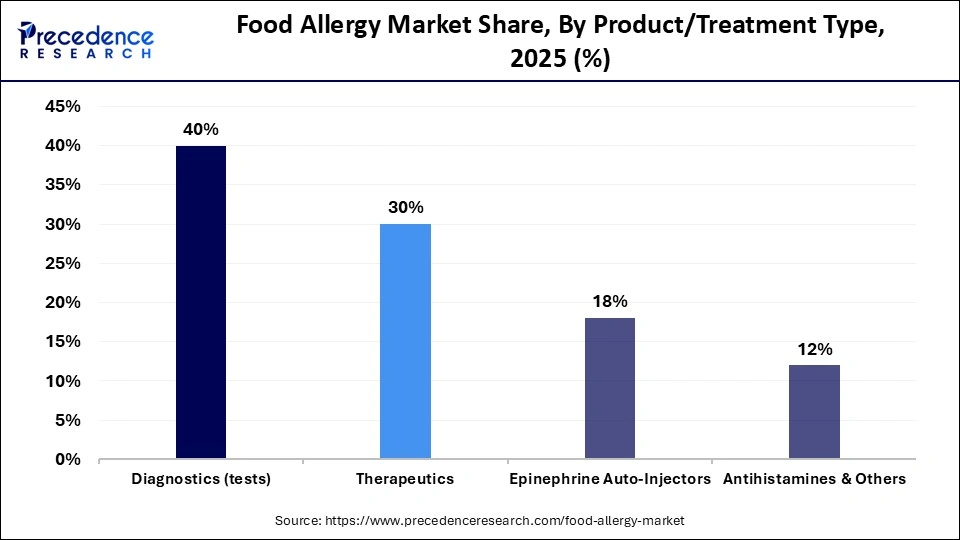
The therapeutics segment is projected to witness the fastest growth CAGR of 9.7% in the food allergy market, driven by the fact that oral, epicutaneous, and sublingual immunotherapies are becoming an acceptable long-term management option. Immunomodulatory biologic therapies are also becoming an adjunctive or stand-alone therapy. Increasing clinical data on efficacy and safety is enhancing physician confidence. Regulatory guidelines for new therapies are increasingly becoming clear. These changes are speeding up the use of therapies. The therapeutic part is also justified by the increase in patient readiness to undergo desensitization therapy to enhance the quality of life. Access to advanced therapies is increasing with growing access to specialty allergy centers.
End-User/Channel Insights
Which End-User Dominated the Food Allergy Market in 2025?
The hospitals & clinics segment dominated the market by holding a share of approximately 40%, since they are at the heart of the diagnosis, initiation of treatment, and emergency management of food allergies. Such environments offer access to qualified specialists and other sophisticated diagnostic devices. They are also the main locations for administering immunotherapies under controlled settings. The developed referral routes support patient movement into hospital-based care. High utilization is facilitated by the introduction of allergy services into the wider healthcare systems. The top end users are thus the hospitals and the clinics.
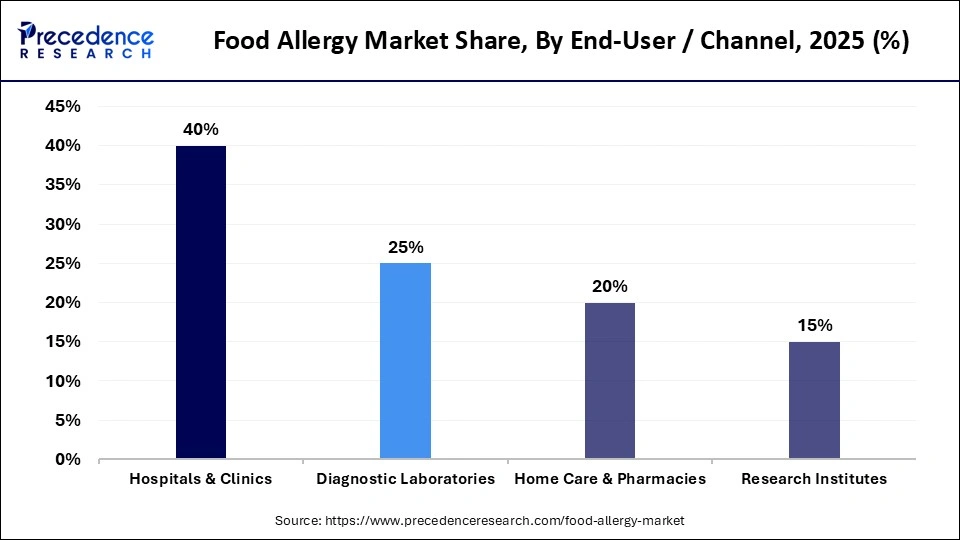
The home care & pharmacies segment is projected to witness the fastest growth CAGR of 10.1% in the food allergy market, which is influenced by the increasing demand for special and high-throughput allergy tests. The increased laboratory testing capacity due to the development of molecular diagnostics and automation is expanding. Hospital testing is being outsourced to specialized laboratories, which increases efficiency and scalability. Increasing focus on early and precise diagnosis facilitates an increased number of tests. Reference laboratory models and direct-to-provider models are on the rise. These are the trends that are increasing the growth of laboratory-based testing.
Regional Insights
How Big is the North America Food Allergy Market Size?
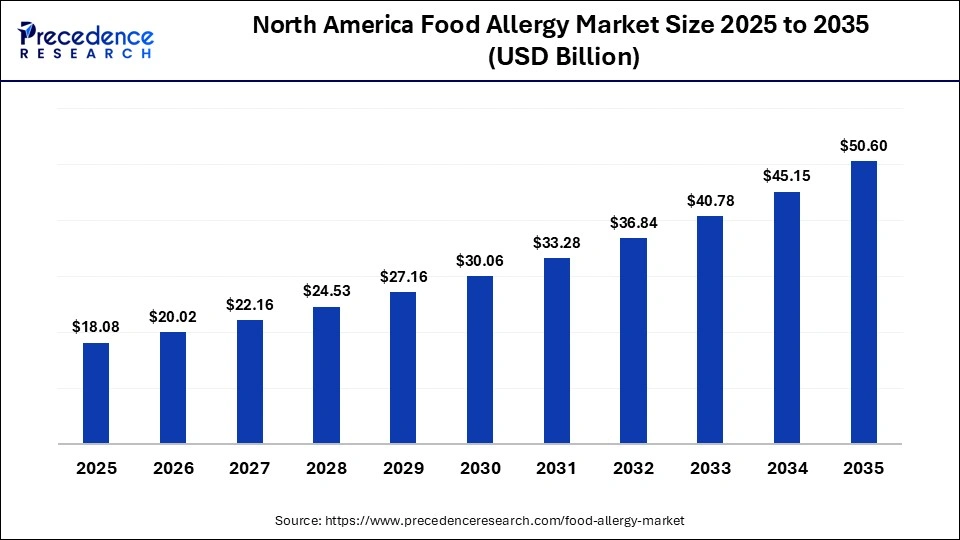
The North America food allergy market size is estimated at USD 18.08 billion in 2025 and is projected to reach approximately USD 50.60 billion by 2035, with a 10.84% CAGR from 2026 and 2035.
Why North America Dominated the Food Allergy Market?
North America dominated the market with approximately 40% share in 2025, because of the level of disease awareness, early identification, and the establishment of the high level of disease advanced diagnostic and treatment solutions for the disease. The area enjoys adequate medical facilities and a high degree to which patients are involved in the management of their allergies. The high regulatory success of new biologics and immunotherapy strategies has advanced the product development and commercialization process. The presence of large numbers of allergen testing and emergency treatment solutions strengthens market maturity. Moreover, increased focus on preventive medicine and personalized medicine keeps the demand long-term. All these reasons make the North American market the most dominant in the region.
What is the Size of the U.S. Food Allergy Market?
The U.S. food allergy market size is calculated at USD 13.56 billion in 2025 and is expected to reach nearly USD 38.20 billion in 2035, accelerating at a strong CAGR of 10.91% between 2026 and 2035.
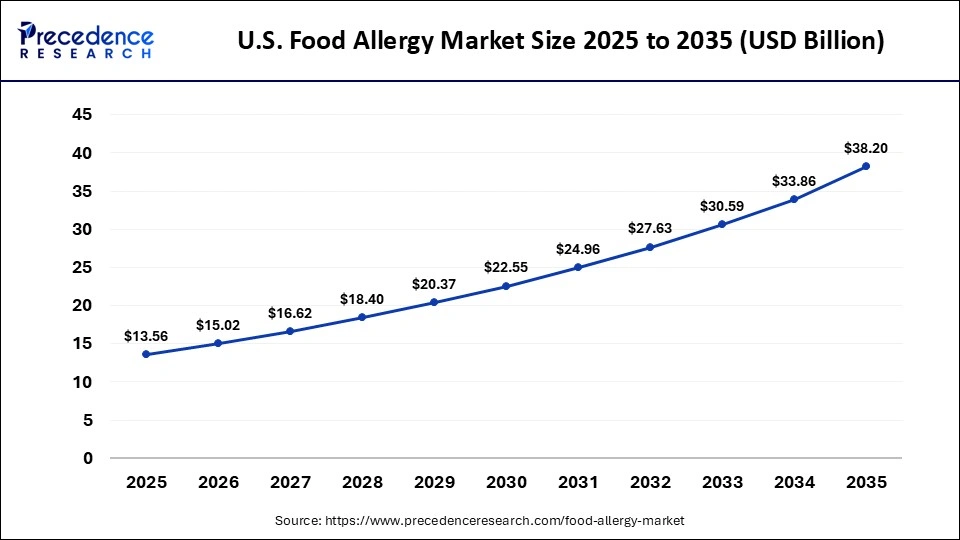
The U.S. is the largest contributor in the North America food allergy market, which is backed by high food allergy rates and huge healthcare expenditure. The high level of research and close cooperation between the industry and academia result in constant innovation. Canada also has a significant place, with the awareness of the population and the standard setting of regulations on food labeling contributing to the safety of consumers. The use of digital health tools to monitor allergies is developing momentum in the two countries. Good reimbursement policies facilitate the use of modern treatments. The combination of these country-level dynamics supports the leading status of North America.
How Asia Pacific the Fastest Growing the Food Allergy Market?
Asia Pacific has the fastest-growing CAGR of 11% in the market between 2026 and 2035, driven by the increased urbanization rates and the better understanding of allergic disorders. The prevalence of more allergic disorders. The provision of more health care access and the growth of investment in diagnostic potentialities are contributing to early detection and management. The region is experiencing an increased demand of package foods that have clear labels of the allergens, which affect both the clinical and consumer segments. The growth of interest in paediatric care also contributes to the growth of the market. The use of modern immunotherapy methods is slowly growing in major markets. The trends render the Asia Pacific a high-growth region.
Asia Pacific Country-level analysis
Japan is a major contributing country in the Asia Pacific food allergy market because of its huge population and changing eating habits. Japan is very accepting of modern diagnostics and high food safety standards. China is undergoing a swift development due to the development of healthcare infrastructure and the awareness of the middle class. The market in India has been promoted by the enhanced diagnostics, attention of regulation to food labeling, and the advancement of personal healthcare. Local manufacturing and regional partnerships are also increasing access. All these together hasten the market growth curve of the Asia Pacific.
Is the Food Allergy Market Entering a New Era of Growth and Innovation in Europe?
Europe is expected to show significant growth during the forecast period. The European Medicines Agency, along with local bodies, is streamlining approvals for novel therapies and emergency treatments, like needle-free adrenaline nasal sprays, for example, EURNeffy. Digital platforms and telemedicine, are being increasingly accepted for remote monitoring and even personalized management of food allergies.
Germany Market Trends
The German market is expected to increase, with specialized allergy-free foods and treatments gaining traction due to growing sensitization. Germany has strict food labeling regulations, and restaurants frequently provide allergen menus, improving safety for consumers.
How is the Food Allergy Market Transforming with Advanced Diagnostics and Treatments in Latin America?
Latin America is expected to show notable growth during the forecast period. It is driven by rising allergy prevalence, urbanization, and increasing healthcare investment; the region is thus moving from basic symptom management to advanced molecular diagnostics and targeted immunotherapy.
Brazil Market Trends
Brazil has implemented strict allergen labeling regulations, demanding clear, bolded, and even capitalized warnings on packaged foods, which drives the market for food testing services. Increased investment is now flowing into novel immunotherapy modalities to handle food allergies.
Is Increasing Awareness Fueling the Growth of the Food Allergy Market in MEA?
The Middle East and Africa region is expected to grow at a notable CAGR in the foreseeable future. Greater knowledge among parents, school authorities, and pediatricians regarding food allergy symptoms is contributing to earlier and more frequent diagnoses, rising the need for diagnostic tests and management solutions. Increased advocacy, along with consumer need for transparency, is driving standardizations in allergen labeling and the acceptance of allergy-friendly menus in the food and hospitality industries.
UAE Market Trends
The UAE market is experiencing robust expansion, with a notable focus on peanut allergies as the largest along with fastest-growing allergen segment. Increased acceptance of targeted treatments, which includes oral immunotherapy, biologics, and even epinephrine auto-injectors, also contributes to market growth.
Food Allergy Market Value Chain Analysis
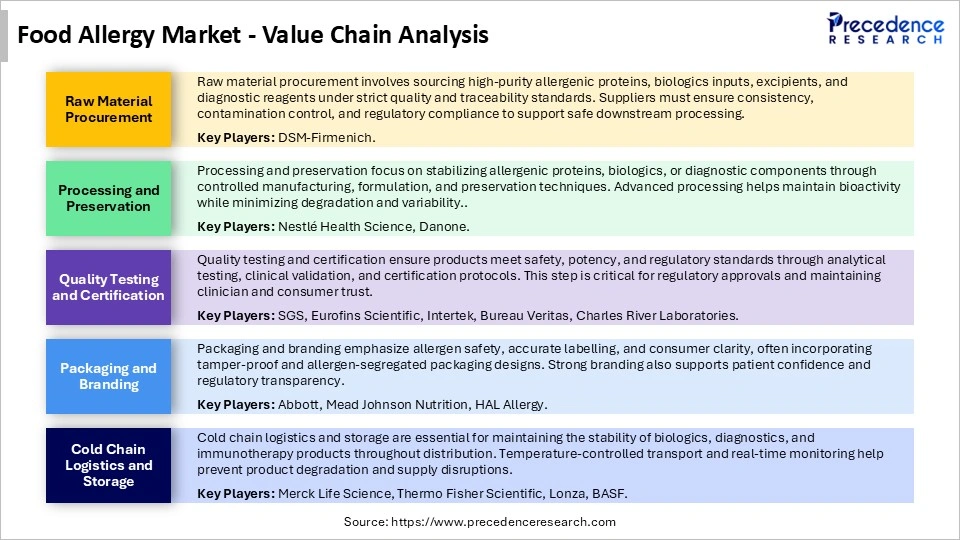
Who are the Major Players in the Global Food Allergy Market?
The major players in the food allergy market include Sanofi S.A., GSK plc, Novartis AG, Mylan N.V. / Viatris, Teva Pharmaceutical Industries Ltd., Bayer AG, Merck & Co., Inc., Aimmune Therapeutics (Stallergenes Greer / Nestlé Health Science), Allergy Therapeutics PLC, Immunomic Therapeutics Inc., Prota Therapeutics Pty Ltd., Cambridge Allergy Ltd., ALS Limited, And Charm Sciences.
Other Major Key Players
- Pfizer Inc.: Pfizer Inc. provides products for food allergy mainly through emergency treatment of allergic reactions and related immune-inflammatory management.
- Novartis AG: Novartis AG has a well-established, leading position in the food allergy industry by combining accepted biologic therapies with a pipeline of next-generation IgE-targeted treatments. The firm's portfolio is focused on decreasing allergic reactions to multiple foods, like peanuts, milk, and eggs.
- Merck & Co., Inc.: Merck & Co., Inc. focuses on the broader allergy and immunology sector rather than specifically providing specialized food-allergy-specific therapeutics.
Recent Developments in the Food Allergy Market
- In January 2026, Nashik introduced dedicated menopause clinics across the district, sub-district, and rural hospitals to provide specialized and compassionate care for women during menopause. The clinics will offer regular outpatient services, including medical evaluation, counseling, and lifestyle guidance, with a focus on improving access to women's healthcare in rural and underserved areas. (Source: https://www.freepressjournal.in)
- In November 2025, the Food Allergy Fund, a leading research nonprofit, received a significant donation from the David Koch Jr. Foundation to accelerate studies on the root causes, prevention, and treatment of food allergies. This funding will support initiatives like the Microbiome Research Collective and drug repurposing programs.
(Source: https://foodallergyfund.org)
Segment Covered in the Report
By Allergen Type
- Peanut Allergy
- Milk Allergy
- Egg Allergy
- Tree Nut Allergy
- Fish & Shellfish Allergy
- Soy Allergy
- Wheat/Sesame & Others
By Product/Treatment Type
- Diagnostics (tests)
- therapeutics
- Epinephrine Auto-Injectors
- Antihistamines & Others
By End-User/Channel
- Hospitals & Clinics
- Diagnostic Laboratories
- Home Care & Pharmacies
- Research Institutes
By Region
- North America
- Europe
- Asia-Pacific
- Latin America
- Middle East & Africa
For inquiries regarding discounts, bulk purchases, or customization requests, please contact us at sales@precedenceresearch.com
Frequently Asked Questions
Tags





Ask For Sample
No cookie-cutter, only authentic analysis – take the 1st step to become a Precedence Research client
 Get a Sample




 sales@precedenceresearch.com
 Schedule a Meeting
