



Food Waste Composting Machine Market Trends, Companies, Revenue / Sales Performance, Food Production, Processing Capacity, Sales Volume, Distribution Performance, Competitive Landscape, and Industry Outlook
Food Waste Composting Machine Market (By Purpose: Industrial, Commercial, Residential; By Capacity: Small (1 ton/day), Medium, Large; By Composting Method: Aerobic Composting, Anaerobic Composting) - Global Industry Analysis, Size, Trends, Leading Companies, Regional Outlook, and Forecast 2026 to 2035
Source: https://www.precedenceresearch.com/food-waste-composting-machine-market
 Get a Sample
 Table Of Content


What is Food Waste Composting Machine Market Size in 2026?
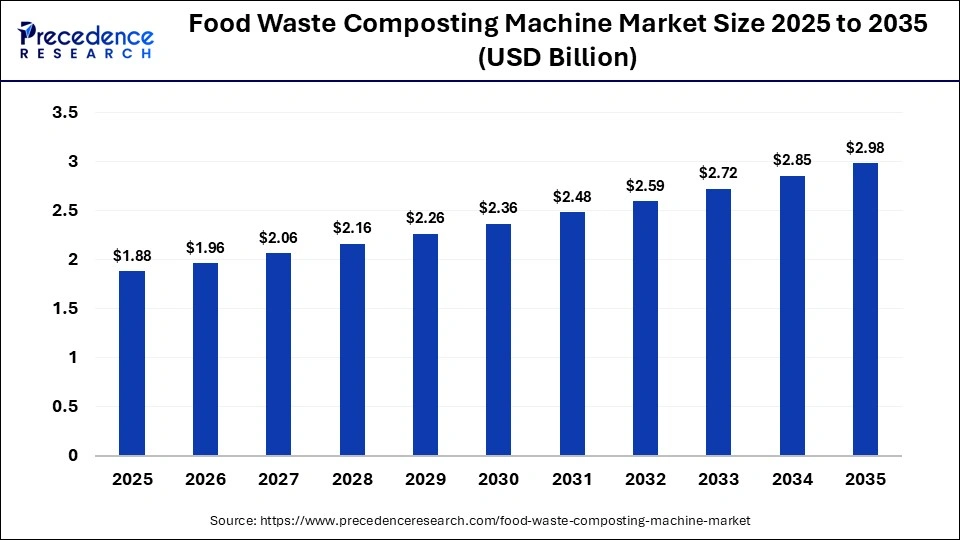
The global food waste composting machine market size was calculated at USD 1.88 billion in 2025 and is predicted to increase from USD 1.96 billion in 2026 to approximately USD 2.98 billion by 2035, expanding at a CAGR of 4.75% from 2026 to 2035. This market is growing due to the rising demand for sustainable and eco-friendly waste management solutions.
Key Takeaways
- North America dominated the market in 2025.
- Asia Pacific is expected to grow at the fastest CAGR between 2026 and 2035.
- By purpose, the residential segment held the biggest market share in 2025.
- By purpose, the industrial segment is expected to expand at the fastest CAGR between 2026 and 2035.
- By capacity, the large segment contributed the highest market share in 2025.
- By capacity, the medium segment is expected to grow at a strong CAGR between 2026 and 2035.
- By composting method, the aerobic composting segment captured the biggest market share in 2025.
- By composting method, the anaerobic composting segment is expected to expand at the fastest CAGR between 2026 and 2035.
What Factors are Driving the Food Waste Composting Machine Market?
The food waste composting machine market is expanding as more homes and businesses look for environmentally friendly ways to handle their organic waste. Adoption is being fueled by growing awareness of environmental sustainability and the advantages of turning food waste into compost that is rich in nutrients. Composting machine use is also being encouraged by government policies and incentives that support waste reduction. Technological advances in composting machines lead to quicker processing times and odor control, increasing their appeal to a significant consumer base.
How is AI Transforming the Food Waste Composting Machine Market?
Artificial intelligence is revolutionizing the food waste composting machine market by improving the machine's intelligence, effectiveness, and manageability. To maximize the composting process for quicker and higher-quality results, AI-powered devices can automatically monitor temperature, moisture content, and waste composition. Predictive analytics extends lifespan and reliability by spotting possible maintenance problems before they result in downtime. Additionally, integrating AI mobile apps enables remote monitoring and control, making it convenient for businesses and households to oversee composting operations. By lowering manual labor and guaranteeing reliable outcomes, these innovations not only increase operational efficiency but also promote broader adoption.
Key Trends in the Food Waste Composting Machine Market
- Rising Environmental Awareness – Consumers and businesses are increasingly adopting composting machines to reduce landfill waste and lower their carbon footprint.
- Technological Advancements – Innovations such as faster processing, odor control, and energy-efficient systems are making composting machines more effective and convenient.
- Integration with Smart Systems – Some composting machines now offer IoT-enabled monitoring and app-based control, enhancing ease of use.
- Growing Urban Adoption – Compact and user-friendly machines are becoming popular in urban households with limited space for traditional composting.
- Government Support – Regulations and incentives for waste reduction and sustainable practices are driving market growth.
- Commercial Sector Adoption – Restaurants, hotels, and food processing units are increasingly installing composting machines to manage food waste efficiently.
- Hybrid and Multi-Function Models – Machines capable of handling both wet and dry waste or producing compost and bioenergy are gaining traction.
- Focus on Sustainability Branding – Businesses are adopting composting solutions to demonstrate corporate social responsibility and eco-friendly practices.
Future Market Outlook
- Expansion in Emerging Markets – Rising awareness of sustainability and growing urbanization in developing regions offer significant market potential.
- Smart Home Integration – Integrating composting machines with smart home systems can attract tech-savvy consumers.
- Eco-Friendly Product Development – Creating energy-efficient, low-emission, and odor-free machines can appeal to environmentally conscious buyers.
- Customization for Commercial Use – Offering scalable solutions for restaurants, hotels, and institutions can drive higher adoption rates.
- Government Incentives and Grants – Leveraging policies and subsidies for waste management can encourage more consumers and businesses to adopt composting machines.
- E-Commerce Expansion – Online sales channels can increase reach and provide convenient access for both residential and commercial buyers.
- Educational and Awareness Campaigns – Promoting the benefits of composting through campaigns can boost adoption in households and businesses.
How do Government Initiatives Support the Food Waste Composting Machine Market?
To cut down on landfill usage and greenhouse gas emissions, governments around the world are promoting sustainable waste management techniques. Governments of several nations offer tax breaks, grants, and subsidies to encourage the adoption of composting machines by homes, businesses, and restaurants. Businesses are being compelled by regulations requiring the segregation and recycling of organic waste to invest in effective composting systems. The use of composting machines for food waste is further encouraged by the government's awareness campaigns and educational initiatives on sustainable waste management. These efforts are stimulating investment in cutting-edge, environmentally friendly composting technologies and fostering a favorable market environment.
How Food Waste Composting Machines Deliver High ROI?
Food waste composting machines deliver high ROI by reducing waste disposal costs and generating nutrient-rich compost that can be sold or used in landscaping and agriculture. They enhance corporate sustainability credentials, which attract eco-conscious customers and improve brand value. Government incentives, tax breaks, and subsidies for environmentally friendly waste management further increase profitability. Additionally, AI-enabled features and smart automation improve operational efficiency, lower maintenance costs, and optimize long-term returns, making these machines both financially and environmentally rewarding.
Market Scope
| Report Coverage | Details |
| Market Size in 2025 | USD 1.88 Billion |
| Market Size in 2026 | USD 1.96 Billion |
| Market Size by 2035 | USD 2.98 Billion |
| Market Growth Rate from 2026 to 2035 | CAGR of 4.75% |
| Dominating Region | North America |
| Fastest Growing Region | Asia Pacific |
| Base Year | 2025 |
| Forecast Period | 2026 to 2035 |
| Segments Covered | Purpose, Capacity, Composting Method, and region |
| Regions Covered | North America, Europe, Asia-Pacific, Latin America, and Middle East & Africa |
Segment Insights
Purpose Insights
What Made Residential the Dominant Segment in the Food Waste Composting Machine Market?
The residential segment dominated the market with the largest share in 2025, driven by growing household consciousness regarding sustainability and food waste management. The segment's growth is greatly aided by the growing use of small, user-friendly composting units for home kitchens. Government initiatives promoting waste segregation at the source also boosted the adoption of food waste composting machines in the residential sector. Additionally, the availability of affordable and automated home composting machines boosted consumer confidence and usage.
The industrial segment is expected to grow at the fastest CAGR in the coming years, driven by an increase in food waste production from restaurants, hotels, and food processing facilities. The adoption of food waste composting machines in industrial facilities is being accelerated by strict waste disposal regulations and corporate sustainability commitments. The effectiveness of large-scale waste management is also motivating investments in cutting-edge composting systems. Growing fines for inappropriate waste disposal are driving businesses to adopt compliant practices. Additionally, businesses are implementing composting systems to improve their sustainability reporting and ESG performance.
Capacity Insights
Why Did the Large Segment Dominate the Food Waste Composting Machine Market?
The large segment dominated the market in 2025 because businesses and government agencies that handle large amounts of food waste have a high demand. Larger machines provide longer-term cost savings and increased processing efficiency. They were greatly favored because of their capacity to handle large amounts of waste. A further factor in adoption was integration with centralized waste management systems. Large-scale composting solutions also assist businesses in lowering landfill and transportation expenses.
The medium segment is expected to grow at the fastest CAGR in the coming years. This is because it perfectly balances efficiency and affordability for a wide range of users, including restaurants, hotels, commercial kitchens, and small-to-medium enterprises. These machines handle larger volumes than small units without the high costs or space requirements of industrial-scale systems, making them ideal for organizations with moderate waste output. Additionally, rising adoption of sustainable waste management practices and government incentives for eco-friendly solutions are driving demand for medium-capacity composting machines.
Composting Method Insights
Why Did the Aerobic Composting Segment Dominate the Food Waste Composting Machine Market?
The aerobic composting segment dominated the market in 2025. This is because of its quicker decomposition and reduced odor production. High efficiency and ease of use of this method are major factors driving its adoption. Aerobic systems are energy-efficient, easier to operate, and suitable for a wide range of applications, from commercial kitchens to hotels and institutional facilities. Their ability to convert food waste into nutrient-rich compost quickly while meeting regulatory and environmental standards has driven widespread adoption, making aerobic composting the preferred choice in the market.
The anaerobic composting segment is expected to grow at the fastest CAGR in the coming years, due to its ability to process large volumes of organic waste while simultaneously producing biogas, which can be used as a renewable energy source. An additional advantage of anaerobic systems is that they reduce waste while recovering energy. Adoption is speeding up as circular economy models receive more attention. Installations are also being encouraged by government incentives for renewable energy projects. Additionally, anaerobic systems are being used by industries to turn waste into useful energy resources.
Regional Insights
What Made North America the Dominant Region in the Food Waste Composting Machine Market?
North America dominated the market while holding the largest share in 2025. This is mainly due to strict environmental regulations, high awareness of food waste reduction, and widespread adoption of sustainable technologies. Government subsidies and sophisticated waste management infrastructure further fueled the market. The presence of key market players and technological innovations reinforced growth. Corporate sustainability initiatives also significantly boosted adoption across commercial and institutional sectors.
U.S. Food Waste Composting Machine Market Trends
The food waste composting machine market in the U.S. is growing steadily due to the stringent laws governing landfill diversion and the growing emphasis on environmentally friendly waste management techniques. To lower disposal costs and carbon emissions, a large number of municipalities, colleges, restaurants, and corporate campuses are adopting on-site composting. Technological advancements, such as automated and AI-enabled composting units, are further accelerating market growth by offering cost-effective and environmentally sustainable solutions.
What Makes Asia Pacific the Fastest-Growing Region in the Market?
Asia Pacific is expected to grow at the fastest CAGR in the coming years, fueled by the growing amount of organic waste and the fast pace of urbanization. Governments in China, Japan, and Southeast Asian countries are encouraging organized waste segregation and composting programs. Modern composting equipment is becoming increasingly popular among businesses and residential complexes due to growing environmental consciousness and the need for effective waste processing infrastructure.
India Food Waste Composting Machine Market Trends
India food waste composting machine market is expanding quickly as cities face increasing pressure to manage organic waste more effectively. The need for small, automated composting machines is increasing because government programs are encouraging decentralized waste treatment and requiring waste segregation. To comply with regulations and support the goals of the circular economy, housing societies, hotels, educational institutions, and local municipalities are increasingly implementing these systems, making India a promising market with high growth potential.
How is the Opportunistic Rise of Europe in the Food Waste Composting Machine Market?
Europe is experiencing an opportunistic rise in the market due to stringent EU regulations on food waste reduction and strong governmental support for sustainable waste management. Growing awareness among households, restaurants, and businesses about environmental responsibility is driving the adoption of on-site composting solutions. Additionally, technological innovations, subsidies, and incentives for eco-friendly waste treatment are enabling faster deployment of automated and efficient composting systems, positioning Europe as a rapidly expanding market in this sector.
Germany Market Trends
Germany is revolutionizing waste management by merging Industry 4.0 with circular economy principles. It leads as the premier market for high-efficiency, AI-powered on-site composting machines that convert organic residues into high-grade resources. Through advanced IoT integration and strategic partnerships, Germany is redefining sustainability, powering the nation's top-tier biogas production, and transforming industrial waste into valuable, nutrient-rich outputs.
How will Latin America Emerge in the Food Waste Composting Machine Market?
Latin America is experiencing significant growth in the global market, driven mainly by urgent demands for waste management due to high levels of organic municipal solid waste, urbanization, and increasing government initiatives supporting a circular economy. Rapid urban growth has resulted in a large percentage of organic matter in municipal solid waste, necessitating the use of efficient composting machines to manage this volume. Several countries in the region are adopting stricter regulations aimed at curtailing food loss and waste, highlighting the need for technical solutions.
Brazil Market Trends
Brazil is transforming its waste infrastructure through a landmark 2025 UNEP partnership with the goal of halving food waste. By mandating municipal composting as part of a new national circular economy strategy, the country is turning organic waste into a breakthrough solution, scaling sustainable urban and industrial practices to simultaneously combat hunger and climate change.
How will the Middle East and Africa grow in the Food Waste Composting Machine Market?
The Middle East and Africa are significant growth regions in the global market. This growth is largely driven by high urban food waste generation, urgent sustainability mandates, and the need for water-efficient agricultural practices. Rapid urbanization in cities like Dubai and Abu Dhabi, along with rising population growth rates, has led to an increase in municipal solid waste, particularly organic biodegradable materials. Governments in the region are adopting circular economy models to reduce reliance on landfills while promoting soil health and water conservation in agriculture.
The UAE Market Trends
The UAE is leading the charge in sustainability by adopting AI-powered, on-site smart composting, with the goal of reducing food waste and addressing rapid urban growth. Companies like Farnek are spearheading the Valuing Our Roots initiative, converting tonnes of hotel and residential waste into high-quality fertilizer, thus driving a circular economy and decreasing reliance on landfills to meet ambitious green goals ahead of COP30.
Value Chain Analysis
- Research, Development, and Design: This focuses on developing compact, efficient, and odor-free technologies, enhancing microbial catalysts for faster breakdown, and incorporating IoT for real-time monitoring.
Key Players: Whirlpool Corporation, Emerson Electric Co., Oklin International Ltd., EcoRich LLC, and NatureMill Inc. - Sourcing and Manufacturing: This involves fabricating the machine components, often high-grade stainless steel for durability, and assembling the mechanical shredders, heaters, and digital control panels.
Key Players: Namibind and Aakaar Industries. - Logistics and Distribution: This involves distributing finished machines from manufacturers to various end-users for large-scale industrial machines.
Key Players: DHL and FedEx. - Implementation, Installation, and Service: This focuses on setting up the machines in residential, commercial, and municipal sites and providing training, maintenance, and technical support.
Key Players: Solwearth Ecotech Pvt. Ltd., RUR Greenlife, and SCD Probiotics LLC.
Food Waste Composting Machine Market Companies
- Oklin International Ltd.
- Whirlpool Corporation
- Tidy Planet Limited
- Food Cycle Science Corporation
- Emerson Electric Co.
- Vitamix Corporation
- Ridan Composting Ltd.
- Bokashicycle, LLC
- BioHiTech Global Inc.
- Smart Cara
- NatureMill Inc.
- Keter Group SA
- Hungry Giant Recycling Inc.
Recent Developments
- In February 2026, Pious Earth Environment Technology announced the launch of a new commercial food waste composting machine designed for bulk waste generators, capable of processing up to 1 Ton Per Hour (TPH) and converting waste into compost within 24 hours. The machine features automated operations, durable stainless-steel construction, and odor-free bio-filters. (Source: https://piousearth.in)
- In January 2026, Mill announced the launch of its commercial-scale food recycling system through a partnership with Amazon and Whole Foods Market. The AI-integrated units convert food scraps into chicken feed and will be initially deployed at select Whole Foods locations and Amazon corporate offices in 2026, with a broader rollout in 2027. (Source:https://www.biocycle.net)
Segments Covered in the Report
By Purpose
- Industrial
- Commercial
- Residential
By Capacity
- Small (1 ton/day)
- Medium
- Large
By Composting Method
- Aerobic Composting
- Anaerobic Composting
By Region
- North America
- Europe
- Asia-Pacific
- Latin America
- Middle East & Africa
For inquiries regarding discounts, bulk purchases, or customization requests, please contact us at sales@precedenceresearch.com
Frequently Asked Questions





Ask For Sample
No cookie-cutter, only authentic analysis – take the 1st step to become a Precedence Research client
 Get a Sample




 sales@precedenceresearch.com
 Schedule a Meeting
