



Full Service Restaurant Market Size, Key Companies, Company Market Share, Production Volume, Consumption Trends, Pricing Analysis, Export & Import Dynamics, Competitive Positioning, and Demand Forecast
Full Service Restaurant Market (By Restaurant Type: Casual Dining, Fine Dining, Family Dining, Quick Service Restaurants (QSRs); By Menu Type: Ethnic Cuisine, American Cuisine, Italian Cuisine, Asian Cuisine; By Service Type: Table Service, Counter Service, Buffet Service, Delivery Service) - Global Industry Analysis, Size, Trends, Leading Companies, Regional Outlook, and Forecast 2026 to 2035Full Service Restaurant Market (By Restaurant Type: Casual Dining, Fine Dining, Family Dining, Quick Service Restaurants (QSRs); By Menu Type: Ethnic Cuisine, American Cuisine, Italian Cuisine, Asian Cuisine; By Service Type: Table Service, Counter Service, Buffet Service, Delivery Service) - Global Industry Analysis, Size, Trends, Leading Companies, Regional Outlook, and Forecast 2026 to 2035
Source: https://www.precedenceresearch.com/full-service-restaurant-market
 Get a Sample
 Table Of Content


What is the Full Service Restaurant Market Size?
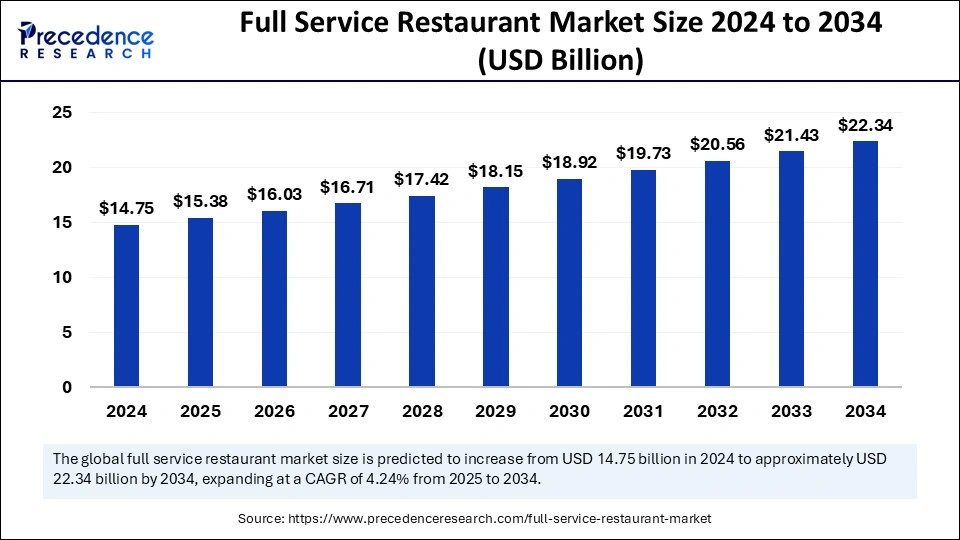
The global full service restaurant market size accounted for USD 15.38 billion in 2025 and is predicted to increase from USD 16.03 billion in 2026 to approximately USD 23.22 billion by 2035, expanding at a CAGR of 4.21% from 2026 to 2035. The growing interest of consumers in gourmet as well as ethnic cuisines is expected to boost the growth of the market during the forecast period.
Full Service Restaurant Market Key Takeaways
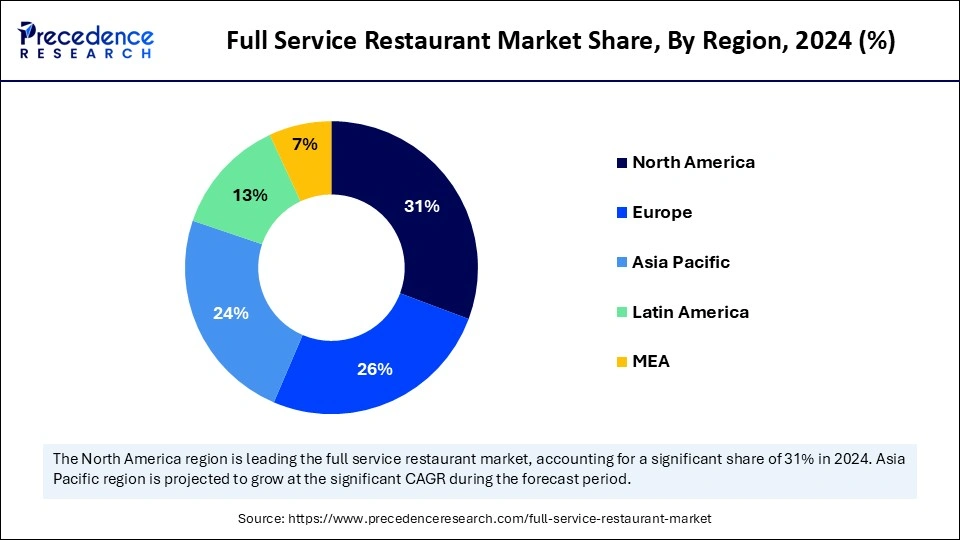
- North America dominated the global market with the largest market share of 31% in 2025.
- Asia Pacific is expected to witness the fastest growth during the forecast period.
- By restaurant type, the casual dining segment contributed the highest market share in 2025.
- By restaurant type, the family dining segment is anticipated to grow at a steady CAGR in the coming years.
- By menu type, the ethnic cuisine segment led the market in 2025.
- By menu type, the Italian cuisine segment is expected to grow at a significant CAGR during the forecast period.
- By service type, the table service segment held a major market share in 2025.
- By service type, the delivery services segment is predicted to show significant growth over the projection period.
What is the Full Service Restaurant?
The landscape of the food services and dining industry is constantly evolving across the world. The full service restaurant market is witnessing rapid growth due to the rising urbanization and population growth, especially in urban countries. The rapid technological advancements are playing an important role and will continue to be crucial for the growth of this market. An increase in demand worldwide for options in food items, cuisines, and ambiances is boosting the market growth. The rising popularity of food delivery services, especially online delivery, is contributing to the growth of this market. A shift in expectations from the customers is helping bring innovation and push the boundaries of market expansion. Increasing disposable income and growing affinity for dining and delivery experiences are helping market growth. Key players are integrating technological advancements and offering exclusive food experiences focusing on quality and comfort, supporting the market's growth.
Role of AI in Full Service Restaurant Market
Artificial intelligence (AI) helps shape the landscape of many industries. In full-service restaurants, AI helps in various ways. Firstly, it helps enhance customer experience and satisfaction by analyzing past orders and food preferences to suggest dishes they will likely enjoy. Secondly, it optimizes restaurant operations by managing inventory levels. AI-powered chatbots and virtual assistants can help restaurants take orders, handle customer inquiries, and offer any required information. This helps restaurants allocate resources properly and helps the staff focus on complex tasks. Personalization of customer service and marketing is made easy with AI systems. Moreover, staff scheduling becomes easy as AI analyzes staffing needs, creating optimized schedules and predicting peak times. It helps businesses reduce labor costs while ensuring their operations are streamlined.
Full Service Restaurant Market Growth Factors
- The rapid pace of urbanization and increasing disposable income are key factors driving the growth of the market.
- A steady increase in demand for the food services across the world is supporting market expansion.
- The growing inclination of consumers for different experiences in food is leading to the increased demand for gourmet and ethnic cuisines, which is aiding the market growth.
- Key players are offering a variety of vegan menu or healthy food items to cater to a wider consumer base.
Market Outlook
- Industry Growth Overview: The growth of full-service restaurants is stable and encouraged by the growth of premiumization of the menu offered by the restaurant and the need to offer personalized services to customers.
- Sustainability Trends: Zero-waste diet, sourcing locally, using all ingredients, and energy saving reform the restaurant business model.
- Global Expansion: Europe and North America are stable with strategies of optimization of operations and additional digital integration.
- Major investors: Darden Restaurants, Everstone Capital, Elevation Capital, Saama Capital, Fireside Ventures, and L Catterton are investors in technologies in restaurants.
Market Scope
| Report Coverage | Details |
| Market Size by 2035 | USD 23.22 Billion |
| Market Size in 2025 | USD 15.38 Billion |
| Market Size in 2026 | USD 16.03 Billion |
| Market Growth Rate from 2026 to 2035 | CAGR of 4.21% |
| Dominated Region | North America |
| Fastest Growing Market | Asia Pacific |
| Base Yeareny | 2025 |
| Forecast Period | 2026 to 2035 |
| Segments Covered | Restaurant Type, Menu Type, Service Type, and Regions |
| Regions Covered | North America, Europe, Asia-Pacific, Latin America, and Middle East & Africa |
Market Dynamics
Drivers
An Increase in Consumer Demand for Dining Out
An increase in consumer demand for dining out across the world is a major factor driving the growth of the full service restaurant market. The rise in urbanization and disposable income per household significantly boosts the number of customers dining out. Full-service restaurants offer a wide range of food menus as well as drinks in a comfortable and relaxed setting. This makes these restaurants popular among consumers seeking enhanced dining out experience. People are opting for restaurants that would offer them a complete dining out experience.
- In 2023, in the U.S., 34.7 % of spending on food services was at full-service restaurants. This shows a steady rise in the demand for dining out experiences that provide good food, drinks, ambiance, services, and a variety of options. The hectic lifestyle patterns, especially in urban areas, are increasing the number of people who want convenient and good dining options.
Restraint
Competition by Other Restaurants
The full service restaurant market faces tough competition from quick-service and fast-food restaurants. These outlets offer a limited number of food items, which are more affordable, along with faster service. The availability of these restaurants challenges the full-service establishments to attract a broader consumer base, specifically price-sensitive customers. With fluctuating raw materials and logistics prices, this market has to maintain certain price levels. The key players in this market must come up with new strategies, like loyalty programs, to broaden and cater to a wider consumer base.
Opportunity
Advancements in Technology
As advanced technologies are penetrating every aspect of life, their integration into full-service restaurants could help elevate the market to new heights. The rise in online ordering, booking services, and digital payments offer customer convenience, which is expected to boost market growth. Customers are looking for restaurants that offer them convenience. Integrating AI and machine learning models into the Point of Sale (POS) or other infrastructure helps improve operational efficiency and customer experience. A study revealed that 84% of full-service restaurants noticed a significant growth in revenue after investing and adopting advanced technologies into their operations. This proves that technological advancements create immense opportunities in the market.
Segment Insights
By Restaurant Type
The casual dining segment dominated the full service restaurant market by holding the largest share in 2025. The rise in disposable incomes and shifting lifestyle patterns encouraged more customers to choose casual dining options. These establishments offer a variety of cuisines and extensive menus that make them popular. The increase in demand for a convenient, comfortable, and affordable dining experience further bolstered the segment.
Meanwhile, the family dining segment held a significant share of the market in 2024 and is anticipated to grow at a steady rate in the coming years. The growing number of people choosing to spend time with their families and enjoy good food is expected to boost the segment growth. These establishments allow families to enjoy a meal together.
By Menu Type
The ethnic cuisine segment led the full service restaurant market in 2025. This is mainly due to the rise in popularity of ethnic cuisine because it offers a special menu that brings out dishes of a specific culture. The rise in the diasporic population across the world and consumers' willingness to experience different food cultures augmented the segment's growth. Ethnic cuisine restaurants provide dishes with cooking methods and ingredients that are particular to a cuisine. This creates an authentic cultural food experience, which makes them an attractive option. The reflection of culture in flavors, food, and décor continues to aid this segment's growth.
On the other hand, the Italian cuisine segment is predicted to grow at a significant rate during the forecast period. The increasing popularity of Italian cuisine around the world is a major factor supporting this segment's growth. Most of the Italian dishes are healthy, attracting more consumers.
By Service Type
The table service segment held the largest share of the full service restaurant market in 2025. The comfort and personalized experience of table service is an important part of the consumer dining experience. Table service also provides an attentive dining experience, attracting customers seeking a quick meal.
The delivery services segment is expected to grow at a significant rate over the studied period. The growing popularity of delivery services, especially online delivery services, is anticipated to the segment's growth. The convenience and ease of ordering food through delivery services from the comfort of home attract more consumers. Moreover, with busy lifestyles, people are preferring to order food online, supporting segmental growth.
Regional Insights
What is the U.S. Full Service Restaurant Market Size?
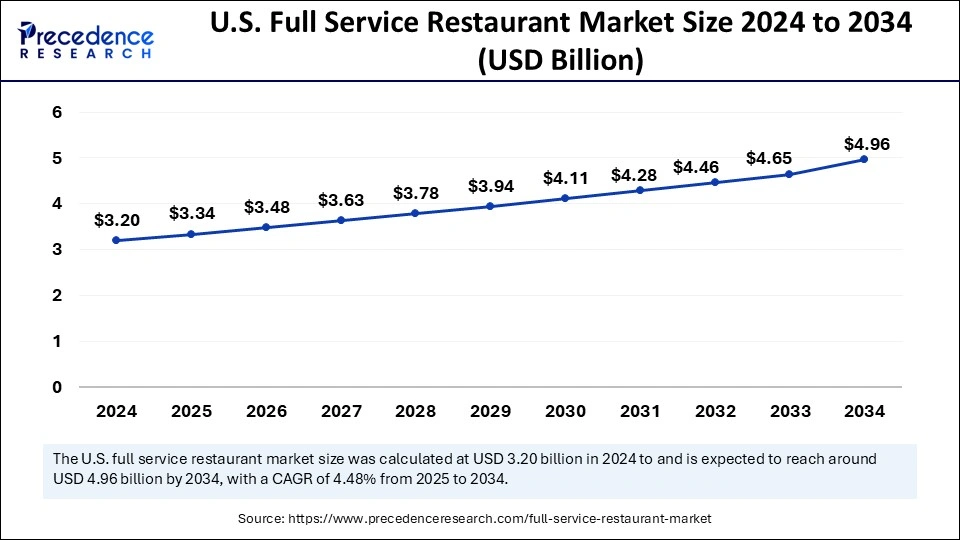
The U.S. full service restaurant market size was exhibited at USD 3.34 billion in 2025 and is projected to be worth around USD 5.19 billion by 2035, growing at a CAGR of 4.51% from 2026 to 2035.
North America registered dominance in the full service restaurant market by holding the largest share in 2025. This is mainly due to the high disposable income, allowing consumers to spend on dining out. With busy lifestyles, the popularity of dining out and utilizing food delivery services has increased among people. In addition, the availability and accessibility to full-services restaurants and well-established tourism industry contributed to regional market growth.
The U.S. and Canada play a major role in the North American full service restaurant market. The U.S. is home to a large number of leading market players. There is a rapid expansion of casual dining chains, along with a robust tourism industry, in the U.S. and Canada, supporting the market.
Asia Pacific is expected to experience the fastest growth during the forecast period. The popularity of food services is rising in the region due to the growing urbanization, especially in emerging countries like India, China, Indonesia, and South Korea. The rising disposable income and inclination of the population toward casual dining and delivery services are likely to boost regional market growth. In addition, the rapid expansion of the food & beverage industry contributes to market growth.
India is anticipated to have a stronghold on the Asia Pacific full service restaurant market. The growing younger population who are seeking improved dining out experience is one of the key factors supporting market growth. The increasing popularity of a combination of full-service restaurants and retail will further support the market's growth. With changing food preferences and expanding tourism activities, there is a high demand for Asian cuisine, driving market growth.
Europe is projected to show notable growth in the foreseeable future. The increasing demand for improved dining experience and the rising popularity of ethnic cuisine are expected to support the European full service restaurant market. Germany is anticipated to play a key role in the market. The expansion of the casual dining chain and the growing tourism in the country propel the market. The country's increased disposable income and a rich culinary heritage further support market expansion
Germany Full-Service Restaurant Market Trends
Germany grows based on the curated menu preferences and plant adoption. The need leads to increased demand due to the desire to experience authentic service. Guests prefer shorter menus. Sourcing is affected by sustainability. Dining out alone has become popular. Restaurants can play a critical role since they offer a major social entertainment source and keep the culture of dining relevant.
Value Chain Analysis of the Full-Service Restaurant Market
- Raw Material Procurement: Strategic sourcing has guaranteed that fresh produce, meat, and spices are supplied by reputable suppliers who can guarantee culinary consistency.
Key players: Sysco, US Foods, Chef's Warehouse - Processing and Preservation: Ingredients were processed into ready-made dishes through cooking methods of marinating under vacuum sealing to maintain freshness.
Key players: Nestlé, Cargill, Tyson Foods - Packaging and Branding: Branded containers maintain meal presentation identity and thermal integrity through service.
Key players: Amcor, Uflex Limited, TCPL Packaging
Full Service Restaurant Market Companies
- Taco Bell Corp: Sells tacos, burritos, and nachos via dining services such as Taco Bell Cantina, which has seating and drink services.
- Yum! Brands, Inc.: Manages KFC, Pizza Hut, and Taco Bell, that provides chicken, pizza, and Mexican foods in seated restaurants.
- The McDonald's: Corporation Offers hamburgers, fries, and breakfast meals in dine-in settings with community meeting areas.
- Domino's Pizza, Inc.: Sells pizza sandwiches in Pizza Theater stores with open kitchen service.
Other Major Key Players
- Dunkin' Brands Group, Inc.
- Panera Bread Company
- Darden Restaurants, Inc.
- Restaurant Brands International Inc.
- Chipotle Mexican Grill, Inc.
- Starbucks Corporation
- Wendy's Company
- Subway Restaurants, LLc
- Texas Roadhouse, Inc.
- Outback Steakhouse, Inc.
Recent Developments
- In March 2025, the New Museum in New York, U.S., is undergoing renovation. A full-service restaurant is set to be opened inside the museum for the first time. This restaurant will integrate sustainable materials and practices in its menu and design.
- In January 2025, Slim Chickens officially opened its first full-service restaurant in Ann Arbor, Michigan.
- In November 2024, a ‘metroburb' Bell Works in New Jersey got its first full-service restaurant. This restaurant, named Mabel, will serve European bar food.
- In October 2024, Punta Gorda Airport in Florida, U.S., announced that it is demanding dialects for a public full-service restaurant, bar, and even catering operation at the PGD Air Center. The authorities take this step to accommodate rising demand from employees, aviators, and local residents.
Segments Covered in the Report
By Restaurant Type
- Casual Dining
- Fine Dining
- Family Dining
- Quick Service Restaurants (QSRs)
By Menu Type
- Ethnic Cuisine
- American Cuisine
- Italian Cuisine
- Asian Cuisine
By Service Type
- Table Service
- Counter Service
- Buffet Service
- Delivery Service
By Region
- North America
- Europe
- Latin America
- Asia Pacific
- Middle East and Africa
For inquiries regarding discounts, bulk purchases, or customization requests, please contact us at sales@precedenceresearch.com
Frequently Asked Questions





Ask For Sample
No cookie-cutter, only authentic analysis – take the 1st step to become a Precedence Research client
 Get a Sample




 sales@precedenceresearch.com
 Schedule a Meeting
