



Green Commodities Market Size, Companies, Share, Crop Production Volume, Yield Analysis, Export & Import Trends, Pricing Metrics, Competitive Positioning, and Demand Forecast
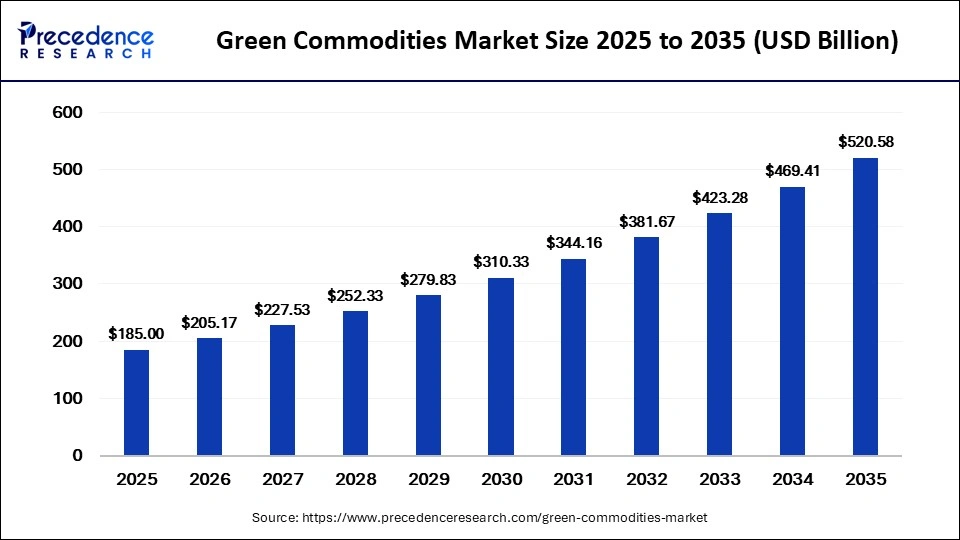
Saurabh Bidwai, an Agriculture Industry Expert, reports that the green commodities market reached USD 205.17 billion in 2026 and is forecast to reach USD 520.58 billion by 2035, expanding at a CAGR of 10.90%. Key green commodities market companies including Cargill, Incorporated, Archer Daniels Midland Company (ADM), Bunge Limited, Louis Dreyfus Company, are advancing the market across segments such as By Commodity Type, By Certification Type, By Application, By End-Use Industry, By Distribution Channel.
Source: https://www.precedenceresearch.com/green-commodities-market
 Get a Sample
 Table Of Content


What is the Green Commodities Market Size in 2026?
The global green commodities market size was calculated at USD 185.00 billion in 2025 and is predicted to increase from USD 205.17 billion in 2026 to approximately USD 520.58 billion by 2035, expanding at a CAGR of 10.90% from 2026 to 2035. The market is majorly driven by the increasing awareness of sustainability and the growing adoption of renewable energy.
Key Takeaways
- Europe led the green commodities market in 2025 with a 35% revenue share.
- Asia Pacific is expected to grow at the fastest CAGR of 13.5% during the forecast period.
- By commodity type, the sustainable agriculture commodities segment led the market with a 35% share in 2025.
- By commodity type, the renewable energy commodities segment is observed to grow at a CAGR of about 12.5% in the upcoming period.
- By certification type, the organic certified segment led the global market in 2025 with a 30% share.
- By certification type, the rainforest alliance certified segment is observed to grow at the fastest CAGR of 11.5% in the coming years.
- By application, the food & beverage industry segment led the global market in 2025 with a 40% share.
- By application, the energy & biofuel production segment is observed to expand at the fastest CAGR of 12.5% between 2026 and 2035.
- By end-use industry, the food & beverage companies segment led the global market in 2025 with a 35% share.
- By end-use industry, the energy & utilities segment is expected to grow at the fastest CAGR of 12.5% in the upcoming period.
Green Commodities Market Overview
Green commodities refer to raw materials and goods that are produced through environmentally sustainable practices. These commodities minimize environmental impact, decrease carbon emissions, and support a net-zero future. Moreover, increasing governments initiatives, such as the (UNDP) Green Commodities Programme, which focuses on the role of global agricultural commodities in achieving the Sustainable Development Goals (SDGs), drives the market. Such programs aim to improve farmer livelihoods, protect high-value forests, and conserve critical ecosystems at risk. Ultimately, it seeks to reduce environmental impact while promoting long-term resource sustainability and social responsibility.
Impact of Artificial Intelligence on the Green Commodities Market
Artificial intelligence has been widely utilized in the innovation of green commodities, significantly enhancing both the production and consumption of green energy. Deep learning algorithms play a crucial role in predicting energy supply and demand, as well as in optimizing energy grid management for peak efficiency. In the agriculture sector, AI has introduced substantial improvements, facilitating systems for irrigation, harvesting, pesticide application, and crop monitoring. Furthermore, AI-driven development in green commodities underscores the diverse roles of governance mechanisms in fostering sustainability through these commodities, providing valuable insights for policymakers to refine governance frameworks that support sustainable growth. This ultimately strengthens the green commodities market.
Green Commodities Market Trends
- Traceability and Sustainable Sourcing: Companies are increasingly investing in digital traceability tools to track commodities like palm oil, cocoa, and coffee back to their origin, ensuring they are produced without deforestation or exploitation. This trend is being driven by stricter regulations, ESG commitments, and initiatives linked to the Sustainable Development Goals that demand transparency across supply chains.
- Rise of Regenerative Agriculture: There is a growing shift from conventional farming to regenerative practices that restore soil health, enhance biodiversity, and capture carbon. These methods not only improve long-term productivity but also align with climate goals supported by programs such as the United Nations Development Programme Green Commodities Programme.
- Premiumization and Consumer-Driven Demand: Consumers are increasingly willing to pay a premium for ethically sourced and environmentally friendly products, pushing brands to differentiate through sustainability certifications. This demand is encouraging producers to adopt eco-labeling, fair trade practices, and low-impact production methods to remain competitive in global markets.
Market Scope
| Report Coverage | Details |
| Market Size in 2025 | USD 185.00 Billion |
| Market Size in 2026 | USD 205.17 Billion |
| Market Size by 2035 | USD 520.58 Billion |
| Market Growth Rate from 2026 to 2035 | CAGR of 10.90% |
| Dominating Region | Europe |
| Fastest Growing Region | Asia Pacific |
| Base Year | 2025 |
| Forecast Period | 2026 to 2035 |
| Segments Covered | Commodity Type, Certification Type, Application, End-Use Industry, Distribution Channel, and Region |
| Regions Covered | North America, Europe, Asia-Pacific, Latin America, and Middle East & Africa |
Market Dynamics
Drivers
Concerns Over Climate Change
Concerns surrounding climate change are driving technological innovations such as solar photovoltaic systems, advanced battery storage solutions, and smart grids, all of which are contributing to the expansion of the green commodities market. Additionally, increasing consumer awareness and demand for sustainable products, along with government incentives, further bolster market growth.
Restraint
Policy and Trade Barriers
Inconsistent regional policies, uneven carbon pricing, subsidies, and emission regulations can hinder the adoption of green technologies and investment. Additionally, geopolitical tensions disrupt import and export activities, leading to supply chain challenges and uncertainty in the green commodities market.
Opportunity
Ongoing Innovations
Rising development of energy-efficient appliances, LED lighting, and enhanced solutions contribute significantly to reducing energy waste in aviation. The emergence of green commodities not only establishes a new market but also decreases resource consumption, promotes long-term environmental sustainability, and addresses challenges related to climate change and environmental degradation.
Segment Insights
Commodity Type Insights
Green Commodities Market Share, By Commodity Type, 2025-2035 (%)
| Commodity Type | 2025 | 2035 | CAGR (%) |
| Sustainable Agriculture Commodities | 35.00% | 33.00% | 9.5% |
| Renewable Energy Commodities | 20.00% | 23.00% | 12.5% |
| Sustainable Forestry Products | 15.00% | 14.00% | 8.5% |
| Bio-based Raw Materials | 15.00% | 16.00% | 11.5% |
| Carbon Credits & Environmental Commodities | 15.00% | 14.00% | 10.5% |
The Sustainable Agriculture Commodities Segment Held a 35% Market Share in 2025
The sustainable agriculture commodities segment dominated the green commodities market, accounting for nearly 35% revenue share in 2025. This dominance is largely driven by the increasing global demand for ethically sourced food products and traceable supply chains. Governance in sustainable agriculture commodities demonstrates considerable potential to enhance forest and land management practices in agricultural production areas, where commodity-driven land use changes can significantly impact the environment, thereby reinforcing the segment's leading position.
The sustainable forestry products segment held a 15% share of the market in 2025 and is anticipated to grow at a CAGR of 8.5% during the forecast period. This growth is fueled by the rising demand for eco-friendly construction and packaging materials. There is a growing interest among consumers, retailers, investors, communities, and governments in procuring wood- and paper-based products produced through sustainable practices, as stakeholders increasingly seek assurance that their purchasing decisions positively influence social and environmental outcomes.
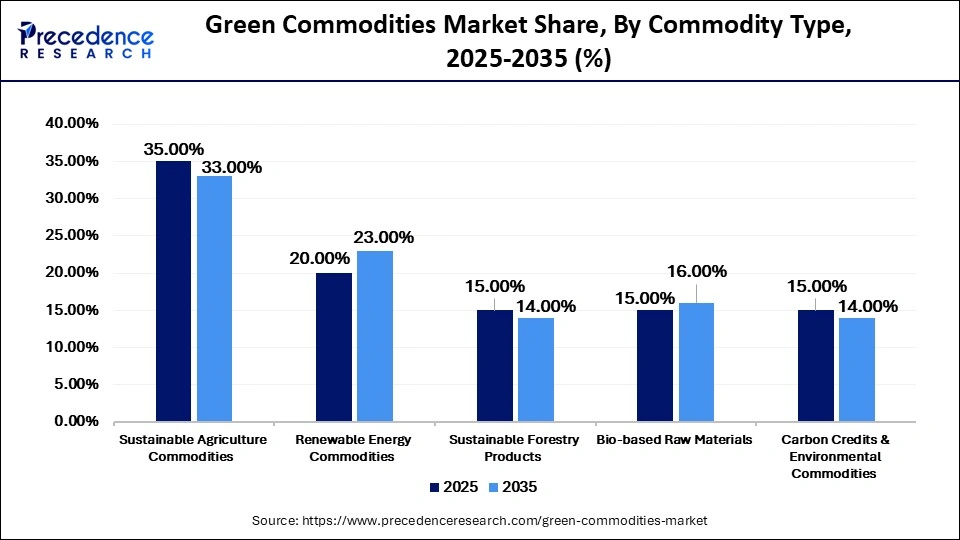
The renewable energy commodities segment accounted for about 20% market share in 2025 and is projected to grow at the fastest CAGR of 12.5%. This growth is attributed to the rising demand for biofuels and the shift toward low-carbon energy sources. The significance of energy commodities is paramount, as they provide essential fuel for electricity generation, heating, transportation, and industrial processes, which further supports the advancement of this segment.
The bio-based raw materials segment held a 15% share of the market in 2025 and is expected to grow at a CAGR of 11.5% in the upcoming period. This growth is bolstered by the increasing adoption of biodegradable materials and initiatives promoting a circular economy. The transition to bio-based raw materials facilitates a shift away from fossil-based sources, steering society towards a more sustainable future. Additionally, these materials offer superior recyclability compared to fossil-based alternatives, making them the preferred choice.
Certification Type Insights
Green Commodities Market Share, By Certification Type, 2025-2035 (%)
| Certification Type | 2025 | 2035 | CAGR (%) |
| Organic Certified | 30.00% | 28.00% | 9.0% |
| Fair Trade Certified | 20.00% | 19.00% | 8.5% |
| Rainforest Alliance Certified | 20.00% | 21.00% | 11.5% |
| FSC Certified | 15.00% | 16.00% | 10.5% |
| Others | 15.00% | 16.00% | 11.0% |
The Organic Certified Segment Led the Market in 2025 With a 30% Share
The organic certified segment held a dominant position in the green commodities market by capturing a 30% share in 2025. The segment's dominance in driven by robust consumer demand for organic and chemical-free products, which allows farms and processing facilities to market their offerings as organic. The organic label also enhances consumer choice in the marketplace. Furthermore, operations involved in the warehousing, storage, and distribution of organic products must be licensed, reinforcing the segment's stronghold.
The fair trade certified segment held around 20% share of the market in 2025 and is expected to grow at a CAGR of 8.5% during the forecast period, driven by an emphasis on ethical sourcing and fair compensation for producers. The certification fosters a responsible business model that promotes conscious consumerism and shared value, aimed at alleviating poverty and facilitating sustainable development for farmers, workers, their families, and communities globally, thereby contributing to market expansion.
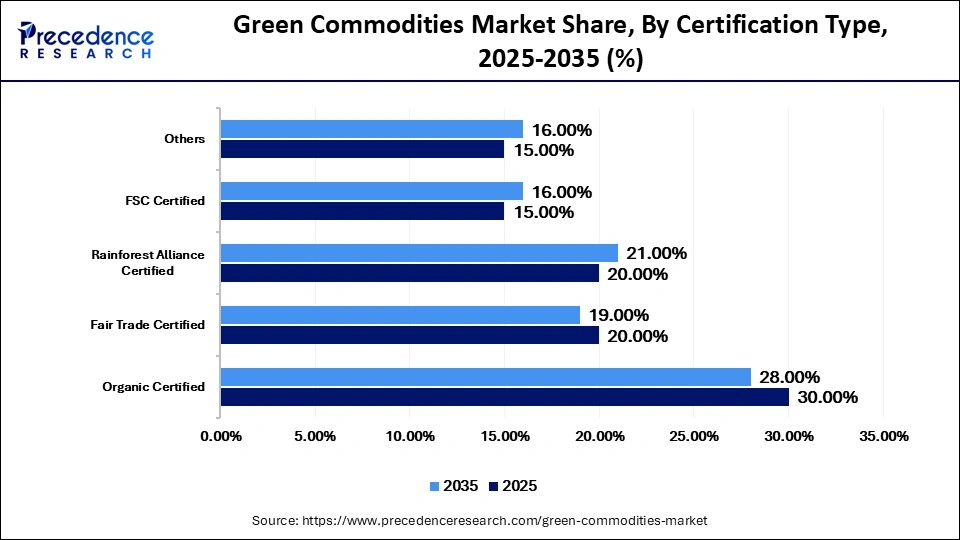
The rainforest alliance certified segment held approximately 20% market share in 2025 and is anticipated to grow at the fastest CAGR of 11.5% in the coming years. This growth is attributed to the increasing emphasis on biodiversity protection and sustainable agriculture. The certification program enhances farmer livelihoods, promotes human rights, supports good environmental practices, and fosters climate resilience. Additionally, it bolsters credibility, as consumers worldwide place trust in the certification, which is verified by independent auditors ensuring that farms and companies adhere to stringent standards, further driving market growth.
The forest stewardship council (FSC) certified segment held about 15% market share in 2025 and is expected to grow at a CAGR of 10.5% in the coming years, driven by rising demand for sustainable forestry and paper products. The FSC promotes responsible forest management on a global scale. FSC-certified products communicate a clear message to companies that forests are vital. The certification is associated with high standards of environmental protection, stakeholder engagement, and economic sustainability, among other benefits.
Application Insights
Green Commodities Market Share, By Application, 2025-2035 (%)
| Application | 2025 | 2035 | CAGR (%) |
| Food & Beverage Industry | 40.00% | 38.00% | 9.5% |
| Energy & Biofuel Production | 20.00% | 23.00% | 12.5% |
| Construction & Packaging Materials | 15.00% | 14.00% | 9.0% |
| Textiles & Apparel | 10.00% | 11.00% | 11.0% |
| Carbon Trading & Offsetting | 15.00% | 14.00% | 10.5% |
The Food & Beverage Industry Segment Led the Market With a 40% Share in 2025
The food & beverage industry segment led the green commodities market, accounting for approximately 40% share in 2025, driven by increasing consumer demand for sustainable and ethically sourced food products. The sector has consistently pursued eco-friendly solutions to address food safety challenges. Besides, green commodities in the food and beverage industries are gaining significant traction due to their environmentally friendly and efficient role in controlling microbes while minimizing residual impact on food quality during processing.
The energy & biofuel production segment captured around 20% share of the market in 2025 and is anticipated to grow at the fastest CAGR of 12.5% during the forecast period, due to the global shift toward renewable energy and ongoing decarbonization efforts. The development of more efficient biofuels is crucial for replacing conventional fossil fuels, particularly through advancements in third-generation biofuels. Additionally, supportive government policies and evolving consumer preferences are accelerating the adoption of green commodities in energy production.
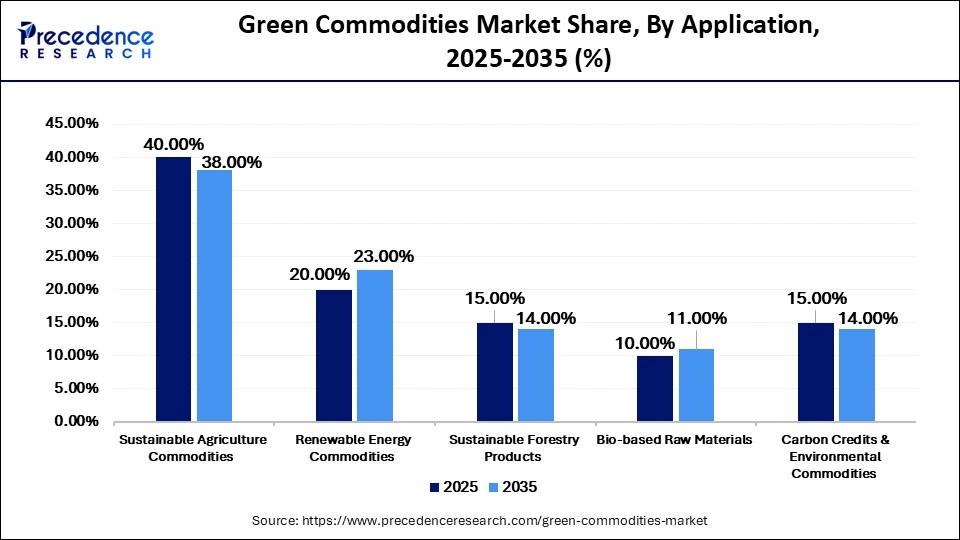
The textiles & apparel segment held approximately 10% market share in 2025 and is expected to grow at a CAGR of around 11% in the coming years. This growth is supported by rising demand for sustainable fibers and eco-friendly fashion. Companies in the industry are increasingly emphasizing sustainability through environmentally responsible merchandising practices, while the shift toward a circular economy presents significant transformation opportunities. Green commodities play a vital role in balancing economic growth with environmental responsibility throughout the product lifecycle.
The construction & packaging materials segment accounted for about 15% market share in 2025 and is projected to grow at a CAGR of 9% in the coming years, driven by rising demand for eco-friendly materials and expanding green building initiatives. The increasing adoption of sustainable materials across various regions and product categories continues to support market expansion. Despite some delays in decarbonization projects, long-term demand for green materials remains robust, reinforcing the growth potential of this segment.
End-Use Industry Insights
Why Did the Food & Beverage Companies Segment Dominated the Market in 2025?
The food & beverage companies segment held a dominant position in the green commodities market, accounting for approximately 35% market share in 2025. This leadership is attributed to their significant reliance on sustainable agricultural commodities and certified sourcing practices. Green commodities in the food and beverages industries are recognized for their ability to deliver high-quality, safe food products, while also enhancing various manufacturing practices that improve food safety and reinforce the sector's dominance.
The energy & utilities segment held a 20% market share in 2025 and is anticipated to grow at the fastest CAGR of 12.5% throughout the forecast period, due to the rising adoption of renewable energy commodities and carbon credits, which encompass economic, social, and policy aspects, fundamentally transforming energy production, distribution, and consumption. Green commodities play a vital role in enhancing the acceptability, development, and sustainability of energy systems, thereby facilitating market growth.
Green Commodities Market Share, By End-Use Industry, 2025-2035 (%)
| End-Use Industry | 2025 | 2035 | CAGR (%) |
| Food & Beverage Companies | 35.00% | 33.00% | 9.5% |
| Energy & Utilities | 20.00% | 23.00% | 12.5% |
| Retail & Consumer Goods | 20.00% | 19.00% | 10.0% |
| Manufacturing & Industrial | 15.00% | 14.00% | 10.5% |
| Government & Environmental Organizations | 10.00% | 11.00% | 11.5% |
The manufacturing & industrial segment held about 15% market share in 2025 and is projected to grow at a CAGR of approximately 10.5% in the coming years. This growth is driven by the increasing use of bio-based materials and sustainable input in production processes. The segment emphasizes the creation of products that minimize the overall carbon footprint of manufacturing. Green manufacturing practices not only reduce negative environmental impacts but also conserve energy and natural resources, encouraging broader adoption.
The government & environmental organizations segment accounted for around 10% of the market share in 2025 and is expected to expand at a CAGR of 11.5% in the coming years. This growth is propelled by a heightened emphasis on sustainability policies, carbon markets, and environmental protection initiatives. Green commodity programs spearheaded by governmental and environmental entities facilitate a market shift towards the sale of sustainably produced commodities and establish the necessary conditions for sustainable production on a national scale, thus supporting market expansion.
Regional Insights
Europe Green Commodities Market Size and Growth 2026 to 2035
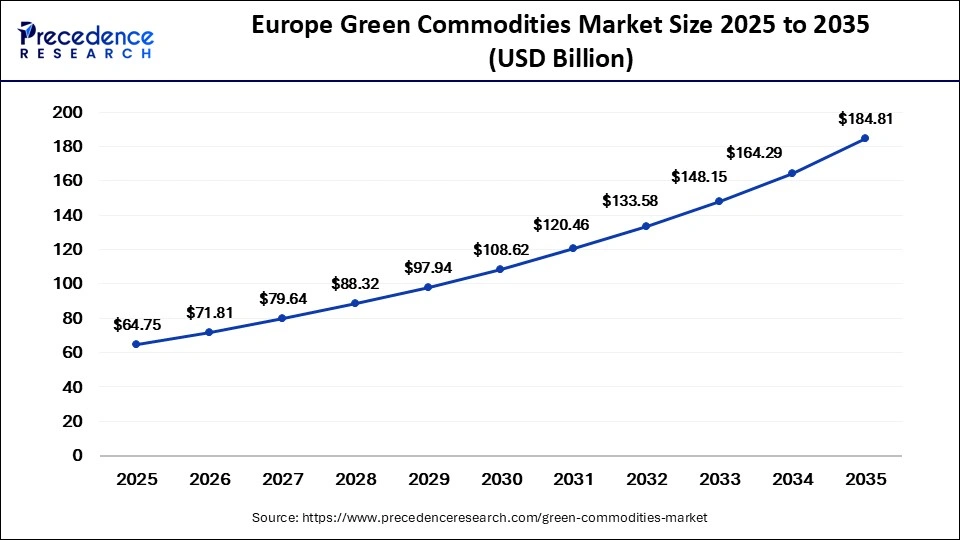
The Europe green commodities market size is estimated at USD 64.75 billion in 2025 and is projected to reach approximately USD 184.81 billion by 2035, with a 11.06% CAGR from 2026 to 2035.
What Made Europe the Leading Region in the Green Commodities Market in 2025?
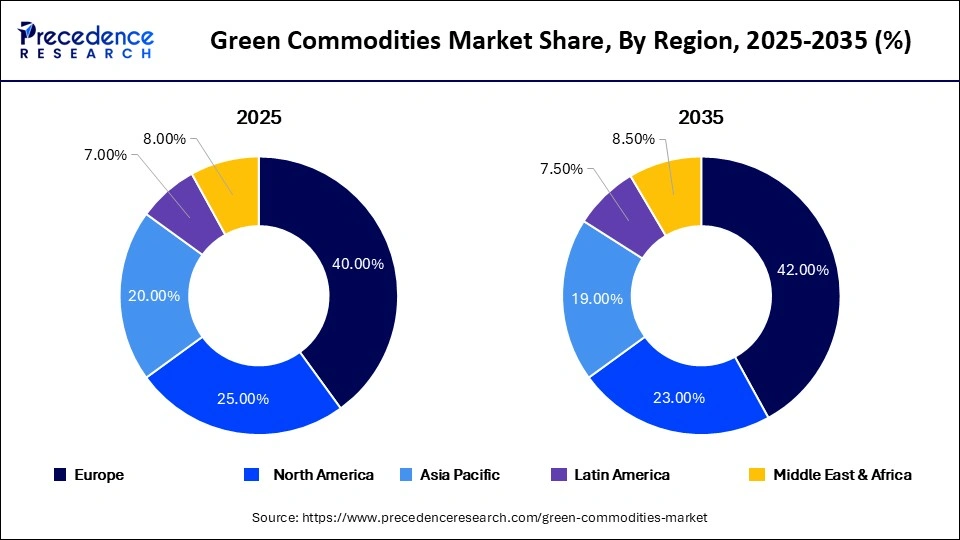
In 2025, Europe led the green commodities market with a 35% share, driven by strong sustainability regulations, ESG mandates, and rising consumer demand for certified eco-friendly products. The region is undergoing a major transition toward a climate-neutral economy, impacting key sectors such as energy, manufacturing, transport, and construction, while initiatives like eco-design legislation are improving overall energy efficiency.
Austria stands out as a leader within Europe, with nearly 90% of its electricity generated from renewable sources. The country's active participation in the photovoltaic value chain, along with high recycling rates and reduced carbon emissions, is further accelerating the adoption of green commodities.
North America: The Second-Largest Market
North America held the second-largest market share of 25% in 2025 and is anticipated to grow at a CAGR of 9.5% in the upcoming period. This growth is driven by strong corporate sustainability initiatives, increasing adoption of green sourcing practices, and rising consumer awareness around environmental conservation. The U.S. leads the regional market, supported by major companies prioritizing sustainability and integrating eco-friendly practices into their operations. Growing investments in initiatives that balance profitability with environmental responsibility, along with heightened awareness of climate change, are further accelerating market growth in the region.
What Makes Asia Pacific the Fastest-Growing Region in the Green Commodities Market?
Asia Pacific captured approximately 20% share of the market in 2025 and is expected to grow at the fastest CAGR of 13.5% in the coming years, driven by rising environmental awareness, export-oriented agriculture, and increasing investments in renewable energy. ESG considerations are reshaping business strategies across the region, while supportive government policies, sustainability targets, and technological advancements are accelerating market adoption.
China is leading the market within Asia Pacific, supported by a comprehensive national action plan promoting green consumption. This includes initiatives across green agriculture, energy-efficient appliances, new energy vehicles (NEVs), circular economy practices, and supply chain decarbonization, strengthening its position in the global green commodities landscape.
Green Commodities Market Companies
- Cargill, Incorporated
- Archer Daniels Midland Company (ADM)
- Bunge Limited
- Louis Dreyfus Company
- Olam Group Limited
- Nestlé S.A.
- Unilever PLC
- Danone S.A.
- Wilmar International Limited
- Sime Darby Plantation Berhad
- Rainforest Alliance (Certification Body)
- Fairtrade International
- Starbucks Corporation
- IKEA (Inter IKEA Group)
- Mars, Incorporated
Recent Developments
- In January 2026, Uniper Global Commodities SE and AM Green Ammonia India Private Limited announced the signing of a long-term binding offtake agreement for renewable ammonia, which is certified as a Renewable Fuel of Non-Biological Origin (RFNBO).(Source: https://www.uniper.energy)
- In December 2025, the European Commission launched a €5.2 billion initiative through the Innovation Fund, designed to accelerate the development of low-carbon industries. This package allocates €2.9 billion for net-zero manufacturing technologies, €1.3 billion for a third auction related to the European Hydrogen Bank, and €1 billion for a pilot auction focused on industrial process heat.(Source: https://africasustainabilitymatters.com)
Segments Covered in the Report
By Commodity Type
- Sustainable Agriculture Commodities (Coffee, Cocoa, Tea, Grains)
- Sustainable Forestry Products (Timber, Pulp, Paper)
- Bio-based Raw Materials (Bioplastics Feedstock, Natural Fibers)
- Renewable Energy Commodities (Biofuels, Biomass)
- Carbon Credits & Environmental Commodities
By Certification Type
- Fair Trade Certified
- Organic Certified
- Rainforest Alliance Certified
- Forest Stewardship Council (FSC) Certified
- Others (RSPO, UTZ, etc.)
By Application
- Food & Beverage Industry
- Energy & Biofuel Production
- Textiles & Apparel
- Construction & Packaging Materials
- Carbon Trading & Offsetting
By End-Use Industry
- Food & Beverage Companies
- Energy & Utilities
- Retail & Consumer Goods
- Manufacturing & Industrial
- Government & Environmental Organizations
By Distribution Channel
- Direct Sourcing & B2B Contracts
- Commodity Exchanges & Trading Platforms
- Sustainability-focused Marketplaces
By Region
- North America
- Latin America
- Europe
- Asia-pacific
- Middle and East Africa
For inquiries regarding discounts, bulk purchases, or customization requests, please contact us at sales@precedenceresearch.com
Frequently Asked Questions
Tags





Ask For Sample
No cookie-cutter, only authentic analysis – take the 1st step to become a Precedence Research client
 Get a Sample




 sales@precedenceresearch.com
 Schedule a Meeting
