



Herpes Treatment Market Size, Companies, Share, Patient Volume, Treatment Adoption Rates, Pricing Analysis, Regulatory Landscape, Competitive Positioning, and Demand Forecast
Herpes Treatment Market (By Therapeutic Type: Nucleoside & Nucleotide Antivirals, Acyclovir, Valacyclovir, Combination & Adjunct Therapies, Emerging Biologics & Novel Agents; By Route of Administration: Oral Therapies, Topical Agents, Injectable Therapies, Others (e.g., intralesional); By Treatment Approach: Outbreak Suppression/Episodic Treatment, Chronic Suppression Therapy, Symptomatic Relief Therapie,s Recurrent / Preventive Management; By End User: Hospitals & Specialty Clinics, Dermatology & STD Clinics, Retail Pharmacies, Online Pharmacies & E-commerce) - Global Industry Analysis, Size, Trends, Leading Companies, Regional Outlook, and Forecast 2026 to 2035
Source: https://www.precedenceresearch.com/herpes-treatment-market
 Get a Sample
 Table Of Content


What is the Herpes Treatment Market Size in 2026?
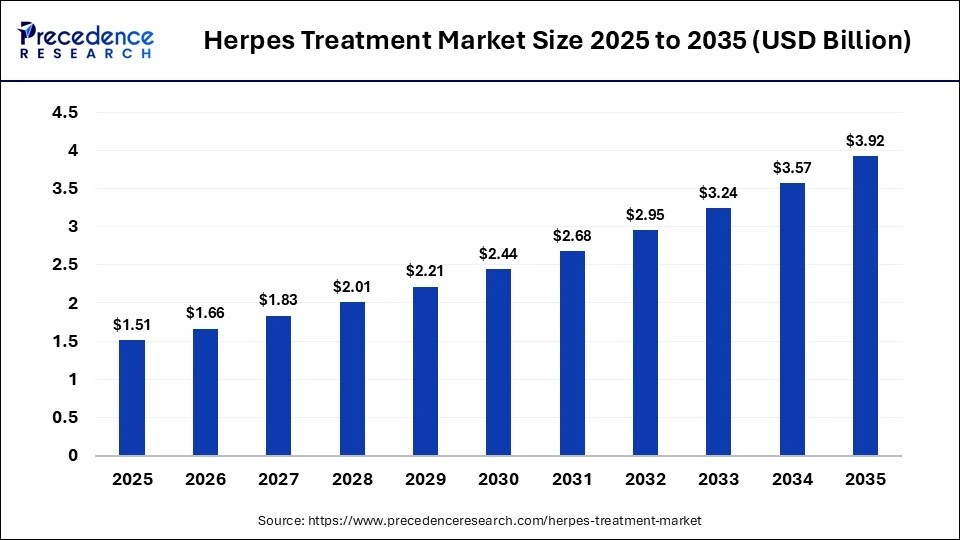
The global herpes treatment market size was calculated at USD 1.51 billion in 2025 and is predicted to increase from USD 1.66 billion in 2026 to approximately USD 3.92 billion by 2035, expanding at a CAGR of 10.00% from 2026 to 2035.This market is growing because of rising cases of conventional antiviral treatment resistance and patients preferring long-acting medicines with an improved mechanism of action.
Key Takeaways
- North America dominated the herpes treatment market in 2025, with a revenue of approximately 38%.
- Asia Pacific is expected to be the fastest-growing region with a CAGR of approximately 10.2% between 2026 and 2035.
- By therapeutic type, the nucleoside and nucleotide antivirals segment held a dominant position in the market with a share of approximately 48% in 2025.
- By therapeutic type, the emerging biologics and novel agents segment is expected to grow at the fastest CAGR during the forecast period.
- By route of administration, the oral therapies segment dominated the market with a share of approximately 67% in 2025.
- By route of administration, the injectable therapies segment is expected to show the fastest growth with a CAGR over the forecast period.
- By treatment approach, the outbreak suppression/episodic treatment segment led the global market with a share of approximately 45% in 2025.
- By treatment approach, the chronic suppression therapy segment is expected to witness the fastest growth in the market with a CAGR over the forecast period.
- By end-user, the hospitals and specialty clinics segment registered its dominance over the global market with a share of approximately 49% in 2025.
- By end-user, the online pharmacies and e-commerce segment is expected to expand rapidly in the market with a CAGR in the coming years.
Market Overview
The global herpes treatment market includes pharmaceuticals and therapeutics used to manage infections caused by Herpes Simplex Virus type 1 (HSV-1) and Herpes Simplex Virus type 2 (HSV-2), as well as treatments for associated complications and recurrent outbreaks. Key products include prescription antivirals, topical agents, emerging biologics, and combination therapies. The market reflects treatment adoption for episodic flare management, chronic suppression, symptomatic relief, and recurrent prevention across outpatient and inpatient settings.
What is the Role of AI in the Market?
Artificial intelligence is playing an important role in changing the herpes treatment market, especially in drug discovery and development. In the early stage, AI helps to analyze large existing data, identify new drug compounds, and predict potential compound which is suitable for clinical trials. This reduces trial-and-error and reduces developmental cost and time. During clinical trials, AI supports patient selection, data analysis, and real-time data monitoring, leading to accurate results. Overall, AI is not replacing traditional methods but strengthening data-driven decision-making, accelerating drug discovery, and minimizing time and money.
What are the Market Trends?
- Rising cases of acyclovir resistance, especially in immunocompromised and long-term users, are driving demand for alternative treatments. This resistance shows the need for drugs with a new mechanism of action, encouraging innovation in antiviral development.
- Pharmaceutical companies are taking a shift towards long-acting antiviral therapies that reduce dosing frequency. This aims to improve patient adherence to manage disease for patients with frequent or severe outbursts.
- The government is investing in novel drug discovery, development, spreading awareness, and health campaigns, leading to an increase in diagnosis rates. Early detection increases long-term demand and supports steady market growth.
- Telemedicine platforms are used for diagnosis, prescription refills, and follow-up care. This improves access and supports continuous therapy use, encouraging consistent demand through online pharmacies.
Market Scope
| Report Coverage | Details |
| Market Size in 2025 | USD 1.51 Billion |
| Market Size in 2026 | USD 1.66 Billion |
| Market Size by 2035 | USD 3.92 Billion |
| Market Growth Rate from 2026 to 2035 | CAGR of 10.00% |
| Dominating Region | North America |
| Fastest Growing Region | Asia Pacific |
| Base Year | 2025 |
| Forecast Period | 2026 to 2035 |
| Segments Covered | Therapeutic Type, Route of Administration, Treatment Approach , End User, and Region |
| Regions Covered | North America, Europe, Asia-Pacific, Latin America, and Middle East & Africa |
Segmental Insights
Therapeutic Type Insights
Why Did the Nucleoside and Nucleotide Antivirals Segment Hold the Largest Share of the Herpes Treatment Market?
The nucleoside and nucleotide antivirals segment registered its dominance over the global market with a share of approximately 48% in 2025 due to its strong effectiveness in herpes treatment. Drugs such as acyclovir, valacyclovir, and famciclovir is first line treatment for both HSV-1 and HSV-2 infections. It is used for episodic treatment as well as long-term therapy. They are available in generic form with affordable cost, which makes them easily accessible across developed and developing regions.
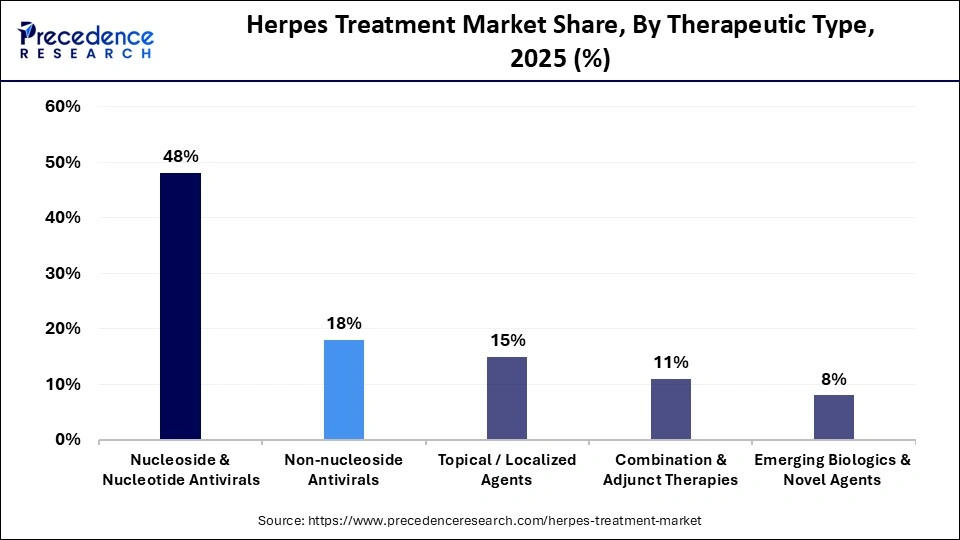
The emerging biologics and novel agents segment is expected to gain the highest share of the market in the coming years. These therapies are designed to work through new pathways by targeting different stages of viral replication or by supporting the body's immune response. The focus is on viral suppression and reducing resistance. Higher development costs and longer approval timelines limit its use.
Route of Administration Insights
How Oral Therapies Segment Dominated the Herpes Treatment Market?
The oral therapies segment held a dominant position in the market with a share of approximately 67% in 2025 due to their ease of use and strong patient acceptance. Many patients prefer oral medications because they can be taken at home without any medical supervision. Oral antivirals are widely available, affordable, and one of the conventional dosage forms. Healthcare professionals commonly prescribe oral antivirals as first-line treatment for herpes infection. Telemedicine and online pharmacies further support the market dominance of oral therapies.
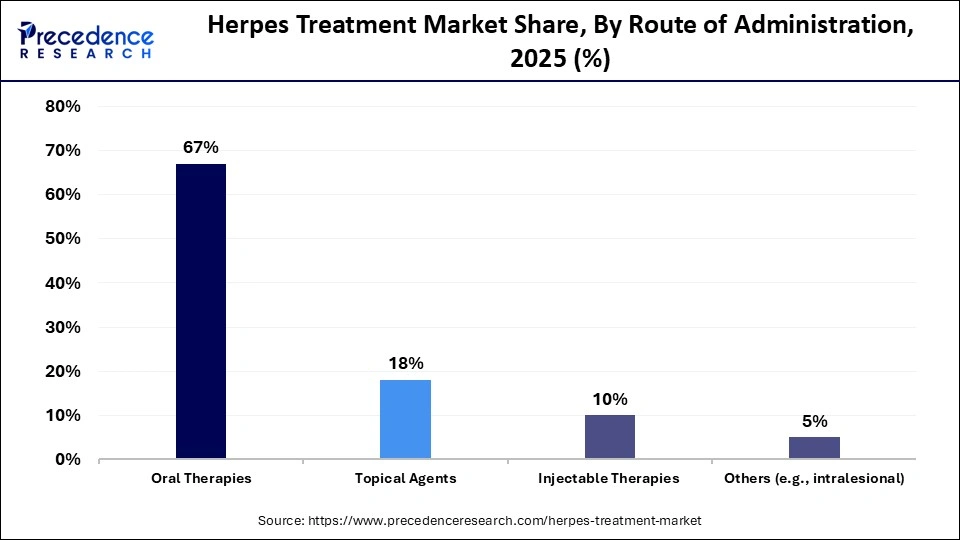
The injectable therapies segment is expected to expand rapidly in the market in the coming years because of its 100% bioavailability and fast-acting advantages. These therapies are used to maintain sustained drug levels to reduce frequent dosing. Currently, this segment remains small due to limited approvals and high costs. Most injectable candidates are still in the clinical development stage.
Treatment Approach Insights
Why the Outbreak Suppression/Episodic Segment Dominated the Herpes Treatment Market?
The outbreak suppression/episodic treatment segment dominated the global market with a share of approximately 45% in 2025. This approach focuses on treating symptoms only when an outbreak occurs. Many patients prefer episodic therapy because it involve short term treatment and considerably lower cost. Physicians often recommend this treatment approach for newly diagnosed patients. The wide availability of oral antivirals and fast symptom relief further supports its dominance in the market.
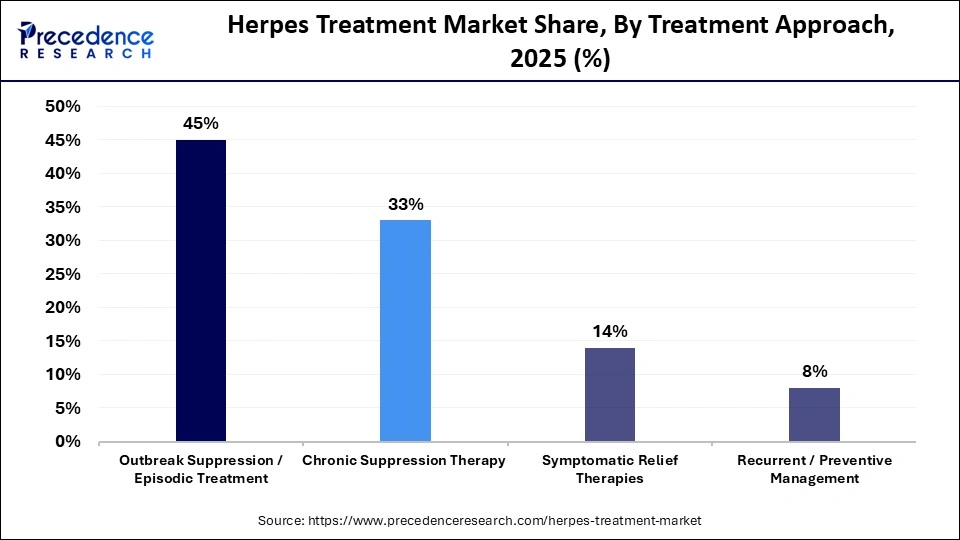
The chronic suppression therapy segment is expected to witness the fastest growth in the market over the forecast period. This method involves daily intake of antivirals to prevent outbreaks and reduce viral transmission. It is recommended for patients with frequent recurrences or severe symptoms. Improved drug safety profiles and better patient education are encouraged for long-term use.
End-user Insights
Why Hospitals and Specialty Clinics Dominated the Herpes Treatment Market?
The hospitals and specialty clinics segment registered its dominance over the global market with a share of approximately 49% in 2025. It is a primary centre for diagnosis, especially for severe symptoms or complicated patients. Hospitals have skilled professionals and specialists which gives accurate testing, counselling, and personalized treatment plans. Hospitals also play a key role in managing complex cases and treatment -resistant infections.
The online pharmacies and e-commerce segment is expected to gain the highest share of the market over the forecast period. Patients prefer these channels due to privacy, convenience, and easy access to medications. Online platforms offer competitive pricing, subscription refill options, and home deliveries. Integration with teleconsultation services has simplified the process, which allows patients to receive prescriptions without visiting hospitals or clinics. This channel is popular among younger adults and urban populations.
Regional Insights
How Big is the North America Herpes Treatment Market Size?
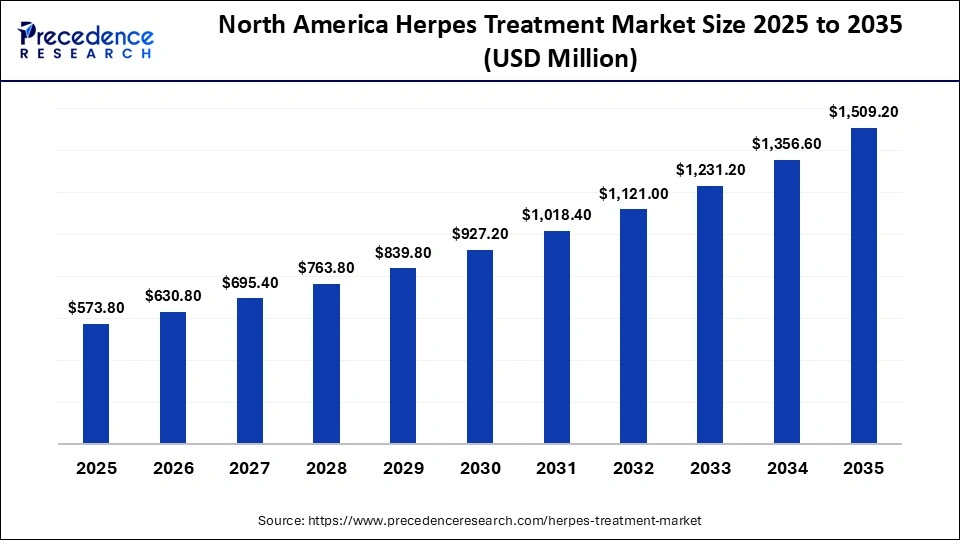
The North America herpes treatment market size is estimated at USD 573.80 million in 2025 and is projected to reach approximately USD 1,509.20 million by 2035, with a 10.15% CAGR from 2026 to 2035.
What Factors Made the North America Region the Dominant Region in the Market?
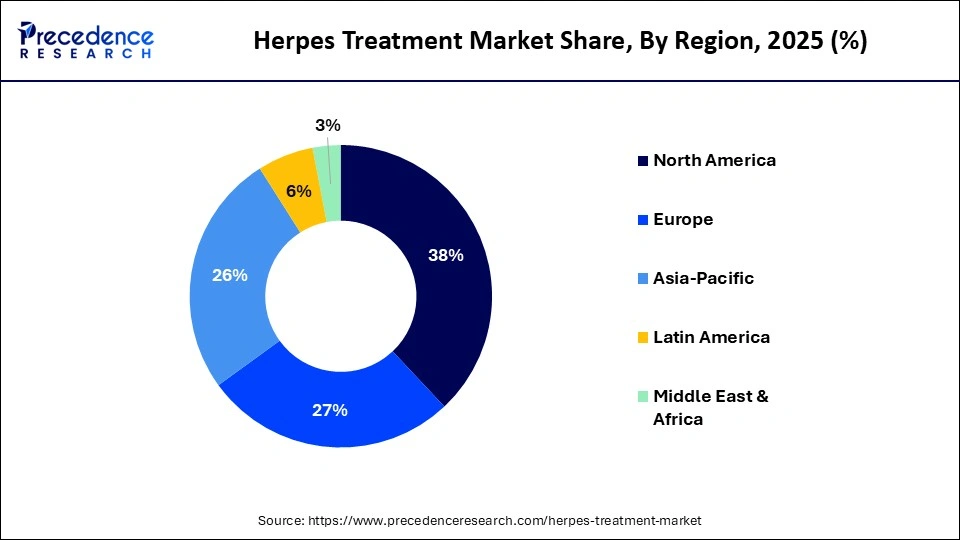
North America dominated the global herpes treatment market with a share of approximately 38% in 2025 because of high awareness, easy diagnosis, and early adoption of antiviral therapies.
The region has a well-established healthcare infrastructure and strong reimbursement policies for chronic treatments. High prevalence of HSV-1 and HSV-2 supports consistent demand for novel drug discovery and advanced antiviral therapies. Growing use of telemedicine for consultation further strengthens dominance in the market.
What is the Size of the U.S. Herpes Treatment Market?
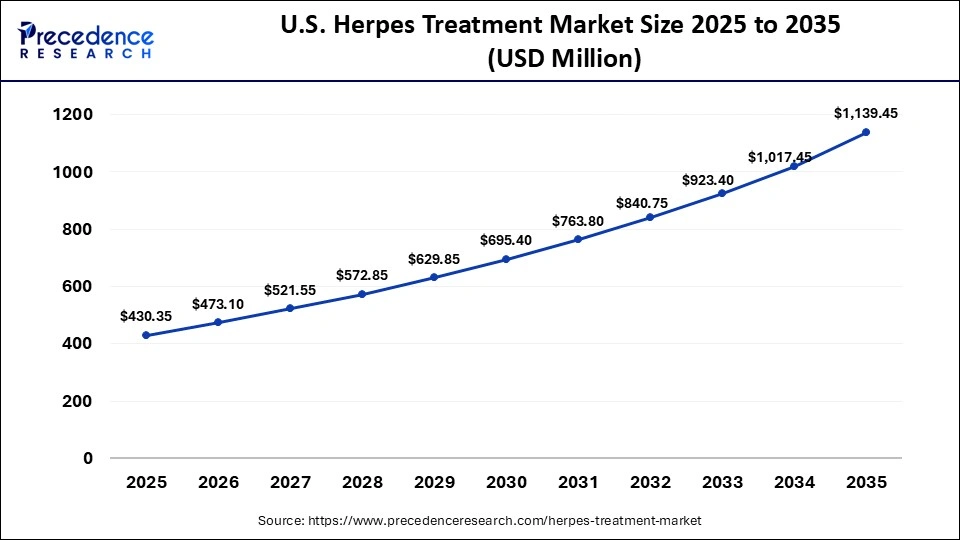
The U.S. herpes treatment market size is calculated at USD 430.35 million in 2025 and is expected to reach nearly USD 1,139.45 million in 2035, accelerating at a strong CAGR of 10.23% between 2026 and 2035.
U.S. Market Analysis
The U.S. represents the largest market in North America. High herpes prevalence, high diagnosis rates, and widespread access to antivirals are driving demand in the market. Healthcare professionals prefer long-acting therapies to reduce outbreak and transmission risk. The country leads in clinical trials for next-generation herpes treatments. Insurance coverage supports continued treatment use, while online consultation platforms have made easy access to treatments.
Why Is the Asia Pacific Growing with the Highest CAGR in the Market?
Asia Pacific is expected to grow at the fastest CAGR of approximately 10.2% in the foreseeable future. Growth is due to a huge population base, rising awareness, and improving healthcare access. More people are getting diagnosed as testing is available in urban and semi-urban areas. Governments are investing in public health campaigns, STI education, and private hospitals and pharmacies expanding treatment access to patients. Digital healthcare platforms are supporting growth in the market.
India Market Analysis
India's herpes treatment market is growing because of increasing awareness and easy access to diagnosis centers. Affordable generic antivirals support long-term treatment use. Telemedicine platforms have improved access by offering consultation and prescription services. Public health programs and private hospital growth are improving disease management. As education and diagnosis improve, which demand antiviral therapy, expect an increase in the market.
Which Factors Made Europe a Significantly Growing Region in the Market?
Europe represents a stable and well-established market for herpes treatment. Countries such as Germany, the UK, and France lead the region due to high diagnosis rates and well-defined treatment guidelines. The government provides reimbursement for antiviral therapy to patients, which encourages long-term adherence. Growing focus on quality of life and awareness of transmission prevention has increased consistent medication use. Ongoing clinical research and regulatory support for novel antiviral therapies supports growth of the region.
Germany Market Trends
The German market is driven by its well-developed healthcare infrastructure, excellent dermatological treatments, and increased interest in managing infectious diseases. Antiviral drugs, which can be prescribed by doctors, have witnessed a high demand to minimize the occurrence of outbreaks, pain, and risk of transmission. Growing awareness among people about sexually transmitted diseases and robust distribution channels for medicines have added to the market's development.
Which Factors Drive the Herpes Treatment Market in Latin America?
Latin America is expected to grow at a considerable CAGR in the upcoming period, due to improved healthcare facilities, increased awareness regarding sexually transmitted diseases, and expanded access to affordable antiviral medication. Hospitals and public healthcare clinics play an important role in providing treatment. Government healthcare initiatives and improving healthcare access in urban areas encourage more patients to seek antiviral treatment. Generic drug manufacturing also helps reduce treatment costs.
Brazil Market Trends
The Brazilian market is driven by the large number of patients in conjunction with the higher consumption of health services. There was a rising need for affordable and efficient antiviral drugs used in treating recurring infections caused by herpes. This kind of antiviral drug is becoming widely available within retail pharmacy chains and in public hospitals, both in urban and semi-urban areas.
How the Middle East and Africa grow in the Herpes Treatment Market?
The Middle East and Africa are expected to grow at a notable CAGR in the foreseeable future, driven by increased infrastructural development in the healthcare sector, high consciousness about infections, and availability of antiviral drugs through prescriptions. Urban hospital development helps in the detection and management of infections. The development of the healthcare sector and infectious disease control also drive growth in the market.
UAE Market Trends
The UAE is driven by the presence of world-class medical facilities, medical tourism, and increased accessibility to branded antiviral drugs. The private hospitals and skin clinics were instrumental in the swift diagnosis and treatment of herpes. Increased knowledge on sexually transmitted infections and the importance of healthcare led to early visits to doctors by patients.
Herpes Treatment Market Value Chain Analysis
- R&D
Research and development in the market focuses on developing and designing new antivirals, long-acting therapies, and improved safety compounds.
Key Players: AiCuris Anti-infective Cures AG, Moderna Inc, Gilead Sciences/ Assembly Biosciences, BioNTech SE. - Clinical Trials and Regulatory Approvals 
In clinical trials, drugs are tested for safety and efficacy. Regulatory authorities review trial data and manufacturing quality. Approval timelines depend on results and long-term safety monitoring to sell in different regional markets.
Key Players: Gilead Sciences/ Assembly Biosciences, BioNTech SE, Innovative Molecules, and Rational Vaccines. - Formulation and Final Dosage Preparation
Formulation and final dosage preparation involve developing a safe, effective, and patient-friendly dosage form, such as tablets and capsules, creams, and injectables. Long-acting formulations required precise design to maintain drug concentration and reduce frequent dosing.
Key Players: GlaxoSmithKline plc, Pfizer Inc., Teva Pharmaceutical Industries Ltd., Viatris Inc., Abbott Laboratories. - Packaging and Sterilization
Medicines are packed to protect from moisture, light, and contamination. Sterilization is critical for injectables and topical products to maintain hygiene, prevent contamination, and protect product quality during storage, transportation, and daily patient use.
Key Players: GlaxoSmithKline plc, Teva Pharmaceutical Industries Ltd., Novartis AG, Emcure Pharmaceutical Ltd. - Distribution to Hospitals, Pharmacies
Finished products are supplied through established distributor networks, ensuring consistent product availability across hospitals, clinics, and retail healthcare outlets.
Key Players: Bausch Health Companies Inc, Pfizer Inc, Gilead Sciences, Inc., GlaxoSmithKline plc. - Patient Support and Services 
Patient support and services focus on education programs, simple usage guides to improve treatment consistency, and encourage better long-term disease control.
Key Players: GlaxoSmithKline plc, Pfizer Inc., Teva Pharmaceutical Industries Ltd., Viatris Inc., Abbott Laboratories.
Herpes Treatment Market Companies
- GSK plc
- Emcure Pharmaceuticals Ltd.
- Carlsbad Tech
- Glenmark Pharmaceuticals Inc.
- Viatris, Inc.
- Fresenius Kabi AG
- Teva Pharmaceuticals Industries Ltd.
- Apotex Inc.
- Sanofi
- Bausch Health Companies Inc
- Gilead Sciences, Inc
- Pfizer, Inc.
- BioNTech SE
- Innovative Molecules
- AiCuris Anti-infective Cures AG
- Moderna Inc
- BioNTech SE.
Recent Developments
- In October 2025, Aicuric, a German clinical-stage biopharmaceutical company, reported the success of the phase 3 trial of pritelivir oral antiviral drug. The company is planning to file a new drug application to FDA.(Source: https://www.fiercebiotech.com)
- In August 2025, Assembly Lifesciences advanced its long-acting herpes simplex virus drug ABI-5366 to phase II trials after phase Ib trials showed 94% reduction in viral shedding.(Source: https://www.clinicaltrialsarena.com)
- In March 2025, Canada based clinical stage pharmaceutical company named Theralase announced a new drug to treat Herpes Simplex Virus Type 1, which showed high efficacy compared to standard care treatment Acyclovir and Abreva in a preclinical animal model.(Source: https://www.biospace.com)
Segments Covered in the Report
By Therapeutic Type
- Nucleoside & Nucleotide Antivirals
- Acyclovir
- Valacyclovir
- Famciclovir
- Non-nucleoside Antivirals
- Topical / Localized Agents
- Combination & Adjunct Therapies
- Emerging Biologics & Novel Agents
By Route of Administration
- Oral Therapies
- Topical Agents
- Injectable Therapies
- Others (e.g., intralesional)
By Treatment Approach
- Outbreak Suppression/Episodic Treatment
- Chronic Suppression Therapy
- Symptomatic Relief Therapies
- Recurrent / Preventive Management
By End User
- Hospitals & Specialty Clinics
- Dermatology & STD Clinics
- Retail Pharmacies
- Online Pharmacies & E-commerce
By Region
- North America
- Europe
- Asia-Pacific
- Latin America
- Middle East & Africa
For inquiries regarding discounts, bulk purchases, or customization requests, please contact us at sales@precedenceresearch.com
Frequently Asked Questions
Tags





Ask For Sample
No cookie-cutter, only authentic analysis – take the 1st step to become a Precedence Research client
 Get a Sample
.webp)



 sales@precedenceresearch.com
 Schedule a Meeting
