



Hydrodesulfurization Catalyst Market Size, Companies, Share, Production Capacity, Raw Material Pricing, Export & Import Analysis, Manufacturing Cost, Competitive Positioning, and Demand Forecast
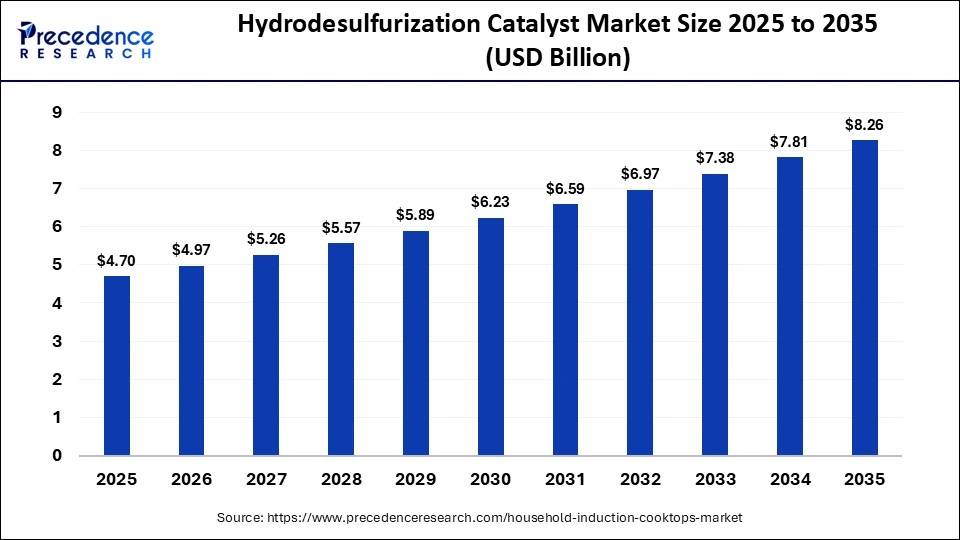
Yogesh Kulkarni, a Chemical and Materials Industry Expert, estimates the hydrodesulfurization catalyst market at USD 4.97 billion in 2026, with the market projected to reach USD 8.26 billion by 2035 at a CAGR of 5.80%. Major hydrodesulfurization catalyst market companies such as Albemarle Corporation, BASF SE, Clariant AG, Johnson Matthey PLC, Chevron Phillips Chemical Company LLC are competing across key material and application segments, including By Catalyst Type, By Application, By End-User Industry.
Source: https://www.precedenceresearch.com/hydrodesulfurization-catalyst-market
 Get a Sample
 Table Of Content


What is the Hydrodesulfurization Catalyst Market Size in 2026?
The global hydrodesulfurization catalyst market size accounted for USD 4.70 billion in 2025 and is predicted to increase from USD 4.97 billion in 2026 to approximately USD 8.26 billion by 2035, expanding at a CAGR of 5.80% from 2026 to 2035. The market is significantly growing due to the strict environmental protection regulations, technological advancements in refineries, and increasing demand for desulfurization of heavy crude oil across the globe.
Key Takeaways
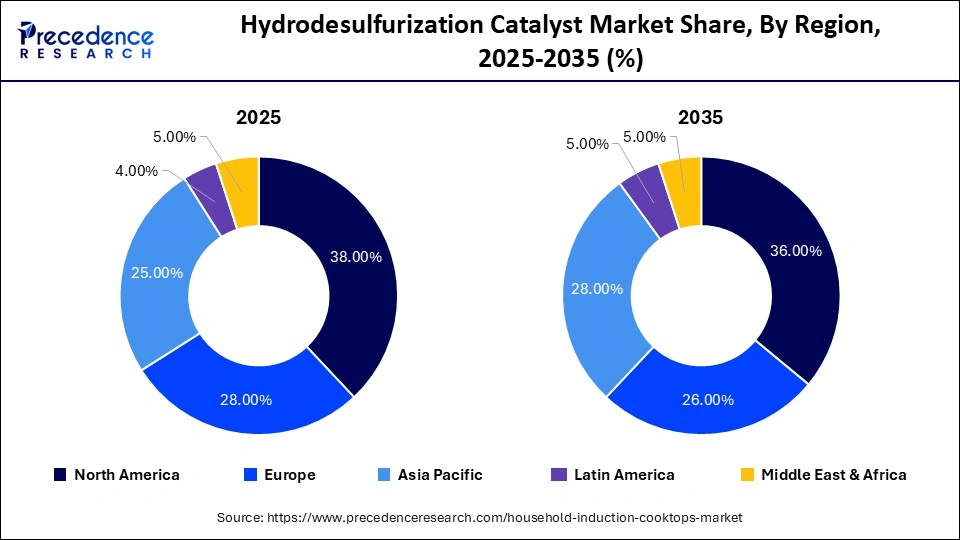
- North America held the largest market share of 38% in 2025.
- Europe is the second-largest shareholder and is projected to grow at a significant rate during the forecast period.
- By catalyst type, the cobalt molybdenum segment dominated the market with a 38% share in 2025.
- By catalyst type, the nickel molybdenum segment is the second-largest shareholder and is expected to grow at a significant rate between 2026 and 2035.
- By application, the petroleum refining segment held the largest market share of 72% in 2025.
- By application, the chemical production segment is the second-largest shareholder and is expected to grow at a significant rate between 2026 and 2035.
- By end-user industry, the oil & gas segment held the largest market share of 65% in 2025.
- By end-user industry, the chemicals segment is the second-largest shareholder and is expected to grow at a significant rate between 2026 and 2035.
Market Overview
Hydrodesulfurization catalyst is a chemical agent majorly utilized in petroleum refining to remove sulfur molecules from fuels such as gasoline, diesel, and jet fuel. It works by reacting with hydrogen to form hydrogen sulfide. The hydrodesulfurization catalyst market is largely driven by strict government mandates, like the EPA, that compel the production of ultra-low sulfur diesel and gasoline to combat increasing air pollution.
The market is also driven by a rapid shift toward high-activity catalysts designed to minimize hydrogen consumption and improve energy efficiency. Top manufacturers like Haldor Topsoe, BASF, and Shell are offering catalysts for fixed-bed reactors in large-scale refinery operations. It is essential to the global oil and gas sector to balance the requirement for refined fuel production with the environment's status, including regulatory standards.
How is AI Impacting the Hydrodesulfurization Catalyst Market?
Artificial intelligence is significantly impacting the hydrodesulfurization catalyst market by enabling real-time monitoring and optimization of catalyst performance through advanced analytics and machine learning. This integration allows refineries to predict catalyst degradation, optimize replacement cycles, and improve overall efficiency, reducing downtime and operational costs. Additionally, AI-driven insights contribute to the development of more effective and durable catalysts, enhancing the long-term sustainability of refinery operations.
Hydrodesulfurization Catalyst Market Trends
- There is a rising demand for catalysts that can effectively remove deeper sulfur impurities, particularly 'refractory' sulfur compounds such as 4,6-DMDBT found in heavy crudes.
- The development of nanostructured, edge-enriched MoS2 nanoflakes is enhancing the available surface area and active site density, improving catalytic efficiency.
- There is a growing demand for organic additives like citric acid, EDTA, and gluconic acid, which improve active metal dispersion during catalyst preparation and help delay sulfidation, leading to highly active 'type II' CoMoS/NiMoS sites.
- There is a growing shift toward the regeneration of spent catalysts, driven by advanced techniques like maleic acid to re-disperse metals, which helps reduce toxic waste and improve sustainability.
Market Scope
| Report Coverage | Details |
| Market Size in 2025 | USD 4.70 Billion |
| Market Size in 2026 | USD 4.97 Billion |
| Market Size by 2035 | USD 8.26 Billion |
| Market Growth Rate from 2026 to 2035 | CAGR of 5.80% |
| Dominating Region | North America |
| Fastest Growing Region | Asia-Pacific |
| Base Year | 2025 |
| Forecast Period | 2026 to 2035 |
| Segments Covered | Catalyst Type, Application, End-User Industry, and Region |
| Regions Covered | North America, Europe, Asia-Pacific, Latin America, and Middle East & Africa |
Market Dynamics
Drivers
Increasing Demand for Petrochemicals and Bio-based Feedstocks
With the rapid expansion of refineries in leading regions like the Middle East & Africa and Asia Pacific, the need to process heavier and more challenging crude oil slates boosts the demand for hydrogenation catalysts. Also, the rapid transition toward renewable energy supports the increasing demand for bio-based fuels and the processing of vegetable oils. These processes demand specialized catalysts to handle impurities in bio-feedstocks.
Restraint
Price Volatility
Despite the strong demand and numerous benefits of hydrodesulfurization catalysts, the market faces challenges due to the volatility of raw metal prices, such as palladium, platinum, and others. This unpredictability creates procurement risks, working capital losses, and margin reductions. Additionally, catalyst deactivation caused by impurities like metal contaminants leads to costly operational downtime, further hindering market growth.
Opportunity
Digitalization and AI integration
The market presents significant growth opportunities, driven by the increasing integration of cutting-edge technologies like AI/ML and advanced analytics for real-time monitoring of catalyst performance. These technologies enable refineries to optimize catalyst lifespan and predict when replacements are needed. Additionally, ongoing research into high-performance catalysts based on non-precious metals offers a promising opportunity to reduce dependence on volatile metal prices.
Segment Insights
Catalyst Type Insights
Hydrodesulfurization Catalyst Market Share, By Catalyst Type, 2025-2035 (%)
| Catalyst Type | 2025 | 2035 |
| Cobalt Molybdenum (CoMo) | 38.00% | 35.00% |
| Nickel Molybdenum (NiMo) | 32.00% | 30.00% |
| Platinum Group Metals (PGM) | 20.00% | 25.00% |
| Others | 10.00% | 10.00% |
The Cobalt Molybdenum Segment Held the Largest Market Share of 38% in 2025
The cobalt molybdenum (CoMo) segment dominated the hydrodesulfurization catalyst market with a 38% share in 2025, as it offers the best balance of highly effective methods of sulfur removal, cost-effectiveness, and stability in diesel hydrogenating and refinery processes. Nickel molybdenum catalysts are highly beneficial for deeper hydrogenation and nitrogen removal. This catalyst process is a unique active phase where cobalt atoms interact with the edges of MoS2 slabs that efficiently remove sulfur molecules by breaking the bonds of C-S. It has high stability under certain harsh environments, making it highly stable in some conditions.
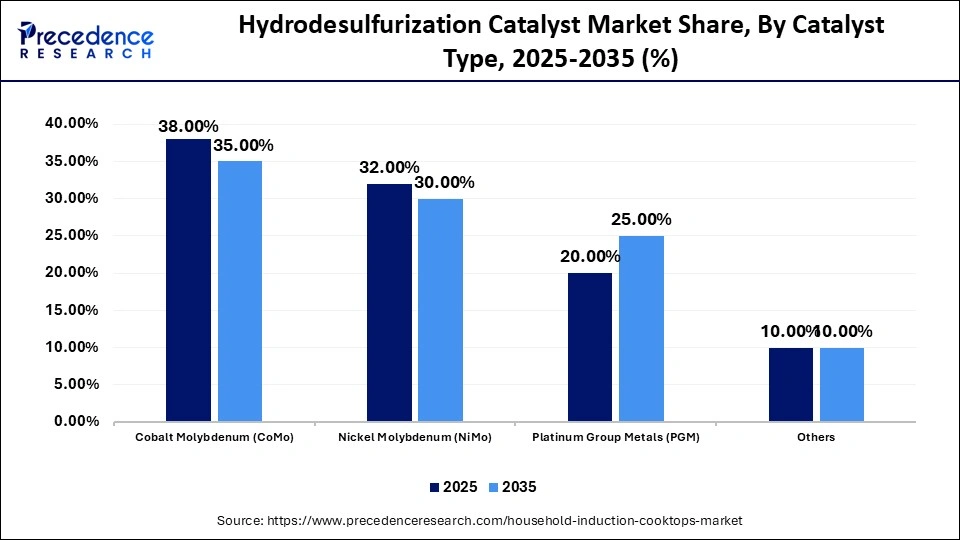
The nickel molybdenum (NiMo) segment was the second-largest shareholder in 2025, holding a 32% market share, and is expected to grow at a significant rate over the forecast period. This is primarily due to its ability to manage complex feedstocks with high efficiency in deep desulfurization. This catalyst is highly efficient in removing nitrogen compounds, which can poison downstream catalysts like FCC units. It also has the ability to saturate aromatic rings and hydrogenate complexes found in heavy feedstocks. This capability is crucial for achieving extremely low sulfur levels of less than 10 ppm, which is not possible with conventional catalysts.
The platinum group metals (PGM) segment held the market share of 20% in 2025. This is due to their properties like superior catalytic activity, high stability, and durability with synergetic effects. The combination of platinum group metals enhances resistance to sulfur-induced deactivation. The platinum group metal-based system can operate with a lower activation energy that offers high conversion rates even at moderate temperatures.
Application Insights
Hydrodesulfurization Catalyst Market Share, By Application, 2025-2035 (%)
| Application | 2025 | 2035 |
| Petroleum Refining | 72.00% | 68.00% |
| Chemical Production | 18.00% | 20.00% |
| Others | 10.00% | 12.00% |
The Petroleum Refining Segment Held the Highest Market Share of 72% in 2025
The petroleum refining segment dominated the hydrodesulfurization catalyst market with the highest share of 72% in 2025, driven by the need for large-scale hydrogenation processes to meet global fuel quality standards. Refineries have been focusing on processing heavier crude oils while complying with stringent regulations on cleaner transportation fuels like diesel and gasoline. The international maritime organization reduced sulfur limits in marine fuel by up to 0.5%. This creates an increased demand for specialized hydrodesulfurization catalysts to upgrade residue.
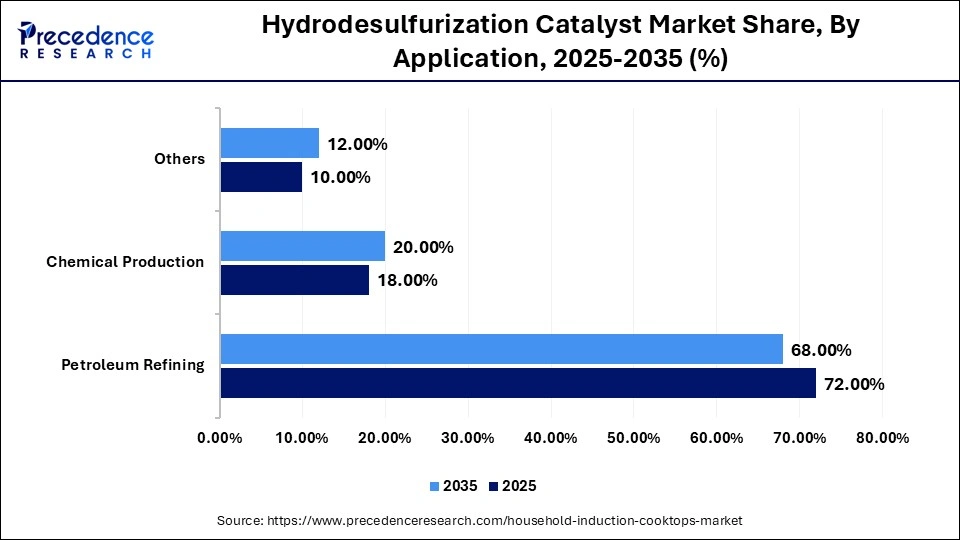
The chemical production segment was the second-largest shareholder, holding a 18% share of the market in 2025, and is expected to grow at a significant rate between 2026 and 2035. This is mainly due to the crucial need for high-purity sulfur-free feedstock to avoid catalyst poisoning in downstream processes. Chemical producers need much lower sulfur levels than transportation fuel standards that comply with the use of highly active catalysts like nickel molybdenum and advanced formulations of cobalt-molybdenum. Chemical manufacturing processes like catalytic reforming, hydrocracking, and hydrogenation are highly sensitive to sulfur, boosting the demand for hydrodesulfurization catalysts.
End-User Industry Insights
The Oil & Gas Segment Held a 65% Market Share in 2025
The oil & gas segment dominated the hydrodesulfurization catalyst market with the largest share of 65% in 2025. This is because oil and gas refineries are responsible for producing low-sulfur fuels. The segment's dominance is also driven by stringent regulations like Euro VI that mandate low-sulfur transportation fuels. These regulations require refineries to continuously replace and upgrade to high-activity catalysts to meet the allowed sulfur limits. Moreover, governments worldwide enforce ultra-low sulfur levels to reduce sulfur dioxide emissions, contributing to the segment's leading position.
Hydrodesulfurization Catalyst Market Share, By End-User Industry, 2025-2035 (%)
| End-User Industry | 2025 | 2035 |
| Oil & Gas | 65.00% | 60.00% |
| Chemicals | 20.00% | 22.00% |
| Energy | 10.00% | 12.00% |
| Others | 5.00% | 6.00% |
In 2025, the chemicals segment was the second-largest shareholder, holding a 20% share, and is expected to grow at a significant rate throughout the forecast period. This is because of the crucial role played by hydrodesulfurization catalysts in producing clean transportation fuels and purifying feedstocks used in the production of chemicals, plastics, and polymers. The chemical manufacturing industry is a significant consumer of these catalysts due to the increasing demand for low-sulfur feedstock to prevent downstream catalytic processes. By ensuring high-purity, sulfur-free feedstocks, the chemical industry holds the bar high by offering sulfur-free feedstocks with higher operational efficiency.
The energy segment held a market share of 10% in 2025. This is mainly due to stringent government regulations aimed at reducing atmospheric pollution. To comply with these regulations, power plants are investing in high-activity catalysts.
Regional Insights
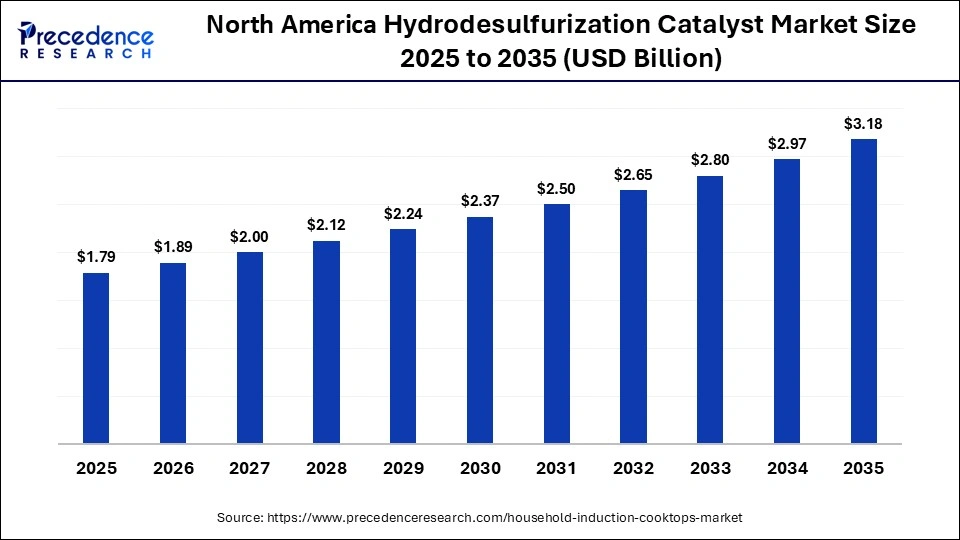
North America Hydrodesulfurization Catalyst Market Size and Growth 2026 to 2035
The North America hydrodesulfurization catalyst market size is estimated at USD 1.79 billion in 2025 and is projected to reach approximately USD 3.18 billion by 2035, with a 5.91% CAGR from 2026 to 2035.
North America Held a 38% Share of the Market in 2025
North America dominated the hydrodesulfurization catalyst market with a major share of 38% in 2025. The dominance of this region is primarily driven by its advanced refining infrastructure, stringent fuel sulfur content regulations, and high demand for gasoline and ultra-low sulfur diesel. The U.S. EPA enforces strict emission standards for ULSD and Tier 3 gasoline, compelling refineries to invest heavily in high-performance catalysts to meet these deep desulfurization requirements.
Additionally, the region is home to major global catalyst manufacturers like Albemarle Corp, advanced refining technologies, and W.R. Grace. They ensure robust supply chains and rapid adoption of technological advancements like customized catalysts for specialized refinery needs. The growing shift toward increasing efficiency has resulted in a high uptake of advanced catalyst technologies that provide higher hydrodesulfurization activity in the region.
U.S. Hydrodesulfurization Catalyst Market Size and Growth 2026 to 2035
The U.S. hydrodesulfurization catalyst market size is calculated at USD 1.34 billion in 2025 and is expected to reach nearly USD 2.40 billion in 2035, accelerating at a strong CAGR of 6.00% between 2026 and 2035.
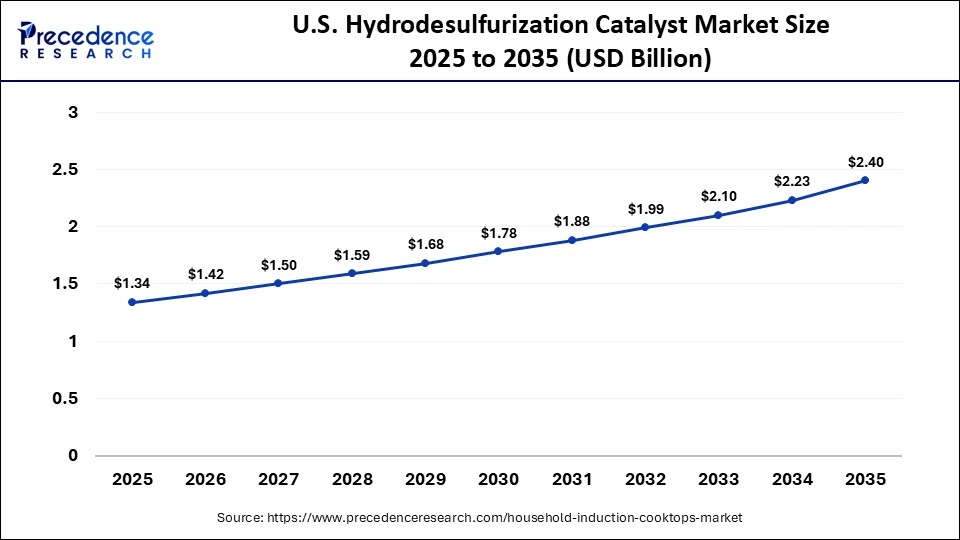
U.S. Hydrodesulfurization Catalyst Market Analysis
The U.S. is a major contributor to the North American hydrodesulfurization catalyst market, driven by its mature and complex refining infrastructure, strict regulations for environmental protection, and the focus on high-sulfur crude processing. The U.S. maintains its dominance in the market through the sheer volume of catalyst replacement required for its massive refining capacity.
The U.S. is a hub for innovation in catalyst technology led by major manufacturers operating in the country. The country has advanced refineries that offer high-activity catalysts designed to enhance sulfur removal while protecting downstream equipment. There is a rising development of catalysts that enable deeper desulfurization without losing octane, which is highly crucial for meeting EPA standards.
Europe: The Second-Largest Market
Europe was the second-largest shareholder in 2025, holding a 28% market share, and is expected to grow at a significant rate in the coming years. The region's growth is largely driven by strict regulations that mandate the processing of higher-sulfur crude oils and a strong focus on sustainability and modernization within its refining industry. The marine fuel standards, like the IMO 2020 sulfur cap, have already minimized sulfur limits in marine fuels to 0.5%. This significantly increased the need for specialized hydrodesulfurization catalysts to upgrade residue fractions.
The aging refinery infrastructure in Europe is driving the need for modernization projects, often involving the installation of advanced hydrogenation units, which increases the demand for modern catalyst solutions. Many refineries in the region are investing heavily in debottlenecking efforts to boost capacity, directly impacting the consumption of hydrodesulfurization catalysts. Additionally, as European refineries increasingly process renewable feedstocks to produce green diesel, new impurities like high nitrogen are created, necessitating the integration of catalysts with bio-treating methods alongside traditional hydrodesulfurization capabilities, further supporting the region's growth.
Germany Hydrodesulfurization Catalyst Market Analysis
The market in Germany is growing due to strict EU regulations requiring ultra-low sulfur levels in fuels, along with a shift toward clean energy and the need to process heavy crude oil blends. As a major refining hub in Europe, Germany focuses on high-performance manufacturing and environmental compliance, ensuring sustained demand for advanced catalyst formulations. Additionally, Germany's increased GHG reduction quotas, aiming for a 25% reduction by 2030 and 36% by 2036, place significant pressure on fuel suppliers to upgrade their refining processes.
How is the Opportunistic Rise of Asia Pacific in the Hydrodesulfurization Catalyst Market?
Asia Pacific is expected to grow at the fastest rate throughout the forecast period. The region's growth is attributed to factors like rapid industrialization, a significant increase in refining capabilities, and strict environmental regulations for high-quality fuel. Governments across the region are enforcing strict carbon emission rules to mitigate the environmental impact of toxic chemicals, requiring cleaner-burning fuels. These regulations mandate sulfur levels to be reduced to 10 ppm or lower, aligning with standards like Euro VI. New refinery projects and large petrochemical complexes in leading Asia Pacific countries are continuously upgrading their facilities, surpassing 17 million barrels per day in capacity. This expansion is driving significant demand for hydrodesulfurization catalysts in the region.
China Hydrodesulfurization Catalyst Market Analysis
China is a major contributor to the Asia Pacific market due to its massive refinery capacity and technological advancements. Local manufacturers, such as Sinopec Catalyst and CNPC Catalyst, offer high-performance catalysts at competitive prices, strengthening the country's market position. These state-owned enterprises have enhanced their technological capabilities, developing indigenous HAS catalysts like CNPC's PHF-101, which are compatible with international players like Albemarle.
Middle East & Africa Hydrodesulfurization Catalyst Market Analysis
The market in the Middle East & Africa is expected to grow at a notable rate in the upcoming period, driven by a strategic shift from being primarily a crude oil exporter to becoming a high-value downstream petrochemical hub. This growth is supported by substantial investments in refinery modernization aimed at producing cleaner, lower-sulfur fuels for both export and domestic consumption. Additionally, countries across the GCC have implemented stringent regulations to reduce sulfur content in gasoline and diesel to 10 ppm, aligning with Euro VI standards.
Middle Eastern national oil companies are investing billions to expand refining capacities and upgrade existing facilities to produce cleaner transportation fuels. Major high-capacity projects, such as BANCO in Bahrain, the Dum refinery in Moan, and several refinery developments in Kuwait and Iraq, are incorporating advanced hydrogenation systems, significantly supporting market growth in the Middle East & Africa.
Hydrodesulfurization Catalyst Market Companies
- Albemarle Corporation
- BASF SE
- Clariant AG
- Johnson Matthey PLC
- Chevron Phillips Chemical Company LLC
- Honeywell UOP
- ExxonMobil Chemical Company
- Haldor Topsoe A/S
- Shell Global Solutions International B.V.
- Sinopec Limited
- Standard Energy
- Saudi Aramco
- Grace Catalysts Technologies
- Nippon Ketjen Co.
- PetroChina Company Limited
Recent Developments
- In June 2025, Clariant announced that its ShiftMax 100 RE catalyst is powering INERATEC's "ERA ONE" e-Fuels plant in Frankfurt Hoechst, Germany, which officially opened on June 3. The facility will recycle 8,000 tons of CO2 annually, converting it into up to 2,500 tons of synthetic fuels and waxes.
(Source: https://www.hydrocarbonprocessing.com) - In November 2025, SONATARCH and Chinese firm SINOPEC Guangzhou Engineering Co., LTD, signed a contract for the construction of a hydrotreating and reforming unit aiming to treat heavy Naphtha at the Arzew refinery to boost gasoline production capacity up to 1.2 million tons annually.(Source: https://sonatrach.com)
Segments Covered in the Report
By Catalyst Type
- Cobalt Molybdenum (CoMo)
- Nickel Molybdenum (NiMo)
- Platinum Group Metals (PGM)
- Others
By Application
- Petroleum Refining
- Diesel Desulfurization
- Gasoline Desulfurization
- Jet Fuel Desulfurization
- Chemical Production
- Production of Fine Chemicals
- Production of Specialty Products
- Others
- Environmental Control
By End-User Industry
- Oil & Gas
- Oil Refining
- Natural Gas Processing
- Chemicals
- Petrochemicals
- Specialty Chemicals
- Energy
- Power Plants
- Others
- Environmental Protection
By Region
- North America
- Latin America
- Europe
- Asia-pacific
- Middle and East Africa
For inquiries regarding discounts, bulk purchases, or customization requests, please contact us at sales@precedenceresearch.com
Frequently Asked Questions





Ask For Sample
No cookie-cutter, only authentic analysis – take the 1st step to become a Precedence Research client
 Get a Sample




 sales@precedenceresearch.com
 Schedule a Meeting
