



Keloid Treatment Market Size, Companies, Share, Patient Volume, Treatment Adoption Rates, Pricing Analysis, Regulatory Landscape, Competitive Positioning, and Demand Forecast
Keloid Treatment Market (By Product Type: Topical Products (Gels, Sheets), Injectable Products, Laser and Energy-based Devices, Others (Cryotherapy/Radiation); By Treatment Type: Intralesional Corticosteroids, Laser Therapy, Surgical Excision, Radiation and Cryosurgery; By End-User: Hospitals and Specialized Clinics, Dermatology Centers, Homecare/E-commerce) - Global Industry Analysis, Size, Trends, Leading Companies, Regional Outlook, and Forecast 2026 to 2035
Source: https://www.precedenceresearch.com/keloid-treatment-market
 Get a Sample
 Table Of Content


What is the Keloid Treatment Market Size?
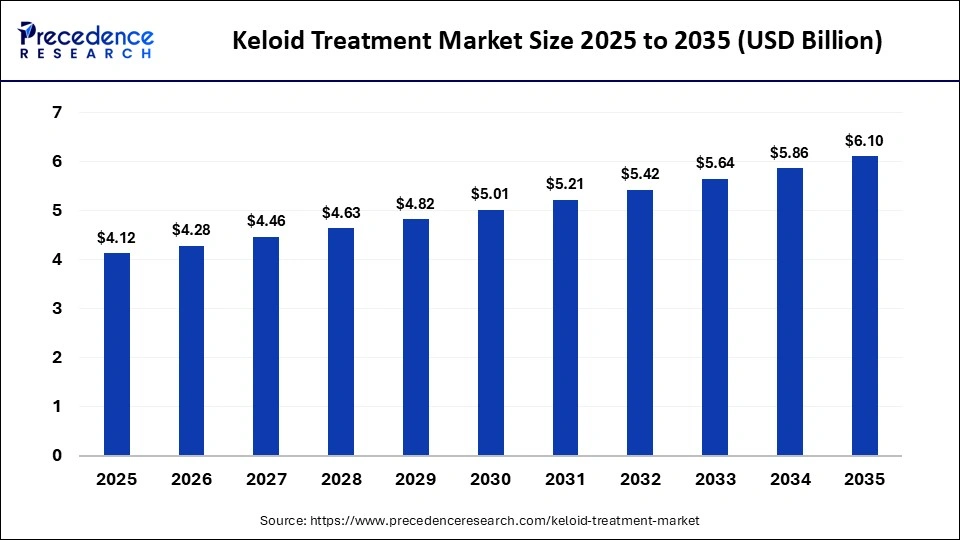
The global keloid treatment market size accounted for USD 4.12 billion in 2025 and is predicted to increase from USD 4.28 billion in 2026 to approximately USD 6.10 billion by 2035, expanding at a CAGR of 4.00% from 2026 to 2035. The market growth is attributed to rising awareness of early scar intervention and increasing adoption of multimodal treatment protocols in specialized dermatology settings.
Market Highlights
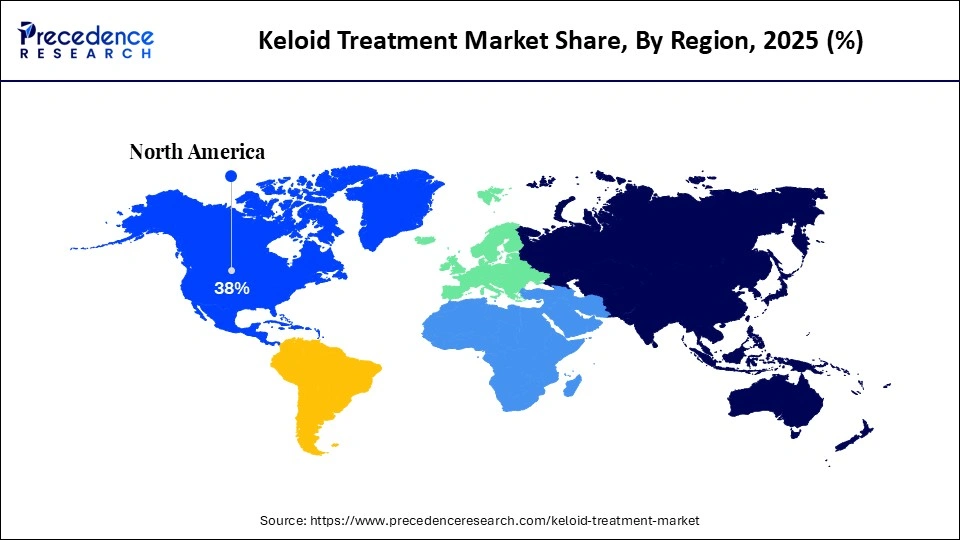
- North America dominated the market with a share of approximately 38% in 2025.
- Asia-Pacific is expected to grow at the fastest CAGR between 2026 and 2035.
- By product type, the topical products segment contributed the highest market share of approximately 42% in 2025.
- By product type, the laser and energy-based devices segment is expected to grow at a strong CAGR between 2026 and 2035.
- By treatment type, the intralesional corticosteroids segment held a major keloid treatment market share of approximately 48% in 2025.
- By treatment type, the laser therapy segment is expected to expand at the fastest CAGR from 2026 to 2035.
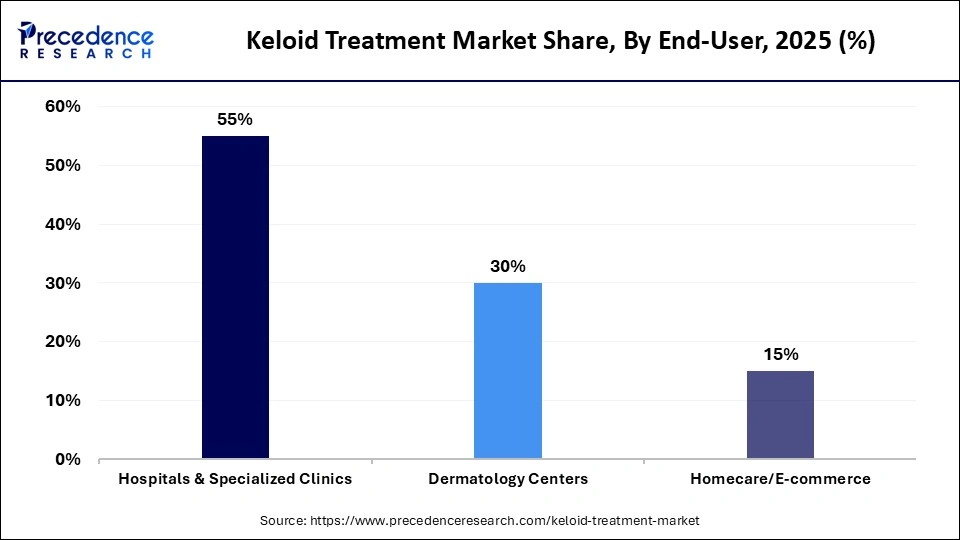
- By end-user, the hospitals and specialized clinics segment captured the highest market share of approximately 55% in 2025.
- By end-user, the dermatology centers segment is poised to grow at a healthy CAGR between 2026 and 2035.
Which Factors Drive the Keloid Treatment Market?
The keloid treatment industry is being driven by rising global awareness of abnormal scar formation and the growing adoption of evidence-based therapies, such as intralesional corticosteroid injections and advanced energy-based laser systems. Silicone gel and corticosteroids are still first-line interventions. Their efficacy in terms of scar thickness reduction and symptom reduction is supported by systematic reviews published in peer-reviewed journals. Furthermore, the expanding clinical validation, technological refinement in laser systems, and increasing patient awareness of effective scar interventions continue to drive market growth.
Impact of AI on the Keloid Treatment Market
Artificial intelligence transforms the market as it is being used to diagnose, select a specific type of therapy, and predict the occurrence of the disease better. Pattern recognition and analysis of lesion morphology have been used to differentiate keloids and hypertrophic scars in AI-based imaging systems that help dermatologists make the right decision. Furthermore, the industry of laser devices is progressing and adopting AI-based optimization of parameters used to optimize energy delivery and improve the results of collagen remodeling.
Growth Factors
- Rising Demand for Aesthetic Scar Correction: Growing cosmetic consciousness is driving higher patient volumes for visible keloid treatment across urban dermatology centers.
- Increasing Incidence of Surgical and Trauma-Related Scarring: Expanding surgical procedures and post-injury wound cases are fueling demand for structured scar management solutions.
- Advancements in Combination Therapy Protocols: Evolving multimodal approaches integrating injectables and energy-based devices are propelling improved long-term treatment outcomes.
- Growing Dermatology Workforce Expansion: Rising numbers of trained dermatologic surgeons and cosmetic specialists are boosting access to specialized keloid interventions.
Evolving Global Treatment Paradigms and Clinical Evidence Driving Innovation in the Keloid Treatment Market
- A systematic review of intralesional excision (a specific surgical variant) covering 926 keloid cases across multiple regions reported recurrence ranges 0%-28.6% when excision was used as part of treatment protocols, underscoring that surgical removal remains a significant portion of clinical interventions in 2024-2025.
- Clinical observational data from a tertiary center in Pakistan in the 2025 cohort showed 35% of surgically excised keloids remained recurrence-free at 24 months, with 65% experiencing recurrence, providing a regional (South Asia) numerical example of surgical excision outcomes over a 2-year follow-up.
- A 2025 systematic meta-analysis of laser use in hypertrophic and keloid scars included data from ~404 patients with 506 treated scar sites, showing broad adoption of fractional COâ‚‚ laser therapy in clinical practice settings across multiple countries where research was conducted.
- A 2024 systematic review and meta-analysis including 7 randomized controlled trials found that intralesional botulinum toxin type A (BTA) significantly improved scar quality (Vancouver Scar Scale) compared to placebo in hypertrophic and keloid scars with a pooled mean difference of -1.69 in scar severity scores, demonstrating measurable clinical adoption of toxin therapy in scar clinics.
- In Africa, the prevalence of keloids in some populations has been reported as high as 8.5% in Kenya and 9% in Zambia, with historical reports up to 16% in Zaire, indicating a substantially elevated incidence among African populations compared with non-African groups.
Keloid Treatment Market Trends
- Teledermatology Platforms Boosting Remote Scar Management Access: Telehealth consultations for initial scar evaluation and follow-up care are gaining traction, especially in regions with limited specialist availability. Clinicians are using virtual platforms to track treatment response using standardized digital scar imagery. This trend is expanding overall patient reach and shortening the time to intervention.
- Personalized Molecular Scar Profiling Emerging as Clinical Trend: Genetic and proteomic profiling of keloid tissue is emerging to identify individualized fibrotic signalling patterns before therapy. Such profiles are being used to identify specific therapies that match the scar biology of each patient, as researched and used by clinicians. This approach is shifting treatment planning toward precision medicine frameworks.
Market Scope
| Report Coverage | Details |
| Market Size in 2025 | USD 4.12 Billion |
| Market Size in 2026 | USD 4.28 Billion |
| Market Size by 2035 | USD 6.10 Billion |
| Market Growth Rate from 2026 to 2035 | CAGR of 4.00% |
| Dominating Region | North America |
| Fastest Growing Region | Asia Pacific |
| Base Year | 2025 |
| Forecast Period | 2026 to 2035 |
| Segments Covered | Product Type, Treatment Type, End-User, and Region |
| Regions Covered | North America, Europe, Asia-Pacific, Latin America, and Middle East & Africa |
Segmental Insights
Product Type Insights
Why Did the Topical Products Segment Dominate the Keloid Treatment Market?
The topical products segment dominated the market with a share of approximately 42% in 2025, due to their broad accessibility and high clinical recommendations as first-line adjunctive products. Topical corticosteroid preparations are often used by physicians to relieve mild cases of itching and inflammation sympathetically. Retail pharmacies and online retail improve product penetration in both developed and developing economies. This favor enhanced continuity in the volume sales and led the segment in various geographic markets.
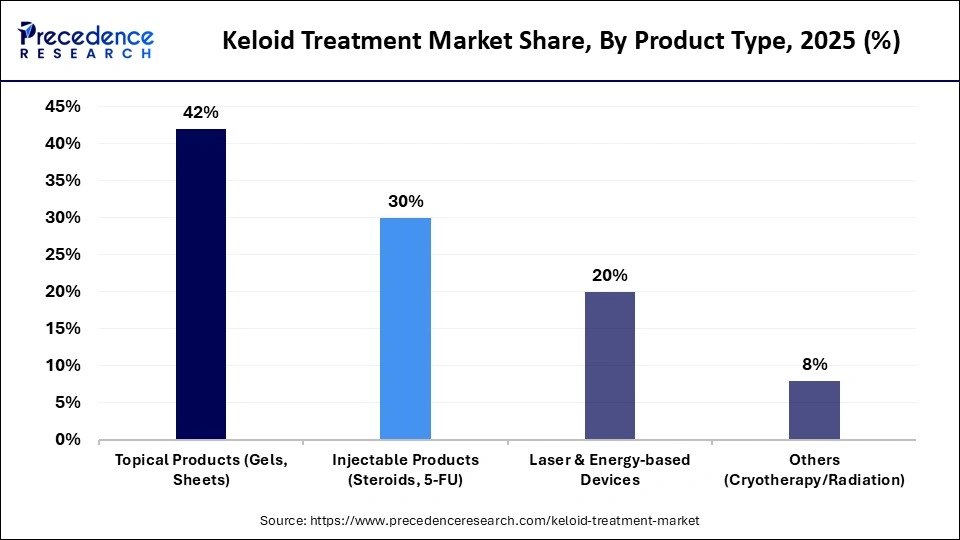
The laser and energy-based devices segment is expected to grow at the fastest CAGR in the coming years, owing to the rapid technological advancements in pulsed dye laser (PDL) and fractional CO2 systems. There is a shift in the use of laser platforms by dermatologists with the aim of attacking vascular elements and inducing regulated collagen remodeling. Moreover, the rising aesthetic awareness and demand for minimally invasive procedures are further boosting the segment growth.
Treatment Type Insights
Which Treatment Type Segment Dominated the Keloid Treatment Market?
The Intralesional corticosteroids segment held the largest revenue share of approximately 48% in the market in 2025, as dermatology guidelines continue to recognize intralesional corticosteroids as first-line therapy for keloids. This method is widely preferred by physicians, as it is relatively inexpensive and widely reimbursed in hospital and outpatient dermatology practices. Furthermore, the high adoption rates of intralesional corticosteroids for their ability to provide quantifiable scar flattening and symptomatic improvement are likely boost the demand for these types of injections.
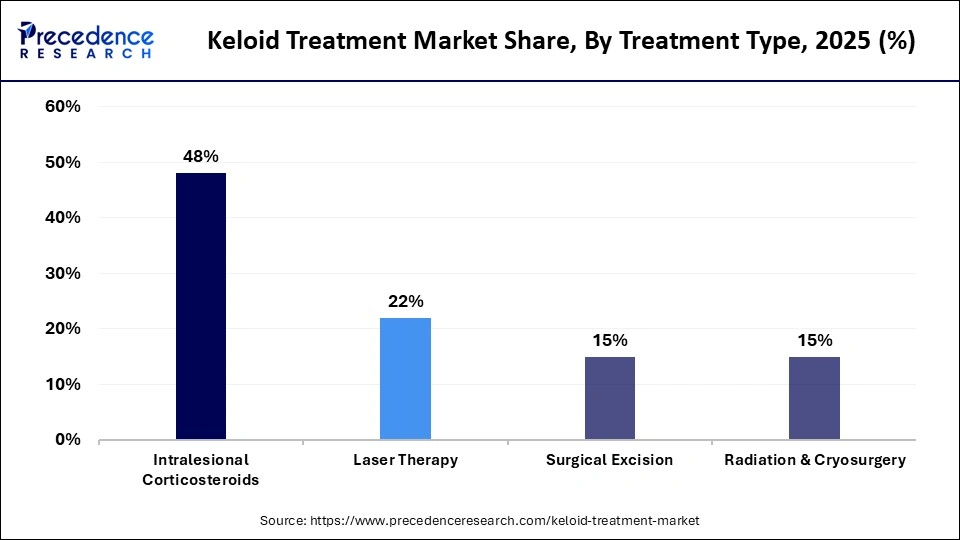
The laser therapy segment is expected to expand rapidly in the market in the coming years, owing to the sustained innovation in pulsed dye laser (PDL) and fractional COâ‚‚ platforms. In 2024-2025, Candela Medical, Lumenis Ltd., Cutera Inc., and Sensus Healthcare Inc. device manufacturers launched updated energy-based platforms with better epidermal cooling and pulse modulation technologies. Additionally, continuous innovation in energy-based dermatology devices is anticipated to position laser therapy as a high-precision and rapidly expanding therapeutic segment.
End-User Insights
Why Did the Hospitals & Specialized Clinics Segment Dominate the Keloid Treatment Market?
The hospitals and specialized clinics segment held a major revenue share of approximately 55% in the market in 2025, as keloid cases often involve complex surgical removal followed by adjuvant treatments. Hospital teams of plastic surgeons, dermatologic surgeons, and radiation oncologists are merged to deal with recurrent and large lesions.
Hospitals still serve as the most important sources of administration of superficial radiotherapy and brachytherapy regimens in instances of refractory scars. Institutional settings also manage keloids arising after trauma, burns, and major surgeries, which often require inpatient infrastructure. These clinical complexities are expected to sustain hospital dominance in the market.
The dermatology centers segment is expected to witness the fastest growth in the market over the forecast period, owing to the rising aesthetic awareness and preference for outpatient scar refinement. Minimally invasive treatment options that are provided in clinics include intralesional corticosteroids, cryotherapy, and laser-assisted remodelling as part of lean-bodied appointment models. Additionally, dermatology centers are likely to lead growth as scar treatment gradually shifts toward precision-based, outpatient-centered care models.
Regional Insights
How Big is the North America Keloid Treatment Market Size?
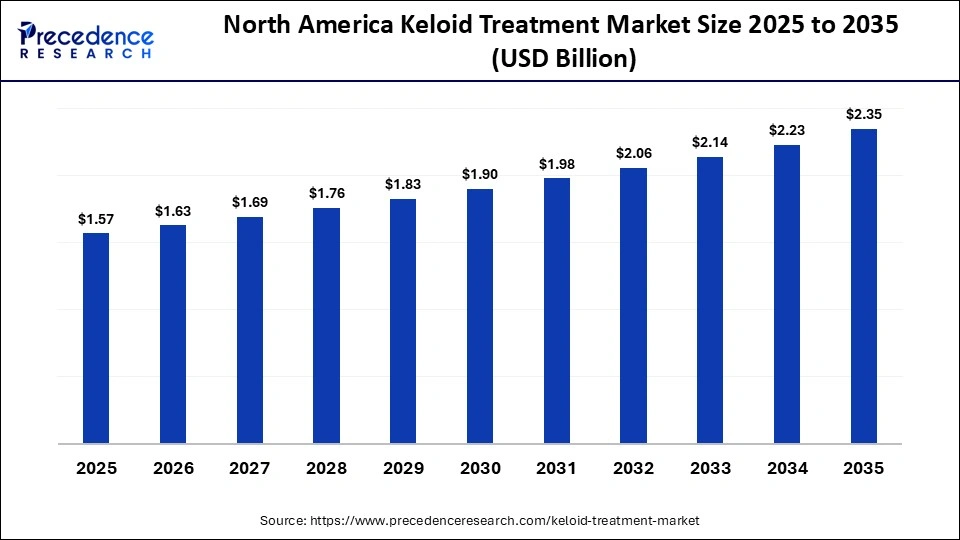
The North America keloid treatment market size is estimated at USD 1.57 billion in 2025 and is projected to reach approximately USD 2.35 billion by 2035, with a 4.12% CAGR from 2026 to 2035.
Why North America Dominated the Keloid Treatment Market?
North America led the market, capturing the largest revenue share of approximately 38% in 2025, due to advanced dermatology infrastructure and coordinated scar management pathways. The American Academy of Dermatology reported more than 13,000 practicing dermatologists in 2024, strengthening national access to specialized keloid care.
The volumes of intralesional steroids, surgical excision, and adjuvant laser therapy are high to support the structured treatment demand in hospitals and outpatient care. The high adoption of the pulsed dye and fractional CO2 laser systems throughout the U.S. clinics strengthens technological leadership. Moreover, the high patient awareness of early scar treatment further increases consultation rates and boosts demand for keloid treatment solutions.
What is the Size of the U.S. Keloid Treatment Market?
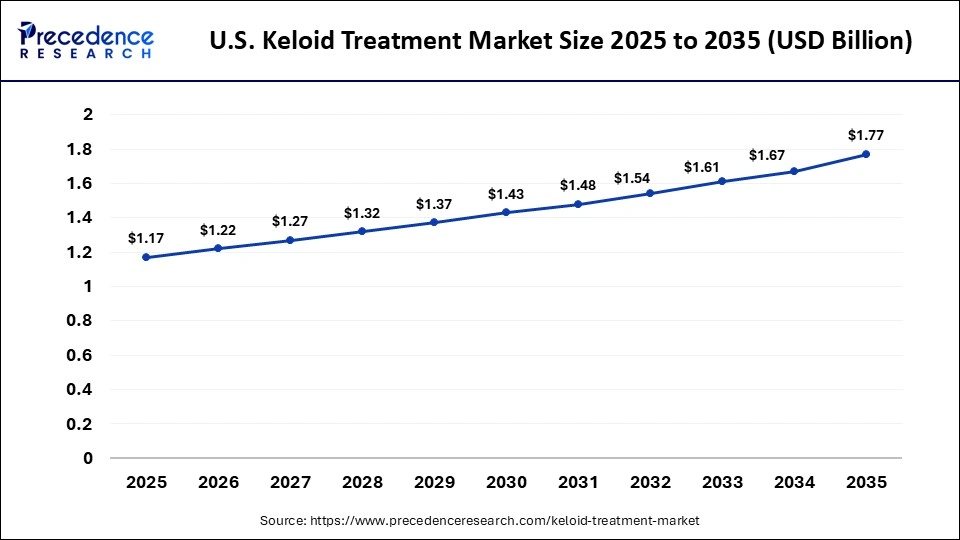
The U.S. keloid treatment market size is calculated at USD 1.17 billion in 2025 and is expected to reach nearly USD 1.77 billion in 2035, accelerating at a strong CAGR of 4.23% between 2026 and 2035.
U.S. Driving Continued Leadership in Scar Care Advancement
U.S. leads the regional market in North America, due to widespread clinical adoption of evidence-based protocols and multidisciplinary care pathways. Intralesional corticosteroid therapy and energy-based procedures remain among the most frequently performed scar management interventions nationwide. Furthermore, the high patient awareness and referral systems also support the United States to remain a major force in the level of dominance in the region of advanced scar care.
How is Asia-Pacific Emerging in the Keloid Treatment Market?
Asia-Pacific is expected to witness the fastest growth during the predicted timeframe, due to the higher genetic susceptibility in several populations and expanding specialty dermatology services. The accelerated urbanization and growing cosmetic awareness are pushing the clinical intervention of the visible scars treament.
It is expected that this growth in infrastructure will boost the rate of treatment adoption in both metropolitan and secondary cities. Additionally, rising middle-class healthcare expenditure across Southeast Asia is estimated to improve the affordability of combined injectable and device-based therapies, facilitating market growth in this region.
India Leading Growth Within Asia-Pacific Through Expanding Clinical Capacity
China is leading the charge in Asia-Pacific, owing to the increasing healthcare access and dermatologic specialization. Large tertiary centres in metropolitan centers like Delhi, Mumbai, and Bangalore have incorporated intralesional corticosteroids, cryotherapy, and laser-aided treatment into organised scar clinics. Moreover, medical tourism is also emerging for aesthetic and reconstructive procedures, with international patients seeking scar correction alongside other dermatologic services. These developments make India a key growth driver in the growing scar care environment in the Asia-Pacific.
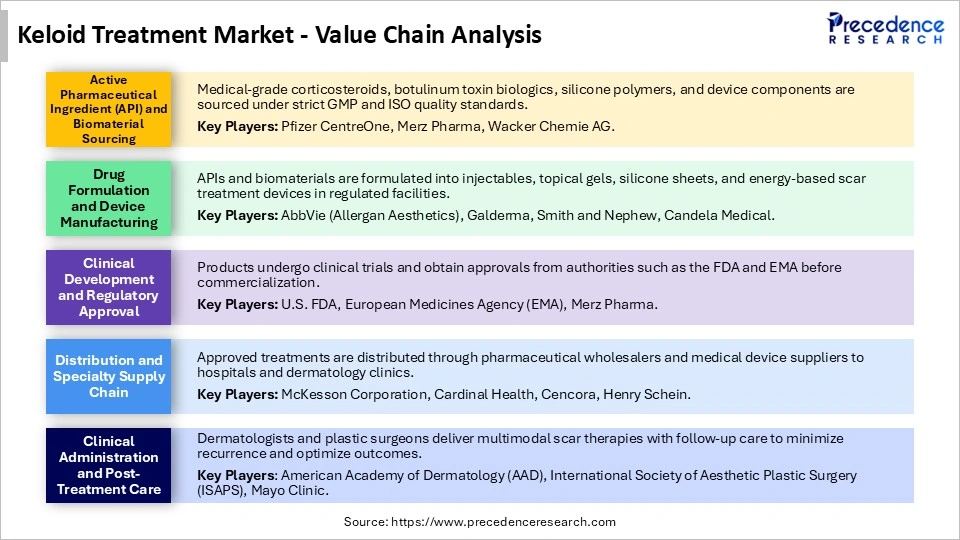
Keloid Treatment Market Value Chain Analysis
Who are the Major Players in the Global Keloid Treatment Market?
The major players in the keloid treatment market include Alliance Pharma plc, Avita Medical, Bausch Health Companies (Valeant), Candela Medical, Cynosure, LLC, Lumenis (Boston Scientific/BPEA), Merz Pharma GmbH and Co. KGaA, Molnlycke Health Care AB, Newmedical Technology, Inc., Pacific World Corporation, Perrigo Company plc, Sensus Healthcare, Inc., Smith and Nephew plc, Sonoma Pharmaceuticals,Inc., and Suneva Medical, Inc.
Recent Developments
- In February 2026, BirchBioMed Inc. announced that Health Canada's Natural and Non-prescription Health Products Directorate (NNHPD) granted regulatory clearance for its FS2 (KynA) topical cream as an approved natural health product. The authorization allows over-the-counter distribution throughout Canada without a prescription requirement.(Source: https://finance.yahoo.com)
- In February 2026, Sisram Medical Ltd revealed that its flagship Energy-Based Devices (EBD) brand, Alma, presented its forward-looking “Intelligent Aesthetics” framework during the IMCAS World Congress in Paris, held January 29–31, 2026. Alma showcased advancements focused on integrating personalized treatment planning with evidence-based device technologies. Sisram's commitment to innovation within energy-based dermatologic and aesthetic solutions, reinforcing its leadership across international markets.(Source: https://www.prnewswire.com)
Segments Covered in the Report
By Product Type
- Topical Products (Gels, Sheets)
- Injectable Products
- Laser and Energy-based Devices
- Others (Cryotherapy/Radiation)
By Treatment Type
- Intralesional Corticosteroids
- Laser Therapy
- Surgical Excision
- Radiation and Cryosurgery
By End-User
- Hospitals and Specialized Clinics
- Dermatology Centers
- Homecare/E-commerce
By Region
- North America
- Europe
- Asia-Pacific
- Latin America
- Middle East & Africa
For inquiries regarding discounts, bulk purchases, or customization requests, please contact us at sales@precedenceresearch.com
Frequently Asked Questions
Tags





Ask For Sample
No cookie-cutter, only authentic analysis – take the 1st step to become a Precedence Research client
 Get a Sample




 sales@precedenceresearch.com
 Schedule a Meeting
