



Kidney Cancer Drugs Market Size, Share, and Trends 2026 to 2035
Kidney Cancer Drugs Market (By Therapy Type: Targeted Therapy, Immunotherapy, Chemotherapy; By Pharmacological Class Type: Angiogenesis Inhibitors, mTOR Inhibitors, Cytokinesis, Others; By Distribution Channel: Hospital Pharmacies, Retail Pharmacies, Online Pharmacies) - Global Industry Analysis, Size, Trends, Leading Companies, Regional Outlook, and Forecast 2026 to 2035
Source: https://www.precedenceresearch.com/kidney-cancer-drugs-market
 Get a Sample
 Table Of Content


What is the Kidney Cancer Drugs Market Size?
The global kidney cancer drugs market size is calculated at USD 7.24 billion in 2025 and is predicted to increase from USD 7.63 billion in 2026 to approximately USD 12.16 billion by 2035, expanding at a CAGR of 5.32% from 2026 to 2035. The North America reprocessed kidney cancer drugs market size reached USD 2.21 billion in 2023. Targeted therapy drugs, immunotherapy drugs, and chemotherapy drugs can help with the treatment of kidney cancers and contribute to the growth of the kidney cancer drugs market.
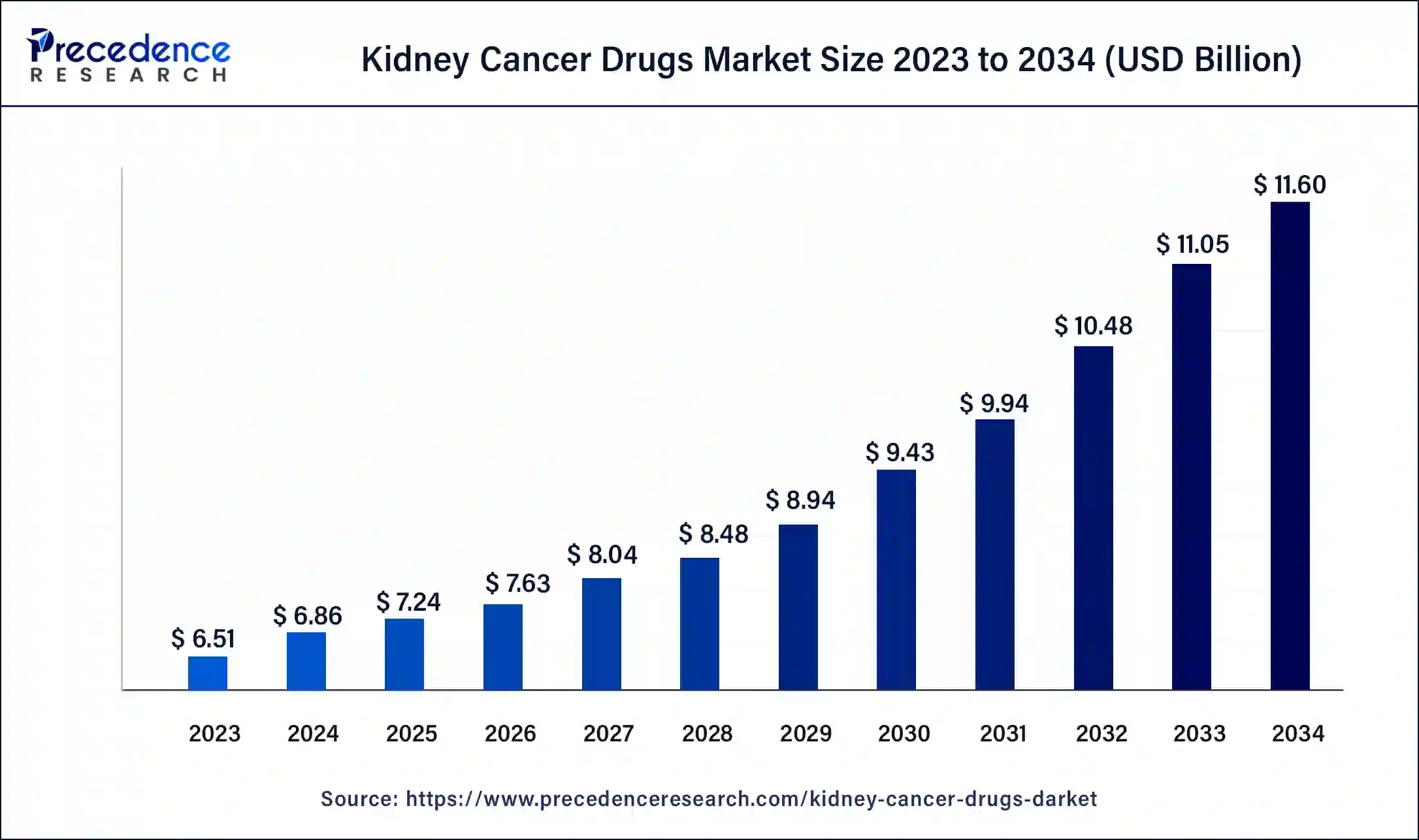
Kidney Cancer Drugs Market Key Takeaways
- North America dominated the market with the largest revenue share of 34% in 2025.
- Asia Pacific is estimated to hold the fastest-growing market over the forecast period of 2026-2035.
- By therapy, the targeted therapy segment dominated the market in 2025.
- By therapy, the immunotherapy segment is expected to witness the fastest growth during the forecast period.
- By pharmacological class, the angiogenesis inhibitors segment has held the major revenue share of 52% in 2025.
- By pharmacological class, the cytokinesis segment will grow rapidly during the forecast period.
- By distribution channel, the hospital pharmacies segment dominated the market in 2025.
- By distribution channel, the retail pharmacies segment is projected to see the fastest growth during the forecast period.
What is the Kidney Cancer Drug?
The kidney cancer drugs market consists of sales of kidney cancer drugs and related services by entities such as organizations, sole traders, and partnerships that produce kidney cancer drugs to diagnose and treat kidney cancer. These industries include the formation of the drugs used in targeted therapy, immunotherapy, and chemotherapy.
Kidney cancer disease is caused by the cancerous or malignant cells in the kidney. This causes extreme fever and fatigue, sudden weight loss, low back pain, lump in the abdomen, and blood in urine. These various types can be life-threatening or dangerous if untreated. There is a need for drugs for the treatment of kidney cancer. Most of the doctors prescribe medications called immunotherapy and targeted therapy. Kidney cancer drugs help the body's immune system to eliminate and recognize cancer cells. These factors help to the growth of the kidney cancer drugs market.
How is AI contributing to the Kidney Cancer Drugs Industry?
Artificial intelligence enhances the management of kidney cancer by accelerating the diagnosis of patients and making treatment choices wiser. It examines the imaging and genomic data to identify tumors early. AI estimates the response to drugs, eliminating unproductive treatments. It helps in prognosis to examine clinical trends. The complex equipment can help surgeons to plan very fast and accurately, with the help of a 3D representation. There is also a benefit of AI in the field of pathology analysis, where it provides regular tumor grading.
Kidney Cancer Drugs Market Growth Factors
- The kidney cancer is caused by the cancerous or malignant cells in the kidney. These can be treated by the drugs used in the therapies, including chemotherapy, immunotherapy, and targeted therapy.
- Treatment of kidney cancer can involve the combination of targeted therapy and immunotherapy medications.
- These kidney cancer drugs help to reduce the risk of returning cancer or slow its growth and can shrink a tumor.
- Doctors also prescribe medications for kidney cancer treatment that are based on immunotherapy and targeted therapy.
Market Outlook
- Industry Growth Overview: Marker expands, having an increased incidence and therapy innovation. A combination therapy redefines care. Targeted drugs are still enhancing patient outcomes.
- Sustainability Trends: The trend changes towards constant formulations and availability. The improvement of shelf-life eliminates storage difficulties. This is because targeted therapies improve the precision and efficiency of treatment.
- Major investors: Innovation and international growth plans are driven by major investors such as Pfizer Inc., Novartis AG, Exelixis Inc., Merck and Co, Inc., and Bristol Myers Squibb.
Kidney Cancer Drugs Market Scope
| Report Coverage | Details |
| Growth Rate from 2026 to 2035 | CAGR of 5.32% |
| Market Size in 2025 | USD 7.24 Billion |
| Market Size in 2026 | USD 7.63 Billion |
| Market Size by 2035 | USD 12.16 Billion |
| Largest Market | North America |
| Base Year | 2025 |
| Forecast Period | 2026 to 2035 |
| Segments Covered | Therapy Type, Pharmacological Class Type, Distribution Channel, and Regions |
| Regions Covered | North America, Europe, Asia-Pacific, Latin America, and Middle East & Africa |
Market Dynamics
Drivers
Increasing senior population
As age increases, the risk of kidney cancer increases in the senior population or older age. Kidney cancer is found in the senior population more than the other. The senior population is exposed to chemicals, cigarette smoke, and sunlight, and their body can cause cancer agents instantly. Kidney cancer is more common in the senior population. This kidney cancer needs treatment with different drugs used in the therapies. This helps to the growth of the kidney cancer drugs market.
Increased risks of kidney cancer
Smoking people are the main reason for the risk of kidney cancer than the non-smoking person. People who are obese have higher risks of kidney cancer. Hypertension or high blood pressure increases kidney cancer risks. The treatment of kidney failure needs long-term dialysis, which has a high risk of kidney cancer developing. Mutation in DNA. Some people are born with specific inherited syndromes, which leads to risks of kidney cancer diseases. These risks of kidney cancer need kidney cancer drugs to treat kidney cancer. These factors help the growth of the kidney cancer drugs market.
Restraint
Side effects of kidney cancer drugs
Side effects of the kidney cancer drugs include a careful balancing act, psychological distress, blisters on the soles of the feet and palms of the hand, skin rash, easy blooding or bruising because of the low blood platelet counts, increased chance of infections because of the low white blood cell counts, hair loss, swelling in legs or arms, high blood pressure, weight loss, mouth sores, nausea and vomiting, loss of appetite, muscle or joint pain, fatigue, and diarrhea. All kidney cancer patients face the problem of psychological burden with the life-threatening disease. These side effect factors of the kidney cancer drugs can restrict the growth of the kidney cancer drugs market.
Opportunity
Advanced technologies
Advancements in immunotherapy include the combination of drugs with one another or with kidney cancer drugs or medications for the treatment of kidney cancer. Advancements in kidney cancer biomarkers and tumor profiling biomarkers for cancer characteristics help to solve the issue. Kidney subtyping and biomarkers may also help to improve the science of the therapies, including immunotherapy for kidney cancer. Advancements in immunotherapy enhance the ability of the immune system to attack cancer cells. Immunotherapy can work in different ways based on the cells that are acting on the body. These advanced technology factors help the growth of the kidney cancer drugs market.
Segment Insights
Therapy Insights
The targeted therapy segment dominated the kidney cancer drugs market in 2025. Kidney cancer can be treated by targeted therapy, which uses drugs to block certain proteins, genes, or molecules that fuel the growth of kidney tumors. The main two types of targeted therapy drugs are used for the treatment of kidney cancer, including monoclonal antibodies and tyrosine kinase inhibitors. Targeted therapy is more effective than the chemotherapy and immunotherapy. Most of the drugs used in the targeted therapy for the treatment of kidney cancer are angiogenesis inhibitors that disrupt the process of creating tumors by their blood vessels. These targeted therapy drugs are normally taken as tablets daily.
It also may be taken in combination with immunotherapy drugs for advanced kidney cancer as the first treatment. Targeted therapy drugs may help to treat advanced kidney cancers by slowing down or shrinking the growth of the cancer. Targeted therapy drugs can control or kill kidney cancer cells, and they help to relieve pain and control advanced kidney cancer symptoms. These factors help to the growth of the targeted therapy type segment and contribute to the growth of the market.
The immunotherapy segment is expected to witness the fastest growth in the kidney cancer drugs market during the forecast period. In the treatment of kidney cancer, immunotherapy is used to help the immune system fight off abnormal cells. The main types of immunotherapies for the treatment of kidney cancer include cytokinesis and immune checkpoint inhibitors. Immunotherapy can also be used in the treatment of advanced kidney cancer. This immunotherapy drug helps to recognize and destroy cancer cells more effectively. These factors help the growth of the immunotherapy-type segment and contribute to the growth of the market.
Pharmacological Class Insights
The angiogenesis inhibitors segment dominated the kidney cancer drugs market in 2025. For the treatment of kidney cancer drugs, angiogenesis inhibitors, including bevacizumab, axitinib, sorafenib, pazopanib, and sunitinib, are used. Some angiogenesis inhibitors are immunomodulatory drugs that suppress or stimulate the immune system, which have antiangiogenic characteristics. It helps improve overall and progression-free survival in patients who suffer from kidney cancer disease. These factors helped the growth of the angiogenesis inhibitors pharmacological class type segment and contributed to the growth of the market.
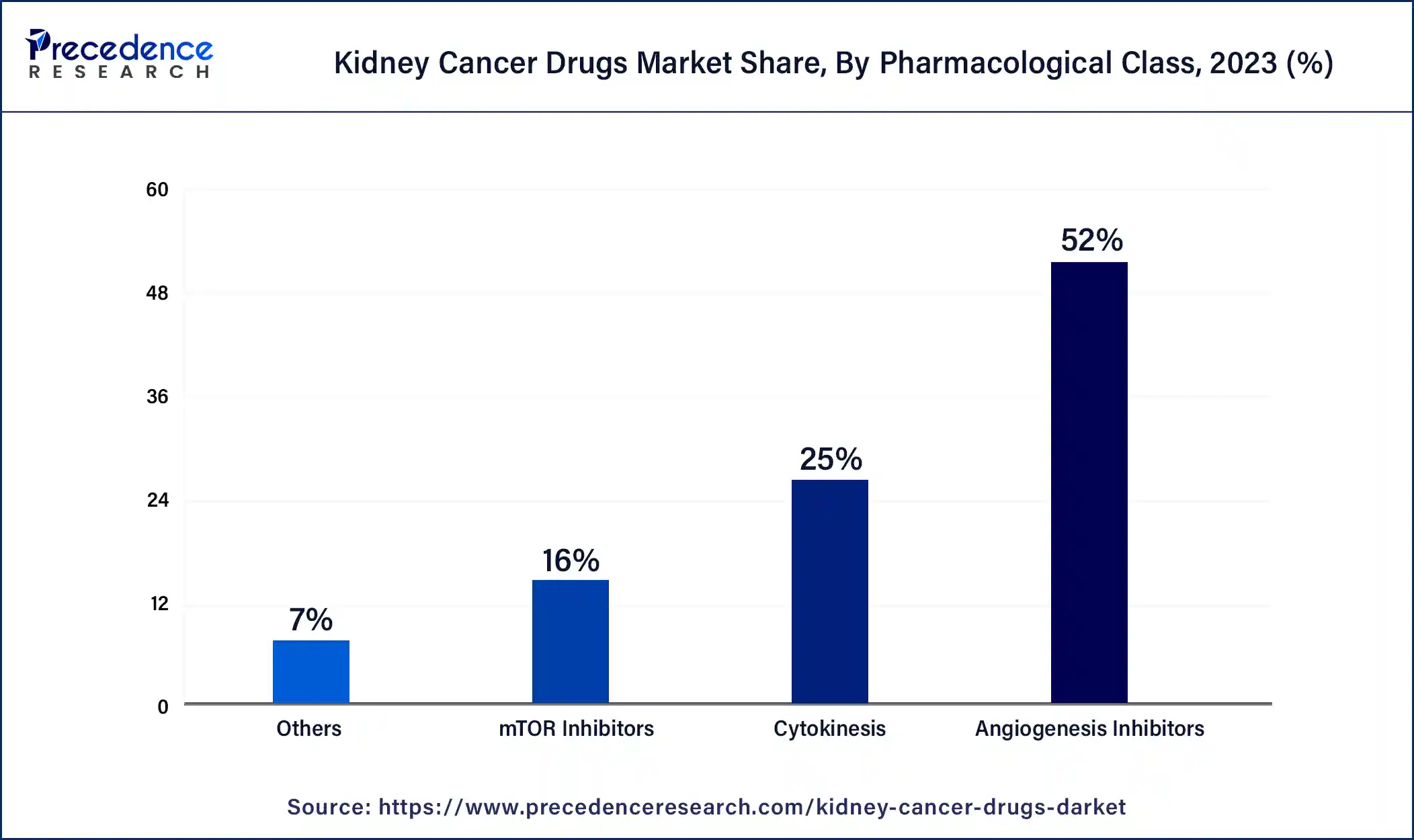
The cytokinesis segment will grow rapidly in the kidney cancer drugs market during the forecast period. Cytokinesis is used in immunotherapy to treat kidney cancer. Cytokinesis plays the main role in the anticancer immune response and is the main component of the immune system. These factors help the growth of the cytokinesis pharmacological class type segment and contribute to the growth of the market.
Distribution Channel Insights
The hospital pharmacies segment dominated the kidney cancer drugs market in 2025. Hospital pharmacies have better access to patients' medical records. Improved discharge reconciliation and quality of admission by exercising oversight, a considerable contribution to safer medication use by cooperating with the other providers, offering information about possible side effects, and also checking the medicines are agreeable with existing medicines. Increased interaction with health professionals and prescribers helps to the growth of the market. Enhancing the reduction of readmission, continuity of care, and medication adherence. These factors help the growth of the hospital pharmacies distribution channel type segment and contribute to the growth of the market.
The retail pharmacies segment is projected to see the fastest growth during the forecast period. Retail pharmacies have direct access to pharmacists, which allows for personalized consultations by walk-in interactions with the pharmacists. Collaboration with the healthcare providers, and specialists, and contributing to the more comprehensive approach for patient care. It helps with one-stop shopping and saves time and effort. These factors help the growth of the retail pharmacies distribution channel type segment and contribute to the growth of the market.
Regional Insights
What is the U.S. Kidney Cancer Drugs Market Size?
The U.S. kidney cancer drugs market size was estimated at USD 1.73 billion in 2025 and is predicted to be worth around USD 2.92 billion by 2035 with a CAGR of 5.37% from 2026 to 2035.
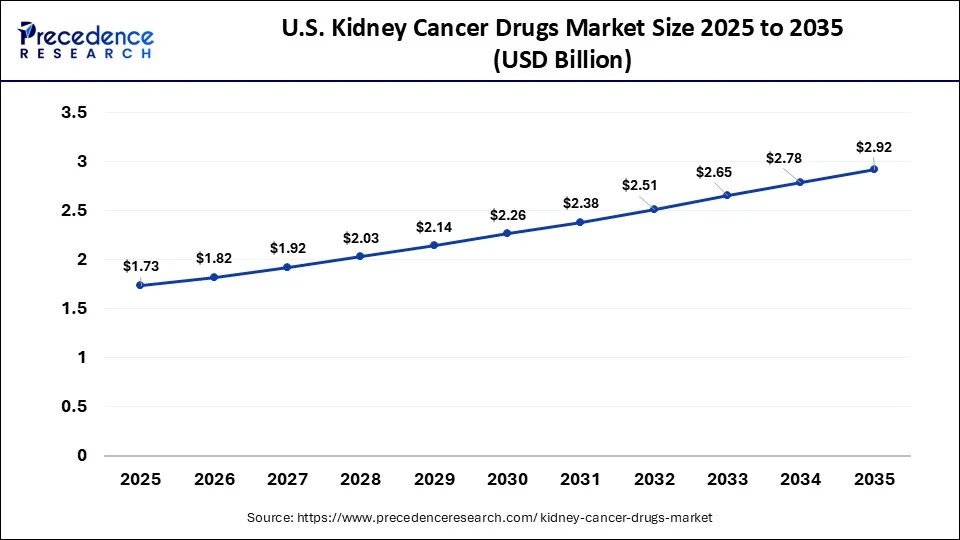
North America dominated the kidney cancer drugs market in 2025. Rising genetic disorders and the presence of healthcare facilities help to the growth of the market in the North American region. The United States is the leading country in the region in terms of the growth of the market for the treatment of kidney cancer.
- In September 2023, Jardiance 10mg tablets (empagliflozin) were approved by the United States (U.S.) Food and Drug Administration (FDA) is responsible for the treatment of adults who suffer from chronic kidney disease (CKD) at the risk of progression, and it was announced by the Boehringer Ingelheim and Eli Lilly & Company.
- In December 2023, the United States FDA approved the drug belzutifan of Merks & Co., Inc. for the treatment of kidney cancer. This is used in the treatment of renal cell carcinoma disease in that cancer cells are found in the kidney's lining of very small tubes in the kidney.
U.S. Kidney Cancer Drugs Market Trends
North America is the first because of superior treatment and effective health systems. Immunotherapies and targeted drugs are highly adopted by the U.S. Hybrid therapies are the force of change in the treatment. Adjuvant therapies are popular postoperatively. The emphasis on new treatments enhances the clinical performance and expansion into the market.
China Kidney Cancer Drugs Market Trends
Asia-Pacific is growing because of the increase in disease burden and medical progress. China is a growth propeller that exhibits robust domestic production and innovation. Local players establish cost-effective therapies. The access is enhanced by biosimilars and targeted drugs. Better survival is assisted by the adoption of advanced treatments.
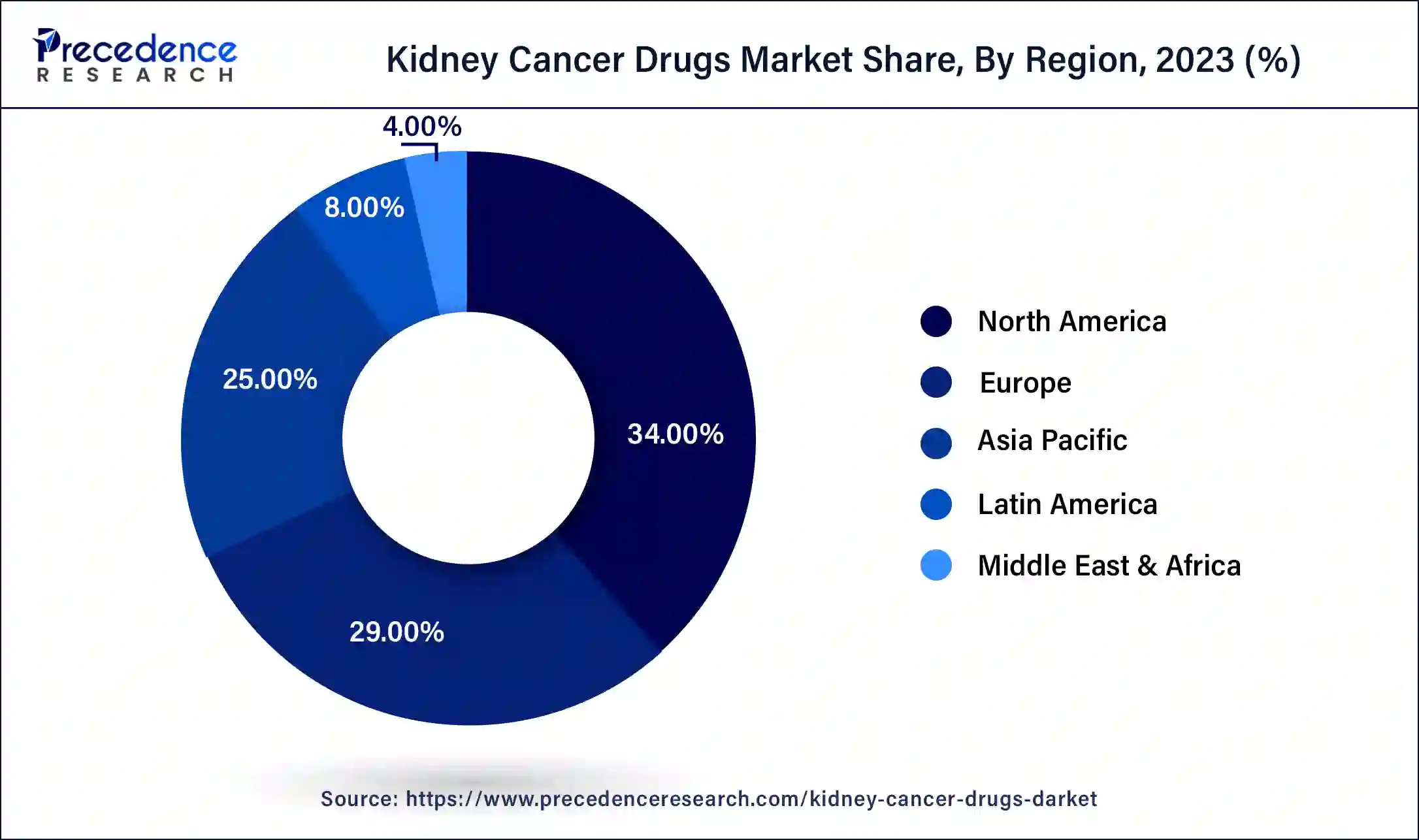
Asia Pacific is estimated to hold the fastest-growing kidney cancer drugs market over the forecast period of 2026-2035. The diabetic population, hypertension, and high smoking lead to the growth of kidney cancers, and the increasing number of major key manufacturers of the products contribute to the growth of the market. China, India, and Japan are the leading countries in the region for the growth of the market.
- In October 2023, DCGI (Drug Controller General of India) approved MSD's anti-PD one therapy, KEYTRUDA (pembrolizumab) immunotherapy, which helps the immune system fight cancer cells for the treatment of renal cell carcinoma is the common type of kidney cancer and triple-negative breast cancer in adults was announced by MSD (called as Merck in the U.S. and Canada).
Kidney Cancer Drugs Market Companies
- Abbvie: Comes up with customized oncology therapeutics such as antibody drug conjugates. Specializes in new treatments such as telisotuzumab adizutecan to treat renal cancer.
- Arlak Biotech: It has an oncology division where cancer medicines are sold cheaply. Offers injectables and tablets that aid in the prevention of renal cancer treatments using franchise-based delivery systems.
- Apikos Pharma: Produces oncology medications such as tablets and injections. Specializes in the low-cost treatment of kidney cancer of certified quality and a wide product mix.
Other Major Key Players
- Astellas Pharma
- AstraZeneca plc
- Amgen Inc
- Allena Pharmaceuticals
- AVEO Oncology
- AID Genomics Limited
- AQVIDA GmbH
- BIOPHARMA-MEA
- Biogen Inc
- Biocad
- Baxter International Inc
- BeiGene
- Byer AG
- Cure Tech Ltd.
- Celnova Pharma
- Celon Pharma
- CARsgen Therapeutics
- CStone Pharma
- Daiichi Pharmaceutical Sankyo
- Euroferma Laboratories S.A.
- Enteris BioPharma
- Emisphere Technologies, Inc.
- Eli Lilly and Company
- EUSA Pharma Inc
- GlaxoSmithKline plc
- Healthkind Labs Pvt. Ltd
- JW Therapeutics
- Johnson & Johnson
- Julphar
- Kitov Pharma Limited
- Kolaz Biotech
- Merck and Co., Inc.
- Neopharma
- Novo Nordisk A/S
- Natco Pharma
- NeoTX
- Otsuka Pharmaceuticals Co., Ltd
- Pierre Fabre Group
- SwisscheM Healthcare Pvt. Ltd
- TUTEUR Argentina
- Teva Pharmaceutical Industries Ltd.
- Rani Therapeutics
- UroGen Pharma Ltd
- Veropharm
Recent Developments
- In January 2026, Zydus Lifesciences launched its biosimilar Tishtha in India following the Delhi High Court's decision, offering it in 100 mg and 40 mg doses priced at Rs. 28,950 and Rs. 13,950, significantly cheaper than the innovator's brand. (Source: https://pharma.economictimes.indiatimes.com)
- In September 2025, NICE's new draft kidney cancer guideline outlines diagnosis, treatment, and care for adults with suspected or confirmed renal cell carcinoma, aiming to standardize treatment, prevent unnecessary kidney surgeries, enhance patient care, and assist healthcare professionals. (Source: https://www.oncology-central.com)
- In December 2023, for the treatment of metastatic kidney cancer, the use of belzutifan was approved by the FDA and developed by a UTSW spinoff at UT Southwestern Medical Center.
- In January 2024, Bristol Myers Squibb published a hypodermic or skin version of its PD-1 inhibitor Opdivo data in kidney cancer as the I-O battle heads to a new front.
- In May 2024, Alectinib, an adjuvant treatment for lung cancer was approved by the Food and Drug Administration.
Segments Covered in the Report
By Therapy Type
- Targeted Therapy
- Immunotherapy
- Chemotherapy
By Pharmacological Class Type
- Angiogenesis Inhibitors
- mTOR Inhibitors
- Cytokinesis
- Others (Immune Checkpoint Inhibitors, CTLA-4 Inhibitors, Antimetabolites, and Others)
By Distribution Channel
- Hospital Pharmacies
- Retail Pharmacies
- Online Pharmacies
By Geography
- North America
- Asia Pacific
- Europe
- Latin America
- Middle East & Africa
For inquiries regarding discounts, bulk purchases, or customization requests, please contact us at sales@precedenceresearch.com
Frequently Asked Questions
Tags





Ask For Sample
No cookie-cutter, only authentic analysis – take the 1st step to become a Precedence Research client
 Get a Sample




 sales@precedenceresearch.com
 Schedule a Meeting
