



Maternal Health Therapeutics Market Size, Share and Trends 2026 to 2035
Maternal Health Therapeutics Market (By Therapeutic Category: Oxytocics & Uterotonics, Antihypertensives, Antibiotics & Anti-infectives, Anticoagulants/Antithrombotic, Diabetes Management, Anaemia & Nutritional Supplement Therapies, Other Maternal Health Therapeutics; By Indication: Postpartum Haemorrhage, Gestational Diabetes Mellitus, Maternal Infections, Maternal Anaemia, Thrombosis/VTE Risk Management, Other Indications; By Route of Administration: Injectable, Oral, Other Routes; By Distribution Channel: Hospital Pharmacies, Retail Pharmacies, Online Pharmacies, Government/Public Health Procurement Programs) - Global Industry Analysis, Size, Trends, Leading Companies, Regional Outlook, and Forecast 2026 to 2035
Source: https://www.precedenceresearch.com/maternal-health-therapeutics-market
 Get a Sample
 Table Of Content


What is the Maternal Health Therapeutics Market Size?
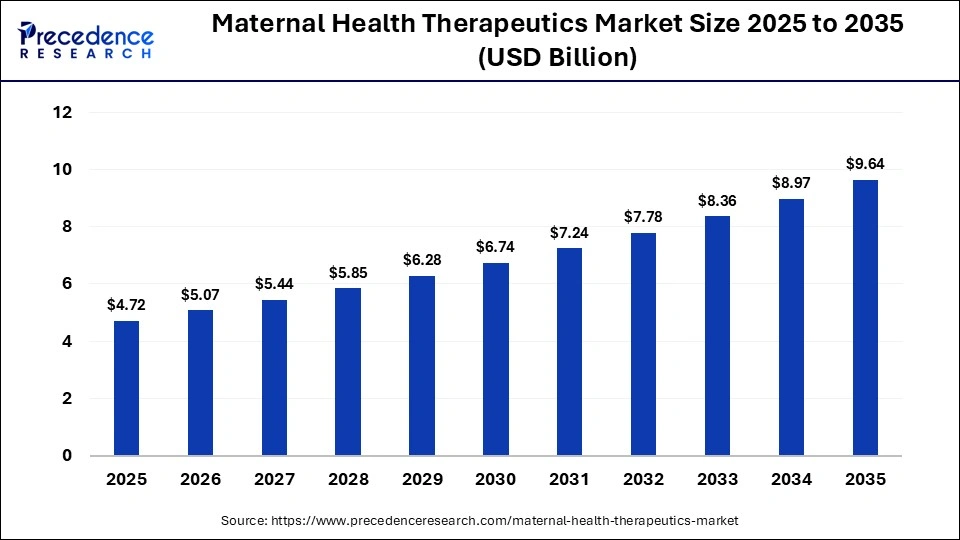
The global maternal health therapeutics market size accounted for USD 4.72 billion in 2025 and is predicted to increase from USD 5.07 billion in 2026 to approximately USD 9.64 billion by 2035, expanding at a CAGR of 7.40% from 2026 to 2035. The market is rapidly growing due to the rising incidence of pregnancy-related health disorders, increasing awareness, and the launch of innovative products supported by AI-driven diagnostics aimed at reducing maternal mortality worldwide.
Market Highlights
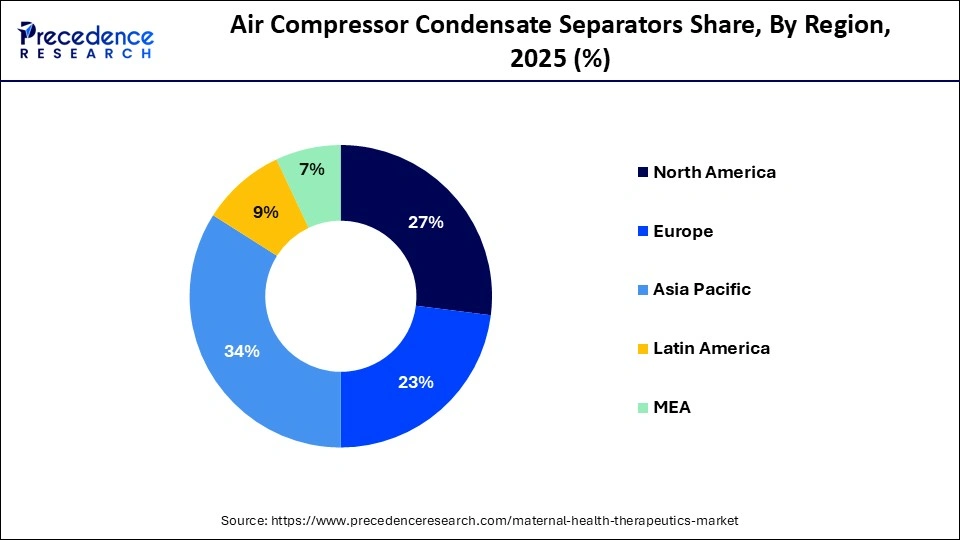
- Asia Pacific held the largest market share of nearly 34% in 2025.
- The Middle East & Africa is expected to grow at the fastest CAGR during the foreseeable period.
- By therapeutic category, the oxytocics & uterotonics segment held the largest market share of nearly 24% in 2025.
- By therapeutic category, the anticoagulants / antithrombotic segment is expected to grow at the fastest CAGR during the forecast period.
- By indication, the postpartum hemorrhage segment held the largest market share of nearly 22% in 2025.
- By indication, the gestational diabetes mellitus segment is expected to grow at the fastest CAGR during the foreseeable period.
- By route of administration, the injectables segment held the largest market share of nearly 46% in 2025.
- By route of administration, the oral segment is expected to grow at the fastest CAGR between 2026 and 2035.
- By distribution channel, the hospital pharmacies segment held the largest market share of nearly 52% in 2025.
- By distribution channel, the online pharmacies segment is expected to grow at the fastest CAGR during the foreseeable period.
Market Overview
The global maternal health therapeutics market comprises pharmaceutical drugs, biologics, and supportive therapies used to prevent, manage, and treat medical conditions occurring during pregnancy, childbirth, and the postpartum period. The market includes therapeutics for hypertensive disorders of pregnancy (preeclampsia/eclampsia), gestational diabetes, postpartum haemorrhage, infections, anaemia, thrombosis risk, uterine atony, and other pregnancy-related complications, delivered across hospitals, maternity centres, and outpatient settings. The market growth is largely driven by the rising maternal risk factors (advanced maternal age, obesity, diabetes), improving access to prenatal care, expansion of institutional deliveries, and a higher focus on reducing maternal mortality globally.
How is AI Influencing the Maternal Health Therapeutics Market?
The integration of AI, specifically machine learning (ML), holds immense potential to revolutionize maternal health by enabling predictive analytics, early interventions, and data-driven decision support for healthcare providers. Advanced AI algorithms can address critical challenges, such as reducing maternal and infant mortality rates, by analyzing integrated health data. They are increasingly used for the early diagnosis of pregnancy-related complications, including preeclampsia and gestational diabetes, allowing healthcare professionals to implement preventive measures and lower the risk of severe outcomes.
Maternal Health Therapeutics Market Trends
- Rising development of targeted therapies for conditions such as postpartum depression, anxiety, PTSD, and physical recovery after childbirth.
- The rise of telemedicine and remote monitoring is enabling 24/7 access to healthcare professionals without the need for in-person visits.
- Demand for wearable devices to track critical health parameters of both mother and baby.
- Increasing R&D investment in therapies for postpartum depression, hemorrhage, and mental health recovery
- Integration of AI tools for early detection, risk assessment, and personalized treatment planning to reduce maternal mortality
Market Scope
| Report Coverage | Details |
| Market Size in 2025 | USD 4.72 Billion |
| Market Size in 2026 | USD 5.07 Billion |
| Market Size by 2035 | USD 9.64 Billion |
| Market Growth Rate from 2026 to 2035 | CAGR of 7.40% |
| Dominating Region | Asia Pacific |
| Fastest Growing Region | Middle East & Africa |
| Base Year | 2025 |
| Forecast Period | 2026 to 2035 |
| Segments Covered | Therapeutic Category, Indication, Route of Administration, Distribution Channel, and Region |
| Regions Covered | North America, Europe, Asia-Pacific, Latin America, and Middle East & Africa |
Segment Insights
Therapeutic Category Insights
Why Did the Oxytocics & Uterotonics Segment Lead the Maternal Health Therapeutics Market?
The oxytocics & uterotonics segment led the market by holding the largest share of nearly 24% in 2025. This is because postpartum hemorrhage is a leading cause of maternal mortality, contributing to over 25% of all maternal deaths, and these drugs are highly effective in preventing and treating it. Oxytocin and uterotonics are recommended as first-line interventions during childbirth and emergencies, making them essential in hospitals and maternity clinics. Their widespread use, proven efficacy, and critical role in saving lives during delivery ensure the segment's market dominance.
The anticoagulants/antithrombotic segment is expected to grow at the fastest CAGR during the foreseeable period due to its extensive use in managing postpartum prophylaxis and cardiovascular comorbidities. Women with congenital heart disease often require continuous anticoagulation during pregnancy to manage risks. Additionally, the rising prevalence of advanced maternal age, obesity, and diabetes further drives the need for both prophylactic and therapeutic anticoagulant treatments.
Indication Insights
Why Did the Postpartum Hemorrhage Segment Dominate the Maternal Health Therapeutics Market?
The postpartum hemorrhage segment dominated the market with a major share of nearly 22% in 2025, as PPH is a leading cause of maternal mortality, accounting for up to 25% of deaths. Annually, it results in approximately 44,000 to 86,000 deaths, underscoring its high-risk nature and prioritization by healthcare professionals. The rising incidence of high-risk pregnancies and increasing C-section rates further drive demand for PPH therapeutics, prompting the development and launch of innovative treatment products.
The gestational diabetes mellitus (GDM) segment is expected to grow at the fastest CAGR during the foreseeable period due to its significant long-term health consequences, which drive advancements in diagnostics and treatment. Studies show that women with GDM have a 70% risk of developing type-2 diabetes within 10 years after delivery, necessitating continuous monitoring and frequent testing. The widespread adoption of standardized screening methods, such as the Oral Glucose Tolerance Test, further fuels market growth on a large scale.
Route of Administration Insights
Why Did the Injectables Segment Hold the Highest Market Share?
The injectables segment held the largest market share of nearly 46% in 2025, as injections serve as the first-line treatment to prevent postpartum hemorrhage during the third stage of labor due to their rapid therapeutic action. Critical conditions like severe preeclampsia often require fast-acting therapies such as magnesium sulfate injections, which are effectively administered via parenteral routes. Additionally, the development of pre-filled syringes and long-acting injectables has simplified patient care during complications, further driving market growth.
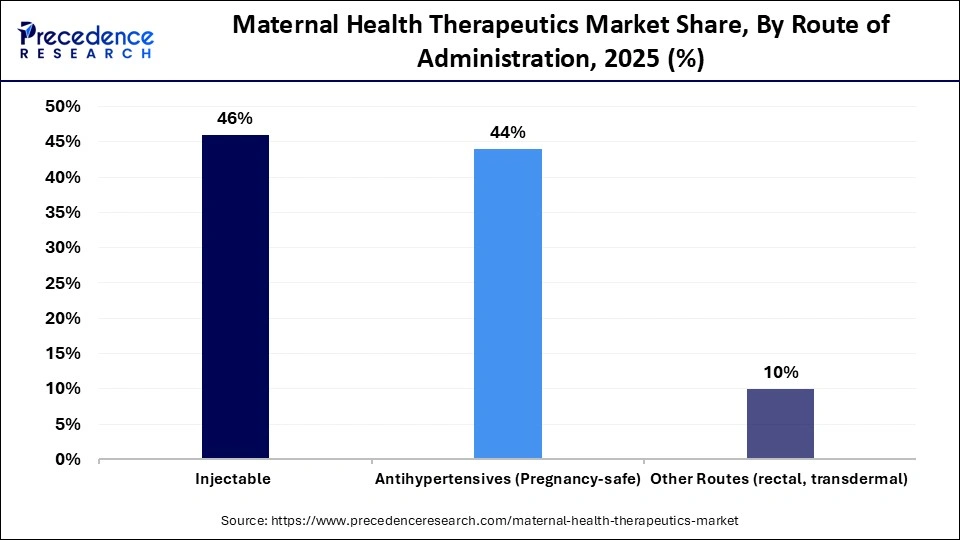
The oral segment is expected to grow at the fastest CAGR during the projection period due to its high convenience, cost-effectiveness, and widespread use in the form of tablets, capsules, and liquids for maternal supplements during and after pregnancy. Oral medications are easy to administer, even in emergency situations, helping improve patient outcomes. Additionally, the launch of new oral therapies for postpartum depression, available in both prescription and over-the-counter formulations, is further driving adoption and supporting maternal health.
Distribution Channel Insights
How Does the Hospital Pharmacies Segment Lead the Maternal Health Therapeutics Market?
The hospital pharmacies segment led the market with a 52% share in 2025 due to their critical role in providing immediate and specialized care for maternal health issues. They also support mental health services, addressing conditions like postpartum depression, which affects 1 in 8 women, and work closely with obstetricians and healthcare providers to manage tailored drug therapies. The need for timely, expert-administered medications during childbirth makes hospital pharmacies the dominant and preferred distribution channel in the market.
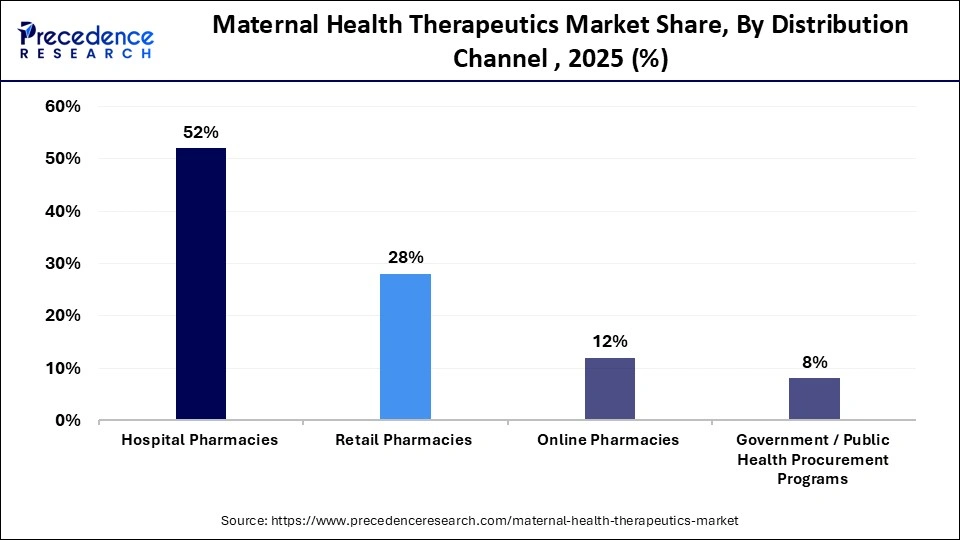
The online pharmacies segment is expected to expand at the fastest CAGR during the foreseeable period. This is mainly due to their convenience, privacy, and easy accessibility regardless of location. They provide essential medications directly to the doorstep for new mothers with mobility challenges or those unable to visit physical pharmacies. This model is especially valuable for women in underserved or rural areas, bridging healthcare gaps and driving the segment's rapid growth.
Regional Insights
What is the Asia Pacific Maternal Health Therapeutics Market Size?
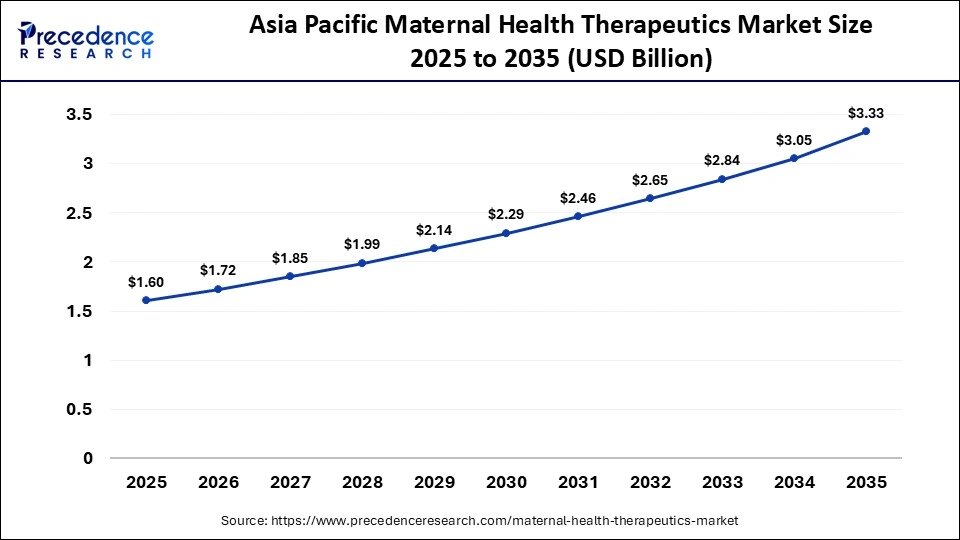
The Asia Pacific maternal health therapeutics market size is expected to be worth USD 3.33 billion by 2035, increasing from USD 1.60 billion by 2025, growing at a CAGR of 7.60% from 2026 to 2035.
What Made Asia Pacific the Dominant Region in the Maternal Health Therapeutics Market?
Asia Pacific registered dominance in the market by holding the largest share of nearly 34% in 2025. This is mainly due to factors such as rising healthcare expenditure, women-centric awareness programs, and strong government and NGO support. Increased focus on maternal nutrition and growing disposable incomes have also boosted the adoption of preventive healthcare during pregnancy and postpartum. The region's large population further amplifies demand, making it a key contributor to global market growth.
There is a rising prevalence of maternal health issues, such as postpartum hemorrhage and gestational diabetes, which is driving demand for specialized therapeutic interventions, while the growth of assisted reproduction technologies further strengthens the market. Additionally, the increasing adoption of smart wearables, mobile health apps, and telemedicine platforms for monitoring maternal and infant health has positioned the region as a frontier in the FemTech sector, boosting innovation and healthcare accessibility.
India Maternal Health Therapeutics Market Analysis
The market in India is growing due to government initiatives aimed at reducing maternal and child mortality, such as Janani Suraksha Yojana, Village Health Sanitation and Nutrition Days, and PMSMA. India is strengthening its maternal healthcare infrastructure and addressing postpartum care, including mental health issues, with the support of digital health tools. Programs that integrate mental health screening for perinatal depression and anxiety with digital platforms like e-SAATHI are further enhancing maternal support, driving market growth.
Why is the Middle East & Africa Rapidly Expanding in the Maternal Health Therapeutics Market?
The Middle East & Africa is expected to grow at the fastest CAGR during the foreseeable period due to demographic shifts, a growing health-conscious population, and a high proportion of women of reproductive age, which drive demand for safe and innovative maternal health therapeutics. Government initiatives, such as Saudi Arabia's Vision 2030, which mandates antenatal screening, are improving access to maternal healthcare. This is boosting demand for advanced therapeutic drugs and diagnostic tools, accelerating market growth in the region.
UAE Maternal Health Therapeutics Market Analysis
In the UAE, the market is evolving due to increased access to digital health and telemedicine, amid rising cases of obesity and advanced maternal age, supported by government initiatives and substantial funding. The region is adopting AI-driven diagnostics, virtual care, and wearable devices to manage high-risk pregnancies more effectively. Additionally, the growing use of non-invasive prenatal testing (NIPT) is further fueling market growth by improving early detection and personalized maternal care.
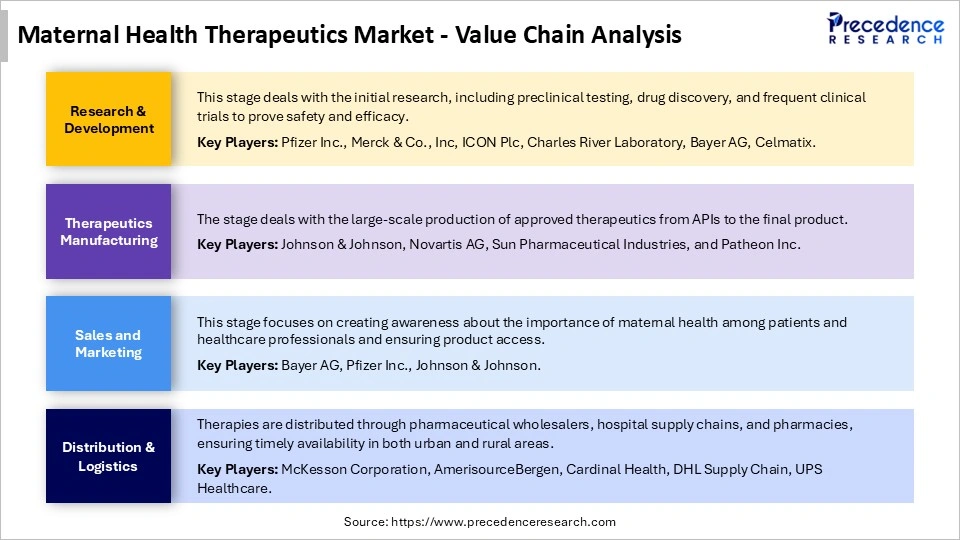
Maternal Health Therapeutics Market Value Chain Analysis
Who are the Major Players in the Global Maternal Health Therapeutics Market?
The major players in the maternal health therapeutics market include Novartis AG (Switzerland), Johnson & Johnson (U.S.), Shionogi & Co., Ltd. (Japan), Bayer AG (Germany), Bristol-Myers Squibb Company (U.S.), Biogen (U.S.), Pfizer Inc. (U.S), and Merck & Co., Inc. (U.S.).
Recent Developments
- In September 2025, a global consumer health and hygiene company, Reckitt, announced its partnership with the global non-profit organization PATH and the Center for Health Research and Innovation, aiming to introduce a maternal and child health tech accelerator in India.(Source: https://www.expresshealthcare.in)
- In August 2025, the Gates Foundation announced a $2.5 billion commitment fund up to 2030 for research and development, majorly focused on women's health, including maternal care specifically for women in low-and middle-income countries.(Source: https://www.gatesfoundation.org)
Segments Covered in the Report
By Therapeutic Category
- Oxytocics & Uterotonics
- Oxytocin
- Carbetocin
- Misoprostol
- Antihypertensives (Pregnancy-safe)
- Labetalol
- Nifedipine
- Methyldopa
- Antibiotics & Anti-infectives
- Anticoagulants/Antithrombotic
- Low molecular weight heparin
- Aspirin (low-dose prophylaxis)
- Diabetes Management (Insulin & Adjuncts)
- Anaemia & Nutritional Supplement Therapies
- Other Maternal Health Therapeutics
By Indication
- Postpartum Haemorrhage (PPH)
- Hypertensive Disorders of Pregnancy (Preeclampsia/Eclampsia)
- Gestational Diabetes Mellitus (GDM)
- Maternal Infections (UTI, sepsis, chorioamnionitis)
- Maternal Anaemia
- Thrombosis/VTE Risk Management
- Other Indication
By Route of Administration
- Injectable
- Oral
- Other Routes (rectal, transdermal)
By Distribution Channel
- Hospital Pharmacies
- Retail Pharmacies
- Online Pharmacies
- Government/Public Health Procurement Programs
By Region
- North America
- Europe
- Asia-Pacific
- Latin America
- Middle East & Africa
For inquiries regarding discounts, bulk purchases, or customization requests, please contact us at sales@precedenceresearch.com
Frequently Asked Questions





Ask For Sample
No cookie-cutter, only authentic analysis – take the 1st step to become a Precedence Research client
 Get a Sample
.webp)



 sales@precedenceresearch.com
 Schedule a Meeting
