



Molecular Glues Market Size, Companies, Share, Production Capacity, Raw Material Pricing, Export & Import Analysis, Manufacturing Cost, Competitive Positioning, and Demand Forecast
Molecular Glues Market (By Type: Monovalent Molecular Glues (Classic glues like IMiDs), Bivalent/Multispecific Glues (Next-gen rational designs), CELMoDs (Cereblon E3 Ligase Modulating Drugs), Others (LYTACs, SNIPERs); By Application: Oncology (Solid Tumors, Hematologic Malignancies), Neurology (Alzheimers, Parkinson, Neurodegeneration), Immunology & Inflammation (Autoimmune diseases), Others; By Technology/Process: Phenotypic Screening, Structure-Based Drug Design (SBDD), AI/Machine Learning-Enabled Discovery, High-Throughput Screening (HTS); By End-User: Pharmaceutical & Biotechnology Companies, Academic & Research Institutes, Contract Research Organizations (CROs)) - Global Industry Analysis, Size, Trends, Leading Companies, Regional Outlook, and Forecast 2026 to 2035
Source: https://www.precedenceresearch.com/molecular-glues-market
 Get a Sample
 Table Of Content


What is the Molecular Glues Market Size in 2026?
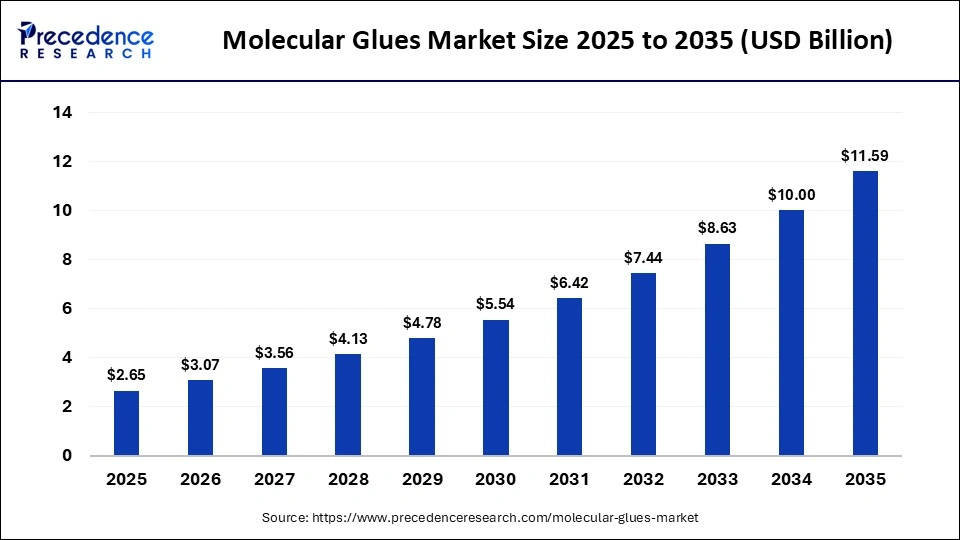
The global molecular glues market size accounted for USD 2.65 billion in 2025 and is predicted to increase from USD 3.07 billion in 2026 to approximately USD 11.59 billion by 2035, expanding at a CAGR of 15.90% from 2026 to 2035. The market is experiencing unprecedented growth, driven by increasing R&D in targeted protein degradation and rapid advancements in structural biology.
Key Takeaways
- North America held the largest market share of 42.0% in 2025.
- Asia Pacific is expected to expand at the fastest CAGR of approximately 16.2% in the upcoming period.
- By type, the monovalent molecular glues segment held the largest market share of 62.0% in 2025.
- By type, the bivalent/multispecific glues segment is the second-largest shareholder in 2025 and is expected to grow at the fastest rate during the forecast period.
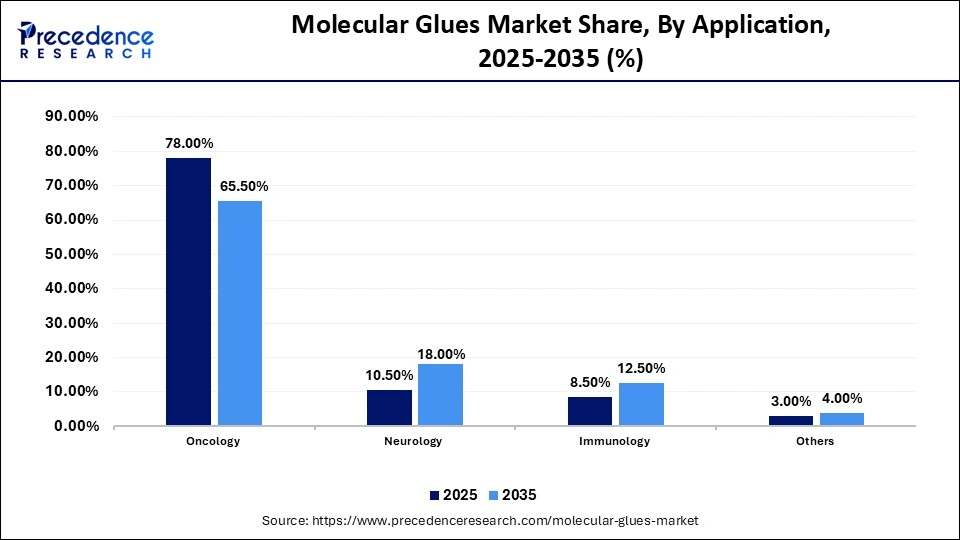
- By application, the oncology segment dominated the market with a share of 78% in 2025.
- By application, the neurology segment is the second-largest shareholder in 2025 and is expected to grow at the fastest CAGR during the projection period.
- By technology/process, the phenotypic screening segment contributed the biggest market share in 2025.
- By end user, the pharmaceutical & biotechnology companies segment led the market with the highest market share in 2025.
Market Overview
Molecular glues are small molecules that stick proteins together, inducing new protein interactions to treat various chronic diseases, such as cancer. Molecular glues act as bridges or adhesives, bringing together two proteins that would otherwise not interact. Most molecular glue strategies effectively target the interaction between a specific protein and an E3 ubiquitin ligase, thereby promoting the selective degradation of the target protein through the proteasomal pathway.
How is AI Impacting the Molecular Glues Market?
As technology continues to advance, Artificial Intelligence (AI) integration emerges as a game-changer in the molecular glues market by accelerating the identification and optimization of molecular glue degraders (MGDs). AI empowers researchers to target previously "undruggable" proteins, which reduces R&D timelines and costs. AI enables the rational design of glues that engage E3 ligases to degrade disease-causing transcription factors, which lack conventional binding pockets. This opens a therapeutic attractive pathway for various diseases like neurodegeneration, cancer, autoimmune diseases, and others.
Several platforms like MindRank's ProtaG and Degron Therapeutics GlueXplorer widely adopt generative AI to predict how molecules fit at the protein-protein interface, identifying promising candidates in a shorter period. AI-driven approaches also allow for de novo design and assist in predicting the ternary complex (E3 ligase-glue-target) structure before synthesis.
- In January 2026, XtalPi, a pioneer in AI- and robotics-powered drug discovery, successfully concluded its 2026 International Symposium on Molecular Glue Drug Discovery. The event brought together leading scientists, entrepreneurs, biopharma innovators, and investors from across the globe to discuss how emerging technologies are transforming strategies for historically "undruggable" protein targets.
What are the Emerging Trends in the Market?
- The increasing interest in target protein degradation (TPD) as a novel therapeutic strategy, mainly for “undruggable” target proteins that cannot be modulated effectively by conventional small molecules, is expected to promote the market's growth during the forecast period.
- The rising partnerships between pharma and biotech startups are expected to accelerate the growth of the market. Major pharmaceutical companies are investing heavily in partnerships with biotech firms such as Proxygen, Neomorph, and Magnet Biomedicine.
- The increasing awareness regarding the advantages of PROTACs is expected to contribute to the overall growth of the market. Molecular glues are smaller than PROTACs, which allows for better cell penetration and easier formulation into oral drugs.
- The expanding therapeutic scope of molecular glues is anticipated to bolster the market's growth in the coming years. Beyond cancer, molecular glues are now also playing a crucial role in targeting autoimmune diseases and neurodegenerative diseases.
Market Scope
| Report Coverage | Details |
| Market Size in 2025 | USD 2.65 Billion |
| Market Size in 2026 | USD 3.07 Billion |
| Market Size by 2035 | USD 11.59 Billion |
| Market Growth Rate from 2026 to 2035 | CAGR of 15.90% |
| Dominating Region | North America |
| Fastest Growing Region | Asia-Pacific |
| Base Year | 2025 |
| Forecast Period | 2026 to 2035 |
| Segments Covered | Type, Application, Technology/Process, End-User |
| Regions Covered | North America, Europe, Asia-Pacific, Latin America, and Middle East & Africa |
Market Dynamics
Drivers
Growing Importance of Molecular Glue in Drug Discovery
The increasing application of molecular glue in drug discovery is expected to drive market growth during the forecast period. Molecular glue is rapidly reshaping the way drugs are developed. Molecular glues are an innovative class of small molecules that are gaining significant attention in the drug discovery field. The success in targeting challenging proteins has significantly increased the interest in molecular glues as both therapeutics and research tools. Molecular glues typically operate through a unique mechanism, bringing proteins together to elicit therapeutic effects. The concept has opened innovative pathways to target previously "undruggable" conditions, including neurodegenerative disorders, cancer, and infectious diseases.
Restraint
Challenges in Rational Drug Design
The rising associated challenges in rational drug design are expected to hamper the growth of the molecular glues market. Molecular glues work by changing the shape of target proteins. The discovery of effective molecular glues remains serendipitous, owing to the lack of predictive models for compound-target-ligase interactions. In addition, off-target protein degradation and rising safety concerns may restrict the growth of the market.
Opportunities
Surge in Approvals of Molecular Glue Degrader
Rising approvals of molecular glue degraders are creating lucrative opportunities in the market. Molecular glues are gaining traction in the development of next-generation, orally bioavailable protein degraders. These compact molecules facilitate the degradation of targets that were earlier considered undruggable. The massive investments from pharmaceutical and biotechnology companies are being driven by successes in the fields of oncology and immunology.
In August 2025, Cyrus Therapeutics proudly announced that it had received approval from the Ministry of Food and Drug Safety (MFDS) for its investigational new drug (IND) application for the phase 1 clinical trial of CYRS1542, an oral GSPT1 molecular glue degrader (MGD). In April, the company received approval for the phase 1 IND for CYRS1542 from the U.S. FDA. CYRS1542 is an oral GSPT1 molecular glue degrader drug candidate.
Segment Insights
Type Insights
Molecular Glues Market Share, By Type, 2025-2035 (%)
| Type | 2025 | 2035 |
| Monovalent Glues | 62.0% | 48.0% |
| Bivalent/Next-Gen | 38.0% | 52.0% |
The Monovalent Molecular Glues Segment Contributed the Market Share of 62.0% in 2025
The monovalent molecular glues segment dominated the molecular glues market with the largest share of 62.0% in 2025. This is mainly due to their superior drug-like properties, which align closely with highly successful small-molecule drug development frameworks. Monovalent glues are generally small molecules that allow them to pass through cell membranes more easily, resulting in improved absorption, better tissue distribution, and increased oral bioavailability.
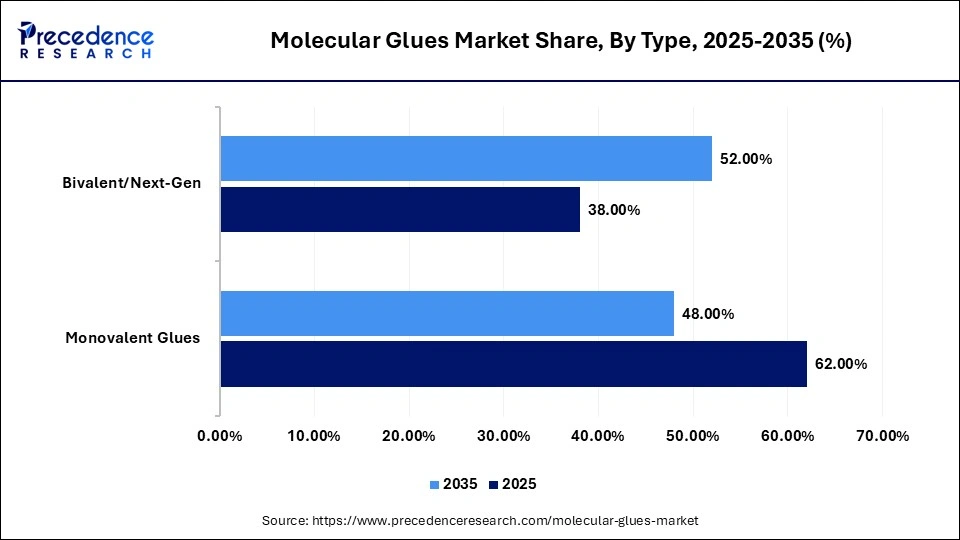
The bivalent/multispecific glues segment is the second-largest shareholder, holding a 38.0% share in 2025, owing to the rapid integration of AI-driven rational design and the rising shift toward rationally designed molecules that offer higher specificity and reduced side effects. The bivalent/next-generation molecular glues can catalytically degrade previously "undruggable" proteins and have superior drug-like properties (pharmacokinetics) in comparison with conventional bifunctional degraders (PROTACs).
Technology/Process Insights
The Phenotypic Screening Segment Dominated the Market in 2025
The phenotypic screening segment held the largest share of the molecular glues market in 2025. This is because phenotypic screening is the most effective and unbiased method for discovering complex and small-molecule degraders, especially when targeting "undruggable" proteins. Phenotypic screening assists researchers in discovering entirely new protein degradation pathways and E3 ligase substrates.
The AI/machine learning enabled discovery segment is the second-largest shareholder in 2025, owing to its ability to address the inherent, high-level complexity of designing these compounds. AI/ML platforms are designed to identify binders for proteins that are considered undruggable, facilitating the targeting of complex diseases like cancers, neurology, and immunology.
The high-throughput screening (HTS) segment is expected to grow at a notable rate in the market during the studied years, driven by its ability to rapidly identify effective compounds from massive libraries. Several HTS technologies are highly favored for identifying molecular glues such as NanoLuc Binary Technology (NanoBiT), DNA-Encoded Libraries (DEL), and Protein Microarrays. The rising integration of artificial intelligence in HTS platforms results in accelerating the analysis of complex data, reducing false positives, and assisting in the prediction of ternary complex formation.
The structure-based drug design (SBDD) segment is anticipated to witness considerable growth during the forecast period, owing to its ability to provide a rational, structural, and efficient approach to designing molecular glues, which facilitates the targeting of previously unreachable proteins. SBDD allows researchers to use 3D structural data to engineer small molecules that precisely bridge an E3 ligase and a target protein, which is often difficult to achieve solely through random screening.
Application Insights
Molecular Glues Market Share, By Application, 2025-2035 (%)
| Application | 2025 | 2035 |
| Oncology | 78.0% | 65.5% |
| Neurology | 10.5% | 18.0% |
| Immunology | 8.5% | 12.5% |
| Others | 3.0% | 4.0% |
The Oncology Segment Held the Largest Market Share of 78% in 2025
The oncology segment led the molecular glues market with the largest share of 78% in 2025. This is mainly because molecular glues enable targeted degradation of cancer-related proteins, offering a novel approach to treat tumors that are resistant to conventional therapies. High prevalence of various cancers and the urgent need for more effective, precision-based treatments further drive the adoption of molecular glues in oncology.
The neurology segment is the second-largest shareholder, holding a share of 10.5% in 2025, owing to the increasing cases of neurodegenerative diseases such as Alzheimer's and Parkinson's. The unique ability of molecular glues to cross the blood-brain barrier and target undruggable proteins is expected to drive the segment's growth during the forecast period.
According to the article published by the National Library of Medicine in April 2025, an estimated 7.2 million Americans age 65 and older live with Alzheimer's dementia today. This number could grow to 13.8 million by 2060, barring the development of medical breakthroughs to prevent or cure AD.
The immunology segment held an 8.5% share of the market in 2025 and is expected to grow at a significant rate in the upcoming period, driven by the rising use of molecular glues to modulate protein interactions to control immune signaling in autoimmune conditions. The increasing success of immunomodulatory imide drugs (IMiDs) like thalidomide, lenalidomide, and pomalidomide, which are widely adopted to treat immune-related disorders, is expected to drive the segment's growth during the forecast period.
End-User Insights
Pharmaceutical & Biotechnology Companies Segment Led the Market in 2025
The pharmaceutical & biotechnology companies segment held the largest share of the molecular glues market in 2025, owing to the increasing demand for more effective drug delivery systems. Pharmaceutical & biotechnology companies have been investing heavily in R&D related to protein degraders, including molecular glues. These companies continually seek to enhance drug delivery systems to improve treatment efficacy and safety. Molecular glues present an emerging approach by allowing the targeted delivery of therapeutics to specific cells.
The academic & research institutes segment held a significant share of the market in 2025. Academic & research institutions play a crucial role in discovering new molecular glue-based degrader targets, particularly for proteins that are considered "undruggable." They investigate complex cellular pathways to identify novel E3 ligase-substrate pairs. Several research centers are increasingly focusing on expanding molecular glue applications beyond cancer into neurology, immunology, and rare genetic diseases, fostering a wider range of therapeutic potential.
The contract research organizations (CROs) segment is expected to grow at the fastest rate in the market over the forecast period. This is because CROs offer specialized expertise, advanced AI-driven discovery platforms, and essential laboratory infrastructure required for navigating the complexities of Targeted Protein Degradation (TPD). CROs are increasingly adopting machine learning, generative AI, and high-throughput screening to predict binding pockets and speed up the discovery of new glues.
Regional Insights
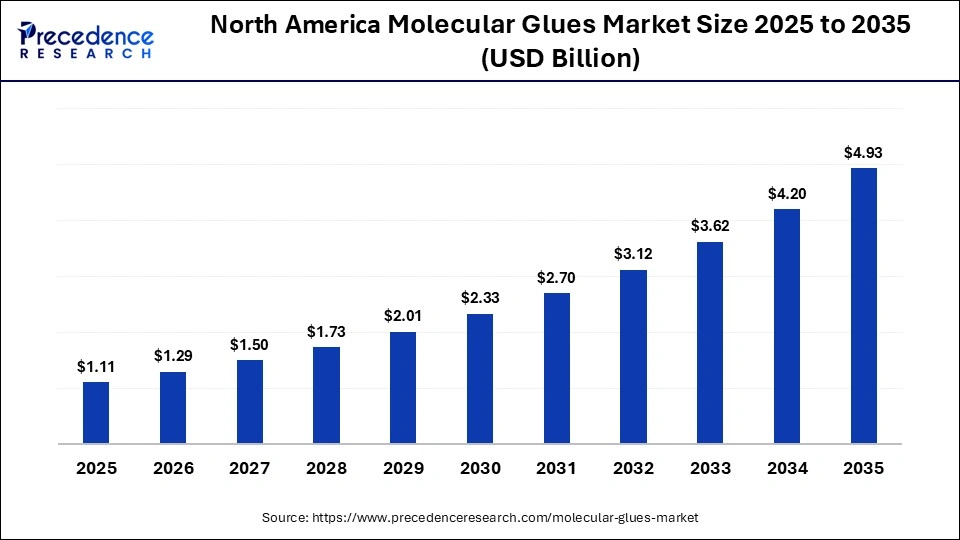
North America Molecular Glues Market Size and Growth 2026 to 2035
The North America molecular glues market size is estimated at USD 1.11 billion in 2025 and is projected to reach approximately USD 4.93 billion by 2035, with a 16.08% CAGR from 2026 to 2035.
What Made North America the Dominant Region in the Molecular Glues Market?
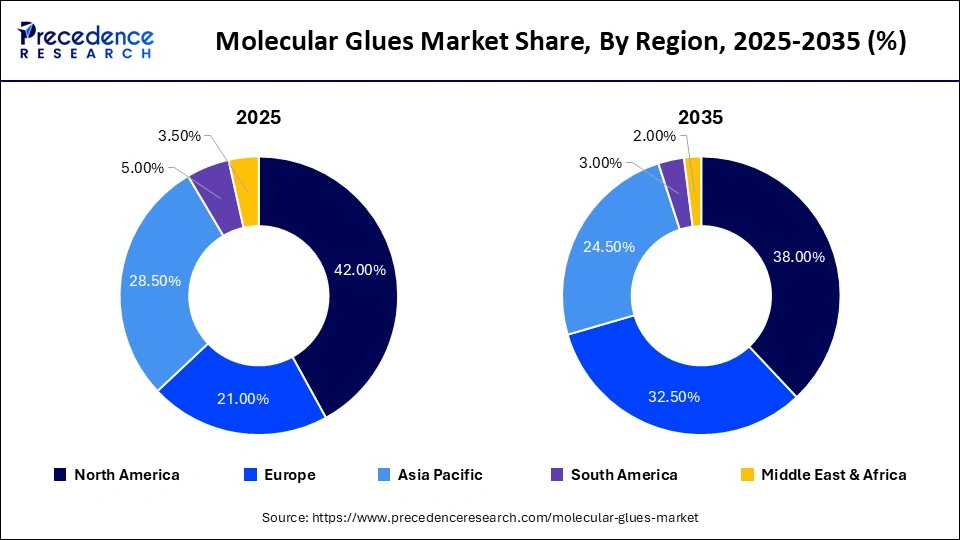
North America dominated the global molecular glues market with a major share of 42.0% in 2025. This is because the region has a well-established healthcare infrastructure with a high concentration of TPD pioneers and strong venture capital support for biotech startups. The strategic partnerships between big pharma and biotech startups have accelerated the clinical progression of molecular glue candidates. There is a high adoption rate of Artificial Intelligence (AI), Machine Learning (ML), and advanced structural biology to improve the discovery process and reduce the reliance on serendipity for finding new glues. Supportive regulatory frameworks and robust funding for oncology and rare disease research further reinforced the region's leadership.
U.S. Molecular Glues Market Size and Growth 2026 to 2035
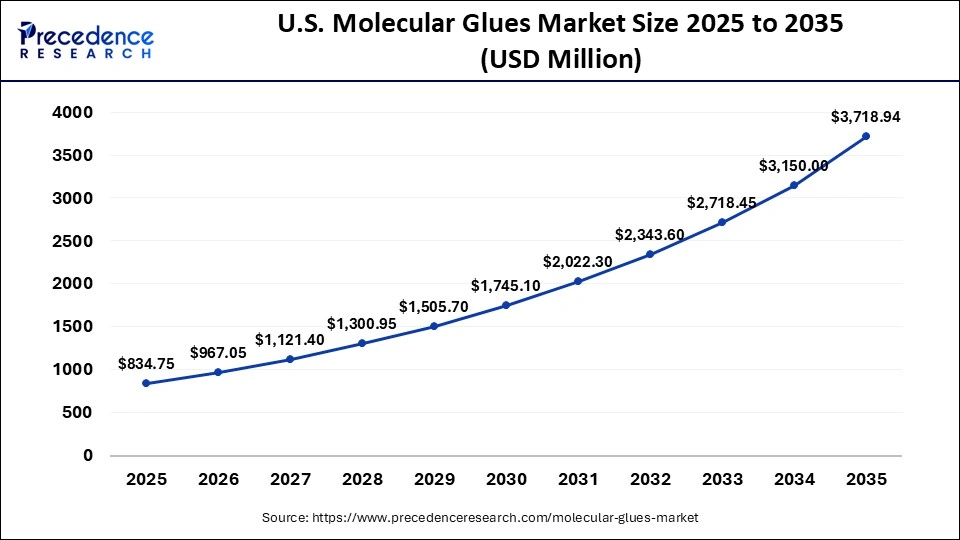
The U.S. molecular glues market size is calculated at USD 834.75 million in 2025 and is expected to reach nearly USD 3,718.94 million in 2035, accelerating at a strong CAGR of 16.11% between 2026 and 2035.
U.S. Molecular Glues Market Analysis
The U.S. is the major contributor to the market within North America. This is because of the increasing incidence of cancer and neurodegenerative diseases, such as Alzheimer's and Parkinson's, which create a huge demand for novel therapies. The region is home to leading market players and research institutions, such as Bristol Myers Squibb (BMS), Monte Rosa Therapeutics, C4 Therapeutics, Inc., Seed Therapeutics, Pfizer Inc., Eli Lilly and Company, Nurix Therapeutics (USA), Neomorph, Inc., Kymera Therapeutics, Arvinas, Inc., and others. The supportive regulatory environment of the FDA provides tailored and accelerated regulatory pathways for breakthrough therapies, which allows pharma and biotech companies to bring innovative molecular glues to market faster. The country also benefits from rapid technological advancements in identifying and developing small-molecule glues to treat previously "undruggable" diseases.
Asia Pacific: The Fastest-Growing Region
Asia Pacific is expected to grow at the fastest CAGR of approximately 16.2% in the market during the forecast period. This is mainly due to increasing investment in biotechnology and pharmaceutical research, particularly in countries like China, Japan, and India. Rising prevalence of cancer and other chronic diseases is driving demand for innovative therapies, including targeted protein degradation approaches. Additionally, expanding healthcare infrastructure, supportive government initiatives, and the entry of global pharmaceutical companies are further accelerating market growth in the region.
China Molecular Glues Market Analysis
The market in China is growing because the country has a strong network of academic research institutions and pharmaceutical companies, along with significant venture capital funding dedicated to oncology and novel drug discovery. The country's growth is largely driven by the aggressive biotech expansion, rising investment in structural biology research, a surge in chronic incidence, and increasing adoption of next-generation drug modalities, particularly in oncology and neurology. Moreover, the rising integration of AI and machine learning is accelerating the discovery and development of new molecular glue candidates, which is expected to fuel the growth of the country during the forecast period
Molecular Glues Market Companies
- Bristol Myers Squibb
- Novartis AG
- Monte Rosa Therapeutics
- C4 Therapeutics, Inc.
- Evotec SE
- Proxygen GmbH
- Seed Therapeutics
- Pfizer Inc.
- Roche (Genentech)
- Eli Lilly and Company
- Nurix Therapeutics
- Neomorph, Inc.
- Kymera Therapeutic
- Arvinas, Inc.
- Eisai Co., Ltd.
Recent Developments
- In January 2025, AbbVie collaborated with Neomorph, Inc. to develop novel molecular glue degraders for multiple targets across immunology and oncology. Molecular glue degraders are a novel class of small molecules designed to specifically target and trigger the degradation of proteins that drive cancer growth and immune system dysregulation, providing a more effective approach to treatment.(Soruce: https://www.prnewswire.com)
- In February 2024, Neomorph announced a collaboration and licensing agreement with Novo Nordisk to develop, discover, and commercialize molecular glue and degraders. By combining Neomorph's proprietary glue discovery platform with Novo Nordisk's vast experience in cardiometabolic and rare diseases, they are well-positioned to develop transformative treatments in these areas. Phil Chamberlain, DPhil, co-founder, president, and CEO of Neomorph, stated, "This collaboration will facilitate the expansion of their platform into new therapeutic areas, complementing their ongoing efforts in oncology."(Source: https://www.insideprecisionmedicine.com)
Segment Covered in the Report
By Type
- Monovalent Molecular Glues (Classic glues like IMiDs)
- Bivalent/Multispecific Glues (Next-gen rational designs)
- CELMoDs™ (Cereblon E3 Ligase Modulating Drugs)
- Others (LYTACs, SNIPERs)
By Application
- Oncology (Solid Tumors, Hematologic Malignancies)
- Neurology (Alzheimer's, Parkinson's, Neurodegeneration)
- Immunology & Inflammation (Autoimmune diseases)
- Others
By Technology/Process
- Phenotypic Screening (Serendipitous discovery)
- Structure-Based Drug Design (SBDD)
- AI/Machine Learning-Enabled Discovery
- High-Throughput Screening (HTS)
By End-User
- Pharmaceutical & Biotechnology Companies
- Academic & Research Institutes
- Contract Research Organizations (CROs)
By Region
- North America
- Latin America
- Europe
- Asia-pacific
- Middle and East Africa
For inquiries regarding discounts, bulk purchases, or customization requests, please contact us at sales@precedenceresearch.com
Frequently Asked Questions
Tags





Ask For Sample
No cookie-cutter, only authentic analysis – take the 1st step to become a Precedence Research client
 Get a Sample




 sales@precedenceresearch.com
 Schedule a Meeting
