



Multiple Sclerosis Diagnostics Market Size, Key Companies, Company Product Portfolio, Hospital Procurement Trends, Manufacturing Capacity, Sales Performance, Regulatory Approvals, Company Market Share, and Forecast
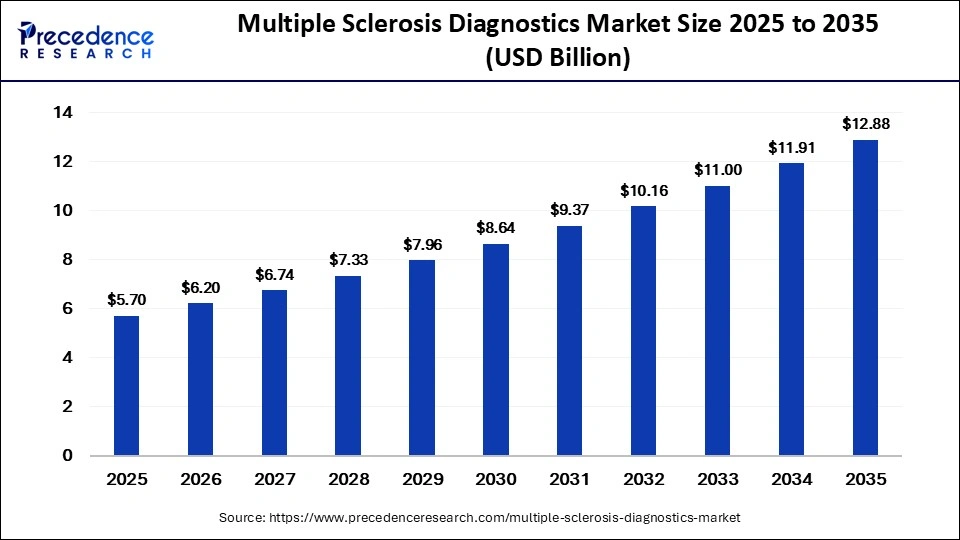
Rohan Patil, a Healthcare Industry Expert, highlights that the multiple sclerosis diagnostics market has reached USD 6.20 billion in 2026 and is on track to reach USD 12.88 billion by 2035, advancing at a CAGR of 8.80%. Key multiple sclerosis diagnostics market companies shaping the market include F. Hoffmann-La Roche Ltd., Siemens Healthineers, GE HealthCare, Thermo Fisher Scientific, while major growth segments span By Diagnostic Type, By Biomarker Type, By Disease Type, By End-use, By Technology.
Source: https://www.precedenceresearch.com/multiple-sclerosis-diagnostics-market
 Get a Sample
 Table Of Content


What is the Multiple Sclerosis Diagnostics Market Size in 2026?
The global multiple sclerosis diagnostics market size accounted for USD 5.70 billion in 2025 and is predicted to increase from USD 6.20 billion in 2026 to approximately USD 12.88 billion by 2035, expanding at a CAGR of 8.80% from 2026 to 2035. The market is driven by technological advancements in neuroimaging, specifically the use of high-resolution, 3T magnetic resonance imaging (MRI) scanners.
Key Takeaways
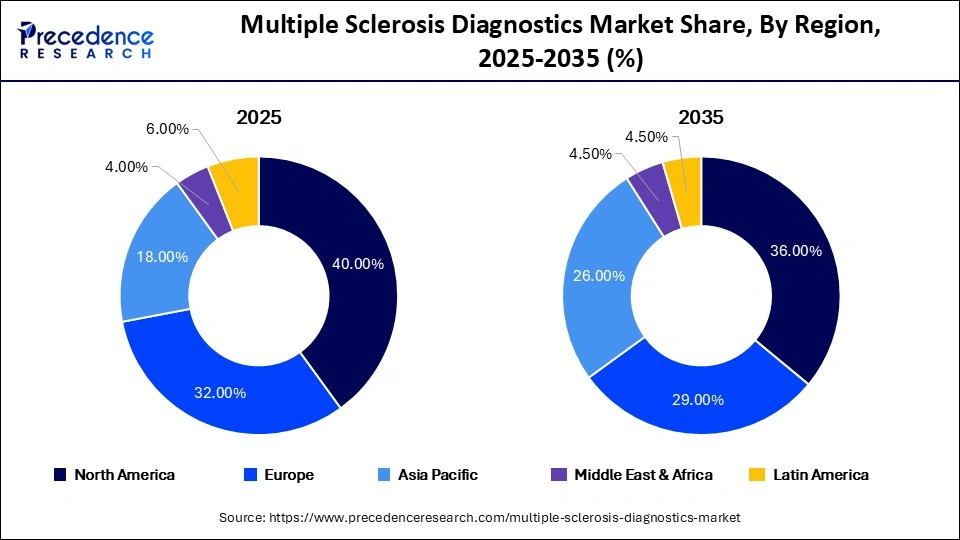
- North America dominated the global multiple sclerosis diagnostics market with a share of 40% in 2025.
- Asia-Pacific is expected to grow at the fastest CAGR of 13.2% during the forecast period.
- By diagnostic type, the magnetic resonance imaging (MRI) segment led the global market with a share of 42% in 2025.
- By diagnostic type, the blood-based biomarker testing segment held 14% of the market share in 2025 and is expected to grow at the fastest CAGR of 15.5% between 2026 and 2035.
- By biomarker type, the neurofilament light chain (NfL) segment accounted for a revenue share of 34% in the market in 2025.
- By biomarker type, the glial fibrillary acidic protein (GFAP) segment is expected to grow at the highest CAGR of 12.5% in the multiple sclerosis diagnostics market between 2026 and 2035.
- By disease type, the relapsing-remitting multiple sclerosis (RRMS) segment accounted for a revenue share of 62% in the market in 2025.
- By disease type, the primary progressive multiple sclerosis (PPMS) segment is expected to grow at the fastest CAGR of 11.2% between 2026 and 2035.
- By end-use, the hospitals segment accounted for a revenue share of 44% in the market in 2025.
- By end-use, the specialty neurology clinics segment is expected to grow at the fastest CAGR of 12.2% between 2026 and 2035.
Market Overview
The multiple sclerosis diagnostics market refers to the global industry segment dedicated to the tools, technologies, and services used to detect and monitor multiple sclerosis. It encompasses advanced imaging systems, laboratory testing kits, and biomarker tests utilized by neurologists to confirm diagnoses and even track disease progression. Primary driving factors for the market are the increasing global prevalence of the disease, significant technological advancements in neuroimaging, and the critical need for early diagnosis to enhance patient outcomes.
How is AI Influencing the Multiple Sclerosis Diagnostics Industry?
Artificial intelligence is rapidly transforming the market by enabling earlier, more precise, and automated disease detection. AI algorithms drastically cut MRI and lab analysis times, determine subtle biomarkers invisible to the human eye, and forecast patient prognosis and treatment responses. Research is shifting toward multimodal AI, which combines MRI data with patient-reported results, smart wearables, and smartphone applications to track gait, balance, and even cognitive function in real-time.
Multiple Sclerosis Diagnostics Market Trends
- The industry is pivoting toward less invasive, high-specificity testing. The development of serum neurofilament light chain blood assays is transforming the diagnostic pathway by allowing early detection of axonal damage and forecasting disease progression without relying solely on spinal taps.
- Early diagnosis is directly tied to outcome-driven treatment models. Identifying specific disease subtypes as early as possible enables neurologists to immediately place individuals on targeted disease-modifying therapies to preserve neurological function.
Market Scope
| Report Coverage | Details |
| Market Size in 2025 | USD 5.70 Billion |
| Market Size in 2026 | USD 6.20 Billion |
| Market Size by 2035 | USD 12.88 Billion |
| Market Growth Rate from 2026 to 2035 | CAGR of 8.80% |
| Dominating Region | North America |
| Fastest Growing Region | Asia Pacific |
| Base Year | 2025 |
| Forecast Period | 2026 to 2035 |
| Segments Covered | Diagnostic Type, Biomarker Type, Disease Type, End-use, Technology, and Region |
| Regions Covered | North America, Europe, Asia-Pacific, Latin America, and Middle East & Africa |
Market Dynamics
Drivers
Advances in Diagnostic Technologies
Advances in diagnostic technologies are the main driver for the multiple sclerosis diagnostics market because they allow earlier and more accurate disease detection. Advanced MRI techniques are the gold standard and thus drive the largest market share in MS diagnostics. High-resolution 3T scanners, diffusion-weighted imaging, along with magnetization transfer imaging, enable clinicians to detect subtle, microscopic lesions in the brain and spinal cord, confirming a diagnosis in most cases.
Restraint
Shortage of Skilled Healthcare Professionals
A shortage of skilled healthcare professionals limits the market by causing diagnostic delays and even restricting access to specialized care. Because multiple sclerosis diagnosis demands complex clinical evaluations and expert interpretation of MRI scans, a lack of neurologists and trained radiologists hampers timely and accurate disease identification.
Opportunity
Predictive Diagnostic Software
The predictive diagnostic software represents the most robust opportunity in the market by transforming care from reactive symptom management to proactive precision medicine. It solves critical clinical bottlenecks by allowing earlier detection, tracking subtle progression, and thus, personalizing therapies before irreversible neurological damage occurs.
Segmental Insights
Diagnostic Type Insights
The Magnetic Resonance Imaging (MRI) Segment Held 42% of the Market Share in 2025
The magnetic resonance imaging (MRI) segment generated approximately USD 2.39 billion in 2025 and is projected to reach nearly USD 4.89 billion by 2035, growing at a CAGR of 7.2% during the forecast period. The magnetic resonance imaging (MRI) segment dominated the multiple sclerosis diagnostics market with a share of 42% in 2025, owing to the multiple sclerosis demands lifelong patient management. MRI scans are frequently repeated to assess treatment efficacy, evaluate medication safety, and monitor disease progression. Further, this high per-patient utilization rate drives the bulk of the segment's revenue.
Multiple Sclerosis Diagnostics Share, By Diagnostic Type, 2025-2035 (%)
| Diagnostic Type | 2025 | 2035 | CAGR (%) |
| Magnetic Resonance Imaging (MRI) | 42.00% | 38.00% | 7.20% |
| Cerebrospinal Fluid (CSF) Analysis | 18.00% | 15.00% | 5.80% |
| Evoked Potential Testing | 10.00% | 8.00% | 4.5% |
| Blood-based Biomarker Testing | 14.00% | 20.00% | 15.5% |
| Optical Coherence Tomography (OCT) | 8.00% | 9.00% | 10.0% |
| Molecular & Genetic Diagnostics | 8.00% | 10.00% | 14.20% |
The blood-based biomarker testing segment accounted for approximately USD 798 million in 2025 and is projected to reach nearly USD 2.58 billion by 2035 at the fastest CAGR of 15.5% during the forecast period. The blood-based biomarker testing segment held a 14% share of the market in 2025. This is mainly due to the development of ultra-high-sensitivity assays, such as Simoa, which has made it possible to detect brain-specific and disease-indicating proteins in blood at remarkably low concentrations. Blood biomarkers are thus highly effective for evaluating how well a patient is responding to disease-modifying therapies. This enables neurologists to track disease evolution in real-time without subjecting individuals to frequent, costly MRI scans.
The cerebrospinal fluid (CSF) analysis segment generated approximately USD 1.03 billion in 2025 and is projected to reach nearly USD 1.93 billion by 2035, growing at a CAGR of 5.8% during the forecast period. The cerebrospinal fluid (CSF) analysis segment held a 18% share of the market in 2025, driven by the inclusion of neurofilament light chain (NfL) in CSF testing, which offers clinicians a highly sensitive, quantifiable marker of active axonal injury, assisting heavily in monitoring treatment efficacy.
Biomarker Type Insights
Why Did the Neurofilament Light Chain (NfL) Segment Lead the Multiple Sclerosis Diagnostics Market?
The neurofilament light chain (NfL) segment generated approximately USD 1.94 billion in 2025 and is projected to reach nearly USD 4.89 billion by 2035, growing at a CAGR of 14.5% during the forecast period. The neurofilament light chain (NfL) segment held a dominant position in the market, with a share of 34% in 2025, driven by the shift from invasive cerebrospinal fluid (CSF) testing to minimally invasive, highly sensitive blood tests. This evolution has enabled early diagnosis, precise prediction of future disease activity, and real-time monitoring of treatment efficacy.
Multiple Sclerosis Diagnostics Share, By Biomarker Type, 2025-2035 (%)
| Biomarker Type | 2025 | 2035 | CAGR (%) |
| Neurofilament Light Chain (NfL) | 34.00% | 38.00% | 14.50% |
| Oligoclonal Bands (OCBs) | 28.00% | 28.00% | 5.50% |
| Glial Fibrillary Acidic Protein (GFAP) | 14.00% | 16.00% | 12.50% |
| Cytokine Biomarkers | 12.00% | 14.00% | 11.80% |
| Other Neurological Biomarkers | 12.00% | 10.00% | 8.0% |
The glial fibrillary acidic protein (GFAP) segment accounted for approximately USD 798 million in 2025 and is projected to reach nearly USD 2.06 billion by 2035 at the fastest CAGR of 12.5% during the forecast period. The glial fibrillary acidic protein (GFAP) segment held a 14% share of the market in 2025. This is mainly due to the discovery that blood and CSF GFAP levels are powerful biomarkers for forecasting MS disease severity, brain tissue loss, and progression independent of relapse activity (PIRA). Historically, monitoring MS aimed at inflammatory relapses. GFAP has emerged as a major prognostic marker for PIRA, the slow, gradual deterioration in disability that usually goes undetected by traditional MRI or relapse assessments.
The oligoclonal bands (OCBs) segment generated approximately USD 1.60 billion in 2025 and is projected to reach nearly USD 3.61 billion by 2035, growing at a CAGR of 5.5% during the forecast period. The oligoclonal bands (OCBs) segment held a 28% share of the market in 2025, driven by the growing understanding that DMTs are the most effective when administered early, which has pushed clinicians to use robust laboratory markers such as OCBs to confirm MS diagnoses promptly and also mitigate irreversible neurological damage.
Disease Type Insights
Multiple Sclerosis Diagnostics Share, By Disease Type, 2025-2035 (%)
| Disease Type | 2025 | 2035 | CAGR (%) |
| Relapsing-Remitting Multiple Sclerosis (RRMS) | 62.00% | 58.00% | 8.00% |
| Secondary Progressive Multiple Sclerosis (SPMS) | 18.00% | 20.00% | 10.0% |
| Primary Progressive Multiple Sclerosis (PPMS) | 16.00% | 18.00% | 11.20% |
| Progressive-Relapsing Multiple Sclerosis (PRMS) | 4.00% | 4.00% | 6.20% |
What Made Relapsing-Remitting Multiple Sclerosis (RRMS) the Dominant Segment in the Market?
The relapsing-remitting multiple sclerosis (RRMS) segment generated approximately USD 3.53 billion in 2025 and is projected to reach nearly USD 7.47 billion by 2035, growing at a CAGR of 8% during the forecast period. The relapsing-remitting multiple sclerosis (RRMS) segment dominated the global multiple sclerosis diagnostics market with the largest share of 62% in 2025. There is a steady increase in the overall burden of multiple sclerosis worldwide due to a combination of environmental triggers, lifestyle factors, and better tracking methods. RRMS is the most common form, thus affecting all newly diagnosed multiple sclerosis patients.
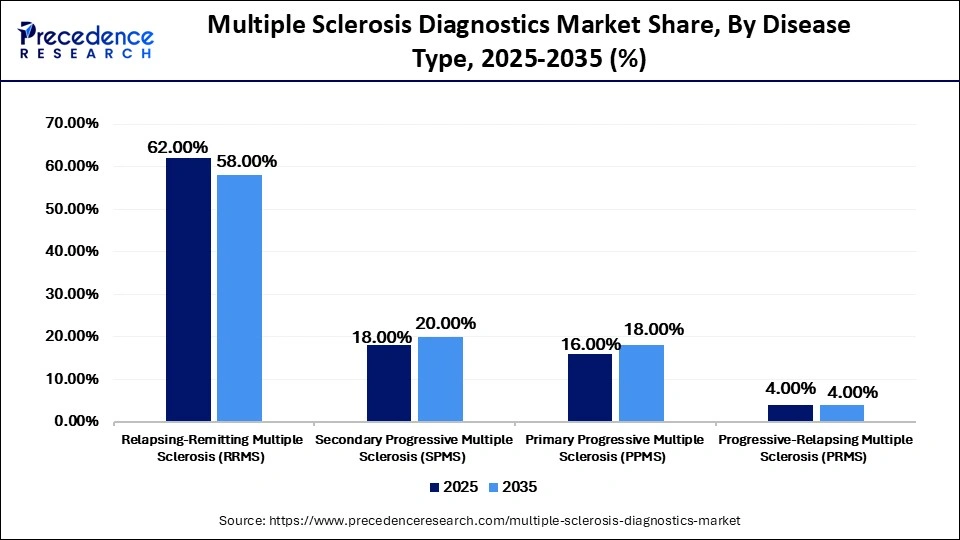
The primary progressive multiple sclerosis (PPMS) segment accounted for approximately USD 912 million in 2025 and is projected to reach nearly USD 2.32 billion by 2035 at the fastest CAGR of 11.2% during the forecast period. The primary progressive multiple sclerosis (PPMS) segment held a 16% share of the market in 2025. This is mainly due to the rising global prevalence of the disease, the development of targeted therapies such as monoclonal antibodies, for example, Ocrevus, and advancements in MRI and cerebrospinal fluid testing. The integration of the 2017 McDonald criteria, which emphasizes earlier and even more accurate MRI techniques for the detection of CSF-specific oligoclonal bands, enables clinicians to diagnose PPMS with less delay.
The secondary progressive multiple sclerosis (SPMS) segment generated approximately USD 1.03 billion in 2025 and is projected to reach nearly USD 2.58 billion by 2035, growing at a CAGR of 10% during the forecast period. The secondary progressive multiple sclerosis (SPMS) segment held a 18% share of the market in 2025. These entities drive market standards by establishing clinical protocols, enhancing biomarker research, and defining criteria to distinguish SPMS from other MS types. The identification of specific molecular markers and NfL biomarkers has enabled earlier identification of the transition from RRMS to SPMS.
End-Use Insights
What Made the Hospitals Segment Dominate in the Multiple Sclerosis Diagnostics Market?
The hospitals segment generated approximately USD 2.51 billion in 2025 and is projected to reach nearly USD 5.02 billion by 2035, growing at a CAGR of 7.2% during the forecast period. The hospitals segment dominated the global market with the largest share of 44% in 2025, because hospitals house vital diagnostic equipment such as high-resolution MRIs, which are the gold standard for detecting and monitoring MS lesions in the central nervous system. Larger hospital systems are best equipped to navigate complex insurance policies and even government programs, such as the Medicare 340B program, which assists in subsidizing the high costs of MS care.
Multiple Sclerosis Diagnostics Share, By End-use, 2025-2035 (%)
| End-use | 2025 | 2035 | CAGR (%) |
| Hospitals | 44.00% | 39.00% | 7.20% |
| Diagnostic Laboratories | 26.00% | 28.00% | 10.50% |
| Specialty Neurology Clinics | 20.00% | 24.00% | 12.20% |
| Academic & Research Institutes | 10.00% | 9.00% | 7.80% |
The specialty neurology clinics segment accounted for approximately USD 1.14 billion in 2025 and is projected to reach nearly USD 3.09 billion by 2035 at the fastest CAGR of 12.2% during the forecast period. The specialty neurology clinics segment held 20% share of the market in 2025. This is mainly because accurately detecting asymptomatic dissemination of multiple sclerosis demands high-resolution imaging and biomarker testing, which, thus, are standard in specialty hubs.
The diagnostic laboratories segment generated approximately USD 1.48 billion in 2025 and is projected to reach nearly USD 3.61 billion by 2035, growing at a CAGR of 10.5% during the forecast period. The diagnostic laboratories segment held a 26% share of the market in 2025. An increasing global incidence of multiple sclerosis, coupled with greater knowledge, has led to a surge in individuals seeking diagnostic testing. Innovations in laboratory testing, specifically CSF analysis and emerging blood-based biomarker research, enable more accurate differential diagnoses and earlier intervention.
Regional Insights
North America Multiple Sclerosis Diagnostics Market Size and Growth 2026 to 2035
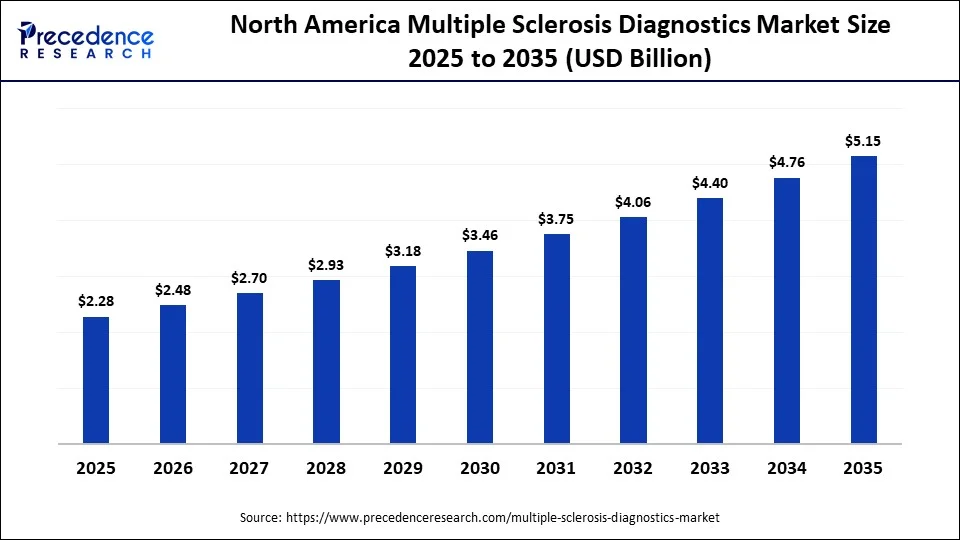
The North America multiple sclerosis diagnostics market size was exhibited at USD 2.28 billion in 2025 and is projected to be worth around USD 5.15 billion by 2035, growing at a CAGR of 8.49% from 2026 to 2035.
Which Factors Dominated the Multiple Sclerosis Diagnostics Market in North America?
North America held a major market share of 40% in 2025. This is due to the high regional prevalence of the disease, advanced healthcare infrastructure, strong government or private funding, and early patient access to breakthrough diagnostic technologies. Thus, the widespread availability of high-field MRI scanners, along with sophisticated imaging software, enables the early detection of demyelinating lesions in the brain and spinal cord.
U.S. Multiple Sclerosis Diagnostics Market Size and Growth 2026 to 2035
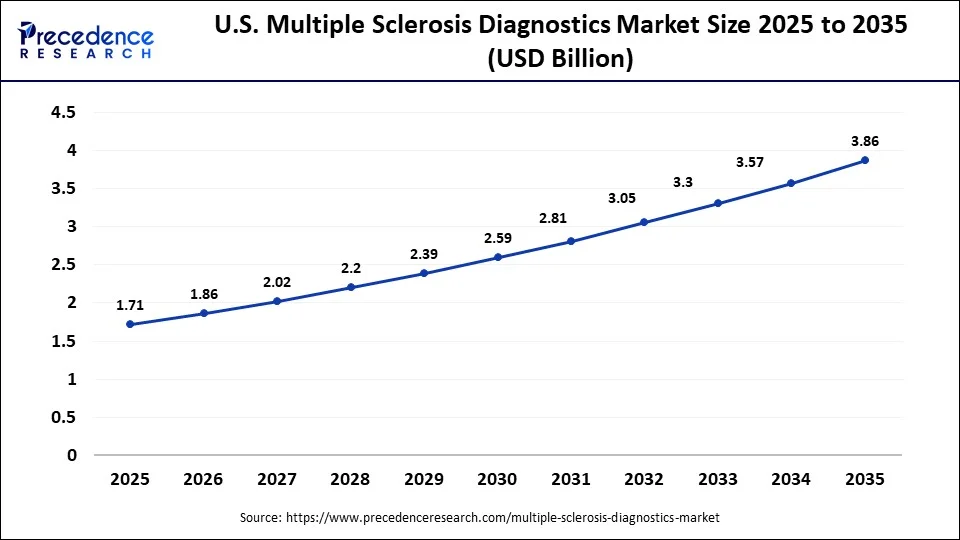
The U.S. multiple sclerosis diagnostics market size was evaluated at USD 1.71 billion in 2025 and is projected to reach around USD 3.86 billion by 2035, growing at a CAGR of 8.48% from 2026 to 2035.
U.S. Market Analysis
With approximately one million people living with multiple sclerosis in the U.S., there is a sustained, high need for diagnostic, prognostic, and monitoring tests. MRIs led the diagnostic segment because they non-invasively offer detailed images of the central nervous system, enabling doctors to identify lesions and track disease progression.
How is Europe Growing in the Multiple Sclerosis Diagnostics Market?
Europe held the second-largest share of 32% in 2025 and is expected to grow at a notable CAGR of 7.5% during the projection period, driven primarily by the region's high multiple sclerosis prevalence, widespread public knowledge campaigns, and advanced healthcare infrastructure. Significant improvements in diagnostic tools, mainly high-resolution Magnetic Resonance Imaging and cerebrospinal fluid analysis, have enabled much earlier and more accurate diagnoses.
UK Market Analysis
The UK market is driven by the exceptionally high prevalence of multiple sclerosis in the country, the rising acceptance of standardized diagnostic protocols such as the McDonald criteria, and even continuous advancements in neuroimaging and biomarker testing.
Will Asia-Pacific Grow in the Multiple Sclerosis Diagnostics Market?
Asia-Pacific held 18% share of the market in 2025 and is expected to grow at the fastest CAGR of 13.2% during the projection period, driven by the rising disease awareness, rapidly enhancing healthcare infrastructure in emerging economies, such as China and India, and a growing aging population. Massive investments in hospital infrastructure, together with the availability of advanced diagnostic imaging tools such as high-resolution Magnetic Resonance Imaging, have remarkably boosted early diagnosis rates.
China Market Analysis
China's market is mainly led by the rising prevalence of multiple sclerosis, government initiatives to expand healthcare access, and the acceptance of advanced neurological imaging. The launch of the China National Registry of Central Nervous System Inflammatory Demyelinating Diseases has thus elevated the standard of clinical research, standardizing diagnostic criteria as well as patient management.
Multiple Sclerosis Diagnostics Market Companies
- F. Hoffmann-La Roche Ltd.
- Siemens Healthineers
- GE HealthCare
- Thermo Fisher Scientific
- Qiagen N.V.
- Abbott Laboratories
- Danaher Corporation
- Philips Healthcare
- Canon Medical Systems
- Bio-Rad Laboratories
- Quest Diagnostics
- Quanterix Corporation
- Agilent Technologies
- Merck KGaA
- PerkinElmer
Recent Developments
- In April 2026, Roche declared that its Elecsys Neurofilament Light Chain (NfL) test had received CE mark approval for the detection of neuroinflammation in patients diagnosed with relapsing remitting multiple sclerosis (RRMS). The test brings meaningful innovation to MS disease management, providing clinicians a minimally invasive way to monitor the biological damage which is caused by multiple sclerosis.(Source: https://www.roche.com)
- In April 2025, QIAGEN declared that plans are advancing to launch three new sample preparation instruments during 2025 and 2026 to expand and even strengthen its portfolio for automated sample preparation.(Source: https://corporate.qiagen.com)
Segments Covered in the Report
By Diagnostic Type
- Magnetic Resonance Imaging (MRI)
- Cerebrospinal Fluid (CSF) Analysis
- Evoked Potential Testing
- Blood-based Biomarker Testing
- Optical Coherence Tomography (OCT)
- Molecular & Genetic Diagnostics
By Biomarker Type
- Neurofilament Light Chain (NfL)
- Oligoclonal Bands (OCBs)
- Glial Fibrillary Acidic Protein (GFAP)
- Cytokine Biomarkers
- Other Neurological Biomarkers
By Disease Type
- Relapsing-Remitting Multiple Sclerosis (RRMS)
- Secondary Progressive Multiple Sclerosis (SPMS)
- Primary Progressive Multiple Sclerosis (PPMS)
- Progressive-Relapsing Multiple Sclerosis (PRMS)
By End-use
- Hospitals
- Diagnostic Laboratories
- Specialty Neurology Clinics
- Academic & Research Institutes
By Technology
- Imaging Technologies
- Immunoassays
- Molecular Diagnostics
- AI-based Diagnostic Analytics
By Region
- North America
- Latin America
- Europe
- Asia-pacific
- Middle and East Africa
For inquiries regarding discounts, bulk purchases, or customization requests, please contact us at sales@precedenceresearch.com
Frequently Asked Questions





Ask For Sample
No cookie-cutter, only authentic analysis – take the 1st step to become a Precedence Research client
 Get a Sample




 sales@precedenceresearch.com
 Schedule a Meeting
