



Multiple Sclerosis Therapeutics Market Size, Companies, Share, Patient Volume, Treatment Adoption Rates, Pricing Analysis, Regulatory Landscape, Competitive Positioning, and Demand Forecast
Multiple Sclerosis Therapeutics Market (By Drug Class: Immunomodulators, Immunosuppressants, Monoclonal Antibodies, Corticosteroids, Sphingosine-1-Phosphate (S1P) Receptor Modulators, Others; By Disease Type: Relapsing-Remitting Multiple Sclerosis (RRMS), Secondary Progressive Multiple Sclerosis (SPMS), Primary Progressive Multiple Sclerosis (PPMS), Progressive-Relapsing Multiple Sclerosis (PRMS); By Route of Administration: Oral, Injectable, Intravenous (IV) Infusion; By Distribution Channel: Hospital Pharmacies, Retail Pharmacies, Online Pharmacies; By End-use: Hospitals, Specialty Neurology Clinics, Homecare Settings, Rehabilitation Centers) - Global Industry Analysis, Size, Trends, Leading Companies, Regional Outlook, and Forecast 2026 to 2035
Source: https://www.precedenceresearch.com/multiple-sclerosis-therapeutics-market
 Get a Sample
 Table Of Content


What is the Multiple Sclerosis Therapeutics Market Size in 2026?
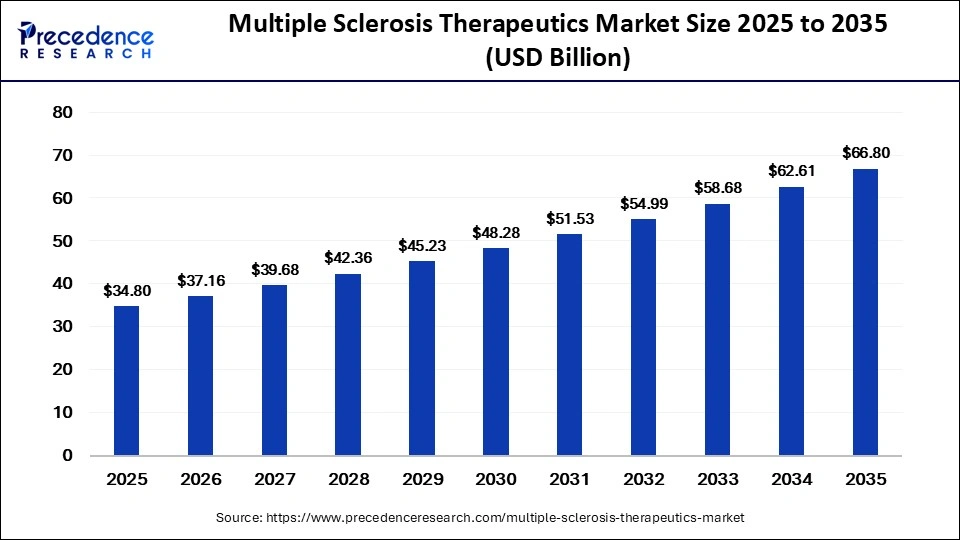
The global multiple sclerosis therapeutics market size accounted for USD 34.80 billion in 2025 and is predicted to increase from USD 37.16 billion in 2026 to approximately USD 66.80 billion by 2035, expanding at a CAGR of 6.90% from 2026 to 2035. The market is driven by rising multiple sclerosis cases, increasing adoption of biologic therapies, and advancements in disease-modifying treatments.
Key Takeaways
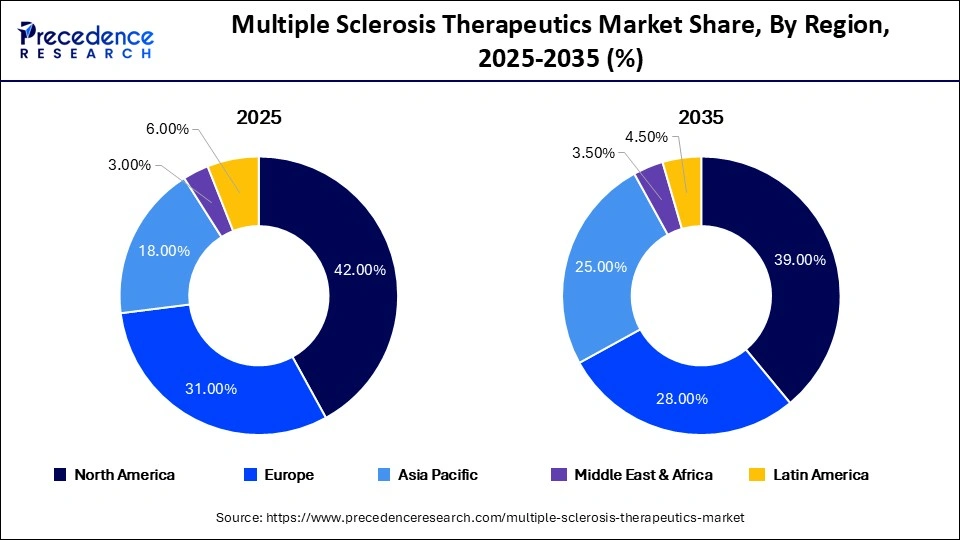
- North America dominated the global multiple sclerosis therapeutics market, accounting for a 42% share in 2025.
- Asia-Pacific is expected to grow at the fastest CAGR of 10.8% during the forecast period.
- By drug class, the monoclonal antibodies segment held a dominant position in the market, accounting for 32% of the market share in 2025, and is expected to grow at the fastest CAGR of 10.5% during the forecast period.
- By drug class, the immunomodulators segment is expected to grow at a CAGR of 3.8% between 2026 and 2035.
- By disease type, the relapsing-remitting multiple sclerosis (RRMS) segment accounted for a considerable revenue share of 64% in the market in 2025.
- By disease type, the primary progressive multiple sclerosis (PPMS) segment is expected to grow at the highest CAGR of 9.5% between 2026 and 2035.
- By route of administration, the oral segment led the global multiple sclerosis therapeutics market with a share of 44% in 2025 and is expected to sustain its dominance with a CAGR of 9.2% over the studied period.
- By route of administration, the injectable segment held the second-largest market share of 30% in 2025.
- By distribution channel, the hospital pharmacies segment accounted for a considerable revenue share of 46% in the market in 2025.
- By distribution channel, the online pharmacies segment is expected to grow at the fastest CAGR of 11.8% between 2026 and 2035.
- By end-use, the hospitals segment accounted for a considerable revenue share of 40% in the market in 2025.
- By end-use, the home care settings segment is expected to grow at the highest CAGR of 10.5% between 2026 and 2035.
Multiple Sclerosis Therapeutics Market Driven by Advancements in High-Efficacy Treatment Solutions
Multiple sclerosis is a chronic autoimmune disease of the central nervous system that can cause a variety of symptoms, including coordination problems, weakness in muscles, and tiredness or fatigue. The market is undergoing significant growth by virtue of increased endeavors to prompt diagnosis, and advances in continuous innovations of disease-modifying treatments. Investments in biologics, targeted therapies, and the number of new innovative therapies approved are fueling the growth of the market. Furthermore, the global increase in the use of high-efficacy treatments, the improvement of healthcare facilities, and research and development activities on personalized medicine offer long-term prospects.
Key AI Integration in Multiple Sclerosis Therapeutics
Artificial intelligence (AI) is emerging as an important component in the multiple sclerosis therapeutics industry, helping aid in the diagnosis of the disease, treatment planning, drug discovery, and patient monitoring. AI-driven imaging and data analytics software enable healthcare professionals to diagnose MS earlier by analyzing MRI scans and neurological data with advanced algorithms and tools, allowing for quicker and more accurate diagnosis. AI is used by pharmaceutical and biotechnology firms to expedite the development of disease-modifying drugs and discover potential drugs for new targets more efficiently.
Multiple Sclerosis Therapeutics Market Trends
- Convenience of administration, increased patient acceptability, and reduced needs for hospital visits, including the use of new therapies like Fingolimod and dimethyl fumarate, are aiding the increased popularity of oral disease-modifying therapies.
- Biosimilars, including natalizumab Biosimilar versions, make medicines more affordable and accessible for people, and are clinically effective when compared with the original biologic medicines, especially in cost-sensitive regions.
- From interpreting MRI scans to identifying predictive disease models, remotely monitoring patients to developing personalised treatment plans, AI and digital health technologies are helping to improve patients' lives in MS care, and thus their health outcomes and adherence, with a variety of applications and uses.
- The research has expanded into developing therapy for the MS forms that are present in the progressive disease cycle, and several pharmaceutical companies are exploring compounds for unmet needs relating to slowing of the disease disability process and long-term neurological functioning.
Market Scope
| Report Coverage | Details |
| Market Size in 2025 | USD 34.80 Billion |
| Market Size in 2026 | USD 37.16 Billion |
| Market Size by 2035 | USD 66.80 Billion |
| Market Growth Rate from 2026 to 2035 | CAGR of 6.90% |
| Dominating Region | North America |
| Fastest Growing Region | Asia Pacific |
| Base Year | 2025 |
| Forecast Period | 2026 to 2035 |
| Segments Covered | Drug Class, Disease Type, Route of Administration, Distribution Channel, End-use, and Region |
| Regions Covered | North America, Europe, Asia-Pacific, Latin America, and Middle East & Africa |
Market Dynamics
Drivers
Rising Adoption of High-Efficacy Disease-Modifying Therapies
The major growth factor of the market is the increased usage of high-efficacy disease-modifying therapies in the treatment of MS. The increasing incidence of autoimmune neurological diseases and the knowledge of early diagnosis are stimulating better patient and provider understanding of the need for advanced therapeutic solutions. The ongoing acceptance of new generation drugs, such as ocrelizumab, and other targeted drugs, is further bolstering the market growth.
Restraints
High Treatment Costs and Limited Accessibility
There are numerous challenges to the market, including the cost of therapy and the limited availability of drugs in developing countries. Treatment may be costly, particularly when advanced disease-modifying treatment is likely to be used, including biologics and monoclonal antibodies, which are often costly and require long-term therapy. In addition, diagnostic and monitoring procedures are tailored to a person's specific needs, and requiring frequent monitoring and infusion-based treatment also increases the basic healthcare costs.
Opportunity
Expansion of Personalized Medicine and AI-Driven Healthcare
The increasing convergence of personalized medicine and AI in healthcare offers great potential for the market. New developments in biomarker research, genomic profiling, and predictive analytics are helping to create a more personalized treatment strategy, based on patient-specific disease status and treatment progression. The application of AI technologies is helping patient management to become more efficient, as they can enhance early diagnosis, MRI analyses, prediction of relapse, and treatment optimization.
Segmental Insights
Drug Class Insights
The Monoclonal Antibodies Segment Held 32% of the Market Share in 2025
The monoclonal antibodies segment generated approximately USD 11.14 billion in 2025 and is projected to reach nearly USD 26.72 billion by 2035 at the fastest CAGR of 10.5% during the forecast period. The monoclonal antibodies segment held a dominant position in the multiple sclerosis therapeutics market with a share of 32% in 2025, due to the improved efficacy these monoclonal antibodies provide compared to traditional therapy, including the reduction of a person's chances of having a relapse and the speed of disability progression. Sustainable activities are likely to continue to drive growth over the projection period, likely due to the long-term effectiveness created and improved patient outcomes.
The immunomodulators segment accounted for approximately USD 8.35 billion in 2025 and is projected to reach nearly USD 12.02 billion by 2035, growing at a CAGR of 3.8% during the forecast period. The immunomodulators segment held 24% of the market share in 2025, propelled by the long-standing usage in the treatment of relapsing MS, inducing generic formulations, and the familiarity of physicians with this segment. These medications normalize the activity of the immune system, reduce the frequency of relapses, and minimize the amount of activity of the disease during the early stages. They are cost-effective, easily accessible, and ideal for long-term use in less developed areas of the world.
Multiple Sclerosis Therapeutics Market Share, By Drug Class, 2025-2035 (%)
| Drug Class | 2025 | 2035 | CAGR (%) |
| Immunomodulators | 24.00% | 18.00% | 3.80% |
| Immunosuppressants | 14.00% | 12.00% | 4.50% |
| Monoclonal Antibodies | 32.00% | 40.00% | 10.50% |
| Corticosteroids | 10.00% | 8.00% | 3.00% |
| Sphingosine-1-Phosphate (S1P) Receptor Modulators | 16.00% | 18.00% | 9.20% |
| Others | 4.00% | 4.00% | 5.00% |
The immunosuppressants segment generated approximately USD 4.87 billion in 2025 and is projected to reach nearly USD 8.02 billion by 2035, growing at a CAGR of 4.5% during the forecast period. The immunosuppressants segment held 14% of the market share in 2025, driven by rising clinical evidence in favor of immune-targeting strategies and rising use of combination therapy for multiple sclerosis. Such drugs are capable of suppressing overactive immune suppression and limiting the course of the disease and neurological damage. More research into more effective models and improved combinations for therapy will likely increase their applications in the speciality neurology care sectors around the world.
The corticosteroids segment accounted for approximately USD 3.48 billion in 2025 and is projected to reach nearly USD 5.34 billion by 2035, growing at a CAGR of 3% during the forecast period. The corticosteroids segment held 10% of the market share in 2025, due to the continued use of corticosteroids in acute relapse management, higher levels of preference for long-term disease-modifying treatment, and increasing awareness of side effects from corticosteroids. Corticosteroids mainly treat the "flares" of MS that have a short duration since they take effect quickly, to relieve inflammation and improve neurological symptoms.
Disease Type Insights
The Relapsing-Remitting Multiple Sclerosis (RRMS) Segment Dominated the Market with 64% of Market Share in 2025
The relapsing-remitting multiple sclerosis (RRMS) segment generated approximately USD 22.27 billion in 2025 and is projected to reach nearly USD 40.08 billion by 2035, growing at a CAGR of 6.5% during the forecast period. The relapsing-remitting multiple sclerosis (RRMS) segment held a dominant position in the multiple sclerosis therapeutics market with a share of 64% in 2025, due to the high prevalence of MS and availability of diagnosed patients in the relapsing-remitting patient population, along with the strong drug availability and early diagnosis and initiation of treatment. RRMS is the most common type of MS and can be easily treated. Improved control of the disease has been achieved with new treatments like biologics, oral drugs, and infusion therapy.
The secondary progressive multiple sclerosis (SPMS) segment accounted for approximately USD 6.26 billion in 2025 and is projected to reach nearly USD 13.36 billion by 2035, growing at a CAGR of 8.2% during the forecast period. The secondary progressive multiple sclerosis (SPMS) segment held 18% of the market share in 2025, supported by the shifting focus towards slowing the disease progression, advancement in the development of targeted drugs, and youths' demand for long-term neurological care. Advanced treatment methods are needed as time goes on and patients' neurological function deteriorates. New treatments for neuroprotection and inflammation are enhancing the treatment of the disease.
Multiple Sclerosis Therapeutics Market Share, By Disease Type, 2025-2035 (%)
| Disease Type | 2025 | 2035 | CAGR (%) |
| Relapsing-Remitting Multiple Sclerosis (RRMS) | 64.00% | 60.00% | 6.50% |
| Secondary Progressive Multiple Sclerosis (SPMS) | 18.00% | 20.00% | 8.20% |
| Primary Progressive Multiple Sclerosis (PPMS) | 14.00% | 16.00% | 9.50% |
| Progressive-Relapsing Multiple Sclerosis (PRMS) | 4.00% | 4.00% | 5.50% |
The primary progressive multiple sclerosis (PPMS) segment generated approximately USD 4.87 billion in 2025 and is projected to reach nearly USD 10.69 billion by 2035 at the fastest CAGR of 9.5% during the forecast period. The primary progressive multiple sclerosis (PPMS) segment held 14% of the market share in 2025, driven by increasing awareness of neurological diseases and growing clinical studies in neuroprotection, which are responsible for the primary progressive. PPMS is progressive, and there are no remissions with the disorder, so it is difficult to treat. Ongoing research leads to the development of disease-modifying treatment and monoclonal antibodies for PPMS.
The progressive-relapsing multiple sclerosis (PRMS) segment accounted for approximately USD 1.39 billion in 2025 and is projected to reach nearly USD 2.67 billion by 2035, growing at a CAGR of 5.5% during the forecast period. The progressive-relapsing multiple sclerosis (PRMS) segment held 4% of the market share in 2025, due to the continuous monitoring of the disease with biomarkers and the continued expansion of new neurologic research initiatives. This is a disorder in which symptoms recur in acute attacks and get worse over time; therefore, more advanced treatments are required. The increasing number of diagnoses and biomarker technologies has improved the identification of this uncommon type.
Route of Administration Insights
Multiple Sclerosis Therapeutics Market Share, By Route of Administration, 2025-2035 (%)
| Route of Administration | 2025 | 2035 | CAGR (%) |
| Oral | 44.00% | 50.00% | 9.20% |
| Injectable | 30.00% | 22.00% | 3.50% |
| Intravenous (IV) Infusion | 26.00% | 28.00% | 8.80% |
The Oral Segment Led the Market with 44% of Market Share in 2025
The oral segment generated approximately USD 15.31 billion in 2025 and is projected to reach nearly USD 33.40 billion by 2035 at the fastest CAGR of 9.2% during the forecast period. The oral segment registered its dominance over the global multiple sclerosis therapeutics market with a share of 44% in 2025, as it offers convenient treatment, increasing pocket preference for oral disease-modifying treatment, and promoting long-term treatment adherence improvement. Oral treatments are widely prescribed for early or moderate disease stages. Several new drugs (such as so-called fingolimod and dimethyl fumarate) have been developed to manage the disease.
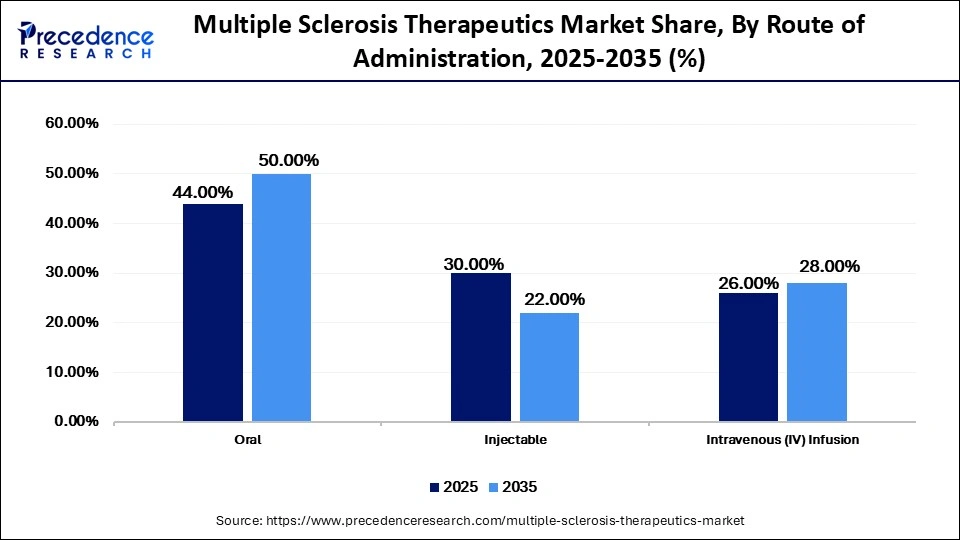
The injectable segment accounted for approximately USD 10.44 billion in 2025 and is projected to reach nearly USD 14.70 billion by 2035, growing at a CAGR of 3.5% during the forecast period. The injectable segment held 30% of the market share in 2025, spurred by favorable regulatory rulings on interferon, a shift towards oral/inferior therapy options, and an increase in the availability of advanced therapies. They are proven to be safe and have a long clinical history. Injectable treatments have become a very common treatment that has been used as a first-line MS therapy. Patient preferences focus on more convenient oral and infusion therapies.
The intravenous (IV) infusion segment generated approximately USD 9.05 billion in 2025 and is projected to reach nearly USD 18.70 billion by 2035, growing at a CAGR of 8.8% during the forecast period. The intravenous (IV) infusion segment held 26% of the market share in 2025, due to the newly approved monoclonal antibody drugs, widespread use of high-efficacy biologics, and growing demand for relapsing drugs. These treatments are given intravenously and administered in a hospital, requiring careful monitoring, which leads to increased safety and better clinical efficacy when used in moderate to severe MS.
Distribution Channel Insights
Multiple Sclerosis Therapeutics Market Share, By Distribution Channel, 2025-2035 (%)
| Distribution Channel | 2025 | 2035 | CAGR (%) |
| Hospital Pharmacies | 46.00% | 42.00% | 5.80% |
| Retail Pharmacies | 38.00% | 36.00% | 6.20% |
| Online Pharmacies | 16.00% | 22.00% | 11.80% |
The Hospital Pharmacies Segment Contributed the Highest Market Share of 46% in 2025
The hospital pharmacies segment generated approximately USD 16.01 billion in 2025 and is projected to reach nearly USD 28.06 billion by 2035, growing at a CAGR of 5.8% during the forecast period. The hospital pharmacies segment registered its dominance over the global multiple sclerosis therapeutics market with a share of 46% in 2025. Hospitals play a vital role in the use of biologics and infusion therapy products, as well as an increase in patient buying of bio and infusion therapy products in supervised hospital settings. The increasing patient preference for supervised treatment settings and the growing access to specialty neurological medications augment the segment's growth.
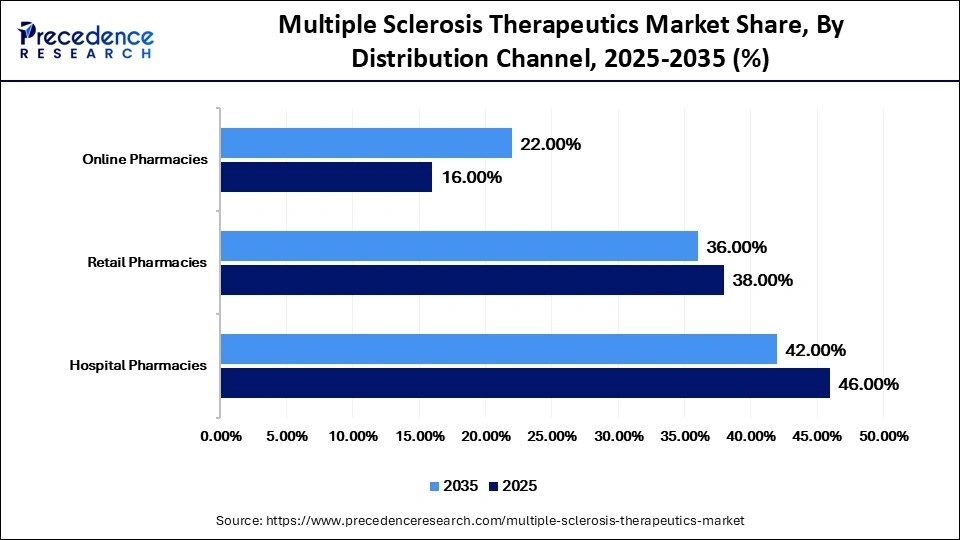
The retail pharmacies segment accounted for approximately USD 13.22 billion in 2025 and is projected to reach nearly USD 24.05 billion by 2035, growing at a CAGR of 6.2% during the forecast period. The retail pharmacies segment held 38% of the market share in 2025, due to the increase in the availability of oral MS treatments, the convenience of prescription refills, and the growth of speciality pharmacy networks. Retail pharmacies provide GP-dispensed patient medicines for medium- to long-term prescription usage. They enable prescription refill convenience for chronic therapies.
The online pharmacies segment generated approximately USD 5.57 billion in 2025 and is projected to reach nearly USD 14.70 billion by 2035 at the fastest CAGR of 11.8% during the forecast period. The online pharmacies segment held 16% of the market share in 2025, led by the growing digitalization of health care platforms, surge in demand for home delivery of chronic medicines, and the progress of telemedicine services. Regulations of the e-pharmacy and digital prescriptions are also contributing to the growth. As remote care solutions and chronic disease management platforms continue to become more popular in the industry is expected to see a large penetration from the internet.
End-Use Insights
The Hospitals Segment Dominated the Market with 40% of Market Share in 2025
The hospitals segment generated approximately USD 13.92 billion in 2025 and is projected to reach nearly USD 23.38 billion by 2035, growing at a CAGR of 5.5% during the forecast period. The hospitals segment held the largest revenue share of 40% in the multiple sclerosis therapeutics market in 2025, because of the increased patient flows in hospitals to treat advanced MS and the growing number of end-users of biological and infusion therapies. Hospitals are the major institutions for diagnosis, to start treatment, and for the management of relapse. They offer advanced imaging, infusion facilities, and multi-disciplinary care.
The specialty neurology clinics segment accounted for approximately USD 10.44 billion in 2025 and is projected to reach nearly USD 22.71 billion by 2035, growing at a CAGR of 8.8% during the forecast period. The speciality neurology clinics segment held 30% of the market share in 2025, driven by the growing demand for tailoring neurological care to the individual, rising adoption of precision MS treatment protocols, and outpatient neurology services. They are clinics geared towards neurological disorders and possess neurological expertise to treat MS. They play a key role in long-term disease surveillance, treatment strategies, and early intervention.
Multiple Sclerosis Therapeutics Market Share, By End-use, 2025-2035 (%)
| End-use | 2025 | 2035 | CAGR (%) |
| Hospitals | 40.00% | 35.00% | 5.50% |
| Specialty Neurology Clinics | 30.00% | 34.00% | 8.80% |
| Homecare Settings | 18.00% | 22.00% | 10.50% |
| Rehabilitation Centers | 12.00% | 9.00% | 4.20% |
The homecare settings segment generated approximately USD 6.26 billion in 2025 and is projected to reach nearly USD 14.70 billion by 2035 at the fastest CAGR of 10.5% during the forecast period. The home care settings segment held 18% of the market share in 2025, due to the use of oral and self-administered therapies, growing home-based chronic disease management, and growing use of telehealth. More patients are opting for home treatment because it allows them to be comfortable, convenient, and not be dependent on any hospitalisation. With the evolution of digital health tools and advancements in new, remotely monitored methods of care, effective MS care can happen in the home.
The rehabilitation centers segment accounted for approximately USD 4.18 billion in 2025 and is projected to reach nearly USD 6.01 billion by 2035, growing at a CAGR of 4.2% during the forecast period. The rehabilitation centers segment held 12% of the market share in 2025, because there has been growing attention to enhancing mobility, an increasing number of people with MS require long-term neurological rehabilitation, and the growing attitudes toward improving management of MS involving multidisciplinary approaches. They provide physiotherapy, occupational therapy, and psychological support. The rising focus on the whole person MS and on-going disability management is maintaining a steady global demand for rehabilitation.
Regional Insights
North America Multiple Sclerosis Therapeutics Market Size and Growth 2026 to 2035
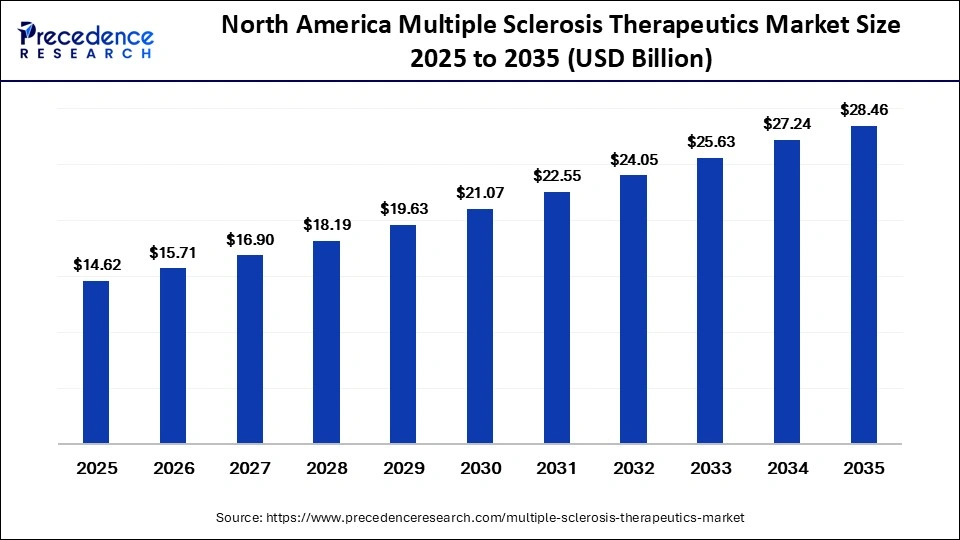
The North America multiple sclerosis therapeutics market size was exhibited at USD 14.62 billion in 2025 and is projected to be worth around USD 28.46 billion by 2035, growing at a CAGR of 6.20% from 2026 to 2035.
Which Factors Drive the Multiple Sclerosis Therapeutics Market in North America?
North America held a major market share of 42% in 2025, driven by the rising prevalence and diagnosis of MS, the development of progressive white blood cell count drugs and monoclonal antibodies. The United States is the biggest source of funds, mainly because the process is relatively rapid, and clinical trials with a high level of activity and disease-modifying treatments are available. The growing awareness, timely screening, and ongoing treatment contribute to market growth. Leading pharmaceutical companies based in the area are continually putting money into R&D for next-generation treatments, such as targeted biologics and monoclonal antibodies.
U.S. Multiple Sclerosis Therapeutics Market Size and Growth 2026 to 2035
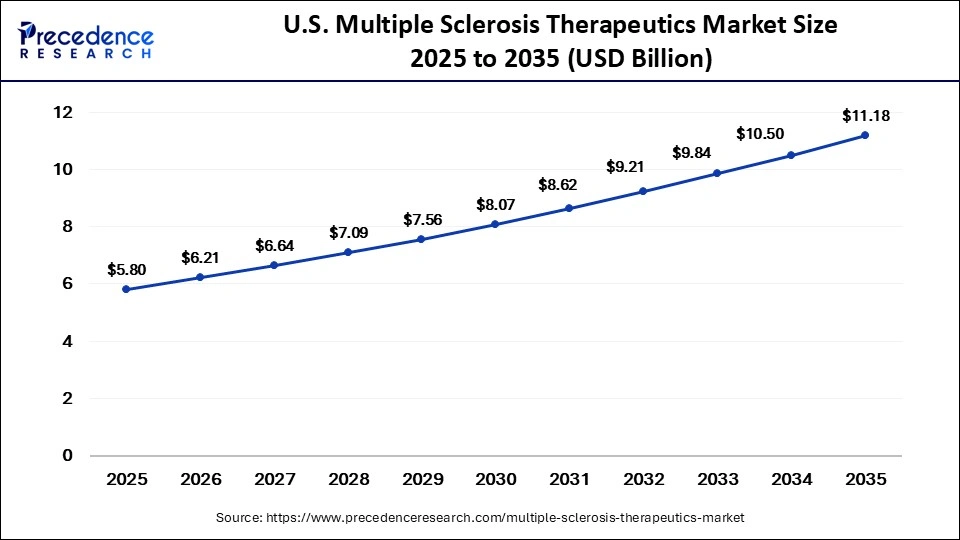
The U.S. multiple sclerosis therapeutics market size was evaluated at USD 5.80 billion in 2025 and is projected to reach around USD 11.18 billion by 2035, growing at a CAGR of 6.33% from 2026 to 2035.
U.S. Market Trends
The U.S. market offers an excellent healthcare system, high MS prevalence, advanced development of biologicals, and rapid FDA approvals. Latest technologies, such as MRI imaging, extensive neurologist networks, and full coverage of insurance for disease-modifying drug therapies, positively influence market growth in the U.S. Higher use of monoclonal antibodies and other high-efficacy drugs is helping to yield better clinical results and prevent relapses.
How is Asia-Pacific Growing in the Multiple Sclerosis Therapeutics Market?
Asia-Pacific held 18% of the market share in 2025 and is expected to grow at the fastest CAGR of 10.8% during the projection period, owing to rising awareness towards MS, growing healthcare expenditure, and developments in the neurology care infrastructure throughout the region. More frequent access to health coverage due to rare disease programs and new laws is improving access to advanced treatment. This market is expanding continually as pharmaceutical companies are increasingly building their network and going deeper into the clinical trials in such areas. Pharma companies are focused on finding ways to reach more people via the distribution channels-specifically, urban and semi-urban patients.
China Market Trends
China's market is driven by the burgeoning healthcare infrastructure and increasing awareness regarding neurological disorders. High disease incidence and access to advanced therapies also contribute to market growth. The market is also driven by better early diagnosis and treatment capabilities due to the reforms of the health system's structure by the government and the increasing funding for speciality hospitals. Increased patient enrolment in global and local trials is increasing access to innovative disease-modifying treatment options.
Will Europe Experience Notable Growth in the Multiple Sclerosis Therapeutics Market?
Europe held 31% of the market share in 2025 and is expected to grow at a notable CAGR of 5.8% during the projection period, driven by the strong healthcare infrastructure, growing consciousness about MS, and the increasing usage of disease modifying therapies. Beneficial government healthcare policies in Europe are also driving the market. Germany, France, Italy, and the United Kingdom are front-runners due to the high-quality care systems addressing gaps in treatment provision within neurology care. Efforts to establish a general screening program and early diagnosis can ensure the timely commencement of treatment and enhance treatment outcomes in the long run.
UK Market Trends
The UK's market is driven by the growing research activities, increasing R&D investments, and favorable government support. The UK government launch initiatives to support the development of a robust clinical trial infrastructure, encouraging foreign trials in the region.
Multiple Sclerosis Therapeutics Market Value Chain Analysis
- R&D
The development of new advanced drug category disease-modifying therapies (DMTs), namely, oral agents and monoclonal antibodies with a disease indication and effectiveness focus through precision medicine and immunological studies, is targeted in the market with a focus on reducing the number of relapses and disease progression.
Key Players: Roche, Novartis, Merck KGaA, Bristol Myers Squibb
- Clinical Trials and Regulatory Approvals
The market covers the entire multiple sclerosis landscape from clinical trials to product authorization and includes agencies like the FDA and EMA, which are reported to accelerate authorisation of new product efficacy due to their groundbreaking approach and efficacy.
Key Players: U.S. FDA, European Medicines Agency (EMA), Roche, Novartis
- Patient Support and Services
Adherence programs, infusion support, financial assistance, and disease management tools are patient support and services for multiple sclerosis therapeutics that are designed to help patients get better, maintain treatment, and ensure treatment continuity in healthcare systems.
Key Players: Sanofi, Teva Pharmaceuticals, Bristol Myers Squibb
Multiple Sclerosis Therapeutics Market Companies
- Biogen Inc.
- Novartis AG
- F. Hoffmann-La Roche Ltd.
- Sanofi S.A.
- Merck KGaA
- Bristol Myers Squibb
- Johnson & Johnson
- Teva Pharmaceutical Industries
- Pfizer Inc.
- TG Therapeutics
- EMD Serono
- UCB Pharma
- Bayer AG
- Celgene Corporation
- Mitsubishi Tanabe Pharma
Recent Developments
- In February 2026, TG Therapeutics presented new data at the annual ACTRIMS meeting in San Diego, California, providing more clinical evidence of its efficacy in the treatment of MS. The results further its contribution to the market regarding disease control.(Source: https://ir.tgtherapeutics.com)
- In November 2025, Tyruko (Sandoz) was the first Food and Drug Administration (FDA)-approved natalizumab biosimilar for relapsing forms of MS (MS-RF) to be released in the United States. This is an additional launch that will enhance the accessibility and affordability of treatment in the market.(Source: https://www.sandoz.com)
- In April 2025, Sanofi presented data from the Phase 3 HERCULES trial showing that 1,400 SPMS subjects with no relapses displayed a 31% decrease in the 6-month CDP rate with Tolebrutinib treatment versus placebo. A key advance in the market was getting an FDA Priority Review with a PDUFA date of October 2026 for the review in March 2025.(Source: https://www.sanofi.com)
Segment Covered in the Report
By Drug Class
- Immunomodulators
- Interferons
- Glatiramer Acetate
- Immunosuppressants
- Monoclonal Antibodies
- Corticosteroids
- Sphingosine-1-Phosphate (S1P) Receptor Modulators
- Others
By Disease Type
- Relapsing-Remitting Multiple Sclerosis (RRMS)
- Secondary Progressive Multiple Sclerosis (SPMS)
- Primary Progressive Multiple Sclerosis (PPMS)
- Progressive-Relapsing Multiple Sclerosis (PRMS)
By Route of Administration
- Oral
- Injectable
- Intravenous (IV) Infusion
By Distribution Channel
- Hospital Pharmacies
- Retail Pharmacies
- Online Pharmacies
By End-use
- Hospitals
- Specialty Neurology Clinics
- Homecare Settings
- Rehabilitation Centers
By Region
- North America
- Latin America
- Europe
- Asia-pacific
- Middle and East Africa
For inquiries regarding discounts, bulk purchases, or customization requests, please contact us at sales@precedenceresearch.com
Frequently Asked Questions





Ask For Sample
No cookie-cutter, only authentic analysis – take the 1st step to become a Precedence Research client
 Get a Sample




 sales@precedenceresearch.com
 Schedule a Meeting
