



Power Limits: New York to Freeze 50M AI Data Centres
Published: 28 Jul 2026
Author: Gautam mahajan



In July 2026, New York Governor Kathy Hochul signed a historic executive order halting data centers, while state officials have drafted stringent environmental impact rules. The infrastructure demands of AI have now been met with the physical constraints of existing energy grids, and New York has become one of the first US states to formally pause development of hyperscale data facilities, enacting a one-year freeze on new data centers using 50 MW of power or more. New York Governor Kathy Hochul signed the order on 14 July 2026, with the stated goal of establishing a comprehensive environmental regulatory framework. While the moratorium legally applies to all commercial data storage facilities of this scale, the freeze was predominantly driven by the unprecedented power requirements of generative AI infrastructure.
During the temporary pause, state officials will draft a Generic Environmental Impact Statement to evaluate how these facilities affect regional power grids, water reserves, and air quality. While this moratorium represents a local policy action, its implications could extend globally. The decision signals to AI companies that the era of unchecked digital infrastructure expansion could be ending. What is unfolding in New York serves as a potential template for how governments worldwide may manage, tax, and regulate the physical footprint of AI infrastructure moving forward.
Beyond temporary bans, regions are also deploying economic measures to manage grid risks. New York is currently evaluating the creation of a Grid Acceleration Fund, which would mandate that developers directly finance public grid upgrades and clean energy generation, alongside specialized insurance mechanisms for speculative power loads and the potential elimination of lucrative sales tax exemptions. Consequently, these regulatory hurdles are actively reshaping deployment strategies for AI companies. Rather than clustering around traditional tech hubs, developers are migrating toward regions that offer structural stability and abundant power.
Faced with the threat of prolonged development freezes, AI infrastructure operators and hardware manufacturers are overhauling their technical architectures. The industry's primary objective has shifted from maximizing raw processing speed to ensuring grid compatibility and operational self-sufficiency. To maintain public trust and avoid destabilizing local power networks, AI companies are changing how they interact with utilities.
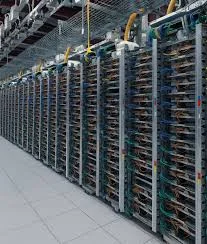
Impact on the AI Market
The primary catalyst behind New York's intervention is the unprecedented nature of AI data center power consumption. Traditional data facilities draw a relatively steady, predictable baseline of electricity from local grids. AI infrastructure, however, operates in drastically fluctuating phases. This intense computational training required for foundation models demands vast amounts of energy over multi-week spikes, which then drop to highly variable levels during live user deployment. The physical scale of these facilities is simply too large for existing regional grids to absorb without consequence.
While a standard data center consumes roughly the same amount of electricity as 100,000 homes, the International Energy Agency estimates that newer AI campuses currently under development will require up to 20 times that amount. Left unregulated, this surge threatens to drive up utility costs for everyday citizens, deplete local water systems used for cooling, and strain community infrastructure. This could potentially reflect a growing international movement towards strict regulatory oversight. Governments all over the world are also seen increasingly moving away from offering incentives to data centers, opting instead to enforce operational accountability.
Impact on the AI Data Centers Market
The global AI data centers market size is valued at USD 17.43 billion in 2025 and is predicted to increase from USD 22.26 billion in 2026 to approximately USD 197.57 billion by 2035, expanding at a CAGR of 27.48% from 2026 to 2035.
According to Precedence Research, the rising adoption of AI technologies to streamline data transmission drives the growth of the AI data centers market. The demand for high-performance computing power has increased, further contributing to market growth. The growing emphasis on building data centers with less environmental impact, the implementation of energy-efficient cooling systems, the use of renewable energy sources, and the utilization of eco-friendly materials in construction are driving the focus on AI data centers.
The growing proliferation of generative AI and large language models, advances in cooling solutions, expanding hyperscale and edge facilities, and massive investments in specialized hardware are driving the industry growth in the market. The development of specialized, high-performance, and energy-efficient infrastructure solutions is the focus of the startup ecosystem. CoreWeave, Lambda, Vigyan Labs, and RackBank are some of the startups actively participating in the market.
Impact on the Data Center Cooling Market
The global data center cooling market size accounted for USD 81.88 billion in 2025 and is expected to exceed around USD 248.21 billion by 2035, growing at a CAGR of 11.73% from 2026 to 2035.
According to Precedence Research, the market is witnessing rapid growth, driven by growing hyperscale data center demand, growth of cloud services, deployment of edge computing, and rising deployments of AI and high-performance workloads, all of which are demanding advanced thermal management. The increasing adoption of high-density computing driven by artificial intelligence (AI), machine learning (ML), high-performance computing (HPC), and advanced analytics workloads is significantly contributing to the growth of the data center cooling industry.
The market is also witnessing a strong emphasis on sustainability. Companies all over the world are increasingly prioritizing energy-efficient solutions to reduce their carbon footprint. Liquid cooling systems, which often consume less energy than conventional air cooling, seem to align well with corporate sustainability goals, suggesting a shift towards greener technologies.
Expert Opinion
Gerhard Salge, CTO of Hitachi Energy, said:
"One of the very popular discussions these days is what you can achieve with solid-state transformer concepts, and that is also something we are looking at together with NVIDIA and others,"