



North America Phenylketonuria Treatment Market Trends, Leading Companies, Company Revenue / Sales Performance, Procedure Volume, Healthcare Spending, Technology Adoption, Reimbursement Analysis, Competitive Landscape, and Growth Outlook
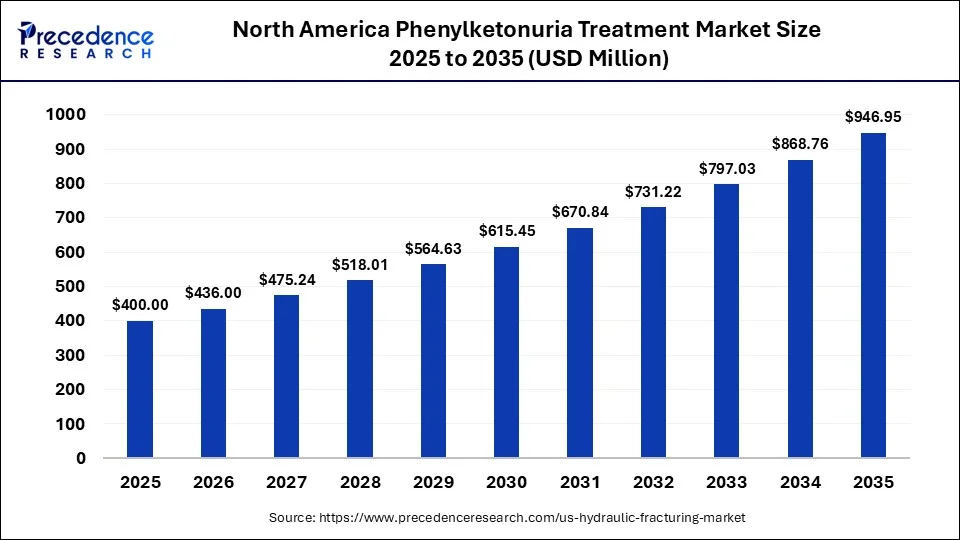
North America phenylketonuria treatment market accounted for USD 436.00Â million in 2026 and is expected to grow at a CAGR of 9% throughout the forecast period. The market is driven by advancements in therapeutic options and a growing awareness of the condition. As healthcare providers and patients alike become more informed about phenylketonuria, the demand for effective treatments seems to be on the rise. These trends were evaluated by our Senior Research Analyst, Deepa Pandey, to curate this well-researched report. Her analysis benefits pharmaceutical producers, distributors, medical professionals, and stakeholders in performing competitive analysis and informed decision-making.
Source: https://www.precedenceresearch.com/north-america-phenylketonuria-treatment-market
 Get a Sample
 Table Of Content


North America Phenylketonuria Treatment Market Demand, Size, and Growth Rate Forecast 2035
The North America phenylketonuria treatment market is forecasted to expand from USD 436.00 million in 2026 to USD 946.95 million by 2035, growing at a CAGR of 9% from 2026 to 2035. The market is transitioning from a predominantly diet-centered model toward a multi-modality treatment architecture encompassing dietary management, BH4-pathway therapies, enzyme replacement, and emerging genetic medicines. As the market continues to evolve, it seems poised for growth, with potential opportunities for stakeholders to contribute to advancements in care. Current market trends focus on personalized medicine and patient-centric approaches, which may further shape the future of this market, indicating a shift towards tailored treatment strategies that address individual patient needs.
Key Takeaways
- The North American PKU treatment market is a specialized rare-disease market characterized by a clearly identifiable patient population, lifelong disease management, and high treatment complexity.
- Newborn screening is a foundational market driver, enabling early diagnosis and long-term monitoring while creating a structured pathway from diagnosis to dietary and pharmacological intervention.
- The market is shifting from dietary management toward a broader multimodal treatment model, combining medical nutrition with pharmacological therapies and emerging disease-modifying approaches.
- Oral therapies are becoming increasingly important, particularly where convenience, treatment burden, adherence, and dietary flexibility influence patient and physician preferences.
- Adult and adolescent patients represent important treatment-expansion opportunities, particularly where long-term dietary management creates adherence challenges or where pharmacological treatment can provide greater dietary flexibility.
- Treatment eligibility is becoming increasingly phenotype- and responder-specific, making patient identification and clinical segmentation important determinants of commercial opportunity.
- Medical nutrition remains structurally important despite pharmaceutical innovation, as specialized formulas and low-protein foods continue to form a core component of PKU management.
- Emerging genetic and gene-editing technologies could represent the market's most disruptive long-term development, potentially shifting treatment economics from chronic disease management toward durable or potentially one-time interventions.
- The market has high barriers to entry because of specialized clinical expertise, rare-disease development requirements, regulatory complexity, patient identification challenges, and the need for specialist distribution.
Market Dynamics
The principal growth drivers are increasing pharmacological penetration, expanded pediatric eligibility, improved identification of treatment-responsive patients, and the commercial launch of new oral therapies. The principal restraints are the small addressable population, payer controls, treatment adherence, tolerability, injection burden, monitoring requirements, and continued reliance on specialized medical nutrition.
The clinical benchmark is increasingly stringent: treatment aims to maintain plasma Phe within approximately 120–360 μmol/L (2–6 mg/dL).
This creates a differentiated value proposition for therapies capable of producing durable biochemical control while allowing greater dietary flexibility. The market is therefore evolving from a simple "Phe-lowering" proposition toward quality of life, dietary liberalization, adherence, convenience, and long-term metabolic control.
Key Coverage
- Patient and physician adoption drivers
- Treatment burden
- Adherence and persistence
- Payer restrictions
- Dietary liberalization
- Pediatric expansion
- Generic erosion
- Unmet clinical needs
What Opportunities are Rising in the Market?
Several identifiable white spaces emerge:
- Adult pharmacotherapy conversion: the large population managed primarily through diet represents a potential expansion pool.
- Adolescent treatment: the 12–17-year-old population is becoming increasingly accessible to pharmacological treatment.
- Convenient medical nutrition: ready-to-drink, portable, and better-tasting formats address adherence barriers.
- Dietary liberalization: therapies that increase natural-protein tolerance can capture value beyond simple Phe reduction.
- Oral alternatives: oral therapies can address injection burden and patient acceptance.
- Genetic medicine: one-time or durable therapies represent the largest potential disruption to the chronic-treatment model.
- Canada: newly approved therapies create opportunities for differentiated reimbursement and market-access strategies.
The report quantifies each opportunity through patient pools, treatment penetration, revenue per patient, and forecast CAGR.
Epidemiology, Patient Pool and Treatment Penetration
PKU occurs in approximately 1 in 15,000 U.S. births, with state-level variation. A claims-based analysis estimated approximately 16,615 diagnosed U.S. patients, establishing a useful denominator for treatment penetration modeling. Newborn screening data further demonstrate that the condition is being identified systematically: 691 classical PKU/hyperphenylalaninemia cases were recorded among approximately 11.75 million births in the 2015–2017 U.S. dataset.
The commercial opportunity therefore lies less in diagnosis creation than in lifetime retention, adult re-engagement, treatment escalation, responder identification, and conversion from dietary management to pharmacotherapy. Adult patients who have historically relied on diet alone represent an especially important commercial pool because pharmacological treatment can potentially increase dietary flexibility and reduce the burden of strict Phe restriction.
The full analysis quantifies patients by age, phenotype/severity, treatment eligibility, responder status, pharmacotherapy penetration, diet-only management, monitoring intensity, and treatment persistence.
Key Coverage
- Diagnosed and estimated patient population
- Incidence and prevalence
- Pediatric versus adult population
- Classic PKU versus milder phenotypes
- Treatment eligibility
- Diagnosis-to-treatment funnel
- Pharmacotherapy penetration
- Lost-to-follow-up and undertreated populations
Pricing Analysis
PKU pricing is best analyzed through annual treatment cost per patient, net price, dose intensity, payer reimbursement, and cost of adjunctive medical nutrition, rather than conventional unit ASPs.
Pegvaliase uses weight-independent product economics but requires dose escalation and can reach 20–60 mg daily in patients requiring higher maintenance dosing. Treatment also carries significant monitoring and risk-management requirements, including a restricted REMS program and epinephrine availability because of anaphylaxis risk.
Sepiapterin is an oral, weight- and age-based therapy. Current U.S. cash-market pricing illustrates the premium rare-disease economics: a 30-unit supply of 250 mg powder has been listed at approximately USD 4,010, although actual insured net pricing can differ materially.
The report models gross-to-net adjustments, payer mix, patient assistance, specialty-pharmacy economics, dose escalation, medical-food costs, treatment persistence, and price sensitivity.
Demand-Supply and Value Chain
PKU is unlike capacity-constrained pharmaceutical markets. Production volumes are small relative to conventional medicines; the more important bottlenecks are specialized manufacturing, regulatory compliance, cold-chain or controlled logistics where applicable, specialty pharmacy access, metabolic-center coverage, and medical-food reimbursement.
The treatment value chain runs from pharmaceutical/medical-nutrition R&D through specialized manufacturing, regulatory approval, metabolic clinics, specialty pharmacies/distributors, dietitians, and long-term patient monitoring.
Medical nutrition remains structurally important: PKU treatment continues to rely on Phe restriction and specialized protein substitutes even when pharmacotherapy is prescribed. North American medical-food portfolios include amino-acid formulas, glycomacropeptide-based products, ready-to-drink formats, and low-protein foods.
Which Emerging Technologies Are Most Likely to Redefine PKU Treatment Beyond Conventional Phe Reduction?
Sepiapterin is emerging as the most consequential near-term technology shift in North American PKU treatment. Phase III evidence demonstrated substantially greater phenylalanine (Phe) reduction than sapropterin in a head-to-head crossover study, while its regulatory profile extends across pediatric and adult patients with sepiapterin-responsive PKU. Our analysis indicates that the significance of this development extends beyond incremental competition: an oral therapy with broad age applicability can address treatment-burden and adherence considerations that are increasingly important alongside biochemical efficacy. In our view, this positions BH4-pathway innovation as a near-term mechanism for expanding pharmacological penetration, particularly among patients for whom treatment convenience and dietary flexibility are important decision factors.
The longer-term technology trajectory is considerably more disruptive. AAV-mediated PAH gene transfer, mRNA-based PAH replacement, and gene-editing approaches are being developed with the objective of addressing the underlying metabolic defect rather than managing Phe levels through lifelong conventional therapy. The June 2026 U.S. clearance of an investigational new drug application for a base-editing PKU program represents an important development-stage milestone, moving gene editing from predominantly preclinical potential toward clinical evaluation. We assess that these platforms should not yet be treated as near-term commercial substitutes for established therapies, given the need to demonstrate durability, safety, dosing feasibility, and long-term clinical benefit; however, their potential impact on the lifetime economics of PKU treatment is substantially greater than that of another incremental Phe-lowering product.
In our view, the strategic technology divide is therefore becoming near-term optimization versus long-term disease modification. BH4/cofactor therapies and enzyme replacement are competing on Phe reduction, dietary liberalization, route of administration, and treatment burden, while genetic approaches are targeting potentially durable correction. This creates different commercial requirements: established and emerging pharmaceutical therapies must maximize responder identification, adherence and access, whereas genetic-medicine developers must establish durable efficacy, safety and an economically viable one-time-treatment proposition.
The implication for market participants is that R&D positioning should be evaluated not only by pipeline size but by the probability that each technology can materially reduce lifetime treatment burden.
Could Regulatory and Reimbursement Policy Become the Primary Constraint on PKU Treatment Adoption Rather Than Clinical Innovation?
The North American PKU treatment landscape is entering a period in which regulatory availability is expanding faster than uniform patient access. Sepiapterin received U.S. approval on July 28, 2025, for adults and children 1 month of age and older with sepiapterin-responsive PKU, while Canadian authorization followed on October 7, 2025. The U.S. label for pegvaliase was subsequently expanded on February 27, 2026, to include patients 12 years and older with uncontrolled blood Phe concentrations above 600 μmol/L despite existing management. These developments materially broaden the pharmacological treatment pool, but the eligible population remains defined by age, phenotype, responsiveness, and prior treatment status rather than by diagnosis alone.
Our analysis indicates that the key market-access issue is therefore shifting from “Can a patient be treated?” to “Will the patient qualify, receive reimbursement, and remain on treatment?” This distinction is particularly important in PKU because treatment is lifelong and typically combines pharmacotherapy with a Phe-restricted diet. Sepiapterin's U.S. approval, for example, covers patients from 1 month of age, but specifically requires a sepiapterin-responsive form of PKU; its pivotal trial enrolled 157 pediatric and adult patients aged 1–61 years, illustrating both the breadth of the intended population and the importance of identifying treatment responsiveness. Our assessment is that reimbursement criteria, prior authorization, specialist prescribing, medical-food coverage, and treatment persistence will increasingly determine the commercial conversion of this expanding eligible population.
In our view, the most significant implication is that regulatory approval should not be treated as equivalent to addressable market penetration. The U.S. combines commercial insurance, Medicaid, and state-specific approaches to medical-food coverage, while Canada's reimbursement pathway introduces additional provincial considerations after federal authorization. This creates meaningful differences between the theoretical patient pool, label-eligible population, reimbursable population, and ultimately treated population. For emerging high-cost therapies, and particularly future gene or gene-editing approaches, the commercial hurdle is likely to become even more demanding because payers will need to evaluate not only clinical efficacy and safety but also durability, long-term value, and the economic consequences of replacing chronic treatment with potentially one-time intervention.
How Large Is the Treatable PKU Population, and Where Does the Greatest Treatment-Expansion Opportunity Remain?
PKU is a relatively small but highly identifiable rare-disease population in North America because newborn screening creates a systematic pathway from birth to diagnosis and long-term metabolic management. In the U.S., PKU occurs at approximately 1 in 15,000 births, while a claims-based analysis estimated approximately 16,615 diagnosed patients. Historical newborn-screening data identified 691 cases of classical PKU/hyperphenylalaninemia among approximately 11.75 million births during 2015–2017. These figures indicate that the primary commercial challenge is not broad disease discovery but converting an already identifiable patient population into sustained, appropriately matched treatment. Our analysis indicates that the resulting market opportunity should therefore be assessed through a diagnosis-to-treatment funnel, rather than population prevalence alone.
Our assessment is that the most important expansion pools are likely to sit downstream of diagnosis: adults managed primarily through dietary therapy, patients requiring treatment escalation, individuals who are eligible but not receiving pharmacotherapy, and patients whose treatment is limited by adherence or tolerability. This becomes increasingly relevant as the therapeutic landscape expands beyond dietary management and conventional BH4 therapy. Pharmacological treatment can potentially provide greater dietary flexibility for appropriate patients, meaning that the commercial value of increasing treatment penetration extends beyond adding prescriptions; it can also influence treatment persistence, patient quality of life, and the long-term value captured per diagnosed patient.
In our view, the key strategic metric is therefore addressable treated patients rather than total diagnosed patients. A patient may be diagnosed through newborn screening but remain outside the immediately addressable drug population because of phenotype, age, treatment responsiveness, payer requirements, or clinical management preferences. Conversely, adult patients who have historically remained on dietary management may represent an incremental opportunity as treatment options broaden. We believe this makes patient segmentation by age, Phe severity, phenotype, treatment eligibility, responder status, and current management approach particularly important for forecasting future market growth.
The full analysis quantifies the patient funnel from birth incidence and prevalence through diagnosis, specialist follow-up, treatment eligibility, pharmacotherapy initiation, persistence, and discontinuation, with separate analysis of pediatric and adult populations, classical versus milder phenotypes, diet-only patients, and undertreated populations.
The underlying intelligence can also be structured into a granular patient-population dataset tracking geography, age cohort, phenotype/severity, diagnosed population, treatment eligibility, therapy status, responder status, pharmacotherapy penetration, diet-only management and treatment persistence, allowing users to filter and benchmark the addressable population by patient segment and identify the largest treatment-conversion opportunities.
Segmentation Analysis
The market is segmented across therapy, mechanism, age, PKU severity, treatment line, route of administration, payer, distribution channel, and geography.
By commercial drug, Palynziq remains the largest segment in the current market model, while sapropterin/Kuvan has entered a mature phase characterized by generic competition and declining branded economics. In 2025, Palynziq generated USD 433.3 million in global net product revenue, up approximately 22% year over year, while Kuvan generated USD 99.6 million, down approximately 17.6%.
The strategic inflection point is sepiapterin. Approved in the U.S. in July 2025 for sepiapterin-responsive PKU and in Canada in 2025, it provides an oral alternative within the BH4 pathway and expands competition against established sapropterin therapy.
Key Coverage
- Drug/mechanism segmentation
- Oral versus injectable therapy
- Pediatric versus adult
- Classic versus mild PKU
- Responsive versus non-responsive populations
- First-line versus escalation therapy
- Revenue, share and CAGR by segment
- Growth contribution and emerging segments
Geographic Competitive Landscape
The United States represents the dominant North American revenue pool because of its larger patient base, specialty-drug reimbursement infrastructure, and established commercial penetration. Canada represents a smaller market but is strategically important because of universal newborn-screening infrastructure and national/provincial reimbursement considerations.
Sepiapterin received Canadian authorization in 2025 for adults and pediatric patients aged one month and older who have sepiapterin-responsive PKU, creating a meaningful North American commercial footprint beyond the United States.
The analysis benchmarks U.S., Canada, and Mexico by patient population, diagnosis, treatment access, reimbursement, specialist infrastructure, and company presence.
Industry Structure
- Supplier power - Medium: specialized biologic, enzyme, and metabolic-nutrition manufacturing requirements create qualification barriers, although raw-material dependence is less important than in conventional pharmaceuticals.
- Buyer power - Medium to High: individual patients have limited purchasing power, but payers exert substantial influence through formulary management, prior authorization, and reimbursement controls.
- Threat of new entrants - Low: orphan-drug development, clinical evidence requirements, specialist distribution, and small patient populations create significant barriers.
- Threat of substitutes - Medium: dietary therapy remains the fundamental alternative, while future gene therapies could represent a structural substitute for chronic pharmacotherapy.
- Competitive rivalry - High and increasing: current commercial concentration is high, but sepiapterin, generic sapropterin, and multiple genetic-medicine platforms are increasing strategic pressure.
PESTLE Analysis
- Political: orphan-disease policy, newborn screening and public reimbursement influence access.
- Economic: high annual treatment costs make payer negotiations and cost-effectiveness increasingly important.
- Social: lifelong dietary burden, adolescent adherence, and adult quality of life drive demand for easier treatment formats.
- Technological: BH4 modulation, enzyme replacement, mRNA, AAV, and gene editing are expanding the therapeutic toolkit.
- Legal: orphan exclusivity, pediatric labeling, pharmacovigilance, and genetic-medicine regulation shape commercial timing.
- Environmental: sustainability has lower direct materiality than in industrial markets, but packaging, cold-chain requirements and specialized food manufacturing remain relevant operational considerations.
Market Attractiveness
- The market exhibits high attractiveness in targeted segments, particularly innovative pharmacotherapy, pediatric expansion, convenient medical nutrition, and potentially disease-modifying genetic medicine.
- Attractiveness is supported by lifelong treatment requirements, identifiable patients, specialist care pathways, high unmet need, and premium-value therapies. Constraints include the small patient pool, payer scrutiny, safety requirements, and substantial clinical-development risk.
- The report assesses attractiveness by market size, CAGR, treatment penetration, pricing, competition, regulatory barriers, reimbursement, technology risk, and investment requirements.
Competitive Landscape
The competitive structure is unusually concentrated at the commercial drug level but much broader when medical nutrition, generic competition and clinical-stage technologies are included.
The incumbent commercial benchmark is defined by BioMarin's Palynziq franchise, which generated USD 433.3 million in 2025 global revenue, compared with USD 99.6 million for Kuvan. Meanwhile, PTC Therapeutics reported USD 111 million in 2025 global Sephience revenue, including approximately USD 92 million in fourth-quarter revenue, demonstrating rapid initial commercialization after launch.
This creates three competitive layers: established pharmacotherapy, medical nutrition, and disruptive next-generation modalities. Competitive advantage increasingly depends on breadth of eligible patients, oral convenience, biochemical efficacy, dietary liberalization, safety profile, payer positioning, and specialist-clinic access.
Market Share and Competitive Ranking
Within the narrowly defined North American pharmaceutical treatment market, available estimates indicate that Palynziq accounted for approximately 81.7% of 2025 revenue, leaving a relatively small pool for established sapropterin products and other therapies.
However, this concentration should not be interpreted as a stable long-term structure. Sephience introduces direct oral competition within the BH4 pathway, while pediatric label expansion increases the addressable market for enzyme therapy. Generic sapropterin continues to pressure legacy branded economics, demonstrated by the approximately 17% decline in 2025 Kuvan revenue.
The full analysis estimates company shares, treatment volumes, revenue per treated patient, share shifts, and concentration ratios under multiple market definitions.
Product Portfolio Benchmarking
Commercial portfolios range from single-indication pharmaceutical franchises to extensive metabolic-nutrition platforms. The most relevant comparison is not simply product count but age coverage, phenotype coverage, dosage formats, dietary compatibility, patient support and geographic availability.
Medical-nutrition portfolios now include numerous age-specific PKU formulations, while pharmaceutical portfolios are expanding from adult-focused treatment toward pediatric populations. The competitive gap is shifting toward convenient formulations that can improve adherence without sacrificing metabolic control.
The full report benchmarks portfolios by dosage form, age group, disease severity, formulation, geographic availability, and reimbursement status.
Strategic Developments & M&A
- The most significant recent strategic developments include the 2025 launch of sepiapterin, the 2026 pediatric expansion of pegvaliase, increasing investment in genetic medicines, and continued consolidation within specialized metabolic nutrition.
- The medical-nutrition segment has also experienced portfolio consolidation: Vitaflo announced an agreement to acquire the Mevalia and ComidaMed brands and associated manufacturing assets, expanding its metabolic-nutrition footprint.
- Eton Pharmaceuticals acquired U.S. rights to PKU GOLIKE in 2024, with stated peak sales expectations above USD 10 million annually and an estimated U.S. PKU medical-formula market of approximately USD 100 million annually at the time of the transaction.
- The report tracks transactions by deal value, target technology, geographic rationale, product portfolio, manufacturing assets, and expected commercial synergies.
List of Key Players in the Market
| Company | Headquarters | Market Position | Core Strength | Major Applications/Segments |
| BioMarin Pharmaceutical | U.S. | Commercial leader | Pegvaliase | Pharmacological PKU |
| PTC Therapeutics | U.S. | Growth challenger | Sepiapterin | Oral PKU therapy |
| Nestlé Health Science / Vitaflo | Switzerland/U.S. | Nutrition leader | Medical foods | PKU formulas |
| Nestlé Health Science / Vitaflo | France/U.S. | Nutrition leader | Medical nutrition | PKU formulas |
| Danone Nutricia | U.S./Japan | Nutrition specialist | Medical foods | Formulas/low-protein foods |
| Ajinomoto Cambrooke | U.S. | Emerging specialty player | PKU GOLIKE | Medical formula |
| Eton Pharmaceuticals | France | Gene-therapy developer | AAV technology | Genetic medicine |
| Sanofi | U.S. | Emerging technology challenger | Base editing | One-time genetic therapy |
| Beam Therapeutics | U.S. | Emerging platform player | mRNA | Genetic/metabolic therapy |
| Moderna | U.S. | Emerging platform player | Specialized formulas | Pediatric PKU |
| Abbott | U.S. | Nutrition participant | Infant metabolic nutrition | Pediatric PKU |
| Reckitt / Mead Johnson | U.K./U.S. | Nutrition participant | Amino-acid mixtures | PKU/HPA |
| metaX | Germany | Specialty nutrition | Low-protein foods | PKU diet |
| Dr. Schär | Italy | Specialty nutrition | Medical formula | PKU |
| Eton/PKU GOLIKE | U.S. | Specialty nutrition | Metabolic nutrition | PKU |
| Solace Nutrition | U.S. | Nutrition specialist | Medical foods | PKU |
| Applied Nutrition | U.S. | Nutrition specialist | Formula/foods | PKU |
| PKU Perspectives | U.S. | Niche nutrition | Specialty foods | PKU |
| Taste Connections | U.S. | Low-protein specialist | Specialty foods | PKU diet |
| Firstplay Dietary Foods / Promin | U.K. | Specialty food supplier | Low-protein foods | PKU |
| Taranis | France | Specialty food supplier | Low-protein foods | PKU |
| Generic sapropterin manufacturers | U.S./international | Cost challenger | Generic BH4 | Pharmacological PKU |
| Pentec Health / ZOIA Pharma | U.S. | Distribution specialist | Specialty distribution | Medical nutrition |
Company Strategic Positioning
- The market analysis classifies participants into Market Leaders, Growth Leaders, Technology Leaders, Scale Leaders, Regional Leaders, Application Specialists, and Emerging Challengers rather than applying a single numerical score.
- The current commercial structure favors established rare-disease infrastructure, while future positioning increasingly depends on broad eligibility, oral administration, durable Phe control, dietary liberation and the ability to demonstrate long-term outcomes.
- The report assesses each participant across market position, growth, product breadth, technology, geography, manufacturing, clinical development, customer access and strategic investment.
Future Outlook
- The base-case outlook supports continued market expansion through 2030–2033, with North American revenue potentially reaching approximately USD 535 million by 2033 under the referenced 7.9% CAGR scenario.
- The base case assumes continued Palynziq growth, progressive sepiapterin penetration, continued generic pressure on sapropterin, and steady medical-nutrition demand.
- The upside case assumes faster pediatric adoption, stronger dietary-liberalization benefits, improved payer coverage, and accelerated commercialization of next-generation therapies.
- The downside case assumes stronger payer restrictions, slower adoption of premium therapies, treatment discontinuation, generic erosion, and delays in genetic-medicine development.
- The next phase of competition will therefore be determined less by the number of therapies and more by which modality can deliver sustained biochemical control with the lowest treatment burden and strongest quality-of-life proposition.
Expert Opinion
The North America PKU treatment market is structurally attractive but highly specialized, with future value creation likely to come from increased treatment penetration, therapeutic differentiation, and expansion of eligible patient populations rather than significant growth in the underlying disease population.
The market is transitioning from a predominantly dietary-management model toward a multimodal treatment ecosystem encompassing medical nutrition, BH4 therapies, enzyme replacement, newer oral therapies, and emerging disease-modifying technologies. Competitive differentiation is increasingly centered on treatment convenience, sustained biochemical control, dietary flexibility, tolerability, adherence, and reimbursement accessibility.
From a strategic perspective, patient segmentation is more important than headline market size. The most commercially relevant opportunities are likely to include diagnosed but undertreated patients, adolescents and adults facing long-term dietary-management challenges, treatment-responsive populations, and patients who can benefit from improved formulations or alternative mechanisms of action. Overall, the market presents a two-speed growth opportunity: near-term expansion through greater pharmacological penetration, improved treatment convenience and broader patient access, combined with longer-term potential disruption from disease-modifying technologies.
Our Experts
- The primary market research process was carried out by Deepa Pandey, Senior Research Associate, who also designed the methodology and did market segmentation, regional trend analysis, buyer intelligence, competitive analysis, and forecasts, laying the foundation for the analytical part of the report.
- Aman Singh, Head of Research, has gathered and checked regulatory policies, company financial information, genome sequencing information, production information, commodity price information, and various other quantitative information sources, which were obtained independently, thereby increasing the quality of evidence supporting the calculations of the market values.
- Aditi Shivarkar, VP Research, has validated and refined the research material, verified facts, corrected inconsistencies, and completed the research document, making it accurate and to the point.
North America Phenylketonuria Treatment Market Segments Covered in the Report
By Treatment Type
- Dietary Management / Medical Nutrition
- Pharmacological Treatment
- Sapropterin / BH4 therapy
- Pegvaliase / enzyme substitution therapy
- Sepiapterin
- Other emerging pharmacological therapies
- Emerging Genetic & Disease-Modifying Therapies
- AAV gene therapy
- mRNA-based approaches
- Gene editing / base editing
By Disease Severity / Phenotype
- Classical PKU
- Moderate PKU
- Mild PKU / Mild Hyperphenylalaninemia
- BH4-responsive PKU
- Non-BH4-responsive PKU
By Age Group
- Infants / Newborns
- Children
- Adolescents
- Adults
By Treatment Status
- Newly Diagnosed Patients
- Diet-Managed Patients
- Pharmacotherapy-Treated Patients
- Treatment-Eligible but Untreated Patients
- Treatment-Experienced Patients
- Treatment-Discontinued / Non-Persistent Patients
By Therapeutic Eligibility
- Pharmacotherapy-Eligible Patients
- Sapropterin-Responsive Patients
- Sepiapterin-Responsive Patients
- Pegvaliase-Eligible Patients
- Patients Requiring Dietary Management Only
By Route / Formulation
- Oral
- Injectable / Subcutaneous
- Powder / Sachet
- Tablet / Capsule
- Medical Formula / Protein Substitute
- Ready-to-Drink Medical Nutrition
By Medical Nutrition
- Amino-Acid-Based Protein Substitutes
- Glycomacropeptide-Based Products
- Low-Protein Foods
- Infant Formulas
- Pediatric Formulas
- Adult Formulas
- Ready-to-Drink Products
By Distribution Channel
- Specialty Pharmacies
- Hospital / Institutional Pharmacies
- Retail / Community Pharmacies
- Direct-to-Patient / Manufacturer Programs
- Specialty Medical-Nutrition Distributors
- Hospitals and Metabolic Clinics
By Payer / Reimbursement
- Commercial Insurance
- Medicaid / Public Programs
- Medicare
- Provincial / Public Coverage in Canada
- Self-Pay / Out-of-Pocket
- Patient Assistance / Support Programs
By Care Setting
- Metabolic Disease Centers
- Pediatric Hospitals
- Specialist Clinics
- Genetic / Metabolic Clinics
- Hospital Outpatient Settings
- Home-Based Treatment
For inquiries regarding discounts, bulk purchases, or customization requests, please contact us at sales@precedenceresearch.com
Frequently Asked Questions





Ask For Sample
No cookie-cutter, only authentic analysis – take the 1st step to become a Precedence Research client
 Get a Sample
.webp)



 sales@precedenceresearch.com
 Schedule a Meeting
