



Ocular Hypertension Market Size, Companies, Share, Patient Volume, Treatment Adoption Rates, Pricing Analysis, Regulatory Landscape, Competitive Positioning, and Demand Forecast
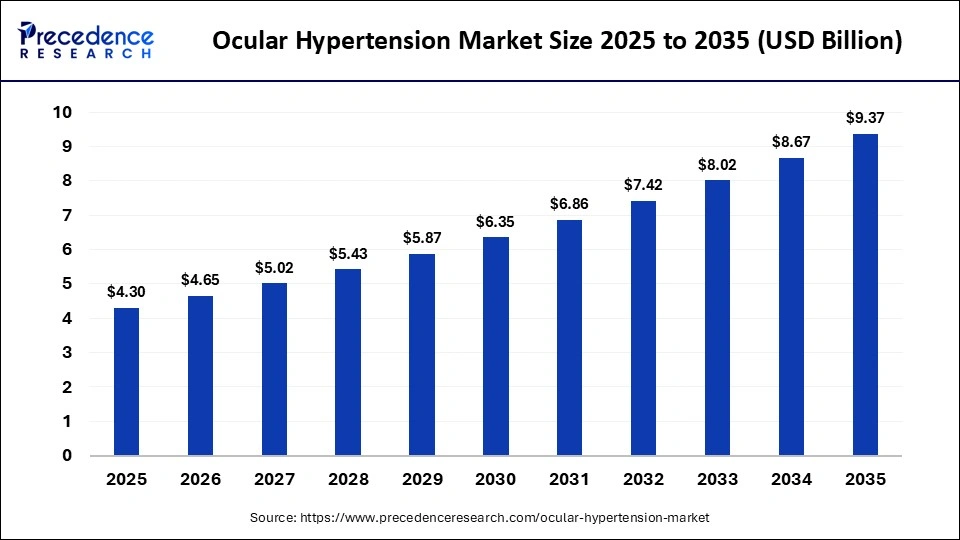
Deepa Pandey, a Healthcare Industry Expert, highlights that the ocular hypertension market has reached USD 4.65 billion in 2026 and is on track to reach USD 9.37 billion by 2035, advancing at a CAGR of 8.10%. Key ocular hypertension market companies shaping the market include Allergan, Inc., Novartis AG, Johnson & Johnson, Pfizer Inc., Santen Pharmaceutical Co., Ltd., Merck & Co., Inc., while major growth segments span By Drug Type, By Treatment Type, By Route of Administration, By Distribution Channel.
Source: https://www.precedenceresearch.com/ocular-hypertension-market
 Get a Sample
 Table Of Content


What is the Ocular Hypertension Market Size in 2026?
The global ocular hypertension market size accounted for USD 4.30 billion in 2025 and is predicted to increase from USD 4.65 billion in 2026 to approximately USD 9.37 billion by 2035, expanding at a CAGR of 8.10% from 2026 to 2035. The expansion of healthcare infrastructure and the growing awareness regarding ocular health are propelling market growth.
Key Takeaways
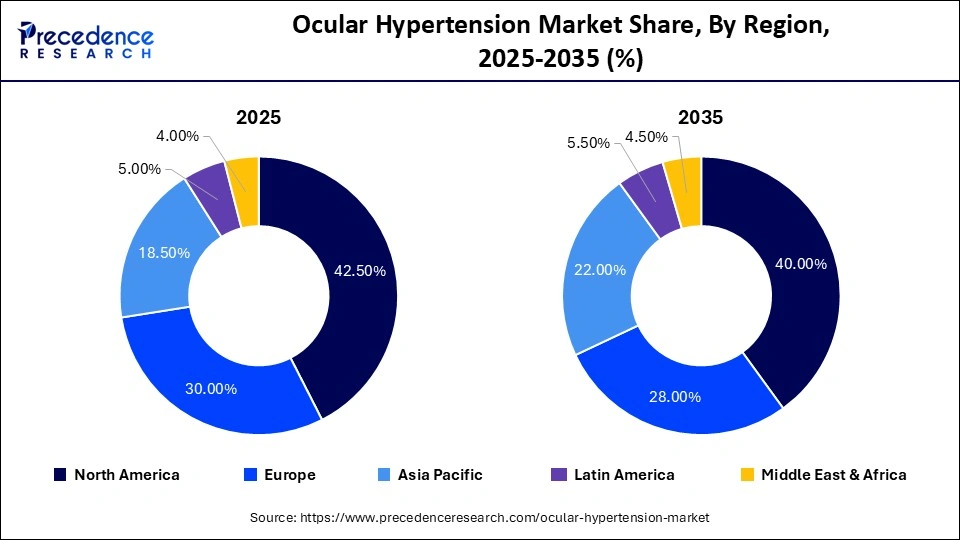
- North America led the ocular hypertension market in 2025 with approximately 42.50% share.
- The Asia Pacific is projected to experience the fastest growth during the forecast period.
- By drug type, the prostaglandin analogs segment dominated the market in 2025 with about 42% share.
- By drug type, the beta-blockers segment held the second-largest share of the market in 2025.
- By treatment type, the medical treatment segment led the market with around 70% share in 2025.
- By treatment type, the surgical treatment segment held the second-largest share of the market in 2025 and is expected to grow at a significant rate between 2026 and 2035.
- By route of administration, the topical segment dominated the market with about 78% share in 2025.
- By route of administration, the oral segment was the second-largest shareholder in 2025 and is expected to grow at a significant rate during the projection period.
- By distribution channel, the retail pharmacies segment dominated the market with nearly 45% share in 2025.
- By distribution channel, the hospitals & clinics segment held the second-largest share of 40% in 2025 and is expected to grow at the fastest rate between 2026 and 2035.
Ocular Hypertension Market Overview
Ocular hypertension is defined as an abnormal elevation of intraocular pressure IOP, i.e., increased pressure within the eye, primarily due to impaired aqueous humor drainage. Under normal conditions, IOP ranges from 11 to 21 mmHg; values above 21 mmHg are generally classified as ocular hypertension. The condition is relatively common, with prevalence estimates of approximately 4.5% to 9.4% among individuals aged over 40 years. Current treatment options include prostaglandin analogs, β-blockers, α-adrenergic agonists, carbonic anhydrase inhibitors, and ρ kinase inhibitors. If left uncontrolled, elevated IOP can damage the optic nerve, typically leading first to peripheral visual field loss and, in more advanced stages, to central vision impairment.
Impact of Artificial Intelligence on the Ocular Hypertension Market
In ophthalmology, artificial intelligence is increasingly embedded in diagnostic and management pathways, with proven applications in ocular hypertension and other ophthalmic conditions. AI-based image analysis and risk stratification enable earlier detection, more accurate prognosis, and more efficient clinical decision-making, as evidenced by improved detection rates in conditions such as pre-eclampsia and intrauterine growth restriction. In ocular hypertension and glaucoma, artificial neural networks and related models analyze imaging data, intraocular pressure trends, and patient-specific risk factors to support personalized treatment and closer monitoring, driving adoption of AI-enabled diagnostic platforms and decision-support tools over the upcoming period.
Ocular Hypertension Market Trends
- Development of Targeted Therapies: Improved understanding of intraocular pressure regulation is enabling the development of targeted therapies that effectively control IOP while minimizing systemic side effects.
- Strategic Collaboration and Portfolio Expansion: Market players are expanding product portfolios through mergers, acquisitions, and partnerships with biotech firms to strengthen capabilities in advanced ocular drug delivery systems.
- Rising Adoption of Topical Eye Drops: The increase in the use of topical eye drops that regulate aqueous humor dynamics is driving demand, offering effective and non-invasive solutions for managing elevated intraocular pressure.
Market Scope
| Report Coverage | Details |
| Market Size in 2025 | USD 4.30 Billion |
| Market Size in 2026 | USD 4.65 Billion |
| Market Size by 2035 | USD 9.37 Billion |
| Market Growth Rate from 2026 to 2035 | CAGR of 8.10% |
| Dominating Region | North America |
| Fastest Growing Region | Asia-Pacific |
| Base Year | 2025 |
| Forecast Period | 2026 to 2035 |
| Segments Covered | Drug Type, Treatment Type, Route of Administration, Distribution Channel, and Region |
| Regions Covered | North America, Europe, Asia-Pacific, Latin America, and Middle East & Africa |
Market Dynamics
Drivers
Rising Disease Burden and Pipeline Expansion
The ocular hypertension market is being driven by the rising global disease burden of glaucoma and related eye disorders, which increases the demand for early diagnosis and treatment to prevent vision loss. Additionally, pipeline expansion with novel drug candidates, sustained-release formulations, and minimally invasive therapies is attracting investment and providing more effective treatment options, further propelling market growth.
Restraint
High Treatment Cost
The major factor restraining the growth of the ocular hypertension market is the high cost of treatment and limited patient adherence to long-term medication regimens. Many therapies require daily eye drops or frequent monitoring, which can lead to poor compliance and suboptimal outcomes. Additionally, the availability of advanced treatments may be restricted in developing regions, further limiting market expansion.
Opportunity
Advancement in Gene Therapy and Biologics
Advancements in gene therapy and biologics are creating significant opportunities in the ocular hypertension market by offering the potential for more targeted, long-lasting, and disease-modifying treatments. Gene therapies aim to address the underlying genetic causes of elevated intraocular pressure, potentially reducing the need for daily medications and improving patient compliance. Biologics, with their precision mechanisms, can provide safer and more effective alternatives to traditional drugs, expanding treatment options and attracting investment in innovative therapies.
Segment Insights
Drug Insights
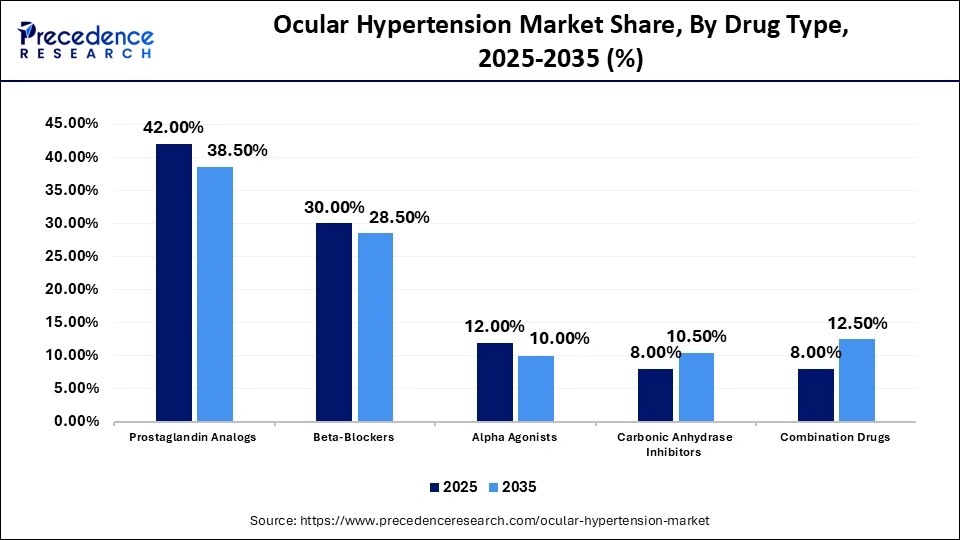
Ocular Hypertension Market Share, By Drug Type, 2025-2035 (%)
| Drug Type | 2025 | 2035 |
| Prostaglandin Analogs | 42.00% | 38.50% |
| Beta-Blockers | 30.00% | 28.50% |
| Alpha Agonists | 12.00% | 10.00% |
| Carbonic Anhydrase Inhibitors | 8.00% | 10.50% |
| Combination Drugs | 8.00% | 12.50% |
The Prostaglandin Analogs Segment Dominated the Market in 2025 With a 42% Share
The prostaglandin analogs segment dominated the ocular hypertension market with around 42% share in 2025, driven by their role as potent topical ocular hypotensive agents for the treatment of elevated intraocular pressure. Bimatoprost and latanoprost, key drugs in this class, reduce intraocular pressure by selectively activating FP receptors relative to the natural agonist PGF2α. Their widespread use, strong efficacy profile, and established safety record collectively support their leading position in the market.
The beta-blockers segment was the second-largest shareholder, holding a 30% share of the market in 2025, supported by their ability to lower intraocular pressure by reducing aqueous humor production from the ciliary body. Timolol decreases IOP by suppressing the formation of natural intraocular fluids, while betaxolol, with negligible local anesthetic activity, avoids corneal desensitization during use. Overall, β-blockers reduce IOP through blockade of sympathetic nerve endings in the ciliary epithelium, leading to decreased aqueous humor production and sustained pressure control.
The alpha agonists segment held a 12% share of the market in 2025, as these agents reduce intraocular pressure (IOP) by inhibiting aqueous humor production and are mainly available in the form of brimonidine, an alpha-2-selective agonist. Brimonidine-purity formulations are typically favored due to superior ocular tolerability while achieving comparable efficacy. Nevertheless, alpha agonists are infrequently utilized in pediatric glaucoma due to their relatively limited IOP-lowering effect and safety concerns within this demographic.
The carbonic anhydrase inhibitors segment accounted for around 8% share of the market in 2025 and is expected to grow at a significant rate in the coming years. These inhibitors lower intraocular pressure by reducing aqueous humor production in the ciliary body epithelium through inhibition of bicarbonate ion formation, thereby decreasing fluid flow. Further, Dorzolamide and brinzolamide are the most frequently used topical carbonic anhydrase inhibitors, as they achieve sufficient corneal penetration to reach the ciliary body.
Treatment Type Insights
Ocular Hypertension Market Share, By Treatment Type , 2025-2035 (%)
| Treatment Type | 2025 | 2035 |
| Medical Treatment | 70.00% | 65.00% |
| Surgical Treatment | 20.00% | 25.00% |
| Others | 10.00% | 10.00% |
The Medical Treatment Segment Dominated the Market in 2025
The medical treatment segment dominated the ocular hypertension market with the highest share of 70% in 2025, driven by the wide availability of medications that effectively reduce intraocular pressure (IOP) in glaucoma and ocular hypertension patients. Medications significantly prevent optic nerve damage. Fixed-dose combinations of commonly used agents have been introduced, offering advantages in terms of convenience, adherence, cost, and safety. Medical therapy is available as topical eye drops that act locally in the eye and as oral drugs, providing flexible and convenient treatment options for patients across disease severities.
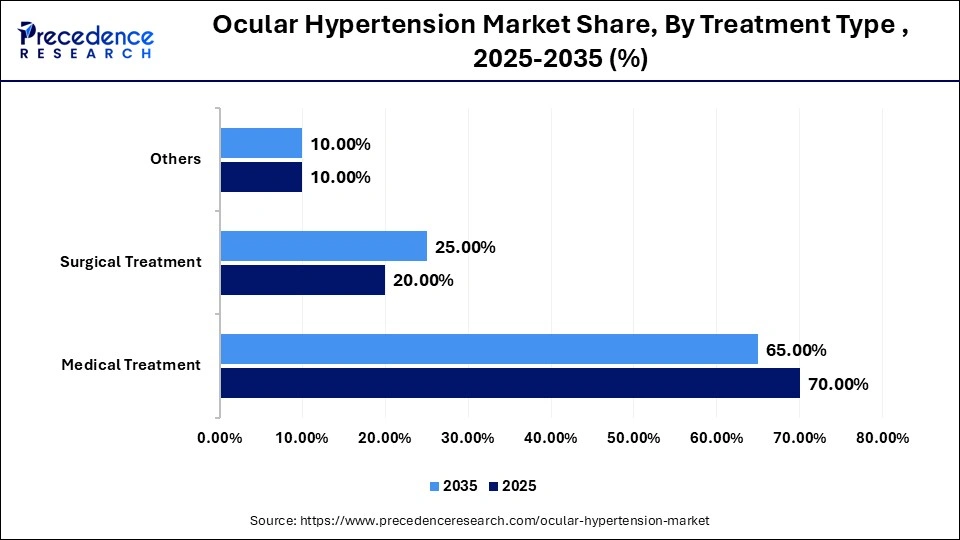
In 2025, the surgical treatment segment was the second-largest shareholder, holding a 20% share, and is expected to grow at a significant rate over the projection period. Surgical treatments primarily include laser surgery, trabeculectomy, and implantable devices. Surgery helps manage and control intraocular pressure effectively, often more consistently than medications alone. This leads to better long-term ocular health and lowers the risk of further optic nerve damage. Additionally, reduced frequency of doctor visits and enhanced visual comfort are key factors driving segmental growth.
Route of Administration Insights
The Topical Segment Dominated the Market With a 78% Share in 2025
The topical segment dominated the ocular hypertension market with around 78% share in 2025. This is mainly due to the proven efficacy of topical medication, including eye drops, which represent the most utilized method for reducing intraocular pressure (IOP). These treatments are not only cost-effective but are also generally well tolerated and widely embraced by both patients and healthcare providers, promoting their adoption.
Ocular Hypertension Market Share, By Route of Administration, 2025-2035 (%)
| Route of Administration | 2025 | 2035 |
| Topical | 78.00% | 72.00% |
| Oral | 15.00% | 18.00% |
| Others | 7.00% | 10.00% |
The oral segment held a 15% share of the market in 2025 and is expected to expand at a significant rate in the upcoming period. This growth is driven by the benefits of the oral administration route, which eliminates the pain and discomfort linked to injections and minimizes the risk of contamination. Furthermore, factors such as the convenience of drug delivery, stability within the gastrointestinal tract, cost-effectiveness, and the simplicity of large-scale production of oral dosage forms contribute to its increased acceptance.
Distribution Channel Insights
The Retail Pharmacies Segment Led the Market With a 45% Share in 2025
The retail pharmacies segment led the ocular hypertension market, accounting for around 45% share in 2025. This is because of their wide accessibility and convenience, allowing patients to easily obtain prescribed medications. Retail pharmacies provide trusted, regulated sources for ophthalmic drugs and often offer counseling and guidance, which enhances patient adherence. Additionally, strong pharmacy networks and collaborations with healthcare providers ensure consistent availability of ocular hypertension therapies, making this channel the preferred choice for patients worldwide.
Ocular Hypertension Market Share, By Distribution Channel, 2025-2035 (%)
| Distribution Channel | 2025 | 2035 |
| Hospitals & Clinics | 40.00% | 38.00% |
| Retail Pharmacies | 45.00% | 48.00% |
| Online Pharmacies | 15.00% | 14.00% |
The hospitals & clinics segment held the second-largest share of 40% in the market in 2025, supported by the rising number of ophthalmology clinics and hospitals. These facilities provide comprehensive treatment, structured post-treatment care, and systematic record-keeping. They also offer multidisciplinary teams for the diagnosis and management of complications, as well as appropriate surgical care, all of which increase patient footfall in these settings.
The online pharmacies segment held a 15% market share in 2025, driven by the increasing number of e-commerce platforms serving both urban and remote areas. Doorstep delivery of medicines significantly enhances consumer convenience. Moreover, these platforms often provide a variety of discounts and coupon codes, making treatments more cost-effective and further supporting segmental growth
Regional Insights
North America Ocular Hypertension Market Size and Growth 2026 to 2035
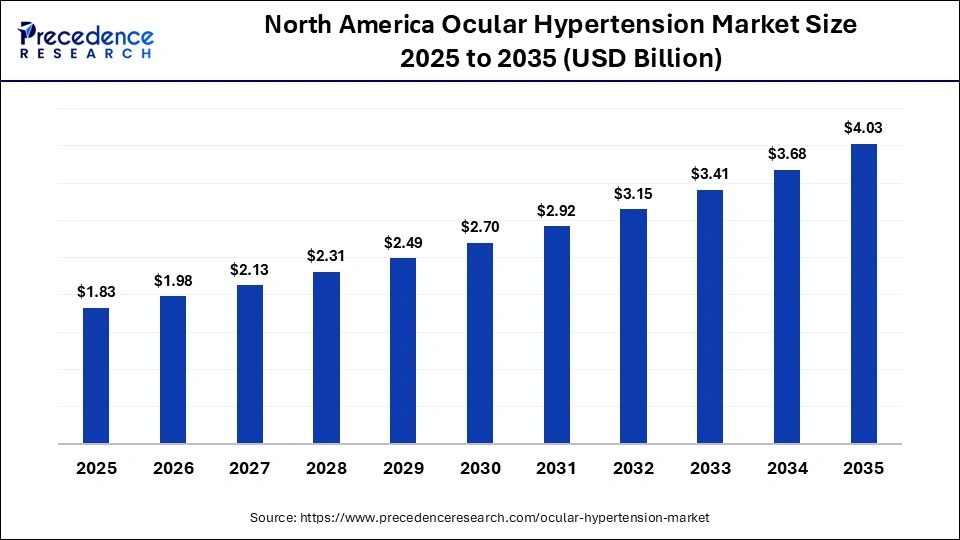
The North America ocular hypertension market size is estimated at USD 1.83 billion in 2025 and is projected to reach approximately USD 4.03 billion by 2035, with a 8.21% CAGR from 2026 to 2035.
North America Held a 42.50% Share of the Ocular Hypertension Market in 2025
North America held a dominant position in the ocular hypertension market by capturing around 42.50% share in 2025, propelled by its sophisticated healthcare infrastructure, elevated disposable incomes, and well-established ophthalmic care systems. It is estimated that between 4% and 10% of Americans aged 40 and above are affected by ocular hypertension. Furthermore, the rise in research and development initiatives focused on innovative therapies contributes significantly to the growth of the market in the region.
U.S. Ocular Hypertension Market Size and Growth 2026 to 2035
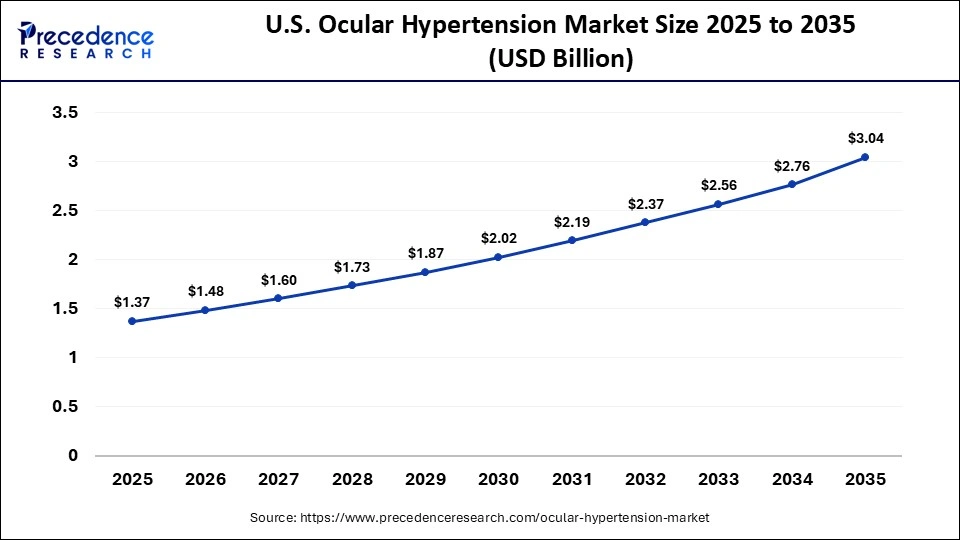
The U.S. ocular hypertension market size is calculated at USD 1.37 billion in 2025 and is expected to reach nearly USD 3.04 billion in 2035, accelerating at a strong CAGR of 8.30% between 2026 and 2035.
U.S. Market Analysis
The U.S. leads the North American market due to the high prevalence of glaucoma and related eye disorders, which drives demand for early detection and treatment. Favorable healthcare infrastructure, widespread awareness about eye health, and easy access to advanced therapies further support market expansion. Additionally, ongoing research, pipeline developments, and the adoption of innovative treatments like sustained-release formulations and minimally invasive procedures are fueling growth in the U.S. market.
Asia Pacific: The Fastest-Growing Region
Asia Pacific held about 18.50% market share and is expected to witness the fastest growth throughout the forecast period, driven by increased access to healthcare services, increased awareness of eye-related conditions, and improvements in living standards. A large and diverse population, along with rising healthcare expenditures, is propelling the adoption of modern treatments. Furthermore, the expansion of healthcare infrastructure, the increasing prevalence of ocular hypertension, and growing investments in R&D, combined with higher disposable incomes, are collectively driving regional market growth.
China Market Analysis
China is a major contributor to the Asia Pacific market, supported by the rising prevalence of glaucoma and an aging population, which increases the need for early diagnosis and effective treatment. Growing awareness of eye health, expanding healthcare infrastructure, and improved access to advanced therapies are further supporting market growth. Additionally, government initiatives promoting chronic disease management and the introduction of innovative drugs and biologics in the market are driving adoption and boosting the overall market in China.
Europe: The Second Largest Market
Europe was the second-largest share of the market in 2025, holding a 18% share, driven by favorable regulatory frameworks and heightened disease awareness. Treatments that are partially or fully reimbursed under statutory health insurance systems facilitate patient access and enhance market penetration. Additionally, ongoing research, the introduction of novel medications and sustained-release formulations, and favorable reimbursement policies are driving market expansion across the region.
Germany Market Analysis
Germany has taken the lead in the European market, driven by the presence of specialized eye hospitals and clinics, which are vital for ensuring treatment accessibility and acceptance. The extensive network of retail pharmacies and a significant emphasis on ophthalmic care support Germany's dominant position in the region.
Ocular Hypertension Market Companies
- Allergan, Inc.
- Novartis AG
- Johnson & Johnson
- Pfizer Inc.
- Santen Pharmaceutical Co., Ltd.
- Merck & Co., Inc.
- GlaxoSmithKline plc
- Aerie Pharmaceuticals, Inc.
- Bausch Health Companies Inc.
- Teva Pharmaceutical Industries Ltd.
- Otsuka Pharmaceutical Co., Ltd.
- Visus Therapeutics, Inc.
- Mylan N.V.
- Inotek Pharmaceuticals
- Sun Pharmaceutical Industries Ltd
Recent Developments
- In January 2026, SpyGlass Pharma submitted its application for an initial public offering on the Nasdaq Global Select Market, using the ticker "SGP." This late-stage biopharmaceutical company is focused on developing sustained-release drug delivery systems for glaucoma and related ocular conditions, with its flagship product being the bimatoprost drug pad-IOL system. Jefferies, Leerink Partners, Citigroup, and Stifel are serving as joint bookrunners for this offering.(Source: https://www.tradingview.com)
- In September 2025, Sagent Pharmaceuticals officially launched its travoprost ophthalmic solution, USP 0.004%, marking the company's entry into the ophthalmic market. Travoprost is indicated for the reduction of elevated intraocular pressure (IOP) in patients diagnosed with open-angle glaucoma or ocular hypertension.(Source: https://www.ophthalmologytimes.com)
- In April 2025, Akums introduced an ophthalmic drop designed for the treatment of glaucoma and ocular hypertension. This combination therapy operates on a dual mechanism of action: Ripasudil facilitates the outflow of aqueous humor, while Timolol decreases its production.(Source: https://pharma.economictimes.indiatimes.com)
Segments Covered in the Report
By Drug Type
- Prostaglandin Analogs
- Latanoprost
- Bimatoprost
- Beta-Blockers
- Timolol
- Betaxolol
- Alpha Agonists
- Brimonidine
- Carbonic Anhydrase Inhibitors
- Dorzolamide
- Brinzolamide
- Combination Drugs
- Fixed-dose combinations
By Treatment Type
- Medical Treatment
- Topical Drugs
- Oral Drugs
- Surgical Treatment
- Laser Surgery
- Trabeculectomy
- Implantable Devices
- Others
- Lifestyle Modifications
By Route of Administration
- Topical
- Eye Drops
- Oral
- Oral Medications
- Others
- Injectable
By Distribution Channel
- Hospitals & Clinics
- Ophthalmology Clinics
- Hospitals
- Retail Pharmacies
- Chain Pharmacies
- Independent Pharmacies
- Online Pharmacies
By Region
- North America
- Latin America
- Europe
- Asia-pacific
- Middle and East Africa
For inquiries regarding discounts, bulk purchases, or customization requests, please contact us at sales@precedenceresearch.com
Frequently Asked Questions
Tags





Ask For Sample
No cookie-cutter, only authentic analysis – take the 1st step to become a Precedence Research client
 Get a Sample
.webp)



 sales@precedenceresearch.com
 Schedule a Meeting
