



Post-traumatic Stress Disorder Treatment Market Size, Key Companies, Company Production Capacity, Healthcare Infrastructure Growth, Product Utilization, Regulatory Compliance, Company Expansion Strategies, Company Investment Strategies, and Market Outlook
Post-traumatic Stress Disorder Treatment Market (By Drug Class: Antidepressants, Anti-Anxiety, Antipsychotics, Other Drug Class; By Demographics: Adult, Children, Geriatric; By Distribution Channel: Hospital Pharmacies, Retail Pharmacies, Other Pharmacies) - Global Industry Analysis, Size, Trends, Leading Companies, Regional Outlook, and Forecast 2026 to 2035
Source: https://www.precedenceresearch.com/post-traumatic-stress-disorder-treatment-market
 Get a Sample
 Table Of Content
What is the Post-traumatic Stress Disorder Treatment Market Size?
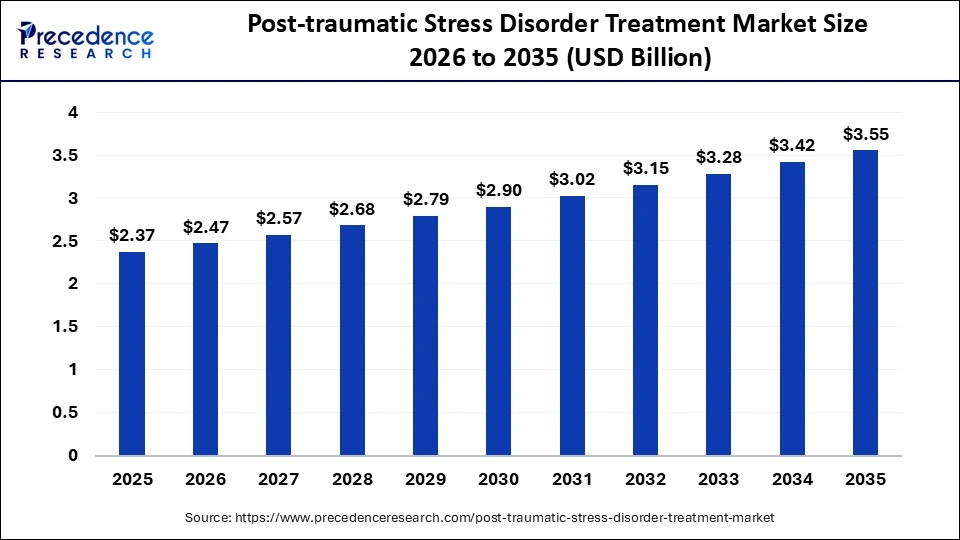
The global post-traumatic stress disorder treatment market size is calculated at USD 2.37 billion in 2025 and is predicted to increase from USD 2.47 billion in 2026 to approximately USD 3.55 billion by 2035, expanding at a CAGR of 4.12% from 2026 to 2035. The post-traumatic stress disorder treatment market is driven by the growing understanding and acceptance of mental health issues.
Post-traumatic Stress Disorder Treatment Market Key Takeaways
- In terms of revenue, the market is valued at $2.37 billion in 2025.
- It is projected to reach $3.42 billion by 2035.
- The market is expected to grow at a CAGR of 4.14% from 2026 to 2035.
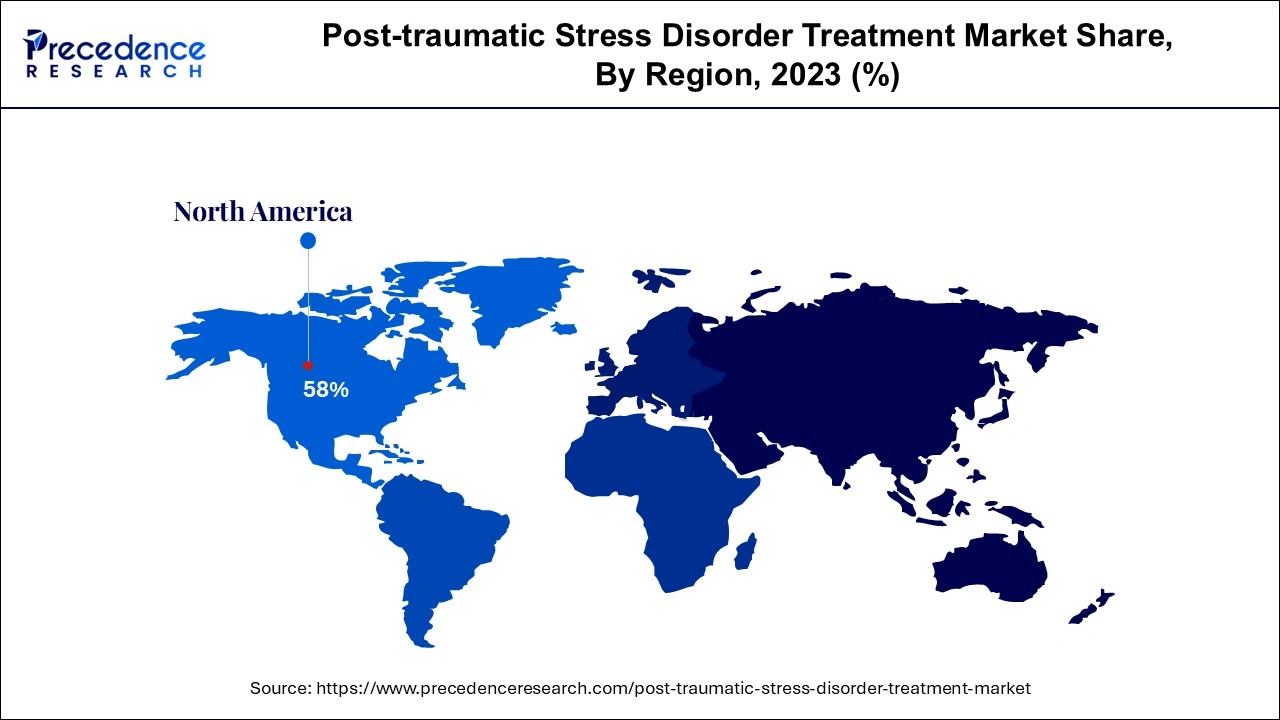
- North America dominated the global market with the largest market share of 58% in 2025.
- Asia Pacific is expected to witness the fastest growth during the forecast years.
- By drug class, the antidepressants segment contributed the highest market share of 40% in 2025.
- By drug class, the anti-anxiety segment is observed to grow at the fastest CAGR during the forecast period.
- By demographics, the adult segment captured the biggest market share of 76% in 2025.
- By demographics, the geriatric segment is projected to witness the fastest growth during the forecast period.
- By distribution channel, the retail pharmacies segment captured the biggest market share of 65% in 2025.
- By distribution channel, the hospital pharmacies segment will grow rapidly during the forecast period.
How is Artificial Intelligence (AI) Enhancing the Post-Traumatic Stress Disorder Treatment Market?
The use of artificial intelligence in the post-traumatic stress disorder treatment market is only one of the many industries where it has become a game-changer. AI has amazing powers, including the ability to process large amounts of information quickly and to make it easier to analyze intricate patterns and relationships. AI can completely transform mental healthcare by offering insights and solutions that were previously unattainable through traditional approaches, particularly in the field of mental healthcare, where comprehending complicated human behaviors and emotions is crucial. It is a game-changing tool that provides virtual therapeutic platforms, customized therapies, and sophisticated detecting techniques. It might increase access to healthcare, lessen stigma, and enhance the effectiveness of treatment.
What overview insight is bolstering the Post-traumatic Stress Disorder Treatment Market?
The prevalent condition known as post-traumatic stress disorder (PTSD) is linked to severe discomfort and compromised functioning. PTSD has a substantial financial impact because of its impact on people's quality of life, productivity at work, and medical expenses. Since these expenses can be decreased by effective therapies, the market is essential to enhancing both economic stability and public health in general. The World Health Organization (WHO) reports that mental health conditions now account for a significant portion of the world's disease burden, with depression alone being the primary cause of disability worldwide.
Market trend
The global market for post-traumatic stress disorder (PTSD) is witnessing a progressive transformation, shaped by rising mental health awareness and increasing investment in neuropsychiatric therapies. One of the key trends shaping the market is the shifting societal attitude toward mental health, which is no longer viewed as taboo but as an essential healthcare priority. With the global rise in PTSD cases stemming from war trauma, domestic abuse, accident-related trauma, and post-pandemic psychological distress, there is growing interest in multi-modal treatments that combine pharmacological approaches with cognitive therapies. Innovative treatment methods, such as virtual reality-assisted exposure therapy, AI-guided behavioural interventions, and long-acting injectable medications, are also gaining traction. Additionally, the surge in digital health platforms and teletherapy services is making mental healthcare more accessible, especially in underserved regions.
Post-traumatic Stress Disorder Treatment Market Growth Factors
- The need for specific treatments is fueled by the high prevalence of PTSD among veterans and active military personnel. The demand for PTSD treatment services for this demographic is very significant due to ongoing wars and military operations around the world.
- Funding for PTSD programs is being increased by numerous governments and organizations, which is contributing to the post-traumatic stress disorder treatment market expansion.
- Better identification and diagnosis of mental health disorders, such as PTSD, are being brought about by increased awareness of these problems. The need for efficient treatment alternatives has increased as more people seek therapy for problems linked to trauma.
- A major factor in motivating people to seek therapy is public health initiatives and education regarding PTSD symptoms.
Post-traumatic Stress Disorder Treatment Market Outlook
- Start-up ecosystem: Numerous start-ups are evolving the PTSD treatment by adopting creative technologies like novel pharmaceuticals, AI, virtual reality (VR) and digital therapeutics. The major leading start-ups are driving and focusing the tech and digital solutions, and the huge support of biotech and pharmaceutical innovators has made space for new tech minds to contribute effectively, keeping science ahead to well explain and follow the specific areas of PTSD.
- Industrial growth overview: The growth meter in the PTSD market is rapidly experiencing a boost with its characterised robust pipeline of novel therapies, technological advancement and accelerating mental health awareness. With the rising prevalence of PTSD, the doors for awareness and destigmatization have opened to reach the unmet, disturbed group of individuals seeking reliable and effective solutions to this unspoken worst condition.
Market Scope
| Report Coverage | Details |
| Market Size by 2035 | USD 3.55 Billion |
| Market Size in 2025 | USD 2.37 Billion |
| Market Size in 2026 | USD 2.47 Billion |
| Market Growth Rate from 2026 to 2035 | CAGR of 4.12% |
| Largest Market | North America |
| Base Year | 2025 |
| Forecast Period | 2026 to 2035 |
| Segments Covered | Drug Class, Demographics, Distribution Channel, and Regions |
| Regions Covered | North America, Europe, Asia-Pacific, Latin America and Middle East & Africa |
Market Dynamics
Drivers
Importance of addressing mental health concerns
PTSD diagnoses have increased as a result of the growing frequency of wars, natural disasters, and other traumatic experiences in the post-traumatic stress disorder treatment market. There is a constant need for treatment solutions since victims of these incidents frequently need long-term mental health support. Globally, the COVID-19 pandemic has also made mental health issues worse. PTSD-like symptoms are currently plaguing a large number of people who have endured loneliness, grief, and the stress of frontline labor. PTSD care is becoming more widely available thanks to cutting-edge and scalable treatment alternatives offered by virtual reality (VR) therapy and AI-based mental health solutions.
Restraint
Insufficient research on personalized medicine
The lack of trustworthy biomarkers to identify PTSD and forecast how well a patient will respond to treatments is a significant obstacle to personalized medicine in the post-traumatic stress disorder treatment market. A person's response to a specific treatment can be predicted using biomarkers, which are biological indicators (genes, proteins, or other quantifiable biological elements). Since there are no reliable biomarkers for PTSD, it is difficult to customize biologically based therapy. Because there are no biomarkers, doctors are forced to use clinical judgment and established diagnostic methods (such as questionnaires or interviews), which do not take into consideration the molecular underpinnings of PTSD.
Opportunity
Advancements in innovative therapies and technologies
One important post-traumatic stress disorder treatment market service, exposure therapy, has been transformed by VR technology. VR exposure treatment offers a novel and regulated method of lowering anxiety and fear reactions by submerging patients in a virtual world where they can safely face up to painful memories or events. Veterans, first responders, and those with complicated trauma histories will find it very helpful. Treatment approaches are changing as a result of new knowledge about the physiological effects of PTSD, such as immunological system failure and hormone imbalances. A comprehensive approach to recovery can be achieved by combining traditional therapy with complementary therapies, including yoga, acupuncture, and nutritional interventions.
Post-traumatic Stress Disorder Treatment Market Segment Insights
Drug Class Insights
The antidepressants segment dominated the post-traumatic stress disorder treatment market in 2024. Millions of people worldwide suffer from PTSD, including those who have served in the armed forces, have experienced abuse, or have been exposed to horrific situations. Because of their accessibility, effectiveness, and proven safety profile, antidepressants are frequently prescribed as the first line of treatment for both civilian and veteran populations. Government programs in nations with sizable veteran populations, like the U.S., place a high priority on treating PTSD with evidence-based methods. Because of their shown efficacy and affordability, antidepressants are commonly incorporated into these programs, increasing their market share.
The anti-anxiety segment is observed to grow at the fastest rate in the post-traumatic stress disorder treatment market during the forecast period. Campaigns and lobbying have raised awareness of PTSD as a mental health illness, which has increased the number of people receiving a diagnosis. Anti-anxiety drugs are increasingly being provided to patients as part of complete treatment plans as medical professionals become more proficient in diagnosing and treating PTSD.
Demographics Insights
The adult segment dominated the post-traumatic stress disorder treatment market in 2024. For individuals with PTSD, pharmacological treatments such as selective serotonin reuptake inhibitors (SSRIs) continue to be the first line of treatment. The FDA has approved drugs like paroxetine and sertraline, especially to treat PTSD. Adults are increasingly using evidence-based psychotherapies such as exposure therapy, eye movement desensitization and reprocessing (EMDR), and cognitive-behavioral therapy.
The geriatric segment will show lucrative growth in the post-traumatic stress disorder treatment market during the forecast period. Many older people have lived through major historical events, such as civil unrest, natural disasters, and wars. PTSD is especially common in veterans of previous battles, including World War II, the Korean War, and the Vietnam War. Diagnoses in this age range are further increased by the critical role that family members and caregivers play in recognizing PTSD symptoms and promoting medical care.
Distribution Channel Insights
The retail pharmacies segment dominated the post-traumatic stress disorder treatment market in 2024. Campaigns to raise awareness of mental health issues mostly rely on retail pharmacies. Numerous pharmacies provide informational materials on PTSD and available treatments, which motivates people to get therapy and buy drugs from them. By incorporating telehealth services, some pharmacies are enhancing accessibility and convenience by enabling patients to visit doctors and fill prescriptions in one location.
The hospital pharmacies segment will grow rapidly in the post-traumatic stress disorder treatment market during the forecast period. Hospital pharmacies are prepared to carry and dispense a wide variety of specialty drugs needed to treat PTSD, such as anxiolytics, antipsychotic drugs, and antidepressant drugs (such as SSRIs like sertraline and paroxetine). Hospital pharmacies are well-equipped to handle and store these medications correctly, which are frequently necessary. Additionally, new drugs that need controlled settings for delivery and monitoring, such as ketamine for treatment-resistant PTSD, are accessible through hospital pharmacies.
Post-traumatic Stress Disorder Treatment Market Regional Insights
U.S. Post-traumatic Stress Disorder Treatment Market Size and Growth 2026 to 2035
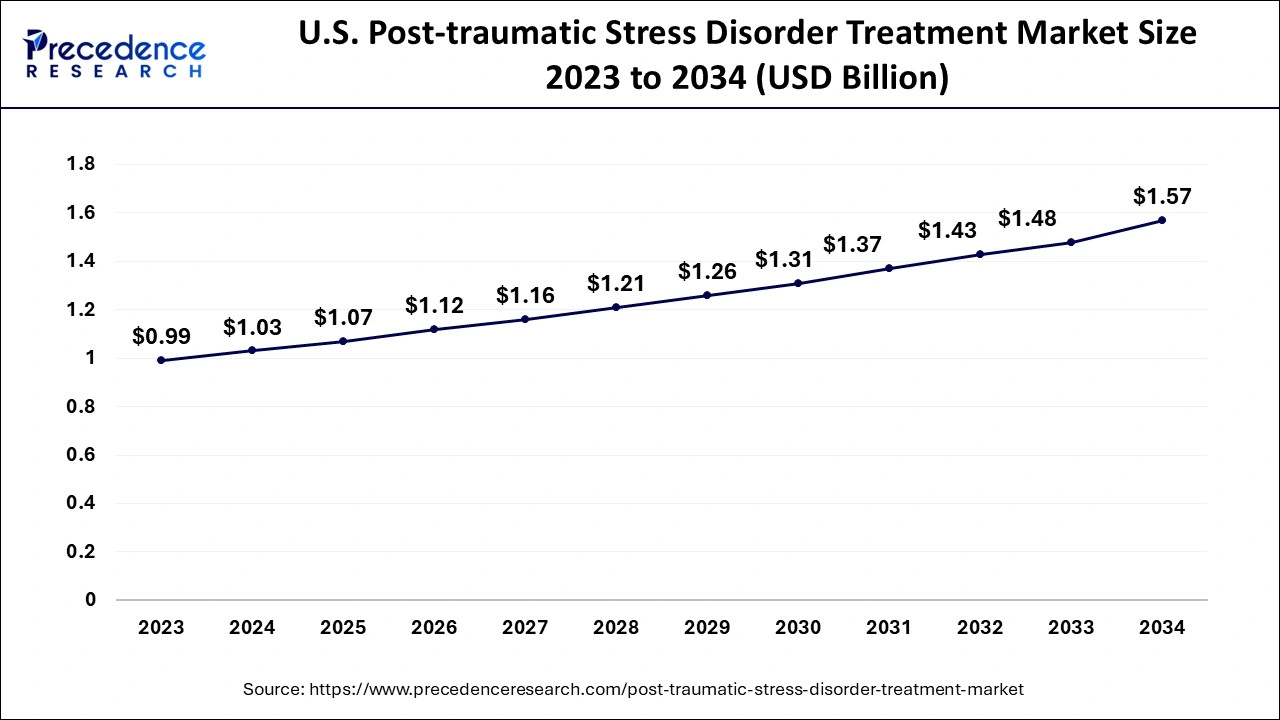
The U.S. post-traumatic stress disorder treatment market size is exhibited at USD 1.12 billion in 2026 and is projected to be worth around USD 1.63 billion by 2035, growing at a CAGR of 4.30% from 2026 to 2035.
North America dominated the post-traumatic stress disorder treatment market in 2025. Veterans, active military personnel, and civilians are more likely to experience PTSD as a result of local and international armed conflicts (such as wars, military engagements, or internal instability). The psychological ramifications of the trauma endured under these circumstances are frequently long-lasting, requiring a variety of therapies, such as counseling, medicine, and rehabilitation.
- In December 2024, Funding for a groundbreaking study examining the efficacy of methylenedioxymethamphetamine-assisted treatment in treating alcohol use disorder (AUD) and post-traumatic stress disorder in Veterans was approved by the U.S. Department of Veterans Affairs. An important turning point in the study of mental health for veterans is marked by the VA's first psychedelic-assisted therapy study in more than 50 years.
North America remains at the forefront of the PTSD market, driven by strong government-backed mental health programmes, advanced pharmaceutical research, and higher diagnostic rates. The United States plays a pivotal role with its significant veteran population, for whom PTSD is a major concern. Government organisations such as the U.S. Department of Veterans Affairs (VA) and National Institute of Mental Health (NIMH) have implemented robust programs to support research, early diagnosis, and timely intervention for PTSD. Canada, too, has launched public health campaigns aimed at increasing public education and removing the stigma associated with PTSD, especially among first responders and healthcare workers. These initiatives, coupled with the presence of top pharmaceutical companies developing PTSD medications and therapies, position North America as the leading region in the global PTSD market.
Key Contributing Countries in North America:
- United States: Large patient population among veterans and trauma survivors; comprehensive VA mental health programmes.
- Canada: Government grants and educational campaigns for early intervention and PTSD awareness.
Asia Pacific is observed to host the fastest-growing post-traumatic stress disorder treatment market during the forecast period. Since Asia is a varied region, different cultural practices, and beliefs have an impact on how mental health issues are viewed and handled. Treatments that are adapted to certain cultural situations are made more acceptable and successful through personalized care. For example, combining contemporary therapy with traditional healing methods can improve patient participation and treatment plan adherence.
Several Asian governments are prioritizing mental health and funding individualized treatment programs. The industry is growing faster as nations like China, Singapore, and India integrate individualized care into their national health systems and increase mental health services.
Asia Pacific is emerging as the fastest-growing market, fuelled by greater public acceptance of psychological health, increased healthcare investment, and expanding digital therapy access. In countries like India, China, Japan, and South Korea, the market is receiving a strong boost from government-funded mental health initiatives, efforts to integrate mental health services into primary healthcare, and the development of mobile therapy platforms. Awareness campaigns targeting stress disorders, particularly in post-COVID recovery environments, have also created a more receptive environment for diagnosis and treatment. Furthermore, the increased prevalence of PTSD linked to social stressors, urban trauma, and natural disasters has led to the rising demand for effective therapy options. As local pharmaceutical companies begin to invest in psychotropic drug development and international firms collaborate with regional healthcare providers, the Asia-Pacific market is poised for sustained growth.
How is Europe proving its advancement in the Post-traumatic Stress Disorder Treatment Market?
Europe has smartly made progress in PTSD treatment via the discovery of technologies and novel pharmacological agents, and with the sincere, promising standardisation of proof based psychotherapies. Furthermore, the initiatives to enhance professional training and improve accessibility of care the region has proven time and again its responsiveness and advancement in the market.
How is Latin America making a transitional shift in the Post-traumatic Stress Disorder Treatment Market?
The transitional shift from Latin America's end and within the Latine/x communities includes the unification of traditional healing practices and the root cultural acceptance and promotion of the evidence-based Western therapies. This idea is entangled in the region's cultural and prestigious values like the emphasis on community, spirituality and family. Science has reached and agreed to this adoption, secretly or openly, either way, boosting the region's strong, balanced belief in health and culture.
Post-traumatic Stress Disorder Treatment Market Value Chain Analysis
- Marketing and sales: The analysis of marketing and sales includes raising awareness regarding PTSD treatment alternatives, offering a patient education kit, mitigating stigma and addressing the importance of detailed information respective of primary care patients and veterans need to understand and learn impromptu to be able to access available services.
- Services: The services analysis in PTSD features monitoring and ongoing support. This is an activity to fuel consistent contribution after the primary treatment time. The services involve offering resources, monitoring symptoms, providing support group connections and managing relapses for long-standing community collaboration and self-care.
- Logistics: The term logistics consists of patient evaluation and intake, including screening, primary patient engagement, collection and diagnosis of patient details and history. The outbound term demonstrates referrals and care coordination. This consists of monitoring the patient's movement via various stages of cooperative referrals to specialists and the care spectrum to further help social services, groups.
Post-traumatic Stress Disorder Treatment Market Companies
- AstraZeneca
- GSK plc.
- Pfizer Inc.
- Merck KGaA
- Jazz Pharmaceuticals, Inc.
- Viatris Inc.
- Otsuka Holdings Co., Ltd
- Aurobindo Pharma
- Bionomics
- Eli Lilly and Company
Recent updates on post-traumatic stress disorder treatment
Breakthrough therapies enhance the PTSD treatment landscape
- On 18 March 2025, therapies that target brain pathways linked to trauma have made significant strides in the PTSD treatment market. Faster and more lasting relief from symptoms like anxiety and flashbacks is the goal of these treatments. Trial results for innovations such as NMDA modulators and neurosteroids are encouraging. These choices are being incorporated into integrated PTSD treatment programs as the healthcare industry moves towards holistic care.
Psychedelic-assisted therapies gain traction
- In April 2025, treatment-resistant PTSD showed encouraging results in trials involving MDMA and psilocybin/ together with psychotherapy; these treatments are lessening the intensity of symptoms and enhancing emotional healing. Increased backing from veterans and mental health advocates has sped up policy and research debates. By late 2025, analysts anticipated FDA approvals, which could lead to the creation of a high-value market niche.
Latest Announcements by Industry Leaders
- In March 2024, following the announcement of good topline data from a Phase IIb study of their main candidate, BNC210, to treat post-traumatic stress disorder, Bionomics stated plans to meet with the U.S. Food & Drug Administration in Q2 2024.
- In September 2023, results from two Phase 3 clinical trials of Otsuka's brexpiprazole as a combination therapy with sertraline for the management of post-traumatic stress disorder (PTSD) were released by Otsuka Pharmaceutical Co., Ltd., and H. Lundbeck A/S.
Recent Developments
- On 9 December 2024, Clearmind Medicine Inc. announced the submission of a patent application for novel compounds aimed at treating PTSD and other mental health issues. This initiative is part of an exclusive licensing agreement with Yissum Research Development Company of the Hebrew University of Jerusalem.
- On 24 September 2024, Seelos Therapeutics Inc. entered into a material transfer agreement with the U.S. Army Medical Material Development Activity to provide its investigational therapy, SLS-002, for a Department of Defense-funded clinical trial targeting PTSD among military personnel.
- In June 2024, Otsuka Pharmaceutical Co., Ltd. and H. Lundbeck A/S announced that the U.S. Food and Drug Administration has determined the supplemental new drug application for brexpiprazole complete for a substantive review for the treatment of adults with PTSP.
- In June 2024, according to a statement from Otsuka Pharmaceutical, Co. Ltd. and H. Lundbeck A/S, the U.S. Food and Drug Administration concluded that the supplemental New Drug Application for brexpiprazole and sertraline for the treatment of adults with PTSD is comprehensive enough to allow for a substantive review.
- In January 2024, Prism for PTSD has officially launched in the United States, according to Gray Matters Health (GMH), a company that develops digital self-neuromodulation therapies for mental health care. Two facilities are currently using Prism for PTSD to treat patients, and there are other clinics in varying stages of preparation.
Post-traumatic Stress Disorder Treatment Market Segment Covered in Report
By Drug Class
- Antidepressants
- Anti-Anxiety
- Antipsychotics
- Other Drug Class
By Demographics
- Adult
- Children
- Geriatric
By Distribution Channel
- Hospital Pharmacies
- Retail Pharmacies
- Other Pharmacies
By Region
- North America
- Asia Pacific
- Europe
- Latin America
- Middle East and Africa
For inquiries regarding discounts, bulk purchases, or customization requests, please contact us at sales@precedenceresearch.com
Frequently Asked Questions





Ask For Sample
No cookie-cutter, only authentic analysis – take the 1st step to become a Precedence Research client
 Get a Sample
.webp)



 sales@precedenceresearch.com
 Schedule a Meeting
