



Ready-to-Cook Food Market Trends, Companies, Revenue / Sales Performance, Food Production, Processing Capacity, Sales Volume, Distribution Performance, Competitive Landscape, and Industry Outlook
Ready-to-Cook Food Market (By Product Type: Frozen Meals, Meal Kits, Refrigerated, Shelf-Stable, Instant/Others; By Distribution Channel: Supermarkets/Hypermarkets, Online Retail, Convenience Stores, Specialty Stores, Other; By End-User/Application: Household/Residential, Foodservice/Restaurants, Institutional/Catering, Others; By Cuisine Type: Western, Asian, Latin American, Middle Eastern & Others) - Global Industry Analysis, Size, Trends, Leading Companies, Regional Outlook, and Forecast 2026 to 2035
Source: https://www.precedenceresearch.com/ready-to-cook-food-market
 Get a Sample
 Table Of Content


What is the Ready-to-Cook Food Market Size?
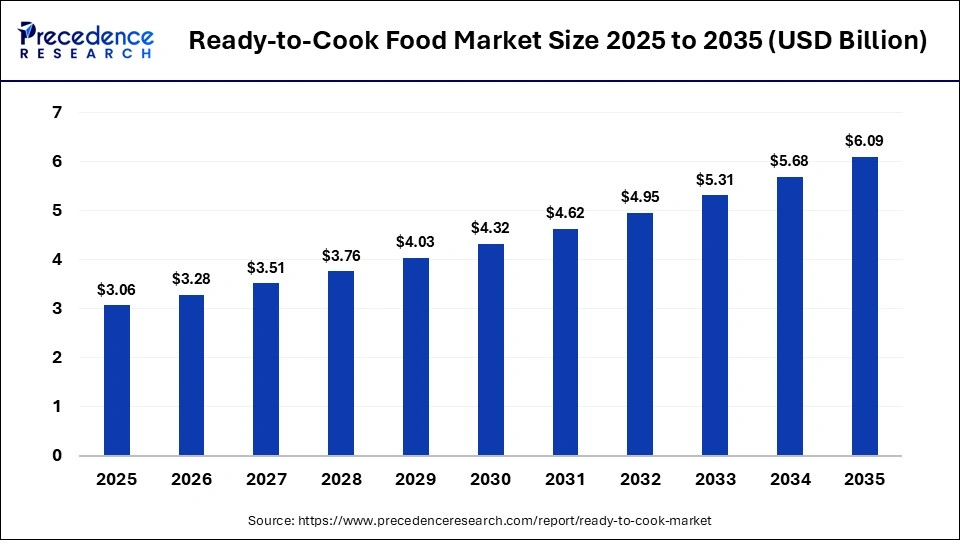
The global ready-to-cook food market size is predicted to increase from USD 3.28 billion in 2026 to approximately USD 6.09 billion by 2035, expanding at a CAGR of 7.12% from 2026 to 2035. The ready-to-cook food market is driven by rising demand for convenient, time-saving meal solutions amid busy lifestyles and increasing workforce participation.
Market Highlights
- North America dominated the market, holding the largest share of 35% in 2026.
- The Asia Pacific is expected to grow at the fastest CAGR of 7.5% during the forecast period.
- By product type, the frozen meals segment held the largest market share of 45% in 2026.
- By product type, the meal kits segment is expected to grow at the fastest CAGR 6.6% between 2026 and 2035.
- By distribution channel, the supermarkets/hypermarkets segment held the largest market share of 40% in 2026.
- By distribution channel, the online retail segment is expected to grow at a robust CAGR of 6.8% in the upcoming period.
- By end-user / application, the household / residential segment held the largest market share of 62% in 2026.
- By end-user / application, the foodservice / restaurants segment is expected to expand at a healthy CAGR of 6.2% from 2026 to 2035.
- By cuisine type, the western segment held the largest market share of 40% in 2026.
- By cuisine type, the Asian segment is expected to grow at the fastest CAGR of 6.4% over the forecast period.
Market Overview
The global ready-to-cook food market has been experiencing rapid growth as more consumers are demanding convenience and time-saving meal options without compromising taste, nutrition, and quality. RTC items such as frozen foods, meal preparations, shelf-stable mixes, and chilled preparations are meant to provide easy cooking as well as provide the same outcome when used by both households and food service providers. Moreover, accessibility of products has been enhanced in both developed and developing economies due to the rise of supermarkets, hypermarkets, and online grocery stores. Increased exposure of consumers to foreign foods, alongside relentless advancement in packaging technology, portion control, and customized meal products also drives the market.
How is AI Revolutionizing the Ready-to-Cook Food Market?
The introduction of AI is transforming the market by increasing efficiency, improving product quality, and enhancing communication with customers across the value chain. Manufacturers are leveraging AI-based demand prediction to more accurately anticipate consumption trends, reduce food waste, and prevent surplus inventory. In product development, AI-powered analytics can analyze consumer preferences, dietary trends, and regional taste profiles to create recipes with a higher likelihood of market success. Additionally, AI enables intelligent pricing strategies and dynamic supply chain optimization, improving delivery schedules and minimizing operational costs.
What are the Major Trends in the Ready-to-Cook Food Market?
- There is a growing demand for ready-to-cook meals among urban consumers who seek convenient meals that save preparation time while retaining a homemade flavor, particularly among working professionals and dual-income families.
- Improved cold chain logistics and freezer penetration are enhancing the availability of frozen and chilled ready-to-cook foods, extending shelf life without compromising taste or nutritional value.
- Greater accessibility through grocery stores, online platforms, and on-demand delivery services is also boosting visibility and encouraging impulse purchases, while efficient last-mile delivery ensures convenience.
- Companies are adopting recyclable packaging with clear ingredient labeling to meet government regulations and satisfy growing consumer demand for environmentally friendly and trustworthy food products.
Market Dynamics
Driver
Expansion of Modern Retail and E-Commerce Channels
A surge in supermarkets, hypermarkets, and online grocery services has increased the visibility and availability of products quite a bit. Now shoppers can easily compare products, check out new meal offerings, or buy ready-to-cook items. And digital retailing has given manufacturers a shot at markets that traditional distribution methods have otherwise overlooked.
Restraint
Cold Chain and Storage Infrastructure Challenges
Numerous ready-to-cook products rely on dependable refrigeration and temperature-controlled supply chains. In developing areas, insufficient cold-chain facilities can result in increased distribution costs, reduced product shelf life, and limited market coverage. The operational challenges usually lead to a lower growth rate than anticipated.
Opportunities
Growing Demand for Health-Oriented Meal Solutions
Consumers are increasingly seeking out offerings that blend convenience with nutritional benefits. This trend results in a number of opportunities for ready-to-cook products with high protein, clean-label ingredients, low sodium, and plant-based components. Brands that can strike a balance between convenience and a health-friendly aspect to grab the consumer can be much more widely appealing.
Segment Insights
Product Type Insights
Why Did the Frozen Meals Segment Contribute the Largest Market Share in 2026?
The frozen meals segment held the largest share of 45% in the ready-to-cook food market in 2026. The dominance of this segment is mainly supported by their long shelf life, consistent product quality, and widespread availability in supermarkets, hypermarkets, and online platforms. Frozen RTC foods are also prepared with the least amount of effort and give the guarantee of consistency and quantity. The innovations in technology in the aspects of freezing, vacuum-sealing, and cold-chain logistics have enhanced the texture, flavor retention, and nutritional value to a large extent, enhancing consumer confidence. Moreover, frozen meals help minimize food waste and simplify meal planning, making them particularly appealing to cost-conscious consumers.
The meal kits segment is expected to grow at a significant CAGR of 6.6% over the forecast period due to the increasing demand for fresh, personalized, and interactive home-prepared meals. Increasing health consciousness and the desire for portion-controlled diets are key factors supporting the adoption of meal kits. The models of subscription-based delivery that are accompanied by mobile applications and online e-commerce platforms have contributed greatly to enhancing accessibility and customer retention. With the growing penetration of digital grocery platforms and the rising consumer interest in cooking experiences, meal kits are expected to capture an increasingly larger share of the market.
Distribution Channel Insights
What Made Supermarkets / Hypermarkets the Dominant Segment in the Ready-to-Cook Food Market?
The supermarkets / hypermarkets segment dominated the market with a 40% share in 2026. This is mainly due to their extensive product range, large shelf presence, and strong brand recognition, which give them a competitive advantage, enabling consumers to easily compare prices and products. Physical retail outlets also provide customers with an opportunity to examine packaging, look at nutritional labels, and assess freshness, that instils confidence in the quality of products. In-store promotions, such as special offers, bundled deals, sampling stands, and loyalty programs, further encourage impulse purchases. Additionally, supermarkets serve as key channels for launching new and seasonal products.
The online retail segment is expected to expand at a 6.8% CAGR in the market during the projection period. This is mainly due to the convenience and accessibility it offers, allowing consumers to order products anytime and from anywhere. The increasing penetration of digital grocery platforms, along with subscription services and personalized recommendations, has made it easier for consumers to discover and purchase RTC foods. Additionally, online channels provide a wider product variety, attractive promotions, and safe, contactless delivery, which appeal to busy and cost-conscious consumers.
End-User/Application Insights
Why Did the Household / Residential Segment Lead the Ready-to-Cook Food Market in 2026?
The household / residential segment led the market, capturing a 62% share in 2026. This dominance is driven by lifestyle changes, including longer working hours, the rise of dual-income families, and limited time for preparing traditional meals. Consumers often perceive home-prepared meals using RTC products as more cost-effective and healthier compared to dining out or ordering delivery. The availability of a wide variety of portioned dishes and healthier options, such as low-fat or high-protein products, further encourages adoption. Additionally, widespread ownership of freezers and modern kitchen appliances supports bulk buying and convenient storage of RTC food, contributing to segmental dominance.
The foodservice / restaurants segment is expected to grow at a healthy CAGR of 6.2% in the upcoming period due to its ability to save preparation time, maintain consistent taste and quality across locations, and address labor shortages. Rising urbanization and increasing consumer preference for dining out are further boosting demand. Additionally, the expansion of online food delivery services has encouraged restaurants to adopt standardized RTC ingredients, which help improve operational efficiency, reduce costs, and shorten service times during peak hours. These factors collectively drive the adoption of RTC foods in the foodservice sector.
Cuisine Type Insights
Why Did the Western Segment Dominate the Market in 2026?
The western segment dominated the ready-to-cook food market with the largest share of 40% in 2026. The segment's leadership is supported by the global popularity of products such as pasta, pizza, burgers, lasagna, and baked snacks, which can be conveniently offered in both frozen and shelf-stable formats. Strong brand recognition, consistent recipes, and a well-established fast-food culture further enhance its appeal, especially among younger consumers. Promotional campaigns and quick-service restaurant menus prominently feature Western RTC foods, reinforcing familiarity and trust in flavor. This combination of accessibility, recognizable taste, and brand familiarity continues to drive high demand in both developed and developing markets.
The Asian segment is expected to grow at the fastest CAGR of 6.4% during the projection period due to the increasing global interest in Chinese, Indian, Thai, Japanese, and Korean food items. Growing cultural exchange, international tourism, exposure to digital media, and migration have significantly increased consumer awareness and acceptance of Asian flavors. Many consumers associate Asian foods with healthy diets, diverse spices, and nutritious cooking methods, further boosting demand. Companies are rapidly expanding their product portfolios to include authentic regional recipes in frozen, chilled, and shelf-stable formats, while retailers and online platforms are dedicating more space to ethnic foods, improving accessibility.
Region Insights
How Big is the North America Ready-to-Cook Food Market Size?
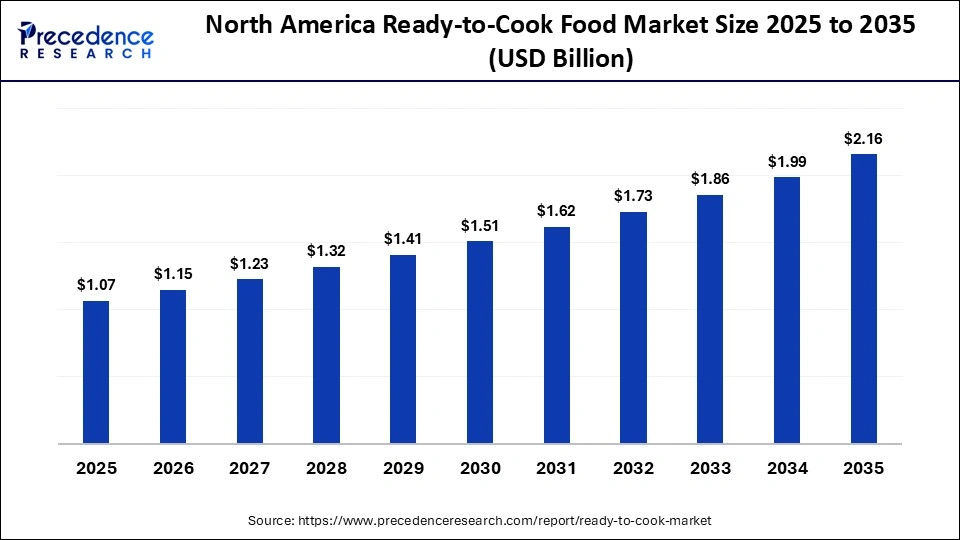
The North America ready-to-cook food market size is estimated at USD 1.15 billion in 2026 and is projected to reach approximately USD 2.16 billion by 2035, with a 7.28% CAGR from 2026 to 2035.
What Made North America the Dominant Region in the Ready-to-Cook Food Market in 2026?
North America dominated the ready-to-cook food market with the largest share of 35% in 2026 due to a high consumption of convenience and packaged foods and elevated income levels. Busy lifestyles, long working hours, and the prevalence of dual-income households have increased reliance on fast and minimally prepared meals. Well-established cold chain infrastructure, modern retail chains, and advanced e-commerce grocery platforms make product accessibility convenient and efficient. Major food producers are also investing heavily in product innovation, introducing healthier, organic, and plant-based RTC options to meet evolving consumer preferences.
What is the Size of the U.S. Ready-to-Cook Food Market?
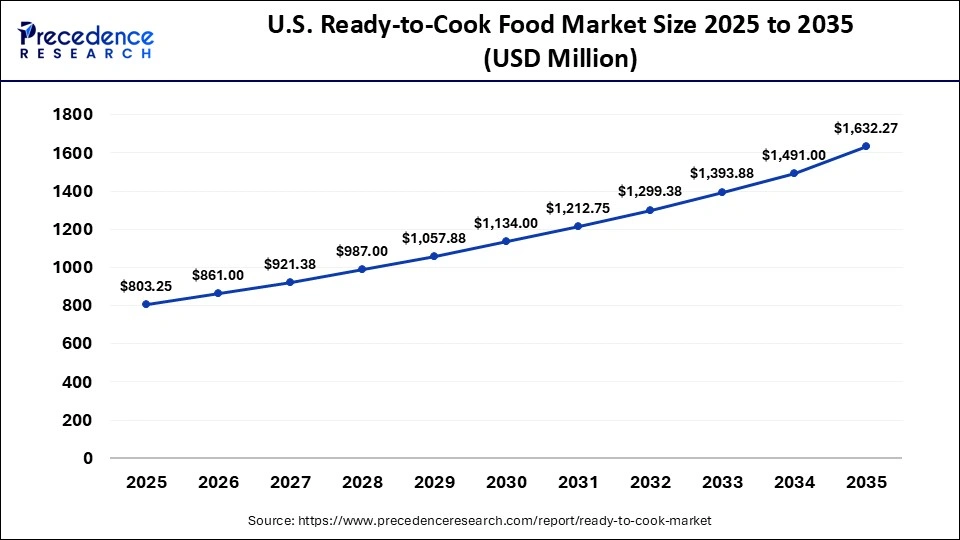
The U.S. ready-to-cook food market size is calculated at USD 861 million in 2026 and is expected to reach nearly USD 1,632.27 million in 2035, accelerating at a strong CAGR of 7.35% between 2026 and 2035.
U.S. Market Trends
The ready-to-cook food market is growing in the U.S. due to busy lifestyles, longer working hours, and the rise of dual-income households, which increase demand for convenient and time-saving meal solutions. Consumers are also increasingly seeking healthier, organic, and plant-based options, driving innovation in RTC products. Well-developed cold-chain infrastructure, modern retail chains, and e-commerce grocery platforms make these products easily accessible.
Why is Asia Pacific Considered the Fastest-Growing Region in the Ready-to-Cook Food Market?
Asia Pacific is expected to grow at the fastest CAGR of 7.5% throughout the forecast period due to the rapid urbanization, increasing middle-class population, and changing food habits. The rise in the number of workers and women's participation in the workforce is boosting the demand for convenient meal options in economies, including China, India, Japan, and Southeast Asian countries. The rise in modern retail formats, increased mobile phone usage, and the development of food delivery and e-commerce have enhanced access to ready-to-cook products even in semi-urban areas.
China Market Trends
China is a major contributor to the Asia-Pacific ready-to-cook food market. This is due to its large population, increasing urbanization, and rising disposable incomes, which drive demand for convenient meal solutions. Changing lifestyles, including longer working hours and a growing number of dual-income households, have boosted the adoption of RTC foods. Additionally, the expansion of modern retail chains, e-commerce grocery platforms, and improvements in cold-chain infrastructure have made RTC products more accessible across the country.
What Makes Europe a Notably Growing Region in the Ready-to-Cook Food Market?
Europe is expected to grow at a notable rate in the market. High consumer awareness around nutrition, sustainability, and ingredient transparency is prompting manufacturers to offer clean-label, organic, and minimally processed RTC products. The increasing number of single-person households and the aging population is driving demand for portion-controlled, easy-to-prepare meals. Additionally, fast-paced urban lifestyles, combined with a high concentration of supermarkets and discount retail chains, support consistent consumption of RTC foods across the region.
Germany Market Trends
The ready-to-cook food demand in Germany concentrates on sustainability and high quality, as consumers want products packaged in an eco-friendly way and with transparency around the origin of ingredients. The German consumer also wants traceable products, which means knowing where their food comes from. There is a growing demand for meal-kit services and prepared meals from local and traceable producers, and the consumer is able to choose based on their preferences and diet.
What Are the Driving Factors of the Ready-to-Cook Food Market in Latin America?
Latin America is expected to grow at a significant CAGR during the forecast period. Latin America's market growth is led by the fast rate of urbanization and the growing pace of life. In Brazil, the demand for ready-to-cook food and frozen food has led to a significant increase, especially in the large cities with more urban lifestyles. Pre-marinated meat and ready-to-eat meals lead this market segment. Increased online grocery sales also support in-home delivery for convenience. Ready-to-eat meals that
Brazil Market Trends
Brazilian consumers favor frozen ready-to-cook dishes due to increasing busy urban lifestyle. People prefer proteins and frozen meals, and there is a rising trend for delicious regional and ready-to-cook dishes that offer local flavors in easy and quick preparations, readily available in larger supermarkets in the form of frozen meals for home consumption.
How is the Middle East and Africa performing in the Ready-to-Cook Food Market?
The Middle East and Africa are expected to grow at a significant CAGR during the forecast period. As the urban population and workforce are increasing in the Middle East and Africa region, demand for convenient and readily available food products has increased. Halal-ready-to-cook meal options and high-end foreign dishes are in huge demand, complemented by improved retail infrastructure, which facilitates home delivery via modern-day convenience stores.
Nigeria Market Trends
The Nigerian ready-to-cook food industry is growing, driven by consumer demand for convenient and ready-to-use food items made with traditional flavors. People opt for ingredients that are precut, pre-marinated, or come in the form of local ready-to-eat mixes. The availability of cold storage facilities is increasing the availability of frozen, ready-to-cook items. Health-oriented food habits and focus on fresh, local ingredients.
Competitive Landscape
The ready-to-cook food market remains moderately fragmented, characterized by a small number of major multinationals and local intermediaries that compete in the market for food by different products, convenience, and brand loyalty. The big names, such as Nestlé S.A., Conagra Brands, Inc., and McCain Foods Limited, are well ahead by having a wide distribution network, established brands, and ongoing product development, and so they have very large market shares.
Companies are expanding through purchases, collaborations, and investments in healthy or high-end meal products. Innovation in clean-label ingredients, plant-based products, advanced freezing methods, and green packaging is an ongoing issue of increasing importance. Market entries may, however, encounter obstacles due to issues of brand recognition, the efficiency of the supply chain, and compliance with regulations; though changing consumer preference toward convenience and health is likely to reshape the competitive dynamics soon.
Who are the Major Players in the Global Ready-to-Cook Food Market?
The major players in the ready-to-cook food market include Nestle S.A., Conagra Brands, Inc., The Kraft Heinz Company, General Mills, Inc., Unilever PLC, McCain Foods Limited, Nomad Foods Ltd., Tyson Foods, Inc., Pinnacle Foods, Inc., Hormel Foods Corporation, Ajinomoto Co., Inc., Bakkavor Group plc, Dr. Oetker GmbH, ITC Limited, and Greencore Group plc.
Recent Developments
- In March 2026, Satchmo Foods launched a ready-to-cook range, delivering fresh, homemade-quality staples affordably and hygienically, addressing consumer challenges of time-consuming preparation and the reliance on expensive, processed foods. (Source: https://www.fnbnews.com)
- In February 2026, DSM Fresh Foods Limited launched Meevaa Foods, a frozen vegetarian snacks brand, with a ₹10 crore investment aimed at expanding frozen food operations, enhancing processing capabilities, and diversifying the product lineup over two to three years. (Source: https://scanx.trade)
- In July 2025, Tyson Simple Ingredient Nuggets will also be released as part of the company's effort to reach health-conscious consumers with a new product using simple and familiar ingredients. The intention to launch was to simplify meal time and, at the same time, meet the rising demand for eating healthy and convenient foods.(Source: https://www.tysonfoods.com)
- In May 2025, Red Planet introduced ready-to-eat meals with the outrageous shelf life of 25 years at the Saudi Food Show 2025 based on the newest freeze-drying technology. The offering was directed toward the preservation of taste and nutritional value so as to support the important sectors and long-term food security.(Source: https://www.zawya.com)
Ready-to-Cook Food Market Segments
By Product Type
- Frozen Meals
- Meal Kits
- Refrigerated
- Shelf-Stable
- Instant/Others
By Distribution Channel
- Supermarkets/Hypermarkets
- Online Retail
- Convenience Stores
- Specialty Stores
- Others
By End-User/Application
- Household/Residential
- Foodservice/Restaurants
- Institutional/Catering
- Others
By Cuisine Type
- Western
- Asian
- Latin American
- Middle Eastern & Others
By Region
- North America
- Europe
- Asia-Pacific
- Latin America
- Middle East & Africa
For inquiries regarding discounts, bulk purchases, or customization requests, please contact us at sales@precedenceresearch.com
Frequently Asked Questions
Tags





Ask For Sample
No cookie-cutter, only authentic analysis – take the 1st step to become a Precedence Research client
 Get a Sample




 sales@precedenceresearch.com
 Schedule a Meeting
