



Rotator Cuff Injury Treatment Market Size, Companies, Share, Patient Volume, Treatment Adoption Rates, Pricing Analysis, Regulatory Landscape, Competitive Positioning, and Demand Forecast
Rotator Cuff Injury Treatment Market (By Treatment: Surgical Treatment, Arthroscopy (tendon repair), Traditional/open surgery, Shoulder replacement surgery, Open tendon repair or transfer, Physiotherapy, Orthopedic braces, Cold compression therapy, Pharmaceutical Treatment; By Injury Severity: Full-Thickness, Partial-Thickness; By Cause: Acute, Degenerative, Repetitive stress, Lack of blood supply, Bone spurs; By End User: Hospitals, Specialty clinics, Others) - Global Industry Analysis, Size, Trends, Leading Companies, Regional Outlook, and Forecast 2026 to 2035
Source: https://www.precedenceresearch.com/rotator-cuff-injury-treatment-market
 Get a Sample
 Table Of Content


What is the Rotator Cuff Injury Treatment Market Size?
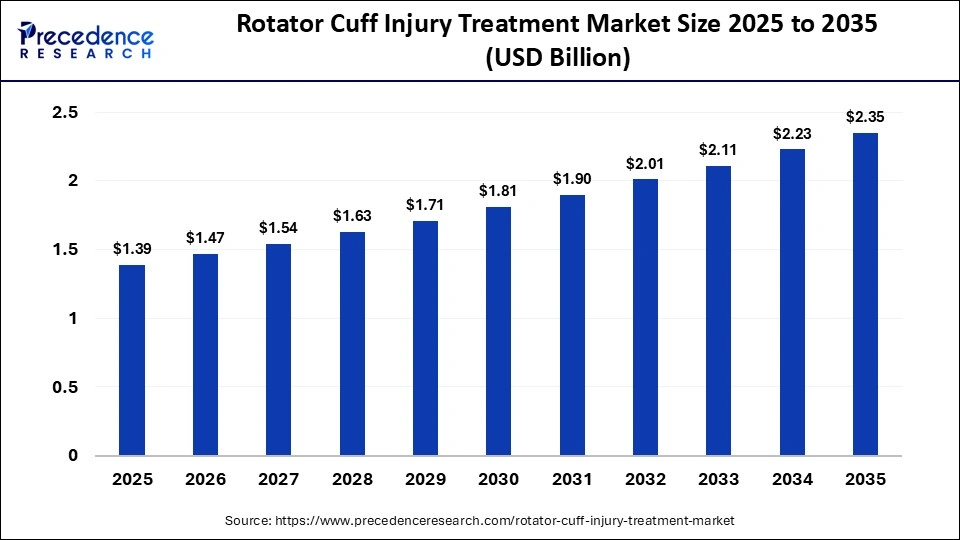
The global rotator cuff injury treatment market size was calculated at USD 1.39 billion in 2025 and is predicted to increase from USD 1.47 billion in 2026 to approximately USD 2.35 billion by 2035, expanding at a CAGR of 5.37% from 2026 to 2035. The market is driven by the increasing prevalence of shoulder injuries and advancements in minimally invasive orthopedic treatments.
Key Takeaways
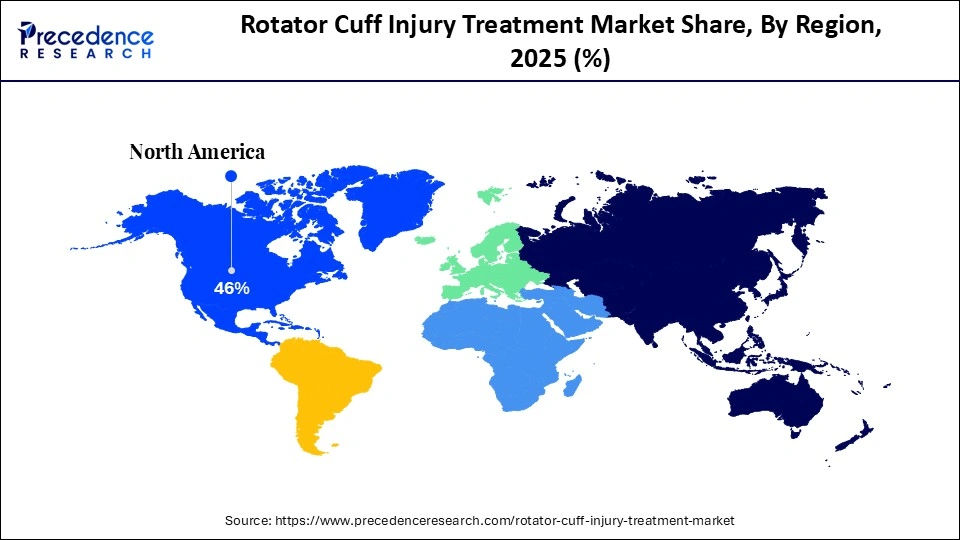
- North America accounted for the largest share of 46% in 2025.
- The Asia Pacific is expected to experience the fastest growth over the forecast period.
- By treatment, the surgical treatment segment held the largest market share in 2025.
- By treatment, the physiotherapy segment is anticipated to show considerable growth in the market over the forecast period.
- By injury severity, the partial-thickness segment held a significant share of the market in 2025.
- By injury severity, the full-thickness segment is anticipated to grow at a significant rate in the market over the forecast period.
- By cause, the acute segment held a significant share of the market in 2025.
- By cause, the degenerative segment is anticipated to grow at the fastest rate in the market over the forecast period.
- By end user, the hospitals segment led the market in 2025.
- By end user, the specialty clinics segment is expected to grow at the fastest CAGR over the forecast period.
Market Overview
The rotator cuff injury treatment market is the branch of the healthcare sector that revolves around the diagnosis, management, and treatment of shoulder rotator cuff tendon injuries. The rotator cuff is a complex of four muscles and tendons that maintain shoulder joint stability and arm movement. The market is experiencing significant growth, as the incidence of shoulder injuries has increased across various age groups. There is an increasing incidence of rotator cuff injuries among athletes and physically active individuals due to increased participation in sports and other physical activities. Also, an aging population is more prone to tendon degeneration and musculoskeletal disorders, which raises the need to find effective ways of treatment.
How is AI Impacting the Rotator Cuff Injury Treatment Market?
The rotator cuff injury treatment market is being revolutionized due to artificial intelligence, improving diagnosis, surgical precision, and recovery outcomes. MRI and ultrasound scans can be compared with AI-driven imaging devices, which help identify tears in the rotator cuff at an early stage with high accuracy. AI decreases errors and enhances tendon fixation through simulating suture placement and alignment, and eventually results in enhanced postoperative recovery. Moreover, multimodal practices are being standardized with the help of AI-assisted robots, which guarantee the same results for hospitals and surgeons and enhance tendon healing.
Rotator Cuff Injury Treatment Market Trends
- Regenerative therapies like platelet-rich plasma and stem cells are gaining attention for tendon repair, inflammation control, and recovery in rotator cuff injuries.
- Rising sports participation and fitness trends have increased shoulder injuries, boosting demand for advanced diagnostics, rehabilitation, and surgical interventions.
- Medical device innovations, including new suture anchors, bioabsorbable implants, and tendon repair systems, are enhancing surgical precision, tendon fixation, and reducing postoperative re-tears.
- Surgical rehabilitation in ambulatory facilities is growing due to lower costs, shorter hospital stays, faster procedures, and improved access to orthopedic care for patients with disabilities.
- Focus on postoperative rehabilitation and physical therapy to improve functional outcomes and reduce re tear rates.
Increasing adoption of biologic scaffolds and implants that support tissue regeneration and long term repair integrity.
Market Scope
| Report Coverage | Details |
| Market Size in 2025 | USD 1.39 Billion |
| Market Size in 2026 | USD 1.47 Billion |
| Market Size by 2035 | USD 2.35 Billion |
| Market Growth Rate from 2026 to 2035 | CAGR of 5.37% |
| Dominating Region | North America |
| Fastest Growing Region | Asia Pacific |
| Base Year | 2025 |
| Forecast Period | 2026 to 2035 |
| Segments Covered | Treatment, Injury Severity, Cause, End User, and region |
| Regions Covered | North America, Europe, Asia-Pacific, Latin America, and Middle East & Africa |
Segment Insights
Treatment Insights
Why Did the Surgical Treatment Segment Lead the Rotator Cuff Injury Treatment Market?
The surgical treatment segment led the market with the largest revenue share in 2025 due to the high incidence of moderate to severe rotator cuff injuries, which require effective and accurate interventions to reestablish shoulder functionality. Arthroscopy is among the first procedures and is a less invasive procedure that takes less time to heal, minimizes tissue damage, and has great results of tendon reattachment. However, complex cases and severe tendon ruptures still necessitate traditional open surgery or tendon transfer techniques to directly repair or reattach healthy tendons and ensure shoulder stability. Severe ruptures in tendons are being repaired or transferred using open tendon repair or transfer techniques, whereby healthy tendons are reattached or transferred to restore shoulder stability.
The physiotherapy segment is expected to grow at a significant CAGR over the forecast period, driven by growing awareness of non-surgical rehabilitation and preventive care. Physiotherapy aims at strengthening shoulder muscles and enhancing flexibility, enabling patients to regain mobility without surgery. Orthopedic braces are used to supplement physiotherapy and give external support to the injured tendon to reduce the strain on the injured tendon, to avoid additional injury, and improve healing when exercise is taking place. Technological developments, including digital physiotherapy platforms and wearable technologies, and tele-rehabilitation, offer customized monitoring and workout programs.
Injury Severity Insights
Rotator Cuff Injury Treatment Market Share, By Injury Severity, 2025 (%)
| Injury Severity | Market Share (2025) |
|---|---|
| Full-Thickness | 39% |
| Partial-Thickness | 61% |
Why Did the Partial-Thickness Segment Dominate the Rotator Cuff Injury Treatment Market?
The partial-thickness segment dominated the market in 2025 because these injuries involve only a portion of the tendon, making them well-suited for conservative and minimally invasive treatments. Patients increasingly prefer physiotherapy, orthopedic braces, and cold compression therapy, which are cost-effective, less invasive, and support faster recovery. The growth of regenerative therapies like platelet-rich plasma injections has further enhanced healing outcomes for partial-thickness tears. Additionally, rising awareness of early intervention, preventive rehabilitation, and digital physiotherapy solutions has accelerated adoption among both active and aging populations.
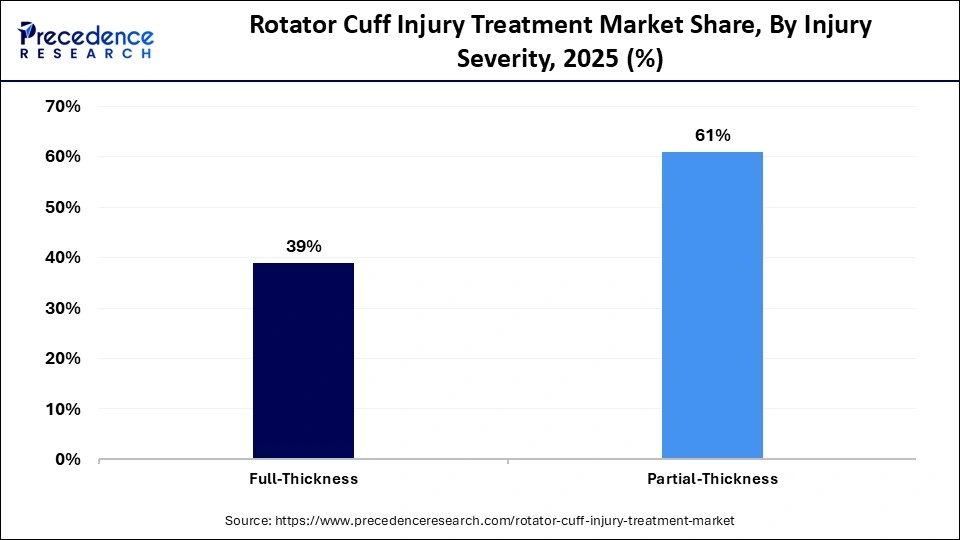
The full-thickness contributed the most revenue in 2025 and is expected to dominate throughout the projected period due to the seriousness of these injuries, which include total tearing of the tendons that result in a lot of pain, weakness, and disability of the shoulder. Advances in arthroscopic and open surgical techniques, along with bioabsorbable implants and suture anchors, are improving surgical outcomes and reducing recovery time. Increasing sports participation and an aging population prone to severe rotator cuff injuries are driving demand for these treatments. Additionally, post-surgical rehabilitation programs and regenerative therapies are further supporting market growth by enhancing tendon healing and long-term shoulder functionality.
Cause Insights
Why Did the Acute Segment Lead the Rotator Cuff Injury Treatment Market?
The acute segment led the market with the largest revenue share in 2025, driven by the sudden onset and severity of injuries caused by trauma, sports, or falls. These injuries often result in partial or complete tendon tears, leading to severe pain, restricted shoulder movement, and the need for prompt medical attention. High-cost surgical interventions such as arthroscopic repair, open surgery, tendon transfer, and shoulder replacement contribute significantly to market revenue. Additionally, rising sports participation, increased risk of accidental injuries, and growing awareness of early intervention strategies are fueling demand for advanced treatment options.
The degenerative segment is expected to grow at a significant CAGR over the forecast period, owing to wear and tear associated with age, long-term overuse, and lower tendon strength. An aging population, increasing awareness of shoulder health, and emphasis on preventive healthcare are major factors driving the segment. Patients increasingly prefer non-surgical interventions such as physiotherapy, orthopedic braces, cold compression, and targeted pharmaceuticals, expanding the market. Additionally, the adoption of minimally invasive surgeries and biologic therapies is rising, particularly for cases unresponsive to conservative treatment.
End-User Insights
Why Did Hospitals Contribute the Most Revenue in the Rotator Cuff Injury Treatment Market?
The hospitals segment held the largest share of the market in 2025, as they offer comprehensive infrastructure and a wide range of treatments for both acute and complex rotator cuff injuries. Hospitals are equipped to perform high-cost surgical procedures such as arthroscopic tendon repair, open surgery, tendon transfer, and shoulder replacement, which drive significant revenue. Patient preference for hospitals is further supported by access to advanced diagnostics, inpatient care, and postoperative rehabilitation including physiotherapy, braces, and cold compression. Additionally, hospitals often serve as referral centers for complex cases, increasing patient inflow and overall market income.
The specialty clinics segment is expected to grow at the fastest rate in the coming years, driven by rising demand for outpatient and minimally invasive care. These clinics focus on physiotherapy, orthopedic consultations, and specialized treatments such as cold compression and orthopedic braces. Growth is further supported by increased awareness of preventive care, rehabilitation programs, and early intervention for partial-thickness and degenerative injuries. Additionally, the adoption of digital physiotherapy, on-demand services, and telehealth enables personalized, self-monitored care, boosting patient preference for outpatient settings.
Regional Analysis
What is the North America Rotator Cuff Injury Treatment Market Size?
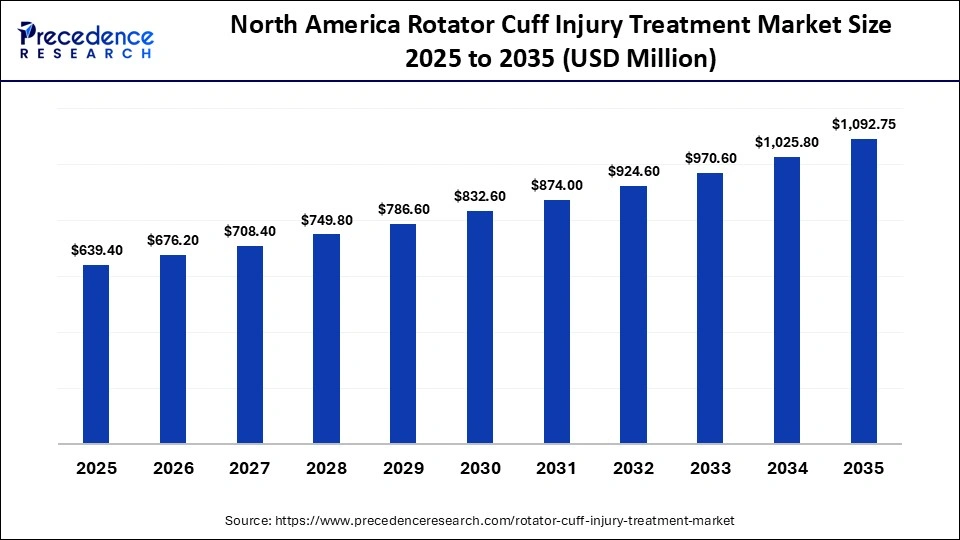
The North America rotator cuff injury treatment market size is estimated at USD 639.40 million in 2025 and is projected to reach approximately USD 1,092.75 million by 2035, with a 5.51% CAGR from 2026 to 2035.
Why Did North America Lead the Global Rotator Cuff Injury Treatment Market?
North America led the rotator cuff injury treatment market by holding a major share in 2025. This is mainly due to its well-developed healthcare infrastructure, growing awareness of orthopedic care, and the popularity of minimally invasive surgical procedures. The region's large aging population and high sports participation contribute to increased demand for shoulder repair treatments. Access to high-cost surgical and regenerative procedures is supported by robust insurance coverage. Moreover, strong R&D in stem cell therapy, platelet-rich plasma, and AI-assisted diagnostics further enhances treatment effectiveness and market growth.
U.S. Rotator Cuff Injury Treatment Market Size and Growth 2026 to 2035
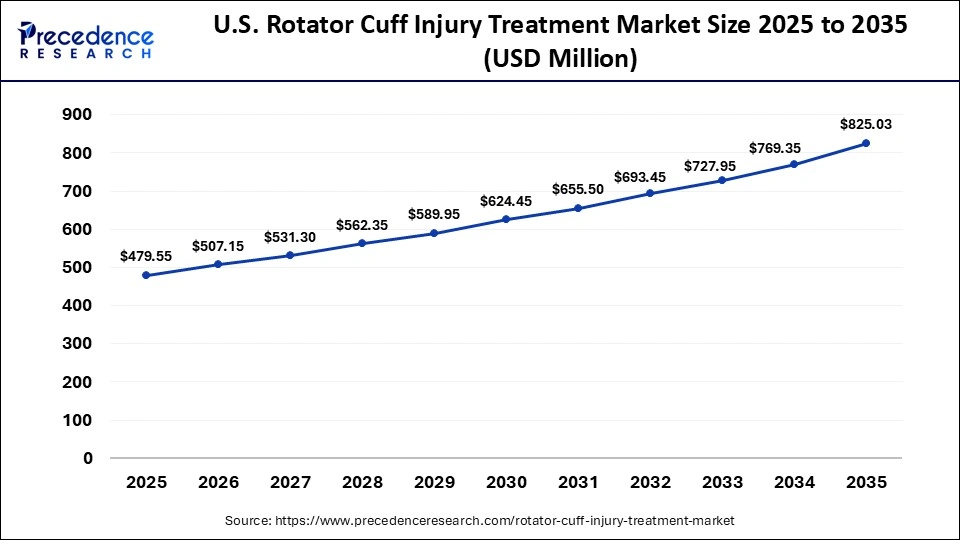
The U.S. rotator cuff injury treatment market size is calculated at USD 479.55 million in 2025 and is expected to reach nearly USD 825.03 million in 2035, accelerating at a strong CAGR of 5.58% between 2026 and 2035.
U.S. Market Analysis
The market in the U.S. is growing due to the rapid expansion into neurology and cardiology, which is broadening the clinical utility of hybrid PET/CT and PET/MRI systems. Market leaders like GE Healthcare and Siemens are solidifying their dominance through strategic acquisitions and high-resolution SiPM technology. These innovations are transforming PET from a specialized tool into an efficient, high-throughput standard for precision molecular diagnostics.
Why is Asia Pacific Experiencing the Fastest Growth in the Rotator Cuff Injury Treatment Market?
Asia Pacific is expected to grow at the fastest CAGR in the market throughout the forecast period, driven by rising healthcare investments, increasing awareness of orthopedic conditions, and wider access to advanced treatments. Countries like China, India, Japan, and South Korea are seeing higher sports participation and fitness activity, leading to a surge in shoulder injuries requiring surgical or regenerative interventions. Growth is further supported by the expanding private healthcare sector, including ambulatory surgical centers and orthopedic clinics, which improve the availability and affordability of treatments. Additionally, rising disposable income, an aging population, and greater patient awareness of early diagnosis are boosting demand for effective rotator cuff therapies.
China Market Trends
The rising cases of sports-related injuries in athletes have increased the demand for orthopedic braces. The Chinese medical device brands are constantly engaged in manufacturing scaffolds using eco-friendly materials to maintain sustainability. In addition, the prominent brands are making significant investments to open new assembly centers due to lower labor wages and the abundance of raw materials at low prices.
What are the Drivers of the European Rotator Cuff Injury Treatment Market?
Europe is expected to grow at a notable CAGR in the foreseeable future. Governments of several nations are engaged in delivering free orthopedic treatments, which in turn increases the demand for fixation systems. The rise in the number of road accidents has increased the application of advanced surgeries for curing bone-related issues. Additionally, insurance providers are launching attractive reimbursement policies, which enable people to take up minimally invasive surgeries.
Germany Market Analysis
The rapid investment by the global hospital chains to establish new orthopedic clinics has increased the application of high-quality orthopedic devices. In addition, the medical device companies are making significant investments to launch an advanced portfolio of biological patches. The increasing prevalence of age-related degenerative disorders further increases the demand for orthopedic implants.
What is the Trend of the Rotator Cuff Injury Treatment Market in Latin America?
Latin America is expected to grow at a considerable CAGR in the upcoming period. The growing cases of soccer-related injuries in Argentina, Brazil, and Uruguay have increased the demand for compression braces. The surging investments by the government for modernizing the healthcare infrastructure further contribute to the growth of this industry. Additionally, the establishment of new orthopedic surgical units by private entities has positively impacted the industry.
Brazil Market Analysis
The increasing prevalence of shoulder pain among the middle-aged population has increased the demand for physiotherapy. Additionally, the research and development activities in stem-cell therapy also add to the industrial growth. The growing consumer preference to adopt over-the-counter drugs for managing pain and swelling has driven the market expansion.
What are the Boosting Factors of the Rotator Cuff Injury Treatment Market in the Middle East and Africa?
The Middle East and Africa are considered to be a significantly growing area, due to the orthopedic hospitals in the UAE and Qatar that are integrating advanced robots in operating theatres to perform arthroscopy. Additionally, the governments are investing rapidly in establishing new ambulatory surgical centers to deliver emergency treatments. The proliferation of medical device startups, as well as the surging prevalence of arthritis, has increased the demand for PRP therapy.
South Africa Market Trends
The growing investments by the pharmaceutical brands in launching advanced therapies for treating joint pain have accelerated the market expansion. The rising cases of cuff injuries in cricketers, along with the presence of various treatment centers such as Gauteng and Western Cape, increase the demand for high-quality orthopedic devices.
Competitive Landscape
The rotator cuff injury treatment market is moderately consolidated with a few prominent players. Leading brands, such as Arthrex, Smith & Nephew, Stryker, Zimmer Biomet, and Johnson and Johnson, have generated more than 70% share of this industry. These companies are engaged in the design and production of biologics and instruments to cater to the end-users. Also, these brands are adopting several strategies, such as product launches and business expansions, to expand their global outreach.
Top brands are making significant investments to deploy AI and blockchain in their manufacturing to scale up their businesses. This market faces numerous hurdles due to the high cost of surgical procedures and several side effects of orthopedic braces. The growing popularity of wearable devices and the surging adoption of robotic surgeries will reshape the industry in the future.
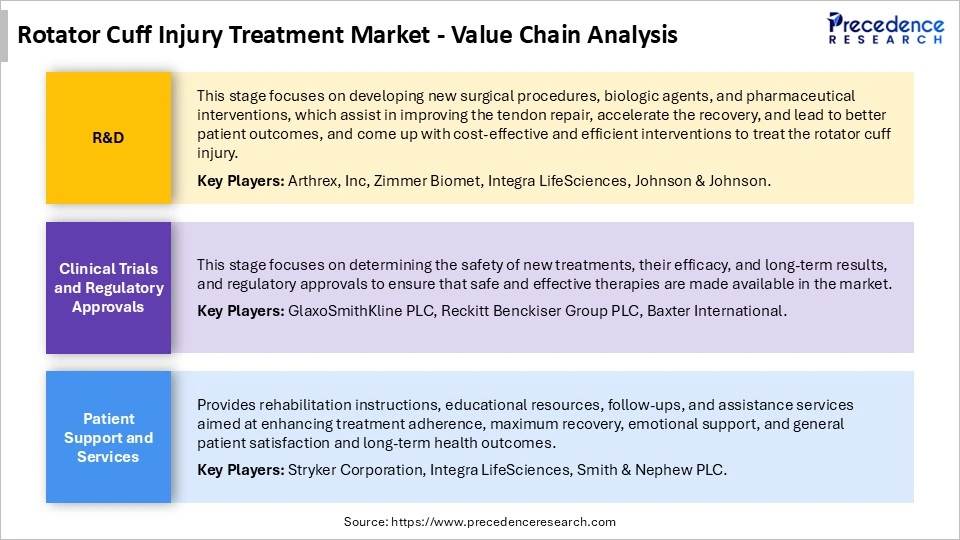
Rotator Cuff Injury Treatment Market Value Chain Analysis
Rotator Cuff Injury Treatment Market Companies
- Arthrex, Inc
- Zimmer Biomet
- FH ORTHOPEDICS S.A.S
- Integra LifeSciences
- Reckitt Benckiser Group PLC
- Evolutis India Pvt. Ltd.
- Johnson & Johnson
- GlaxoSmithKline PLC
- CONMED Corporation
Recent Developments
- In February 2025, Atreon Orthopedics received the 510(k) FDA and launched the BioCharge Autologic Matrix, a 100% resorbable synthetic rotator cuff repair scaffold. The implant improves healing of tendons, strengthens the junction of sutures and tendons, reduces the chances of re-tears, and makes arthroscopic implantation easier, thus increasing the efficiency of surgery.
(Source: https://www.prnewswire.com) - In December 2024, Atreon Orthopedics announced that it had performed over 10,000 surgeries with its ROTIUM Bioresorbable Wick using the device. This breakthrough means that there is more progress in the tendon-to-bone healing technology and more utilization of the platform in orthopedic practice.
(Source: https://www.prnewswire.com) - In March 2024, a team of scientists at Columbia University, headed by Dr. Stavros Thomopoulos, came up with a new device that was based on the structure of python teeth. The innovation increases tendon fixation to bone during rotator cuff repair, therefore minimizing the possibility of re-tears and increasing the rate of patient recovery.
(Source: https://www.engineering.columbia.edu)
Segments Covered in the Report
By Treatment
- Surgical Treatment
- Arthroscopy (tendon repair)
- Traditional/open surgery
- Shoulder replacement surgery
- Open tendon repair or transfer
- Physiotherapy
- Orthopedic braces
- Cold compression therapy
- Pharmaceutical Treatment
By Injury Severity
- Full-Thickness
- Partial-Thickness
By Cause
- Acute
- Degenerative
- Repetitive stress
- Lack of blood supply
- Bone spurs
By End User
- Hospitals
- Specialty clinics
- Others
By Region
- North America
- Latin America
- Europe
- Asia-pacific
- Middle and East Africa
For inquiries regarding discounts, bulk purchases, or customization requests, please contact us at sales@precedenceresearch.com
Frequently Asked Questions





Ask For Sample
No cookie-cutter, only authentic analysis – take the 1st step to become a Precedence Research client
 Get a Sample




 sales@precedenceresearch.com
 Schedule a Meeting
