



Ischemia Reperfusion Injury Treatment Market Size, Companies, Share, Patient Volume, Treatment Adoption Rates, Pricing Analysis, Regulatory Landscape, Competitive Positioning, and Demand Forecast
Ischemia Reperfusion Injury Treatment Market (By Indication: Heart injury, Kidney injury, Intestine injury, Other injury; By End-User: Hospitals, Specialty Clinics) - Global Industry Analysis, Size, Trends, Leading Companies, Regional Outlook, and Forecast 2026 to 2035
Source: https://www.precedenceresearch.com/ischemia-reperfusion-injury-treatment-market
 Get a Sample
 Table Of Content


What is the Ischemia Reperfusion Injury Treatment Market Size in 2026?
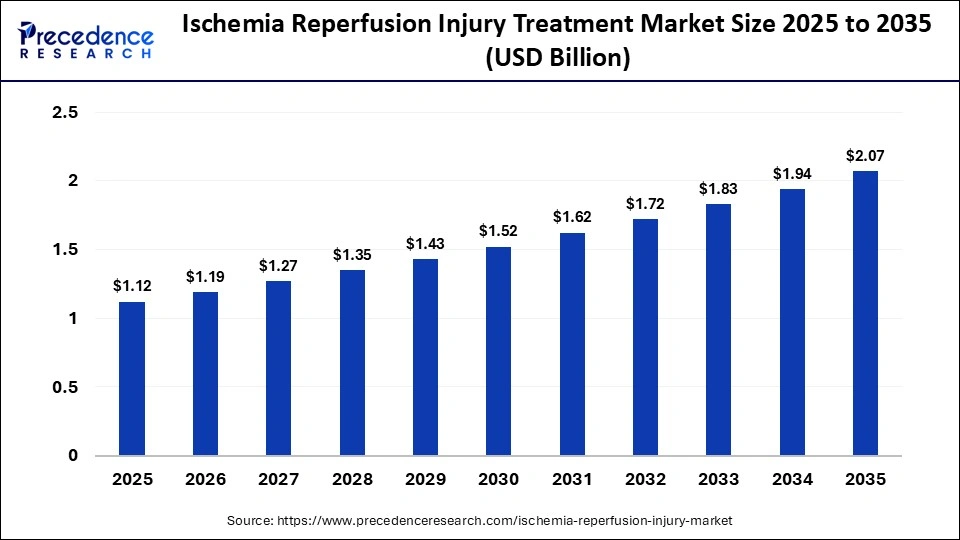
The global ischemia reperfusion injury treatment market size accounted for USD 1.12 billion in 2025 and is predicted to increase from USD 1.19 billion in 2026 to approximately USD 2.07 billion by 2035, expanding at a CAGR of 6.32% from 2026 to 2035. The market is dedicated to the development of therapies aimed at the reduction of tissue damage that develops when the blood supply to organs is restored after a certain duration of ischemia or lack of oxygen. Such injuries tend to be linked with myocardial infarction, stroke, organ transplantation, and traumatic vascular events, so the process of therapeutic intervention is vital in the contemporary healthcare environment.
Key Takeaways
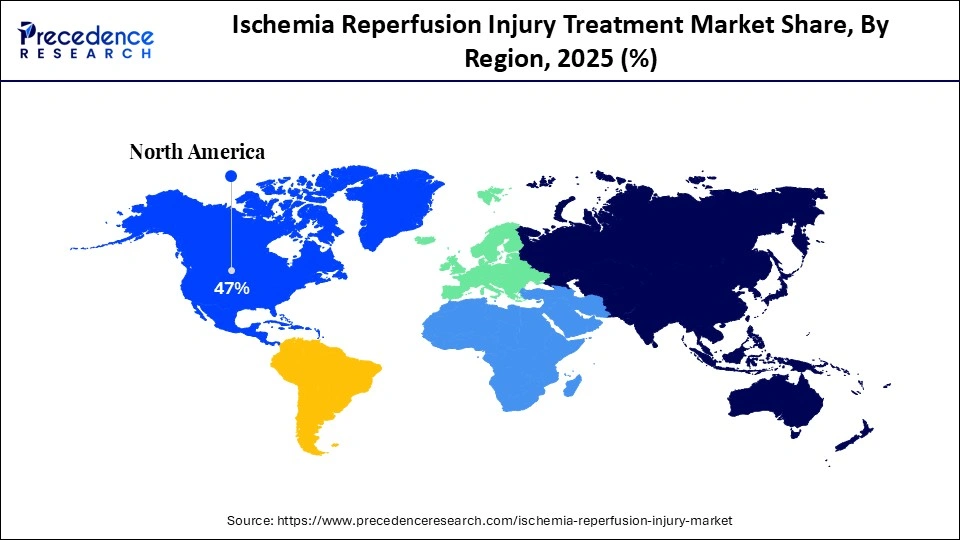
- North America dominated the global market with the largest market share of 47% in 2025.
- Asia-Pacific is expected to grow at the fastest CAGR in the market during the forecast period.
- By indication, the heart injury segment held a dominant position in the market in 2025.
- By indication, the kidney injury segment is expected to grow at the fastest CAGR in the market between 2026 and 2035.
- By end-user, the hospitals segment contributed the biggest market share of 59% in 2025.
- By end-user, the specialty clinics segment is expected to grow with the highest CAGR in the market during the studied years.
Ischemia Reperfusion Injury Treatment: Saving Organs in a Critical Window of Recovery
The ischemia reperfusion injury treatment market is expanding rapidly because of the rising number of cardiovascular and ischemic conditions globally. The disease poses a significant clinical dilemma since the recovery of blood supply may breed a counterproductive reaction in terms of inflammatory reactions, oxidative stress, and cell destruction.
Pharmaceutical and biotechnology companies are busy trying to come up with therapeutic agents that are meant to reduce tissue damage and enhance the recovery of organs. Also, there is an upsurge in the integration of sophisticated drug delivery systems and biologic therapies that are broadening the treatment environment and providing new innovation opportunities in this market.
How is AI Transforming the Ischemia Reperfusion Injury Treatment Market?
The concept of artificial intelligence (AI) is becoming more significant in the creation of ischemia reperfusion injury treatment therapies. Complex biological data are being analyzed using machine learning models, which have allowed researchers to recognize molecular targets in relation to oxidative stress and inflammatory pathways. AI-based drug discovery systems are rapidly discovering new drugs that can save tissues in case of reperfusion. Optimization of clinical trials and predictive modelling of treatment responses possess these technologies to aid in enhancing the effectiveness of treatment development.
Ischemia Reperfusion Injury Treatment Market Trends
- Increased Ultimate Rate of Ischemia-Related Disorders: The increasing global pathology burden of ischemia-related diseases, including myocardial infarction, stroke, and peripheral artery disease, is highly contributing towards the need to develop effective reperfusion injury treatment.
- Development of Therapeutic Interventions: The progress of pharmacological studies has resulted in novel methods of treatment focusing on the molecular pathways of reperfusion injury.
- Federal Grants and Projects with Other Agencies: Studies on ischemia reperfusion injury are being increasingly backed by government organizations and research institutions. These programs are being funded and researched through conferences, and innovative methods of therapy development are being encouraged.
- Engagement of Pharmaceutical Firms: The pharmaceutical industry is also working on designing drugs and biologics that would prevent or limit reperfusion injury. The fast-track development of targeted therapies is being facilitated by the strategic collaboration of biotech startups with established pharmaceutical companies.
Market Scope
| Report Coverage | Details |
| Market Size in 2025 | USD 1.12 Billion |
| Market Size in 2026 | USD 1.19 Billion |
| Market Size by 2035 | USD 2.07 Billion |
| Market Growth Rate from 2026 to 2035 | CAGR of 6.32% |
| Dominating Region | North America |
| Fastest Growing Region | Asia Pacific |
| Base Year | 2025 |
| Forecast Period | 2026 to 2035 |
| Segments Covered | Indication, End-User, and Region |
| Regions Covered | North America, Europe, Asia-Pacific, Latin America, and Middle East & Africa |
Segmental Insights
Indication Insights
Which Indication Segment Dominated the Ischemia Reperfusion Injury Treatment Market?
The heart injury segment dominated the market in 2025, due to the rising global incidence of cardiovascular diseases. Other medical conditions, like myocardial infarction, have long periods of limited blood flow, then reperfusion during the treatment process, and thus cause extensive tissue damage. Consequently, there has been an increase in cardioprotective therapies aimed at minimizing oxidative stress and inflammatory reactions in reperfusion, which are commonly used in clinical practice.
Pharmacological agents and supportive therapies that should reduce myocardial cell death and maximize patient survival outcomes are becoming the norm in hospitals and cardiac centers. Also, current studies of mitochondrial protection and focused molecular therapies are becoming increasingly powerful in supplementing interventions of cardiac reperfusion injury. The high number of patients who have experienced ischemic problems due to the heart still supports the predominance of this segment.
The kidney injury segment is expected to show the fastest growth in the forecasted period, because of the rising prevalence of acute kidney injury in relation to surgery, organ transplant, and critical care procedures. Renal ischemia reperfusion injury is a common phenomenon that is experienced during kidney transplantation, in which a temporary failure of blood flow may lead to cellular damage on restoration of circulation.
The need to reduce renal injury in patients through the implementation of preventive treatment is fuelling the demand for protective therapies. The area of research has been moving towards the creation of drugs that would inhibit inflammatory pathways and oxidative stress response in renal tissues. More than that, technologies in biomarker development and early diagnostic processes are enhancing the management of ischemic injuries of the kidney. All these elements will lead to the fast growth of this segment.
End User Insights
How the Hospitals Segment Led the Ischemia Reperfusion Injury Treatment Market?
The hospitals segment led the market in 2025 because hospitals are the key to the treatment of acute ischemic diseases, including heart attacks, strokes, and organ transplantation processes. Such facilities have advanced diagnostic and intensive care facilities, and expert medical staff that can manage advanced, complex ischemic injuries. There are numerous instances of reperfusion therapies that are administered in case of emergency medical procedures, and therefore, a hospital environment is fundamental to the successful administration of these therapies.
Hospitals are the primary centers of clinical studies and testing novel therapeutic methods to combat ischemia-reperfusion injury. Moreover, cardiologist/nephrologist/critical care teams team up to enhance the outcomes of patients. The ability to concentrate the specialized medical infrastructure among hospitals supports the segment's growth.
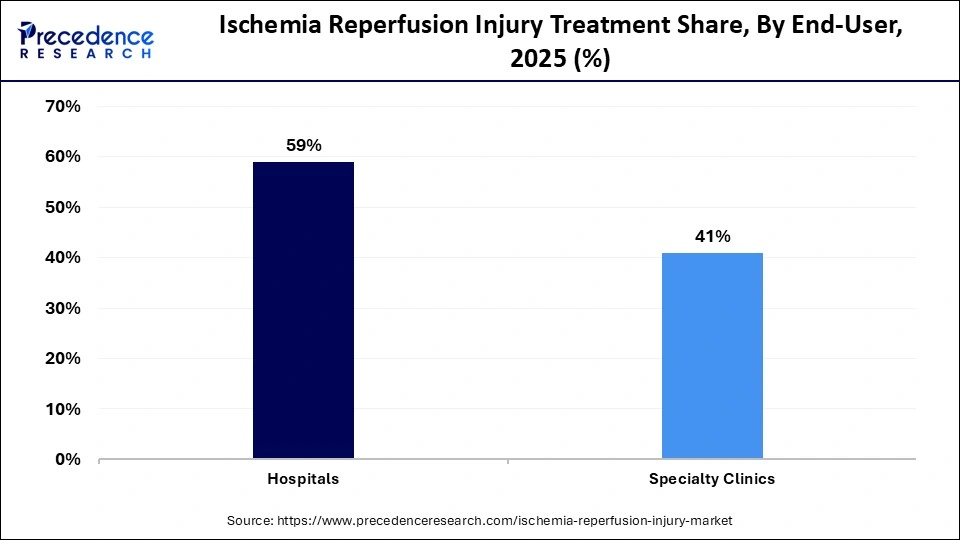
The specialty clinics segment is expected to witness the fastest growth in the market over the forecast period, due to the adoption of special treatment centers by healthcare systems. Specific care of cardiovascular, renal, and neurological conditions is performed in these clinics, and, therefore, they provide extremely specialized therapeutic approaches. Current developments in diagnostic methods and minimally invasive modes of treatment have allowed specialty clinics to develop more capabilities in terms of treating ischemic conditions.
Also, such institutions may offer their services as full-time follow-up services and rehabilitation, assisting patients in the course of rehabilitation. This segment is also on the rise because of an increase in the preference for specialized and personalized medical care for patients. Specialty clinics are increasingly emerging as a significant source of complex treatment options as the process of healthcare service delivery changes.
Regional Insights
North America Ischemia Reperfusion Injury Treatment Market Size and Growth 2026 to 2035
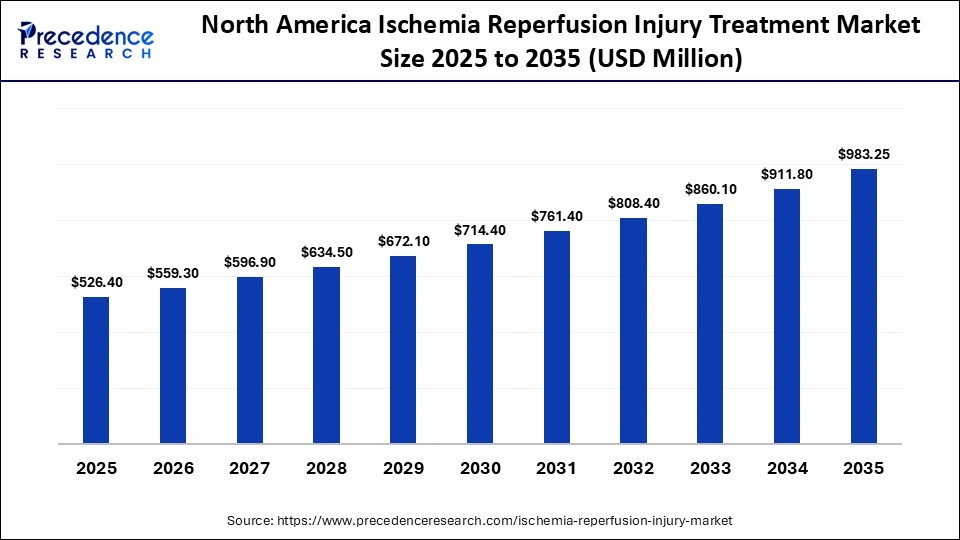
The North America ischemia reperfusion injury treatment market size is estimated at USD 526.40 million in 2025 and is projected to reach approximately USD 983.25 million by 2035, with a 6.45% CAGR from 2026 to 2035.
Why North America Dominated the Ischemia Reperfusion Injury Treatment Market?
North America held a major market share in 2025 because of the high level of availability of appropriate healthcare infrastructure and growing biomedical research activities. A high prevalence of cardiovascular diseases is a contributor to the high demand for effective therapies that would help in minimizing the tissue damage caused by reperfusion. Biotechnology and pharmaceutical businesses in the region have been aggressively investing in research and development of new treatment methods.
Secondly, the existence of established trial networks in clinical trials helps in the development of new therapeutic agents and their commercialization. Favourable regulatory policies and effective healthcare expenditure also promote the use of high-level treatment solutions. All these make North America the foremost market in the region.
U.S. Ischemia Reperfusion Injury Treatment Market Size and Growth 2026 to 2035
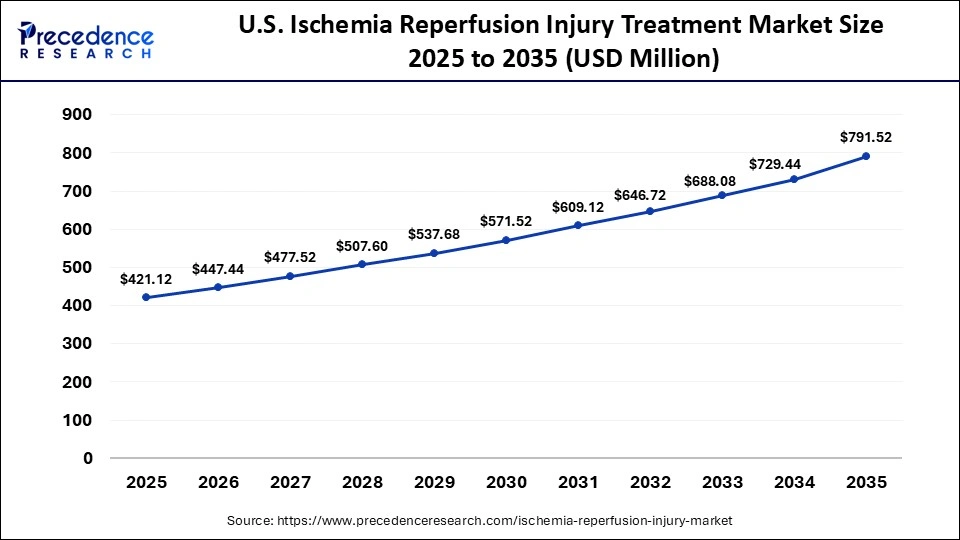
The U.S. ischemia reperfusion injury treatment market size is calculated at USD 421.12 million in 2025 and is expected to reach nearly USD 791.52 million in 2035, accelerating at a strong CAGR of 6.45% between 2026 and 2035.
Country-Level Analysis
The U.S. at the country level is the greatest contributor to the market in the region due to the presence of a large healthcare ecosystem and pharmaceutical industry. Academic research institutions and biotechnology companies are very important in promoting scientific knowledge to gain more insights into ischemia-reperfusion injury. Canada can contribute to the growth of its region by investing more in medical research and healthcare innovations.
The production of new therapies is encouraged in both countries through government financing programs and joint research projects. Moreover, the utilization of modern medical technologies and better approaches to patient management improves the results of a treatment. This has further enhanced the leadership North America was enjoying in the international market.
How is Asia-Pacific Growing in the Ischemia Reperfusion Injury Treatment Market?
Asia-Pacific is expected to experience the fastest growth during the predicted timeframe because of the growing interest in healthcare awareness and the development of the medical infrastructure. The increased prevalence of cardiovascular diseases, diabetes, and metabolic disorders in the area also adds to the continuously increasing demand for effective therapies of reperfusion injury. Government and health organizations are putting their money into the growth of hospital networks and the accessibility of sophisticated medical technologies.
In addition, increasing the capacity to produce pharmaceuticals and biotechnology research projects is aiding in therapeutic development. Market growth is also gaining momentum due to the growing number of partnerships between global pharmaceutical companies and research organizations in the region.
Country-Level Analysis
On the national level, China is one of the most important markets of the region, as the country boasts an ever-growing healthcare system and a well-developed pharmaceutical production industry. Japan is also a key player with its high standards of biotechnology research and new developing regimes on therapeutic development. India is turning out to be a market with great potential due to the developing healthcare infrastructure and increased investment in clinical research.
Other contributive factors include South Korea and Australia through the development of the field of medical technology and the increasing usage of modern methods of handling treatments. As the Asia-Pacific region continuously develops economically and modernizes the healthcare industry, it is predicted to continue to be a major opportunity in the world market.
Will Europe Grow in the Ischemia Reperfusion Injury Treatment Market?
Europe is expected to grow at a notable CAGR in the foreseeable future, owing to the growing investments in healthcare and the increasing biomedical research projects. Increased incidence of chronic diseases like cardiovascular disorders is also attainable in the region, as it is closely related to ischemic complications. Pharmaceutical companies and European researchers are in active progress in exploring new treatment options to counteract cellular injury in the case of reperfusion.
Also, government-backed collaborative research programs are hastening the development of drugs. Other areas of concern for healthcare providers include the enhancement of patient outcomes by implementing early diagnoses and more sophisticated treatment procedures across Europe.
Country-Level Analysis
Germany is an important contributor to the regional market of the country because of its pharmaceutical industry and well-developed systems of clinical research. The United Kingdom contributes equally to active biomedical research programs and partnerships between academic institutions and biotechnology companies.
France and Italy are heavily investing in healthcare innovations and clinical research facilities. Moreover, the European drug control centers offer organized ways of legitimizing novel treatment, which push contaminant firms to design novel treatment models. All these advancements make the region a promising and quickly developing market for ischemia reperfusion injury treatment.
Ischemia Reperfusion Injury Treatment Market Supply Chain Analysis
- R&D
Scientists have been working to discover molecular pathways of oxidative stress, inflammation, and mitochondrial dysfunction, which take place during reperfusion.
Key Players: AstraZeneca, Pfizer, Novartis, Roche, and Bristol Myers Squibb.
- Clinical Trials and Regulatory Approvals
Clinical trials are important in testing the safety and effectiveness of new therapies involved in the treatment of ischemia-reperfusion injury.
Key Players: Johnson & Johnson, Merck & Co., Bayer AG, Sanofi, and Eli Lilly.
- Formulation and Final Dosage Preparation
After the therapies have passed clinical trials successfully, pharmaceutical producers come up with scalable drug formulation production.
Key Players: Lonza, Catalent, Thermo Fisher Scientific, Samsung Biologics, and Boehringer Ingelheim.
- Packaging and Sterilization
Advanced therapies are packed and sterilized to avoid cross-contamination and the growth of microorganisms.
Key Players: McKesson Corporation, Cardinal Health, AmerisourceBergen, DHL Life Sciences, and UPS Healthcare.
- Distribution to Hospitals, Pharmacies
Distribution networks provide solutions to use approved therapies by being accessible to hospitals, transplant centers, and other emergency care centers where ischemia reperfusion injuries are being managed.
Key Players: McKesson Corporation, Cardinal Health, AmerisourceBergen, DHL Life Sciences, and UPS Healthcare.
- Patient Support and Services
Patient support programs are becoming more significant in enhancing the treatment outcome among people who have survived an ischemic event.
Key Players: Philips Healthcare, Medtronic, GE Healthcare, Abbott Laboratories and Siemens Healthineers.
Ischemia Reperfusion Injury Treatment Market Companies
- Amyndas Pharmaceuticals LLC
- Bolder Biotechnology
- Opsona Therapeutics Ltd
- Pharming Group NV
- Prolong Pharmaceuticals
- Prothix BV
- Stealth BioTherapeutics, Inc
- ealand Pharma A/S
- Faraday Pharmaceuticals
- SBI Pharmaceuticals
- Cellular Biomedicine Group, Inc.
- Cytokinetics, Inc.
- Gilead Sciences, Inc.
- GlaxoSmithKline plc
- Johnson & Johnson
- Medtronic plc
- Mesoblast Limited
- Novartis AG
- Pfizer Inc.
- Regeneron Pharmaceuticals, Inc.
- Sanofi S.A.
- Stempeutics Research Pvt. Ltd.
- Takeda Pharmaceutical Company Limited
- Teva Pharmaceutical Industries Ltd.
- Thermo Fisher Scientific Inc.
Recent Developments
- In February 2026, Lumosa Therapeutics announced favorable developments on the end stages of Phase II trials on LT3001, a new treatment for acute ischemic stroke. LT3001 is a first-in-class dual-functional therapy that combines safe reperfusion with direct neuroprotection for acute ischemic stroke treatments.(Source: https://www.lumosa.com.tw)
- In March 2026, Nyrada Inc. announced the development of its cardioprotective candidate, Xolatryp, to treat myocardial ischemia-reperfusion injury. The company announced the initiation of a Phase 2a clinical trial in 2026 to treat patients with acute myocardial ischemic events. The intervention aims to decrease tissue injury and enhance cardiac recovery following the restoration of blood flow.(Source: https://biotechdispatch.com.au)
Segments Covered in the Report
By Indication
- Heart injury
- Kidney injury
- Intestine injury
- Other injury
By End-User
- Hospitals
- Specialty Clinics
By Region
- North America
- Latin America
- Europe
- Asia-pacific
- Middle and East Africa
For inquiries regarding discounts, bulk purchases, or customization requests, please contact us at sales@precedenceresearch.com
Frequently Asked Questions





Ask For Sample
No cookie-cutter, only authentic analysis – take the 1st step to become a Precedence Research client
 Get a Sample
.webp)



 sales@precedenceresearch.com
 Schedule a Meeting
