



Stem Cell Therapy Market Size, Share and Trends 2026 to 2035
Stem Cell Therapy Market (By Product: Adult Stem Cells (ASCs), Human Embryonic Stem Cells (HESCs), Induced Pluripotent Stem Cells (iPSCs), Very Small Embryonic Like Stem Cells; By Therapy Type: Autologous, Allogenic; By Application: Regenerative Medicine, Drug Discovery and Development; By Technology: Cell Acquiition, Cell Production, Cryopreservation, Expansion and Sub-Culture; By End User: Hospitals, Research institutes, surgical institutes, Orders) - Global Industry Analysis, Size, Trends, Leading Companies, Regional Outlook, and Forecast 2026 to 2035
 Get a Sample
 Table Of Content


What is the Stem Cell Therapy Market Size?
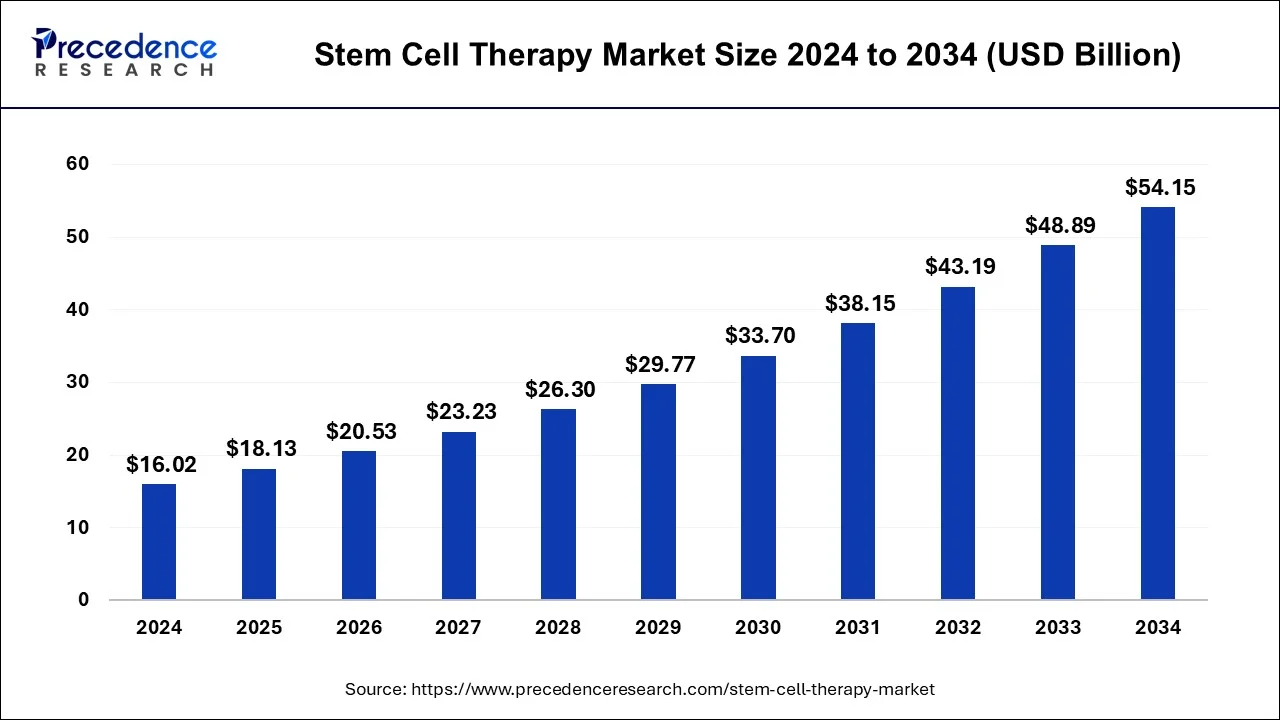
The global stem cell therapy market size accounted USD 18.13 billion in 2025, and is predicted to increase from USD 20.53 billion in 2026 to approximately USD 59.70 billion by 2035, expanding at a CAGR of 12.66% from 2026 to 2035. The market's growth is majorly driven by factors such as advancements in regenerative medicine, prevalence of chronic diseases, and a growing aging population. Continuous clinical trials and expanding therapeutic applications in various medical branches also propel the growth of the market.
Market Highlights
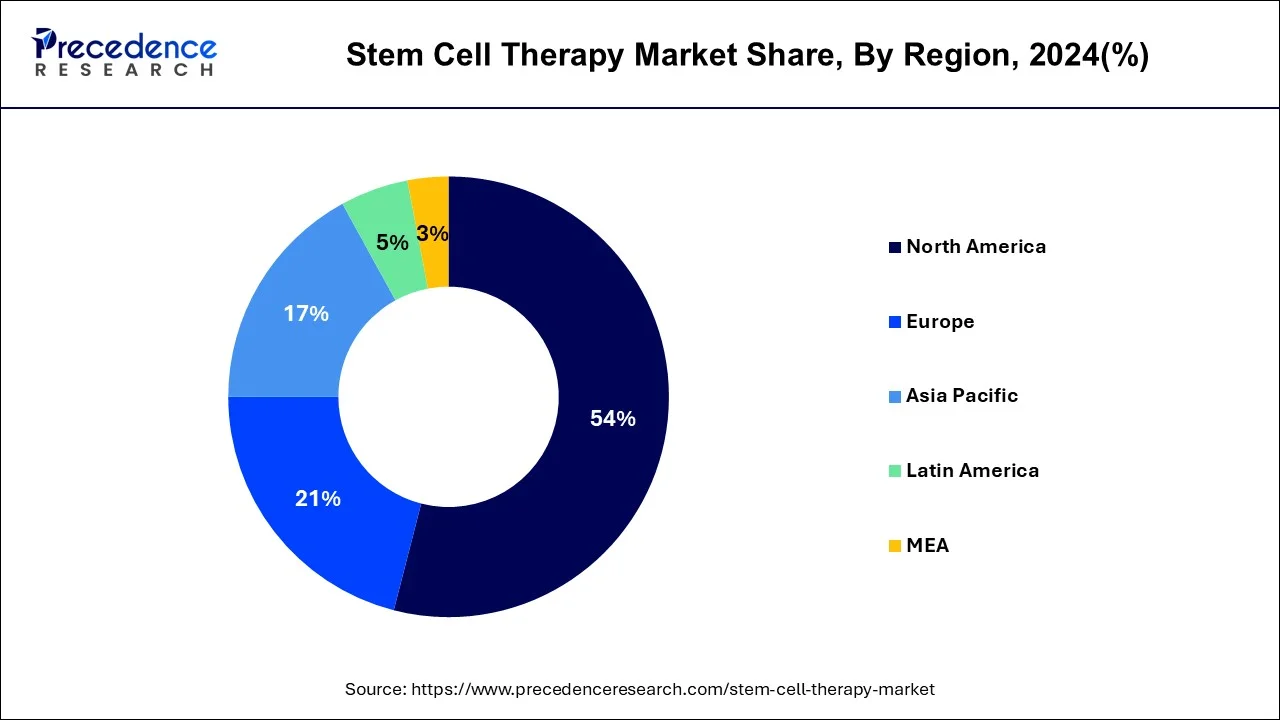
- North America accounted for the largest market share of 54% in 2025.
- Asia Pacific is expected to grow at a CAGR of 10% between 2026 to 2035.
- By product, the adult stem cells (ASCs) segment has reached 86.1% revenue share in 2025.
- The induced pluripotent stem cells (iPSCs) segment is predicted to grow at a CAGR of 10% between 2026 to 2035.
- By application, the regenerative medicine segment has garnered 93% in 2025.
- The drug discovery and development application segment is projected to grow at a CAGR of 10.2% from 2026 to 2035.
- By therapy, allogenic stem cell therapy has hit a market share of 59% in 2025.
Market Overview
Stem cells have a remarkable ability to renew themselves within the body. Stem cells are found in the human body in an early stage of life as well as in adults and can differentiate into specialized cell types of a tissue or an organ. The market's growth is expected to be propelled by factors such as rising burden of global chronic and degenerative diseases, expanding clinical trial pipelines, and technical breakthroughs in GMP-compliant automation. The growing prevalence of chronic health conditions, such as cardiovascular, autoimmune, and neurological conditions, leading to higher demand for regenerative alternatives to conventional and non-curative care, helps to fuel the growth of the market. Major transition of the market from small-scale laboratory procedures towards closed-system automation also fuels the growth of the market.
Role of AI in the Growth of Stem Cell Therapy Market
AI has made a major contribution to the growth of the market by overcoming scalability, research, and clinical delivery challenges. AI-driven automated incubators and bioreactors help to monitor cell culture conditions continuously and lower manual labor, contamination risks, and cost, as well. ML helps to quickly identify ideal biological and chemical conditions required to differentiate stem cells into specific cell types with higher precision, fueling the growth of the market. Algorithms help to analyze a patient's genetic profile and medical history to select the most effective stem cell types and predict treatment outcomes, further propelling the market's growth.
What is Stem Cell Therapy?
Stem cells have remarkable ability to renew themselves within the body. Stem cells are found in human body in an early stage of life as well as in adults and can differentiate into specialized cells types of a tissue or an organ.
Enormous amounts are being invested into stem cell therapy research since more than 50 years because of its unique property to divide and replicate over and over again. In addition, their unspecialized nature enables them to become varied variety of tissue types which makes them able to use in regenerative medicine. Furthermore, embryonic stem cells can form a whole new organ. Almost all the stem cell therapies are still into research phase. Very few treatments have been approved by regulatory bodies and also require specific criteria to meet before a patient undergoes the treatment.
Market players are investing more in oncology to provide better clinical solutions to cancer patients. Even though, chemotherapy is one of the effective tools used to treat cancers, it has some serious side effects which kills bone marrow, and further leads to the death of a patient. To overcome this problem and to improve life expectancies of cancer patients, researchers are constantly working on stem cell therapy. Moreover, researchers are also discovering novel therapies for cardiac problems, arthritis, diabetes, spinal cord injury, autoimmune disorders and many more.
There has been a constant growth in the research associated with the stem cell activities and the number of approval start come from the authorities have increased due to which the market for the stem cell therapy has grown well in the past and it is expected to grow during the forecast period. Due to constant research and development activities in the stem cell treatment market there has been a growth in the demand for the gene treatments and the cell treatments with the help of the stem cells. There has been an increased number of clinical trials that have been registered and they may affect the demand of this market to a great extent and lead to an increased sale.
In the developed nations and other nations that have a good spending power the demand for various medicines of the innovative nature is expected to grow well in the coming years as they may be helpful in treating different types of disorders like the cardiovascular disorders, neurological disorders and the autoimmune disorders. The stem cell treatment or therapy market is expected to grow due to an increase in the number of all of these diseases across the globe. There has also been an increased funding that has led to the growth of the market in the past. There is potential life in the human embryo and destroying the embryo is not ethical even though it is used in the treatment and it may be helpful in saving the lives.
During the outbreak of the pandemic which affected the global economy at large discovered 19 pandemic header good impact on the stem cell treatment market. For treating the virus, the stem cells have been used for various clinical trials. Due to the use of the regenerative medicines a better treatment can be offered for the patients that will help in reducing the cases to a great extent. It may also be helpful in reducing the rate of infection among the people. In the coming years the demand for this product is expected to grow as many clinical trials or getting clearance from the authorities. As there has been an increase in the number of various chronic diseases across the globe the demand for stem cell therapy is expected to grow and these increasing number of diseases will provide opportunities for the growth of the market in the coming years.
Constant research and development activities have provided novel therapies. iPSC's Are used on a large scale by different research scientists across the globe for conducting studies against cancer. This product has been used in the clinical trials against the Parkinson's disease, Alzheimer's disease etc. increase in the number of these trials were led to the growth of the market in the coming years. During the pandemic the researchers were concentrating on providing treatment for combating the COVID-19 virus. The use of the stem cells for treating COVID-19 has been effective. In order to improve the research activities associated with the stem cell market Australian government has invested and provided a road map for the upcoming 10 years.
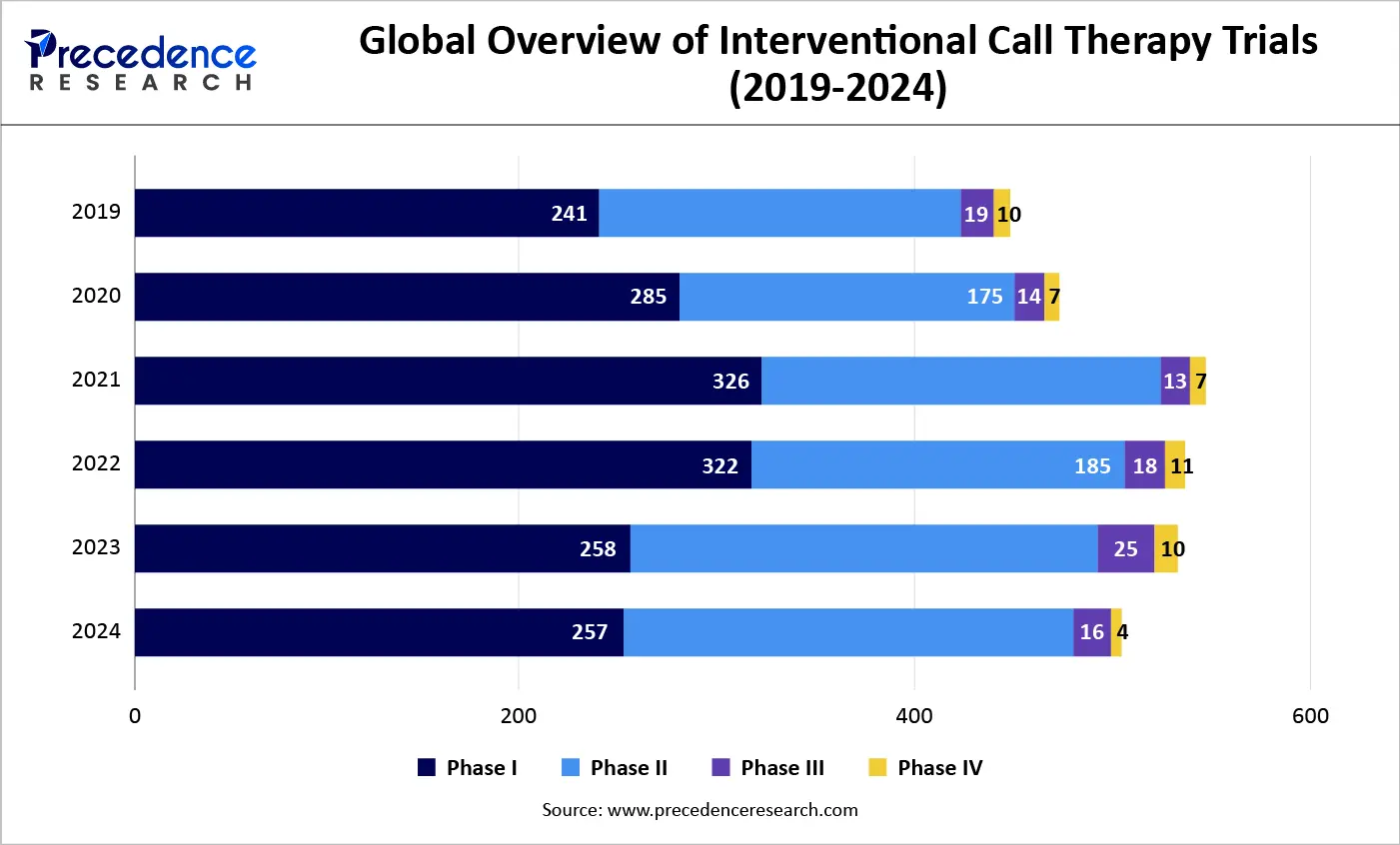
The chart shows that global interventional cell therapy trials peaked around 2021, followed by stabilization through 2024, with Phase I remaining dominant and Phase III and IV activity staying limited. This pattern reflects a field moving from rapid expansion into consolidation rather than contraction.
Beyond the visual trend, recent clinical evidence indicates that cancer cell therapy development is entering a more selective and mature phase. According to Nature Reviews Drug Discovery's November 2025 analysis, more than 6,400 interventional cancer cell therapy trials were registered globally as of June 2025, with over 3,000 unique products under investigation. While CAR-T therapies continue to anchor the pipeline, their trial volumes have begun to fluctuate as developers focus on optimization, manufacturing efficiency, and cost control rather than sheer trial growth.
At the same time, diversification is accelerating. Stem cell therapies rebounded to 29 trials in 2024, matching prior peak levels, while CAR-NK cells, cell-based cancer vaccines, and TIL therapies gained strategic importance, particularly for solid tumor indications. Regulatory milestones, including the first approvals of TIL and TCR therapies in 2024, suggest that this consolidation phase is translating into clinically validated and commercially viable treatment pathways.
What are the Growth Factors in the Stem Cell Therapy Market?
In the year 2021, it was seen that the chronic diseases had increased by about 58% and this data was provided by the World Health Organization. As the developing nations are highly populated, they have the maximum number of chronic diseases and the demand for the treatment of these diseases is expected to grow in this region. The cases of the Alzheimer's disease have increased to a great extent in the North American region especially in the United States. the number of patients that may suffer with Alzheimer's by the year 2032 is projected to be 8.5 million. This is yet another reason why the market is expected to grow due to an increased rate of the people suffering with various chronic diseases.
Constant awareness regarding the availability of the therapies that make use of stem cells have led to an increased demand for the innovation and development of the system. Most of the market players are concentrating on forming collaborations in order to improve their research and development activities which may be helpful in increasing the market for the stem cell treatment across the developing as well as the developed nations in the coming years. There has been an increased amount of funding which has been invested further research that is cell based. There is a growing demand for the induced pluripotent stem cells which involves the genetic reprogramming of the stem cells of the adult human body in order to gather the stem cells of the embryonic stage. It happens to be a great alternative for the embryonic stem cells in the market.
Return increase number of funding which comes from the private as well as the public organizations there shall be an increase in the number of products used for the treatment of various diseases. The market is expected to grow maximum in the North American region and there shall be an increased sales or they shall be an increased demand for this therapy in the North American region during the forecast period. Followed by the North American region the Asia Pacific and the European region is also expected to have a good demand for the stem cell treatment during the forecast period.
Major Trends in Stem Cell Therapy Market
- In recent years, the stem cell and exosomes have been changing wound care applications by applying their regenerative properties to grow healing and improve outcomes. Stem cells , specifically MSCs are being used within wound care because of their capability to secrete growth factor which tissue paper.
- Dermatology is another major factor that gives stem cell acceptance as Autologous epidermal stem cells can treat several types of skin conditions which includes severe burns. Other dermatology conditions which can utilize stem cell therapy include wound healing ,skin manifestations, treatment of toxic blistering of autoimmune disease.
- CRISPR technology has the potential to accurately modify a cell's genetic code which may prove the huge leap in disease treatment and prevention. Genetic modification of a typical cell is advanced enough. But to change an undifferentiated cell ,such as stem cell which can lead to growth in regenerating an immune system.
- Stem cells are being utilised to produce laboratory -grown meat producers which is known as “clean -meat”.Meat manufacturing for human consumption is one of the huge factors in global warming .Sustainably -produced meat is becoming more of a necessity every year.
Key Trends of the Stem Cell Therapy Market
- The evolution towards Personalized Medicine: As stem cell therapy continues to evolve as a field, there has been an emergence of more individualized treatment plans based on the particular genetics and conditions of the patients. This approach will help reduce the risk of rejection (due to donor/recipient mismatch) and lead to better outcomes.
- Shifting towards more efficient Regulatory Pathways: By creating new streamlined pathways for regulatory approval (e.g., RMAT & Fast Track), the regulatory agencies in the high-volume markets have facilitated faster development and translation into the clinic.
- Collaborative Commercial Development: The development and successful introduction to the market of new therapies has been greatly accelerated through the combination of partnerships among the pharmaceutical, biotechnology, and academic institutions.
- Growing financial support from investors: With the explosion of venture capital and private equity coming into the clinical development pipeline, we are experiencing a surge of clinical development in the areas of neurodegenerative and rare diseases.
- The emergence of Allogeneic Products: Due to the ability to manufacture and a broader range of patients, there has been a continuing dominance of allogeneic stem cell therapy products in the product pipeline.
Stem Cell Therapy Market Outlook
- Industry Growth Overview: The growth of the stem cell therapy industry is projected to occur at a very rapid pace from 2025 to 2030, driven by the increasing demand for regenerative treatment options for orthopedic, neurologic, and oncologic conditions. Patients are looking for less invasive ways of healing themselves and there will be increased rates of uptake of stem cell therapies in both the Asia Pacific and North America as companies continue to invest heavily in research and development.
- Global Expansion: Key industry players are continuing to expand into Southeast Asia, Eastern Europe and Latin America for the benefit of companies wanting to take advantage of the more favorable regulatory environment and lower costs for conducting clinical trials. Companies are also growing their networks of clinical and manufacturing facilities to create better access for patients who want to receive advanced stem cell therapies.
- Major Investors: High clinical value, significant IP barriers, and extended long-term reimbursement opportunities have resulted in the influx of private equity and strategic investors into the marketplace for regenerative medicine. Examples of investors with increased investments into regenerative medicine platforms are Blackstone and Carlyle, both of which are now heavily invested in regenerative medicine therapies and scalability.
- Startup Ecosystem: The number of Startups involved in the development of regenerative medicine has increased, including companies that focus on gene-edited stem cell therapies, off-the-shelf allogeneic, and the creation of automated technology that will facilitate the production and distribution of regenerative medical products. Innovative Startups in the U.S., Japan, and India have received significant funding for scalable, safe, and less costly regenerative medicine therapies.
Market Scope
| Report Coverage | Details |
| Market Size in 2025 | USD 18.13 Billion |
| Market Size in 2026 | USD 20.53 Billion |
| Market Size by 2035 | USD 59.70 Billion |
| Growth Rate from 2026 to 2035 | CAGR of 12.66% |
| Largest Market | North America |
| Base Year | 2025 |
| Forecast Period | 2026 to 2035 |
| Segments Covered | Product, Therapy Type, Application, Technology, End User, and Region |
| Regions Covered | North America, Europe, Asia-Pacific, Latin America, and Middle East & Africa |
Market Dynamics
Driver
Rising Prevalence of Chronic Diseases
One of the major market growth drivers is the growing prevalence of chronic diseases. The growing geriatric population fuels the prevalence of chronic diseases, leading to a higher demand for effective treatment options. The rising prevalence of diseases such as cardiovascular, autoimmune, and neurological issues also fuels the market's growth. Musculoskeletal disorders also fuel the market's growth.
Restraint
High Costs and Manufacturing Complexities
High costs and manufacturing complexities restrain the growth of the market. Such issues restrict insurance coverage and force developers to navigate strict chain logistics. Major reliance of the segment on manual processing increases contamination risk, which is also a major hurdle.
Opportunity
Induced iPSCs
Induced iPSCs allow scientists to reprogram mature adult cells back into a stem cell state. It helps to propel the growth of the market by addressing major scientific, ethical, and clinical bottlenecks. The advanced technology is generated directly from adult human tissue, further fueling the market's growth.
Segments Insights
By Product
Which Product Dominated the Market in 2025?
The adult Stem Cells (ASCs) segment dominated the stem cell therapy market in 2025 due to their extensive clinical use, proven safety profile, and broad therapeutic applications. Their minimal ethical concerns, established regulatory acceptance, and effectiveness in treating hematological, orthopedic, and regenerative conditions encouraged widespread adoption. Continuous advancements in adult stem cell therapies further strengthened their leading market position globally.
The induced Pluripotent Stem Cells (iPSCs) segment is expected to register the fastest CAGR during 2026–2035, owing to increasing investments in personalized medicine, disease modeling, and regenerative therapies. Their ability to differentiate into diverse cell types, combined with advances in gene editing and scalable manufacturing, is accelerating clinical research, commercialization, and adoption across numerous therapeutic applications worldwide.
By Type
What Made the Allogeneic Segment Dominant in the Market in 2025?
The allogeneic stem cell therapy segment dominated the global market in 2025. The therapy involves utilizing healthy, donor-derived stem cells to manufacture standardized, ‘off-the-shelf' products. It helps to eliminate the waiting time required to process a patient's own cells. Donors help to provide a scalable product to lower the costs and expand access for clinical and commercial applications, which is helpful for the market's growth. Mass manufacturing lowers long-term operational costs compared to custom, patient-by-patient autologous processes, which is helpful for the market's growth. Venture capital financing also has a major role in the market's growth.
The autologous segment is observed to be the fastest-growing segment in the foreseen period. The segment's growth is majorly driven by factors such as advancements in personalized medicine, the rise in oncology applications, and zero-risk graft-versus-host disease. Zero risk of immune rejection is one of the major advantages of the segment, as the patient's own cells are utilized, further propelling the growth of the market. Major investments in decentralized manufacturing to combat logistical and cost hurdles also propel the market's growth. Hospitals and transplant centers command half of the market share currently for administering these therapies.
By Application
What Supports the Regenerative Medicine Segment's Dominance in the Market?
The regenerative medicine segment dominated the global stem cell therapy market in 2025 and is also observed to be the fastest-growing segment in the foreseen period. The segment's growth is majorly driven by advancements in personalized therapies, induced iPSCs, and the growing demand for effective treatment options for chronic diseases. The segment is also known to directly utilize the unique capabilities of stem cells to replace, repair, or restore damaged tissues and organs affected by chronic diseases. The segment's major focus is on curative results by regenerating biological functions. The segment's growth is also propelled by the fact that it allows highly customized, patient-specific personalized medicine.
The oncology segment is anticipated to record the fastest CAGR during 2026–2035, driven by expanding stem cell transplantation procedures, advancements in cancer immunotherapy, and increasing integration with gene-modified cellular therapies. Rising global cancer prevalence, continuous clinical research, and growing investments in innovative treatment approaches are significantly accelerating the adoption of stem cell-based oncology solutions worldwide.
By End User
Which End-User Segment Dominated the Market in 2025?
The pharmaceutical and biotechnology companies segment dominated the global market in 2025. The segment's growth is majorly driven by a surge in regenerative medicine, growing investments in clinical trials, and enhanced collaborations to accelerate the development of allogeneic and induced iPSC pipelines. Growing capital investments, massive clinical trials, and a major inclination of the market towards automated drug discovery also fuel the market's growth. Growing cases of chronic conditions such as cancer, cardiovascular conditions, and neurodegenerative disorders also help to fuel the market's growth. Growing reliance of top-tier players on CROs and specialized biotech suppliers to lower early-phase overhead and accelerate regulatory pathways also helps to drive the market's growth.
The hospital segment is observed to be the fastest-growing segment in the foreseen period. The segment's growth is primarily propelled by frequent use of bone marrow transplants and regenerative medicine. Hospitals also possess specialized infrastructure, advanced surgical facilities, and multi-disciplinary medical expertise required to execute complex transplant and regenerative protocols safely. Hospitals also have integrated surgical suites, further fueling the growth of the market. They also have the efficiency to handle patients with chronic health issues such as hematological malignancies (leukemia, lymphoma), severe cardiovascular failures, and advanced neurological disorders, which is helpful for the growth of the market.
Regional Insights
What is Supporting the Market's Growth in North America?
North America dominated the global stem cell therapy market in 2025. The market's growth is majorly driven by accelerated regulatory pathways and commercial manufacturing expansions. Usage of RMAT designations in the region allows developers shorter approval timelines and rolling reviews, further fueling the market's growth.
What is the U.S. Stem Cell Therapy Market Size?
The U.S. stem cell therapy market size is valued at USD 6.75 billion in 2025 and is expected to reach USD 21.31 billion by 2035, growing at a CAGR of 12.18% from 2026 to 2035.
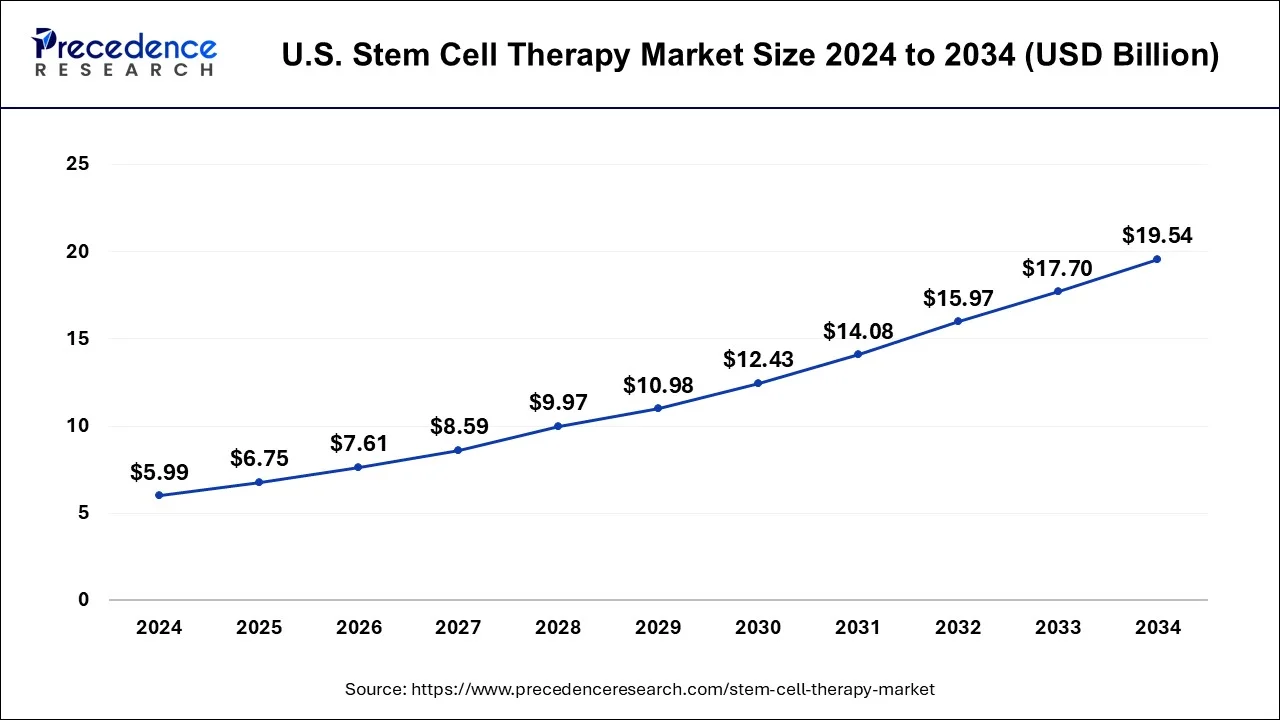
Integration of automated platforms to reduce manufacturing labor costs is also a major market driver. The growing prevalence of chronic diseases in the region also fuels the growth of the market. Growing funding for clinical trials, coupled with a dense concentration of leading biotechnology firms, also helps to fuel the growth of the market.
U.S. Market Trends
The U.S. has a major contribution in the growth of the market due to a surge in chronic and degenerative diseases, accelerated FDA approval pathways, robust private funding, and increasing clinical adoption for personalized medicine. Growing funding from government bodies and substantial venture capital investments are also some of the major market drivers. Technological advancements in the form of cell isolation, cryopreservation, and AI/iPSC research for safer and scalable therapies also fuel the growth of the market. Major shift of the market towards personalized medicines also helps to fuel the market's growth.
Which Factors are Responsible for Europe's Market Growth?
Europe held a significant share of the market in 2025. The market's growth is majorly driven by growing investments in regenerative medicine, growing prevalence of chronic diseases, and growing demand for personalized medicine. Growing funding for expanding the health infrastructure of the region dedicated to advanced therapies also fuels the market's growth. A growing number of GMP certification approvals and improved processing/cryopreservation standards, scaling up commercial production and clinical adoption, also fuel the market's growth. Demographic shifts, clinical breakthroughs, and specialized regional frameworks also help to fuel the growth of the market.
Germany Market Trends
Germany has a massive contribution to the growth of the market. The growth is majorly fueled by factors such as supportive regulatory frameworks for clinical trials, the growing biotechnology sector, and advanced healthcare infrastructure. The growing geriatric population of the region, leading to the growing prevalence of chronic diseases such as cardiovascular, autoimmune, and neurological issues, also helps to fuel the market's growth. Growing collaborations between academic institutions and biopharmaceutical companies to accelerate translational research are also a major market driver.
Asia Pacific Market's Growth Supported by Rising Geriatric Population
Asia Pacific is observed to have the fastest growth in the forecast period. The region's growth is majorly propelled by the growing geriatric population of the region, the prevalence of chronic diseases, and growing investments in biotechnology infrastructure. Established accelerated approval pathways for regenerative medicines in various countries of the region also help to fuel the growth of the market, along with giving faster approval to patients for innovative treatments. Growing funding from private and public sectors of the region for improvement of cell manufacturing capabilities, drug discovery, and research infrastructure also helps to fuel the growth of the market.
China Market Trends
China's market is observed to expand rapidly due to massive state-backed R&D investments, a growing aging population, and the growing prevalence of chronic health ailments. Government backing for clinical research and recent landmark product approvals also help to accelerate the shift from research to commercialization. Technological advancements in the form of iPSC technology and allogeneic MSC platforms, allowing for scalable, cost-effective cell replacement therapies, lowering manufacturing complexity, are also some of the major market drivers.
What are the MEA Market Trends?
The Middle East and Africa market is observed to have a steady growth, majorly driven by factors such as the growing prevalence of chronic diseases, growth of the geriatric population, rising healthcare infrastructure, and growing demand for personalized medicines. The expanding biology sector also fuels the market's growth. Growing government investments to diversify economies and improve local healthcare are also major market drivers. Growing demand for regional precision therapies also helps to fuel the market's growth.
UAE Market Trends
The UAE's market is observed to expand rapidly and is majorly driven by factors such as growing government investments and state-of-the-art medical tourism. The development of advanced stem cells in the region to treat chronic orthopedic and blood disorders also helps to fuel the market's growth. Progressive regulatory frameworks for advanced therapies and clinical trials, attracting international patients, are also a major market driver.
Trade Analysis of the Stem Cell Therapy Market
- Dynamics of India's Export of Stem Cells: In FY 24-25 (April 2024 - March 2025), India had 136 shipments of stem cell product export for 20+ Countries. Although there was a decline of approximately 40% in the previous year in shipment quantity and value.
- Importation Patterns for India's Stem Cell products: Stem cell products exported from India reached markets in New Zealand, Norway, and Qatar. There is an increasing global interest in stem cells, with competition from South Korea, the USA, and Vietnam, which are leading in overall export amounts.
- India's Impact on Global Reach for Stem Cells: The breadth of India's exports reflects the increasing desire of developing countries to use stem cells. On the other hand, leading exporters of stem cells worldwide are showing an interest in diversifying, optimizing, and enhancing supply chain efficiency.
Competitive Landscape
The highly competitive stem cell therapy market is observed to grow due to factors such as growing investments in the biotechnology sector, growing demand for personalized treatment and medications, and a growing population of the aged, leading to a higher prevalence of chronic conditions. Vericel Corporation, Mesoblast Ltd, MEDIPOST, JCR Pharmaceuticals, and Thermo Fisher Scientific are some of the major market players with major contributions to the market's growth. The main aim of these players involves providing technological advancements, developing FDA-approved cell therapies, and providing cell therapies for aging-related and rare conditions in niche markets.
Stem Cell Therapy Market Companies
- Caladrius
- CELGENE CORPORATION
- ReNeuron Group plc
- Virgin Health Bank
- Opexa Therapeutics, Inc.
- Pluristem Therapeutics Inc
- STEMCELL Technologies Inc.
- Biovault family
- Precious Cells International Ltd
- Mesoblast Ltd
- Seneca Biopharmaceuticals, Inc.
Recent Developments
- On 19 September 2024, GC Therapeutics announced the launch to scale and unleash the next generation therapy which was invented and developed by a world class team of scientists in the lab of professor George Church.
- On 7 January 2025, Pluristyx who is a top server of Good Manufacturing Practices, cutting -edge and which persuaded pluripotent stem cell technologies, revealed the immediate availability of the PSXi013 iPSC line made under GMP.
- On 17 February 2025, Cellistic is an iPSC -based off-the-shell cell therapy development and manufacturing services who has made it official of its Allo Chasis which are ready to use ,immune cloaked iPSC Cell lines came from CD34+ and CD4+ T-Cell primary cells.
- For the use of the cultured cells and to maintain the health of these cells especially for their use in the transplants of the stem cells for various patients a new method was developed by understanding the causative factor by the scientists from the University of California in the year 2021.
Segments Covered in the Report
By Product
- Adult Stem Cells (ASCs)
- Hematopoietic
- Mesenchymal
- Neural
- Epithelial/Skin
- Others
- Human Embryonic Stem Cells (HESCs)
- Induced Pluripotent Stem Cells (iPSCs)
- Very Small Embryonic Like Stem Cells
By Therapy Type
- Autologous
- Allogenic
By Application
- Regenerative Medicine
- Neurology
- Orthopedics
- Oncology
- Hematology
- Cardiovascular and Myocardial Infraction
- Injuries
- Diabetes
- Liver Disorder
- Incontinence
- Others
- Drug Discovery and Development
By Technology
- Cell Acquiition
- Bone Marrow Harvest
- Umbilical Blood Cord
- Apheresis
- Cell Production
- Therapeutic Cloning
- In-vitro Fertilization
- Cell Culture
- Isolation
- Cryopreservation
- Expansion and Sub-Culture
By End User
- Hospitals
- Research institutes
- surgical institutes
- Orders
By Region
- North America
- Latin America
- Europe
- Asia-pacific
- Middle and East Africa
For inquiries regarding discounts, bulk purchases, or customization requests, please contact us at sales@precedenceresearch.com
Frequently Asked Questions





Ask For Sample
No cookie-cutter, only authentic analysis – take the 1st step to become a Precedence Research client
.webp)



 sales@precedenceresearch.com
 Schedule a Meeting



