



Terbinafine Hydrochloride Drug Market Size, Companies, Share, Patient Volume, Treatment Adoption Rates, Pricing Analysis, Regulatory Landscape, Competitive Positioning, and Demand Forecast
Terbinafine Hydrochloride Drug Market (By Formulation/Dosage Form: Tablets/Oral, Topical Creams, Gels/Sprays/Solutions/Others; By Application/Indication: Onychomycosis, Tinea Infections, Others; By End User: Hospitals, Clinics, Homecare, Others) - Global Industry Analysis, Size, Trends, Leading Companies, Regional Outlook, and Forecast 2026 to 2035
Source: https://www.precedenceresearch.com/terbinafine-hydrochloride-drug-market
 Get a Sample
 Table Of Content


What is the Terbinafine Hydrochloride Drug Market Size?
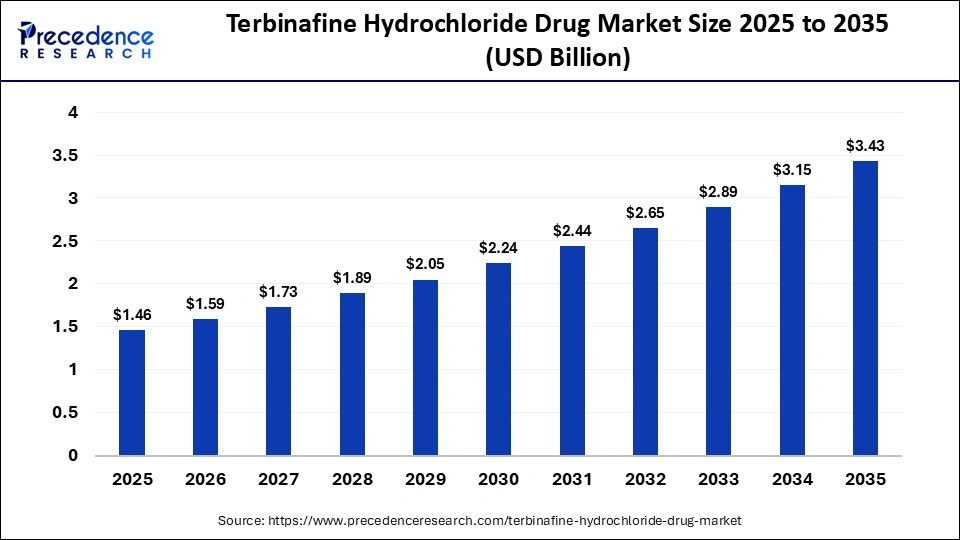
The global terbinafine hydrochloride drug market size accounted for USD 1.46 billion in 2025 and is predicted to increase from USD 1.59 billion in 2026 to approximately USD 3.43 billion by 2035, expanding at a CAGR of 8.92% from 2026 to 2035. The terbinafine hydrochloride drug market is experiencing unprecedented growth, driven by growing awareness of fungal infections as a serious medical condition.
Market Highlights
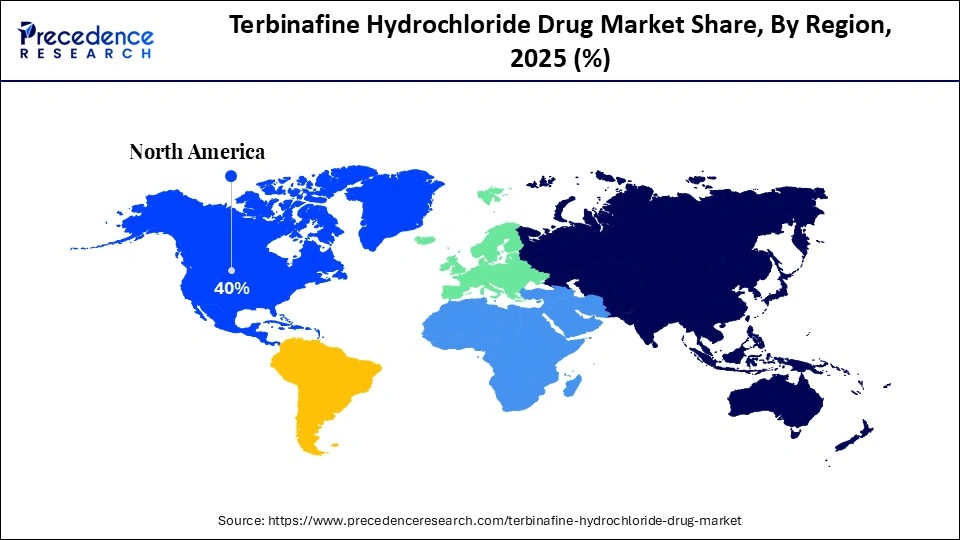
- North America dominated the market, holding the largest market share of approximately 40% in 2025.
- Asia Pacific is expected to expand at the fastest CAGR of 9.0% in the terbinafine hydrochloride drug market between 2026 and 2035.
- By formulation/dosage form, the tablets/oral segment held the largest market share of nearly 55% in 2025.
- By formulation/dosage form, the topical creams segment is expected to grow at the fastest CAGR of 7.7% between 2026 and 2035.
- By application/indication, the onychomycosis segment accounted for the highest market share of approximately 60% in the terbinafine hydrochloride drug market during 2025.
- By application/indication, the tinea infections segment is set to grow at the highest CAGR of 8% between 2026 and 2035.
- By end user, the hospitals segment contributed the biggest market share of approximately 40% in 2025.
- By end user, the homecare segment is expected to grow at a significant CAGR of 7.8% between 2026 and 2035.
Market Overview
The terbinafine hydrochloride drug market comprises pharmaceutical products containing terbinafine hydrochloride, a synthetic antifungal agent used to treat dermatophytic infections like onychomycosis, athlete's foot, jock itch, and ringworm. It works by inhibiting squalene epoxidase, a vital enzyme in the synthesis of fungal cells, causing fungal cell death. This medication is widely available in oral and topical cream/spray formulations. It is prescribed through hospitals, clinics, pharmacies, and online channels.
How are AI-driven innovations reshaping the market?
In the rapidly evolving technological landscape, the integration of Artificial Intelligence (AI) is significantly accelerating the growth of the terbinafine hydrochloride drug market by enabling faster drug discovery, improving formulation efficacy, enhancing manufacturing efficiency, optimizing supply chain, and improving diagnostic accuracy. AI is most widely used to design and optimize nanoparticle formulations to maximize skin retention. AI-driven formulations achieve higher entrapment efficiency and deeper skin penetration.
AI algorithms can analyze massive datasets to identify new therapeutic targets, predict drug efficacy, and accelerate the development pipeline. AI algorithms determine the ideal ratios of polymers, surfactants, and lipophilic ingredients to formulate terbinafine-loaded solid lipid nanoparticles (SLNs) or nano-ethosomes. AI-powered diagnostic tools assist healthcare professionals in accurately detecting fungal nail infections (onychomycosis) and athlete's foot. AI can efficiently analyze patient data to recommend the most effective terbinafine concentration or formulation based on the type of fungi, leading to more personalized therapy.
What are the emerging trends in the market?
- The increasing prevalence of fungal infections is anticipated to accelerate the growth of the market during the forecast period. Terbinafine hydrochloride is most widely used for treating onychomycosis (nail fungus), tinea infections, and various skin fungal infections (dermatophytosis).
- The expanded treatment awareness worldwide, along with the rise in per capita healthcare expenses, is expected to create significant growth opportunities for the terbinafine hydrochloride drug market during the forecast period.
- The increasing availability of over-the-counter (OTC) and growing demand for effective antifungal solutions for skin and nail conditions is expected to contribute to the overall growth of the market.
- The rising geriatric population and high prevalence of diabetes increase susceptibility to fungal infections, bolstering the market's expansion in the coming years.
- The surge in clinical trials for newer and more potent oral drugs is anticipated to fuel the market's expansion during the forecast period.
- The increasing government initiative and spending on expanding dermatological care, including for fungal disease management, support the growth of the market.
Market Scope
| Report Coverage | Details |
| Market Size in 2025 | USD 1.46 Billion |
| Market Size in 2026 | USD 1.59 Billion |
| Market Size by 2035 | USD 3.43 Billion |
| Market Growth Rate from 2026 to 2035 | CAGR of 8.92% |
| Dominating Region | North America |
| Fastest Growing Region | Asia Pacific |
| Base Year | 2025 |
| Forecast Period | 2026 to 2035 |
| Segments Covered | Formulation/Dosage Form, Application/Indication, End User, and Region |
| Regions Covered | North America, Europe, Asia-Pacific, Latin America, and Middle East & Africa |
Segmental Insights
Formulation/dosage form Insights
What causes the tablets/oral segment to dominate the market in 2025?
The tablets/oral segment held the largest terbinafine hydrochloride drug market share of nearly 55% in 2025. They are preferred as the first-line treatment for onychomycosis and widespread fungal infection. Oral terbinafine hydrochloride offers numerous benefits, including a high success rate, convenience, and potential for lasting results. Several clinical trials shown that oral terbinafine has a high success rate in treating toenail fungus. Taking terbinafine tablets involves taking a pill for a specified duration. Several pharmaceutical companies are increasingly focusing on developing new and highly effective oral formulations that offer high efficacy and non-invasive treatments to patients.
The topical creams segment is expected to grow at a remarkable CAGR of 7.7% between 2026 and 2035, owing to their high efficacy and the elimination of the risk of side effects associated with oral tablets. Topical cream achieves high mycological cure rates for cutaneous dermatophyte infections. Topical formulations provide direct and targeted application. There are over 90 countries that have approved terbinafine for over-the-counter (OTC) use, facilitating direct access for patients to self-treat conditions like tinea pedis and tinea cruris.
Application/Indication Insights
Which sub-segment is dominated by the application/indication segment in the market?
The onychomycosis segment is dominating the terbinafine hydrochloride drug market by holding a majority share of approximately 60%. The increasing prevalence of onychomycosis (fungal nail infections), particularly due to aging populations and a higher incidence of diabetes, which significantly increases susceptibility, created a massive demand for the terbinafine hydrochloride drug. Onychomycosis is a fungal infection of the nails that often causes nails to become thick and discolored, such as brown or yellowish. Fungal nail infections are common, especially in toenails.
The clinical studies have also shown that terbinafine is effective in eliminating the fungal infection in nearly 70-90% of cases. The high success rate makes it one of the most reliable treatments for onychomycosis. Terbinafine hydrochloride tablets are usually the first choice for nail fungal infections as they are taken by mouth and get delivered through the bloodstream to the nail matrix and nail bed, killing the fungus at the site of infection.
The tinea infections segment is the fastest-growing segment in the terbinafine hydrochloride drug market, and the segment is set to grow at a notable CAGR of 8% between 2026 and 2035. The segment's growth is primarily supported by the tinea corporis (ringworm), tinea pedis (athlete's foot), tinea cruris (jock itch), and tinea capitis. Tinea infections are contagious fungal skin infections that are caused by dermatophytes. Terbinafine hydrochloride is a highly effective and acts as a fungicidal agent in treating severe or chronic tinea infections, providing faster relief in shorter treatment durations.
End User Insights
What factors have led the hospitals segment to dominate the market?
The hospitals segment is dominating the terbinafine hydrochloride drug market with approximately 40% market share in 2025. The growth of the segment is supported by the high volume of prescription-based oral tablet treatments for severe or chronic fungal infections, such as onychomycosis and tinea infections. Hospitals are the central point to treat severe, systemic, or rapidly progressing fungal infections that require immediate medical intervention rather than self-medication. Hospitals have advanced diagnostic capabilities and skilled healthcare professionals who can properly diagnose, manage, and treat complex, severe, or resistant fungal infections.
The homecare segment is expected to grow at the fastest CAGR of 7.8% between 2026 and 2035. The increasing incidence of fungal infections drives the demand for easily accessible, effective, and self-administered treatments. Terbinafine hydrochloride is widely available over-the-counter (OTC) in many countries for treating dermatophytic infections, which allows consumers to purchase it directly from retail pharmacies, making it convenient for home care. In addition, rising self-medication trends and increasing consumer preference for self-medication are anticipated to boost the growth of the home care segment during the forecast period.
Regional Insights
How Big is the North America Terbinafine Hydrochloride Drug Market Size?
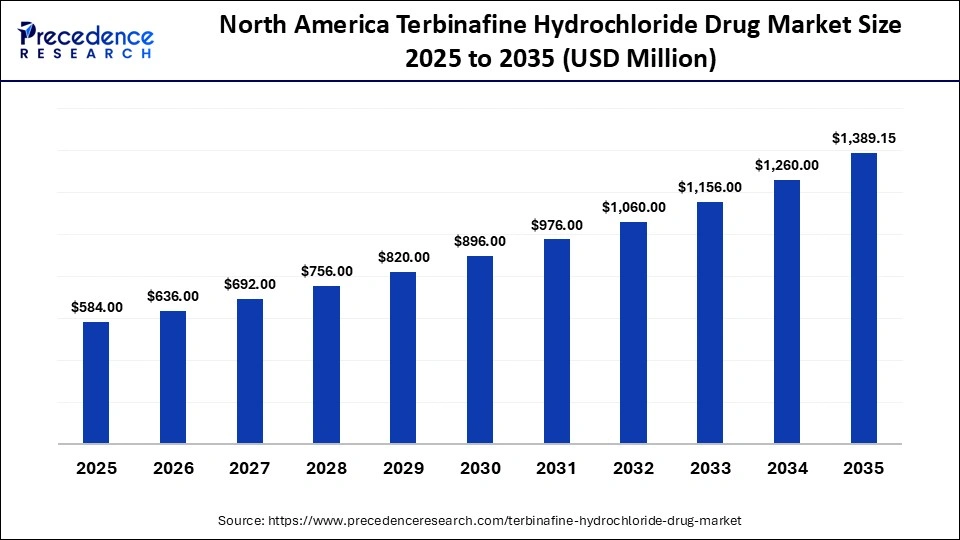
The North America terbinafine hydrochloride drug market size is estimated at USD 584.00 million in 2025 and is projected to reach approximately USD 1,389.15 million by 2035, with a 9.05% CAGR from 2026 to 2035.
North America Terbinafine Hydrochloride Drug Market Analysis
North America dominated the terbinafine hydrochloride drug market, holding approximately 40% revenue share in 2025. The North American region has an advanced healthcare infrastructure and a robust presence of pharmaceutical companies. The region's leadership position is attributed to the high prevalence of dermatophytic infections, the rise in the older population, growing awareness of skin health, wide accessibility of over-the-counter (OTC) platforms, and rising AI integration in R&D, clinical trials, and the discovery of new antifungal candidates. candidates. Additionally, the rising spending on the healthcare system and expanded payer coverage are anticipated to fuel the region's growth during the forecast period.
What is the Size of the U.S. Terbinafine Hydrochloride Drug Market?
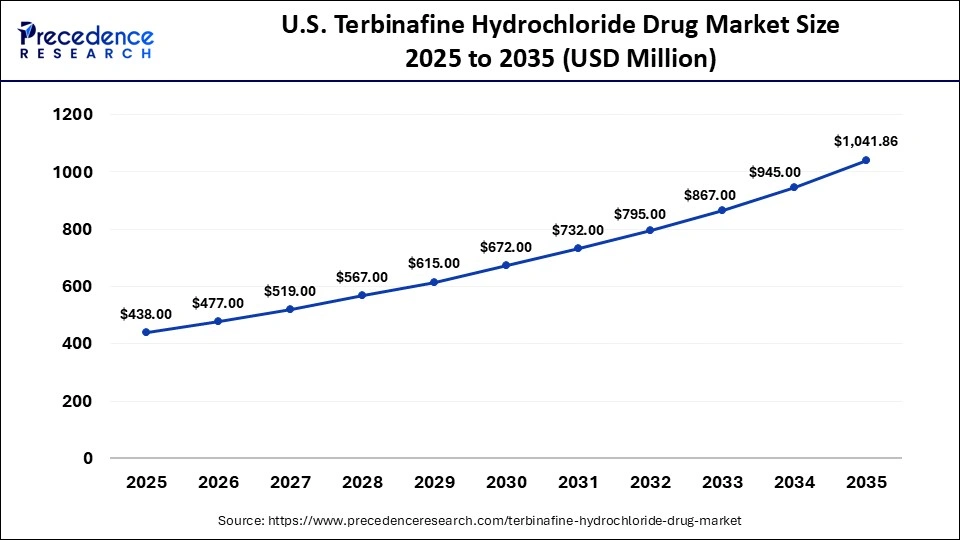
The U.S. terbinafine hydrochloride drug market size is calculated at USD 438.00 million in 2025 and is expected to reach nearly USD 1,041.86 million in 2035, accelerating at a strong CAGR of 9.05% between 2026 and 2035.
The U.S. Terbinafine Hydrochloride Drug Market Analysis
The U.S. is a major contributor to the market in the North American region. The country has a well-established healthcare infrastructure, which enables high diagnosis rates of fungal infections. The strong presence of generic manufacturers has increased the affordability and accessibility of the terbinafine hydrochloride drug in the country.
The country is home to the prominent market players such as Novartis AG, Teva Pharmaceutical Industries Ltd., Sun Pharmaceutical Industries Ltd., Glenmark Pharmaceuticals Ltd., Sandoz International GmbH, Apotex Inc., Dr. Reddy's Laboratories Ltd., Cipla Inc., Torrent Pharmaceuticals Ltd., Aurobindo Pharma Ltd., Zydus Cadila, and others. Several companies are increasingly focusing on formulation innovations that include the introduction of film-forming solutions, sprays, and nanotechnology-based gels to improve skin penetration and provide superior efficacy in resistant cases.
Asia Pacific Terbinafine Hydrochloride Drug Market Analysis
Asia Pacific is estimated to grow at the fastest CAGR of 9.0% in the market during the forecast period. The region has a developing healthcare infrastructure and increasing skin care awareness and dermatological care. The growth of the region is attributed to the increasing presence of generic manufacturers, growing demand for effective antifungal solutions for skin and nail conditions, widespread adoption of both prescription and over-the-counter (OTC) antifungal treatments, a surge in government and private spending on healthcare expenditure, an increasing geriatric population with diabetes, rising investment in R&D activities, and favorable reimbursement policies.
Moreover, the region's growth is also largely driven by the increasing prevalence of fungal nail infections (onychomycosis), ringworm (tinea corporis), jock itch (tinea cruris), athlete's foot (tinea pedis), and scalp fungal infection (tinea capitis).
India Terbinafine Hydrochloride Drug Market Analysis
The country is experiencing significant growth. The market growth is supported by the increasing presence of the pharmaceutical industry, rising cases of dermatophyte infections, growing demand for antifungal treatments, the surge in the aging population, increasing popularity of generic formulations, and favorable government regulations supporting terbinafine hydrochloride drugs. The increasing awareness of skin infections encourages consumers to seek immediate medical intervention for fungal infections. Additionally, rising government initiatives focus on public health, sanitation, and increased awareness of dermatological care, which is expected to significantly contribute to the growth of the terbinafine hydrochloride drug market.
Terbinafine Hydrochloride Drug Market Value Chain Analysis
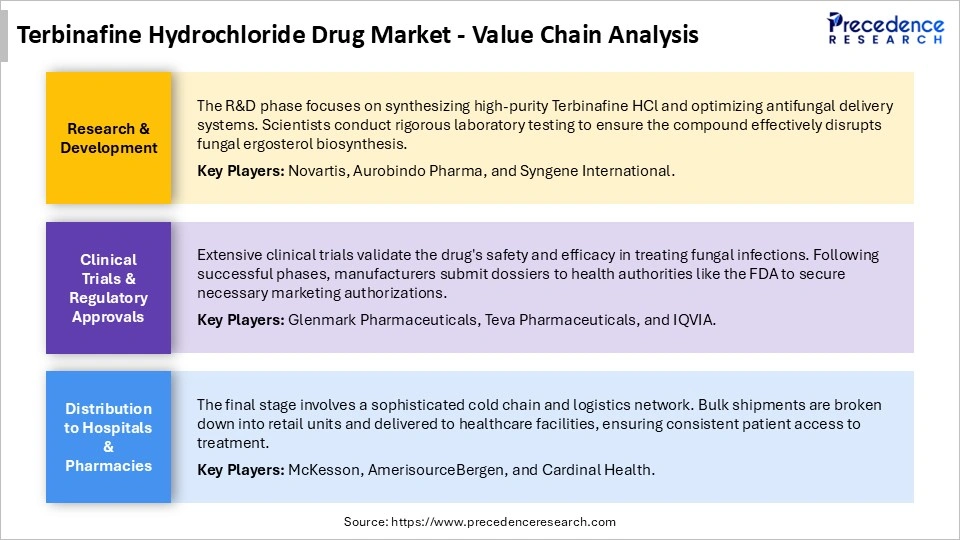
Who are the Major Players in the Global Terbinafine Hydrochloride Drug Market?
The major players in the terbinafine hydrochloride drug market include Novartis AG, Teva Pharmaceutical Industries Ltd., Mylan N.V. (Viatris), Sun Pharmaceutical Industries Ltd., Glenmark Pharmaceuticals Ltd., Sandoz International GmbH, Apotex Inc., Dr. Reddy's Laboratories Ltd., Cipla Inc., Torrent Pharmaceuticals Ltd., Aurobindo Pharma Ltd., Lupin Limited, Zydus Cadila, Hikma Pharmaceuticals PLC, and Alkem Laboratories Ltd.
Recent Developments
- In February 2025, Lamisil AT, an over-the-counter topical antifungal brand, launched a new cream that is clinically proven to eliminate the fungus behind jock itch in just one week. According to the brand, the cream provides fast symptom relief, helping to drive greater patient compliance. The formula is powered by terbinafine hydrochloride 1%, an antifungal ingredient that cures most jock itch in one week. Lamisil AT targets and destroys tinea cruris fungus at its source while providing fast symptom relief against itching, burning, and redness.(Source: https://drugstorenews.com)
- In January 2024, Medexus Pharmaceuticals announced that Health Canada recently accepted for review Medexus's new drug submission, or NDS, for terbinafine hydrochloride nail lacquer to treat fungal nail infections.(Source: https://www.medexus.com)
Segments Covered in the Report
By Formulation/Dosage Form
- Tablets/Oral
- Topical Creams
- Gels/Sprays/Solutions/Others
By Application/Indication
- Onychomycosis
- Tinea Infections
- Others
By End User
- Hospitals
- Clinics
- Homecare
- Others
By Region
- North America
- Europe
- Asia-Pacific
- Latin America
- Middle East & Africa
For inquiries regarding discounts, bulk purchases, or customization requests, please contact us at sales@precedenceresearch.com
Frequently Asked Questions





Ask For Sample
No cookie-cutter, only authentic analysis – take the 1st step to become a Precedence Research client
 Get a Sample




 sales@precedenceresearch.com
 Schedule a Meeting
