



U.S. and Canada Hemodialysis Catheters Market Size, Key Companies, Company Product Portfolio, Hospital Procurement Trends, Manufacturing Capacity, Sales Performance, Regulatory Approvals, Company Market Share, and Forecast
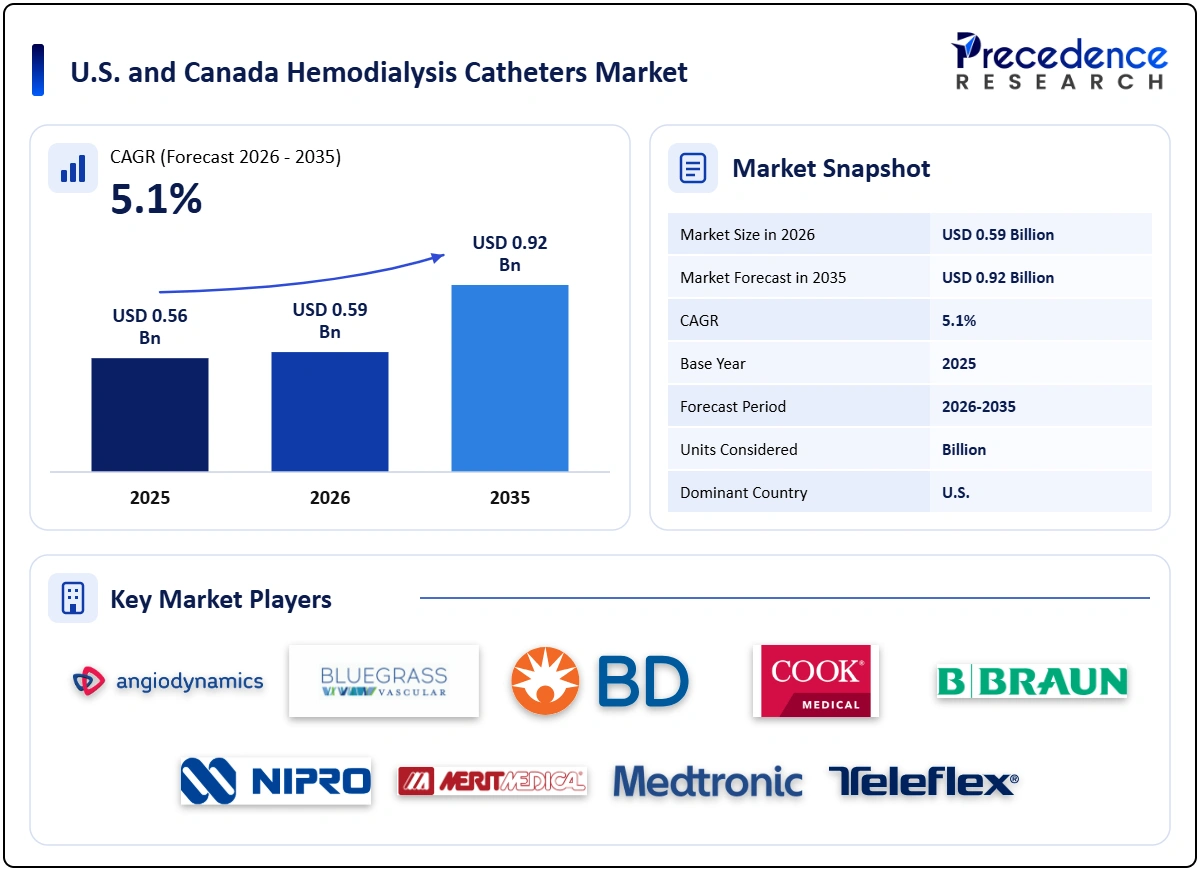
Payal Rabde a Healthcare Industry Expert, highlights that the U.S. and Canada hemodialysis catheters market has reached USD 0.59 billion in 2026 and is on track to reach USD 0.92 billion by 2035, advancing at a CAGR of 5.1%. Key U.S. and Canada hemodialysis catheters market companies shaping the market include BD, Medtronic, Teleflex, Merit Medical while major growth segments span Catheter Type, material, tip design, end-user.
Source: https://www.precedenceresearch.com/us-and-canada-hemodialysis-catheters-market
 Get a Sample
 Table Of Content
Key Takeaways
Market Size & Growth Outlook
- Market size in 2025: USD 0.56 billion
- Estimated market size in 2026: USD 0.59 billion
- Projected market size by 2035: USD 0.92 billion
- CAGR (2026-2035): 5.1%
Regional Market Spotlight
- The United States led the market in 2025, capturing 91% of total revenue.
- In 2025, Canada accounted for 9% of the market and is projected to record the fastest country-level growth during the forecast period, with a CAGR of 6.54% from 2026 to 2035.
Segmental Spotlight
- Tunneled cuffed catheters represented the largest catheter type segment share at 58% in 2025.
- By material, polyurethane catheters dominated the market in 2025, capturing a 54% share.
- In 2025, split-tip catheters captured the largest tip design segment, representing a 40% share of the market.
- Hospitals held the largest end-user segment share at 46% in 2025.
U.S. and Canada Hemodialysis Catheters Market Size, 2025-2035 (USD Billion)
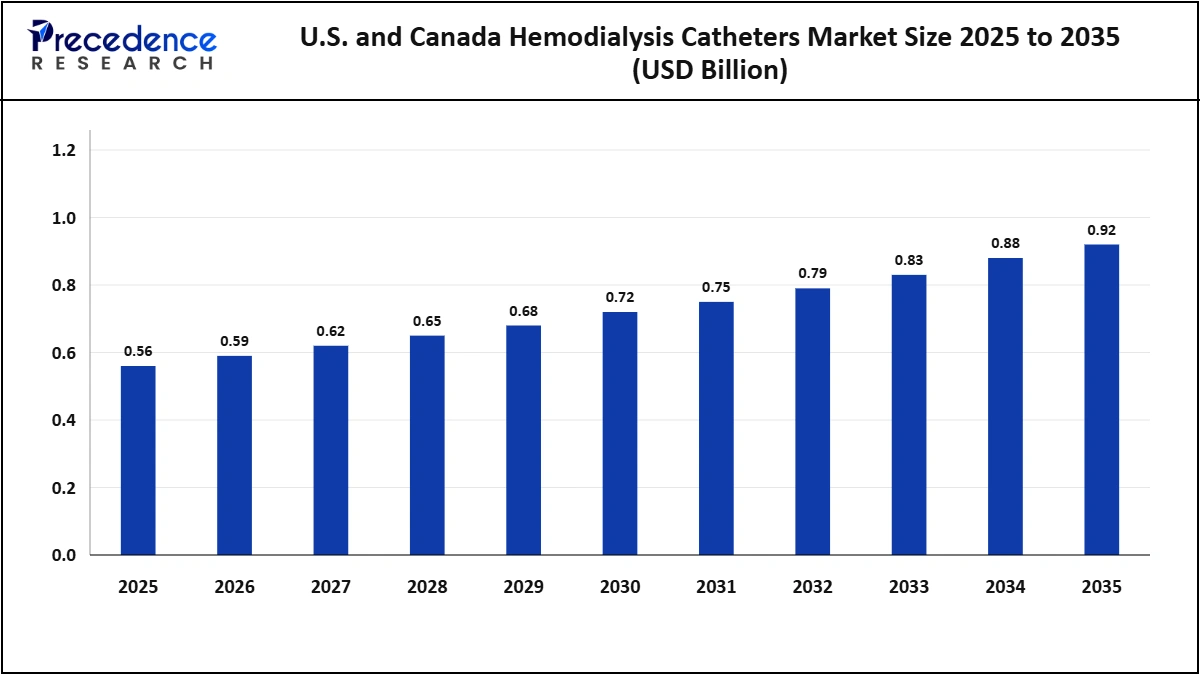
Note: 2025 is the base year; 2026-2035 values are forecasts.
Sources: Expert interviews, secondary sources, Precedence Research database, and Precedence Research analysts.
The U.S. and Canada hemodialysis catheters market is projected to increase from USD 0.59 billion in 2026 to USD 0.92 billion by 2035, registering a CAGR of approximately 5.1% during the forecast period. This represents an incremental revenue opportunity of approximately USD 0.33 billion. Growth is expected to be supported by the expanding dialysis population, continued use of central venous catheters among patients requiring immediate vascular access, acute kidney injury-related dialysis requirements, and demand for advanced catheter designs. The market is expected to reach USD 0.72 billion by 2030, supported by the continued use of tunneled cuffed catheters for long-term access and non-tunneled catheters for acute dialysis requirements.
Analyst View: Our market forecast is based on an assessment of incident and prevalent haemodialysis patient volumes, catheter utilisation rates, replacement and exchange frequency, acute dialysis procedures, and average selling prices. We cross-check these estimates against medical device manufacturer revenues, expert interviews, and industry data to provide a comprehensive market outlook.
U.S. and Canada Hemodialysis Catheters Market Trends
- Antimicrobial and antithrombogenic coatings: Advancements in antimicrobial and antithrombogenic catheter coatings help reduce bloodstream infections, thrombus formation, and occlusions, improving catheter reliability and driving demand for premium vascular access devices.
- Symmetric tip designs: Increasing adoption of symmetric-tip catheter designs helps minimise clot adhesion, improve blood flow, and reduce recirculation during haemodialysis sessions.
- Office-based access care: The expansion of office-based laboratories and specialised vascular access facilities shifts catheter placements, exchanges, and other procedures away from hospitals, improving procedural accessibility and care delivery.
- Percutaneous fistulas: Minimally invasive technologies such as Ellipsys provide alternatives to surgically created arteriovenous fistulas, potentially reducing long-term dependence on haemodialysis catheters.
- Lock solutions: Growing adoption of antimicrobial lock solutions helps prevent microbial colonisation and catheter-related infections between dialysis sessions while supporting long-term catheter functionality.
U.S. and Canada Hemodialysis Catheters Market Dynamics
The U.S. and Canada hemodialysis catheter market is growing due to the rising burden of kidney disease and urgent dialysis requirements. Product innovations in antimicrobial coatings, materials, and designs support adoption. However, fistula-first guidelines, infection risks, and pricing pressures pose challenges, while home dialysis expansion, premium product upgrades, and improved Canadian healthcare infrastructure create growth opportunities.
Drivers
Growing dialysis population
The rising prevalence of diabetes and hypertension has increased the burden of chronic kidney disease and end-stage kidney disease across the United States and Canada. As dialysis requirements grow, demand for reliable vascular access solutions increases, supporting the utilisation of tunneled and non-tunneled haemodialysis catheters.
Late referral
Delayed referrals to nephrologists often result in patients requiring haemodialysis before an arteriovenous fistula or graft is ready. Consequently, central venous catheters are frequently used to establish immediate vascular access, supporting demand for tunneled and non-tunneled catheters across hospitals and dialysis centres.
Acute kidney injury
The rising incidence of acute kidney injury among hospitalised patients drives demand for temporary haemodialysis catheters. Critically ill patients, particularly those in intensive care units, may require immediate renal replacement therapy. Non-tunneled catheters provide essential short-term vascular access for urgent dialysis procedures.
Premium designs
The adoption of technologically advanced catheter designs supported market growth through demand for premium vascular access products. Antimicrobial coatings, antithrombogenic materials, and symmetric-tip configurations help minimise infections, thrombosis, and occlusions. These innovations enhance product differentiation and encourage the adoption of higher-value catheters across the United States and Canada.
Market Drivers - Impact & CAGR Contribution (2026-2035)
| Driver | Impact | ≈ CAGR Contribution | Time Horizon | Key Regions |
| Growing dialysis population | High | +1.99 pp | Short to long term | Both countries, strongest in U.S. |
| Late referral | Medium | +1.68 pp | Medium to long term | Both countries, fastest uptake in Canada |
| Acute kidney injury | Medium | +1.43 pp | Short to medium term | Both countries |
| Premium designs | Low | +1.12 pp | Long term | U.S. and Canada |
Note: Contributions are indicative estimates of each factor's effect on annual growth.
Sources: Expert interviews, secondary sources, Precedence Research database and Precedence Research analysts.
Rising dialysis cases, delayed nephrology referrals, and increasing acute kidney injury incidence are driving catheter demand across the United States and Canada. Growing treatment needs, urgent vascular access requirements, and advanced catheter innovations further support market expansion throughout the forecast period.
Restraints
Fistula-first policies
The rise in preference for fistulas and grafts over long-term catheter use restricts market growth. Healthcare initiatives promote early vascular access planning to minimise infection risks and reduce catheter dependence among eligible haemodialysis patients.
Infection risk
Catheter-related bloodstream infections remain a key market challenge, particularly with prolonged device use. These complications can increase hospitalisations, treatment costs, and catheter replacement requirements, encouraging healthcare providers to favour alternative vascular access options.
Price pressure
Pricing pressures from group purchasing organisations, hospital procurement contracts, and competing manufacturers limit revenue growth. Healthcare providers prioritise cost-effective purchasing, compelling manufacturers to offer competitive pricing while maintaining product quality, safety, and clinical performance.
Market Restraints - Impact & Negative CAGR Contribution (2026-2035)
| Restraint | Impact | ≈ Negative CAGR Contribution | Time Horizon | Key Regions |
| Fistula-first policies | High | -0.50 pp | Short to medium term | Both countries |
| Infection risk | High | -0.37 pp | Medium term | Smaller and price-sensitive markets |
| Price pressure | Medium | -0.25 pp | Short term | U.S. and other mature markets |
Note: Contributions are indicative estimates of each factor's effect on annual growth.
Sources: Expert interviews, secondary sources, Precedence Research database and Precedence Research analysts.
Fistula-first policies constrain the U.S. and Canada hemodialysis catheters market, followed by catheter-related infection risks and pricing pressures. The preference for arteriovenous fistulas and grafts among eligible patients can reduce long-term catheter utilisation, while infection concerns encourage healthcare providers to minimise prolonged catheter dependence.
Opportunities
Home dialysis
The adoption of home haemodialysis is creating growth opportunities for catheter manufacturers. Rising patient preference for flexible, home-based treatment is driving demand for reliable vascular access devices. Improved patient training and infection prevention practices are supporting the expansion of home dialysis services across the United States and Canada.
Coated catheter upgrades
Advancements in antimicrobial coatings and antithrombogenic technologies are creating opportunities for premium catheter products. Growing efforts to minimise infections, thrombosis, and device replacements are encouraging healthcare providers in the United States and Canada to adopt improved catheter materials and designs, supporting product differentiation and higher-value sales.
Canada expansion
Expanding dialysis infrastructure and investments in specialised renal care across Canada are creating opportunities for catheter manufacturers. With the market projected to grow at a CAGR of 6.54% from 2026 to 2035, companies can strengthen distribution networks, establish healthcare partnerships, and introduce advanced catheter technologies across provincial healthcare systems.
U.S. and Canada Hemodialysis Catheters Market Segmentation: 2025 Share and Size
U.S. and Canada Hemodialysis Catheters Market by Catheter Type, 2025-2035 Share (%)
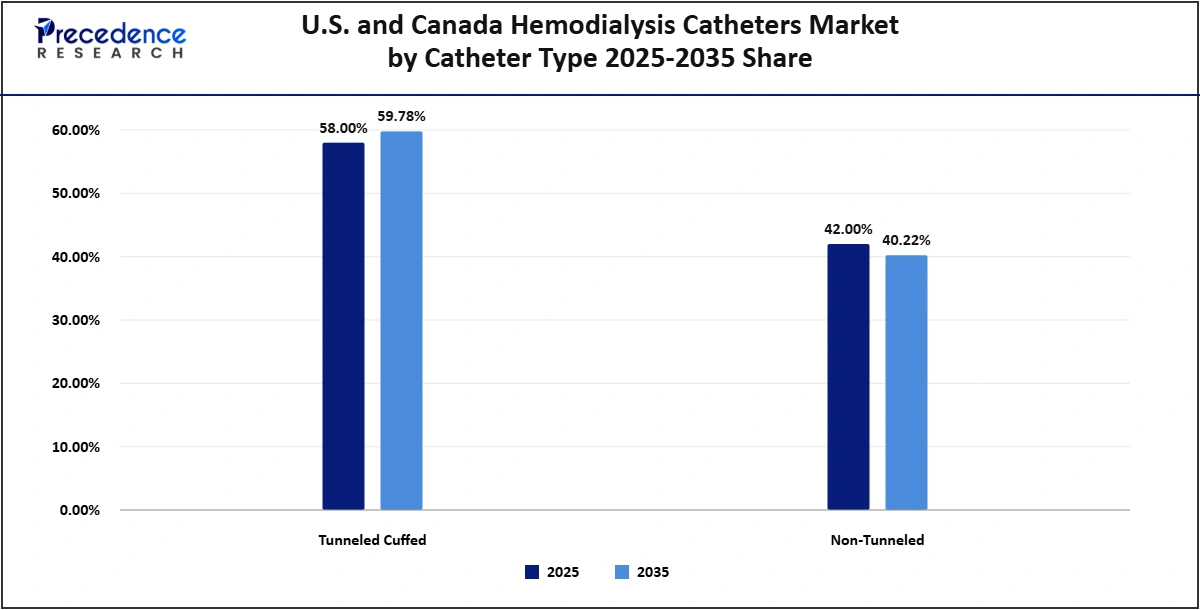
Note: 2025 is the base year; 2035 shares and CAGRs are forecasts.
Sources: Expert interviews, secondary sources, Precedence Research database, and Precedence Research analysts.
In 2025, tunneled cuffed catheters dominated the U.S. and Canada hemodialysis catheters market, accounting for 58% of total revenue. Their lead is supported by widespread use among patients initiating haemodialysis who require long-term vascular access while an arteriovenous fistula or graft matures. Non-tunneled catheters accounted for the remaining 42% of the market, serving patients requiring temporary access for emergency dialysis and inpatient renal replacement therapy.
Tunneled cuffed catheters accounted for 58% of the market in 2025 and are projected to grow at a CAGR of 5.35% through 2035. Tunneled cuffed catheters provide long-term vascular access for patients undergoing ongoing haemodialysis. Extended usage periods and higher product prices contribute to the segment's strong market position.
Non-tunneled catheters represented 42% of the market in 2025. The segment is expected to grow at a CAGR of 4.75% from 2026 to 2035. These catheters offer temporary vascular access for urgent dialysis in hospitals and intensive care units. Acute kidney injury and critical illness drive demand, while shorter usage periods and lower prices limit revenue contribution.
U.S. and Canada Hemodialysis Catheters Market by Material, 2025 Share (%)
| Segments | 2025 Share | 2035 Share | CAGR 2026-2035 |
| Polyurethane | 54.00% | 52.17% | 4.64% |
| Silicone | 30.00% | 29.35% | 5.04% |
| Coated & Antimicrobial | 16.00% | 18.48% | 6.64% |
Note: 2025 is the base year; 2035 shares and CAGRs are forecasts.
Sources: Expert interviews, secondary sources, Precedence Research database, and Precedence Research analysts.
On the basis of the materials, Polyurethane dominated the market in 2025 with a 54% revenue share. Silicone ranked second, with a 30% share, supported by its softness and biocompatibility for longer-term catheter use. Coated and antimicrobial catheters held 16% and are expected to grow fastest, driven by demand for infection prevention and enhanced catheter performance.
Polyurethane catheters accounted for 54% of the market in 2025. Polyurethane is a key material for haemodialysis catheters, offering the necessary stiffness for insertion and flexibility at body temperature. The segment is expected to grow at a CAGR of 4.64% through 2035, driven by established manufacturing processes, clinical familiarity, and widespread use in vascular access devices.
Silicone catheters held 30% of the market in 2025 and are expected to register a CAGR of 5.04% from 2026 to 2035. Silicone is valued for its softness, flexibility, and biocompatibility, making it suitable for patients requiring prolonged catheter use. Its material properties support patient comfort and long-term vascular access applications. Continued demand for chronic haemodialysis access is expected to sustain the segment's market contribution.
Coated and antimicrobial catheters captured the remaining 16% market share in 2025. The segment is projected to register the fastest CAGR of 6.64% during the forecast period. These catheters feature specialised coatings that help minimise microbial growth, thrombosis, and related complications. Teleflex's Arrow JACC with Chlorag+ard offers antimicrobial and antithrombogenic protection, supporting growing demand for safer and longer-lasting vascular access solutions.
U.S. and Canada Hemodialysis Catheters Market by Tip Design, 2025-2035 Share (%)
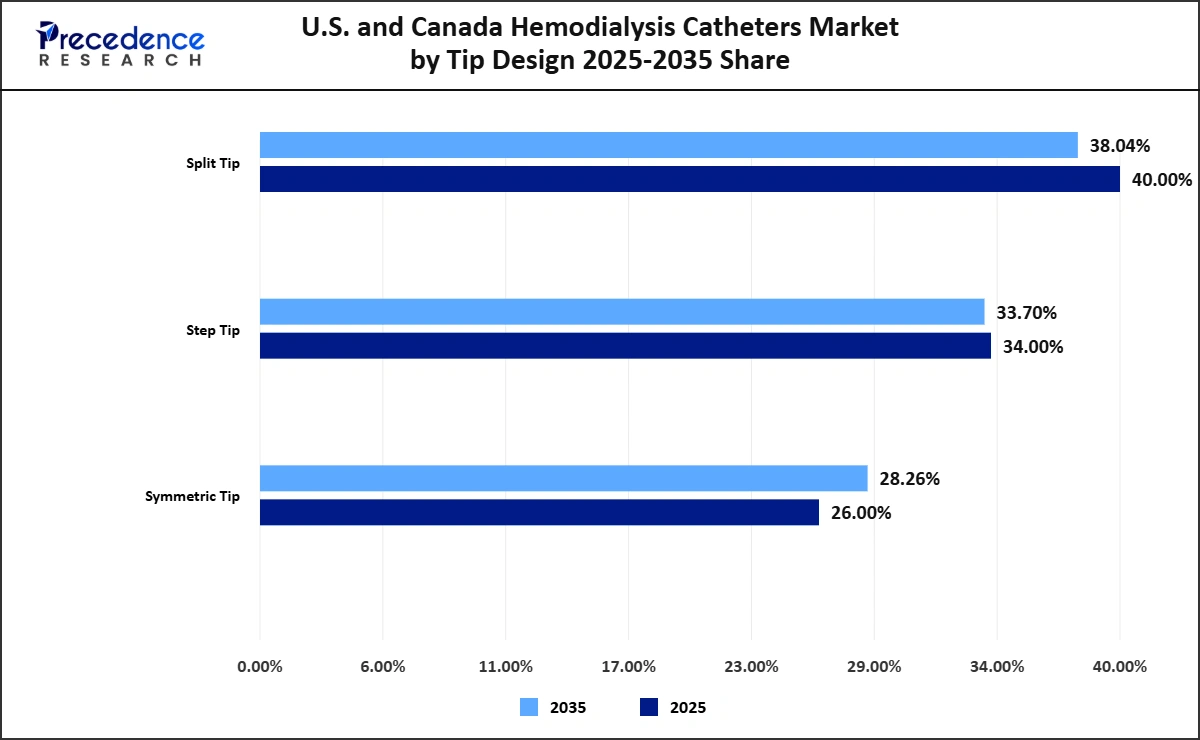
Note: 2025 is the base year; 2035 shares and CAGRs are forecasts.
Sources: Expert interviews, secondary sources, Precedence Research database and Precedence Research analysts.
In the hemodialysis catheters market in the United States, split-tip catheters accounted for a 40% revenue share in 2025, with their ability to provide high and sustained blood flow while helping minimise recirculation during haemodialysis. Step-tip catheters accounted for 34%, followed by symmetric-tip catheters at 26%. Symmetric-tip products are expected to grow fastest through 2035, driven by increasing focus on improved blood flow and reduced thrombus adhesion.
Split-tip catheters captured 40% of the market in 2025. The segment is forecast to grow at a CAGR of 4.53% through 2035. Their divided tip design supports consistent blood flow and reduced recirculation. Continued demand for reliable long-term vascular access is expected to sustain segment growth.
Step-tip catheters captured 34% of the market revenue in 2025 and are expected to grow at a CAGR of 4.93% through 2035. These catheters feature a stepped configuration at the distal end and are valued for their established insertion characteristics and use across haemodialysis applications. Continued demand for conventional vascular access devices is expected to maintain the segment's market contribution.
Symmetric-tip catheters held a 26% market share in 2025 and are projected to achieve the fastest CAGR of 6.13% through 2035. BD's Pristine side-hole-free symmetric Y-tip is designed to minimise thrombus adhesion and recirculation during haemodialysis. Increasing interest in advanced catheter configurations and improved flow performance is expected to strengthen segment growth throughout the forecast period.
U.S. and Canada Hemodialysis Catheters Market by End User, 2025 Share (%)
| Segments | 2025 Share | 2035 Share | CAGR 2026-2035 |
| Hospitals | 46.00% | 43.48% | 4.71% |
| Dialysis Centres | 44.00% | 44.57% | 5.11% |
| Office-Based Labs & ASCs | 10.00% | 11.96% | 6.71% |
Note: 2025 is the base year; 2035 shares and CAGRs are forecasts.
Sources: Expert interviews, secondary sources, Precedence Research database and Precedence Research analysts.
In 2025, hospitals dominated the market with a 46% share, driven by catheter placements for emergency and routine dialysis. Dialysis centres followed with 44%, supported by ongoing catheter maintenance and exchanges. Office-based laboratories and ambulatory surgery centres held 10% and are expected to grow fastest due to increasing outpatient vascular access procedures.
Hospitals accounted for 46% of the market and are projected to grow at a CAGR of 4.71% through 2035. Hospitals remain important end users because they manage patients requiring immediate haemodialysis access, including individuals with advanced kidney disease, acute kidney injury, and other critical conditions. Their specialised infrastructure supports catheter placement, replacement, and management.
Dialysis centres held 44% of the market in 2025. The segment is expected to register a CAGR of 5.11% from 2026 to 2035. These facilities require haemodialysis catheters for routine dialysis procedures, catheter exchanges, and ongoing vascular access management. The growing population of patients receiving chronic haemodialysis supports recurring demand across specialised dialysis networks.
Office-based laboratories and ambulatory surgery centres represented the remaining market share of 10% in 2025 and are projected to register the fastest CAGR of 6.71% through 2035. These facilities support catheter placements, exchanges, and specialised vascular access procedures outside traditional hospital settings. The shift towards outpatient care, improvements in minimally invasive procedures, and investment in specialised access facilities are expected to support segment expansion.
Analyst View: Our analysis indicates that coated and antimicrobial catheters, symmetric-tip designs, and office-based laboratories and ambulatory surgery centres are poised to record the fastest market share gains. In contrast, tunneled cuffed catheters, polyurethane materials, split-tip designs, and hospitals are expected to maintain their leading market positions, supported by established clinical applications and sustained demand for reliable haemodialysis vascular access.
Country Analysis
U.S. and Canada Hemodialysis Catheters Market by Country, 2025 Share (%)
| Country | 2025 Share | 2035 Share | CAGR 2026-2035 |
| U.S. | 91.00% | 89.13% | 4.95% |
| Canada | 9.00% | 10.87% | 6.55% |
Note: 2025 is the base year; 2035 shares and CAGRs are forecasts.
Sources: Expert interviews, secondary sources, Precedence Research database and Precedence Research analysts.
The United States accounted for an estimated 91% of the combined market in 2025, while Canada represented the remaining 9%. The United States' larger contribution reflects its greater dialysis treatment volume and established vascular access infrastructure. Canada is projected to record faster growth, although its smaller starting market means that its contribution to total incremental revenue will remain comparatively limited.
Country Insights
The United States dominated the U.S. and Canada hemodialysis catheters market, accounting for 91% of revenue in 2025. The country is projected to grow at a CAGR of 4.95% through 2035. The market in the United States benefits from over half a million haemodialysis patients, established providers such as DaVita and Fresenius Medical Care, and sustained demand for tunneled and non-tunneled catheters across hospitals and dialysis centres.
Canada accounted for the remaining 9% of the market in 2025 and is projected to register the fastest country-level growth, with a CAGR of 6.55% through 2035. The Canadian market is supported by investments in provincial dialysis facilities, demand for renal replacement therapy, and healthcare needs of an ageing population affected by diabetes and kidney disease. Expanding dialysis services and specialised kidney care facilities are expected to boost demand for haemodialysis catheters across Canada.
Analyst View: Our analysis suggests that the United States dominated the regional market in 2025, supported by its large haemodialysis patient population, established dialysis infrastructure, and major providers such as DaVita and Fresenius Medical Care. In comparison, Canada is expected to record faster growth, with a projected CAGR of approximately 6.5% through 2035, driven by investments in provincial dialysis facilities, an ageing population, and rising cases of diabetes and kidney disease. Expanding renal care services and demand for renal replacement therapy are expected to strengthen Canada's market growth.
Competitive Landscape
Top Companies in the U.S. and Canada Hemodialysis Catheters Market, 2025
| Rank | Company Name | 2025 Share (%) | Key Products / Business | Headquarters |
| 1 | BD | 24.00% | Pristine, GlidePath and HemoSplit long-term catheters | United States |
| 2 | Medtronic | 18.00% | Mahurkar acute and Palindrome chronic catheters | Ireland |
| 3 | Teleflex | 14.00% | Arrow NextStep and Arrow JACC catheters | United States |
| 4 | Merit Medical | 10.00% | ProGuide chronic dialysis catheters | United States |
| 5 | AngioDynamics | 8.00% | dialysis catheters | United States |
| 6 | Cook Medical | 5.00% | acute and chronic dialysis catheters | United States |
| 7 | B. Braun | 4.00% | acute dialysis catheters | Germany |
| 8 | Nipro | 2.00% | dialysis catheters | Japan |
| 9 | Bluegrass Vascular | 1.00% | Surfacer inside-out access system | United States |
Note: Company shares are 2025 estimates.
Sources: Company press releases, expert interviews, secondary sources, Precedence Research database and Precedence Research analysts.
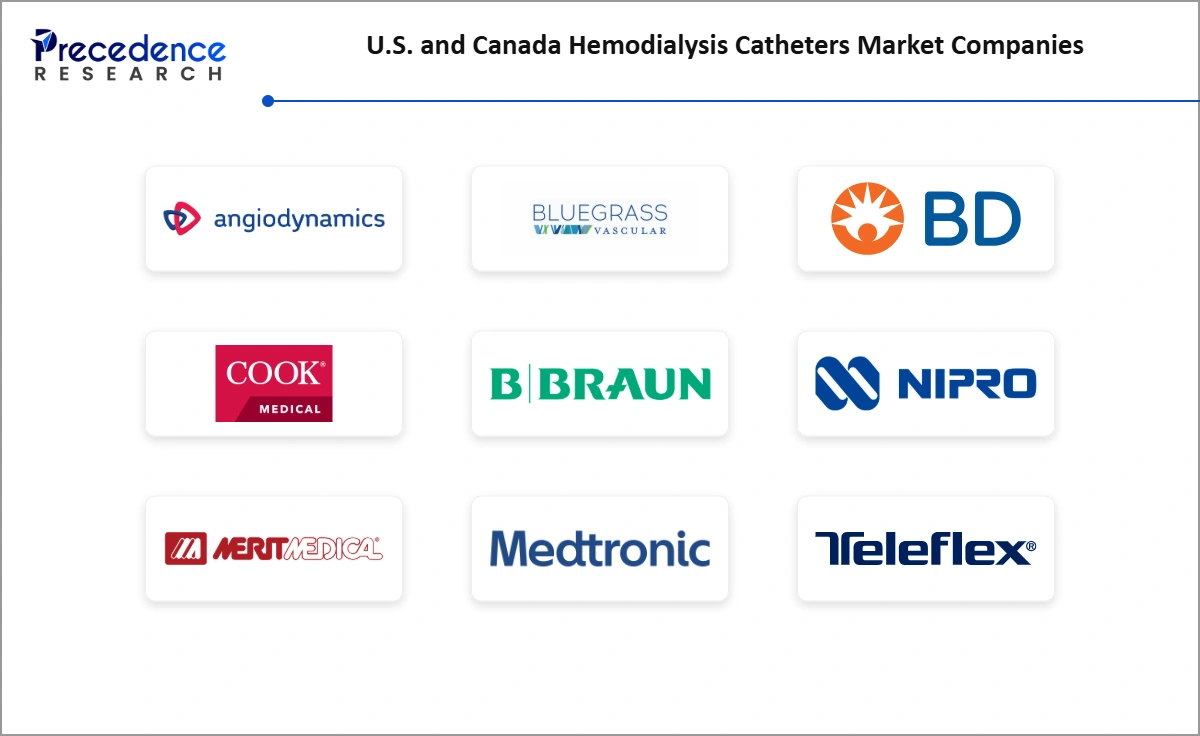
In 2025, BD dominated the U.S. and Canada hemodialysis catheters market, accounting for an estimated 24% of total revenue, followed by Medtronic at 18% and Teleflex at 14%. These companies benefit from established vascular access product portfolios, broad distribution networks, and strong relationships with hospitals and dialysis providers.
BD competes through its Pristine, GlidePath, and HemoSplit long-term catheters, while Medtronic maintains its market presence through Mahurkar acute and Palindrome chronic catheters. Teleflex offers Arrow NextStep and Arrow JACC catheters, while Merit Medical focuses on ProGuide chronic dialysis catheters. AngioDynamics, Cook Medical, B. Braun, Nipro, and Bluegrass Vascular participate through dialysis catheters, acute and chronic vascular access products, and the Surfacer inside-out access system.
In 2025, the nine listed companies accounted for an estimated 86% of hemodialysis catheters market revenue in the United States and Canada, while smaller manufacturers and private-label suppliers captured the remaining 14%. The market is characterized by competition centred on infection prevention, thrombus resistance, blood flow performance, ease of insertion, product reliability, and pricing. Group purchasing organisation contracts and agreements with major dialysis providers also influence manufacturers' competitive positions.
Company Snapshots
BD: BD dominated the U.S. and Canada hemodialysis catheters market, accounting for an estimated 24% of revenue in 2025. Headquartered in the United States, the company provides Pristine, GlidePath, and HemoSplit long-term haemodialysis catheters, positioning it as a leader in the Precedence Research Companies Quadrant with its established vascular access portfolio and strong presence in healthcare facilities.
Medtronic: In 2025, Medtronic accounted for approximately 18% of the market. Headquartered in Ireland, the company competes through its Mahurkar acute and Palindrome chronic dialysis catheters. Its presence across temporary and long-term vascular access applications positions it as a Leader in the Precedence Research Companies Quadrant.
Teleflex: Teleflex held an estimated 14% revenue share in 2025. Its portfolio includes advanced vascular access technologies and antimicrobial catheter solutions, including Arrow NextStep and Arrow JACC catheters. These offerings position the company as a Leader in the Precedence Research Companies Quadrant.
Merit Medical: Accounted for approximately 10% of the market in 2025, Merit Medical, headquartered in the United States, competes through its ProGuide chronic dialysis catheters. Its established presence in interventional and vascular access products positions it as a Leader in the Precedence Research Companies Quadrant.
AngioDynamics: In 2025, AngioDynamics held an estimated 8% share of the U.S. and Canada hemodialysis catheters market. Headquartered in the United States, the company participates through its dialysis catheter portfolio. Its presence in vascular access and interventional medical devices positions it as a Leader in the Precedence Research Companies Quadrant.
Cook Medical: Cook Medical held about 5% of the market in 2025 and is based in the United States. The company specializes in acute and chronic dialysis catheters for vascular access, establishing itself as a Leader in the Precedence Research Companies Quadrant.
B. Braun: In the hemodialysis catheters market in the United States and Canada, B. Braun held an estimated 4% share in 2025. The German company participates through acute dialysis catheters. Its broader expertise in infusion therapy and medical devices positions it as an Innovator in the Precedence Research Companies Quadrant.
Nipro: In 2025, Nipro accounted for approximately 2% of the market. Headquartered in Japan, the company offers dialysis catheters and other renal care products. Its presence in the global dialysis and medical device industry positions it as an Innovator in the Precedence Research Companies Quadrant.
Bluegrass Vascular: Bluegrass Vascular held approximately 1% of the U.S. and Canada hemodialysis catheters market in 2025. Based in the United States, the company provides the Surfacer inside-out access system for establishing central venous access in patients with difficult vascular access situations, positioning itself as an Innovator in the Precedence Research Companies Quadrant.
Companies Ecosystem
The U.S. and Canada hemodialysis catheter ecosystem comprises medical device manufacturers, raw material suppliers, coating technology developers, distributors, healthcare providers, hospitals, dialysis centres, and regulatory bodies. These stakeholders support product development, manufacturing, distribution, clinical trials, catheter placement, and vascular access management. Manufacturers work with healthcare providers to introduce advanced materials, antimicrobial coatings, and improved catheter designs. The ecosystem also connects with the wider renal care industry, including dialysis equipment, infusion pump technologies, home hemodialysis services, and digital health platforms that support chronic kidney disease management.
U.S. and Canada Hemodialysis Catheters Market Ecosystem
| Ecosystem Stage | Role in the Market | Key Companies |
| Device Makers | Make catheters | BD, Medtronic, Teleflex, Merit |
| Distributors & GPOs | Supply hospitals and clinics | Vizient, Premier, Owens & Minor |
| Interventional Physicians | Place catheters | interventional radiologists, nephrologists, vascular surgeons |
| Dialysis Providers | Use and maintain catheters | DaVita, Fresenius, regional clinics |
| Payers & Regulators | Pay and set rules | CMS, provincial plans, FDA |
Sources: Company press releases, expert interviews, secondary sources, Precedence Research database and Precedence Research analysts.
Device Makers: Manufacturers compete through advanced catheter tip designs, antimicrobial coatings, and antithrombogenic materials that help reduce catheter-related infections, thrombosis, and occlusions, the major causes of catheter failure.
Distributors & GPOs: Distributors and group purchasing organisations (GPOs) influence product availability and purchasing decisions through supply agreements, bulk procurement contracts, and pricing arrangements with hospitals and dialysis providers.
Interventional Physicians: Interventional physicians perform catheter placements, exchanges, and vascular access procedures. The adoption of office-based laboratories and ambulatory surgery centres is expanding outpatient procedural opportunities.
Dialysis Providers: Dialysis providers manage routine catheter use, maintenance, and replacement while implementing strict catheter care protocols to minimise bloodstream infections and other vascular access complications.
Payers & Regulators: Payers and regulators influence catheter utilisation through reimbursement policies, CMS quality programmes, infection prevention requirements, and initiatives encouraging providers to reduce long-term catheter dependence.
The U.S. and Canada hemodialysis catheters market value chain begins with material and coating technology suppliers and continues through catheter manufacturing, distribution, vascular access procedures, dialysis service delivery, and patient care. Regulatory requirements and reimbursement policies influence product development, purchasing decisions, and catheter utilisation. Companies that integrate multiple stages or establish long-term relationships with hospitals, dialysis providers, and procurement organisations can strengthen their competitive positions.
Precedence Research Companies Quadrant
The Precedence Research Companies Quadrant positions key participants in the U.S. and Canada hemodialysis catheters market by market strength, reflecting revenue scale, market share, and geographic reach, and by innovation and growth strategy, reflecting product portfolio breadth, R&D intensity, and partnerships. Positions reflect each company's estimated 2025 share of the hemodialysis catheters market in the United States and Canada and our assessment of its product innovation, portfolio breadth, and partnerships.
Sources: Company press releases, expert interviews, secondary sources, Precedence Research database and Precedence Research analysts.
Leaders: BD, Medtronic, Teleflex, Merit Medical, AngioDynamics, and Cook Medical combine high market share with broad product portfolios, established distribution networks, and strong market presence.
Innovators: B. Braun, Nipro, and Bluegrass Vascular bring specialised vascular access products, advanced technologies, and differentiated solutions to the market.
Recent Developments
- April 2026: Ellipsys Medical said its Ellipsys percutaneous arteriovenous fistula system will re-enter the United States, with commercial availability expected in mid-2026, potentially providing an alternative to long-term catheter-based vascular access for suitable patients.
- April 2026: Xeltis received CE marking for Axess, a restorative vascular access conduit designed for haemodialysis applications, supporting the development of next-generation vascular access solutions.
U.S. and Canada Hemodialysis Catheters Market Segments
By Catheter Type
- Tunneled Cuffed
- Non-Tunneled
By Material
- Polyurethane
- Silicone
- Coated & Antimicrobial
By Tip Design
- Split Tip
- Step Tip
- Symmetric Tip
By End User
- Hospitals
- Dialysis Centres
- Office-Based Labs & ASCs
By Country
- U.S.
- Canada
Research Methodology: The U.S. and Canada hemodialysis catheters market was evaluated using a bottom-up assessment of haemodialysis patient volumes, catheter utilisation rates, replacement and exchange frequency, acute dialysis procedures, and average selling prices across major catheter types, materials, tip designs, end users, and countries. The market comprises tunneled cuffed long-term catheters and non-tunneled acute catheters manufactured using polyurethane, silicone, and coated or antimicrobial materials, with split-tip, step-tip, and symmetric-tip configurations. These products are used across hospitals, dialysis centres, office-based laboratories, and ambulatory surgery centres in the United States and Canada. The 2025 base-year estimate was developed by analysing incident and prevalent haemodialysis patient volumes, catheter adoption rates, and average product prices across catheter categories and end-user settings in both countries. Acute kidney injury-related dialysis requirements and catheter repla ement volumes were also considered. The resulting estimates were validated against market-specific revenues of leading medical device manufacturers, public industry information, and relevant company disclosures.Company market shares were determined using estimated revenues attributable to haemodialysis catheter products. Key assumptions were cross-checked against company disclosures, regulatory and industry information, expert interviews, and third-party estimates. Estimates that could not be reconciled were excluded from the final assessment. All segment, country, and company estimates were reconciled to the same 2025 base year. The 2026-2035 forecast incorporates expected changes in the dialysis population, catheter utilisation rates, acute dialysis requirements, adoption of antimicrobial coatings, advanced tip designs, vascular access policies, outpatient procedural capacity, and pricing pressures.
Analyst View: In our assessment, the U.S. and Canada hemodialysis catheters market is positioned for steady growth as the increasing burden of end-stage kidney disease and acute kidney injury sustains demand for vascular access devices. We expect tunneled cuffed catheters to maintain their leading position, supported by their widespread use in long-term haemodialysis access, while non-tunneled catheters will continue to serve acute and emergency dialysis requirements. Polyurethane will remain the leading material segment, whereas coated and antimicrobial catheters are projected to expand at a faster rate as healthcare providers prioritise infection prevention. Split-tip catheters will retain their leading tip design share, while symmetric-tip products are expected to gain adoption through improvements in flow performance and thrombus resistance. Hospitals will continue to account for the largest end-user share, whereas office-based laboratories and ambulatory surgery centres are projected to experience faster growth as vascular access procedures move towards outpatient settings. The United States will retain its dominant market position, supported by its substantial haemodialysis population and established dialysis provider networks, while Canada is expected to record faster growth through expanding provincial dialysis infrastructure. Companies strengthening antimicrobial technologies, catheter performance, product portfolios, and relationships with major dialysis providers will improve their competitive positions.
Sources and References
- Endovascular Today. "Ellipsys Vascular Access System to return to market". April 2026. News. (Source: evtoday.com)
- Medical Device Network. "Teleflex secures FDA 510(k) clearance for Arrow JACC with Chlorag+ard Technology". 2024. News. (Source: medicaldevice-network.com)
For inquiries regarding discounts, bulk purchases, or customization requests, please contact us at sales@precedenceresearch.com
Frequently Asked Questions





Ask For Sample
No cookie-cutter, only authentic analysis – take the 1st step to become a Precedence Research client
 Get a Sample




 sales@precedenceresearch.com
 Schedule a Meeting
