


U.S. Biospecimen Market Size, Key Companies, Company Production Capacity, Healthcare Infrastructure Growth, Product Utilization, Regulatory Compliance, Company Expansion Strategies, Company Investment Strategies, and Market Outlook
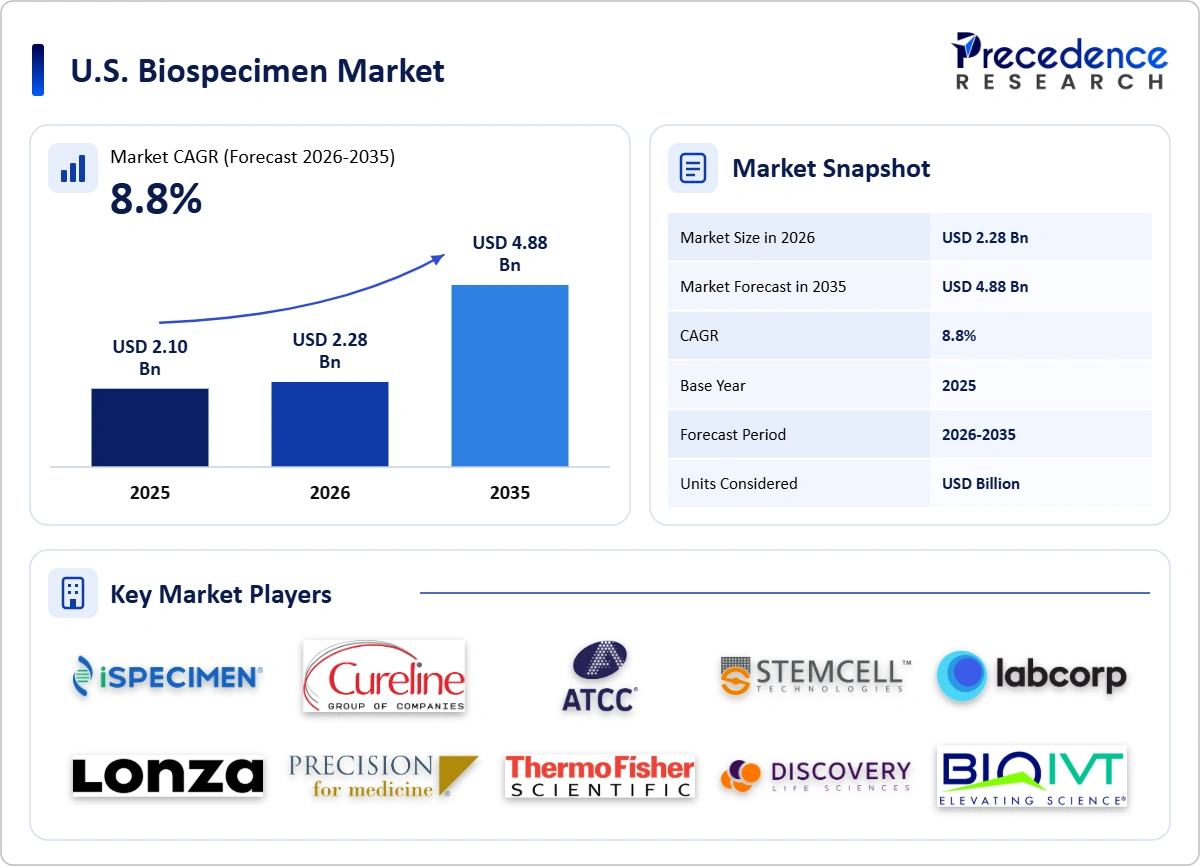
Payal Rabde, a Healthcare Industry Expert, highlights that the U.S. biospecimen market has reached USD 2.28 billion in 2026 and is on track to reach USD 4.88 billion by 2035, advancing at a CAGR of 8.8%. Key U.S. biospecimen market companies shaping the market include BioIVT, Discovery Life Sciences, Thermo Fisher Scientific, while major growth segments span sample type, application, end-user and region.
Source: https://www.precedenceresearch.com/us-biospecimen-market
 Get a Sample
 Table Of Content
Key Takeaways
Market Size & Growth Outlook
- Market size in 2025: USD 2.10 billion
- Estimated market size in 2026: USD 2.28 billion
- Projected market size by 2035: USD 4.88 billion
- CAGR (2026-2035): 8.8%
Regional Market Spotlight
- In 2025, the Northeast led the market with a 32% revenue share.
- The West accounted for 28% of the market in 2025.
- The South represented 24% of the market in 2025 and is projected to be the fastest-growing region, registering a CAGR of 9.82% from 2026 to 2035.
Segmental Spotlight
- Blood and Blood Products emerged as the leading sample type segment, accounting for 34% of the market in 2025.
- In 2025, Drug Discovery and Development dominated the application segment, holding a 44% market share.
- Pharma and Biotech Companies led the end-user segment, capturing 50% of the market in 2025.
U.S. Biospecimen Market Size and Forecast, 2025-2035 (USD Billion)
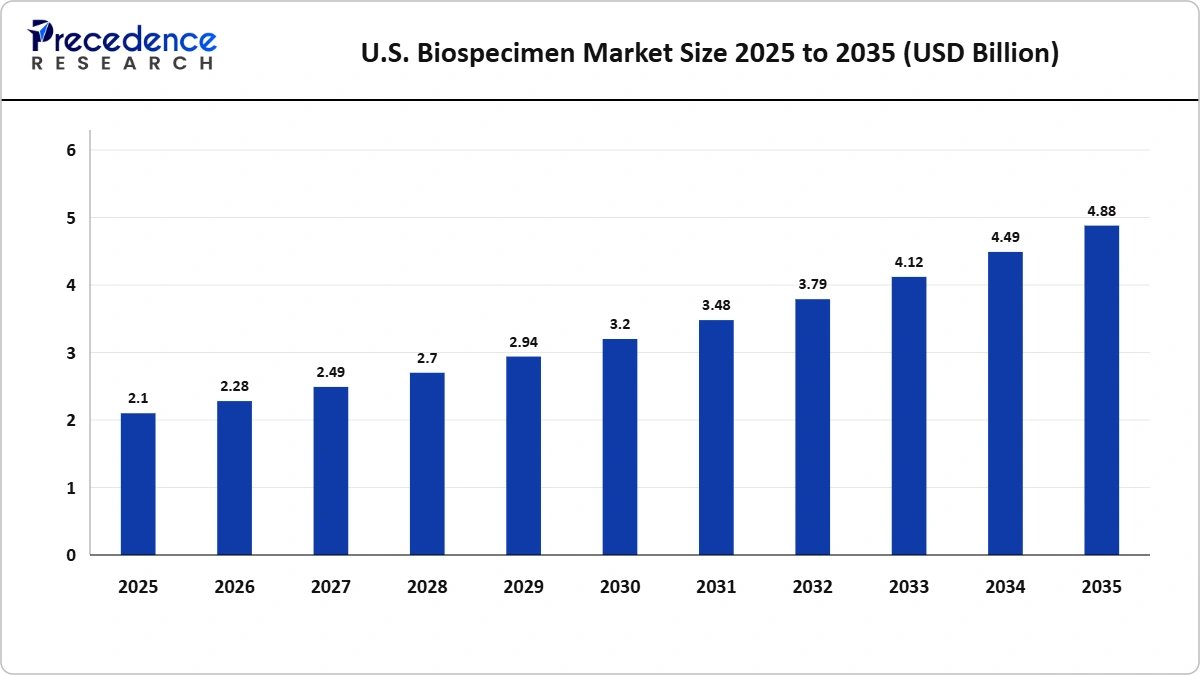
Note: 2025 is the base year; 2026-2035 values are forecasts.
Sources: Expert interviews, secondary sources, Precedence Research database, and Precedence Research analysts.
The U.S. biospecimen market is projected to grow from USD 2.10 billion in 2025 to USD 4.88 billion by 2035, driven by demand for well-annotated human biological samples in drug discovery, diagnostics development, and precision medicine. Pharmaceutical and biotechnology companies increasingly rely on human biospecimens for biomarker research, target identification, and drug development.
The market is expected to reach USD 3.20 billion by 2030 and sustain a CAGR of 8.8% from 2026 to 2035. The growing adoption of human-relevant testing methods, clinical trials, regenerative medicine, and enzyme research is supporting market expansion.
Analyst View: We developed the market estimate using biospecimen volumes by sample type and application and average prices by region, cross-validated against revenues of leading providers. Published estimates for this exact U.S. market scope are limited, making our estimate an evidence-based assessment.
Market Trends
- The adoption of New Approach Methodologies (NAMs) using human cells is increasing demand for human-relevant biospecimens.
- Growing demand for liquid biopsy samples is supporting the development of diagnostics and precision medicine.
- Increasing research into rare diseases is creating demand for specialized and disease-specific biological samples.
- Digital biobank marketplaces are improving access to biospecimens for researchers and pharmaceutical companies.
- Consent, privacy, and ethical sourcing requirements are influencing biospecimen procurement and management.
- Increasing demand for longitudinal samples is supporting biomarker discovery and clinical research.
U.S. Biospecimen Market Drivers, Restraints, and Opportunities
Driver
The biospecimen market in the United States is supported by increasing drug discovery activity and the adoption of human-relevant testing methods. Developments in diagnostics and precision medicine also support market growth in the country. Pharmaceutical and biotechnology companies increasingly require high-quality human biological samples for target identification, biomarker research, and drug development.
The shift toward human cell-based research and New Approach Methodologies is further increasing demand for human tissues, primary cells, and other biological materials. Growing diagnostic research and clinical development activities are supporting market demand throughout the forecast period.
Restraint
Ethical and consent requirements present significant challenges in the U.S. biospecimen market. It is crucial for providers to adhere to regulations concerning the collection, processing, storage, and distribution of samples, ensuring compliance with relevant consent and privacy standards.
Sample quality variability hampers the market due to inconsistencies in collection, processing, storage, and handling methods, which can compromise sample integrity. Furthermore, the logistical and transportation demands, especially for temperature-sensitive biological materials, can elevate operational costs in the United States.
Opportunity
The adoption of human cell models and New Approach Methodologies is fostering new opportunities for biospecimen suppliers. This trend is driven by the increasing demand for rare disease samples and oncology tissues, which is supporting the development of specialized biospecimen collections in the United States.
Digital marketplaces and enhanced access to liquid biopsy samples present significant opportunities for suppliers to broaden their distribution networks. Rising demand for well-characterized and longitudinal samples is expected to support market growth during the forecast period.
Market Drivers - Impact & CAGR Contribution (2026-2035)
| Driver | Impact | ≈ CAGR Contribution | Time Horizon | Key Regions |
| Drug discovery grows | High | +3.44 pp | Short to long term | U.S.-wide, strongest in Northeast |
| FDA push for human-relevant methods | Medium | +2.90 pp | Medium to long term | U.S.-wide, fastest uptake in South |
| Diagnostics development | Medium | +2.47 pp | Short to medium term | U.S.-wide |
| Precision medicine | Low | +1.93 pp | Long term | Northeast and South |
Note: Contributions are indicative estimates of each factor's effect on annual growth.
Sources: Expert interviews, secondary sources, Precedence Research database and Precedence Research analysts.
Drug discovery significantly boosts the U.S. biospecimen market, accounting for about 3.44 percentage points of annual growth. The FDA's advocacy for human-relevant testing promotes the use of human cells and tissues in research. This contributes around 10.74 percentage points to annual market growth, with drug discovery being the primary contributor.
Market Restraints - Impact & Negative CAGR Contribution (2026-2035)
| Restraint | Impact | ≈ Negative CAGR Contribution | Time Horizon | Key Regions |
| Ethical and consent requirements | High | -0.87 pp | Short to medium term | U.S.-wide |
| Sample quality variability | High | -0.64 pp | Medium term | Smaller and price-sensitive markets |
| Logistics | Medium | -0.43 pp | Short term | Northeast and other mature markets |
Note: Contributions are indicative estimates of each factor's effect on annual growth.
Sources: Expert interviews, secondary sources, Precedence Research database, and Precedence Research analysts.
Annual market growth is projected to decrease by approximately 1.94 percentage points due to ethical and consent requirements, sample quality variability, and logistics challenges, with ethical concerns being the most significant barrier. These factors are expected to moderate market expansion, resulting in a projected CAGR of 8.8% from 2026 to 2035.
U.S. Biospecimen Market Segmentation: 2025 Share and Size
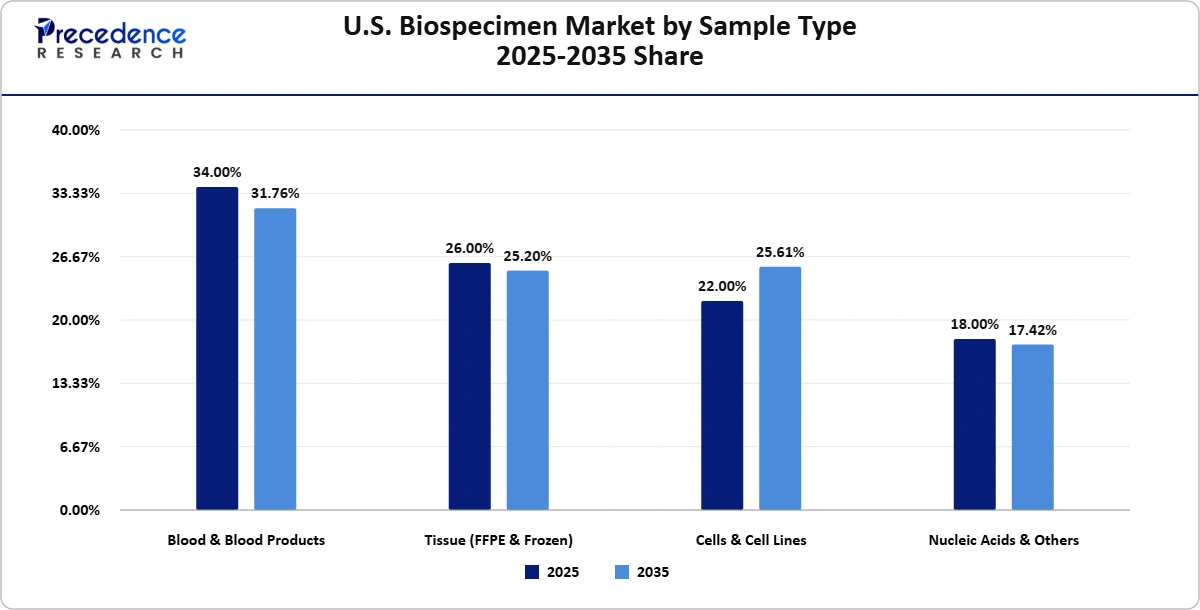
U.S. Biospecimen Market By Sample Type 2025-2035 Share
Note: 2025 is the base year; 2035 shares and CAGRs are forecasts.
Sources: Expert interviews, secondary sources, Precedence Research database, and Precedence Research analysts.
In 2025, Blood and Blood Products accounted for 34% of the U.S. biospecimen market, followed by Tissue (FFPE and Frozen) at 26%, Cells and Cell Lines at 22%, and Nucleic Acids and Others at 18%. Blood and Blood Products are widely used in research assays, while Cells and Cell Lines are expected to record the fastest growth among sample-type segments during the forecast period.
Blood and Blood Products accounted for 34% of the market in 2025 and are projected to grow at a CAGR of 8.06% from 2026 to 2035. Serum, plasma, and whole blood are widely used in research assays, biomarker studies, and diagnostics development. Their extensive applications continue to support the segment's leading market position. However, growth is expected to remain below the overall market.
Tissue (FFPE and Frozen) represented 26% of the market in 2025. These samples are forecast to expand at a CAGR of 8.46% through 2035. Human tissue samples play a crucial role in oncology research, drug discovery, and biomarker development. While there is a sustained demand for these samples, the segment's growth is projected to be slower than that of the overall market.
Cells and Cell Lines captured 22% of the market in 2025 and are anticipated to register the highest CAGR of 10.46% through 2035. Primary cells, hepatocytes, and peripheral blood mononuclear cells (PBMCs) are integral to human-relevant research models, with demand driven by New Approach Methodologies. As a result, this segment is projected to grow faster than the overall market.
Nucleic Acids and Others held an 18% market share in 2025. The segment is expected to grow at a CAGR of 8.46% between 2026 and 2035. This segment includes nucleic acids and other biological samples such as cerebrospinal fluid (CSF) and urine. These materials support specialized research and diagnostic applications. However, the segment is expected to grow more slowly than the overall market.
Segment Outlook: Blood and Blood Products will remain the largest segment in the market until 2035, despite a decline in market share from 34% in 2025 to 31.76%. Conversely, Cells and Cell Lines are projected to grow rapidly, with a CAGR of 10.46%, increasing their share to 25.61% by 2035. Nucleic Acids and Others will hold the smallest market share.
U.S. Biospecimen Market By Application 2025 Share
| Segments | 2025 Share | 2035 Share | CAGR 2026-2035 |
| Drug Discovery & Development | 44.00% | 41.80% | 8.27% |
| Diagnostics Development | 24.00% | 26.43% | 9.87% |
| Clinical Research | 18.00% | 17.83% | 8.67% |
| Academic Research | 14.00% | 13.93% | 8.67% |
Note: 2025 is the base year; 2035 shares and CAGRs are forecasts.
Sources: Expert interviews, secondary sources, Precedence Research database and Precedence Research analysts.
Drug Discovery and Development led with 44% of the U.S. biospecimen market in 2025. This segment dominates because pharmaceutical and biotechnology companies extensively use biospecimens for target identification and biomarkers research. Diagnostics Development followed at 24% in 2025 and is projected to record the fastest growth among application segments through 2035. Clinical Research accounted for 18%, and Academic Research for 14%.
Drug Discovery and Development represented 44% of the market in 2025 and is projected to grow at a CAGR of 8.27% from 2026 to 2035. Pharmaceutical and biotechnology companies use human biological samples for target identification, biomarker discovery, and drug development. However, the demand for these human-relevant research materials is expected to grow more slowly than the overall market.
Diagnostics Development accounted for 24% of the market in 2025. The application is expected to register a CAGR of 9.87% through 2035. Increasing demand for diagnostic assay development using human biological samples, alongside the rise of precision medicine and biomarker-based diagnostics, is expected to lead to faster growth in this segment compared to the overall market.
Clinical Research held an 18% market share in 2025 and is forecast to expand at a CAGR of 8.67% from 2026 to 2035. Biospecimens play a crucial role in clinical research for biomarker analysis and disease studies. Increasing biospecimen requirements in clinical research are anticipated to drive demand in this segment, which is expected to grow in tandem with the overall market.
Academic Research captured 14% of the market in 2025 and is anticipated to grow at a CAGR of 8.67% through 2035. Academic institutions utilize human biological samples for disease research and scientific studies. This demand from universities and research institutes is anticipated to drive market growth, with the segment expected to align closely with market growth during the forecast period.
Segment Outlook: Drug Discovery and Development is expected to remain the largest application by 2035, although its share is projected to drop from 44% in 2025 to around 41.80% in 2035. Diagnostics Development is anticipated to record the highest application-level CAGR of 9.87%, growing its share to 26.43%. Academic Research is expected to maintain the smallest market share throughout the forecast period.
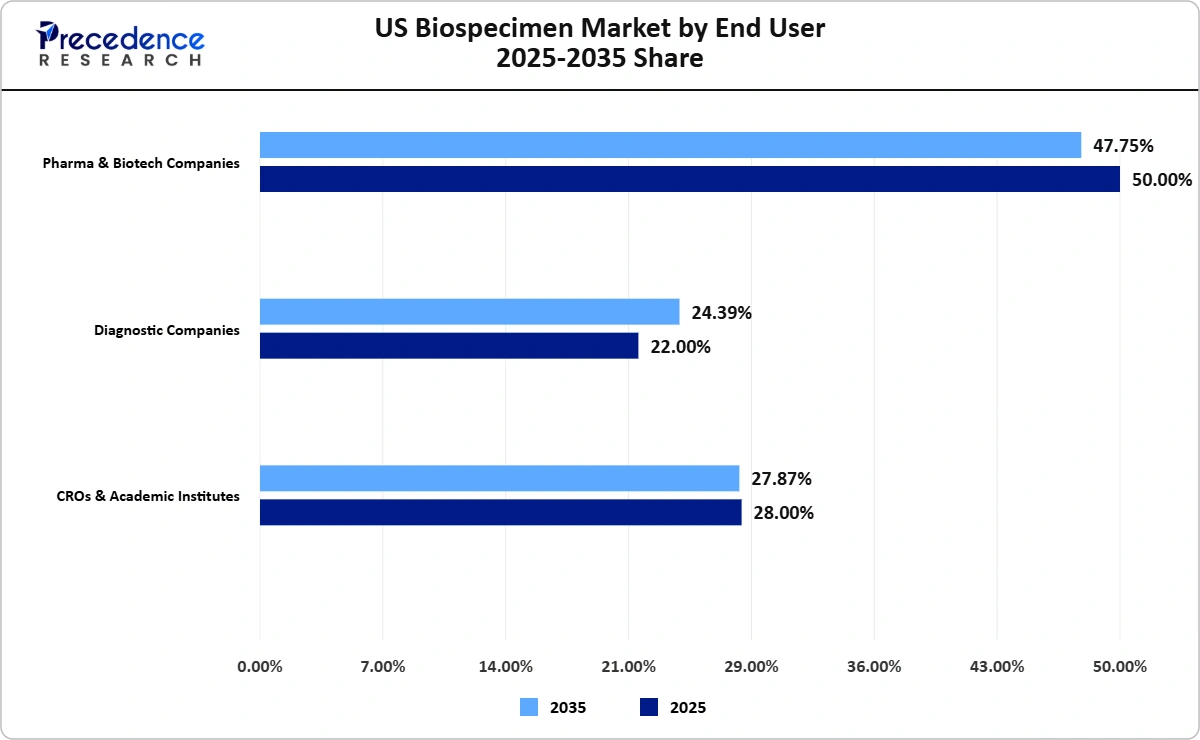
US Biospecimen Market by End User 2025 Share
Note: 2025 is the base year; 2035 shares and CAGRs are forecasts.
Sources: Expert interviews, secondary sources, Precedence Research database and Precedence Research analysts.
In 2025, Pharma and Biotech companies held 50% of the U.S. biospecimen market, primarily due to their high demand for human biological samples in drug discovery. CROs and Academic Institutes comprised 28%, while Diagnostic Companies accounted for 22% and are expected to experience the fastest growth among end-users through 2035.
Pharma and Biotech Companies accounted for 50% of the market in 2025 and are projected to expand at a CAGR of 8.32% from 2026 to 2035. These companies drive significant biospecimen demand through the use of human tissues, blood, cells, and nucleic acids in drug discovery and development. Their extensive research and development activities support their leading market position; growth in this segment is anticipated to be slower than the market growth.
Diagnostic Companies held a 22% market share in 2025 and are forecast to register a CAGR of 9.92% through 2035. Increasing demand for diagnostic assays, validation, and biomarker testing is driving utilization of biospecimens, with the adoption of precision medicine accelerating the need for human biological samples. This segment is anticipated to outpace overall market growth throughout the forecast period.
CROs and Academic Institutes represented 28% of the market in 2025 and are projected to grow at a CAGR of 8.72% from 2026 to 2035. Contract research organizations and academic institutes use biospecimens for clinical research, disease studies, and academic investigations. Their ongoing research requirements are expected to sustain segment growth. The segment is projected to grow broadly in line with the overall market.
Segment Outlook: Pharma and Biotech Companies are expected to remain the largest end-user segment by 2035, although their share is projected to decrease from 50% in 2025 to around 47.75% in 2035. Diagnostic Companies are anticipated to record the highest end-user-level CAGR of 9.92%, increasing their market share to 24.39%. CROs and Academic Institutes will continue to represent an important source of demand across clinical and academic research.
Analyst View: In our analysis, segment estimates were developed by allocating market demand according to sample type, application, end-user requirements, and pricing. Blood and Blood Products, Drug Discovery and Development, and Pharma and Biotech Companies remain the leading segments because they address core requirements of biospecimen buyers. However, Cells and Cell Lines, Diagnostics Development, and Diagnostic Companies are expected to gain market share as human-relevant testing methods and diagnostic research activities expand.
Country Analysis of the U.S. Biospecimen Market
US Biospecimen Market by Country 2025 Share
| Country | 2025 Share | 2035 Share | CAGR 2026-2035 |
| Northeast | 32.00% | 30.33% | 8.22% |
| West | 28.00% | 27.46% | 8.62% |
| South | 24.00% | 26.43% | 9.82% |
| Midwest | 16.00% | 15.78% | 8.62% |
Note: 2025 is the base year; 2035 shares and CAGRs are forecasts.
Sources: Expert interviews, secondary sources, Precedence Research database, and Precedence Research analysts.
The U.S. biospecimen market in 2025 was dominated by the Northeast, which captured a 32% revenue share. The region benefits from established pharmaceutical and biotechnology clusters across Massachusetts, New Jersey, and Pennsylvania. The West ranked second, accounting for a 28% share, while the South accounted for 24% and the Midwest represented 16%. The South is projected to record the fastest regional growth during the forecast period.
The Northeast region dominated the market in 2025, accounting for 32% of the total share, and is forecast to register a CAGR of 8.22% during the forecast period. Established pharmaceutical and biotechnology clusters in Massachusetts, New Jersey, and Pennsylvania support growth in the region. The demand for human biological samples is supported by research organizations and industry participants, although growth in the Northeast is anticipated to be slower than the market.
The West held a 28% market share in 2025. The region is anticipated to grow at a CAGR of 8.62% from 2026 to 2035. The region benefits from established biotechnology hubs in California. The presence of biotechnology companies and research organizations supports demand for biospecimens across drug discovery and research applications. Accordingly, the West is projected to grow broadly in line with the overall market.
The South accounted for 24% of the market in 2025. The region is expected to record the highest regional growth, with a projected CAGR of 9.82% through 2035. Expanding research parks and biotechnology activities in North Carolina and Texas are supporting regional demand. Increasing research investment and adoption of human biological samples are expected to accelerate market expansion. Therefore, the South is projected to grow faster than the market during the forecast period.
The Midwest represented 16% of the market in 2025 and is forecast to expand at a CAGR of 8.62% from 2026 to 2035. The region benefits from academic biobanks and research institutions that support demand for biological samples. Continued academic and research activities are expected to sustain market growth. The Midwest is projected to grow broadly in line with the market.
Analyst View: In our analysis, regional estimates were developed using demand, installed base, spending, and supplier presence across individual regions. The Northeast is expected to maintain its leading position because of its established pharmaceutical and biotechnology ecosystem. The South is projected to record the fastest growth as research investment, adoption, and capacity continue to expand.
Competitive Landscape
Top 10 Companies in the U.S. Biospecimen Market, 2025
| Rank | Company Name | 2025 Share (%) | Key Products / Business | Headquarters |
| 1 | BioIVT | 8.00% | Biospecimens and in vitro research products | United States |
| 2 | Discovery Life Sciences | 8.00% | Biospecimens and cell products | United States |
| 3 | Thermo Fisher Scientific | 6.00% | Human cells and samples | United States |
| 4 | Precision for Medicine | 4.00% | Biospecimens and biomarkers | United States |
| 5 | Lonza | 4.00% | Primary cells | Switzerland |
| 6 | Labcorp | 4.00% | Biospecimen and lab services | United States |
| 7 | STEMCELL Technologies | 3.00% | Primary cells | Canada |
| 8 | ATCC | 3.00% | Cell lines and biological materials | United States |
| 9 | Cureline (ABS Bio) | 2.00% | Tissue biospecimens | United States |
| 10 | iSpecimen | 1.00% | Biospecimen marketplace | United States |
Note: Company shares are 2025 estimates.
Sources: Company press releases, expert interviews, secondary sources, Precedence Research database and Precedence Research analysts.
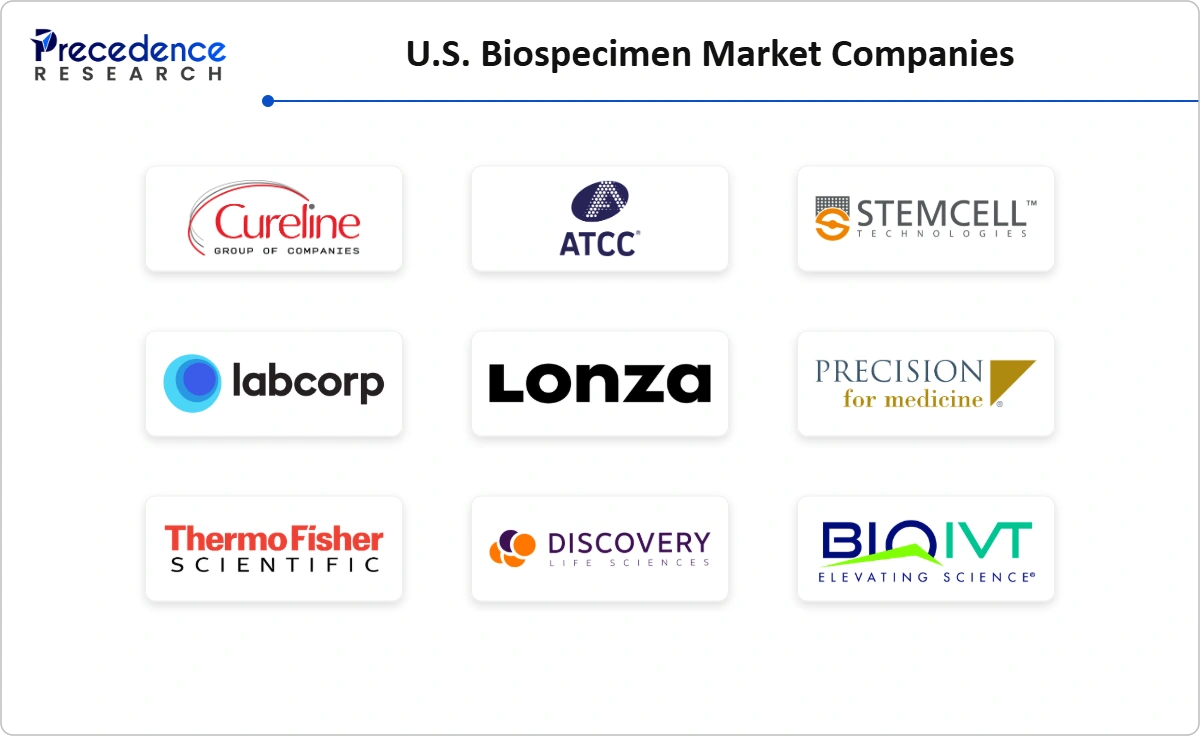
BioIVT and Discovery Life Sciences led the U.S. biospecimen market with estimated shares of 8% each in 2025, followed by Thermo Fisher Scientific at 6%. BioIVT maintains its position through biospecimens and in vitro research products, while Discovery Life Sciences competes through biospecimens and cell products. Thermo Fisher Scientific offers human cells and biological samples for research applications.
Other prominent participants include Precision for Medicine, Lonza, Labcorp, STEMCELL Technologies, ATCC, Cureline (ABS Bio), and iSpecimen. These companies compete through biospecimens and biomarkers, primary cells, laboratory services, cell lines, tissue samples, and biospecimen marketplace solutions.
The top 10 companies accounted for approximately 43.0% of the U.S. biospecimen market in 2025, based on rounded company-share estimates. The remaining market was distributed among other commercial suppliers, specialized collection networks, hospital and academic biobanks, and other specimen repositories. The U.S. biospecimen market remains fragmented, with companies competing on sample quality and annotation, ethical consent, disease coverage, turnaround time, logistics, and pricing.
Company Snapshots
BioIVT: BioIVT maintained a leading position in the U.S. biospecimen market, accounting for an estimated 8% share in 2025. The New York-based company offers a broad portfolio of biospecimens and in vitro research products, supporting its presence in the life sciences research sector. According to the Precedence Research Companies Quadrant, the company is classified as a Leader.
Discovery Life Sciences: With an estimated 8% market share in 2025, Discovery Life Sciences, an Alabama-based company, offers a portfolio focused on biospecimens and cell products for research applications. Its specialized product offerings and market presence position it as a Leader in the Precedence Research Companies Quadrant.
Thermo Fisher Scientific: Thermo Fisher Scientific accounted for approximately 6% of the market in 2025, supported by its portfolio of human cells and biological samples for research applications. Its established presence in the life sciences industry positions it as a Leader in the Precedence Research Companies Quadrant.
Precision for Medicine: Headquartered in Maryland, Precision for Medicine held an estimated 4% share of the biospecimen market in the U.S. in 2025. The company offers biospecimens and biomarker solutions that support research and precision medicine applications. It is classified as a Leader in the Precedence Research Companies Quadrant.
Lonza: The Switzerland-based company Lonza accounted for approximately 4% of the U.S. biospecimen market in 2025, supported by its primary cell portfolio for research applications. Its specialized biological products and established presence in the life sciences sector position it as a Leader in the Precedence Research Companies Quadrant.
Labcorp: Part of Laboratory Corporation of America Holdings and headquartered in North Carolina, Labcorp held an estimated 4% share of the biospecimen market in 2025. Its portfolio includes biospecimen and laboratory services that support a range of research and diagnostic applications. The company is classified as a Leader in the Precedence Research Companies Quadrant.
STEMCELL Technologies: Headquartered in Canada, STEMCELL Technologies accounted for an estimated 3% share of the U.S. biospecimen market in 2025, supported by its portfolio of primary cells for research applications. Its specialized cell products position it as an Innovator in the Precedence Research Companies Quadrant.
ATCC: The U.S.-based company ATCC held approximately 3% of the market in 2025, with its portfolio comprising cell lines and biological materials for scientific research. Its specialized research resources and product offerings place it in the Innovator category of the Precedence Research Companies Quadrant.
Cureline (ABS Bio): With an estimated 2% share of the biospecimen market in the U.S. in 2025, Cureline (ABS Bio), a U.S.-based company, specializes in tissue biospecimens for research applications. Its focused product portfolio and specialized market presence position it as an Innovator in the Precedence Research Companies Quadrant.
iSpecimen: Headquartered in the United States, iSpecimen accounted for approximately 1% of the U.S. biospecimen market in 2025, supported by its biospecimen marketplace solutions. Its technology-driven approach to connecting researchers with biospecimen resources positions it as an Innovator in the Precedence Research Companies Quadrant.
Companies Ecosystem
The U.S. biospecimen ecosystem connects donors and collection sites, biospecimen providers, biobanks, end users, and regulatory organizations. Each stage contributes to the collection, processing, storage, distribution, and utilization of human biological samples across research and diagnostic applications.
| Ecosystem Stage | Role in the Market | Key Companies |
| Donors & Collection Sites | Provide samples | Hospitals, clinics, donor centres |
| Biospecimen Providers | Process and supply | BioIVT, Discovery Life Sciences, Precision for Medicine |
| Biobanks | Store samples | Academic and hospital biobanks |
| Users | Use samples | Pharma, diagnostics, CROs, universities |
| Regulators | Set consent and privacy rules | HHS Common Rule, HIPAA, FDA |
Sources: Company press releases, expert interviews, secondary sources, Precedence Research database and Precedence Research analysts.
Donors & Collection Sites: Participants contribute biological samples for research and diagnostics, primarily sourced from hospitals, clinics, and donor centers.
Biospecimen Providers: Key companies involved in the processing, characterization, and supply of biological samples include BioIVT, Discovery Life Sciences, and Precision for Medicine.
Biobanks: Biobanks collect, process, and store biological samples for future research, with involvement from academic and hospital biobanks.
Users: End users of biospecimens include pharmaceutical companies, diagnostic firms, CROs, and academic institutions, utilizing them for drug discovery, diagnostic development, clinical research, and academic studies.
Regulators: Regulatory organizations create requirements on consent, privacy, and sample use, with key frameworks including the HHS Common Rule, HIPAA, and FDA.
Value in the U.S. biospecimen market flows from donors and collection sites to biospecimen providers and biobanks, followed by distribution to pharmaceutical companies, diagnostic developers, CROs, and academic institutions. Companies that integrate multiple stages or establish long-term relationships with end users can capture a larger share of market value.
Precedence Research Companies Quadrant
The Precedence Research Companies Quadrant positions key participants in the U.S. biospecimen market by market strength, reflecting revenue scale, market share, and geographic reach, and by innovation and growth strategy, reflecting product portfolio breadth, R&D intensity, and partnerships. Positions reflect each company's estimated 2025 share of the U.S. biospecimen market and our assessment of its product innovation, portfolio breadth, and partnerships.
Sources: Company press releases, expert interviews, secondary sources, Precedence Research database and Precedence Research analysts.
Leaders: BioIVT, Discovery Life Sciences, Thermo Fisher Scientific, Precision for Medicine, Lonza and Labcorp combine high market share with broad portfolios and strong innovation.
Innovators: STEMCELL Technologies, ATCC, Cureline (ABS Bio) and iSpecimen bring newer technologies and specialised products.
Recent Developments
- November 2025: U.S.-based BioIVT acquired BeCytes Biotechnologies, a provider of human tissues and primary liver cells, to expand access to ethically sourced biospecimens for New Approach Methodologies and ADME research.
U.S. Biospecimen Market Segments
By Sample Type
- Blood & Blood Products
- Tissue (FFPE & Frozen)
- Cells & Cell Lines
- Nucleic Acids & Others
By Application
- Drug Discovery & Development
- Diagnostics Development
- Clinical Research
- Academic Research
By End User
- Pharma & Biotech Companies
- Diagnostic Companies
- CROs & Academic Institutes
By Region
- South (Texas, Florida, Georgia, North Carolina, Rest of South)
- West (California, Arizona, Colorado, Washington, Rest of West)
- Midwest (Illinois, Ohio, Michigan, Indiana, Rest of Midwest)
- Northeast (New York, Pennsylvania, New Jersey, Massachusetts, Rest of Northeast)
Research Methodology: The U.S. biospecimen market is defined as the commercial market for human-derived biological specimens supplied for drug discovery and development, diagnostics development, clinical research, and academic research. The study covers blood and blood-derived products, fresh and FFPE tissue, frozen tissue, primary human cells, defined cell-line products, extracted nucleic acids, and other human biofluids. The market includes specimens supplied from existing repositories and through prospective or custom collection programmes. Associated processing and characterization services are included only where they are directly attributable to the supply of an in-scope specimen and are not counted separately elsewhere. The 2025 base-year estimate is developed using a bottom-up assessment of specimen volumes and average selling prices by sample type, application, and end-user category. Demand estimates distinguish existing repository inventory from prospective collections and account for specimen characteristics, disease status, processing requirements, clinical annotation, and sample availability. Revenue is calculated using the estimated number of qualifying specimen transactions multiplied by the corresponding average selling price, with qualifying service fees treated separately where applicable. Regional revenue is allocated according to the location of the purchasing organization or end-use facility. The analysis considers commercial suppliers, hospital and academic biobanks, clinical collection networks, and specialized procurement providers. Company revenue is estimated using only the U.S. sales attributable to in-scope human biospecimens and qualifying supply services. Revenue from unrelated laboratory testing, animal-derived specimens, general research reagents, and other non-qualifying services is excluded. The 2026-2035 forecast considers drug discovery activity, demand for human-relevant testing methods, diagnostics development, precision medicine, clinical research, and growth in specialized specimen procurement. It also accounts for consent and privacy requirements, specimen quality variation, collection-network availability, storage requirements, and temperature-controlled logistics. Segment, regional, and company estimates are reconciled against the same market definition and revenue-recognition rules to reduce double counting.
Analyst View: The U.S. biospecimen market is projected to record steady growth through 2035, driven by increasing demand for human biological samples in drug discovery, diagnostics, and precision medicine. Blood and Blood Products will remain the leading sample type, while Cells and Cell Lines are expected to record the fastest growth as human-relevant testing methods gain adoption. Drug Discovery and Development will continue to dominate applications, while Diagnostics Development is expected to gain market share. Pharma and Biotech Companies will remain the largest end-user segment, although Diagnostic Companies are projected to grow faster. The Northeast will maintain its leading regional position, while the South is expected to record the fastest growth. Challenges related to ethical consent, sample quality, and logistics may moderate market expansion, but suppliers focusing on human cell models, rare disease samples, and specialized biospecimen collections are positioned to benefit from increasing research demand.
Sources and References
- BioIVT. “BioIVT Welcomes BeCytes: Expanding Global Access to Ethically Sourced Human Biospecimens for Research”. November 2025. Acquisition Announcement. (Source: bioivt.com)
For inquiries regarding discounts, bulk purchases, or customization requests, please contact us at sales@precedenceresearch.com
Frequently Asked Questions





Ask For Sample
No cookie-cutter, only authentic analysis – take the 1st step to become a Precedence Research client
 Get a Sample




 sales@precedenceresearch.com
 Schedule a Meeting