



Zanubrutinib Market Size, Companies, Share, Patient Volume, Treatment Adoption Rates, Pricing Analysis, Regulatory Landscape, Competitive Positioning, and Demand Forecast
Zanubrutinib Market (By Product Type: Oral Tablets, Injectable Solutions; By Therapeutic Application / Indication: Chronic Lymphocytic Leukemia (CLL/SLL), Mantle Cell Lymphoma (MCL), Waldenström’s Macroglobulinemia (WM,) Marginal Zone Lymphoma (MZL) & Others; By Distribution Channel: Hospital Pharmacies, Retail Pharmacies, Online Pharmacies; By End-User: Hospitals / Oncology Centers, Specialty Clinics, Homecare / Others) - Global Industry Analysis, Size, Trends, Leading Companies, Regional Outlook, and Forecast 2026 to 2035
Source: https://www.precedenceresearch.com/zanubrutinib-market
 Get a Sample
 Table Of Content


What is the Zanubrutinib Market Size in 2026?
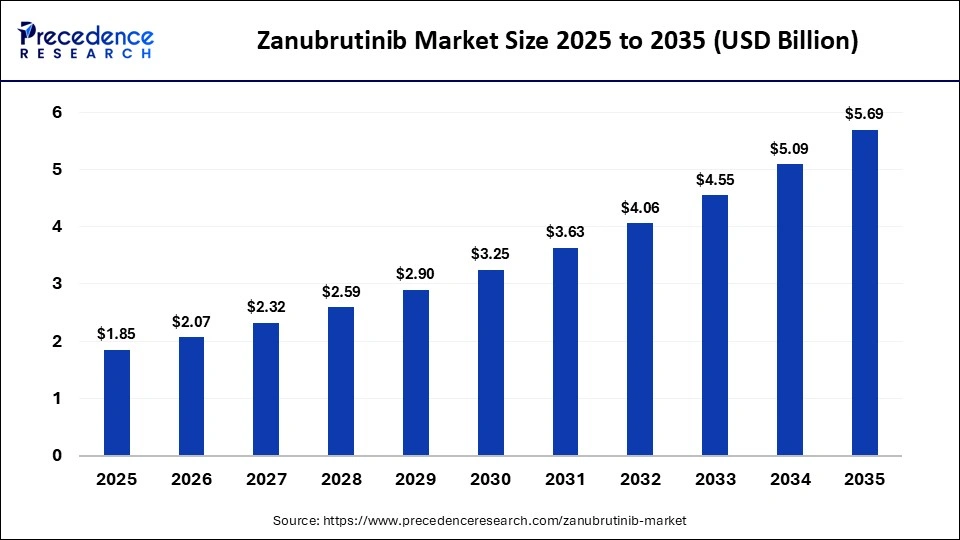
The global Zanubrutinib market size was calculated at USD 1.85 billion in 2025 and is predicted to increase from USD 2.07 billion in 2026 to approximately USD 5.69 billion by 2035, expanding at a CAGR of 11.90% from 2026 to 2035.The Zanubrutinib market is expanding rapidly due to rising cancer prevalence, strong clinical efficacy in B-cell malignancies, increased approvals, and growing adoption of targeted therapies, driving significant global demand and investment.
Key Takeaways
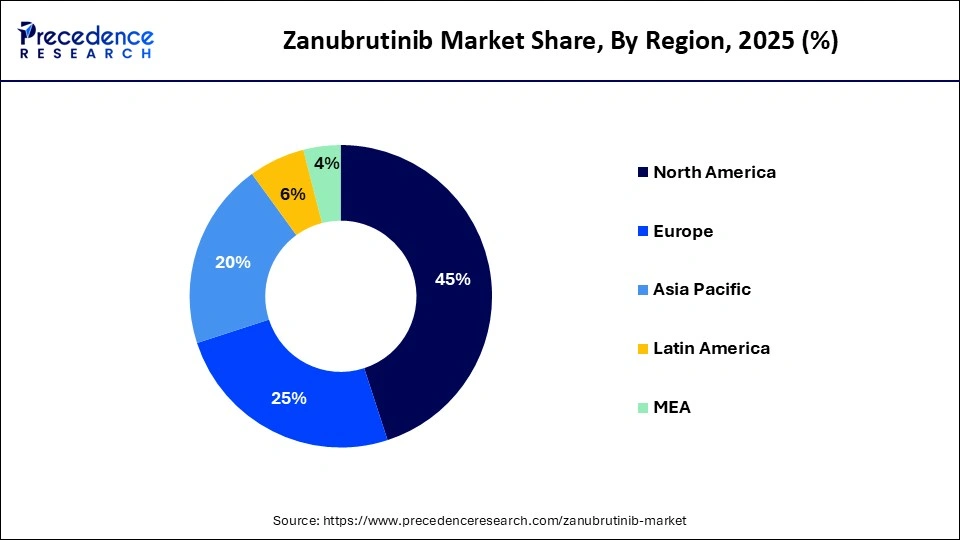
- North America led the Zanubrutinib market with the largest share of approximately 45% in the global market in 2025.
- Asia Pacific is estimated to expand the fastest CAGR in the market between 2026 and 2035.
- By product type, the oral tablets segment dominated the market in 2025, with a revenue of approximately 70%.
- By product type, the injectable solutions segment is expected to grow at the highest CAGR of 10.5% during 2026 and 2035.
- By therapeutic application/indication, the chronic lymphocytic leukemia (CLL/SLL) segment captured the highest market share of approximately 60% in 2025.
- By therapeutic application/indication, the mantle cell lymphoma (MCL) segment is expected to expand at the fastest CAGR of 11.0% from 2026 to 2035.
- By distribution channel, the hospital pharmacies segment led the market and captured the largest market share of approximately 55% in 2025.
- By distribution channel, the online pharmacies segment is projected to grow at the fastest CAGR of 10.8% between 2026 and 2035.
- By end user, the hospitals/oncology centers segment dominated the Zanubrutinib market in 2025, with approximately 55% share.
- By end user, the specialty clinics segment is growing at the fastest CAGR of 11.2% from 2026 to 2035.
Is Zanubrutinib Changing the Way We Treat Blood Cancers?
Zanubrutinib (BRUKINSA) is a newer type of medication that targets a specific enzyme involved in B-cell cancer, Bruton's tyrosine kinase (BTK), and is used to treat B-cell cancers like chronic lymphocytic leukaemia, mantle cell lymphoma, and Waldenstrom macroglobulinaemia. Currently, the Zanubrutinib market is steadily increasing due to the increasing incidence of blood cancers, the higher demand for specific BTK inhibitors that have improved safety and tolerability, and the increasing number of regulatory approvals across key regions. Zanubrutinib as a product has been favourably positioned in relation to first-generation BTK inhibitors leading to widespread adoption for both relapsed/refractory and frontline settings, continued clinical studies of combinations and the development of additional uses, along with increased confidence from physicians on tolerance, have all helped to strengthen Zanubrutinib overall market potential over time through strategic partnerships, additional geographical label expansions, and greater physician confidence.
AI Drives Market Integration for Zanubrutinib and Other Anti-Cancer Agents
Artificial Intelligence is changing how oncology therapy is approached commercially, particularly drugs such as zanubrutinib. It has transformed processes such as the discovery stage of drugs, clinical trial design, and commercial launch strategy by expediting development and improving innovation through predictive modeling/analytics, therefore increasing the opportunity for companies with BTK inhibitors to effectively position themselves against competitors in a very crowded hematology space. For example, industry players are partnering to develop AI-focused solutions with the potential to increase capital requirement and time to market by billions of dollars through faster small molecule drug discovery and enhancing overall R&D productivity.
Key Trends Driving the Zanubrutinib Market
- Expanded Indications: Current clinical trials are evaluating zanubrutinib in combination with additional treatments for B-cell cancers. Label expansions and broader approval will enhance zanubrutinib's position as an earlier line of therapy, leading to an increase in the number of physicians using this product worldwide.
- Increased Competition: Comparative clinical trials showing improved progression-free survival and better tolerability of zanubrutinib compared to first-generation BTK inhibitors are providing competitive advantages and increasing the number of oncologists who prefer to use zanubrutinib in their treatment protocols.
- Global Approvals: Regulatory approvals across North America, Europe, and Asia-Pacific are increasing patient access to zanubrutinib. The establishment of strategic partnerships and the development of localized commercialization strategies are also assisting in increasing market penetration in regions with a rising hematologic cancer burden.
- Combination Strategies: Manufacturers are focusing on combinations of zanubrutinib with monoclonal antibodies or new targeted therapies to improve duration of response, minimize the risk of resistance, and support lifecycle management efforts in the increasingly competitive landscape of BTK inhibitors.
Market Scope
| Report Coverage | Details |
| Market Size in 2025 | USD 1.85 Billion |
| Market Size in 2026 | USD 2.07 Billion |
| Market Size by 2035 | USD 5.69 Billion |
| Market Growth Rate from 2026 to 2035 | CAGR of 11.90% |
| Dominating Region | North America |
| Fastest Growing Region | Asia Pacific |
| Base Year | 2025 |
| Forecast Period | 2026 to 2035 |
| Segments Covered | Product Type ,Therapeutic Application/Indication, Distribution Channel, End-User, and region |
| Regions Covered | North America, Europe, Asia-Pacific, Latin America, and Middle East & Africa |
Segment Insights
Product Type Insights
Why were oral tablets the dominant product type in the Zanubrutinib Market?
The oral tablets segment was the dominant product type in the market in 2025, with a revenue of approximately 70%. The oral route of administration is more convenient, facilitates better adherence to therapy, and is ideal for the long-term management of patients with chronic hematologic malignancies. The oral formulation reduces dependence on hospital-based treatment and allows patients to receive their treatment through outpatient services, resulting in lower overall costs of health care. Furthermore, there is a strong preference among physicians for the oral formulation of zanubrutinib, as well as regulatory approvals from the FDA and global authorities, which contribute to their continued dominance as approved formulations of zanubrutinib throughout the world.
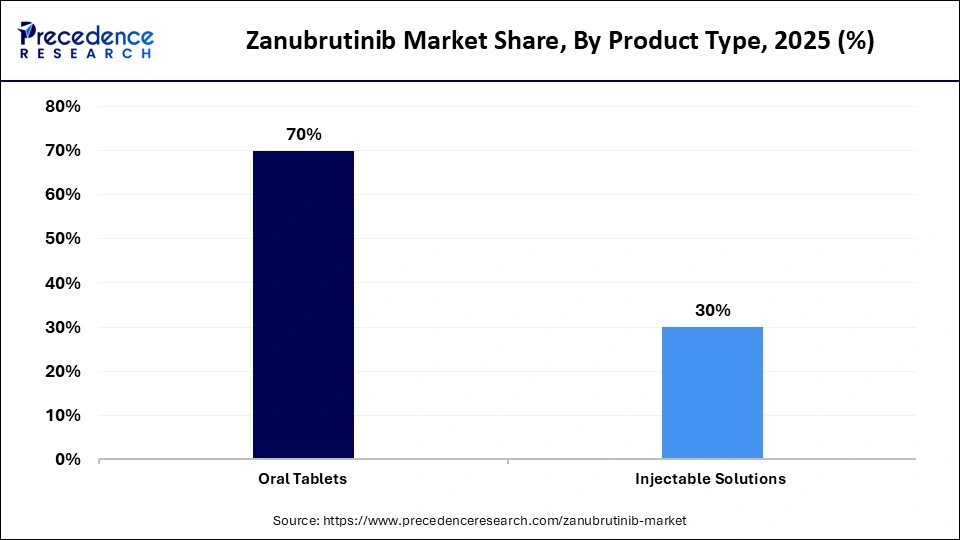
The injectable solutions segment is estimated to witness the fastest growth with a CAGR of 10.5% due to increased demand for controlled dosing of medications in critical care settings and among patients who are unable to take oral medications. Hospitals are using injectable formulations more frequently because they have a faster therapeutic effect and produce greater bioavailability than oral formulations. Ongoing research and development are being conducted on alternative delivery systems as well as combination regimens, which will be further responsible for the projected growth in this segment of the market.
Therapeutic Application/Indication Insights
Why did Chronic Lymphocytic Leukemia (CLL/SLL) lead the Market in 2025?
The chronic lymphocytic leukemia (CLL/SLL) segment dominated the Zanubrutinib market with approximately 60% share in 2025. The large number of patients globally who have CLL and the strong clinical data supporting zanubrutinib's ability to inhibit BTK are the main reasons for the CLL/SLL market share leadership. The favorable safety profile of zanubrutinib compared to first-generation therapies and broadening treatment guidelines have also aided in the increased use of zanubrutinib in CLL/SLL. In addition, the increased number of diagnosed CLL patients and the long duration of treatment will continue to provide a consistent source of revenue for this respective indication.
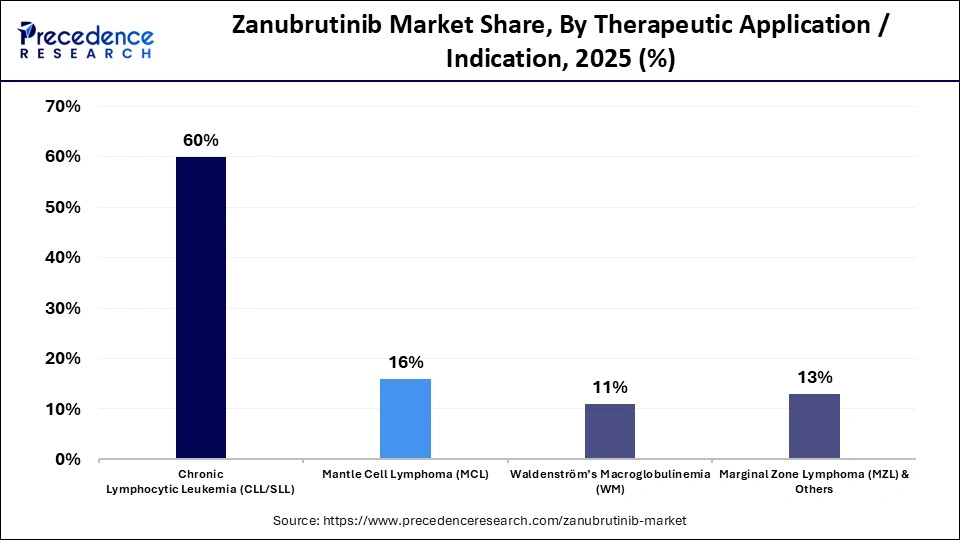
The mantle cell lymphoma (MCL) segment is expected to be the fastest-growing indication with 11% CAGR during the forecast period. The increased awareness of MCL, new clinical trials, and regulatory approvals for MCL patients who have relapsed or are refractory to treatment have greatly accelerated the demand for treatments. As a result of the improved progression-free survival in MCL patients treated with these targeted therapies, the number of physicians who are prescribing zanubrutinib is on the rise. The continued innovation in precision oncology and combination therapy regimens will enable MCL therapy to grow rapidly within this therapeutic category.
Distribution Channel Insights
How did the Hospital Pharmacies Segment Lead Zanubrutinib Market in 2025?
The hospital pharmacies segment dominated the channel distribution segment with the largest share of approximately 55% in 2025. As oncology drugs are highly specialized with a supervised dispensing requirement, this gives hospitals a dominant position in the market. The initiation of prescriptions for Zanubrutinib is most often through hospitals, where a hematologist will follow the patient's response to the drug and manage any side effects. The purchasing and reimbursement systems within an institution also significantly contribute to the hospital's leadership within the distribution channel.
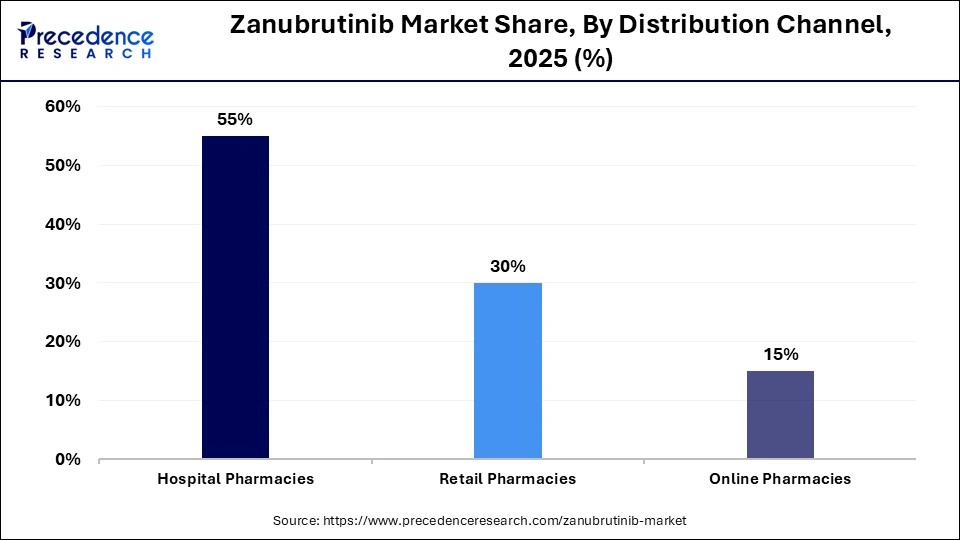
The online pharmacies segment is expected to be the fastest-growing distribution segment, with a CAGR of approximately 10.8%. Factors driving the increase of online pharmacies include the rise of digital health care, at-home cancer treatment, and the usage of e-prescriptions. Patients prefer to have chronic therapies delivered to their home rather than traveling to the hospital for treatment. In addition, the expansion of licensed digital pharmacy platforms and improvements in the cold-chain logistics will further drive growth in this channel.
End User Insights
Why did Hospitals and Oncology Centers Dominate the Market in 2025?
The hospitals/oncology centers segment dominated the Zanubrutinib market with nearly 55% share in 2025. This is due to their superior diagnostic capabilities, availability of hematology specialists, and ability to successfully treat complicated lymphoma cases. The first cycle of treatment and subsequent monitoring are usually conducted in the hospital. Participation in clinical trials and access to new targeted therapies also add to the importance of hospitals as the primary end user segment.
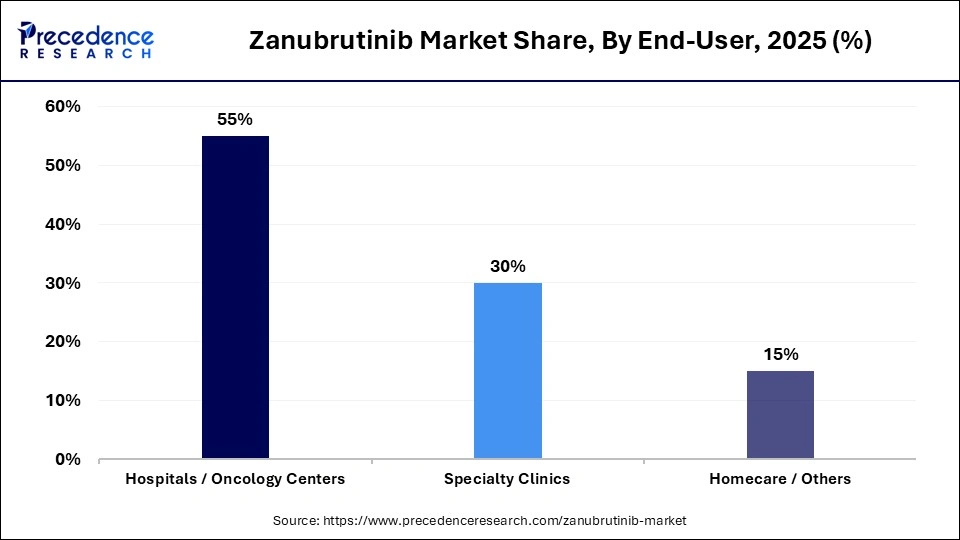
The specialty clinics segment is estimated to achieve the highest CAGR of 11.2% during the forecast period. The trend toward decentralized cancer care and outpatient treatment is helping this segment grow. Specialty clinics often provide tailored treatment options and follow-up services that make it more convenient for patients. Collaborative relationships between pharmaceutical companies and specialty care providers also enhance accessibility and speed up the expansion of this segment.
Regional Insights
North America Zanubrutinib Market Size and Growth 2026 to 2035
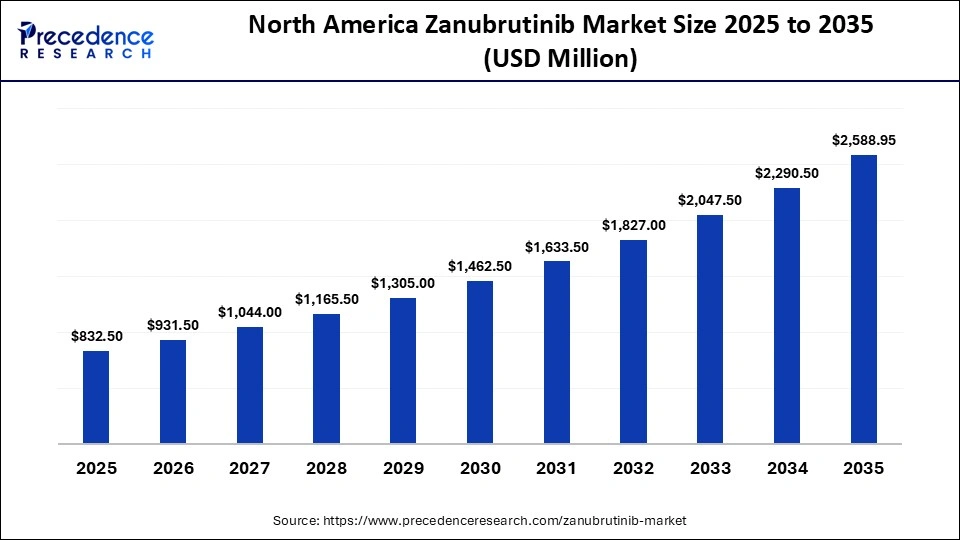
The North America zanubrutinib market size is estimated at USD 832.50 million in 2025 and is projected to reach approximately USD 2,588.95 million by 2035, with a 12.01%% CAGR from 2026 to 2035.
Why is North America the dominant region for the Zanubrutinib Market?
North America was dominant in the zanubrutinib market with a revenue of approximately 45% in 2025 due to having well-developed healthcare systems, a high rate of adoption of targeted therapies for oncology, and highly developed research environments. This has allowed for the increased use of zanubrutinib as an option for treating hematologic malignancies like mantle cell lymphoma and chronic lymphocytic leukemia at many leading medical institutions. Also, the commitment to innovating in the field of oncology, as well as the increased diagnostic abilities and awareness of patients, has supported increased implementation of zanubrutinib into treatment protocols. Recent regulatory approvals, as well as current studies being performed on different combinations of therapies, have solidified the position of North America as a leader in driving the market for zanubrutinib.
U.S. Zanubrutinib Market Size and Growth 2026 to 2035
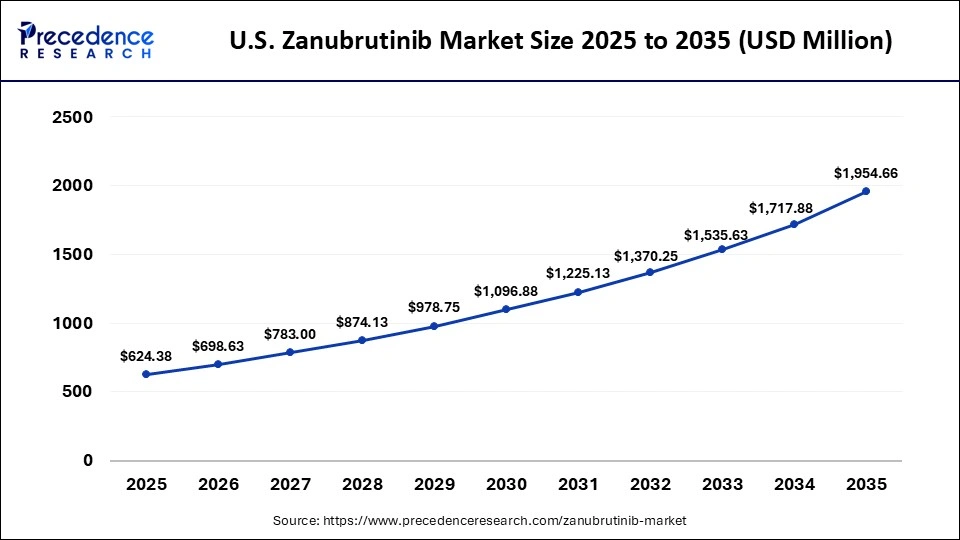
The U.S. zanubrutinib market size is calculated at USD 624.38 million in 2025 and is expected to reach nearly USD 1,954.66 million in 2035, accelerating at a strong CAGR of 12.09% between 2026 and 2035.
U.S. Zanubrutinib Market Trends
The U.S. is the leading country in terms of its zanubrutinib market share within North America because of the presence of a sophisticated infrastructure supporting cancer research, as well as the early introduction of zanubrutinib into clinical practice. Due to the high prevalence of B-cell malignancies and widespread access to specialty care, the U.S. is leading the activity for clinical trials and utilization of zanubrutinib in everyday practice. The U.S. healthcare system continues to be a central contributor to the expansion of commercial use of zanubrutinib and to new methods of treating cancer through the development of new drugs and delivery systems.
Why is the Asia Pacific experiencing the fastest growth of the Zanubrutinib Market?
Asia Pacific is estimated to be the fastest-growing region for pantograph chargers as a result of rapid urbanization and rapid electrification of public transport systems throughout the region. Most of the governments here have made modernizing urban transportation with electric buses, electric trams, and regional railways a priority, thus providing a very conducive environment for the adoption of pantograph charging networks. A growing passenger base in cities where there is population density and investment in supporting infrastructure has also led to widespread adoption of pantograph charging networks. There is a collaborative effort between regional manufacturers and operators to create cost-effective pantograph charging solutions tailored for their various climatic and geographic conditions. The dynamic ecosystem of pantograph charging in the Asia Pacific region also fosters experimentation, growth of networks, and an exchange of knowledge across neighbouring markets.
China Zanubrutinib Market Trends
China is leading the charge in pantograph charging's growth throughout the Asia Pacific region due to the rapid growth of electric bus fleets and rail systems. Chinese manufacturers and transit agencies are working together to develop and deploy chargers which are able to be deployed quickly with reliability. The national government of China is focused on promoting pollution-free modes of transportation and modernizing urban areas, therefore making China a leader in innovation and implementation of pantograph charging technology.
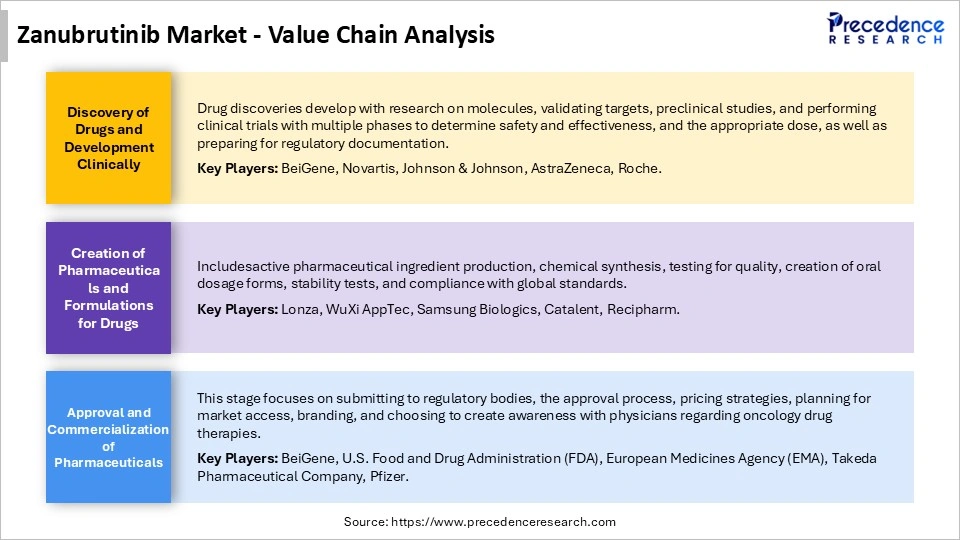
Zanubrutinib Market Value Chain Analysis
Zanubrutinib Market Companies
- BeiGene Ltd / BeOne Medicines GmbH
- Pfizer Inc.
- AbbVie Inc.
- Novartis AG
- Roche Holding AG
- Eisai Co. Ltd.
- Merck & Co. Inc.
- Amgen Inc.
- Gilead Sciences Inc.
- Janssen Pharmaceuticals (J&J)
- Sun Pharmaceutical Industries Ltd.
- Glenmark Pharmaceuticals
- Takeda Pharmaceutical Company Ltd.
- Bristol-Myers Squibb Company
- Eli Lilly and Company
Recent Developments
- In October 2025, Reckitt, manufacturer of Mucinex, announced that extended-release guaifenesin (Mucinex) significantly reduces cough and sputum severity, improves quality of life, and boosts patient satisfaction in stable chronic bronchitis.(Source: https://www.prnewswire.com)
- In August 2025, Mucinex Children's launches its first chewable cold & flu medicine, Mighty Chews, offering easy, mess-free relief of multiple symptoms like fever, cough, sore throat, and runny nose for kids six and older.(Source: https://www.prnewswire.com)
Segments Covered in the Report
By Product Type
- Oral Tablets
- Injectable Solutions
By Therapeutic Application / Indication
- Chronic Lymphocytic Leukemia (CLL/SLL)
- Mantle Cell Lymphoma (MCL)
- Waldenström's Macroglobulinemia (WM)
- Marginal Zone Lymphoma (MZL) & Others
By Distribution Channel
- Hospital Pharmacies
- Retail Pharmacies
- Online Pharmacies
By End-User
- Hospitals / Oncology Centers
- Specialty Clinics
- Homecare / Others
By Region
- North America
- Asia Pacific
- Europe
- Latin America
- Middle East & Africa
For inquiries regarding discounts, bulk purchases, or customization requests, please contact us at sales@precedenceresearch.com
Frequently Asked Questions
Tags





Ask For Sample
No cookie-cutter, only authentic analysis – take the 1st step to become a Precedence Research client
 Get a Sample




 sales@precedenceresearch.com
 Schedule a Meeting
