



Amino Acids Market Size, Key Companies, Company Market Share, Production Capacity, Raw Material Pricing, Export & Import Analysis, Manufacturing Cost, Competitive Positioning, and Demand Forecast
Amino Acids Market (By Raw Material: Plant Based, Animal Based; By Product: L-Glutamate, Lysine, Methionine, Threonine, Tryptophan, Leucine, Iso-Leucine, Valine, Glutamine, Arginine, Glycine, Phenylalanine, Tyrosine, Citrulline, Creatine, Proline, Serine, Others; By Application: Animal Feed, Food & Dietary Supplements, Pharmaceutical; By Livestock: Swine, Poultry, Cattle, Others; By Form: Powder, Granules, Liquid, Pellet, Others; By Function: Fortification, Energy Booster, Flavour Enhancer, Preservative, Muscle Growth, Immunity Booster, Others; By Purity Level: Amino Acid 99%, Amino Acid More Than 99%, Amino Acid 90%, Amino Acid 80%, Amino Acid 70%, Amino Acid Less Than 60%) - Global Industry Analysis, Size, Trends, Leading Companies, Regional Outlook, and Forecast 2026 to 2035
Source: https://www.precedenceresearch.com/amino-acids-market
 Get a Sample
 Table Of Content


What is the Amino Acids Market Size?
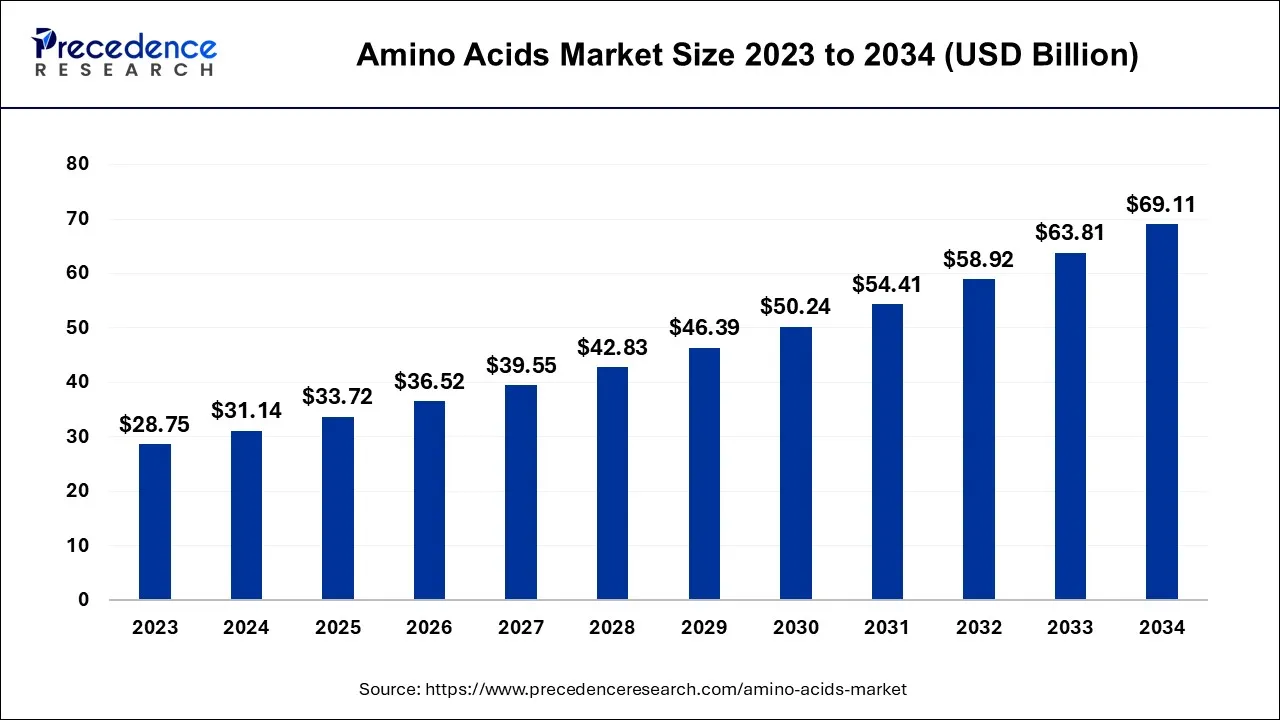
The global amino acids market size is calculated at USD 36.52 billion in 2026 and is anticipated to reach around USD 74.41 billion by 2035, expanding at a CAGR of 8.24% over the forecast period from 2026 to 2035. The market's growth is primarily driven by the increasing demand for health-consciousness, sports nutrition, and high-protein dietary needs. The market has a major importance in human wellness as well as livestock production.
Market Highlights
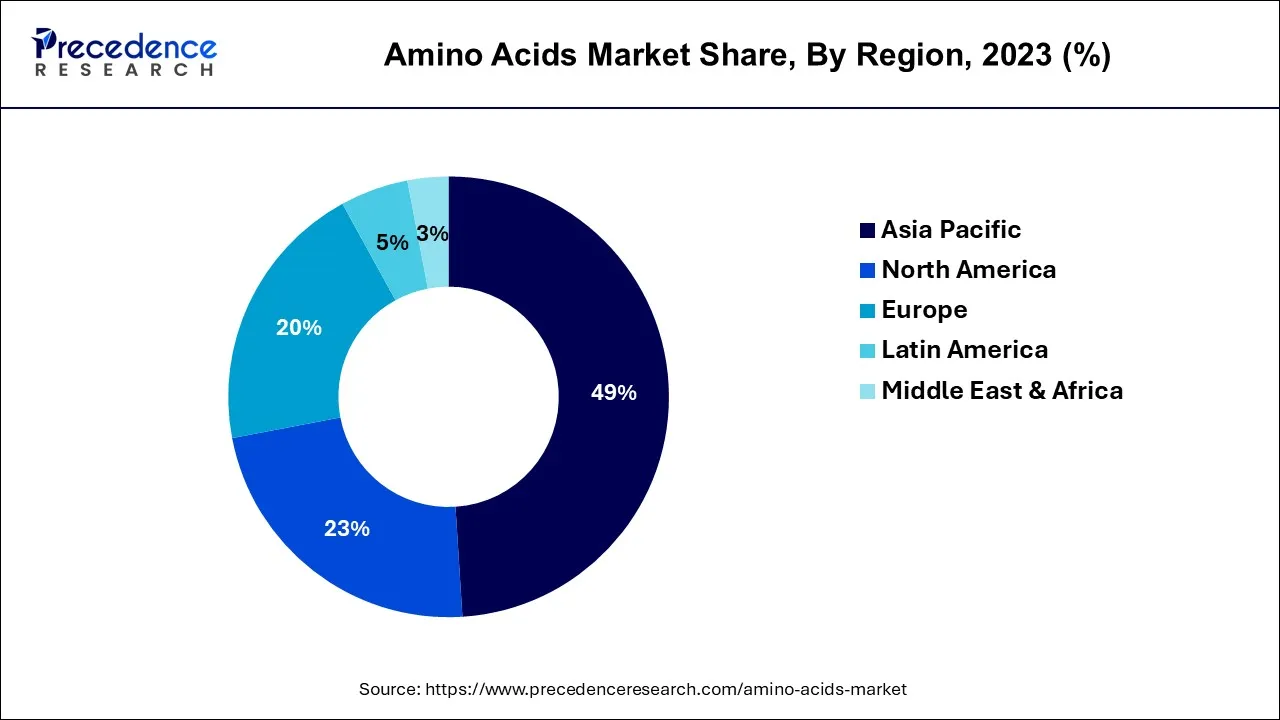
- The Asia Pacific amino acids market accounted for 49% of revenue share in 2025.
- By raw material, the plant-based segment held a revenue share of 86.50% in 2025.
- By product, L-glutamate has captured a revenue share of 49.7% in 2025.
- By livestock, the poultry industry held a revenue share of 44% in 2025.
- By application, the food and dietary supplements segment accounted for a revenue share of 57% in 2025.
Market Overview
The amino acids market is observed to grow majorly due to growing health awareness among consumers of all age groups, leading to higher demand for health and wellness products, protein-enriched supplements and food options, dietary products, and functional food and beverage options. The growing demand for livestock nutrition also fuels the market's growth. Integrators use amino acid additives like lysine, methionine, and threonine to improve feed efficiency. Technical advancements in microbial fermentation also help to fuel the growth of the market.
What is the Role of AI in the Growth of the Amino Acids Market?
AI helps to lower precision fermentation production costs, optimize targeted feed formulations, and accelerate new therapeutic peptide discoveries. AI models also help to analyze live sensor data in bioreactors to lower the chances of batch failures and stabilize yields. Hence, it further helps to lower production costs and facilitate cheaper and clean-label manufacturing. The advanced technology in the form of real-time metrics also helps to customize amino acid profiles. It also helps to enhance the nutritional level of livestock, maximize feed conversion ratios, and propel overall demand.
Market Growth Factors
- Growing health awareness among consumers, leading to higher demand for protein-rich diets and muscle recovery supplements, is one of the major market growth factors.
- Growing demand for non-essential amino acids due to their major importance to enhance the nutritional value and balance of animal feed also helps to fuel the market's growth.
- Higher demand for amino acids for drug formulations, intravenous nutrition, and treatment of metabolic and neurological diseases is also a major market driver.
- Technological advancements in the market are helpful for enhanced production of amino acids, along with enhancements in fermentation technologies to increase their availability among various industries, also propelling the market's growth.
Market Outlook
- Industry Growth Overview: The amino acids market is dominated by the essential role of amino acids in blood sugar control, immune function, and hormone production. They play a key role in muscle growth and the transmission of electrical signals around the body. They also contribute to hormone production and to the regulation of blood glucose.
- Sustainability Trends: Alternative protein sources are gaining attention to support sustainable sports nutrition and food systems. They are designed under the framework of the Sustainable Development Goals 2030. Plant-based proteins are used as alternatives to animal-derived proteins in human nutrition and as functional ingredients in food production.
- Startup Ecosystem: The government has highly prioritized startups and offered infrastructure support, tax exemptions, and market access to startups. Countries like India are emerging as the fastest-growing startup ecosystems in the world. The expansion of startups is fueled by the adoption of technology, government support, encouragement of innovation, and growing interest in startup culture.
- Global Expansion: It is driven by the wide use of amino acids in several industries like pharmaceuticals, food and beverage, cosmetics, and animal feed. The supply chain of amino acids is complex and involves many players, like retailers, manufacturers, and distributors. The supply chain is driven by several channels, including pharmacies, supermarkets, and online retailers.
Market Scope
| Report Coverage | Details |
| Market Size in 2025 | USD 33.72 Billion |
| Market Size in 2026 | USD 36.52 Billion |
| Market Size by 2035 | USD 74.41 Billion |
| Growth Rate from 2026 to 2035 | CAGR of 8.24% |
| Largest Market | Asia Pacific |
| Base Year | 2025 |
| Forecast Period | 2026 to 2035 |
| Segments Covered | Raw Material, Product, Application, Livestock, Form, Function, Purity Level, and Region |
| Regions Covered | North America, Europe, Asia-Pacific, Latin America, and Middle East & Africa |
Market Dynamics
Drivers
- Increased Knowledge About Dietary Supplements - Increasing consumption of amino acids because of increasing awareness nutritional supplements among the consumers are the primary factors fuelling the growth of Amino Acids Market. The market for amino acids is expanding as a result of rising demand for exotic, fresh animals and plants as a source of amino acids. People are searching for healthier foods and diet supplements as they become more health conscious and desire to live healthy lifestyles. This is yet another important aspect propelling the market for amino acids.
Restraint
- Sudden Agricultural Raw Material Volatility - Agricultural raw material volatility is one of the major factors restraining the growth of the market. Price spikes in corn, soybeans, and molasses also affect the market's growth majorly, as they serve as a primary feedstock for microbial fermentation. Hence, it further affects manufacturing costs, compresses profit margins, and slows the overall growth of the industry. The production costs are also affected by factors such as adverse weather, shipping bottlenecks, and geopolitical shifts. Shortage of staple feedstock restrains the supply chains, further affecting the market's growth.
Opportunity
- Major Focus on Plant-Based Formulations - The major focus of the market is on plant-based formulations, including plant-based amino acids, animal-free options, sustainable, and highly bioavailable amino acids for vegans and eco-conscious consumers. Such methods help companies to enhance the quality of yields, improve cost-effectiveness, and improve the overall quality of the final product as well. Such factors also help to create a need for nutritional fortification. Higher usage of amino acids like glutamic acid to replicate the flavor profile found in animal-based options also helps to fuel the growth of the market. The rising population of vegans and vegetarians due to growing health consciousness is one of the major opportunities fueling the growth of the market.
Segments Insights
By Raw Material
The plant-based segment led the global amino acids market in 2025. The segment's growth is majorly propelled by factors such as the rise of vegetarianism and veganism, growing demand for sustainable and clean-label dietary supplements, and sports nutrition products. The growing food and beverage industry, functional food industry, and dietary supplement industry also help to fuel the growth of the market. Major investments in advanced enzymatic hydrolysis and microbial synthesis also help to fuel the growth of the market. Shift of major manufacturing entities from animal-based to plant-based sources further fuels the growth of the market.
The animal-based segment is observed to be the fastest-growing region in the foreseen period. Growing demand for essential amino acids such as lysine, methionine, and threonine, for optimizing the overall quality of livestock, also helps to fuel the growth of the segment. Growing demand for standardized meat and precision livestock nutrition is another major factor fueling the growth of the market. Growing demand for high-quality amino acid supplementation to ensure rapid growth and optimal egg production also helps to fuel the growth of the market.
By Product
The L-glutamate segment dominated the global market in 2025. The segment's growth is majorly driven as it is an essential raw material for industries such as food, pharmaceutical, and animal feed industries. The primary applications of the amino acid involve the manufacturing of MSG, flavor enhancers, and processed foods. It is also used in livestock and poultry feed to improve palatability and overall animal nutrition. It is also useful in the manufacturing of targeted health supplements, clinical nutrition, and chemical intermediates.
The lysine segment is observed to be the fastest-growing segment in the foreseen period. Higher usage of the amino acid for animal feed applications, such as for swine and other poultry, is a major market driver. Higher stability and efficiency in feed formulation also help to fuel the growth of the market. The segment's growth is also propelled by the higher importance of lysine as a feed additive for livestock and to improve protein synthesis for poultry, swine, and aquaculture. It is also essential for the manufacturing of dietary supplements and biopharma manufacturing.
By Application
The animal feed segment led the global market in 2025. The segment's growth is majorly propelled by growing demand for precise nutrition, feed conversion optimization, and sustainability targets. Tightening climate regulations and surging demand for animal protein are also some of the major factors driving the growth. Different types of amino acids, such as lysine, methionine, and threonine, help to enhance the quality of overall livestock feed and are also essential for muscle development in early growth stages.
The food and dietary supplements segment is observed to be the fastest-growing segment in the foreseeable period. The growing demand of consumers for sports nutrition, functional foods, and preventive healthcare is one of the major factors propelling the growth of the market. The segment is also observed to grow as it acts as an ideal flavor enhancer in ready-to-eat meals and sauces. They are also essential for muscle growth and immunity, and hence are highly demanded for the manufacturing of dietary supplements and fortified infant formula.
By Livestock
The poultry segment dominated the global market in 2025. The segment's growth is majorly propelled by factors such as precision feeding practices, lower-protein diet formulations, and the growing demand for poultry meat globally. Integrators transitioning to low-protein diets supplemented with amino acids for poultry help to lower the total feed costs, along with successfully preventing nitrogen excretion and lowering environmental pollution. Use of crystalline amino acids to meet the minimum threshold for essential proteins and optimize muscle development also fuels the growth of the market.
The other segment is observed to be the fastest-growing segment in the foreseen period. The segment majorly focuses on the growth of the aquaculture segment as it is driven by a higher need for plant-based protein and lower reliance on fishmeal. Precision amino acid supplementation to lower the material costs and balance diets heavily relying on plant proteins also fuels the market's growth.
Form Insights
How does the Powder Segment Dominate the Amino Acids Market in 2025?
The powder segment dominated the market in 2025, owing to the key role of powder forms in sports nutrition and dietary supplements for their rapid solubility, flavor innovation, and immune and muscle health. They are widely preferred for animal feed and agriculture due to formula uniformity and nutrient distribution.
The liquid segment is expected to grow at the fastest CAGR in the market during the forecast period due to enhanced bioavailability, industrial automation, convenience, and blending. Liquid formulations enable immediate cellular absorption in animals, humans, and plants.
Function Insights
What made Fortification the Dominant Segment in the Amino Acids Market in 2025?
The fortification segment dominated the market in 2025, owing to different types of nutritional fortifiers such as vitamins, minerals, amino acids, and other ingredients as fortifiers. The nutritional fortifiers include fortified foods, dietary supplements, and over-the-counter medications.
The muscle growth segment is estimated to grow at the fastest rate in the market during the predicted timeframe due to the importance of maintaining muscle mass to improve muscle strength and function. Muscle contraction stimulates intramyocellular uptake of creatine, and creatine helps to regulate skeletal muscle metabolism.
Purity Level Insights
How did the Amino Acid 99% Segment Dominate the Amino Acids Market in 2025?
The amino acid 99% segment dominated the market in 2025, owing to the key role of these amino acids in ensuring biochemical predictability, optimizing chemical yields, and eliminating toxic side effects. In laboratory research, scientists use amino acids to create custom synthetic peptides.
The amino acid more than 99% segment is anticipated to grow at the fastest rate in the market during the upcoming period due to 99% chemical purity in animal feed additives and raw nutritional powders. 99% chemical purity is essential for the elimination of toxins, agricultural efficiency, and targeted supplementation.
Regional Insights
Asia Pacific will lead the Amino Acids Market in 2025
Asia Pacific dominated the global amino acids market in 2025. The market's growth is majorly propelled by the rapid growth of the food and beverage industry, animal feed, and dietary supplements. Large-scale livestock and aquaculture production to meet the rising meat and seafood demand in the region is one of the major factors propelling the growth of the market in the region. Various other factors, such as rising health consciousness, urbanization, and a growing vegetarian and vegan population, also fuel the growth of the market.
Asia Pacific Amino Acids Market Size and Growth 2026 to 2035
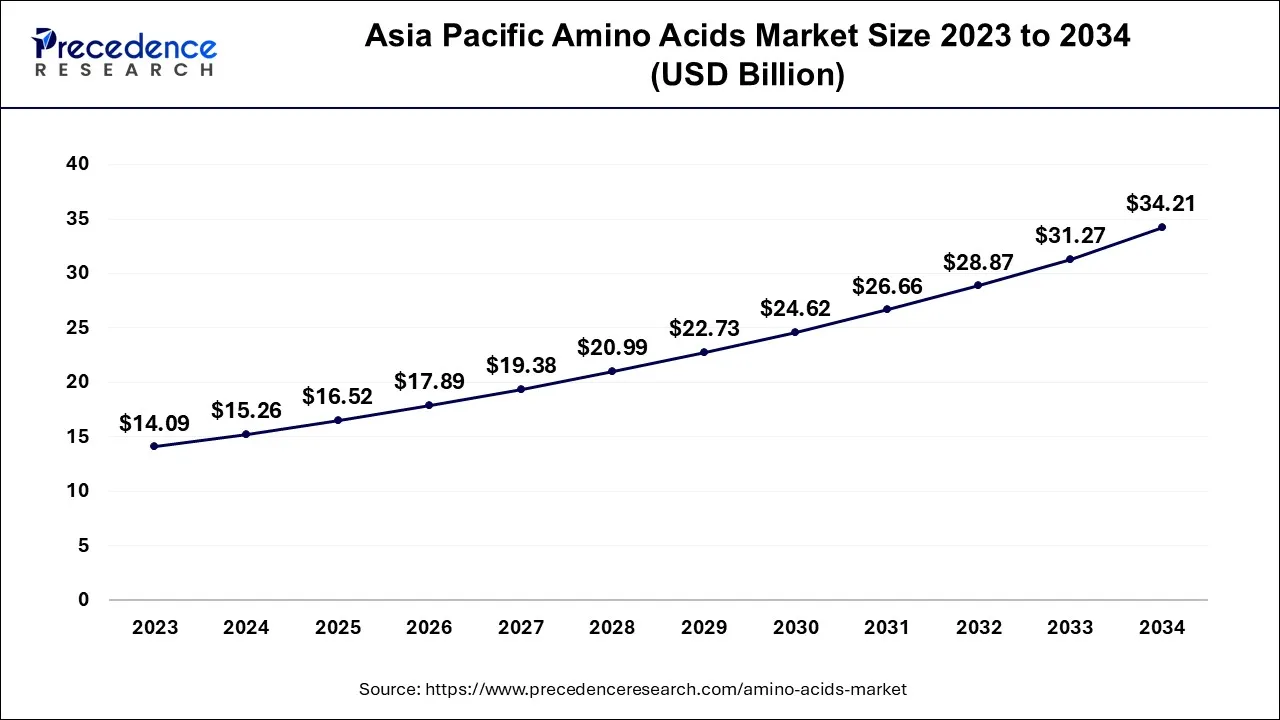
The Asia Pacific amino acids market size accounted for USD 17.89 billion in 2026 and is projected to be worth around USD 37.15 billion by 2035, poised to grow at a CAGR of 8.44% from 2026 to 2035.
China Market Trends
China has a major contribution to the growth of the market due to its robust industrial infrastructure, abundant raw materials, and highly cost-effective manufacturing processes. High volume of fermentation-based manufacturing also helps to fuel the growth of the market.
North America Amino Acids Market Trends
North America is observed to be the fastest-growing region in the foreseeable period. The market's growth is majorly propelled by factors such as the booming sports nutrition industry, growing demand for plant-based foods, and the large-scale livestock sector. Growing consumer awareness regarding health and nutrition, leading to higher demand for healthy aging supplements and preventive wellness products, also propels the growth of the market. Growing demand for improved feed efficiency and livestock gut health is also one of the major market growth drivers.
U.S. Market Trends
The U.S. has a major contribution in the growth of the market due to growing demand for animal feed, sports nutrition, and pharmaceutical sectors, and the expanding nutraceutical industry of the region, supported by rising health consciousness, also helps to fuel the growth of the market.
Europe Amino Acids Market Trends
Europe's amino acids market is observed to have a significant growth. The growth of the market is majorly driven by factors such as the growing food and beverage industry, the growing cosmetic industry, and the major reliance of the market on feed, dietary supplements, and the pharmaceutical sectors. Growing demand for poultry and swine production in the region also fuels the growth of the market. Strict EU regulations on the use of antibiotics and a major push to precision nutrition also propel the growth of the market.
Germany Market Trends
Germany has a major contribution in the growth of the market due to the robust pharmaceutical industry and growing demand for sports nutrition in the region, due to growing health consciousness. The region's growth for parenteral nutrition, drug synthesis, and active pharmaceutical ingredients also fuels the growth of the market.
Middle East and Africa Amino Acids Market Trends
The Middle East and Africa are expected to grow significantly due to rising livestock production, rising health-conscious demographics, and heavy investments in regional food security initiatives. Growing investments in livestock self-sufficiency and large-scale poultry production to lower import reliance also fuel the growth of the market. Growing health consciousness in the region is fueling the demand for sports supplements, infant formulas, and functional foods, also fueling the market's growth.
South Africa Market Trends
South Africa has a major contribution to the growth of the market due to the growing demand for animal feed and the growing need for high-efficiency protein production to meet growing consumer demands.
Which Major Growth Factors Drive the Notable Growth of the Amino Acids Market in Latin America?
Latin America is expected to grow at a notable rate in the market during the predicted timeframe, driven by booming livestock production, global meat exports, cost-effective raw materials, commercial infrastructure, and local partnerships. The strict government rules drive the transition to bio-based alternatives and precision animal nutrition. Governments across the region offer tax exemptions to international biotechnology corporations. They utilize South America's abundant corn glucose and cheap sugarcane feedstocks for local fermentation.
How can the Amino Acids Market Expand in Brazil?
Brazil is transitioning toward a surging livestock and animal feed sector, fermentation infrastructure, and a shift toward sustainable biostimulants and agronomics. Brazil leads as the largest chemical market, which represents about 750 companies that are manufacturing more than 1500 chemical products.
Supply Chain Analysis
Feedstock Procurement
- This stage secures a high amount of nitrogen sources, carbohydrate substrates, and essential process chemicals.
- Key Players: Cargill, Incorporated, Archer Daniels Midland (ADM) Company, CJ CheilJedang Corporation, Ajinomoto Co., Inc., Evonik Industries AG, Meihua Holdings Group Co., Ltd., and Fufeng Group Limited.
Waste Management and Recycling
- This stage prioritizes recycling of electrolyte residues, biomass valorisation into feed and biofertilizers, wastewater treatment, and upstream resource upcycling.
- Key Players: Ajinomoto Co., Inc., CJ CheilJedang Corp., Evonik Industries AG, Fufeng Group & Meihua Holdings, Veolia Environment S.A., SUEZ Group, and Clean Harbors, Inc.
Regulatory Compliance and Safety Monitoring
- This stage is driven by the industrial expansion across dietary supplement, pharmaceutical, and infant formula sectors.
- Key players: Ajinomoto Co., Inc., Evonik Industries AG, AMINO GmbH, CJ CheilJedang Corp, Kyowa Hakko Bio Co., Ltd, Thermo Fisher Scientific, Agilent Technologies, Waters Corporation, Shimadzu Corporation, Hitachi High-Technologies, Eurofins Scientific, Aragen Life Sciences, Sigma-Aldrich.
Competitive Landscape
The amino acids market is highly competitive and is majorly driven by factors such as multinational biotechnology conglomerates and hundreds of regional, country niche players producing synthetic, fermentation-based, and plant-derived amino acids for various sectors. Ajinomoto Co., Inc., Evonik Industries AG, Archer Daniels Midland Company, and CJ CheilJedang Corp. are some of the major key players of the market. These companies are major pioneers of biotechnology and fermentation processes. They also specialize in various essential amino acids for animal nutrition and feed additives.
The market can observe growth in the foreseen period by expanding bio-based fermentation, prioritizing plant-based sources, and capitalizing on specialized nutritional segments. Manufacturers should invest heavily in scaling microbial fermentation methods and improving microbial strains.
Top Companies in the Amino Acids Market and Their Offerings
- 3D Systems Corporation: Core engineering lines, highly precise hydrogels, wider additive manufacturing, SLA and extrusion systems, 3D-printed glycomacropeptide (GMP) protein substitutes, etc.
- Stratasys, Ltd.: Paranovus Entertainment Technology, FDM Technology, SAF Technology, PolyJet & Biomedical Systems, etc.
- Materialise NV: Evonik Industries AG, Meihua Holdings Group, Ajinomoto Co., Inc. & CJ CheilJedang, etc.
- Arkema SA: Amino 11 Monomer, bio-sourced, recyclable, and high-performance polyamides, a specialized medical-grade bio-circular material, high-performance thermoplastic elastomers, etc.
- Evonik Industries AG: Feed-grade amino acids, high-purity amino acids, active pharmaceutical ingredient intermediates, cell culture solutions, medical and human nutrition, etc.
Amino Acids Market Companies
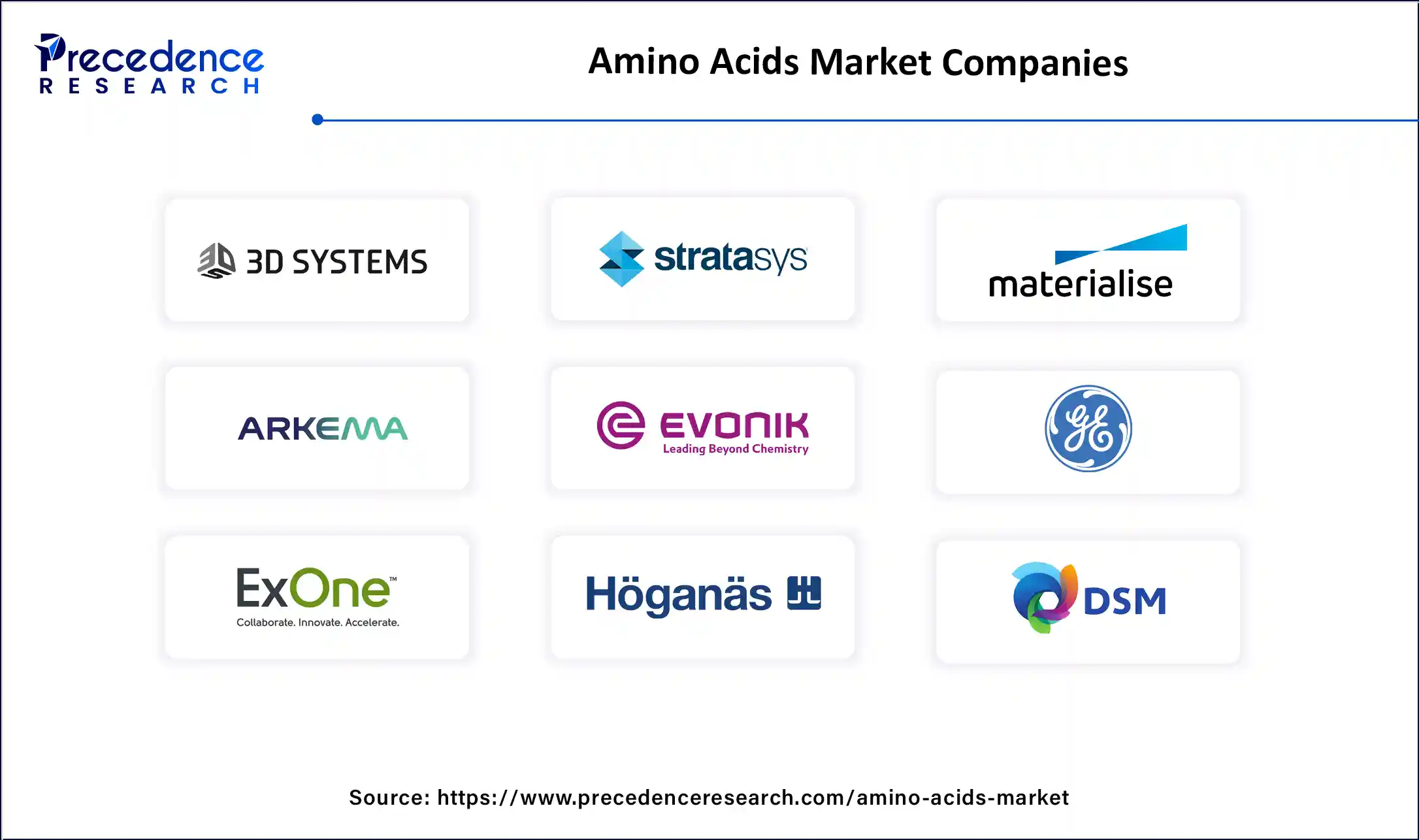
- 3D Systems Corporation (US)
- Stratasys, Ltd. (US)
- Materialise NV (Belgium)
- Arkema SA (France)
- Evonik Industries AG (Germany)
- General Electric (US)
- The ExOne Company (US)
- Hoganas AB (Sweden)
- Royal DSM N.V. (Netherlands)
Recent Developments
- In December 2025, Arla Foods Ingredients launched a new casein glycomacropeptide (CGMP) ingredient called Lacprodan CGMP-30. The ingredient could be used for patients with phenylketonuria (PKU). Lacprodan CGMP-30 contains 50% less phenylalanine, which may help patients who are phenylalanine-sensitive. (Source: www.nutritionaloutlook.com)
- In April 2026, Seiwa Kasei developed Amitose™ R-green in response to rising demand for multifunctional, sustainable cosmetic ingredients. This natural amino acid derivative combines arginine and glycerin, delivering up to 96-hour moisturization, supporting microbiome balance, and aligning with global biodegradability and skinification trends. (Source: https://cosmeticsbusiness.com)
- In April 2026, Seiwa Kasei developed Amitose™ R-green in response to rising demand for multifunctional, sustainable cosmetic ingredients. This natural amino acid derivative combines arginine and glycerin, delivering up to 96-hour moisturization, supporting microbiome balance, and aligning with global biodegradability and skinification trends.
(https://cosmeticsbusiness.com) - In December 2025, Arla Foods Ingredients launched a new casein glycomacropeptide (CGMP) ingredient called Lacprodan CGMP-30. The ingredient could be used for patients with phenylketonuria (PKU). Lacprodan CGMP-30 contains 50% less phenylalanine, which may help patients who are phenylalanine-sensitive.
(https://www.nutritionaloutlook.com)
Segments Covered in the Report
By Raw Material
- Plant Based
- Animal Based
By Product
- L-Glutamate
- Lysine
- Methionine
- Threonine
- Tryptophan
- Leucine
- Iso-Leucine
- Valine
- Glutamine
- Arginine
- Glycine
- Phenylalanine
- Tyrosine
- Citrulline
- Creatine
- Proline
- Serine
- Others
By Application
- Animal Feed
- Food & Dietary Supplements
- Pharmaceutical
By Livestock
- Swine
- Poultry
- Cattle
- Others
By Form
- Powder
- Granules
- Liquid
- Pellet
- Others
By Function
- Fortification
- Energy Booster
- Flavour Enhancer
- Preservative
- Muscle Growth
- Immunity Booster
- Others
By Purity Level
- Amino Acid 99%
- Amino Acid More Than 99%
- Amino Acid 90%
- Amino Acid 80%
- Amino Acid 70%
- Amino Acid Less Than 60%
By Region
- North America
- Europe
- Asia-Pacific
- Latin America
- Middle East & Africa (MEA)
For inquiries regarding discounts, bulk purchases, or customization requests, please contact us at sales@precedenceresearch.com
Frequently Asked Questions
Tags





Ask For Sample
No cookie-cutter, only authentic analysis – take the 1st step to become a Precedence Research client
 Get a Sample




 sales@precedenceresearch.com
 Schedule a Meeting
