



Adhesive Capsulitis (Frozen Shoulder) Treatment Market Size, Companies, Share, Patient Volume, Treatment Adoption Rates, Pricing Analysis, Regulatory Landscape, Competitive Positioning, and Demand Forecast
Adhesive Capsulitis Treatment Market (By Treatment Type: Non-Surgical Treatments, Surgical Treatments; By End-User: Hospitals, Clinics, Home Care Settings, Rehabilitation Centers; By Therapy Type: Physical Therapy, Injection Therapy, Manual Therapy; By Diagnosis: Clinical Diagnosis, Imaging Diagnosis) - Global Industry Analysis, Size, Trends, Leading Companies, Regional Outlook, and Forecast 2026 to 2035
Source: https://www.precedenceresearch.com/adhesive-capsulitis-treatment-market
 Get a Sample
 Table Of Content


What is the Adhesive Capsulitis (Frozen Shoulder) Treatment Market Size in 2026?
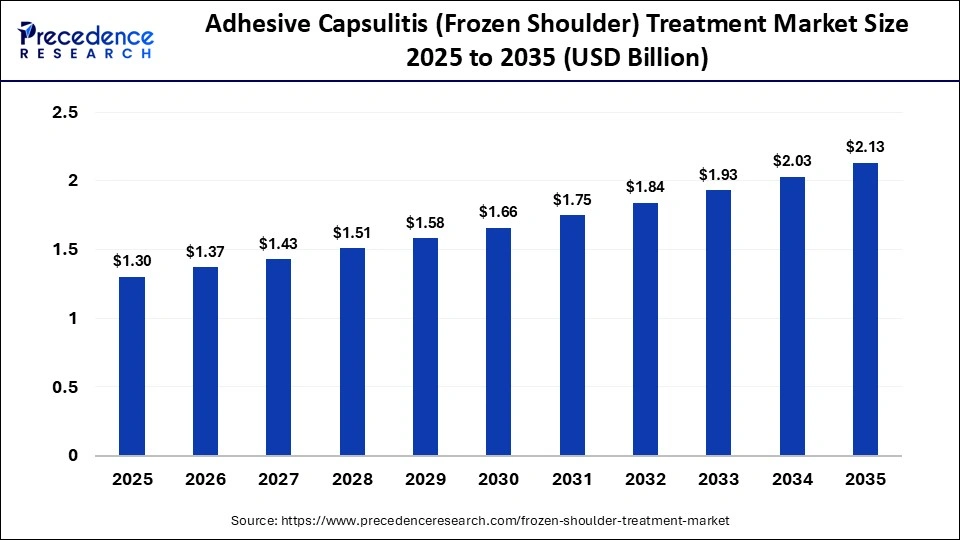
The global adhesive capsulitis (frozen shoulder) treatment market size was calculated at USD 1.30 billion in 2025 and is predicted to increase from USD 1.37 billion in 2026 to approximately USD 2.13 billion by 2035, expanding at a CAGR of 5.05% from 2026 to 2035.The market is experiencing robust growth, driven by the growing instances of musculoskeletal disorders, the growing demand for minimally invasive orthopedic methodologies, the increasing demand for non-surgical pain management, and the rapid adoption of AI-based rehabilitation techniques across hospitals.
Key Takeaways
- North America held the largest revenue share of the adhesive capsulitis (frozen shoulder) treatment market in 2025.
- Asia-Pacific is expected to grow at the fastest CAGR in the market during the forecast period.
- By treatment type, the non-surgical treatments segment registered its dominance over the global market in 2025.
- By treatment type, the surgical treatments segment is expected to grow at the fastest CAGR in the market between 2026 and 2035.
- By end-user, the hospitals segment held the largest revenue share in the market in 2025.
- By end-user, the clinics segment is expected to grow with the highest CAGR in the market during the studied years.
- By therapy type, the physical therapy segment accounted for the highest revenue share in the market in 2025.
- By therapy type, the injection therapy segment is expected to witness the fastest growth in the market over the forecast period.
- By diagnosis, the clinical diagnosis segment held the largest revenue share in the market in 2025.
- By diagnosis, the imaging diagnosis segment is expected to grow at the fastest CAGR in the market between 2026 and 2035.
What is the Adhesive Capsulitis (Frozen Shoulder) Treatment Market?
Frozen shoulder develops when the hard connective tissue surrounding your shoulder joint, the shoulder joint capsule, grows thickened, rigid, and inflamed. These capsule houses the ligaments (the ligaments that connect the top end of your arm bone to the bone socket) under a dynamic joint structure known as a ball-and-socket configuration. Due to aging and other lifestyle disorders as diabetes, conditions related to stiffness and chronic shoulder pain have shifted from being highly specialized orthopedic problems into everyday clinical presentations. Treatment strategies are growing from conventional corticosteroid shots and physical therapy to include treatment with ultrasound guidance, arthroscopic capsular release, biologic injections, and, more recently, AI-assisted rehabilitation programs.
Hospitals are emphasizing the need to reduce the turnaround time for patients for recovery and make outpatient work more efficient because patients are seeking speedier returns to work. Moreover, these developments in diagnostic imaging technologies and early detection methods help strengthen this market framework. This challenge is no longer seen only as a self-limiting condition but is solved by comprehensive multi-modal treatment frameworks that ensure commercial development of pharmaceutical products, medical devices, and digital therapeutic solutions.
Impact of AI on the Adhesive Capsulitis (Frozen Shoulder) Treatment Market
Artificial intelligence (AI) is reshaping the treatment landscape for adhesive capsulitis (frozen shoulder) in a subtle but effective manner. AI-driven imaging analysis has advanced diagnosis accuracy by recognizing early signs of capsular thickening and mobility limitations compared to conventional methods. Machine learning (ML) algorithms can now perform real-time range-of-motion monitoring through smartphone cameras and wearable devices in rehabilitation and adjust the intensity of exercise. This conversion helps clinicians avoid the pitfall of making therapy repetitive when treatment is seen as adaptive.
In addition, predictive analytics help healthcare workers identify people at higher risk, especially those with diabetes or post-surgical stiffness, enabling earlier steps to address symptoms and facilitate recovery. For its care providers, artificial intelligence reduces follow-up tasks by checking on progress and by keeping patients remotely engaged. This, in turn, supports a rather more proactive rather than just a reactive approach as a treatment framework. Within a market focused on pain management, mobility restoration, and outpatient effectiveness, AI is increasingly emerging as the bridge through which diagnoses, intervention programs, and durable functional recovery can take place.
Trends Influencing the Adhesive Capsulitis (Frozen Shoulder) Treatment Market
- Move to Precision Care : Increasingly, invasive surgical approaches are being replaced by minimally invasive methods, such as arthroscopic capsular release and ultrasound-guided injections. More recently, healthcare workers are supporting precision-based therapies that save patients significantly from longer hospitalizations to earlier recovery. These procedures are also preferred by patients because they improve mobility without affecting their productivity or requiring more extensive postoperative rehabilitation.
- Enhanced Utilization of Biologic and Regenerative Therapies: Methods such as platelet-rich plasma (PRP) injections and emerging biologic therapies are moving from experimental approaches to the table of contemporary conversations in orthopedic care. Regenerative strategies, while still in the early stages, appeal to patients in search of an alternative to repeated exposure to steroids and establish biologics as a practical option in the management of chronic stiffness.
- Increased Focus on Early Detection and Risk Assessment: Healthcare systems are more heavily emphasizing high-risk populations, such as diabetics or recently undergone surgical procedures. Improved imaging techniques and predictive-assessment tools enable the earlier detection of capsular inflammation, thus allowing a path toward prophylaxis before it progresses to severe functional impairment as a result of stiffness.
Market Scope
| Report Coverage | Details |
| Market Size in 2025 | USD 1.30 Billion |
| Market Size in 2026 | USD 1.37 Billion |
| Market Size by 2035 | USD 2.13 Billion |
| Market Growth Rate from 2026 to 2035 | CAGR of 5.05% |
| Dominating Region | North America |
| Fastest Growing Region | Asia Pacific |
| Base Year | 2025 |
| Forecast Period | 2026 to 2035 |
| Segments Covered | Treatment Type, End-User, Therapy Type ,Diagnosis, and region |
| Regions Covered | North America, Europe, Asia-Pacific, Latin America, and Middle East & Africa |
Segmental Insights
Treatment Type Insights
Which Treatment Type Segment Dominated the Market?
The non-surgical treatments segment held a dominant position in the adhesive capsulitis (frozen shoulder) treatment market in 2025, as conservative care is the first clinical response, with the rising frozen shoulder cases getting better despite no surgical treatment. Physicians have long favored risk-averse strategies that controlled pain but also slowly returned mobility. Strong adoption of NSAIDs, corticosteroid injections, hydro dilatation, and structured physiotherapy programs underpinned revenue leadership. These alternatives were readily offered in hospitals and outpatient conditions, so they were within reach, in both developed and emerging regions.
The surgical treatments segment is expected to show the fastest growth over the forecast period. The increasing demand for definitive and faster recovery of mobility boosts the segment's growth. Patients with refractory stiffness, on top of conservative therapy reaching a plateau, are increasingly looking for long-term corrective therapy. Adoption is expected to be further increased by progress in arthroscopic capsular release techniques, enhanced visualization systems, and shortened hospital stays. Growing orthopedic capacity in developed markets and favorable reimbursement regimens will push volumes up even more in the years to come.
End-User Insights
Why did the Hospitals Segment Dominate the Market?
The hospitals segment accounted for the highest revenue share in the adhesive capsulitis (frozen shoulder) treatment market in 2025, due to their ability to provide diagnostics, intervention, and aftercare in one facility. Hospitals have professionals with multidisciplinary expertise, enabling patients to seek comprehensive, complex adhesive capsulitis treatment. Providing access to advanced imaging equipment, things like MRI and ultrasound-guided injections, as well as surgical facilities, contribute to the segment's growth.
The clinics segment is expected to gain the highest market share between 2026 and 2035, due to localized care settings, offering affordable treatments that are gaining favor with patients. Shorter waiting times and specialized orthopedic expertise are the attractions that most likely drive the expansion of clinics moving forward. Moreover, increasing injection-therapy adoption combined with the expansion of specialty physiotherapy centers and AI technology-assisted rehabilitation methods should revolutionize outpatient care.
Therapy Type Insights
How the Physical Therapy Segment Dominated the Market?
The physical therapy segment contributed the biggest revenue share in the adhesive capsulitis (frozen shoulder) treatment market in 2025 because the main objective of treating frozen shoulder conditions is to restore function and mobility. For effective resolution of capsular stiffness, guided stretching exercises together with strengthening exercises are essential. Through the course of other treatment phases, structured exercises, supervised rehabilitation measures, and progressive, range-of-motion training were employed. Non-invasive, strong clinical support and its conformance to both conservative forms of treatment and post-operative care also augment the segment's growth.
The injection therapy segment is expected to expand rapidly in the market in the coming years, as improved pain management and less inflammation may promote increased uptake of injection therapies. Patients are looking for real improvements in shorter periods. Ultrasound-guided corticosteroid injections and hydrodilatation are likely better seen clinically due to their precision and superior short-term mobility outcomes. With providers now looking at combined targeted therapy with a physiotherapy approach, injection therapy is expected to expand at a rapid pace.
Diagnosis Insights
Which Diagnosis Segment Led the Adhesive Capsulitis (Frozen Shoulder) Treatment Market?
The clinical diagnosis segment led the market in 2025, as frozen shoulder refers to movement restrictions with defined patterns that experienced clinicians can recognize through physical examination. Imaging may not be needed for uncomplicated cases. This can usually be ascertained through assessment of range-of-motion, and by consulting a review of patients' past as well as an examination. Such a method of diagnosis cuts the costs of diagnosis and speeds up the time at which treatment is initiated, especially when primary care and orthopedic outpatient settings are involved, thus confirming its endurance.
The imaging diagnosis segment is expected to grow with the highest CAGR in the market during the studied years, as increased precision with regard to diagnostic technologies is likely to further benefit imaging, as it would be on the other side of their respective processes. More and more, healthcare providers want a level of validation prior to a new intervention. MRI and high-resolution ultrasound are anticipated to see significant adoption, particularly in established healthcare systems. Expanded reimbursement schemes combined with an increased need to differentiate adhesive capsulitis from structural shoulder injuries will likely drive growth in this category.
Regional Insights
North America Adhesive Capsulitis Treatment Market Size and Growth 2026 to 2035
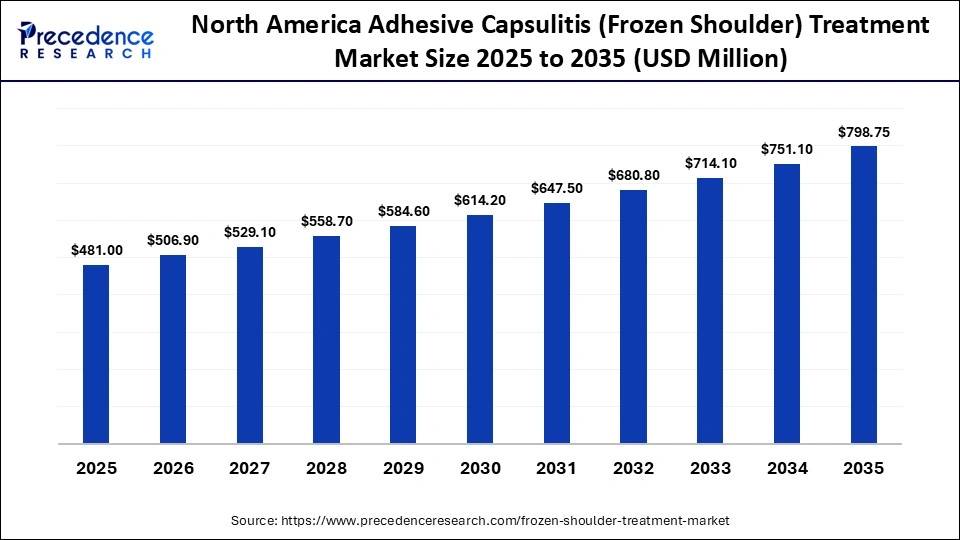
The North America adhesive capsulitis treatment market size is estimated at USD 481.00 million in 2025 and is projected to reach approximately USD 798.75 million by 2035, with a 5.20% CAGR from 2026 to 2035.
Why North America Dominated the Adhesive Capsulitis (Frozen Shoulder) Treatment Market?
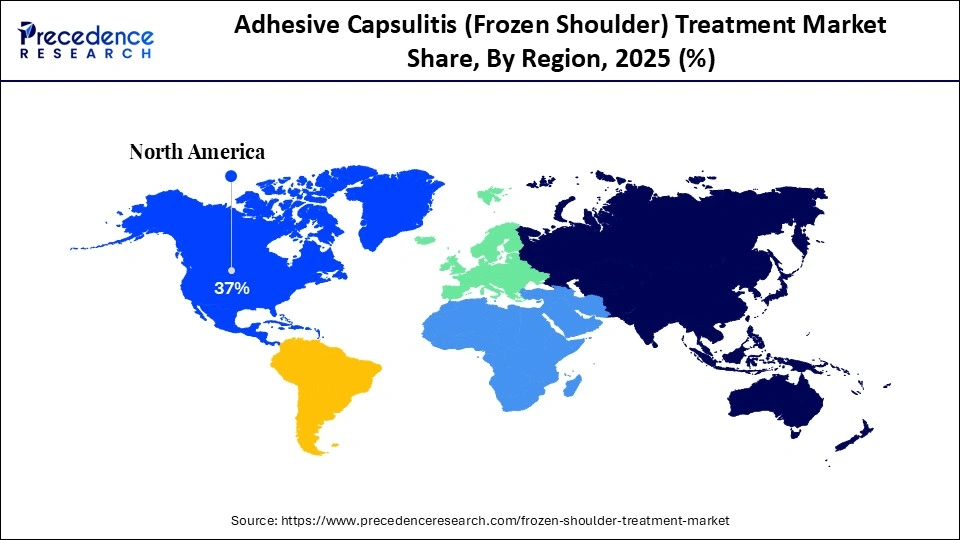
North America held a major revenue share of the market in 2025, due to its well-established orthopedic framework and elevated rates of musculoskeletal disorder diagnoses. Historical support for a structured approach to treatment adoption was supported by broad health reimbursement and an early treatment-recovery culture. There also exists the availability of modern imaging technologies, minimally invasive surgery, and pre-existing physiotherapy services.
Frequent visits by diabetic patients and those of the older population increased awareness and patient adherence to therapies. North America's solidified revenue position was enhanced by institutional strength, the presence of major medical device manufacturers in this field, and a well-equipped outpatient rehabilitation system.
U.S. Adhesive Capsulitis Treatment Market Size and Growth 2026 to 2035
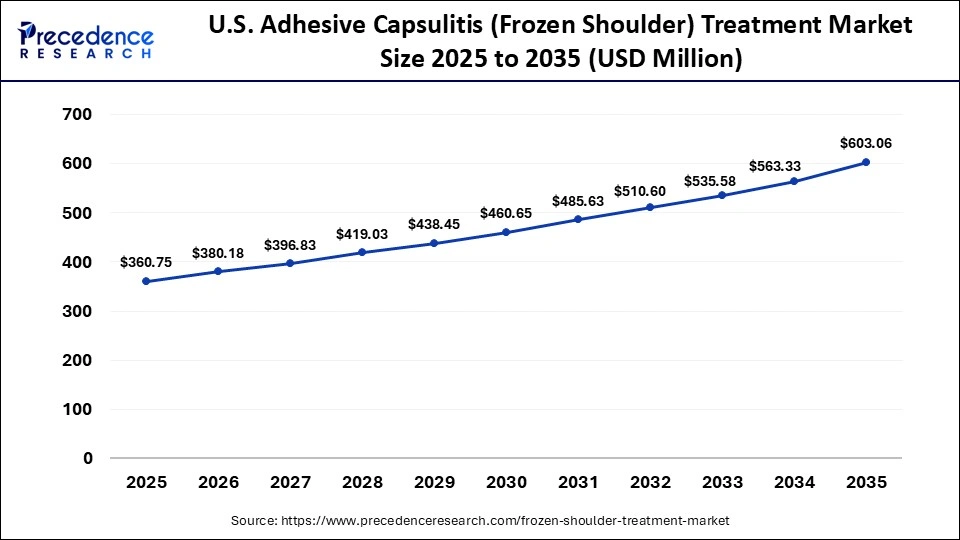
The U.S. adhesive capsulitis treatment market size is calculated at USD 360.75 million in 2025 and is expected to reach nearly USD 603.06 million in 2035, accelerating at a strong CAGR of 5.27% between 2026 and 2035.
U.S. Market Trends
The U.S. leads the market in North America, due to the increasing healthcare investments and the presence of a large number of orthopedists and sports medicine specialists. Patients usually seek care earlier, which increases the therapy penetration. Strong insurance systems have opened the door for injection therapies, arthroscopic surgeries, and state-of-the-art imaging diagnostics.
Similarly, the country's accelerated adoption of minimally invasive surgical modalities and AI-based rehabilitation platforms has helped solidify its leadership in this field. Intensely high burden of diabetes-related shoulder stiffness, in addition to the need for surgical procedures, demands medical and non-medical treatments.
How is Asia-Pacific Growing in the Adhesive Capsulitis (Frozen Shoulder) Treatment Market?
Asia-Pacific is expected to experience the fastest growth during the predicted timeframe. Such expected advancements in healthcare and a rising burden of lifestyle-related diseases will further contribute to regional growth. The older population, together with increased awareness about orthopedic rehabilitation, will likely drive demand for treatments. Moreover, an increase in the number and the accessibility of imaging technologies, expanding hospital networks, and the expansion of specialized physiotherapy clinics are also anticipated to positively affect adoption. In addition, increasing disposable income with enhanced insurance coverage should also serve to sustain some of this local growth in this area.
China Market Trends
China is expected to show the highest growth rate in the Asia-Pacific. There are multiple reasons for the growth, including enormous patient volumes and continued modernization of important healthcare systems. Government spending to build hospital infrastructure to support orthopedic procedures will greatly strengthen the capacity of orthopedic services, according to projections.
An increase in diabetes cases and increasing use of MRI and ultrasound diagnostics, coupled with increasing interest in minimally invasive orthopedic procedures, are also expected to contribute to market growth. In addition, domestic production of medical devices coupled with urban outpatient rehabilitation will further accelerate development in this space.
What are the Advancements in the Adhesive Capsulitis Treatment Market in Europe? 
The European market is expected to witness significant growth, due to orthopedic and musculoskeletal care is the growing use of ultrasound-guided hydro dilatation, particularly in outpatient and community-care settings. Another important regional development is the increasing adoption of image-guided interventions in sports medicine and rehabilitation clinics. Demand is additionally supported by Europe's aging population and rising incidence of diabetes-related musculoskeletal disorders, both of which are strongly associated with adhesive capsulitis.
Germany Market Trends
In many musculoskeletal clinics throughout Germany, the implementation of ultrasound-guided corticosteroid injections alongside structured physiotherapy programs is gaining traction as a standard procedure. This combination shows expedited recovery times and significantly improved outcomes in shoulder mobility compared to exercise therapy alone.
What are the Key Trends in the Adhesive Capsulitis Treatment Market in Latin America? 
The Latin American market is expected to witness significant growth driven primarily by a continued emphasis on recovery pathways that are directed by physiotherapy. Across the region, rehabilitation practitioners are taking on increasingly first-line treatment modalities like manual mobilization therapy, structured exercise regimens, and home-based rehabilitation plans. For chronic shoulder pain, urban private clinics across Latin America are deploying digital monitoring for physiotherapy, motion-tracking tools for rehabilitation, and ultrasound-guided nerve block techniques specifically aimed at managing chronic shoulder pain.
Brazil Market Trends
Brazil is emerging as the regional center for advanced shoulder rehabilitation and image-guided musculoskeletal procedures. Brazilian clinicians have also been early adopters of suprascapular nerve block therapies and combined rehabilitation protocols, helping shape treatment standards.
How is the Middle East and Africa Region Growing in the Adhesive Capsulitis Treatment Market? 
The Middle East and Africa are expected to have significant market growth in the upcoming years, due to specialization in orthopedic care and increasing awareness about chronic musculoskeletal disorders in the region. Countries such as this region are witnessing increased diagnosis rates for frozen shoulder, primarily owing to rising diabetes incidence, sedentary behavior, and an aging population. In both the UAE and Saudi Arabia, healthcare sectors are investing heavily in minimally invasive procedures for musculoskeletal issues, including ultrasound-guided shoulder injections and hydrodilatation techniques.
Saudi Arabia Market Trends
The country's leadership is driven by the rapid expansion of orthopedic and rehabilitation infrastructure, rising diabetes prevalence, and strong government investment in advanced healthcare services. Another factor supporting Saudi Arabia's market dominance is its growing investment in sports medicine and rehabilitation services.
Adhesive Capsulitis (Frozen Shoulder) Treatment Market Value Chain Analysis
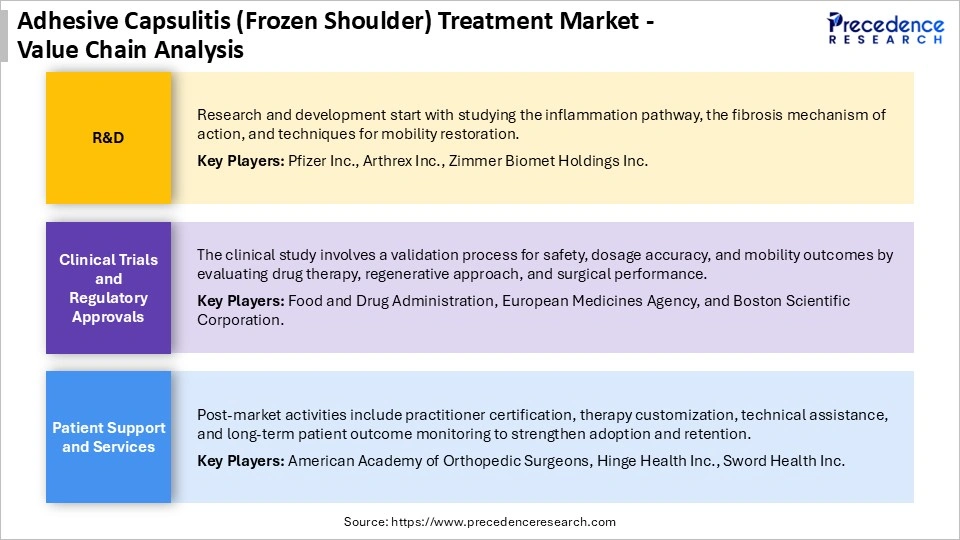
Adhesive Capsulitis (Frozen Shoulder) Treatment Market Companies
- Pfizer Inc.
- Sun Pharmaceutical Industries Ltd.
- Dr. Reddy's Laboratories Ltd.
- Cipla Inc.
- Eli Lilly and Company
- Merck & Co., Inc.
- Johnson & Johnson
- Novartis AG
- Sanofi S.A.
- GlaxoSmithKline plc
- AstraZeneca plc
- Bristol-Myers Squibb Company
- AbbVie Inc.
- Bayer AG
- Amgen Inc.
- Teva Pharmaceutical Industries Ltd.
- Allergan plc
- Mylan N.V.
- Hoffmann-La Roche Ltd.
- Takeda Pharmaceutical Company Limited
Recent Developments
- In March 2025, Macquarie University announced a new clinical trial to test whether a molecular therapy used to treat eye disease can help patients with frozen shoulder. Investigators aim the therapy to reduce the severity of the symptoms, having a positive impact on a debilitating condition that mostly affects women. (Source: https://lighthouse.mq.edu.au)
- In December 2025, researchers at Sanjay Gandhi Post Graduate Institute of Medical Sciences (India) reported a new strategy comprising plasma-rich platelet (PRP) therapy with targeted pain-management techniques alongside conventional physiotherapy. This holistic approach has many advantages that might enable prolonged pain relief and improve mobility in patients with frozen shoulder.(Source: https://timesofindia.indiatimes.com)
Segments Covered in the Report
By Treatment Type
- Non-Surgical Treatments
- Surgical Treatments
By End-User
- Hospitals
- Clinics
- Home Care Settings
- Rehabilitation Centers
By Therapy Type
- Physical Therapy
- Injection Therapy
- Manual Therapy
By Diagnosis
- Clinical Diagnosis
- Imaging Diagnosis
By Region
- North America
- Latin America
- Europe
- Asia-pacific
- Middle and East Africa
For inquiries regarding discounts, bulk purchases, or customization requests, please contact us at sales@precedenceresearch.com
Frequently Asked Questions





Ask For Sample
No cookie-cutter, only authentic analysis – take the 1st step to become a Precedence Research client
 Get a Sample




 sales@precedenceresearch.com
 Schedule a Meeting
