



AI in Predictive Toxicology Market Trends, Companies, Revenue / Sales Performance, Subscriber Growth, Pricing Strategies, Cloud Adoption, Infrastructure Expansion, Competitive Landscape, and Industry Outlook
AI in Predictive Toxicology Market (By Technology: Classical Machine Learning, Deep Learning, Physics-Based & Molecular Modelling, Others (Hybrid AI, Knowledge Graphs, Generative AI) ; By Toxicity Endpoint: Systemic Toxicity, Hepatotoxicity, Cardiotoxicity, Neurotoxicity, Genotoxicity; By Deployment Model: On-Premises Platforms, Cloud-Based Platforms, By End User: Pharmaceutical & Biotechnology Companies, Contract Research Organizations (CROs), Chemical & Cosmetics Companies, Academic & Research Institutes) - Global Industry Analysis, Size, Trends, Leading Companies, Regional Outlook, and Forecast 2026 to 2035
Source: https://www.precedenceresearch.com/ai-in-predictive-toxicology-market
 Get a Sample
 Table Of Content


What is the AI in Predictive Toxicology Market Size in 2026?
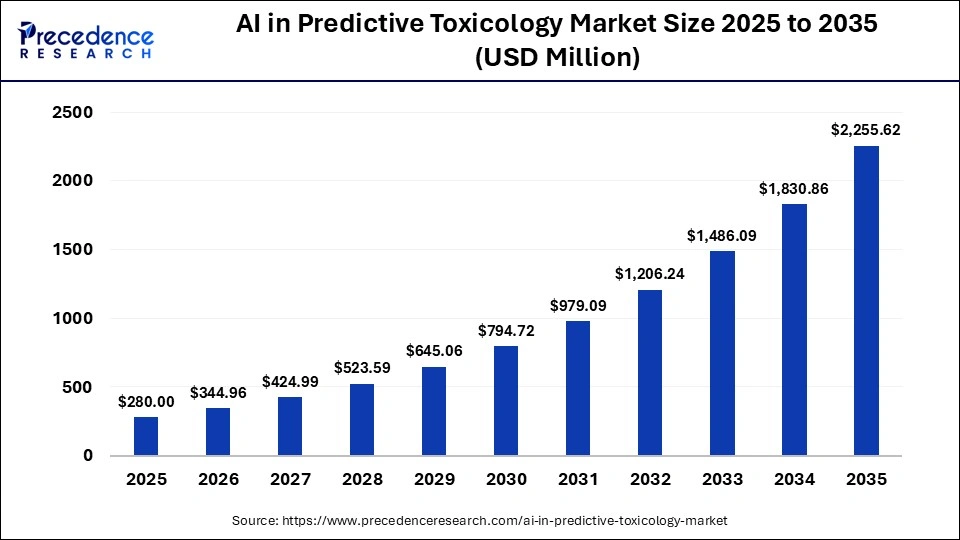
The global AI in predictive toxicology market was calculated at USD 280 million in 2025 and is predicted to increase from USD 344.96 million in 2026 to approximately USD 2,255.62 million by 2035, expanding at a CAGR of 23.2% from 2026 to 2035. The market is rapidly expanding due to the increasing demand for cost-effective and ethically conducted methods over traditional animal testing, along with the advancement in machine learning.
Key Takeaways
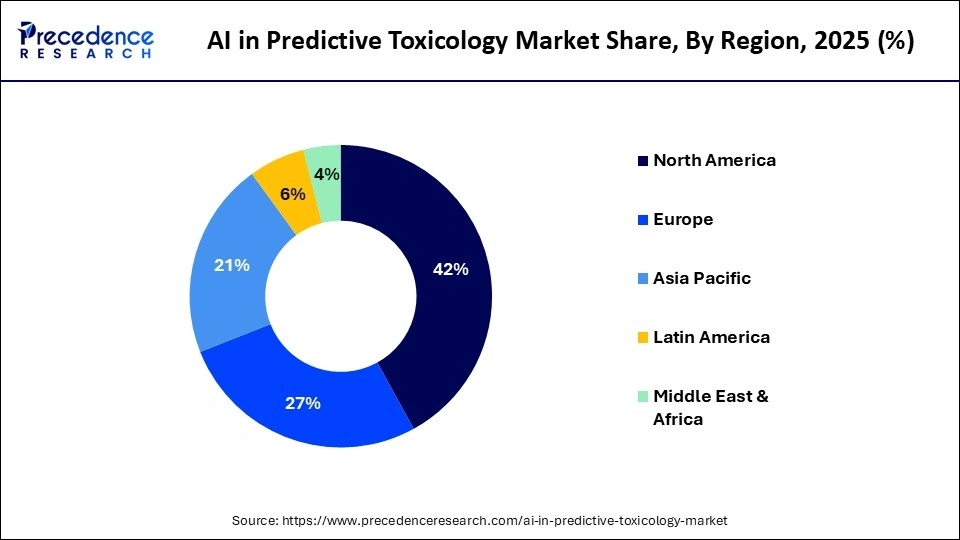
- North America held the largest market share of 42% in 2025.
- The Asia Pacific is expected to grow at the fastest CAGR during the foreseeable period.
- By technology, the classical machine learning segment held the largest market share of 38% in 2025.
- By technology, the deep learning segment is expected to expand at the fastest CAGR during the foreseeable period.
- By toxicity endpoint, the systemic toxicity segment held the largest market share of 34% in 2025.
- By toxicity endpoint, the genotoxicity segment is expected to grow at the fastest CAGR during the foreseeable period.
- By deployment model, the on-premise platforms segment held the largest market share of 56% in 2025.
- By deployment model, the cloud-based platforms segment is expected to grow at the fastest CAGR during the foreseeable period.
- By end user, the pharmaceutical & biotechnology companies segment held the largest market share of nearly 24.1% in 2025 and is projected to grow at the fastest CAGR during the foreseeable period.
Marke Overview
Artificial Intelligence (AI) in predictive toxicology refers to the application of machine learning, deep learning, and computational modeling techniques to predict the toxicological effects of chemicals, drugs, and biological compounds before clinical testing. These AI-driven systems analyze large biological datasets, molecular structures, and historical toxicity data to identify potential safety risks early in the drug discovery process. This technology reduces reliance on animal testing, accelerates pharmaceutical R&D, improves regulatory compliance, and helps pharmaceutical, biotechnology, and chemical companies minimize costly late-stage drug development failures.
AI in Predictive Toxicology Market Trends
- There is a growing focus on reducing reliance on traditional animal testing, which is driving the shift toward AI-driven predictive toxicology, enabling faster, more ethical drug development.
- Deep learning models are increasingly applied to analyze heterogeneous data such as omics datasets and chemical structures, achieving high accuracy (around 90%) in toxicity prediction, including mutagenicity detection.
- The integration of big data and multi-omics (genomics, proteomics, metabolomics) is enabling AI systems to identify potential adverse drug reactions at earlier stages of drug development.
- Regulatory support, including initiatives like the FDA Modernization Act 2.0, is encouraging AI-based non-animal toxicology methods, further accelerating market growth.
- AI is increasingly combined with 3D cell cultures, organoids, and other human-relevant biological models to improve the accuracy and validation of toxicity predictions.
Market Scope
| Report Coverage | Details |
| Market Size in 2025 | USD 280 Million |
| Market Size in 2026 | USD 344.96 Million |
| Market Size by 2035 | USD 2,255.62 Million |
| Market Growth Rate from 2026 to 2035 | CAGR of 23.2% |
| Dominating Region | North America |
| Fastest Growing Region | Asia Pacific |
| Base Year | 2025 |
| Forecast Period | 2026 to 2035 |
| Segments Covered | Technology, Toxicity Endpoint, Deployment Model, End User, and others. |
| Regions Covered | North America, Europe, Asia-Pacific, Latin America, and Middle East & Africa |
Segment Insights
Technology Insights
Why Did the Classical Machine Learning Segment Dominate the AI in Predictive Toxicology Market?
The classical machine learning segment dominated the market with a major share of 38% in 2025 due to its offerings like high efficiency with structured chemical data, excellent interpretability, and less data requirement than deep learning. Also, classical ML is highly beneficial for analyzing chemical structures and numerical datasets found in toxicology. Additionally, widely used quantitative structure-activity relationship (QSAR) models in the chemical and pharmaceutical industries rely heavily on machine learning, further supporting the segment's market dominance.
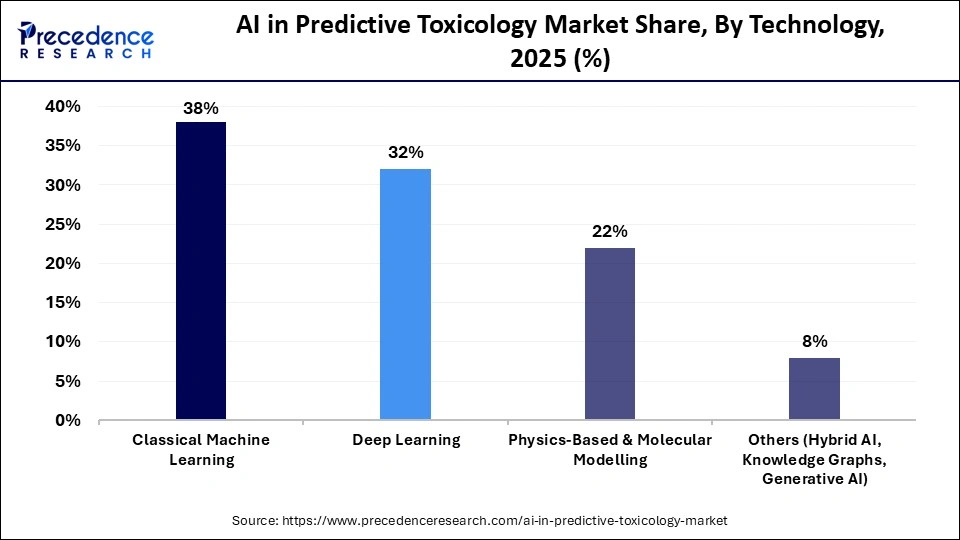
The deep learning segment is expected to expand at the fastest CAGR during the forecast period, as these models provide high accuracy in analyzing complex, non-linear biological interactions within large multidimensional datasets that conventional methods struggle to process. Deep learning enables in-silico toxicity simulations, reducing reliance on costly and time-consuming animal studies. Additionally, these algorithms can automatically learn toxicological patterns from raw data, improving predictive performance and accelerating drug safety assessment.
Toxicity Endpoint Insights
What Made Systemic Toxicity the Dominant Segment in the AI in Predictive Toxicology Market?
The systemic toxicity segment dominated the market with 34% share in 2025, driven by the growing need to evaluate the effects of compounds across multiple organ systems early in drug development, which helps reduce late-stage clinical failures and associated costs. AI-driven and in-silico toxicity models are increasingly being adopted to support systemic toxicity assessments while aligning with the 3R principles, namely Replacement, Reduction, and Refinement, to minimize animal testing. Additionally, regulatory agencies such as the U.S. Food and Drug Administration and the European Medicines Agency require comprehensive systemic toxicity data, further supporting the adoption of AI-based predictive tools.
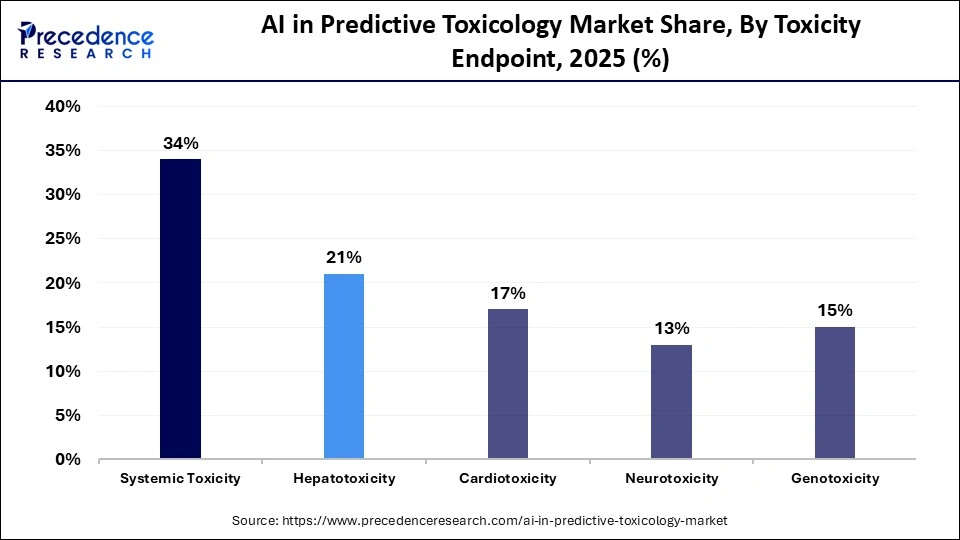
The genotoxicity segment is expected to witness the fastest growth during the projection period, driven by the growing adoption of AI-powered genotoxicity models as an ethical alternative to animal testing in the cosmetics, pharmaceutical, and chemical industries. Increasing pressure from regulatory and public bodies to reduce animal testing is accelerating the use of AI-based predictive approaches. Moreover, while traditional in vitro genotoxicity tests often generate false-positive results, AI-driven models can reduce these errors by up to 70%, improving the reliability of toxicity predictions at the early stages of testing.
Deployment Model Insights
Why Did the On-Premise Platforms Segment Lead the AI in Predictive Toxicology Market?
The on-premise platforms segment led the market with the largest share of 56% in 2025, driven by the need for full control over intellectual property and protection of sensitive compound data under strict regulatory requirements. Many companies prefer keeping AI models and training data within internal firewalls rather than using cloud services to minimize the risk of data leakage. Additionally, pharmaceutical R&D often relies on legacy IT infrastructure, making on-premise AI platforms easier to integrate with existing in-house databases and systems.
The cloud-based platforms segment is expected to grow at the fastest CAGR during the foreseeable period, as they offer excellent scalability and collaborative infrastructure required to manage and analyze huge datasets like large-scale screening libraries. Training advanced deep learning models requires significant computational power, which cloud platforms can provide efficiently. In addition, cloud environments enable the centralized integration of diverse data types, including omics data, chemical structures, and electronic health records, improving the accuracy and efficiency of predictive toxicology analysis.
AI in Predictive Toxicology Market Share, By Deployment Model, 2025 (%)
| Deployment Model | 2025 |
| On-Premise Platforms | 56% |
| Cloud-Based Platforms | 44% |
End User Insights
Why Did the Pharmaceutical and Biotechnology Companies segment Lead the AI in Predictive Toxicology Market?
The pharmaceutical and biotechnology companies segment led the market with 24.1% share in 2025 and is projected to grow at the fastest CAGR during the foreseeable period. This is because these companies face high costs and risks associated with late-stage drug failures due to unforeseen toxicity. AI tools enable early prediction of potential adverse effects, allowing firms to screen out risky compounds sooner, optimize R&D pipelines, and comply with regulatory requirements. Additionally, the need to reduce development timelines, control costs, and improve data accuracy makes AI-driven toxicology solutions particularly valuable for these companies.
AI in Predictive Toxicology Market Share, By End User, 2025 (%)
| End User | 2025 (%) |
| Pharmaceutical & Biotechnology Companies | 49% |
| Contract Research Organizations (CROs) | 23% |
| Chemical & Cosmetics Companies | 18% |
| Academic & Research Institutes | 10% |
Regional Insights
North America AI in Predictive Toxicology Market Size and Growth 2026 to 2035
The North America AI in predictive toxicology market size is estimated at USD 3.35 million in 2025 and is projected to reach approximately USD 24.80 million by 2035, with a 22.16% CAGR from 2026 to 2035.
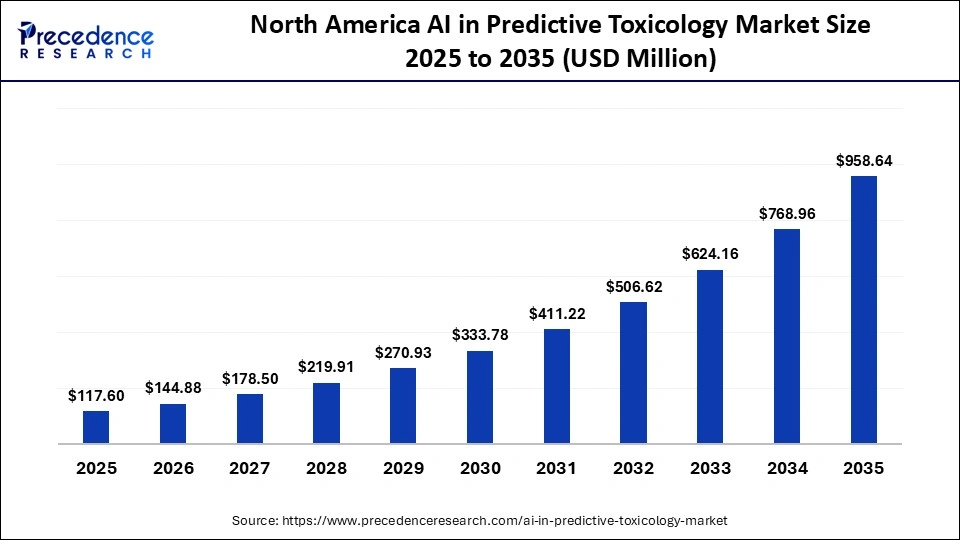
North America led the AI in predictive toxicology market with the largest share of 42% in 2025. This is due to its well-established pharmaceutical and biotechnology sectors, evolving regulatory frameworks, and strategic investments in AI-driven, data-centric models. The region is transitioning from model-centric to data-centric AI development, enabling pretraining on vast chemical and biological datasets for improved toxicity prediction. Additionally, partnerships between technology leaders like NVIDIA, IBM, and Google and North American biopharma companies provide the computational infrastructure needed to train complex AI toxicity models, further strengthening the market position.
U.S. AI in Predictive Toxicology Market Size and Growth 2026 to 2035
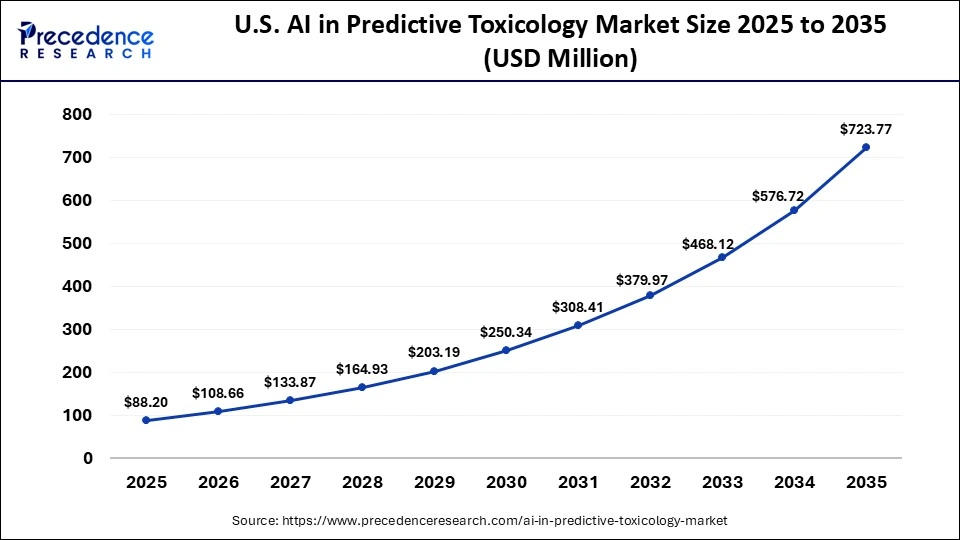
The U.S. AI in predictive toxicology market size is calculated at USD 2.51 million in 2025 and is expected to reach nearly USD 18.73 million in 2035, accelerating at a strong CAGR of 22.26% between 2026 and 2035.
U.S. AI in Predictive Toxicology Market Analysis
The U.S. is the major contributor to the North American AI in predictive toxicology market due to intensive R&D in the pharmaceutical and biotechnology sectors and the rapid adoption of the FDA Modernization Act 2.0. This legislation encourages the replacement, reduction, and refinement of animal testing, promoting the use of computational and AI-based non-animal toxicology methods. The market is further strengthened by leading players such as Certara Inc. and Simulation Plus Inc., along with recent strategic acquisitions and partnerships focused on AI-driven toxicology solutions.
Why is Asia Pacific Rapidly Growing in the AI in Predictive Toxicology Market?
Asia Pacific is expected to witness the fastest growth during the foreseeable period due to the high burden of chronic diseases, which increases the demand for new drug development and early toxicity prediction, particularly in oncology. The region is seeing massive R&D transformation and substantial government investment, with initiatives supporting AI integration and funding for institutes developing advanced Generative AI and causal AI technologies. Approximately 11% of global AI-driven drug development companies are based in Asia Pacific, further fostering the adoption of AI in predictive toxicology.
China AI in Predictive Toxicology Market Analysis
The market in China is driven by massive investments in R&D, a growing pharmaceutical sector, and rising demand for efficient drug discovery to reduce high failure rates. The country leverages centralized, digitized hospital records and CRO infrastructure, enabling AI companies to train models on extensive real-world clinical datasets. Additionally, multinational pharma firms are acquiring local companies to access proprietary AI technologies and talent. For instance, AstraZeneca partnered with CSPC Pharma Group, investing nearly $5 billion for access to its AI platform and cancer drug portfolio.
How is the opportunistic Rise of Europe in the AI in Predictive Toxicology Market?
Europe is expected to grow at a significant rate in the market, driven by a combination of strong regulatory frameworks, advanced pharmaceutical research, and strategic adoption of AI technologies. European governments and institutions are actively supporting computational toxicology initiatives to reduce animal testing, in line with the EU's 3R principles (Replacement, Reduction, Refinement). Additionally, the region benefits from collaborations between AI technology providers and biopharma companies, as well as investments in cloud-based platforms, multi-omics datasets, and advanced AI models, enabling faster adoption of predictive toxicology solutions and strengthening Europe's competitive position in the global market.
AI in Predictive Toxicology Market Companies
- Schrodinger
- Certara
- Simulations Plus
- Dassault Systèmes BIOVIA
- Charles River Laboratories
- Clarivate
- Insilico Medicine
- Exscientia
- Benevolent AI
- Recursion Pharmaceuticals
- Instem
- Lhasa Limited
- MultiCASE
- Optibrium
- Valo Health
Recent Developments
- In March 2026, the U-M and LOS ALAMOS national laboratory are partnering to develop new supercomputing and AI research centers and aiming to expand computational capacity and accelerate high-impact research. It will improve drug safety evaluation methods and revolutionize how drugs can be developed in the upcoming period.(Source: https://record.umich.edu)
- In January 2026, Lantern Pharma Inc. established an AI Center of Excellence and Advanced Agentic Labs in Bengaluru, India, marking a strategic step to scale its AI-driven precision oncology and drug discovery capabilities for global drug development.(Source: https://www.businesswireindia.com)
- In September 2025, Certara, Inc. launched Libra, an AI-powered tool designed to predict drug-induced liver injury (DILI), enabling pharmaceutical companies to improve safety predictions and optimize R&D decisions early in the drug discovery process.(Source: https://www.certara.com)
Segments Covered in the Report
By Technology
- Classical Machine Learning
- Deep Learning
- Physics-Based & Molecular Modelling
- Others (Hybrid AI, Knowledge Graphs, Generative AI)
By Toxicity Endpoint
- Systemic Toxicity
- Hepatotoxicity
- Cardiotoxicity
- Neurotoxicity
- Genotoxicity
By Deployment Model
- On-Premises Platforms
- Cloud-Based Platforms
By End User
- Pharmaceutical & Biotechnology Companies
- Contract Research Organizations (CROs)
- Chemical & Cosmetics Companies
- Academic & Research Institutes
By Region
- North America
- Latin America
- Europe
- Asia-pacific
- Middle and East Africa
For inquiries regarding discounts, bulk purchases, or customization requests, please contact us at sales@precedenceresearch.com
Frequently Asked Questions





Ask For Sample
No cookie-cutter, only authentic analysis – take the 1st step to become a Precedence Research client
 Get a Sample




 sales@precedenceresearch.com
 Schedule a Meeting
