



AI in Virtual Medical Assistants Market Trends, Companies, Revenue / Sales Performance, Subscriber Growth, Pricing Strategies, Cloud Adoption, Infrastructure Expansion, Competitive Landscape, and Industry Outlook
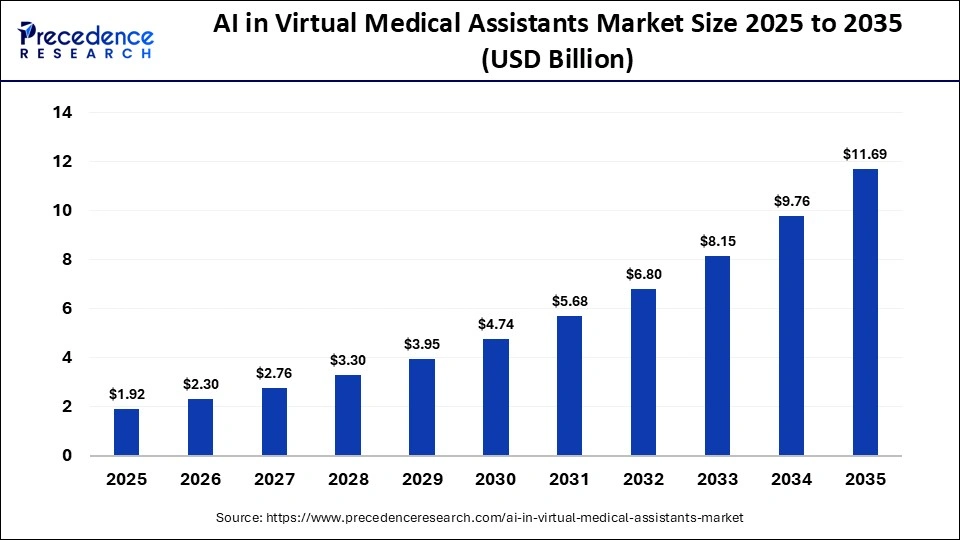
ICT industry specialist Shivani Zoting estimates the AI in virtual medical assistants market at USD 2.30 billion in 2026, with continued technology adoption expected to take the market to USD 11.69 billion by 2035 at a CAGR of 19.80%. Leading AI in virtual medical assistants market providers such as Microsoft Corporation, Nuance Communications, Inc., Amazon Web Services, Inc., Oracle Corporation, Google Cloud, Salesforce, Inc. are expanding their capabilities across segments including By Component, By Deployment Mode, By Technology, By Application, By End User.
Source: https://www.precedenceresearch.com/ai-in-virtual-medical-assistants-market
 Get a Sample
 Table Of Content


What is the AI in Virtual Medical Assistants Market Size in 2026?
The global AI in virtual medical assistants market size was calculated at USD 1.92 billion in 2025 and is predicted to increase from USD 2.30 billion in 2026 to approximately USD 11.69 billion by 2035, expanding at a CAGR of 19.80% from 2026 to 2035. The market is rapidly growing due to the increasing demand for remote patient consultation, monitoring, and 24/7 healthcare support. Ongoing advancements in NLP, GenAI, and AI/ML models and the need to support administrative workflows in healthcare also drive the market.
Key Takeaways
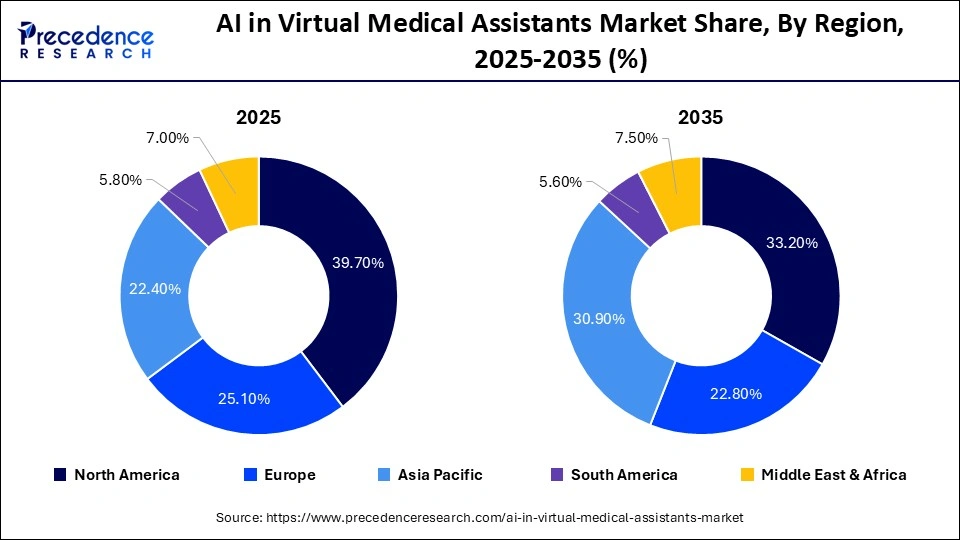
- North America held the largest market share of 39.7% in 2025.
- The Asia Pacific is expected to grow at the fastest CAGR during the forecast period.
- By component, the software segment held the largest market share of 68.3% in 2025.
- By component, the services segment is expected to grow at the fastest CAGR during the foreseeable period.
- By deployment mode, the cloud segment held the largest market share of 59.6% in 2025.
- By deployment mode, the hybrid segment is expected to expand at the fastest CAGR during the foreseeable period.
- By technology, the natural language processing segment held the largest market share of 27.8% in 2025.
- By technology, the generative AI segment is expected to grow at the fastest CAGR during the foreseeable period.
- By application, the appointment scheduling segment dominated the market with a 15.8% share in 2025.
- By application, the clinical documentation support segment is expected to witness the fastest growth during the foreseeable period.
- By end user, the hospitals and health systems segment held the largest market share of 36.8% in 2025.
- By end user, the telehealth platforms segment is expected to grow at the fastest CAGR during the foreseeable period.
Market Overview
The AI in virtual medical assistants market comprises software platforms and intelligent healthcare interfaces that use natural language processing, machine learning, speech recognition, conversational AI, and generative AI to support patients, caregivers, providers, and administrative staff. These solutions assist with symptom guidance, appointment scheduling, medication reminders, patient triage, clinical documentation, billing support, care navigation, and follow-up engagement across voice, chat, mobile, web, and contact center environments.
AI in Virtual Medical Assistants Market Trends
- There is a rapid integration of AI into EHR and EMR systems, enabling seamless access to patient data and improving clinical workflows. This integration enhances care coordination, documentation, and real-time decision making.
- The market is witnessing strong growth in multimodal interfaces, including text, voice, video, and image-based interactions. These capabilities provide a more comprehensive and user-friendly experience for both patients and healthcare providers.
- The adoption of generative AI and large language models (LLMs) is rising, enabling more human-like, context-aware conversations.
- This improves patient engagement, virtual triage, and clinical decision support.
- There is a growing shift toward edge AI, allowing data processing on local devices to reduce latency and improve data privacy. This is particularly important for sensitive healthcare information.
Market Scope
| Report Coverage | Details |
| Market Size in 2025 | USD 1.92 Billion |
| Market Size in 2026 | USD 2.30 Billion |
| Market Size by 2035 | USD 11.69 Billion |
| Market Growth Rate from 2026 to 2035 | CAGR of 19.80% |
| Dominating Region | North America |
| Fastest Growing Region | Asia-Pacific |
| Base Year | 2025 |
| Forecast Period | 2026 to 2035 |
| Segments Covered | Component, Deployment Mode, Technology, Application, End User, and Region |
| Regions Covered | North America, Europe, Asia-Pacific, Latin America, and Middle East & Africa |
Market Dynamics
Drivers
Shortage of Skilled Healthcare Workforce
The market is expanding rapidly due to the shortage of skilled healthcare professionals, prompting organizations to adopt AI-powered solutions like virtual medical assistants. These assistants help reduce administrative workload by handling repetitive tasks, allowing healthcare staff to focus on patient care and critical functions.
Restraint
Rising Cases of Data Breaches
Despite having several benefits, the AI in virtual medical assistants faces several issues, such as data breaches and security concerns over sharing sensitive data on cloud platforms. These systems are prime targets for unauthorized access, raising concerns about patient confidentiality. To mitigate risks, organizations must comply with strict regulations such as GDPR and HIPAA and implement robust data protection measures.
Opportunity
Demand for Robust Support Systems in Rural Areas
The future opportunity for the market lies in the demand for robust healthcare support systems to bridge healthcare gaps in rural and underserved regions. With limited access to skilled professionals and healthcare infrastructure, AI-powered assistants can provide basic medical guidance, virtual consultations, and continuous support. This has the potential to create a paradigm shift in healthcare delivery, extending quality care to millions of people regardless of geographical barriers.
Segment Insights
Component Insights
The Software Segment Held a 68.3% Share of the Market in 2025
The software segment dominated the AI in virtual medical assistants market with the largest share of 68.3% in 2025. This is due to its crucial role in delivering advanced NLP, ML, and conversational AI capabilities that offer intelligent and personalized interaction with patients. AI-driven software solutions work as the brain of a virtual assistant that allows voice/text-based symptom assessment with scheduling. The solutions also allow easy integration with EHR and telemedicine platforms that enhance utility for providers.
Abdominal Aortic Aneurysm Repair Market Share, By Component, 2025-2035 (%)
| Component | 2025 | 2035 |
| Software | 68% | 61% |
| Services | 32% | 39% |
The services segment is expected to grow at the fastest CAGR during the forecast period, driven by rising demand for integration, implementation, and ongoing support of AI solutions within complex healthcare IT systems. These services are critical for configuring virtual assistants to manage administrative tasks, patient communication, and workflow optimization, reducing staff burden. Additionally, continuous technical support and maintenance ensure the efficiency, reliability, and security of AI powered virtual medical assistants.
Deployment Mode Insights
Abdominal Aortic Aneurysm Repair Market Share, By Deployment Mode, 2025-2035 (%)
| Deployment Mode | 2025 | 2035 |
| Cloud | 59.60% | 50.80% |
| On Premises | 18.40% | 11.70% |
| Hybrid | 22.00% | 37.50% |
The Cloud Segment Led Market with a 68.3% Share in 2025
The cloud segment led the AI in virtual medical assistance market with the largest share of 68.3% in 2025. This is due to its cost efficiency, higher scalability, and easy deployment without investing in massive IT infrastructure. Healthcare providers increasingly rely on cloud-based platforms to support AI driven virtual assistance solutions with flexibility and accessibility. Additionally, cloud providers offer built-in security features such as data encryption, automated backups, and compliance with regulations like HIPAA and GDPR, further strengthening the segment's dominance.
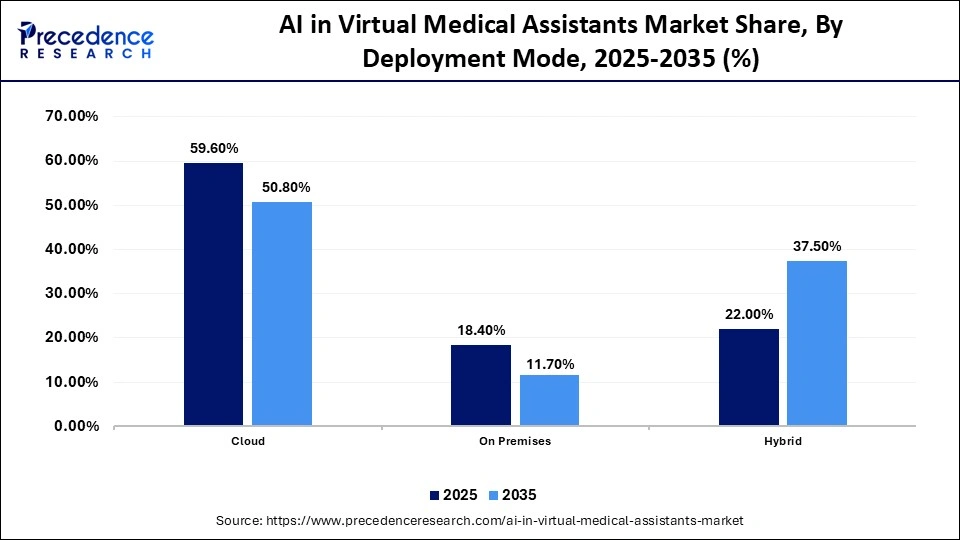
The hybrid segment is expected to expand at the fastest CAGR during the projection period, as it combines the scalability of cloud computing with the control of on premises systems. This approach addresses the healthcare sector's need for data privacy and security, allowing sensitive information to be stored locally while leveraging the cloud for advanced processing. Additionally, hybrid deployment ensures low latency and high performance, which are critical for accurate and timely healthcare outcomes.
Technology Insights
What Made Natural Language Processing the Dominant Segment in 2025
The natural language processing segment dominated the AI in virtual medical assistance market, holding a 27.8% share in 2025, as it allows human like conversation, precisely interprets massive and unstructured medical data, performs autonomous administrative tasks, and majorly reduces repetitive tasks. It offers the capability to handle complex medical terminology and context for effective symptom triage, patient scheduling, and documentation. NLP excels at fetching insights from unstructured medical data and conducting real-time analysis of patients' conversations.
Abdominal Aortic Aneurysm Repair Market Share, By Technology, 2025-2035 (%)
| Technology | 2025 | 2035 |
| Natural Language Processing | 28% | 22% |
| Automatic Speech Recognition | 16% | 14% |
| Machine Learning | 18% | 16% |
| Generative AI | 11% | 24% |
| Context Aware AI | 14% | 13% |
| Predictive Analytics | 12.90% | 11.50% |
The generative AI segment is expected to grow at the fastest CAGR during the foreseeable period because it enables highly accurate, context-aware, and humanlike interactions with patients. By leveraging large language models, generative AI can interpret complex medical data, provide personalized responses, and handle routine administrative tasks efficiently. This capability enhances patient engagement, reduces the workload on healthcare staff, and supports 24/7 virtual assistance, driving strong adoption across healthcare providers.
Application Insights
The Appointment Scheduling Segment Held a 15.8% Share of the Market in 2025
The appointment scheduling segment led the market while holding a 15.8% share in 2025. This is because of its ability to address one of the most time consuming administrative tasks in healthcare, which is managing patient bookings. AI powered scheduling reduces no-shows, optimizes clinician time, and provides 24/7 automated booking, enhancing patient engagement and operational efficiency. Additionally, seamless integration with EHR and telehealth systems ensures consistent workflows, making it an essential application for hospitals and clinics.
Abdominal Aortic Aneurysm Repair Market Share, By Application, 2025-2035 (%)
| Application | 2025 | 2035 |
| Appointment Scheduling | 16% | 12% |
| Symptom Checking | 14% | 12% |
| Medication Adherence | 9% | 10% |
| Patient Triage | 13% | 12% |
| Clinical Documentation Support | 11% | 17% |
| Billing and Claims Assistance | 8.70% | 8.90% |
| Post Discharge Follow Up | 8.30% | 9.60% |
| Chronic Disease Management | 7.50% | 7.90% |
| Mental Health Support | 5.90% | 6.70% |
| Care Navigation and Information Support | 7.10% | 4.50% |
The clinical documentation support segment is expected to witness the fastest growth during the foreseeable period, as it addresses clinicians' burnout through repetitive tasks like lengthy documentation by automating it, which increases adoption rates of clinical documentation. AI tools can minimize paperwork and allow doctors to focus on patient care. AI tools also streamline administrative workflows, improve clinical efficiency, and support precise coding and billing.
End User Insights
Abdominal Aortic Aneurysm Repair Market Share, By End User, 2025-2035 (%)
| End User | 2025 | 2035 |
| Hospitals and Health Systems | 36.80% | 32.40% |
| Clinics and Physician Practices | 21.70% | 18.30% |
| Healthcare Payers | 12.40% | 12.80% |
| Patients and Caregivers | 10.60% | 12.50% |
| Telehealth Platforms | 11.30% | 15.80% |
| Pharma and Life Sciences Organizations | 7.20% | 8.20% |
Why Do Hospitals and Health Systems Dominated the Market in 2025?
The hospitals and health systems segment dominated the AI in virtual medical assistants market by holding a major share of 36.8% in 2025. This is because these facilities often experience increasing patient volume. Hospitals are the primary centers for care, which forces them to adopt AI-driven medical assistants to alleviate the burden on clinicians and enhance patient-centric treatments. By providing 24/7 availability and quick responses, AI virtual assistants improve patient engagement, satisfaction, and overall care quality.
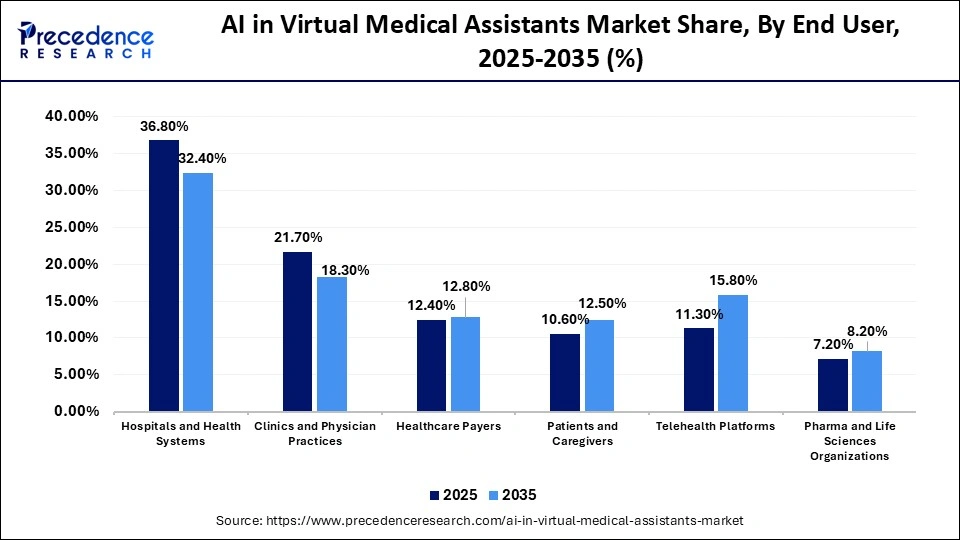
The telehealth platforms segment is expected to grow at the fastest CAGR during the foreseeable period due to the rising demand for remote patient care and seamless integration with EHR. AI assistants help streamline appointment scheduling, follow-ups, and symptom checking, reducing the administrative burden on healthcare providers. Additionally, they enhance patient experience by offering real-time responses, personalized guidance, and continuous monitoring, which is critical for effective virtual care delivery.
Regional Insights
North America AI in Virtual Medical Assistants Market Size and Growth 2026 to 2035
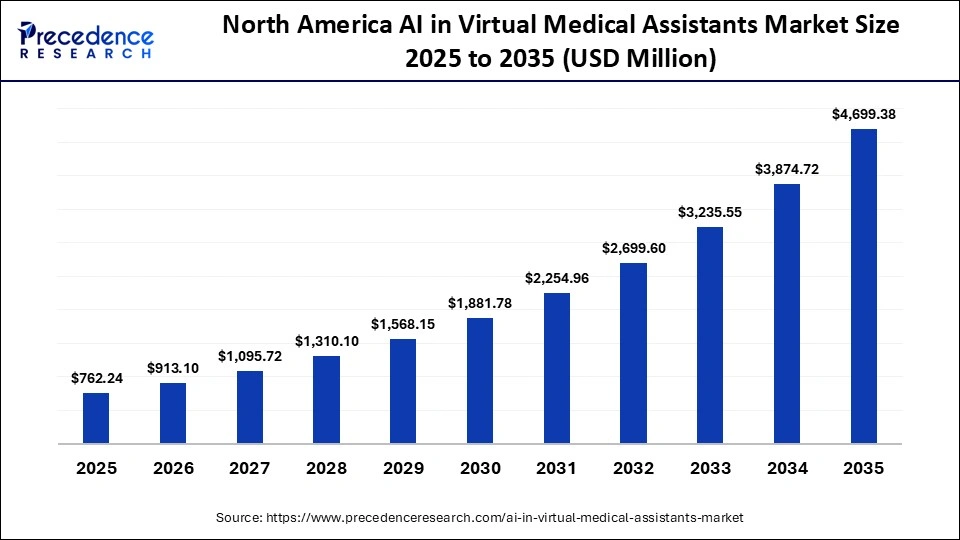
The North America AI in virtual medical assistants market size is estimated at USD 762.24 million in 2025 and is projected to reach approximately USD 4,699 million by 2035, with a 19.95% CAGR from 2026 to 2035.
What Made North America a Leading Region in the AI in Virtual Medical Assistants Market?
North America held the largest market share of 39.7% in 2025 due to its advanced digital healthcare infrastructure and massive healthcare spending. The region experienced a shortage of skilled healthcare professionals, which has boosted the demand for AI support systems. The region also benefits from strong regulatory support for telehealth and growing patient demand for remote monitoring and virtual care. Supportive frameworks from the U.S. FDA for AI-driven medical devices, combined with insurance and reimbursement policies, encourage the adoption of AI in virtual medical assistants. Moreover, investments from tech giants like Google, Microsoft, and IBM, alongside innovative startups such as Buoy Health, are accelerating market growth.
U.S. AI in Virtual Medical Assistants Market Size and Growth 2026 to 2035
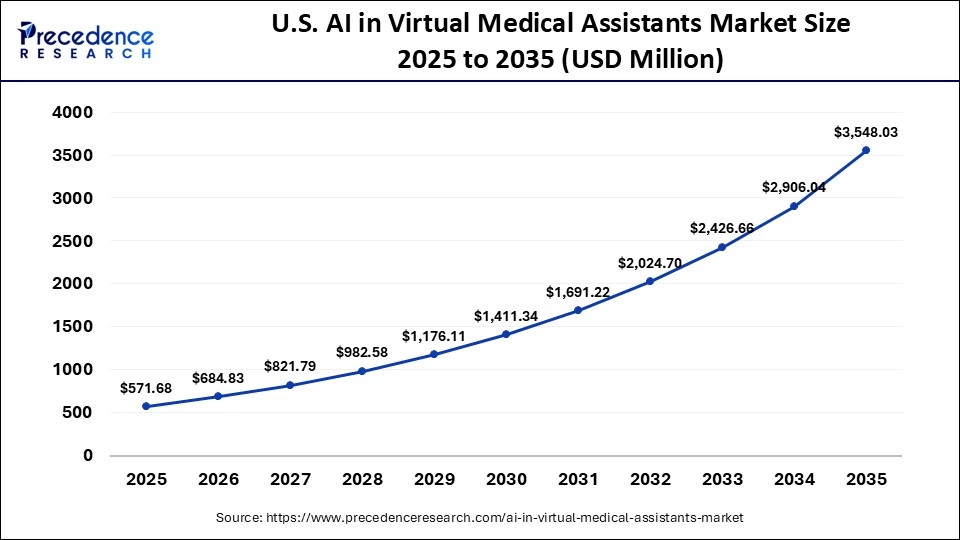
The U.S. AI in virtual medical assistants market size is calculated at USD 571.68 million in 2025 and is expected to reach nearly USD 3,548.03 million in 2035, accelerating at a strong CAGR of 20.03% between 2026 and 2035.
U.S. AI in Virtual Medical Assistants Market Analysis
The U.S. is a major contributor to the North American AI in virtual medical assistants market due to its high concentration of technology firms, favorable reimbursement policies for AI integration, and the proactive U.S. FDA framework for AI/ML-based healthcare software. AI virtual assistants are widely deployed in the country to reduce administrative burdens, including patient scheduling, triage, and clinical documentation. Additionally, significant national healthcare expenditures supporting AI adoption to improve patient outcomes further strengthen the U.S.'s leadership in this market.
How is the Opportunistic Rise of Asia Pacific in the AI in Virtual Medical Assistants Market?
Asia Pacific is expected to witness the fastest growth during the foreseeable period due to the rapid digitalization in the healthcare sector to fill the healthcare gap in underserved areas and the growing geriatric population, who demand remote patient monitoring and supportive government policies. Also, the huge population offers diverse datasets crucial for training and enhancing the outcomes of AI/ML models in the healthcare sector.
The region is rapidly integrating AI for diagnostics and remote healthcare, driven by collaborations between AI startups and private enterprises developing AI-powered medical devices. This synergy is accelerating adoption across hospitals and telehealth platforms. Reports indicate that nearly 75% of healthcare providers in the region expect significant productivity gains by deploying AI agents for real-time decision support and workflow automation, fueling strong market growth.
China AI in Virtual Medical Assistants Market Analysis
China is at the forefront of leveraging AI in virtual medical assistants due to its large population and healthcare resource gaps that demand AI enabled solutions with structured commercialization plans. The government's Healthy China 2030 initiative positions AI as a transformative technology to enhance diagnostics and optimize healthcare resource allocation. China's telemedicine sector is rapidly integrating AI for patient triage, consultations, and post operative monitoring. For instance, Ping An Health Insurance supports a platform with 373 million registered users, using AI avatars that replicate the voice and clinical reasoning of experienced healthcare professionals.
AI in Virtual Medical Assistants Market Companies
- Microsoft Corporation
- Nuance Communications, Inc.
- Amazon Web Services, Inc.
- Oracle Corporation
- Google Cloud
- Salesforce, Inc.
- Hyro
- Orbita, Inc.
- Infermedica
- Ada Health GmbH
- Hippocratic AI
- Sensely, Inc.
- Amelia
- Suki AI, Inc.
- eGain Corporation
Recent Developments
- In March 2026, a leading marketer across the world, Amazon, introduced the Health AI agent on the Amazon website and application with constant access to virtual care for Prime members. This new Health AI agent delivers personalized health insights and guidance while taking real-world actions like booking appointments and managing prescriptions, helping users stay healthier with ease.(Source: https://www.aboutamazon.com)
- In June 2025, a virtual medical receptionist, Cassie, built through research at Texas A&M University, transforming its interaction through facial recognition under collaboration with Humanate, an NVIDIA Inception company.(Source: https://healthcare-in-europe.com)
Segments Covered in the Report
By Component
- Software
- Services
By Deployment Mode
- Cloud
- On Premises
- Hybrid
By Technology
- Natural Language Processing
- Automatic Speech Recognition
- Machine Learning
- Generative AI
- Context Aware AI
- Predictive Analytics
By Application
- Appointment Scheduling
- Symptom Checking
- Medication Adherence
- Patient Triage
- Clinical Documentation Support
- Billing and Claims Assistance
- Post Discharge Follow Up
- Chronic Disease Management
- Mental Health Support
- Care Navigation and Information Support
By End User
- Hospitals and Health Systems
- Clinics and Physician Practices
- Healthcare Payers
- Patients and Caregivers
- Telehealth Platforms
- Pharma and Life Sciences Organizations
By Region
- North America
- Latin America
- Europe
- Asia-pacific
- Middle and East Africa
For inquiries regarding discounts, bulk purchases, or customization requests, please contact us at sales@precedenceresearch.com
Frequently Asked Questions





Ask For Sample
No cookie-cutter, only authentic analysis – take the 1st step to become a Precedence Research client
 Get a Sample




 sales@precedenceresearch.com
 Schedule a Meeting
