



Ambulatory Services Market Size, Companies, Share, Patient Volume, Treatment Adoption Rates, Pricing Analysis, Regulatory Landscape, Competitive Positioning, and Demand Forecast
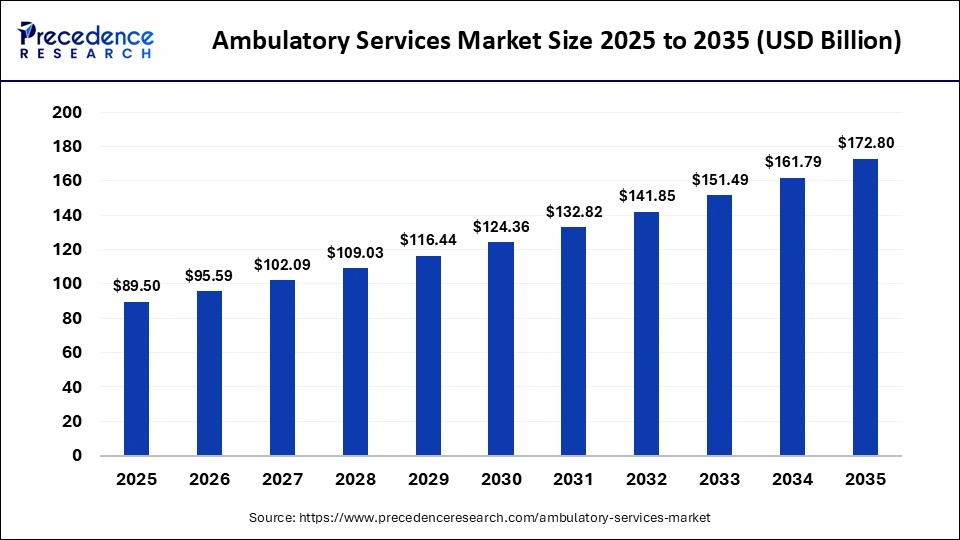
Rohan Patil, a Healthcare Industry Expert, highlights that the ambulatory services market has reached USD 95.59 billion in 2026 and is on track to reach USD 172.80 billion by 2035, advancing at a CAGR of 6.80%. Key ambulatory services market companies shaping the market include HCA Healthcare, Inc., Tenet Healthcare Corporation, Mednax, Inc., Surgical Care Affiliates (SCA), while major growth segments span By Service Type, By Specialization, By Ownership, By Payer.
Source: https://www.precedenceresearch.com/ambulatory-services-market
 Get a Sample
 Table Of Content


What is the Ambulatory Services Market Size in 2026?
The global ambulatory services market size accounted for USD 89.50 billion in 2025 and is predicted to increase from USD 95.59 billion in 2026 to approximately USD 172.80 billion by 2035, expanding at a CAGR of 6.80% from 2026 to 2035. The ambulatory services market is driven by the rising demand for cost-effective, same-day care and the shift from inpatient to outpatient healthcare settings.
Key Takeaways
- North America dominated the ambulatory services market with a 35% share in 2025.
- Asia Pacific is expected to grow at the fastest CAGR of 8.0% between 2026 and 2035.
- By service type, the surgical services segment contributed the highest market share of 55% in 2025.
- By service type, the diagnostic and therapeutic services segment is the second-largest shareholder and is expected to grow at the fastest CAGR of 7.5% during the forecast period.
- By specialization, the orthopedic surgery segment dominated the market with a 25% share in 2025.
- By specialization, the cardiology segment is the second-largest shareholder and is expected to grow at a strong CAGR of 7.2 % in the coming years.
- By ownership, the private ownership segment held a major market share of 60% in 2025.
- By ownership, the public ownership segment is expected to grow at a healthy CAGR of 5.8% between 2026 and 2035.
- By payer, the private insurance segment contributed the highest market share of 40% in 2025.
- By payer, the public insurance segment is the second-largest shareholder and is expected to grow at a significant CAGR of 6.0% during the forecast period.
Market Overview
The global ambulatory services market is growing as patients increasingly prefer outpatient care for its convenience, lower costs, and shorter hospital stays. Services such as consultations, minor surgeries, diagnostics, and preventive care are increasingly being delivered outside traditional hospital settings. Advances in minimally invasive procedures and portable diagnostic technologies are making outpatient treatments safer and more accessible. At the same time, healthcare providers are expanding ambulatory services to enhance patient experience, improve efficiency, and manage rising costs.
Factors such as the increasing burden of chronic diseases, aging populations, and a stronger focus on early diagnosis are further driving demand worldwide. In the U.S., growth is supported by advanced healthcare infrastructure, strong reimbursement frameworks like Medicare, and a well-established outpatient care model. Technologies such as EHRs and telehealth, along with cost-efficiency goals, continue to accelerate the shift from inpatient to outpatient services.
Impact of Artificial Intelligence on the Ambulatory Services Market
Artificial intelligence is enhancing the ambulatory services market by improving efficiency, accuracy, and patient care. It streamlines tasks like scheduling, triage, and documentation, while supporting faster diagnostics and better clinical decisions. AI also enables predictive care, improves patient engagement through virtual tools, and helps optimize workflows, making outpatient services more accessible, cost-effective, and personalized.
Major Market Trends
- Technological Advancements: The ambulatory services market is evolving with technologies like EHRs, telemedicine, and mobile health apps. These tools streamline operations, improve patient management, and enhance communication.
- Cost-Effectiveness: Ambulatory services offer a more affordable alternative to inpatient care, reducing overall healthcare expenses. Lower operational and treatment costs make outpatient care attractive for both patients and healthcare systems.
- Focus on Preventive Care: Ambulatory care is shifting toward prevention, integrating screenings, vaccinations, and early diagnosis services. This proactive approach helps detect conditions early, reduces long-term costs, and lessens the burden on emergency and inpatient services.
- Rising Demand for Outpatient Services: Demand for outpatient care is increasing due to convenience, shorter wait times, and lower costs. A significant share of healthcare visits now occurs in ambulatory settings, prompting providers to expand services and improve accessibility.
- Regulatory Support: Governments and health organizations are promoting ambulatory care through supportive policies, reimbursement incentives, and simplified regulations. These measures encourage investment in outpatient facilities and improve overall healthcare access and efficiency.
- Aging Population & Chronic Disease Management: An aging population and rising chronic diseases are increasing demand for ambulatory services. These settings provide continuous monitoring and management, helping improve quality of life and reducing hospital dependency for long-term care patients.
Market Scope
| Report Coverage | Details |
| Market Size in 2025 | USD 89.50 Billion |
| Market Size in 2026 | USD 95.59 Billion |
| Market Size by 2035 | USD 172.8 Billion |
| Market Growth Rate from 2026 to 2035 | CAGR of 6.80% |
| Dominating Region | North America |
| Fastest Growing Region | Asia Pacific |
| Base Year | 2025 |
| Forecast Period | 2026 to 2035 |
| Segments Covered | Service Type, Specialization, Ownership, Payer, and Region |
| Regions Covered | North America, Europe, Asia-Pacific, Latin America, and Middle East & Africa |
Market Dynamics
Drivers
Rising Demand for Outpatient Services
The ambulatory services market is rapidly growing as healthcare shifts toward outpatient care driven by technology, patient-focused approaches, and cost efficiency. Advanced medical tools and minimally invasive procedures are enabling more treatments outside hospitals, improving outcomes and convenience. At the same time, telehealth integration is expanding access by allowing virtual consultations and remote monitoring. This shift is helping providers reach more patients while reducing hospital burden. Overall, healthcare delivery is becoming more flexible, efficient, and tailored to individual patient needs.
Restraint
High Treatment Costs and Financial Burden
Delayed or incorrect diagnosis remains a key challenge in ambulatory care settings. Diagnostic errors, often caused by system gaps, limited patient interaction, or fragmented data, can lead to serious health consequences. In some cases, conditions like cancer may go undetected until advanced stages, increasing risks for patients. Studies indicate that millions of outpatient cases face misdiagnosis annually, highlighting the scale of the issue. These challenges raise concerns about patient safety, clinical accuracy, and trust, potentially limiting the broader adoption of ambulatory services.
Opportunity
Expansion of Preventive Care
The ambulatory services market holds strong growth potential through the expansion of preventive care, digital health, and integrated service models. Increasing adoption of telemedicine, AI-driven diagnostics, and remote monitoring can improve early detection and personalized treatment. There is also growing demand for ambulatory services in rural and underserved areas, creating opportunities for providers to expand reach. Additionally, partnerships, value-based care models, and investment in specialized outpatient centers can enhance efficiency, reduce costs, and support long-term market growth.
Segment Insights
Service Type Insights
Ambulatory Services Market Share, By Service Type , 2025-2035 (%)
| Service Type | 2025 | 2035 | CAGR (%) |
| Surgical Services | 55.00% | 52.00% | 6.5% |
| Diagnostic and Therapeutic Services | 20.00% | 22.00% | 7.5% |
| Pain Management Services | 15.00% | 14.50% | 6.0% |
| Other Medical Services | 10.00% | 11.50% | 8.0% |
The Surgical Services Segment Dominated the Market in 2025
The surgical services segment dominated the ambulatory services market with a major share of 55% in 2025. This is mainly due to the increasing volume of minimally invasive surgeries and outpatient procedures. Patients prefer outpatient surgeries as they offer faster recovery, lower costs, and reduced hospital stays. Advances in surgical techniques and equipment have made complex procedures safer in ambulatory settings. As healthcare providers focus on efficiency and patient convenience, the shift toward outpatient surgical care is expected to strengthen, keeping this segment at the forefront of market growth.
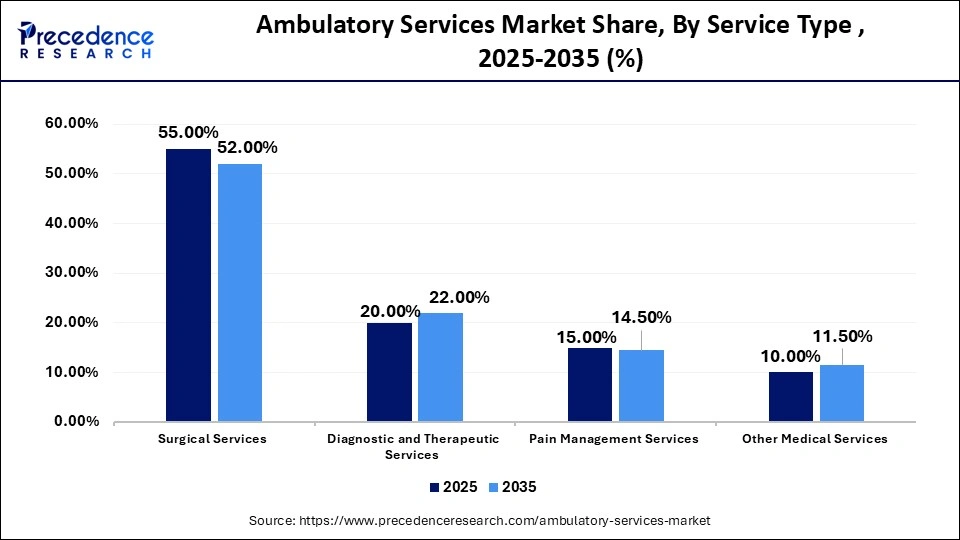
The diagnostic and therapeutic services segment held the second-largest market share of 20% in 2025 and is expected to grow at the fastest CAGR of 7.5% during the forecast period, supported by increasing demand for early detection and specialized treatments. Technologies such as advanced imaging and lab testing are improving the accuracy and accessibility of care. With a growing focus on preventive healthcare and personalized medicine, these services play a key role in timely diagnosis and ongoing disease management. Their expanding scope and importance are helping them gain a strong position within the ambulatory services market.
The pain management services segment held a 15% share of the market in 2025 and is expected to grow at a 6% CAGR in the coming years. This is mainly due to the rising prevalence of chronic pain conditions such as arthritis, back pain, and post-surgical discomfort. Additionally, the shift toward minimally invasive, outpatient treatments and the need for cost-effective, quick recovery options are driving demand for pain management services in ambulatory settings.
Specialization Insights
Why Did the Orthopedic Segment Dominated the Market in 2025?
The orthopedic segment dominated the ambulatory services market with a 25% share in 2025, driven by rising cases of musculoskeletal disorders and sports-related injuries. The growing preference for outpatient care, along with minimally invasive techniques and improved rehabilitation methods, is supporting this trend. Enhanced focus on patient-centered care allows providers to offer customized treatment plans, improving recovery outcomes. As awareness of posture and lifestyle-related issues increases, demand for orthopedic interventions in outpatient settings continues to grow steadily.
Ambulatory Services Market Share, By Specialization, 2025-2035 (%)
| Specialization | 2025 | 2035 | CAGR (%) |
| Orthopedic Surgery | 25.00% | 24.50% | 6.8% |
| Cardiology | 20.00% | 19.50% | 7.2% |
| Ophthalmology | 15.00% | 14.50% | 6.5% |
| Plastic Surgery | 12.00% | 12.50% | 7.5% |
| Gastroenterology | 10.00% | 10.50% | 7.8% |
| Urology | 8.00% | 9.00% | 6.5% |
| Other Specializations | 10.00% | 10.00% | 6.0% |
The cardiology services segment held a 20% share of the market in 2025 and is expected to expand at a CAGR of 7.2% during the forecast period, supported by the rising prevalence of cardiovascular diseases. Procedures such as angioplasty and catheter-based interventions are increasingly performed outside hospitals due to technological advancements and cost benefits. Improved diagnostic tools and minimally invasive treatments are enabling safer outpatient cardiac care. This shift not only reduces hospitalization needs but also enhances patient convenience, contributing to strong growth in this segment.
The gastroenterology segment held a 10% share of the market in 2025 and is expected to grow at the fastest CAGR of 7.5% during the projection period. This is primarily due to the increasing prevalence of gastrointestinal disorders such as acid reflux, irritable bowel syndrome, and colorectal diseases. Additionally, the rising demand for minimally invasive diagnostic and therapeutic procedures like endoscopy and colonoscopy in outpatient settings is driving segment growth.
Ownership Insights
Ambulatory Services Market Share, By Ownership, 2025-2035 (%)
| Ownership | 2025 | 2035 | CAGR (%) |
| Private Ownership | 60.00% | 58.00% | 6.5% |
| Public Ownership | 20.00% | 18.50% | 5.8% |
| Non-profit Ownership | 20.00% | 23.50% | 8.0% |
The Private Ownership Segment Held a 60% Share of the Market in 2025
The private ownership segment led the ambulatory services market with a 60% share in 2025, due to higher investments, operational flexibility, and focus on quality care. These centers can quickly adapt to changing healthcare demands and adopt advanced technologies, offering a wide range of services. Their emphasis on personalized care and efficient operations makes them a preferred choice for patients. Strong financial backing and innovation-driven strategies further strengthen their competitive position in the market.
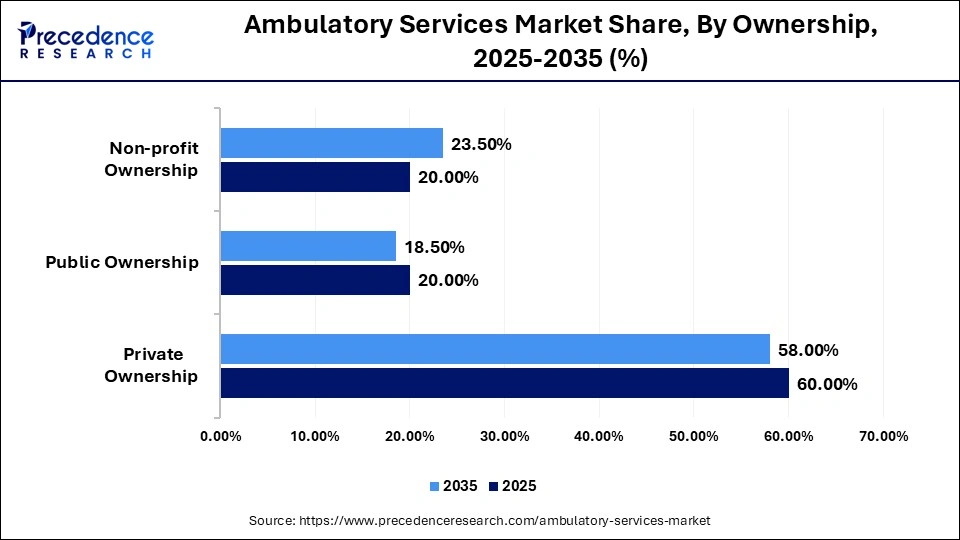
The public ownership segment held the second-largest market share of 20% in 2025 and is expected to expand at the fastest CAGR of 5.8% over the projection period. Publicly owned ambulatory centers play a vital role, particularly in government-supported healthcare systems. These facilities focus on delivering affordable and accessible care to a broader population. Backed by policy support and healthcare initiatives, they help expand outpatient services in underserved areas. While they may have operational limitations compared to private players, their contribution to equitable healthcare access remains significant.
The non-profit ownership segment is expected to grow at the fastest CAGR of 8% throughout the forecast period, driven by its focus on affordable and accessible healthcare services, especially for underserved and low-income populations. Additionally, support from government programs, grants, and community-based initiatives enables non-profit providers to expand outpatient services while maintaining high-quality care standards.
Payer Insights
Ambulatory Services Market Share, By Payer, 2025-2035 (%)
| Payer | 2025 | 2035 | CAGR (%) |
| Private Insurance | 40.00% | 42.00% | 7.5% |
| Public Insurance | 35.00% | 33.00% | 6.0% |
| Out-of-Pocket Payments | 25.00% | 25.00% | 5.5% |
The Private Insurance Segment Held a 40% Share of the Market in 2025
The private insurance segment dominated the ambulatory services market with the largest share of 40% in 2025, driven by increasing coverage and demand for outpatient care. Patients with private plans benefit from faster access, wider provider options, and coverage for advanced procedures. This encourages the use of ambulatory services for cost-effective and convenient treatment.
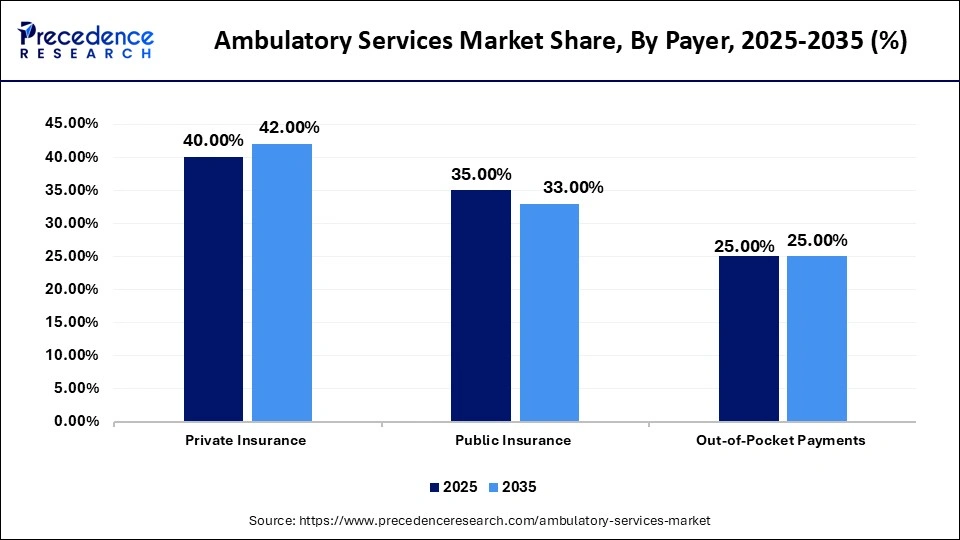
The public insurance segment held the second-largest market share of 35% in 2025 and is expected to expand at a significant CAGR of 6% over the projection period. Programs such as Medicare and Medicaid remain essential, especially for the elderly and low-income populations. These programs support access to outpatient surgeries and treatments, ensuring affordability and continuity of care. Their role is crucial in sustaining demand for ambulatory services across diverse patient groups.
Region Insights
North America Ambulatory Services Market Size and Growth 2026 to 2035
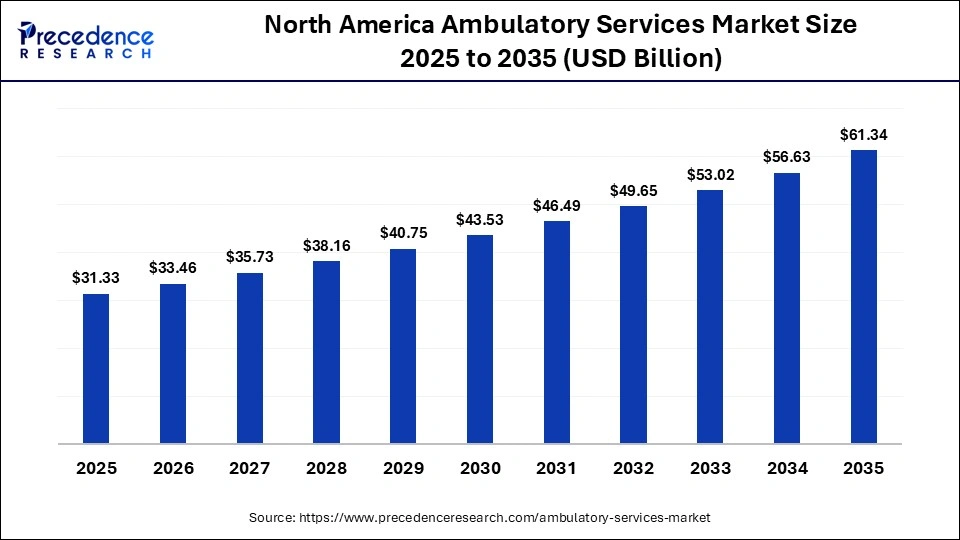
The North America ambulatory services market size is estimated at USD 31.33 billion in 2025 and is projected to reach approximately USD 61.34 billion by 2035, with a 6.95% CAGR from 2026 to 2035.
North America Dominated the Market With a 35% Share in 2025
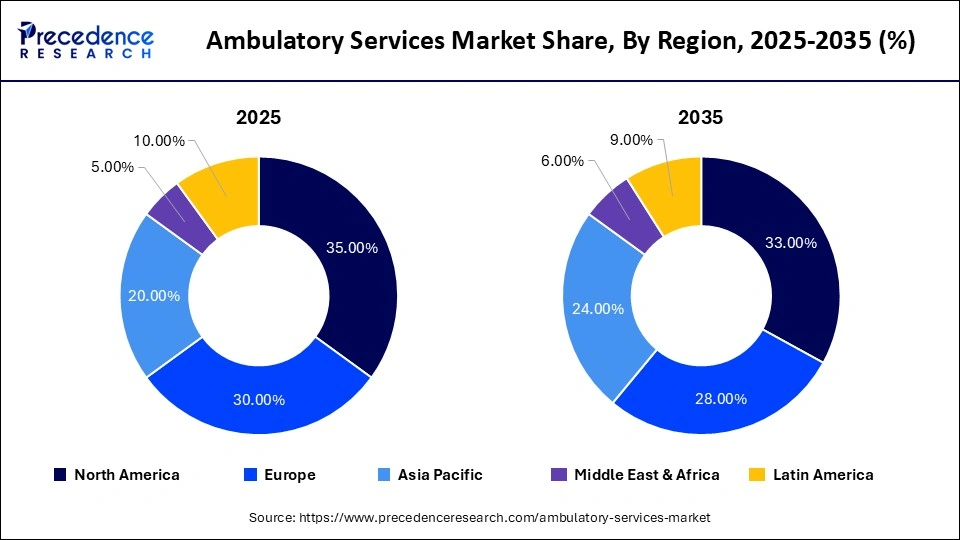
North America dominated the ambulatory services market with a major share of 35% in 2025. This is primarily due to its advanced healthcare infrastructure, strong insurance coverage, and a high number of ASCs. The regional market growth is driven by an aging population, rising prevalence of chronic diseases, and a shift toward outpatient care. Supportive regulations and value-based care models further encourage expansion, while major players continue to grow through strategic partnerships and service diversification.
U.S. Ambulatory Services Market Size and Growth 2026 to 2035
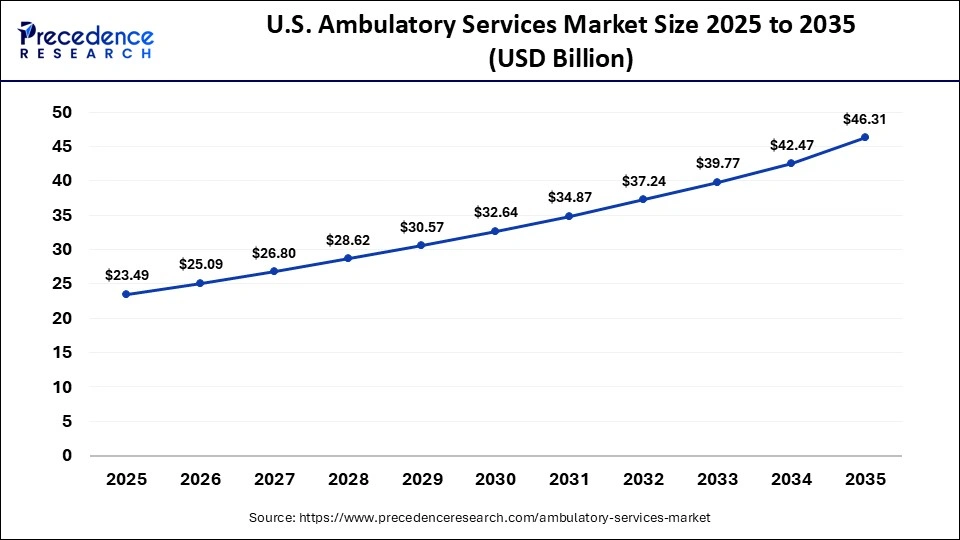
The U.S. ambulatory services market size is calculated at USD 23.49 billion in 2025 and is expected to reach nearly USD 46.31 billion in 2035, accelerating at a strong CAGR of 7.02% between 2026 and 2035.
U.S. Market Analysis
The U.S. is a major contributor to the North American ambulatory services market, supported by its well-established outpatient care network, including ASCs, clinics, and diagnostic centers. High adoption of outpatient procedures, strong investment in technology, and efficient healthcare delivery models enhance patient access, making the country a key driver of global market growth.
Europe: The Second-Largest Market
Europe was the second-largest shareholder in 2025, holding a 30% share, and is expected to grow at a 6.2% CAGR during the projection period. This is mainly due to its strong healthcare systems, aging populations, and a shift toward outpatient care. Government initiatives to reduce costs and improve access are driving expansion. Countries like Germany, France, and the UK lead the market, with providers investing in technology and adapting to regulations to enhance service delivery.
Germany Market Analysis
Germany's ambulatory services market benefits from a well-established healthcare system and a strong focus on outpatient care. Rising demand for efficient, cost-effective treatments is encouraging growth, supported by regulatory frameworks and ongoing investments in healthcare technology and infrastructure.
Asia Pacific: The Fastest-Growing Region
Asia Pacific is expected to grow at the fastest CAGR of 8% in the coming years, driven by rising healthcare spending, a growing middle class, and increasing demand for affordable care. Governments are investing heavily to expand healthcare infrastructure and improve access to outpatient services. Countries like China, India, and Japan are leading growth, with both public and private players expanding services to meet rising demand.
China Market Analysis
China's ambulatory services market is expanding rapidly due to healthcare reforms, urbanization, and rising patient demand. Investments in hospital infrastructure and outpatient facilities are improving accessibility. The government's focus on healthcare modernization and efficiency is encouraging the growth of ambulatory care services across urban and semi-urban regions.
India Market Analysis
India's ambulatory services market is highly competitive, fueled by rising outpatient demand and a shift toward value-based care. Key players, including HCA Healthcare and Tenet Healthcare, are expanding services and leveraging technology to improve patient experience, driving innovation and operational efficiency across the sector. Increasing demand for affordable and accessible treatment is encouraging providers to enhance efficiency and adopt digital solutions, creating a competitive environment with both domestic and international players strengthening their presence.
Middle East & Africa Market Analysis
The Middle East & Africa ambulatory services market is gradually growing, supported by rising investments in healthcare infrastructure and expanding private facilities, particularly in the GCC region. Increasing population and awareness of outpatient care are driving demand. Government initiatives are improving access, while countries like the UAE, Saudi Arabia, and South Africa lead growth. Providers are focusing on innovation and partnerships to enhance service delivery.
Ambulatory Surgical Center Market Companies
- HCA Healthcare, Inc.
- Tenet Healthcare Corporation
- Mednax, Inc.
- Surgical Care Affiliates (SCA)
- UnitedHealth Group (Optum Health)
- AmSurg Corporation (Envision Healthcare)
- Ramsay Healthcare
- DaVita Inc.
- MediPost, Inc.
- Fresenius Medical Care
- USPI (Universal Surgical Partners, Inc.)
- Northwell Health
- Community Health Systems, Inc.
- Regents Health Services
- Alcon, Inc.
Recent Developments
- In March 2026, Representatives Beth Van Duyne (R-TX) and John Larson (D-CT) introduced the Outpatient Surgery Access Act of 2026 on March 25. ASCA supports this bill, which would make essential changes to the Medicare ambulatory surgical center (ASC) payment system. If passed, the act would help stabilize ASC reimbursements by permanently instituting the same inflationary factor used to update hospital payment rates. The legislation also would remove a budget-neutrality adjustment that increasingly depresses ASC rates.(Source: https://www.ascfocus.org)
- In April 2026, Michigan HB 5770 would disallow, beginning January 1, 2027, healthcare providers, including ASCs, from charging facility fees for the following: professional medical services provided through telemedicine; professional medical services provided in a facility that is not a hospital; and professional medical services provided to a patient who is receiving outpatient service in a hospital, unless that service is provided in an emergency room or is observation.(Source: https://www.ascfocus.org)
- On April 9, 2026, Apollo Hospitals launched a structured patient transfer initiative to improve access to advanced critical care through coordinated air medical transport across India and internationally. The company has partnered with multiple air ambulance providers and integrated services via its 1066 Emergency Response Network to enable faster, more organized patient transfers. This initiative aims to address gaps in emergency transport, especially from remote areas, by making services more accessible, efficient, and reliable.(Source: https://www.hospitalmanagementasia.com)
- In January 2026, Tampa General Hospital and Mass General Brigham launched a joint ambulatory care network along Florida's East Coast, expanding access to primary, specialty, and surgical outpatient services. The network aims to provide coordinated, patient-focused care to over two million residents in Martin, St. Lucie, and Palm Beach counties. It will include new facilities like a radiation oncology center and strengthen integrated outpatient services across the region.(Source: https://www.tgh.org)
- In December 2025, DNV launched an accreditation program for Ambulatory Surgery Centers (ASCs), aiming to enhance patient safety and quality standards in outpatient surgical care. The program helps ASCs improve operational efficiency, reduce hospital system burden, and maintain continuous quality improvement. This expansion underscores DNV's commitment to supporting scalable, high-quality healthcare globally.(Source: https://www.dnv.com)
Segments Covered in the Report
By Service Type
- Surgical Services
- Diagnostic and Therapeutic Services
- Pain Management Services
- Other Medical Services
By Specialization
- Orthopedic Surgery
- Cardiology
- Ophthalmology
- Plastic Surgery
- Gastroenterology
- Urology
- Other Specializations
By Ownership
- Private Ownership
- Public Ownership
- Non-profit Ownership
By Payer
- Private Insurance
- Public Insurance (Medicare/Medicaid)
- Out-of-Pocket
By Region
- North America
- Latin America
- Europe
- Asia-pacific
- Middle and East Africa
For inquiries regarding discounts, bulk purchases, or customization requests, please contact us at sales@precedenceresearch.com
Frequently Asked Questions
Tags





Ask For Sample
No cookie-cutter, only authentic analysis – take the 1st step to become a Precedence Research client
 Get a Sample




 sales@precedenceresearch.com
 Schedule a Meeting
