



Battery Technology Market Size, Key Companies, Company Market Share, Vehicle Production Volume, Sales Performance, Export & Import Analysis, Technology Adoption, Competitive Positioning, and Demand Trends
According to automotive sector expert, Laxmi Narayan notes that the battery technology market stands at USD 140.49 billion in 2026 and is expected to reach USD 272.30 billion by 2035, growing at a CAGR of 7.76%. Leading battery technology market companies such as lg energy solution, byd company, Panasonic corporation, Samsung sdi, honda inc are driving market development across segments including product, application, control technologies, power systems.
Source: https://www.precedenceresearch.com/battery-technology-market
 Get a Sample
 Table Of Content


What is the Battery Technology Market Size?
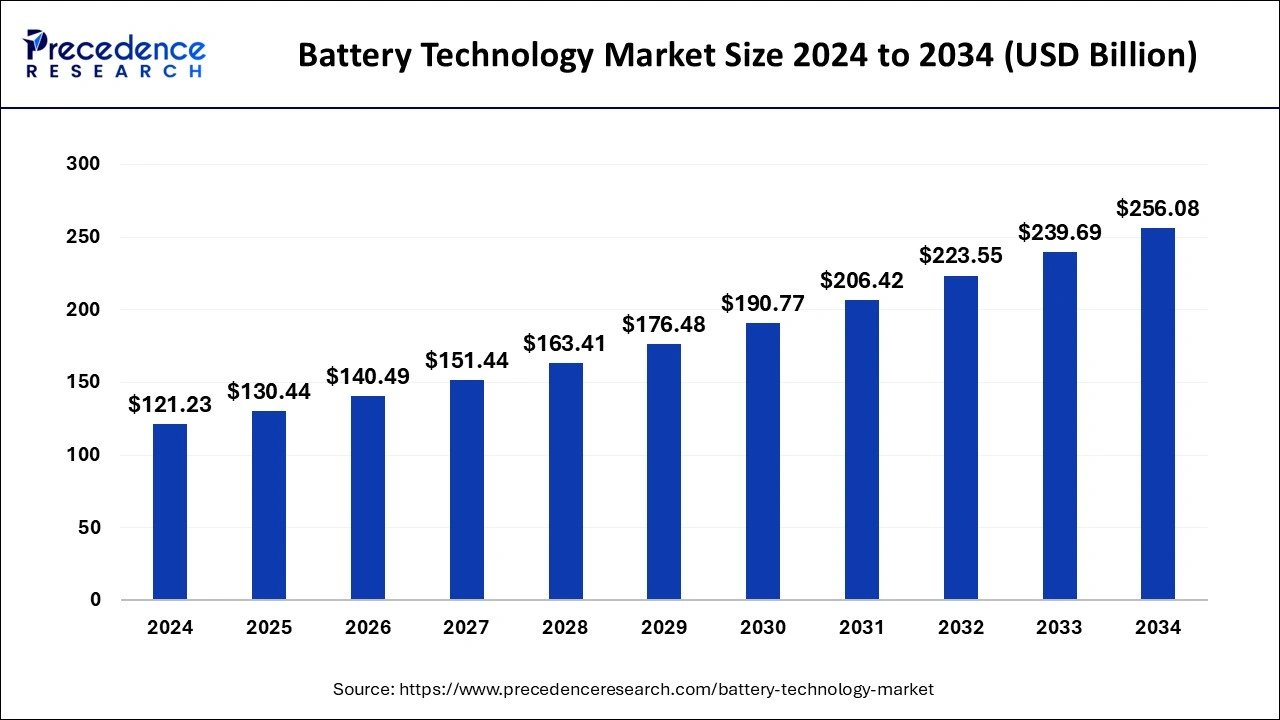
The global battery technology market size is calculated at USD 130.44 billion in 2025 and is predicted to increase from USD 140.49 billion in 2026 to approximately USD 272.30 billion by 2035, expanding at a CAGR of 7.76% from 2026 to 2035. The rising demand for lithium-ion batteries from smartphone manufacturing companies has boosted the growth of the battery technology market.
Battery Technology Market Key Takeaways
- In terms of revenue, the battery technology market is valued at $130.44 billion in 2025.
- It is projected to reach $272.30 billion by 2035.
- The battery technology market is expected to grow at a CAGR of 7.76% from 2026 to 2035.
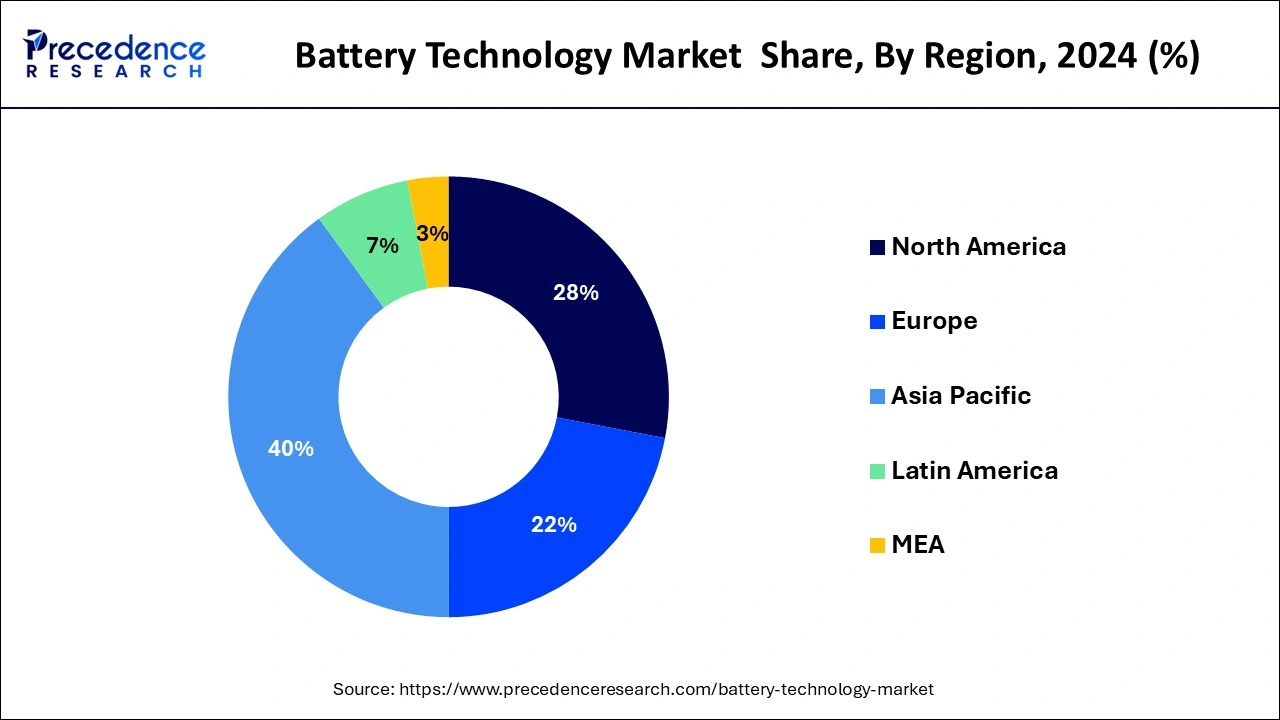
- Asia Pacific dominated the global market with the largest market share of 40% in 2025.
- North America is projected to expand at the notable CAGR during the forecast period.
- By product type, the lithium-ion batteries segment contributed the highest market share in 2025.
- By product type, the lead acid segments is estimated to be the fastest-growing segment during the forecast period.
- By application, the automotive segment captured the biggest market share in 2025.
- By application, the consumer electronic segment is expected to grow at a significant CAGR from 2026 to 2035.
Battery Technology Market Growth Factors
- Rapidly growing demand for the remote controls, watches, toys, and electronic keys across the globe.?
- The surging demand for the secondary batteries in the aviation and the automobile industry.
- The rising sales of battery electric vehicles around the world.
- Increased application of battery technology in renewable energy industry.
- Rapid deployment of battery technology across various industries.
- The technological advancements in battery industry.
- The growing trend of smart battery systems in developed nations.
- The upsurge in demand for long-lasting batteries from medical devices industry.
Battery Technology Market Outlook
- Industry Growth Overview: The battery technology market is set for substantial growth between 2025 and 2034. This surge is primarily driven by the rapid adoption of electric vehicles (EVs), the large-scale integration of renewable energy sources into power grids, and sustained demand from the consumer electronics and industrial automation sectors. High-growth segments include lithium-ion, solid-state, and sodium-ion batteries.
- Rising Demand for Recycling Technologies: This trend aligns with regulations like the EU's Battery Directive that require minimum recycled content and producer responsibility. There is also growing R&D into bio-based and less toxic battery chemistries, such as lithium iron phosphate (LFP), which uses less cobalt, to decrease dependence on scarce and geopolitically sensitive raw materials and to reduce environmental impact.
- Global Expansion: Leading players are expanding their manufacturing capacities globally, driven by government incentives and the need for localized supply chains to enhance energy security and reduce logistical costs. Asia-Pacific dominates the market with significant investments in gigafactories. North America and Europe are also experiencing substantial investment and expansion in domestic battery production.
- Major Investors: The market is attracting significant investment from venture capital, private equity, and strategic corporate investors, including major automakers and tech companies like Volkswagen, Hyundai, GM, Nvidia, and Microsoft. These investors are drawn by strong growth prospects and are often forming joint ventures and strategic partnerships to secure stable supply chains.
- Startup Innovation: The startup ecosystem is thriving by developing innovative chemistries, advanced recycling processes, and AI-powered battery management systems to enhance performance and sustainability.
Market Scope
| Report Coverage | Details |
| Market Size in 2035 | USD 272.30 Billion |
| Market Size in 2026 | USD 140.49 Billion |
| Market Size in 2025 | USD 121.33 Billion |
| Market Growth Rate from 2026 to 2035 | CAGR of 7.76% |
| Largest Market | Asia Pacific |
| Fastest Growing Market | Europe |
| Base Year | 2025 |
| Forecast Period | 2026 to 2035 |
| Segments Covered | Product, Application, Control Technologies, Power Systems, Geography |
| Regions Covered | North America, Europe, Asia-Pacific, Latin America, and Middle East & Africa |
Segments Insights
Product Type Insights
Based on the product type, the lithium-ion batteries held the largest market share in 2025. This growth is attributed to the increased demand for the lithium-ion batteries in the battery electric vehicle and plug-in hybrid electric vehicles across the globe. The growing adoption of the electric vehicles among the global consumers is expected to boost the adoption of the lithium-ion batteries in the foreseeable future. The lithium-ion batteries are considered to be eco-friendlier alternative to the traditional fuels, which has significantly boosted its adoption in the electric vehicles. The rising government initiatives to boost the adoption of the EVs in the form of incentives and subsidies are fueling the sales of the EVs across major countries. The nations like India, Canada, Japan, and Thailand are offering subsidies to the customers for purchasing electric vehicles.
The lead acid is expected to be the fastest-growing segment during the forecast period. The growing adoption of lead acid batteries is attributed to its low cost and higher safety as compared to that of the lithium-ion batteries. Moreover, the lithium-ion batteries are very vulnerable and react with water and may lead to accidents. The safety issues related with the lithium-ion batteries may result in the increasing demand for the lead acid batteries as a substitute for the lithium-ion.
Application Insights
Depending on the application, the automotive segment dominated the global battery technology market in 2025. This growth is attributable to the increased adoption of the battery technology in the automotive industry across the globe. The rising investments in the research and development and growing focus towards developing sustainable commute solutions has fueled the adoption of the battery technology in the automobile industry. Furthermore, the rising government focus towards boosting the adoption of the commercial electric vehicles is expected to foster the growth of this segment. The commercial vehicles produce maximum pollution and hence the rising focus to promote the adoption of commercial electric vehicles is expected to further fuel the market growth.
The consumer electronic is anticipated to be the most opportunistic segment during the forecast period. The increasing demand for the battery technology in the consumer electronic industry is significantly fueling the growth of the market. The increased demand for the various automated and smart consumer electronic devices is propelling the demand for the battery technology in this industry. Furthermore, the growing adoption of the fitness bands and smartwatches among the millennial population is fostering the growth of this segment across the globe.
Regional Insights
Asia Pacific Battery Technology Market Size and Growth 2026 to 2035
The Asia Pacific battery technology market size is evaluated at USD 52.47 billion in 2025 and is projected to be worth around USD 111.38 billion by 2035, growing at a CAGR of 7.95% from 2026 to 2035.
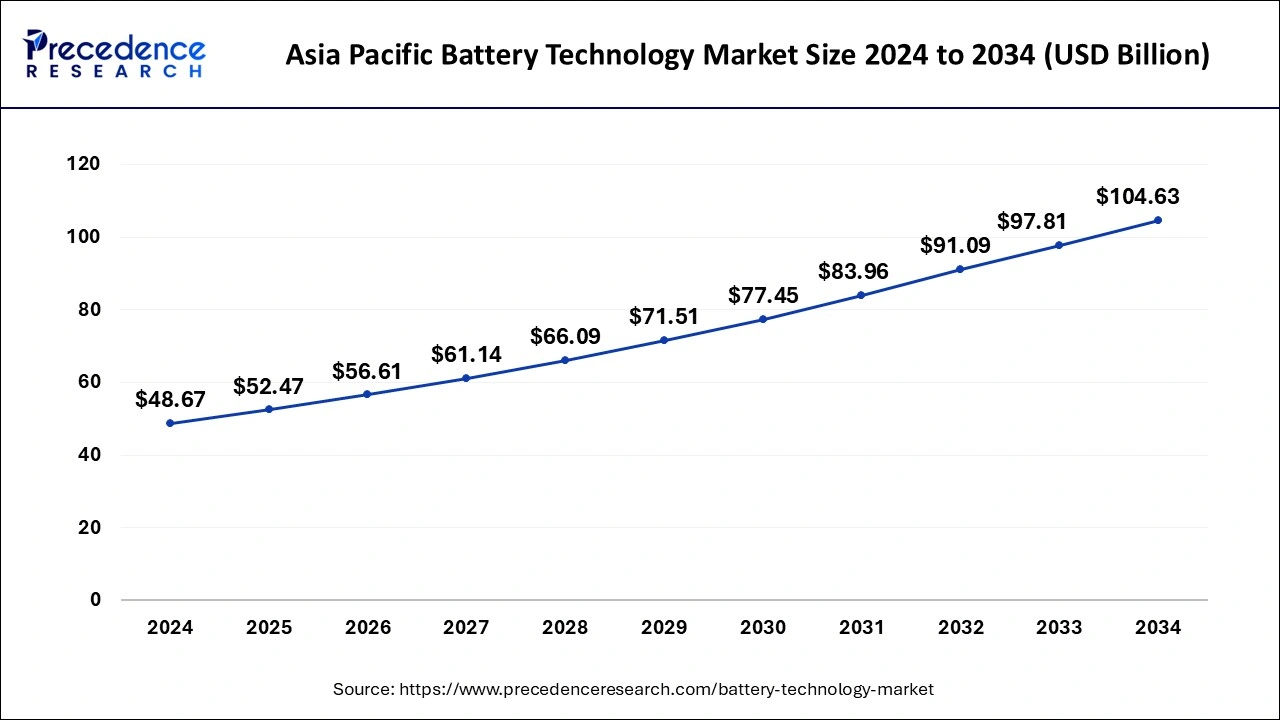
Asia Pacific was dominating the global battery technology market in 2025. This growth is attributable to the presence of top electric vehicle manufacturers in the countries like South Korea, Japan, and China. China is known to produce highest number of electric vehicles in the world. Furthermore the demand for electric vehicles is significantly high in China and it is rapidly growing in other developing regions owing to the rising government initiatives to promote the adoption of electric vehicles. Moreover, Asian countries like India, Japan, South Korea, and China are the top manufacturers of consumer electronics.
The presence of top consumer electronics manufacturers in the region results in the high demand for the battery technology. Asia Pacific is the home to the world's largest population which creates a huge consumer base in the region. Due to the presence of huge consumer base, the growing demand for various products such as automotive, medical equipment, consumer electronics, and commercial and residential products that uses smart and automatic technologies is boosting the growth of the battery technology market in Asia Pacific. With the rising penetration of internet and other digital technologies, the Asia Pacific market is expected to witness a significant growth in the forthcoming years. The rising government initiative to promote industrial growth and the favorable government policies that attracts huge FDIs from the foreign countries is expected to foster the demand for battery technology in the forthcoming years.
How is the Opportunistic Rise of Europe in the Battery Technology Market?
Europe is estimated to be the most opportunistic market during the forecast period. The industrial development in Europe has led to the adoption of automated technologies in various Industries including automotive, healthcare, food and beverages, and so on. The significantly growing demand for electric vehicles among the population in Europe is expected to foster the growth of the Europe battery technology market in the forthcoming years. The strict government regulations regarding environment protection and sustainable products coupled with the increased consumer awareness regarding the adoption of sustainable and green products is expected to drive the adoption of the electric vehicles and subsequently the demand for the battery technology is expected to grow significantly.
Germany is the dominate country within the electric vehicle adhesives market in Europe given the solidified automotive base and speedy uptake of EV's. German manufacturers also have a strong commitment towards sustainability and innovation in precision engineering, which grows the demand for cutting edge adhesive solutions in the assembly of EV platforms. Major automotive manufactures including VW, BMW and Mercedes Benz are committing vast resources into EV platforms which also increases the demand for high-strength / heat-distortion adhesives used in the production of battery systems and lightweight automotive structures. Furthermore, Germany has the goal of carbon neutrality and is reinvesting the funds into electric and alternative fuel vehicles.
What Potentiates the Growth of the Battery Technology Market in North America?
The market in North America is expanding, driven by the increasing adoption of EVs, supported by government incentives and innovative automotive manufacturing capabilities. The use of lightweight materials and the application of safety standards in the region make adhesives essential for structural integrity and thermal management needs. Additionally, the expected rise in EV production from domestic manufacturers will be enhanced by partnerships with battery producers, thereby boosting the demand for high-performance adhesive solutions.
The USA leads the North American market largely due to in-country R&D and the presence of key EV makers, such as Tesla, among other players, plus a combination of states increasingly investng in equitable clean energy transportation. State and federal government grants, along with tax credits provided for EV infrastructure, will further enhance applications of adhesives within battery packs, sensors and body assemblies.
- In June 2025, Ion Storage Systems, a US-based start-up, has started the production of its innovative solid-state batteries. The new high-energy-density batteries could revolutionize electronics and have been backed by the US Department of Energy.
What Factors Promote the Growth of the Latin American Battery Technology Market?
The market in Latin America is driven by the rapid growth of renewable energy projects (solar and wind), the electrification of transportation, and rising demand for energy storage solutions to maintain grid stability. The region is rich in lithium reserves, especially in the Lithium Triangle (Chile, Argentina, and Bolivia), positioning it as a key supplier of raw materials for the global battery supply chain to speed up the adoption of electric vehicles (EVs).
Brazil Battery Technology Market Trends
Brazil's battery technology market is the most advanced in Latin America, fueled by a strong focus on electric mobility, a growing renewable energy sector, and a solid industrial base. The country is emphasizing domestic production of high-quality batteries, mainly lithium-ion, for use in EVs and stationary grid storage. The market benefits from government incentives for electric and hybrid vehicles and investment in battery technology R&D, with a significant push toward biomass-based energy storage solutions.
A Deep Dive into the Middle East and Africa Battery Technology Market
The MEA battery technology market is growing quickly, fueled by large investments in renewable energy, especially big-scale solar projects, and the need for dependable energy storage to handle intermittency. Government efforts to diversify energy sources and speed up electric vehicle adoption are important market drivers. Countries in Africa with major mineral resources like cobalt and lithium, such as Congo and South Africa, are drawing global attention for raw material supplies and are becoming key hubs for battery manufacturing and recycling.
Saudi Arabia Battery Technology Market Trends
Saudi Arabia's battery technology market is a key part of the economic diversification plan, aimed at establishing the country as a global leader in clean energy and electric mobility. The Kingdom is heavily investing in creating a domestic battery manufacturing ecosystem, covering everything from raw material processing to gigafactories. Major drivers include giga-projects like NEOM, which need extensive energy storage for their renewable energy systems, and the growth of a local electric vehicle manufacturing industry.
Value Chain Analysis
- Raw Material Sourcing and Extraction - This stage involves sourcing critical minerals such as lithium, cobalt, and nickel from mines or brine sources.
Key Players: Ganfeng Lithium, Rio Tinto Group, Albemarle Corporation. - Component Manufacturing - In this stage, refined materials are processed into key battery components like cathodes, anodes, and electrolytes.
Key Players: LFP, NMC. - Battery Cell and Pack Assembly - In this stage, components are assembled into individual cells, then into larger modules and packs, including the Battery Management System (BMS), for various applications.
Key Players: CATL, LG Energy Solution, Samsung SDI, and automotive OEMs. - Distribution and Application - Finished batteries are then delivered to markets for integration into end-user applications, including electric vehicles, grid energy storage, and consumer electronics.
Key Players: Automakers, energy storage integrators, and distributors. - End-of-Life Management - This critical stage focuses on the reuse and recycling of batteries at the end of their first life to recover valuable materials and promote a circular economy.
Key Players: Redwood Materials and Li-Cycle.
Competitive Landscape
The battery technology market is backed by the consistent advancement in battery management in response to the demand of popular electrifying industries. The growing volume of lithium iron phosphate production is unlocking the core potential of the market in the energetic brands. The automotive brand engagements are a commercial boost for the market that enables smart innovations throughout its supply and demand business. The market leaders such as LG Energy Solution, BYD Company, Panasonic Corporation, Samsung SDI and CATL are a boon to tech development.
Company Profiles
LG Energy Solution
- HQ: Seoul, South Korea.
- Founded: 1992
- Ownership: Lithium-ion battery manufacturer.
- Business Overview: LG's business revolves around transitioning its manufacturing hub to bolster the footprint of lithium-ion batteries that are delivered to popular businesses such as energy storage systems, IT, electric vehicles, etc.
- Products: Software, hardware solutions and compact batteries.
- Geographic Presence: The company's business is across Asia, Europe and North America.
- Revenue: The company's 2026 Q1 revenue is KRW 6.6 trillion.
- Recent Development: In September 2026, LG Energy Solution Wroclaw announced its fourth edition named #ChargeTheFuture. This new edition is followed by the company's experience back in Poland. This boosts awareness and confidence among battery enthusiasts, building a strong base of tech innovation.
- Key Strategies: The main strategy of the company is to promote charging innovation for stimulating the advance battery management. The deployment of modest components encourages the company to bring this innovation into action.
BYD Company
- HQ: Shenzhen, China.
- Founded: 1995
- Ownership: Chinese multinational high-tech manufacturing company.
- Business Overview: BYD'S branded portfolio and background unveil the specialized range of electronics, rail transit, rechargeable batteries and energy vehicles sales as the company's popular business. The modern manufacturing unit is a strong backing to the company's business.
- Products: Passenger cars, commercial vehicles, blade battery and other systems.
- Geographic Presence: Company's industrial plants are total 30 across many regions.
- Revenue: Company's 2026 first half of 2026 revenue is 344.82 billion yuan.
- Recent Development: In June 2026, BYD introduced DM-I tech featuring BYD's comprehensive Blade battery and 1.5-litre petrol engine. This dual-mode intelligent technology is an eye-catching tech innovation in the Indian market.
- Key Strategies: The company's in-house production strategy marks great customer engagement, whereas the development motive is at the heart of the product quality.
Panasonic Corporation
- HQ: Tokyo, Japan.
- Founded: 1918
- Ownership: Multinational Electronics Company.
- Business Overview: Panasonic's specialized business produces, promotes, and sells lifestyle solutions, home appliances and consumer electronics. The mature commercial businesses accelerate the company footprint and expand customer engagement.
- Products: Washing machines, digital cameras, televisions, and other products.
- Geographic Presence: The company operates across MEA, Europe, Latin America, Southeast Asia, China, Japan and North America.
- Revenue: The company's to date March 2026 revenue is ¥8.05 trillion.
- Recent Development: In September 2025, Panasonic maintained the EV battery suspense, mentioning two years for the final curtains down. The best-in-class EV battery will be backed by the massive potential and technology use that will impress the vast automotive sector.
- Key Strategies: Panasonic's strategy is to build a long-term goal featuring rapid innovation and development of the products. The reframed business models and commercial strategy are the strong backbone of the company.
Samsung SDI
- HQ: Gyeonggi-do, South Korea.
- Founded: 1970
- Ownership: Manufacturing business of electronic materials and rechargeable batteries.
- Business Overview: Samsung's business is producing lithium-ion secondary batteries and manufacturing electronic materials. The two divisions of business attract the automotive, chemical and materials industries, which helps the company expand its footprint and sustain itself financially.
- Products: Automotive batteries, ESS, compact batteries, etc.
- Geographic Presence: The company's business covers 30 locations and main production hubs, sales and operational activities across China, Europe, South Korea and North America.
- Revenue: The company's 2026 revenue is expected to rise by 18.5%.
- Recent Development: In August 2026, GM and Samsung SDI inked a deal to establish a next-generation prismatic battery cell. This alliance will shape the EV future and promote the market trend throughout this developmental process.
- Key Strategies: The company's strategy is to fuel the partnerships to continue announcing effective electrifying approaches that will get the company back to innovative action.
Contemporary Amperex Technology Co., Ltd. (CATL)
- HQ: Ningde, Fujian Province, China.
- Founded: 2011
- Ownership: Manufacturer of energy storage batteries and electric vehicles.
- Business Overview: CATL's robust technology and products portfolio leverage the company's business profit. The consistent support for green trends through its recycling efforts is doubling the profit value of the company.
- Products: ESS, LFP, robust technologies and recycling components.
- Geographic Presence: The company operates internationally, mainly covering North America and Europe.
- Revenue: CATL's 2025 annual revenue was RMB 423.7 billion and is expected to boost in the coming years.
- Key Strategies: The company's long-standing strategy in technological advancement enables the company to confidently step into this market development. The commercial concept elevates the company's financial status.
Other Key Players
- American Battery Charging Inc.
- Honda Inc.
- Fujitsu Ltd
- Google Inc.
- Honeywell Batteries
Industry Leaders Announcements
- In June 2024, Michael Leiters, the CEO of McLaren made an announcement about taking help from UK government for developing high power-dense?battery cell manufacturing that will be used in electric supercars.
- In May 2024, Lee Seok-Hee, the CEO of SK On Co announced that their partnership with Ferrari will strengthen their business in the upcoming days due to Ferrari's decision to manufacture 60% of their cars on battery technology.
Recent Developments
- In January 2025, Tulip Tech opened a new office in the U.S. This new office is inaugurated to develop high-performance drone batteries for the consumers across the country.
- In December 2024, Redivivus partnered with Re-New-Able Technologies. This partnership is done for opening a lithium-ion battery recycling center in Illinois, U.S.
- In October 2024, CATL launched Freevoy battery. These batteries are designed for use in hybrid cars and is expected to provide a driving range of around 400 kms on a single charge.
Segments Covered in the Report
By Product Type
- Lead Acid Batteries
- Stationary
- Motive
- Flooded
- VRLA Battery
- Basic Lead Acid Battery
- Advanced Lead Acid Battery
- The market for Lead Acid Battery, By Type
- The market for Lead Acid Battery, By Construction Method
- The market for Lead Acid Battery, By Technology
- Lithium-ion Batteries
- Lithium Nickel Manganese Cobalt (LI-NMC)
- Lithium Iron Phosphate (LFP)
- Lithium Cobalt Oxide (LCO)
- Lithium Titanate Oxide (LTO)
- Lithium Manganese Oxide (LMO)
- Lithium Nickel Cobalt Aluminum Oxide (NCA)
- 0 to 3,000 mAH
- 3,000 to 10,000 mAH
- 10,000 to 60,000 mAH
- More Than 60,000 mAH
- The market for Lithium-Ion Battery, By Type
- The market for Lithium-Ion Battery, By Power Capacity
- Lithium-Metal Battery
- Nickel Metal Hydride Batteries
- Nickel Cadmium Battery
- Others
By Application
- Automotive
- Medical
- Residential & Commercial
- Industrial
- Consumer Electronics
- Power & Utility
By Control Technologies
- Battery Chargers
- Battery Conditioners
- Smart Battery System
By Power Systems
- Fuel cell batteries
- Proton exchange membrane fuel cells
- Alkaline fuel cells
- Phosphoric acid fuel cells
- Solid oxide fuel cells
- Molten carbonate fuel cells
- Air cells
- Flywheel energy storage
- Nuclear batteries
By Geography
- North America
- Latin America
- Europe
- Asia-pacific
- Middle and East Africa
For inquiries regarding discounts, bulk purchases, or customization requests, please contact us at sales@precedenceresearch.com
Frequently Asked Questions





Ask For Sample
No cookie-cutter, only authentic analysis – take the 1st step to become a Precedence Research client
 Get a Sample




 sales@precedenceresearch.com
 Schedule a Meeting
