



Blood Group Typing Market Size, Companies, Share, Patient Volume, Treatment Adoption Rates, Pricing Analysis, Regulatory Landscape, Competitive Positioning, and Demand Forecast
Blood Group Typing Market (By Product: Kits, Instruments, Software & Services ; By Technology: Serological/Immunohematology, Molecular/Genotyping, Microarray & Others; By End User: Hospitals & Clinics, Blood Banks, Diagnostic Laboratories, Research Institutes; By Application: Transfusion, Organ & Tissue Transplant, Research & Drug Development, Paternity Testing & Forensics) - Global Industry Analysis, Size, Trends, Leading Companies, Regional Outlook, and Forecast 2026 to 2035
Source: https://www.precedenceresearch.com/blood-group-typing-market
 Get a Sample
 Table Of Content


What is the Blood Group Typing Market Size in 2026?
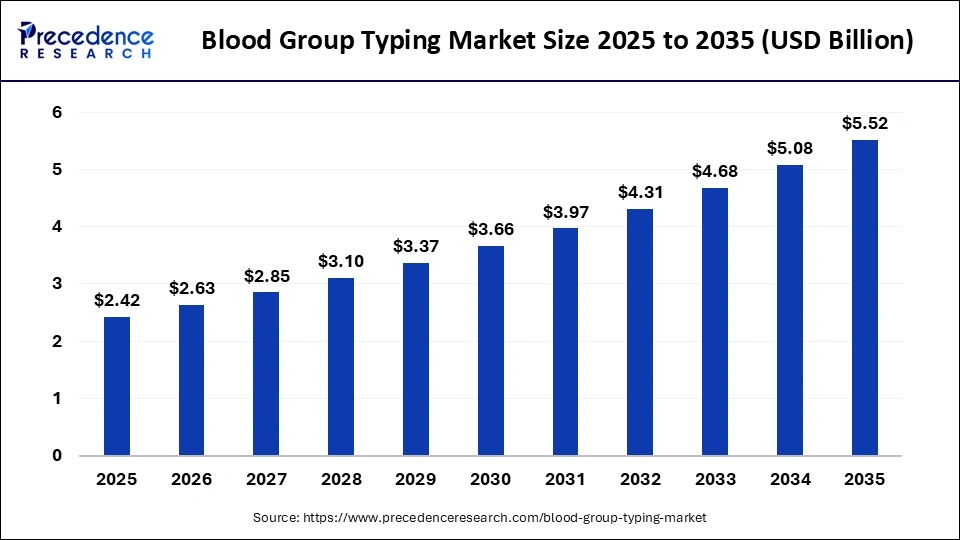
The global blood group typing market size was calculated at USD 2.42 billion in 2025 and is predicted to increase from USD 2.63 billion in 2026 to approximately USD 5.52 billion by 2035, expanding at a CAGR of 8.60% from 2026 to 2035. The market is driven by the rising demand for safe transfusions and advanced blood typing technologies.
Key Takeaways
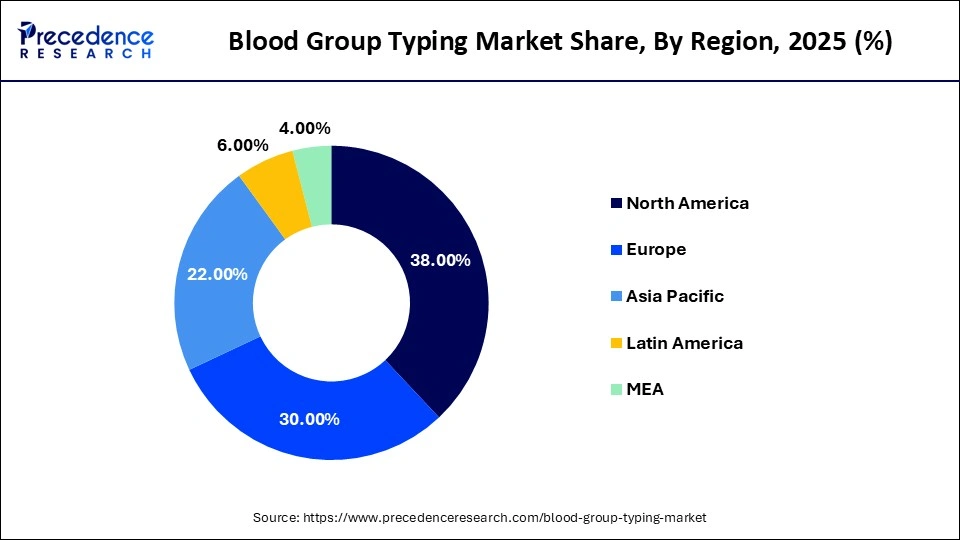
- North America dominated the market with a 38% share in 2025.
- By region, Asia Pacific is expected to grow at the fastest CAGR in the market during the forecast period.
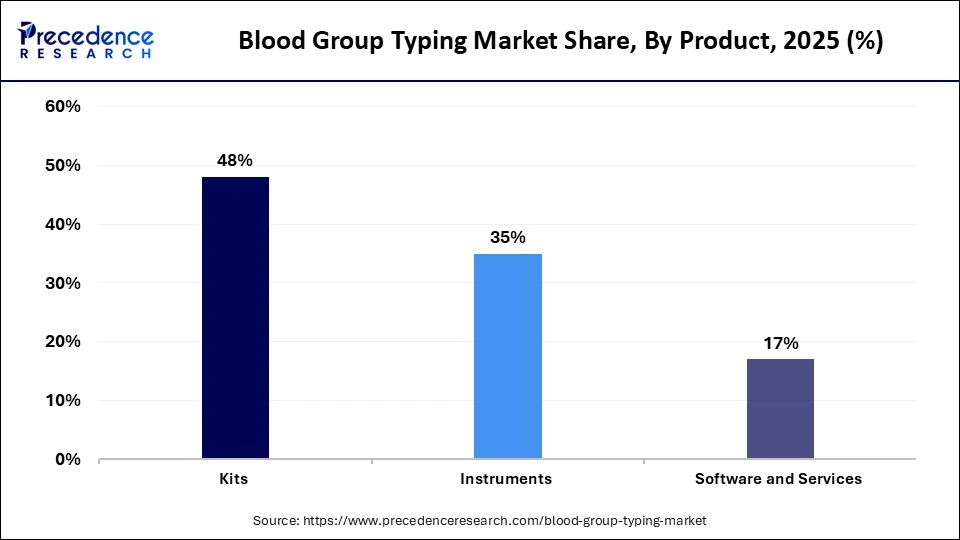
- By product, the kits segment held a dominant position in the market with a share of 48% in 2025.
- By product, the instruments segment is expected to grow at the fastest CAGR of 7.4% in the market between 2026 and 2035.
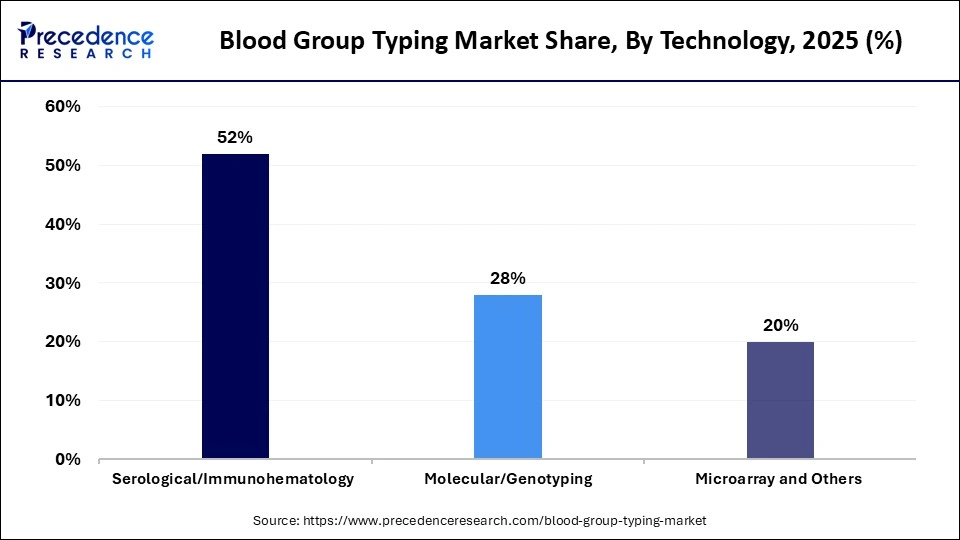
- By technology, the serological/immunohematology segment held the largest market share of 52% in 2025.
- By technology, the molecular/genotyping segment is expected to grow with the highest CAGR of 7.6% in the market during the studied years.
- By end user, the hospitals & clinics segment led the global market with a share of 44% in 2025.
- By end user, the diagnostic laboratories segment is expected to expand rapidly in the market with a CAGR of 7.8% in the coming years.
- By application, the transfusion segment registered its dominance in the global market with a share of 45% in 2025.
- By application, the research & drug development segment is expected to grow at a CAGR of 8.0% over the forecast period.
Market Overview
Blood group typing is the technology and systems by which the blood type of an individual is determined, most commonly by the ABO and Rh systems. The market comprises different methodologies, which include serological tests, molecular techniques, and automated platforms, all of which are expected to provide high accuracy, speed, and reliability in blood typing. The market is expanding rapidly due to the rising demand for blood transfusions, the growing rate of chronic diseases, including anemia and cancer, and the development of automated blood typing systems that simplify laboratory processes. The growth of healthcare infrastructure, increasing awareness of safe transfusion, and the increasing number of hospitals, blood banks, and diagnostic laboratories contribute to market growth. Blood typing is critical in hospitals, blood banks, and diagnostic laboratories.
How is AI Influencing the Blood Group Typing Market?
The blood group typing market is transforming with the rise of artificial intelligence, which is enhancing blood typing processes with greater accuracy, efficiency, and scalability. Complex serological and molecular data are being processed automatically with the help of AI-based algorithms to minimize the possibility of human error and confirm that such antigens as ABO and Rh, among other rare antigens, are properly identified. AI systems can process high sample throughput in a short duration of time; hence, they can accommodate high-throughput hospital laboratories and blood banks. Furthermore, integration of AI enables connection to all the information management systems of laboratories and hospital databases, which is required to manage data in real-time, trace data, and comply with any regulatory needs.
Blood Group Typing Market Trends
- Hospitals and blood banks are increasingly adopting computerized systems, which reduce manual errors, improve throughput, and enable high-precision testing in high-volume clinical and transfusion settings.
- Molecular techniques are gaining popularity due to their ability to detect rare and complex blood group antigens, offering higher accuracy than traditional serological methods, especially for patients with multiple transfusions.
- Laboratory Information Management Systems (LIMS) and other digital health platforms are being integrated with blood typing systems, enhancing workflow efficiency, traceability, and fluid management in clinical diagnostics and blood banks.
- Advanced blood typing technologies are gaining traction in the Asia-Pacific, Latin American, and Middle Eastern regions, driven by expanding healthcare infrastructure, increased awareness of safe transfusion practices, and growth in hospital networks.
- There is growing use of molecular methods like PCR based assays, microarrays, and next generation sequencing (NGS) to detect rare or complex blood group antigens that traditional serology may miss. These offer higher accuracy, especially for chronically transfused or prenatal patients.
Market Scope
| Report Coverage | Details |
| Market Size in 2025 | USD 2.42 Billion |
| Market Size in 2026 | USD 2.63 Billion |
| Market Size by 2035 | USD 5.52 Billion |
| Market Growth Rate from 2026 to 2035 | CAGR of 8.60% |
| Dominating Region | North America |
| Fastest Growing Region | Asia Pacific |
| Base Year | 2025 |
| Forecast Period | 2026 to 2035 |
| Segments Covered | Product, Technology, End User, Application, and region |
| Regions Covered | North America, Europe, Asia-Pacific, Latin America, and Middle East & Africa |
Segment Insights
Product Insights
Blood Group Typing Market Share, By Product, 2025 (%)
| Product | Market Share 2025 (%) |
| Kits | 48% |
| Instruments | 35% |
| Software and Services | 17% |
Why Did the Kits Segment Hold a Major Share of the Blood Group Typing Market?
The kits segment held a major market share of 48% in 2025 due to their convenience, low cost, and widespread application in hospitals, blood banks, and diagnostic laboratories. These kits enable fast and efficient testing of ABO and Rh blood groups, with both clinicians and laboratory technicians relying on serological and rapid test kits. Compared with fully automated instruments, blood typing kits require minimal infrastructure and training, making them suitable for small healthcare facilities and remote locations. Their growing popularity is fueled by the rising demand for safe blood transfusions, increased awareness of blood compatibility testing, and the higher prevalence of chronic and acute diseases worldwide.
The instruments segment is expected to grow at the fastest CAGR of 7.4% in the market between 2026 and 2035 due to the increasing automation in clinical laboratories and hospitals. Compared to manual blood typing methods, automated blood typing devices offer higher precision, faster processing, and the ability to handle large sample volumes. The accuracy and reliability of blood group identification are further enhanced through new technologies such as AI-based image recognition systems, robotics, and digital data management. Growth in this segment is supported by rising investments in modern laboratory infrastructure, the need for standardized and traceable testing, and heightened emphasis on patient safety and regulatory compliance.
Technology Insights
Blood Group Typing Market Share, By Technology, 2025 (%)
| Technology | Market Share 2025 (%) |
| Serological/Immunohematology | 52% |
| Molecular/Genotyping | 28% |
| Microarray and Others | 20% |
Why Did the Serological/Immunohematology Segment Dominate the Blood Group Typing Market?
The serological/immunohematology segment dominated the market with the largest share of 52% in 2025, owing to its long-standing reliability, accessibility, and cost-effectiveness in clinical practice. Blood typing has traditionally relied on serological methods such as agglutination, hemagglutination, and antibody–antigen interaction techniques. These methods remain widely used in hospitals, clinics, and blood banks worldwide due to their ease of use, minimal setup requirements, and proven effectiveness. Additionally, the growing global demand for blood transfusions and increasing awareness of safe transfusion practices have further reinforced the prominence of serological and immunohematology techniques.
The molecular/genotyping segment is expected to grow at a robust CAGR of 7.6% between 2026 and 2035 due to the increasing demand for the precise detection of rare and complex blood group antigens. Clinicians can accurately determine blood groups through molecular-based methods, including PCR-based tests, next-generation sequencing, and microarray systems. These techniques are highly scalable and suitable for large hospital laboratories, blood centers, and research facilities. Integration with AI-driven analytics and Laboratory Information Management Systems (LIMS) further enhances workflow efficiency and minimizes human error in the testing process.
End User Insights
Blood Group Typing Market Share, By End User, 2025 (%)
| End User | Market Share 2025 (%) |
| Blood Banks | 52% |
| Diagnostic Laboratories | 20% |
| Research Institutes | 6% |
| Hospitals and Clinics | 52% |
Why Did Hospitals & Clinics Segment Lead the Blood Group Typing Market?
The hospitals & clinics segment led the market while holding a 44% share in 2025 because of the high volume of blood typing and transfusion-related procedures conducted in these facilities. Hospitals play a central role in surgeries, emergency care, preoperative testing, and chronic disease management, all of which require accurate ABO and Rh blood typing. Utilizing both manual serological kits and automated blood typing systems, hospitals can perform large-scale testing with rapid and precise results. The strong market position of hospitals is further supported by increasing investments in healthcare infrastructure, the rising prevalence of chronic and acute conditions requiring transfusions, and growing awareness of patient safety and transfusion compatibility.
The diagnostic laboratories segment is expected to grow at a CAGR of 7.8% over the forecast period, owing to the rising demand for outsourced blood typing and compatibility testing, especially for rare or complex antigens that require specialized equipment. Adoption of automated, high-throughput, and AI-enabled systems allows these labs to deliver fast, accurate, and scalable testing services. Additionally, the increasing prevalence of chronic diseases and transfusions drives consistent testing volumes, positioning diagnostic laboratories as key end users in the market.
Application Insights
Blood Group Typing Market Share, By Application, 2025 (%)
| Application | Market Share 2025 (%) |
| Transfusion | 45% |
| Organ & Tissue Transplant |
25% |
| Research & Drug Development |
18% |
| Paternity Testing & Forensics | 12% |
Why Did the Transfusion Segment Lead the Blood Group Typing Market?
The transfusion segment led the global market with a major share of 45% in 2025. The dominance of the segment is driven by its essential role in surgeries, trauma care, and the management of chronic diseases such as anemia, hemophilia, and cancer therapies, all of which require accurate ABO and Rh blood typing. To minimize the risk of transfusion reactions, serological kits, automated devices, and advanced molecular techniques are widely used to ensure proper donor-recipient matching. The growth of the segment is further supported by the rising number of hospital procedures, expansion of blood banks, and increasing awareness of safe transfusion practices.
The research & drug development segment is expected to expand rapidly with a CAGR of 8.0% in the coming years, driven by the increasing use of blood group typing in pharmaceutical studies, clinical trials, and immunohematology research. Research laboratories are increasingly adopting molecular and genotyping methods to study complex blood group antigens, develop compatible therapeutic technologies, and support personalized medicine initiatives. Growth in this segment is further fueled by the rising demand for novel treatments and vaccines, the need for precise blood matching in therapies, and strong investments in biotechnology, translational research, and academic-industry collaborations, especially in countries with well-established R&D infrastructure.
Regional Insights
North America Blood Group Typing Market Size and Growth 2026 to 2035
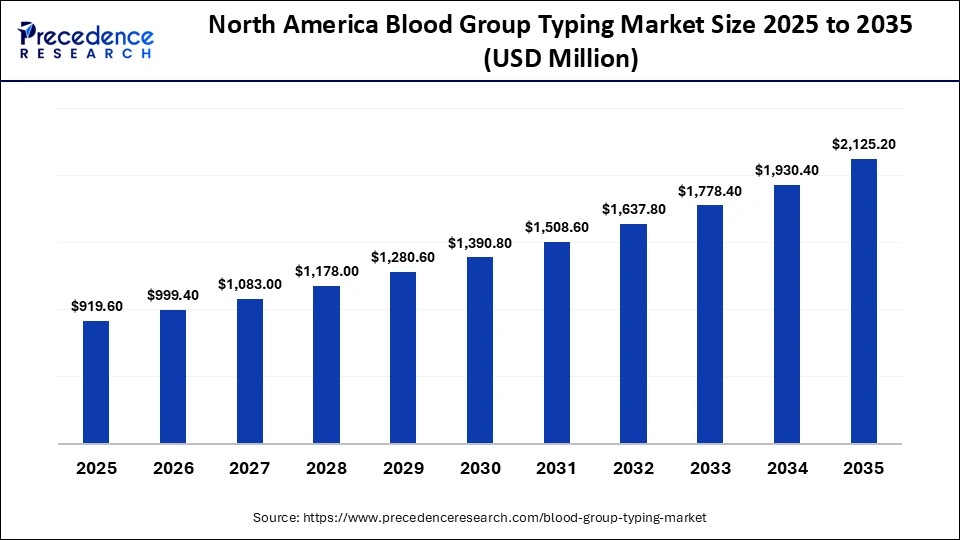
The North America blood group typing market size is estimated at USD 919.60 million in 2025 and is projected to reach approximately USD 2,125.20 million by 2035, with a 8.74% CAGR from 2026 to 2035.
Why Did North America Lead the Global Blood Group Typing Market?
North America dominated the global blood group typing market with a major share of 38% in 2025, driven by its developed healthcare infrastructure, high adoption of advanced diagnostic technologies, and favorable regulatory environment. Market growth is further supported by the rising prevalence of chronic diseases, increasing demand for blood transfusions, and growing awareness of transfusion safety. Additionally, strong investments in research and development enable rapid implementation of automated, molecular, and AI-assisted blood typing technologies, while hospitals and laboratories benefit from efficient testing solutions supported by favorable reimbursement policies and well-structured healthcare systems.
U.S. Blood Group Typing Market Size and Growth 2026 to 2035
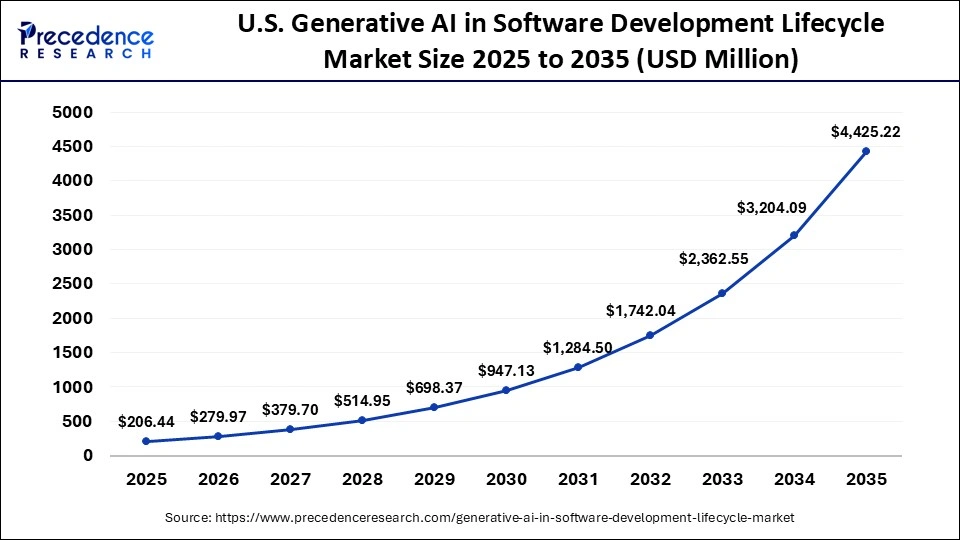
The U.S. blood group typing market size is calculated at USD 689.70 million in 2025 and is expected to reach nearly USD 1,604.53 million in 2035, accelerating at a strong CAGR of 8.81% between 2026 and 2035.
U.S. Market Analysis
The U.S. is the major contributor to the North American blood group typing market. This is because the country has an advanced healthcare infrastructure with widespread adoption of automated and molecular blood typing systems in hospitals and diagnostic laboratories. There is a high demand for safe blood transfusions, driven by increasing surgeries, chronic disease prevalence, trauma care, and cancer treatments. Regulatory focus on patient safety and standardized testing, along with investments in digital health solutions, AI-enabled diagnostics, and laboratory modernization, is further accelerating market growth.
Why is Asia Pacific Experiencing the Fastest Growth in the Blood Group Typing Market?
Asia Pacific is expected to grow at the fastest CAGR during the forecast period, owing to the increasing healthcare investments, rising prevalence of chronic diseases, and the expansion of hospitals and diagnostic facilities. Rapid economic growth in countries such as China, India, and Japan has enabled the adoption of modern blood typing technologies, including automated and molecular systems. Market growth is further supported by greater awareness of safe transfusions, rising demand for organ transplants, and increased blood donations, while advanced blood typing systems are becoming more accessible in emerging markets through partnerships with international equipment manufacturers.
Blood Group Typing Market Companies
- Abbott Laboratories
- Bio-Rad Laboratories
- Ortho Clinical Diagnostics
- Grifols S.A.
- Immucor Inc.
- Siemens Healthineers
- Terumo Corporation
- Quotient Limited
- DIAGAST
- Rockwell Automation
- Werfen
- Fujirebio
- Macopharma
- Haemonetics Corporation
- Blutest AG
Recent Developments
- In June 2025, Devyser introduced Devyser Genomic Blood Typing, a solution based on NGS that allows the full methodology of molecular blood type. The all-in-one assay includes a red blood cell (RBC), human platelet antigen (HPA), and human neutrophil antigen (HNA) in a single streamlined assay.(Source: https://devyser.com)
- In May 2024, Thermo Fisher Scientific released the Applied Biosystems Axiom BloodGenomiX Array and Software to make blood genotyping more precise in clinical research. Useful in based on HLA and platelet (HPA) types, the high-throughput array can detect more than 40 genes and 260 antigens in one assay and in over 38 blood group systems(Source: https://www.businesswire.com)
Segments Covered in the Report
By Product
- Kits
- Instruments
- Software & Services
By Technology
- Serological/Immunohematology
- Molecular/Genotyping
- Microarray & Others
By End User
- Hospitals & Clinics
- Blood Banks
- Diagnostic Laboratories
- Research Institutes
By Application
- Transfusion
- Organ & Tissue Transplant
- Research & Drug Development
- Paternity Testing & Forensics
By Region
- North America
- Latin America
- Europe
- Asia-pacific
- Middle and East Africa
For inquiries regarding discounts, bulk purchases, or customization requests, please contact us at sales@precedenceresearch.com
Frequently Asked Questions
Tags





Ask For Sample
No cookie-cutter, only authentic analysis – take the 1st step to become a Precedence Research client
 Get a Sample




 sales@precedenceresearch.com
 Schedule a Meeting
