



Blood Ketone Meter Market Size, Companies, Share, Patient Volume, Treatment Adoption Rates, Pricing Analysis, Regulatory Landscape, Competitive Positioning, and Demand Forecast
Blood Ketone Meter Market (By Product: Blood Ketone Monitoring, Blood Glucose and Ketone Monitoring, Consumables; By Application: Human, Veterinary; By End-Use: Hospitals, Diagnostic Centers, Home Care Settings Other End Use) - Global Industry Analysis, Size, Trends, Leading Companies, Regional Outlook, and Forecast 2026 to 2035
Source: https://www.precedenceresearch.com/blood-ketone-meter-market
 Get a Sample
 Table Of Content


What is the Blood Ketone Meter Market Size in 2026?
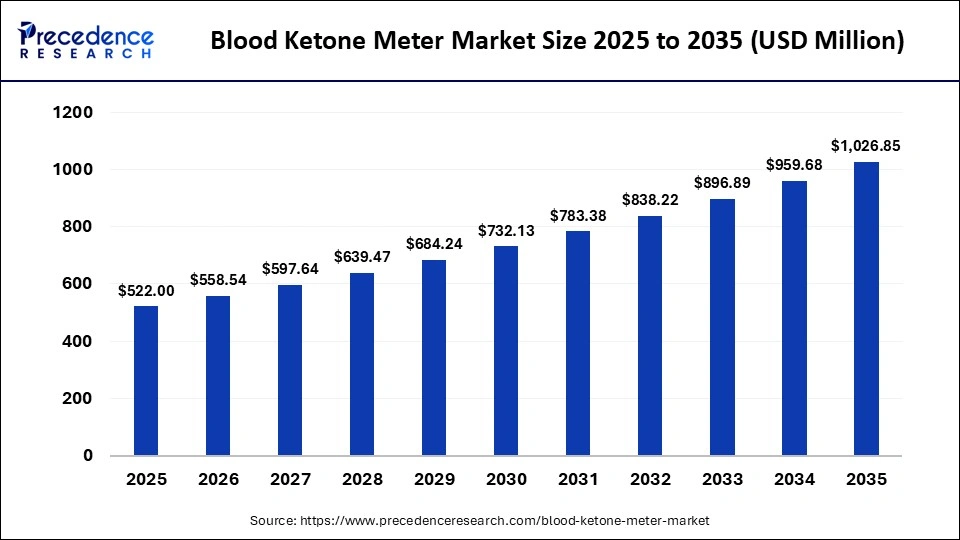
The global blood ketone meter market size was calculated at USD 522.00 million in 2025 and is predicted to increase from USD 558.54 million in 2026 to approximately USD 1026.85 million by 2035, expanding at a CAGR of 7.00% from 2026 to 2035.The market is growing rapidly because of the increasing rates of diabetes and the necessity to implement an accurate metabolic surveillance of the ketogenic diet, overweight, and sporting performance.
Key Takeaways
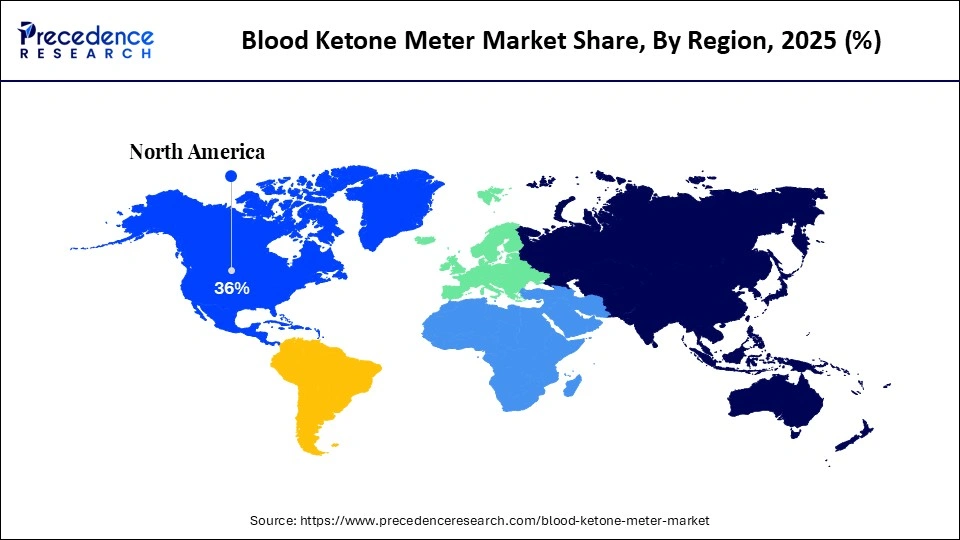
- North America dominated the market with the largest market share of 36% in 2025.
- Asia-Pacific is expected to grow at the fastest CAGR in the market during the forecast period.
- By product, the blood glucose and ketone monitoring segment held a dominant position in the market in 2025.
- By product, the blood ketone monitoring segment is expected to grow at the fastest CAGR in the market between 2026 and 2035.
- By application, the human segment led the global market in 2025.
- By application, the veterinary segment is expected to grow with the highest CAGR in the market during the studied years.
- By end-use, the hospital segment dominated the global market in 2025.
- By end-user, the home care settings segment is expected to expand rapidly in the market in the coming years.
What are Blood Ketone Meters?
The blood ketone meter market includes handheld meters that can detect levels of ketones in capillary blood and give quick and precise data on the level of metabolism. They are capable of being used by diabetic patients to avoid ketoacidosis and achieve maximum glycemic control. They are also used by customers with healthy habits who want to adopt ketogenic diets. Wireless and smartphone integration have improved user experience and effective data tracking due to technological advancements. With the current trend of preventive healthcare and individual wellness being used worldwide, the market of portable and easy-to-use ketone monitors has seen increased demand.
Impact of AI on the Blood Ketone Meter Market
Blood ketone monitoring ecosystems are being progressively combined with artificial intelligence (AI) to extract feasible health data out of raw data. The application of AI in this area provides individual metabolic recommendations based on analyzing trends in ketones, glucose activity, and dietary data. Machine learning algorithms can identify trends that depict metabolic imbalance, which helps in early prevention of complications. With the development of the digital health ecosystem, AI-based ketone meters should provide forecasting alerts and personalized diabetes control and lifestyle monitoring.
Blood Ketone Meter Market Trends
- Expanding Adoption in Diabetes Self-Management: Blood ketone meters are increasingly becoming tools for patients and clinicians to measure the risk of ketoacidosis and inform treatment choices all over the world.
- Growth of Ketogenic Lifestyle Management: The increase in the popularity of low-carb, high-fat diets is leading to consumers seeking frequent ketone monitoring.
- Integration with Wearables and Health Platforms: This will relate to fitness trackers and health applications to increase the visibility of the data and user interaction. AI-based sensors in wearable devices enable patients to monitor vital signs continuously.
- Miniaturization and Portable Design: Small, lightweight meters are used to address the needs of on-the-go testing. The growing demand for point-of-care diagnostics enables more accurate remote monitoring of blood ketones.
- Emerging Markets Uptake: Asia-Pacific and Latin American regions have emerging markets with growing access and awareness of healthcare, contributing to new user adoption.
Market Scope
| Report Coverage | Details |
| Market Size in 2025 | USD 522.00 Million |
| Market Size in 2026 | USD 558.54 Million |
| Market Size by 2035 | USD 1026.85 Million |
| Market Growth Rate from 2026 to 2035 | CAGR of 7.00% |
| Dominating Region | Asia Pacific |
| Fastest Growing Region | North America |
| Base Year | 2025 |
| Forecast Period | 2026 to 2035 |
| Segments Covered | Product, Application, End-Use, and Region |
| Regions Covered | North America, Europe, Asia-Pacific, Latin America, and Middle East & Africa |
Segment Insights
Product Insights
Which Product Segment Dominated the Blood Ketone Meter Market?
The blood glucose and ketone monitoring segment dominated the market in 2025, since it provides holistic metabolic monitoring of diabetes. These hybrid devices allow simultaneous access to both glycemic control and ketone monitoring, preventing ketoacidosis complications in diabetic patients. Their application in the clinical and home care environment makes them useful to people with type 1 and type 2 diabetes. Quick delivery of data, convenience, and excellent clinical validation further maintain the leadership of this segment.
The blood ketone monitoring segment is expected to be the fastest-growing segment in the forecast period, because more consumers are becoming conscious of metabolic health. The need to keep the body in a ketogenic state, improve performance, and maintain weight has driven demand among people who follow these diets, athletes seeking improved performance, and people who are conscious of body weight. Ketone-specific devices are becoming more attractive due to developments in sensor accuracy, portability, and affordability. Integrating with digital health apps enables the monitoring of dietary and metabolic trends.
Application Insights
What Made Human Segment Dominate in the Blood Ketone Meter Market?
The human segment held the largest revenue share of the market in 2025, driven by the growing need for diabetes management. Ketones measure is used by patients with diabetes to minimize the chances of diabetic ketoacidosis and assist in treatment decisions. The growing popularity of metabolic disorders and attention to preventive care also reinforces segment demand. The role of healthcare providers is often to suggest a regular check-up to high-risk populations, propelling the segment's growth.
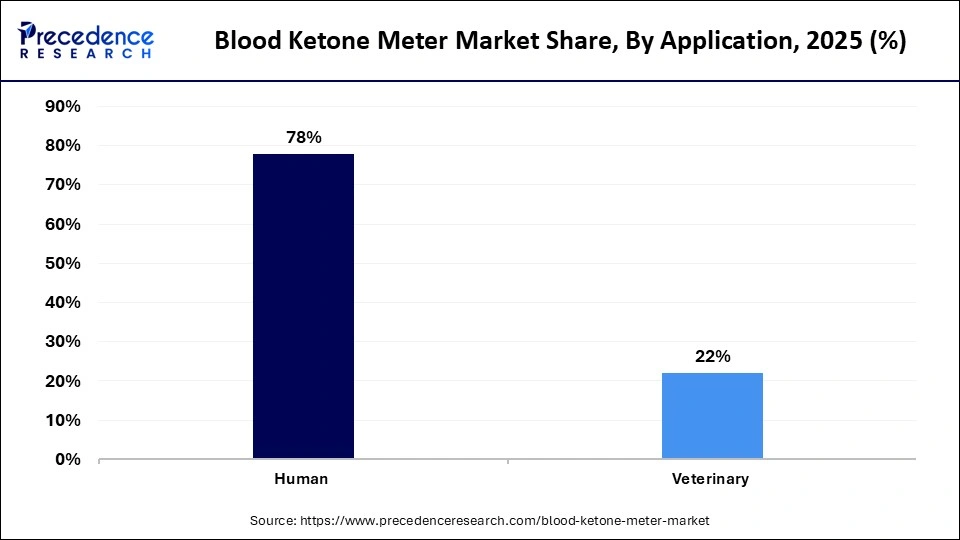
The veterinary segment is expected to gain the highest market share between 2026 and 2035, due to the growing interest in animal metabolic health. Ketone measures of livestock and companion animals are used to detect metabolic diseases, including ketosis in dairy cows and diabetes in pets. Further development of veterinary diagnostics and the rising spending on animal health care contribute to this rise. Animal clinics and farms are increasingly adopting animals with the aim of maximizing health results and productivity.
End-Use Insights
How the Hospitals Segment Led the Blood Ketone Meter Market?
The hospitals segment dominated the market by holding the largest share in the year 2025, because it is the provider of acute care and emergency diagnostic or diabetes management programs. Both ketone and glucose tests are used by clinical professionals to make sound decisions regarding the treatment of a patient with metabolic complications. Subsequently, it may be integrated with hospital information systems to improve the continuity of data and monitor the workflow in patient monitoring. Institutional buying and standardized procedures in buying assure consistent demand in this segment.
The home care settings segment is expected to witness the fastest growth in the market over the forecast period, due to the rising tendency towards self-monitoring by patients. Portable ketone meters are convenient and easy to use, and hence the most suitable in daily practice beyond clinical practice. This is supported by increased patient preference towards remote health management and telemedicine. Connection to smartphone applications and digital health tools also promotes self-care and compliance at home.
Regional Insights
North America Blood Ketone Meter Market Size and Growth 2026 to 2035
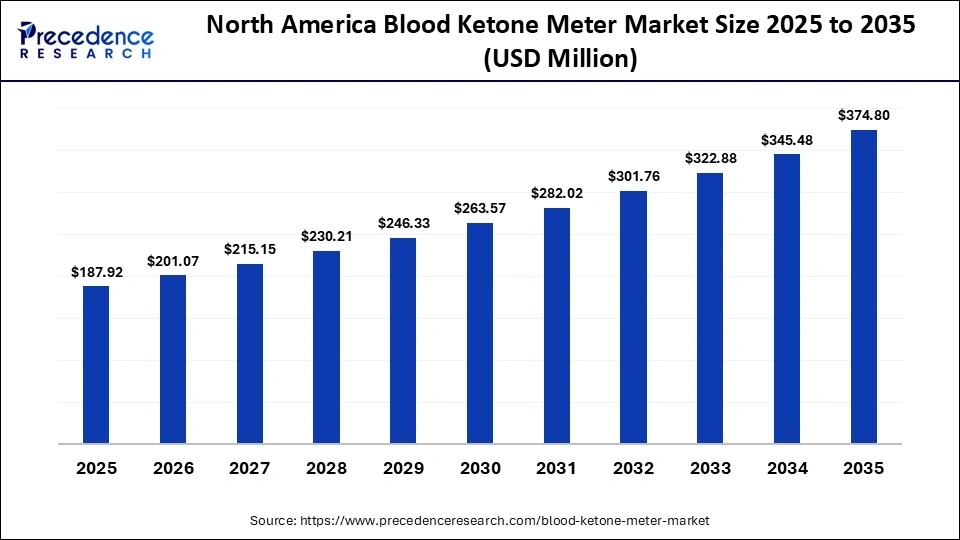
The North America blood ketone meter market size is estimated at USD 187.92 billion in 2025 and is projected to reach approximately USD 374.80 billion by 2035, with a 7.15% CAGR from 2026 to 2035.
Why North America Dominated the Blood Ketone Meter Market?
North America held a major revenue share of the market in 2025, due to the prevalence of diabetes and good awareness of metabolic health management. Regional demand is supported by a well-developed healthcare infrastructure and the increasing use of point-of-care testing. In the U.S. and Canada, there are positive reimbursement policies to promote access to patient monitoring devices. Market growth is also supported by technological innovation, which is undertaken by well-established medical technology firms. Remote monitoring is improved with more digital health ecosystem integration. Moreover, consumers need at-home health tracking tools, boosting market growth.
U.S. Blood Ketone Meter Market Size and Growth 2026 to 2035
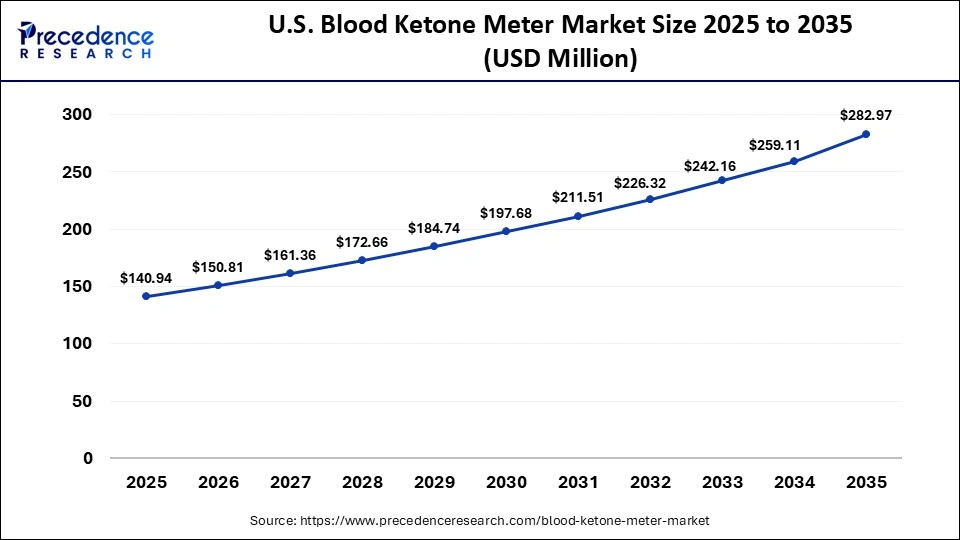
The U.S. blood ketone meter market size is calculated at USD 140.94 billion in 2025 and is expected to reach nearly USD 282.97 billion in 2035, accelerating at a strong CAGR of 7.22% between 2026 and 2035.
Country-Level Analysis
The U.S. leads the market in North America as the country has a significant number of diabetics and is adequately provided with healthcare. The extensive scale of the implementation of monitoring technologies is made possible by high per-capita healthcare spending. Good availability of major market competitors and active investment in R&D promote consistent product innovation.
Canada has a role to play in increasing metabolic health efforts and primary care. Both countries have well-established distribution networks in the clinical and retail channels. Market leadership is further enhanced by the continued leadership in public health campaigns that encourage early detection of illness.
Why is Asia-Pacific the Fastest-Growing Region in the Blood Ketone Meter Market?
Asia-Pacific is expected to witness the fastest growth during the predicted timeframe, due to the growing healthcare support systems and increasing prevalence of metabolic diseases. The growing urbanization and change in lifestyles have boosted the need to use metabolic monitoring solutions. The increasing interest in the field of preventive health and the use of point-of-care diagnostics also contribute to market growth.
Government organizations conduct health programs and provide funding to promote early screening and disease treatment. An increase in disposable income and better availability of healthcare technologies boost penetration around the region. Indeed, digital connectivity is rapidly expanding, opening paths for integrated monitoring solutions.
Country-Level Analysis
China has a significant number of people and an increasing burden of chronic illnesses at the national level, which drives the demand to monitor ketones. India is experiencing high growth with the increasing number of diagnostic centers and the increase in health awareness.
Japan has been exhibiting stable adoption because of its developed healthcare ecosystem and aging population. Digital health solutions and remote monitoring technologies are gradually becoming a part of South Korea and Southeast Asian countries. These dynamics, when combined, make Asia-Pacific an emerging region in the market.
Will Europe Grow in the Blood Ketone Meter Market?
Europe is expected to grow at a notable CAGR in the foreseeable future, due to growing awareness about diabetes and metabolic syndrome. The increasing medical expenditure, rapidly expanding healthcare infrastructure, and favorable health policies make the region grow robustly.
European nations are investing in preventive health and self-monitoring technologies that enable patients to have the power of participation. Increased digital health adoption further increases demand. Transnational co-operations in the EU increase the diffusion and standardization of technologies. The market is also boosted by public health activities that aim at preventing lifestyle diseases.
Country-Level Analysis
The demand for blood ketone meters rises in Germany, owing to the presence of a developed healthcare system and the rising adoption of advanced monitoring technologies. The UK is second in line with a growing focus on preventive health and screening of chronic diseases. France and Italy play a role by increasing the clinical diagnostics and wellness programs.
The Nordic countries are highly integrative of digital health and take up due to patient engagement. Other Southern European countries, including Spain, are boosting their growth by providing more access to healthcare and making devices at an affordable rate.
How is Latin America Growing in the Blood Ketone Meter Market?
The reason behind the emergence of Latin America in the market for blood ketone meters (hydronic) is attributed to the rise in knowledge surrounding healthcare, the increase of diagnosed cases of diabetes, and the slow addition of diagnostic services. Governments and healthcare agencies have been putting a strong emphasis on improving the way chronic diseases are monitored, which has created a greater level of demand for portable blood ketone testing devices. The rise of pharmacy chains and online distribution of medical devices has made these products more accessible.
Brazil
Brazil leads rapidly emerging Latin American blood ketone meter market. Brazil has the largest percentage of individuals diagnosed with diabetes and is currently improving its healthcare system. Increases in the demand for home-based solutions to monitor blood glucose levels, as well as for portable diagnostic devices have been experienced within Brazil's market. Increased investment in both digital health platforms as well as distribution networks for diagnostic technologies will be essential for the long-term expansion of the market in Brazil.
What are the Advancements of the Blood Ketone Meter Market in MEA?
The blood ketone meter market is experiencing phenomenal growth in both the Middle East and Africa, mainly as a result of the rapid increase in incidence and availability of healthcare solutions for those with Diabetes. There is an increased demand for portable and easy-to-use monitoring devices in all hospitals and clinics, and many healthcare modernization projects that are underway in Gulf countries are also driving an improved access to advanced diabetes management technologies in the entire region.
Saudi Arabia Blood Ketone Meter Market
Saudi Arabia is the fastest growing country of the Middle East and African Region because of the rising incidence of Diabetes and a large increase in major healthcare modernization initiatives. Digital Healthcare infrastructure and digital diagnostic technology are two areas that account for a significant amount of money currently being invested by the saudi government. To improve the management of diabetic related medical emergencies, many hospitals and clinics are rapidly adopting portable blood ketone monitoring devices. Saudi Arabia is also encouraging greater use of smart patient monitoring devices through its government supported healthcare transformation programme.
Blood Ketone Meter Market Value Chain Analysis
- R&D
Innovation is aimed at precision, connectivity, and low sample volume needs for ketone sensors.
Key Players: Abbott, Roche, Ascensia Diabetes Care.
- Clinical Trials and Regulatory Approvals
Validation and approval promote compliance with medical device standards, measurement safety, or accuracy, along with accuracy.
Key Players: FDA, CE regulators, Medtronic.
- Formulation
This stage involves the production of test strips and reagents that are specific to quick, accurate electrochemical detection of ketones.
Key Players: LifeScan, ARKRAY, Nipro Diagnostics.
- Distribution to Hospitals, Pharmacies
Equipment and reagents are sold via retail pharmacies, medical supply, and on the internet through distributors or wholesalers.
Key Players: Walgreens Boots Alliance, CVS Health, McKesson.
- Patient Support and Services
Healthcare providers guide patients about the use of blood ketone meters and help with data analysis. Several public and private insurers provide financial assistance to patients, enhancing their affordability.
Blood Ketone Meter Market Companies
- Apex Biotechnology Corp.
- TaiDoc Technology Corporation
- EKF Diagnostics Holdings plc.
- Nova Biomedical
- Keto-Mojo
- ForaCare, Inc.
- Nipro
- i-SENS, Inc.
- Tandem Diabetes Care
Recent Developments
- In November 2025, researchers from Heinrich-Heine-University Düsseldorf (HHU), the University Hospital, and the German Diabetes Center found that mitochondria can ketone bodies to make energy. The study indicated a new possible target for enhancing energy metabolism in diabetes by demonstrating that energy generation via ketone body metabolism decreased in insulin resistance. (Source: https://www.hindustantimes.com)
- In June 2025, Tandem Diabetes Care and Abbott Laboratories announced a collaboration to develop automated insulin delivery systems using a dual glucose-ketone sensor. Tandem focuses on integrating its available insulin delivery systems, a patch-pump system, into Abbott's glucose-ketone sensors, offering real-time tracking to support improved diabetes management and overall metabolic health. (Source: https://www.medtechdive.com)
- In March 2025, researchers from the University of Waterloo developed mini patches to continuously monitor blood glucose and ketone levels in patients with Type 1 diabetes and deliver real-time results to their smartphones or healthcare providers. They offer a non-invasive and non-painful approach, making them more flexible and quite compatible with the skin. (Source: https://uwaterloo.ca)
Segments Covered in the Report
By Product
- Blood Ketone Monitoring
- Blood Glucose and Ketone Monitoring
- Consumables
By Application
- Human
- Veterinary
By End-Use
- Hospitals
- Diagnostic Centers
- Home Care Settings
- Other End Use
By Region
- North America
- Europe
- Asia-Pacific
- Latin America
- Middle East & Africa
For inquiries regarding discounts, bulk purchases, or customization requests, please contact us at sales@precedenceresearch.com
Frequently Asked Questions





Ask For Sample
No cookie-cutter, only authentic analysis – take the 1st step to become a Precedence Research client
 Get a Sample



 sales@precedenceresearch.com
 Schedule a Meeting
