



Collateral Ligament Stabilizer System Market Size, Key Companies, Company Market Share, Patient Volume, Treatment Adoption Rates, Pricing Analysis, Regulatory Landscape, Competitive Positioning, and Demand Forecast
Collateral Ligament Stabilizer System Market (By Ligament: Medial Collateral Ligament (MCL), Lateral Collateral Ligament (LCL); By Injury: Grade I, Grade II, Grade III; By Treatment: Surgical Treatment, Non-Surgical Treatment; By End-Use: Hospitals, Orthopedic Clinics, Others) - Global Industry Analysis, Size, Trends, Leading Companies, Regional Outlook, and Forecast 2026 to 2035
Source: https://www.precedenceresearch.com/collateral-ligament-stabilizer-system-market
 Get a Sample
 Table Of Content


What is the Collateral Ligament Stabilizer System Market Size?
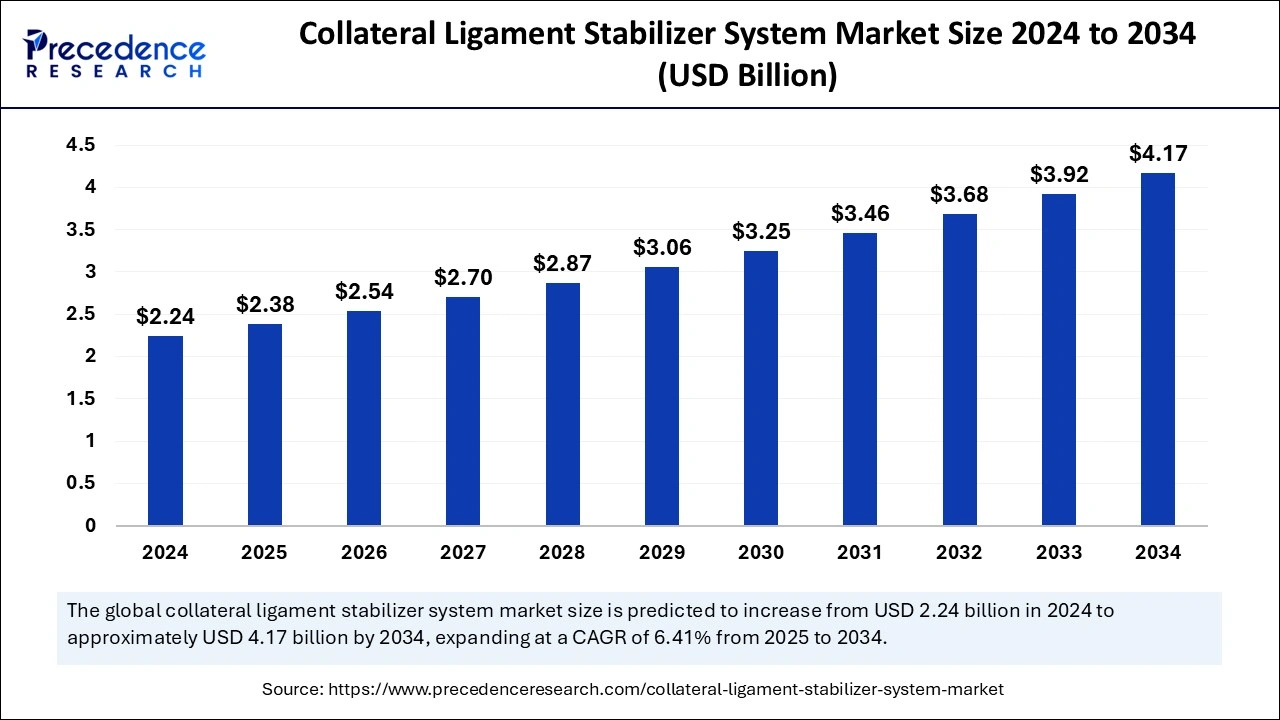
The global collateral ligament stabilizer system market size was calculated at USD 2.38 billion in 2025 and is predicted to increase from USD 2.54 billion in 2026 to approximately USD 4.41 billion by 2035, expanding at a CAGR of 6.36% from 2026 to 2035. The development of the market is driven by factors like increasing sports injuries, demand for minimally invasive treatments, an aging population, technological advancements, and improved healthcare spending.
Collateral Ligament Stabilizer System Market Key Takeaways
- In 2025, the collateral ligament stabilizer system market size will be worth $2.38 billion.
- The market is expected to grow to $4.41 billion by 2035.
- The market is expected to grow at a compound annual growth rate (CAGR) of around 6.36% from 2026 to 2035.
- North America dominated the market with the largest market share of 43% in 2025.
- Europe region holds the second largest share of 28% in 2025.
- Asia Pacific is anticipated to grow at a CAGR of 7.6% during the forecasted years.
- The U.S. country led North American market and contributed the 89% of market share in 2025.
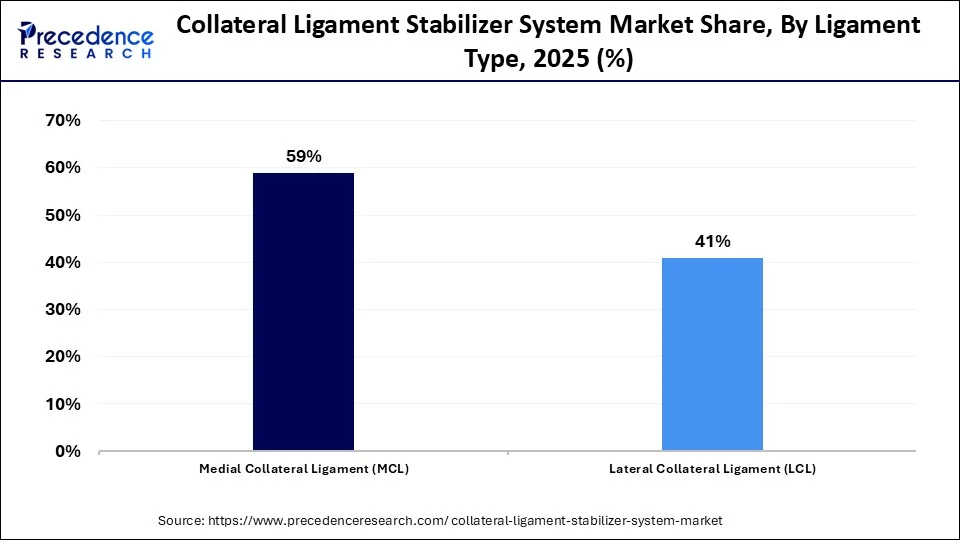
- By ligament, the medial collateral segment has generated a significant market share of 59% in 2025.
- By ligament, the lateral collateral segment is projected to grow at a CAGR of 6.1% in the forecast period.
- By injury, the grade III segment has captured the highest market share of 39% in 2025.
- By injury, the grade II segment is estimated to expand at a CAGR of 6.93% during the forecast period.
- By treatment, the non-surgical treatment segment accounted for the largest market share of 58% in 2025.
- By treatment, the surgical treatment segment is growing at a CAGR of 6.62% in the forecast period.
- By end use, the orthopedic clinics segment recorded the biggest market share of 38% in 2025.
- By end use, the hospital segment is poised to grow at a CAGR of 5.82% during the forecast period.
Market Overview
The collateral ligament stabilizer system features a special collar that applies to ligament tissue in front of the shoulder joint for stabilization. Connective tissue bands called ligaments bind two adjacent bones together. The knee joint receives support from the ligaments that maintain a union between the upper and lower skeleton bones. Strong bands called ligaments serve as stable ropes that unite the bones to maintain proper knee stability. This ligament controls knee-side movements and acts as a protective guard against abnormal motions.
The collateral ligament stabilizer system market continues to grow due to the increased number of ligament injuries among athletes and active adults. The orthopedic device market includes various stabilization products that support collateral ligaments found in both knee and elbow joints. Advancements in surgical techniques combined with an increasing number of sports-related injuries and an aging population drive market expansion. Key players in this market continue to innovate through the development of minimally invasive technology-based solutions that help stabilize ligaments, driving market expansion and improving patient outcomes.
Artificial Intelligence (AI) Integration in the Collateral Ligament Stabilizer System Market
The AI-integrated collateral ligament stabilizer system market products function as a medical device that supports injured collateral ligaments through real-time AI analysis of joint movements and intelligent stabilization management while additionally providing insights to enhance treatment planning and patient rehabilitation at individual patient levels. The combination of artificial intelligence capabilities optimizes surgical planning precision and delivers real-time intraoperative guidance and post-operative rehabilitation therapy through patient data evaluation for optimal implant positioning and recovery status observation with advanced image processing and machine learning models and sensor systems, which lead to advanced personalized treatment outcomes for collateral ligament injuries.
Collateral Ligament Stabilizer System Market Growth Factors
- Increasing prevalence of sports-related injuries: The growth in participation in sports and physical activities, especially among younger populations, leads to a higher incidence of collateral ligament injuries.
- Rising awareness of advanced orthopedic treatments: The rising awareness of advanced collateral ligament stabilizer systems leads clinicians and patients to choose these solutions because they result in superior recovery achievements along with enhanced long-term mobility.
- Growing demand for minimally invasive procedures: Medical development has established minimally invasive surgical approaches as the preferred method because these techniques result in shorter recovery durations combined with limited complications and diminished post-procedural pain.
- Aging population: The aging population produces a growing number of joint stability problems and degenerative injuries. The number of ligament damage cases increases among aging adults, thus creating a greater demand for stabilization systems.
- Advancements in medical technology: More accurate and durable tools for surgeries empower surgeons to treat ligament injuries more effectively, which drives both the adoption and growth of collateral ligament stabilizer systems in the market.
- Rising healthcare expenditure: As healthcare infrastructure investments increase, the market requires orthopedic solutions for treating ligament injuries, which drives market demand for these solutions.
Market Scope
| Report Coverage | Details |
| Market Size by 2035 | USD 4.41 Billion |
| Market Size by 2025 | USD 2.38 Billion |
| Market Size in 2026 | USD 2.54 Billion |
| Market Growth Rate from 2026 to 2035 | CAGR of 6.36% |
| Dominated Region | North America |
| Fastest Growing Market | Asia Pacific |
| Base Year | 2025 |
| Forecast Period | 2026 to 2035 |
| Segments Covered | Ligament, Injury, Treatment, End-Use, and Regions |
| Regions Covered | North America, Europe, Asia-Pacific, Latin America, and Middle East & Africa |
Market Dynamics
Driver
Aging population and orthopedic conditions
Medical experts utilize collateral ligament stabilizer system market products to stabilize damaged ligaments in joints of the knee as the aging population meets higher instances of orthopedic diseases, including arthritis because ligament weakening appears with aging degeneration. Orthopedic conditions and degenerative joint diseases affect aging populations and, therefore, often lead to surgical requirements. Existing data shows the aging global community faces higher risks for musculoskeletal disorders together with injuries to their ligaments. The growing elderly population will produce a rising demand for collateral ligament stabilizer systems to treat age-related ligament damage. Collateral ligament stabilizer systems are used in several orthopedic procedures to restore joint stability.
Restraint
High cost of product
The collateral ligament stabilizer system market growth faces obstacles due to the expensive nature of product utilization as well as the heightened expenses involved in knee surgeries and knee replacements. High costs associated with collateral ligament stabilizer systems can limit their adoption, mostly in regions with limited healthcare budgets. Expensive prices create a major obstacle for healthcare facilities and patients to use these medical devices.
Opportunity
Technological advancements and product innovation
Manufacturers within the collateral ligament stabilizer system market pursued the formation of improved products with enhanced functionality and better patient outcomes. Patient-comfort medical devices should combine lightweight, sturdy materials with integrated smart monitoring systems to track therapy. Research teams have developed new comfortable ligament stabilizer systems through the combination of advanced materials and innovative design approaches. Technological improvements in collateral ligament stabilizer systems deliver better stabilization techniques with reduced surgical strain and improved recovery monitoring capabilities.
Segment Insights
Ligament Insights
The medial collateral segment has generated a significant collateral ligament stabilizer system market share in 2025. The goal of medial collateral ligament stabilizer systems is to protect and stabilize the MCL area on the inner knee side. Athletes, along with people prone to sports injuries, require these systems since the MCL tends to get injured when they participate in activities involving quick directional changes and outer knee impacts. MCL stabilizer system usage grows due to an increase in sports injuries and the rising emphasis on injury prevention among athletes of all levels.
The lateral collateral segment is projected to witness the fastest growth in the forecast period. The lateral collateral ligament stabilizer systems protect the LCL, which is located in the outer knee region. Engineers create these support systems to protect vulnerable LCL tissues because they become prone to injuries following forceful impacts to internal knee areas. LCL stabilizer systems prove essential by helping knees restore their stability when individuals experience ligament sprains or tears or need post-operative recovery support. LCL stabilizer systems experience market expansion because of rising public awareness about knee problems and the heightened acceptance of superior orthopedic techniques to achieve the best results for patients.
- In November 2023, Orthofix Medical launched its new WaveForm L Lateral Lumbar Interbody System for the U.S. market. Orthofix Medical released a 3D-printed device designed specifically for lateral lumbar interbody fusion (LLIF) procedures.
Injury Insights
The segment noted the largest collateral ligament stabilizer system market share in 2025. Grade III stabilizer demand rises due to sports injury growth with population aging patterns and improved awareness of proven bone-joint treatment solutions. Grade III injuries result in complete tears of ligaments while making patients unstable and thus necessitate extended medical care. Stabilizer systems establish essential joint stability regulations for patient healing timeframes and post-surgical reconstruction procedures, thereby enhancing their market utilization for extensive injuries. Market dominance for this segment will persist because medical technology consumer interest keeps rising, and minimally invasive surgery rates continue to increase.
The grade II segment is estimated to witness the fastest growth during the forecast period. Due to the rising incidence of moderate ligament injuries. Advanced early intervention needs and more accurate diagnosis capabilities. Strong patient outcomes from better stabilizer materials and design work as a major market expansion factor. The speed of grade II segment expansion results from rising sports frequency and proactive approaches to injury prevention. Tailored technological solutions, including adjustable braces alongside dynamic stabilization devices, represent a rising opportunity to meet various medical needs among Grade II injury patients.
Treatment Insights
The non-surgical treatment segment dominated the global collateral ligament stabilizer system market in 2025. Non-surgical treatment options for collateral ligament injuries in patients with minimal severity have gained popularity among patients and medical providers. Non-surgical treatment options consisting of braces and supports gain preference since they are inexpensive while requiring shorter durations of recovery and safer outcomes than surgery. Patients prefer non-surgical treatments because they present minimal risks alongside outpatient therapeutic capabilities. The market dominance of this segment strengthens because stabilizer systems serve critical roles in cost-effective treatment plans.
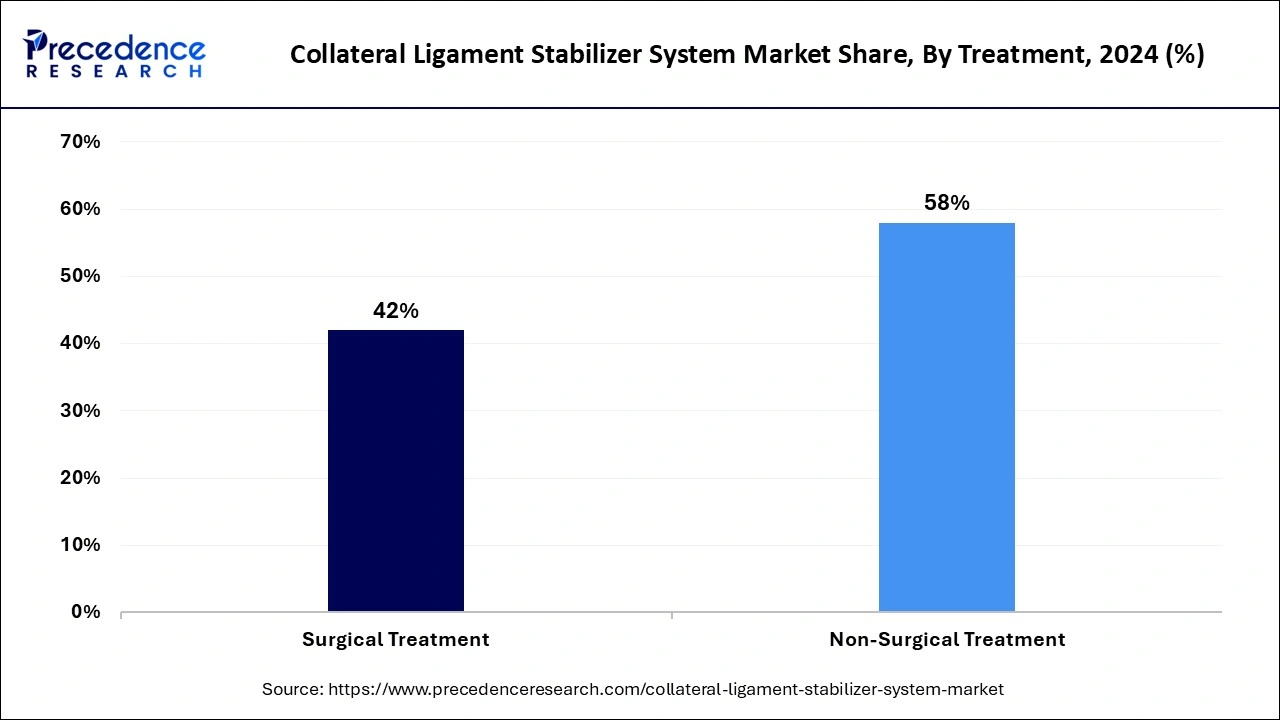
The surgical treatment segment is projected to witness the fastest growth in the forecast period. The collateral ligament stabilizer system (CLSS) functions as an orthopedic medical device by utilizing a collar to maintain knee or shoulder ligament stability. Surgeons often incorporate CLSS devices to treat ligament injuries during surgical procedures. People who suffer coupled collateral ligament tears along with knee injuries in the same instance need surgical intervention to address these simultaneous problems. Such surgical operations focus on disrupting nerve connections responsible for pain impulses while reducing both pain severity and attack occurrences.
End-Use Insights
The orthopedic clinics segment noted the largest collateral ligament stabilizer system market share in 2025. Orthopedic services continue to grow due to changes in patient preference toward specialized care and reduced hospital stays alongside customized treatment plans from orthopedic clinics. Patients gain better access to orthopedic services because of the rising number of specialized orthopedic clinics. Specialized systems that provide improved support and tailored fit to patients present a promising opportunity for market development. Patient access and clinic convenience improve as the number of orthopedic clinics increases.
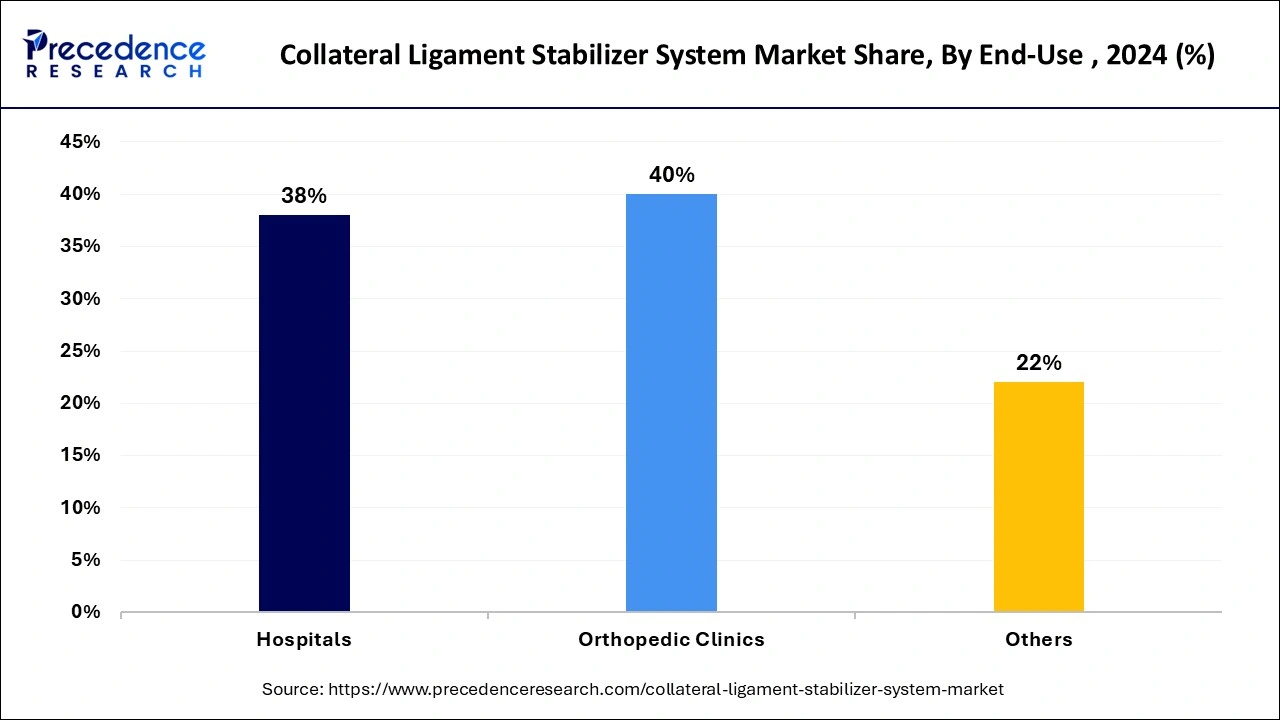
The hospital segment is estimated to witness the fastest growth during the forecast period. The substantial number of admissions involving ligament injuries drives the need for either surgical or non-surgical procedures. Super-specialty hospitals deliver outstanding medical services together with specialist orthopedic surgeons while providing continuous care. The sector focuses primarily on medical treatments because sports-related accidents occur more frequently, while hospitals maintain fully equipped diagnostic and therapeutic centers for patient care. The introduction of advanced systems has brought improvements in comfort while extending both treatment compliance and effectiveness rates for patients who receive non-surgical and post-surgical care.
Regional Insights
What is the U.S. Collateral Ligament Stabilizer System Market Size?
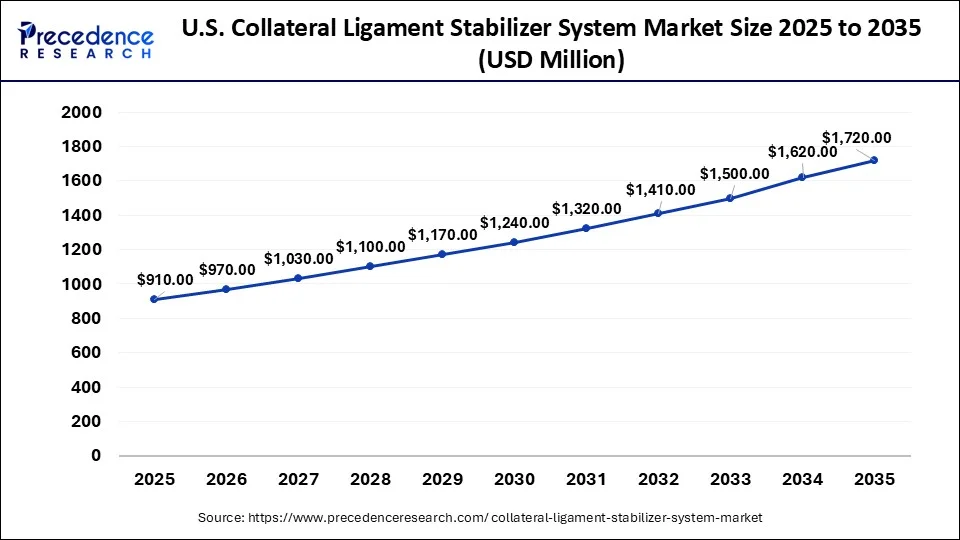
The U.S. collateral ligament stabilizer system market size was exhibited at USD 970 million in 2026 and is projected to be worth around USD 1,720 million by 2035, growing at a CAGR of 6.57% from 2026 to 2035.
North America accounted for the largest share of the collateral ligament stabilizer system market in 2025. The region continues to advance healthcare facilities, and elevated disposable incomes drive the need for collateral ligament stabilizer systems. The market growth will receive more momentum from growing technological developments and surging minimally invasive surgical practices in countries like the United States and Canada. Modern healthcare facilities in the U.S. enable patients to access medical technology through their advanced systems. The widespread application of advanced stabilizer systems becomes possible through technological advancements that improve material compositions along with adjustable functionality and patient-tailored solutions that achieve maximal treatment results.
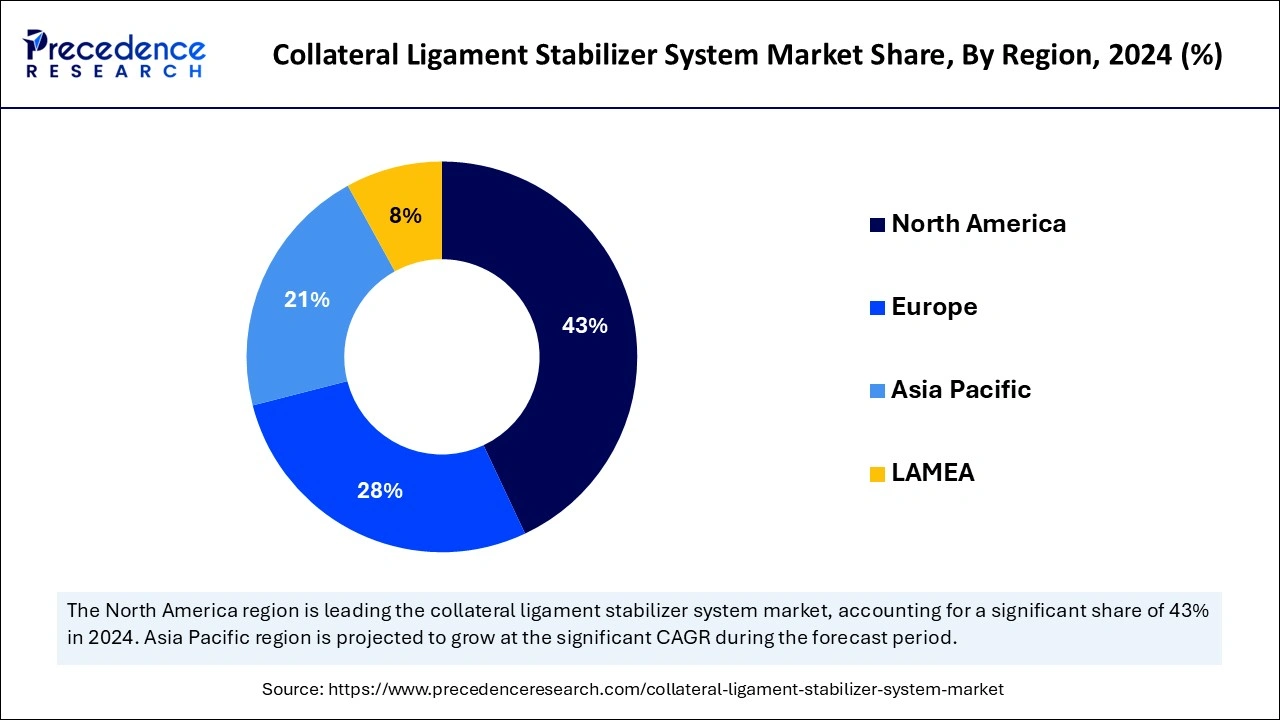
Asia Pacific is anticipated to witness the fastest growth in the collateral ligament stabilizer system market during the forecasted years. Countries such as China, Japan, and India experience growing disposable incomes simultaneously with the development of innovative healthcare infrastructure, which fuels market expansion. The market will experience growth in the upcoming period while government sports and fitness initiatives with advancements in medical technology strengthen regional demand.
European Collateral Ligament Stabilizer System Industry
Europe is expected to witness significant growth throughout the forecast years. This growth is due to the rising prevalence of different joint pains, which is fueling an interest in cutting-edge and superior outcomes. In addition, factors such as an increasing population, expanding healthcare industry, rising incomes, increased government spending on healthcare, international collaborations, and ongoing innovation are driving the growth of this market in the region.
Germany Collateral Ligament Stabilizer System Market Trends: The country's growth is driven by its large population, spending on healthcare, and strong pharmaceutical sector, which fosters continuous research and innovation activities. Moreover, a rise in orthopedic surgeries, with ligament repair and reconstruction have created high market demand.
MEA's Growing Collateral Ligament Stabilizer System Industry
Latin America is expected to witness substantial growth in the market, driven by the increasing prevalence of joint disorders and sports-related injuries, a large and growing population base, and growing participation in athletic activities. Furthermore, the rising awareness among patients about the benefits of collateral ligament stabilizers, coupled with the presence of key market players in the region, is further propelling market demand.
Brazil Collateral Ligament Stabilizer System Market Trends: The country is expected to grow quite significantly due to the incidence of chronic disorders such as osteoarthritis and an increase in severe accidents. Furthermore, substantial investments by industry leaders open up various potential opportunities for the country's market landscape.
MEA's Growing Collateral Ligament Stabilizer System Industry
The Middle East and Africa are expected to witness steady growth in the upcoming years. This growth is due to various factors such as the rising incidence of ligament injuries, increased awareness regarding advanced orthopedic solutions, and a rapidly growing geriatric population that is susceptible to musculoskeletal disorders. The demand for advanced collateral ligament stabilizer systems is further being fueled by advancements in medical technology, leading to the development of more effective and minimally invasive surgical procedures.
Saudi Arabia Collateral Ligament Stabilizer System Market Trends: The digitalization of healthcare is driving the adoption of telemedicine and remote monitoring solutions, enabling better patient management and follow-up care for those undergoing ligament stabilization procedures, thus propelling the region's market forward.
Collateral Ligament Stabilizer System Market Companies
- DePuy Synthes
- Arthrex, Inc.
- Bauerfeind USA Inc.
- Ossur
- Enovis Corporation
- Orthofix Medical, Inc.
- Bio Dynamic Technologies
- DARCO International, Inc.
- DeRoyal Industries, Inc.
- Corin Group
Industry Leader Announcement
- In September 2024, Paragon 28, Inc. Unveiled the R3FLEX Stabilization System, which provides enhanced ankle syndesmosis stability after patients experience fractures or high ankle sprains. The R3FLEX Stabilization System represents a game-changing technology in syndesmotic repair because surgeons can use a handle to precisely monitor and adjust tension using only a simple turn of the device, according to Paragon 28 CEO Albert DaCosta.
Recent Developments
- In January 2024, Enovis acquired LimaCorporate, which builds orthopedic implants. Enovis builds greater market domination in the orthopedic reconstruction market after this acquisition. LimaCorporate's 3D-printed Trabecular Titanium implants, together with their full shoulder revision capabilities, strengthen Enovis' position in the rapidly growing extremities market segment.
- In January 2023, Breg, Inc. extended its product offerings to China through a partnership with Coral International. The corporation endorsed Chinese physicians and patients to access Breg's portfolio of products.
Segments Covered in the Report
By Ligament
- Medial Collateral Ligament (MCL)
- Lateral Collateral Ligament (LCL)
By Injury
- Grade I
- Grade II
- Grade III
By Treatment
- Surgical Treatment
- Non-Surgical Treatment
By End-Use
- Hospitals
- Orthopedic Clinics
- Others
By Geography
- North America
- Europe
- Asia Pacific
- Latin America
- Middle East and Africa
For inquiries regarding discounts, bulk purchases, or customization requests, please contact us at sales@precedenceresearch.com
Frequently Asked Questions





Ask For Sample
No cookie-cutter, only authentic analysis – take the 1st step to become a Precedence Research client
 Get a Sample
.webp)



 sales@precedenceresearch.com
 Schedule a Meeting
