



Cytotoxic Drugs Market Size, Share and Trends 2026 to 2035
Cytotoxic Drugs Market (By Type: Branded Drug, Generic Drug; By Drug Class: Antimetabolites, Alkylating Agents, Cytotoxic Antibiotics, Vinca Alkaloids and Etoposide, Antineoplastic Drugs; By Routes of Administration: Oral, Parenteral; By Applications: Oncology, Rheumatoid Arthritis, Multiple Sclerosis; By Distribution Channel: Hospital Pharmacies, Retail Pharmacies, Online Pharmacies) - Global Industry Analysis, Size, Trends, Leading Companies, Regional Outlook, and Forecast 2026 to 2035
Source: https://www.precedenceresearch.com/cytotoxic-drugs-market
 Get a Sample
 Table Of Content


What is Cytotoxic Drugs Market Size?
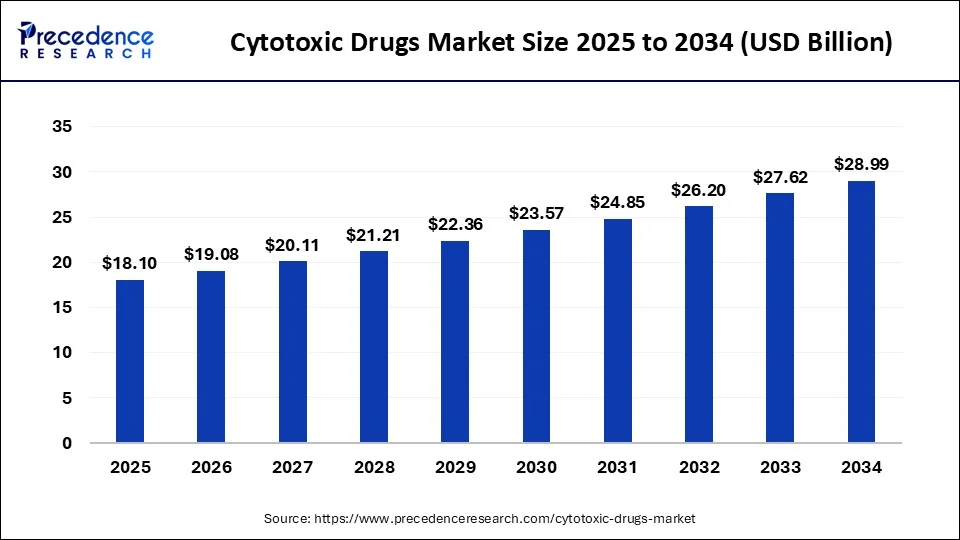
The global cytotoxic drugs market size was calculated at USD 18.10 billion in 2025 and is expected to reach around USD 30.39 billion by 2035, expanding at a CAGR of 5.32% from 2026 to 2035. The growing prevalence of the cancer that fueling the growth of the market.
Market Highlights
- North America led the market with the largest market share of 39% in 2025.
- Asia Pacific is expected to witness the fastest growth in the market during the forecast period.
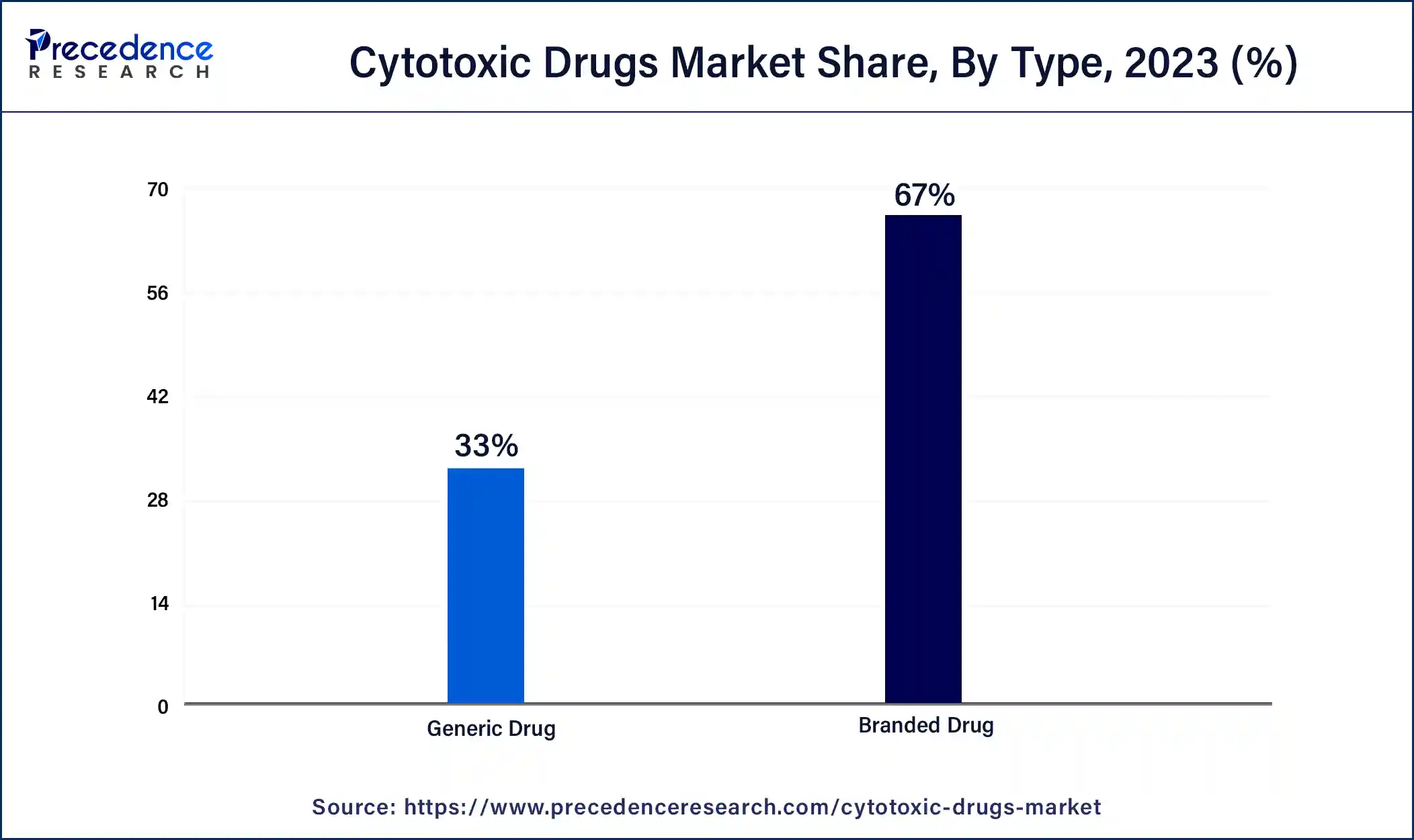
- By type, the branded drugs segment has held the biggest market share of 67% in 2025.
- By type, the generic drugs segment is expected to witness significant growth during the forecast period.
- By drug class, the antimetabolites segment has recorded more than 51% of market share in 2025.
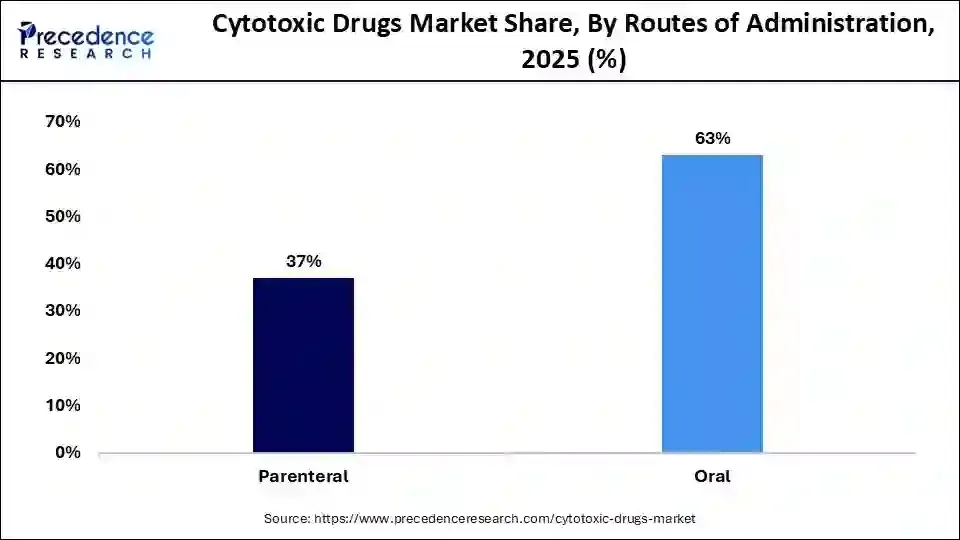
- By routes of administration, the oral segment led the market with the largest market share of 63% in 2025.
- By application, the oncology segment has held more than 82% of market share in 2025.
- By distribution channel, the hospital pharmacies segment held a significant share of the market in 2025.
Market Overview
The global cytotoxic drugs market is highly attributed to the rising prevalence of cancer cases worldwide due to the changing lifestyle and geriatric population. Cytotoxic drugs are the treatment of cancer in the procedure of chemotherapy that acts in the cancer cells. The cytotoxic drug is given to patients who are suffering from the abnormal expansion of cells in the body. Cancer cells, bone marrow, hair follicles, and cells in the intestine and stomach are some of the types of rapid cell expansion.
Chemotherapy is one of the types of cytotoxic medications that can kill all the rapidly growing cells. This type of procedure is a combination of drugs, and the cycle of the procedure is repeated. Thus, the rising number of cancer patients worldwide are other chronic diseases that are driving the growth of the cytotoxic drugs market.
AI: A Golden Opportunity for Cytotoxic Drug Development
The rising demand for painless and precision therapies in oncology has brought AI in limelight as AI plays a major role in cytotoxic drug development. The development value doubles due to AI's contribution and proven performance in analysing how tumors will evolve and progress, alongside personalising dosages to prevent side effects.
It's a noteworthy opportunity for drug development, along with other generative AI tools. This new and popular technology has the potential to engineer new molecules or trim them accordingly to eliminate cancer and alleviate unknown toxicity.
Cytotoxic Drugs Market Growth Factors
- The rising prevalence of chronic diseases such as cancer is driving the demand for an effective treatment that can treat the disease, driving the growth of the market.
- The aging population, environmental solutions, changing lifestyle preferences, and accepting sedentary lifestyles like higher consumption of alcohol and smoking causing severe diseases fueling the demand for effective treatments that drive the growth of the market.
- The rising advancements in cancer medication and supporting government policies for making cancer treatment affordable and available in every region of the country are driving the growth of the cytotoxic drugs market.
- The rising awareness regarding cancer treatment and medication, such as chemotherapy, and the rising number of chemotherapy procedures due to the increasing number of cancer patients globally drive the expansion of the market.
- The rising investments in research and development activities in the innovation of new drugs and treatments are boosting the growth of the cytotoxic drugs market.
Market Scope
| Report Coverage | Details |
| Market Size in 2025 | USD 18.10 Billion |
| Market Size in 2026 | USD 19.08 Billion |
| Market Size by 2035 | USD 30.39 Billion |
| Growth Rate from 2026 to 2035 | CAGR of 5.32% |
| Largest Market | North America |
| Base Year | 2025 |
| Forecast Period | 2026 to 2035 |
| Segments Covered | By Type, Drug Class, Routes of Administration, Applications, Distribution Channel, and Region |
| Regions Covered | North America, Europe, Asia-Pacific, Latin America, and Middle East & Africa |
Market Dynamics
Drivers
Rising cases of cancer
The increasing prevalence of cancer patients, along with other chronic diseases, is driving the growth of the cytotoxic drugs market. The rising urbanization, increasing pollution levels due to higher industrialization, accepting a sedentary lifestyle, and rising consumption of alcohol and smoking are causing higher chances of cancer.
Cancer is the abnormal and rapid growth of cells in the body that cause severe harm to the body. The increasing cases of cancer are contributing to the higher demand for effective treatment procedures like chemotherapy. Thus, the rising number of chemotherapy procedures is driving the demand for the cytotoxic drugs market.
Restraint
Side effects of medications
The side effects associated with the cytotoxic drug on normal cells are limiting the adoption of the drug in the market. Chemotherapy is considered the most important part of cancer treatment because it does not differentiate the affected cells from the normal cells, which results in harming the normal cells and causes several side effects in the body. Thus, it is restraining the growth of the cytotoxic drugs market.
Opportunity
The rising awareness about the treatment
The increasing awareness about cancer treatment, early diagnosis, and prevention treatment are boosting the growth of the market. The favorable government support in affording the treatment for cancer by providing various insurance and other policies and organizing the awareness campaign for creating and educating the people for the prevention and diagnosis of the diseases that are fueling the expansion of the market. Additionally, the rising investments in research and development activities by pharmaceutical companies for innovating new drugs and treatments for the treatment of cancer are driving the opportunity for the growth of the cytotoxic drugs market.
Segment Insights
Type Insights
The branded drugs segment dominated the cytotoxic drugs market in 2025 and will continue doing so throughout the forecast period. The demand for branded drugs is owing to their reliability, market exclusiveness, and patent-protected properties. A branded drug is also known as an innovator drug, and it is the first available in the market. Branded drugs are manufactured by the pharmaceutical company that has held the patent for over 20 years. In branded drugs and generic drugs, the active components of the active components are the same, but the inactive components, like preservatives and dyes, may change. Patent protection of the drug allows it to regain its investments in research and development activities, drug development, maintenance, and control of the price, and it helps generate revenue before the entrance of generic medicines.
The generic drugs segment is expected to witness significant growth during the forecast period. The higher adoption of generic drugs due to their cost convenience is driving the expansion of the segment. Generic drugs are the type of medication that is subsidized in terms of cost by the government, and it does not require any R&D due to their exact components similar to branded drugs. Thus, affordability and effectiveness contribute to the growth of the generic drug market.
Drug Class Insights
The antimetabolites segment was estimated to account for the largest part of the cytotoxic drugs market in 2024. The higher adoption of antimetabolites in chemotherapy for the treatment of cancers ranging from breast cancer and cervical cancer to colorectal cancer and blood cancer. Antimetabolites work on the rapidly dividing cells and help chemotherapeutic agents gain the fast-growing tumor cells. The antimetabolites are used to disrupt the nuclei pathways used in various autoimmune and rheumatological conditions like rheumatoid arthritis and multiple sclerosis.
Pharmaceutical companies are increasingly investing in research and development activities to enhance effectiveness. Adrucil, 5-FU (5-fluorouracil), Alimta (pemetrexed), Cytosar U, Ara-C (cytarabine), Droxia, Hydrea, Siklos (hydroxyurea), Fludara (fludarabine), Gemzar (gemcitabine), Otrexup, Rasuvo, Trexall, Xatmep (methotrexate), Purinethol, 6-MP (6-mercaptopurine), Xeloda (capecitabine) these are some of the common types of antimetabolites used in the cancer treatment.
Routes of Administration Insights
The oral segment dominated the cytotoxic drugs market in 2025. The higher oral administration of cytotoxic drugs by patients suffering from cancer provides the better convenience and comfort of self-administration of drugs in their home. Oral cytotoxic drugs are a patient-friendly and less invasive option of treatment and can be taken into the home comfort. Patients prefer oral administration of cytotoxic drugs over intravenous catheter placement.
The oral administration of the cytotoxic drug reduced the frequent visits to hospitals or diagnosis centers. Additionally, the higher availability of oral cytotoxic drugs and the increasing investments in research and development activities in the formulation and innovations in oral cytotoxic drugs enhance the growth of the segment.
Applications Insights
The oncology segment dominated the cytotoxic drugs market in 2025. Oncology is the treatment or medication associated with the treatment, diagnosis, and prevention of early-stage cancer. The rising research and development activities in the several fields of oncology, from cancer cell biology to optimal palliative care and pain relief and chemotherapy treatment regimens, help enhance the efficiency of oncology treatment.
There are some of the tools associated with oncology diagnosis are biopsy for the removal of tumor tissues that can be examined under the microscope, endoscopy for the gastrointestinal tract, CT scanning, imaging studies like X-rays, ultrasound, and other radiological techniques, MRI scanning, Scintigraphy, Positron emission tomography Single Photon Emission computed tomography, nuclear medicine techniques, and others.
Distribution Channel Insights
The hospital pharmacies segment held a significant share of the cytotoxic drugs market in 2025. The growth of hospital pharmacies is attributed to the higher availability of cancer care services, in-time access, and the provision of supporting professionals and medication for patients who are undergoing cancer treatment. Hospitals are well-equipped with trained professionals, diagnostic equipment, and medication like cytotoxic drugs that are demanded for treating any type of cancer at any stage. Hospitals have trained professionals and pharmacists who are experts in sterile compounding techniques and drug management that help provide accurate and safe cytotoxic medication as per the requirements of the cancer patient.
Regional Insights
How Big is the U.S. Cytotoxic Drugs Size?
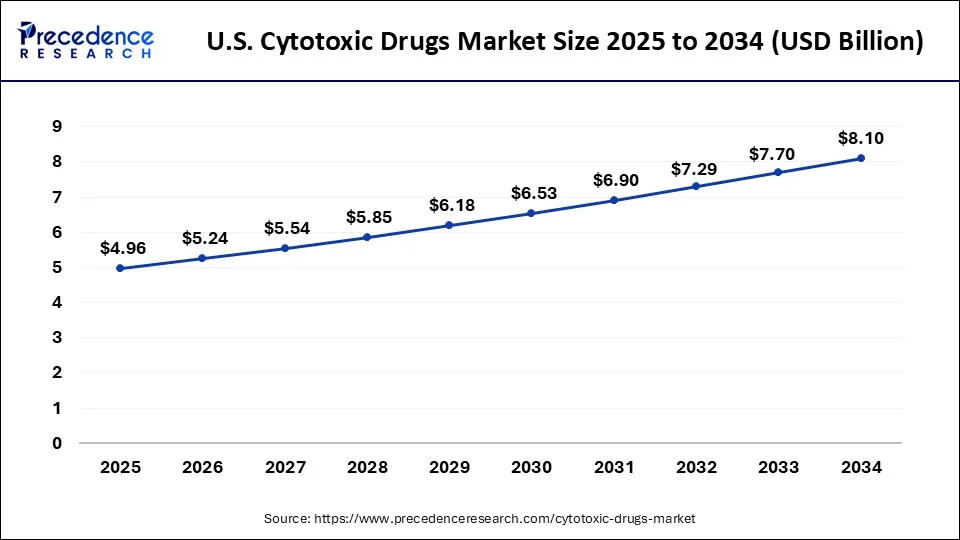
The U.S. cytotoxic drugs market size is estimated at USD 4.96 billion in 2025 and is projected to reach approximately USD 8.5 billion by 2035, with a 5.53% CAGR from 2026 to 2035.
North America led the cytotoxic drugs market in 2025. The region is expected to sustain its growth during the forecast period. The well-developed healthcare infrastructure and the increasing adoption of technological advancements in healthcare and diagnostic equipment are boosting the growth of the market.
The rising disposable income of the people and the rising investment in healthcare by individuals in regional countries like the United States and Canada are further propelling the growth of the market. The rising research and development in the advancement of cancer drugs and treatment to offer better outcomes are driving the expansion of the cytotoxic drugs market across the region.
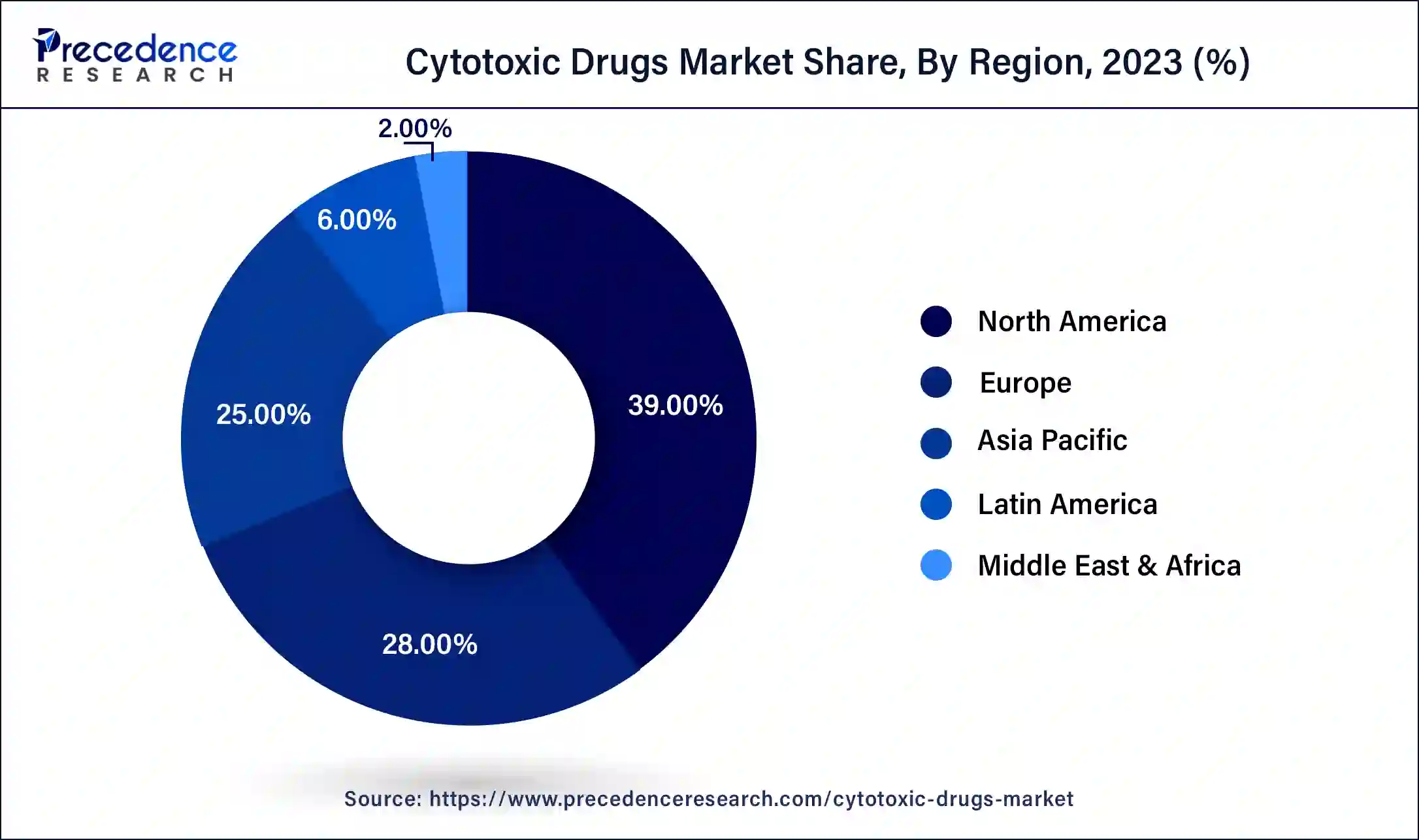
On the other hand, Asia Pacific is expected to witness the fastest growth in the cytotoxic drugs market during the forecast period. The rising geriatric population and shift in lifestyle, rising consumption of alcohol and smoking, causing higher cases of cancer in the region. The government is highly investing in creating awareness about the prevention and treatment of cancer, and the increasing development of research centers, hospitals, and diagnostics centers is driving the expansion of the market across the region.
- In April 2024, Sanofi, a leading French pharma, is launching the best-selling drug from its pipeline in India. The pharma giant is setting a plan to reconstruct its strategies in India and claiming that it is still an un-presented market.
How Europe Contributed to the Cytotoxic Drugs Industry?
Europe's contribution lies in its dedication to the oncology field, which is visible in the transition of the whole chemotherapy perception to targeted therapies, improved manufacturing potency, and its sharp focus on delivery systems. To promote and avail the space for advancements to speak volume, Italy has equipped many manufacturing plants with the use of ADCs.
The ADCs connect with the cytotoxic agent. The support and green signal of the European Medicines Agency (EMA) introduced many cytotoxic drugs, and the regulatory agency's positive attitude towards biosimilars is incredible. This encourages the region to initiate a major transition in the usage of radiopharmaceuticals to serve general cytotoxic radiation.
Latin America Competitive Spirit in the Cytotoxic Drugs Industry.
Latin America's competitive spirit is measured by its long-standing performance in the industry. The clinical graph seems to experience certain challenges, but the research and development capabilities are at their peak. The growing partnership engagements with the giant and reputed companies like CLICaP and LACOG are upgrading particular research space like addressing genetic biomarkers.
The latest studies captured many regional plant species to promote natural product research featuring cytotoxicity, which addresses compounds in the Piper barbatum plant. The plant is shockingly convincing to fit into the drug development process. This natural discovery is rare, and Latin America is one of the gemmologists to discover this gem of drug development.
Value Chain Analysis of the Cytotoxic Drugs Market
- R&D: The R&D process in cytotoxic drugs is an essential part of the oncology field, which confirms safety and efficacy measures while following modern R&D trends. The advanced R&D presents selective, combinational, and smart therapies to prevent toxicity to individuals' healthy tissues.
Key Players – Pfizer Inc, BMS, and Novartis AG - Clinical Trials and Regulatory Approvals
This is the next analysis of cytotoxic drug assessment and qualification for regulatory confirmation. It needs a valid and proven tolerability and safety ratio with the involvement of the volunteers, to grant clear designation and approvals from the FDA and CDSCO.
Key Players – Teva Pharmaceuticals, Eli Lilly and Company, and J&J Services, Inc. - Formulation and Final Dosage Preparation
This stage is a crucial and responsible one as it requires more precision in formulating, manufacturing, and later in distribution, as the extreme oncology conditions need apt cytotoxic agents to fight cancer.
Key Players – AstraZeneca, Roche/Genentech, and Sanofi.
Cytotoxic Drugs Market Companies
- CytoPharma
- Bristol-Myers Squibb
- Amgen Inc.
- Celgene Corp.
- Eli Lilly and Company
Recent Developments
- In April 2024, SaniSure, a leading player in single-use bioprocessing products, launched the Fill4Sure, a single-use custom filling assembly manufactured to influence drug to the market and make efficiency, security, and repeatability in the drug product filling.
- In April 2024, Ipsen S.A., a leading pharmaceutical company focusing on rare diseases, oncology, and neuroscience with a portfolio of commercial drug products, announced the collaboration with Sutro Biopharma, Inc. for the development of a pre-clinical antibody drug candidate.
- In April 2024, Tevogen Bio Holdings (Tevogen), a specialist in clinical clinical-stage immunotherapy biotech company, developed genetically unmodified T-cell therapeutics in oncology, virology, and neurology.
- In April 2024, a clinical-stage biopharmaceutical organization, Corvus Pharmaceuticals, Inc., announced its double-blind, randomized, placebo-controlled Phase 1 clinical trial for identifying soquelitinib in patients with moderate to severe atopic dermatitis.
Segments Covered in the Report
By Type
- Branded Drug
- Generic Drug
By Drug Class
- Antimetabolites
- Alkylating Agents
- Cytotoxic Antibiotics
- Vinca Alkaloids and Etoposide
- Antineoplastic Drugs
By Routes of Administration
- Oral
- Parenteral
By Applications
- Oncology
- Rheumatoid Arthritis
- Multiple Sclerosis
By Distribution Channel
- Hospital Pharmacies
- Retail Pharmacies
- Online Pharmacies
By Geography
- North America
- Europe
- Asia-Pacific
- Latin America
- Middle East and Africa
For inquiries regarding discounts, bulk purchases, or customization requests, please contact us at sales@precedenceresearch.com
Frequently Asked Questions
Tags





Ask For Sample
No cookie-cutter, only authentic analysis – take the 1st step to become a Precedence Research client
 Get a Sample




 sales@precedenceresearch.com
 Schedule a Meeting
