



Dementia Care Market Size, Share, Trends, Companies, and Forecast 2026-2035
Dementia Care Market (By Care Type: Home-based Care, Adult Day Care, Assisted Living Facilities, Nursing Home Care, Memory Care Centers; By Dementia Type: Alzheimers Disease, Vascular Dementia, Lewy Body Dementia, Frontotemporal Dementia, Mixed Dementia, Others; By Service Type: Medical Care Services, Cognitive Therapy Services, Rehabilitation Services, Palliative & Supportive Care, Remote Monitoring & Digital Care; By End-Use: Hospitals, Specialty Neurology Clinics, Long-term Care Facilities, Homecare Settings; By Therapy & Support: Pharmacological Care, Non-pharmacological Care) - Global Industry Analysis, Size, Trends, Leading Companies, Regional Outlook, and Forecast 2026 to 2035
Source: https://www.precedenceresearch.com/dementia-care-market
 Get a Sample
 Table Of Content


Dementia Care Market Size and Forecast 2026 to 2035
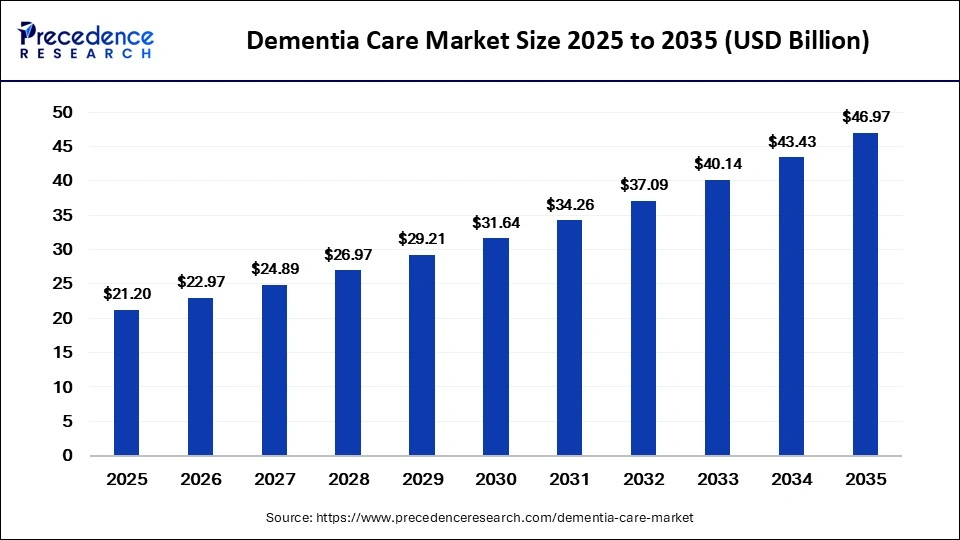
The global dementia care market size is predicted to increase from USD 22.97 billion in 2026 to approximately USD 46.97 billion by 2035, expanding at a CAGR of 8.40% from 2026 to 2035. The market is driven by the growing aging population. As life expectancy rises globally, the sheer volume of older adults, who are at the highest risk for neurodegenerative disorders, is leading to an unprecedented increase in dementia diagnoses.
Key Takeaways
- North America dominated the dementia care market with a share of 39.00% in 2026.
- Asia Pacific is expected to grow at the fastest CAGR of 10.5% during the forecast period.
- By care type, the home-based care segment led the market with a share of 34.00% in 2026 and is expected to grow at the fastest CAGR of 9.6% between 2026 and 2035.
- By care type, the memory care centers segment held a 14.00% market share in 2026 and is expected to grow at a 9.1% CAGR between 2026 and 2035.
- By dementia type, the Alzheimer's disease segment accounted for the largest share of 58.00% in 2026.
- By dementia type, the mixed dementia segment is expected to grow at a significant CAGR of 8.3% between 2026 and 2035.
- By service type, the medical care services segment held a major market share of 32.00% in 2026.
- By service type, the remote monitoring & digital care segment is expected to grow at the fastest CAGR of 11.3% in the coming years.
- By end-use, the long-term care facilities segment led the market with a 31.00% share in 2026.
- By end-use, the homecare settings segment is expected to grow at the fastest CAGR of 10.2% between 2026 and 2035.
Market Overview
The dementia care market encompasses a wide range of products, medical services, and specialized facilities dedicated to helping individuals living with Alzheimer's and other cognitive disorders. The market has been experiencing significant growth, driven by the growing aging population worldwide, rising demand for early diagnosis, and ongoing technological advancements in patient monitoring. Moreover, increasing access to advanced healthcare services and the growing awareness among people about the early diagnosis of neurological disorders contribute to market expansion.
How is AI Influencing the Dementia Care Market?
Artificial intelligence is significantly revolutionizing the dementia care market by enabling early, precise detection, personalized therapies, and continuous remote monitoring. AI models, such as machine and deep learning, analyze MRI and CT scans, spotting structural changes associated with Alzheimer's disease far earlier and more accurately than conventional clinical assessments. AI-driven sensors and wearables, like accelerometers and door sensors, learn daily behavioral baselines. They flag anomalies and proactively prevent accidents like falls.
Dementia Care Market Trends
- Most people prefer to remain in their own homes for as long as possible. This preference has driven significant demand for in-home care services, increasing the responsibilities of both professional caregivers and family members.
- There is growing reliance on adult day care centers and community-based support services to provide relief and assistance to overburdened family caregivers.
- Smart tracking devices, fall-detection wearables, and AI-enabled environmental monitoring systems are increasingly being adopted to help individuals maintain their independence while ensuring their safety.
- The demand for GPS-enabled wearables, memory-training platforms, and automated daily reminder systems is growing rapidly as families seek technology-based solutions to support daily routines and caregiving needs.
Market Dynamics
Drivers
Growing Aging Population
The growing global aging population is a key driver of the dementia care market, as it significantly increases the prevalence of age-related neurodegenerative diseases. This demographic shift is fueling demand for assisted living facilities and specialized memory care units that can effectively address the safety, behavioral, and physical needs of dementia patients. At the same time, the shortage of trained geriatric care professionals is encouraging families and care providers to adopt technology-driven solutions, including remote patient monitoring systems, GPS tracking devices, and smart home technologies, to enhance care delivery and support patient independence.
Restraint
High Costs and Limited Reimbursement
High costs and limited reimbursement act as the main restraints for the dementia care market, as they make advanced treatments and specialized care financially inaccessible for many households. As a result, families often have to rely heavily on out-of-pocket spending, which limits the broader adoption of commercial dementia care services. Furthermore, as the disease progresses, patients require intensive, round-the-clock care, including specialized memory care facilities, skilled nursing services, and in-home assistance. These increasing care needs contribute to substantial direct medical and social costs, placing a significant financial burden on patients, families, and healthcare systems.
Opportunity
Tech-Enabled Home Care
Tech-enabled home care presents a substantial growth opportunity in the dementia care market by meeting the rising preference for aging in place while reducing caregiver burnout. By shifting care delivery from reactive, institution-centric models to proactive and personalized digital ecosystems, these solutions help extend patient independence, enhance safety, and improve overall quality of care.
Market Segmentation Analysis
Care Type Insights
The Home-Based Care Segment Held a 34.00% Market Share in 2026
The home-based care segment dominated the dementia care market by holding a major share of 34.00% in 2026 and is expected to continue its dominance in the coming years, owing to the growing preference for aging in place and the lower cost of care compared to institutional settings. Rising expenses associated with long-term care facilities and assisted living communities have made home-based care a more attractive option for many families. Services such as visiting nurses, occupational therapists, and personal care aides are significantly more affordable than 24/7 institutional care, helping households manage long-term care needs without severe financial strain.
Dementia Care Market Share, By Care Type, 2026-2035 (%)
| Care Type | 2026 | 2035 | CAGR (%) |
| Home-based Care | 34.00% | 38.00% | 9.6% |
| Adult Day Care | 12.00% | 11.00% | 7.2% |
| Assisted Living Facilities | 21.00% | 20.00% | 7.9% |
| Nursing Home Care | 19.00% | 16.00% | 6.8% |
| Memory Care Centers | 14.00% | 15.00% | 9.1% |
The assisted living facilities segment held the second-largest market share of 21.00% in 2026 and is expected to grow at a CAGR of 7.9% during the projection period, driven by the availability of enhanced quality-of-life support services and the continued expansion of senior housing infrastructure. In addition, assisted living facilities are increasingly integrating digital health technologies, including AI-powered safety sensors, GPS tracking systems, and remote health monitoring tools. These innovations help residents maintain greater independence and mobility while ensuring their safety and well-being.
The memory care centers segment held a 14.00% share of the market in 2026 and is expected to grow at a significant CAGR of 9.1% during the projection period. This is mainly due to the rising demand for specialized dementia care services and dedicated cognitive support programs. Memory care centers provide structured environments tailored to the unique needs of dementia patients and invest heavily in staff training to effectively manage behavioral and cognitive challenges. As a result, these facilities have gained the trust of families seeking specialized care that may be difficult to provide at home.
Dementia Type Insights
Why Did the Alzheimer's Disease Segment Dominate the Market in 2026?
The Alzheimer's disease segment dominated the dementia care market with the largest share of 58.00% in 2026, owing to the large global patient population and the increasing availability of disease-modifying therapies. As Alzheimer's disease causes progressive cognitive and functional decline, patients often require intensive, multi-stage, and round-the-clock care. The substantial social and economic burden associated with managing the disease has fueled demand for specialized memory care facilities, remote patient monitoring technologies, and caregiver support services.
Dementia Care Market Share, By Dementia Type, 2026-2035 (%)
| Dementia Type | 2026 | 2035 | CAGR (%) |
| Alzheimer's Disease | 58.00% | 60.00% | 8.9% |
| Vascular Dementia | 16.00% | 15.00% | 7.4% |
| Lewy Body Dementia | 9.00% | 8.00% | 7.8% |
| Frontotemporal Dementia | 6.00% | 6.00% | 8.1% |
| Mixed Dementia | 7.00% | 7.00% | 8.3% |
| Others | 4.00% | 4.00% | 7.0% |
The mixed dementia segment held a 7.00% share of the market in 2026 and is expected to grow at a significant CAGR of 8.3% during the projection period. This is mainly due to advancements in neuroimaging technologies, improved diagnostic capabilities, and the increasing adoption of multidisciplinary care approaches. The complex and often unpredictable progression of mixed dementia places a considerable burden on caregivers, driving demand for specialized care services, long-term care facilities, and supportive technologies that enhance patient safety and assist with daily living activities.
Service Type Insights
Dementia Care Market Share, By Service Type, 2026-2035 (%)
| Service Type | 2026 | 2035 | CAGR (%) |
| Hospitals | 28.00% | 25.00% | 7.3% |
| Specialty Neurology Clinics | 18.00% | 19.00% | 8.9% |
| Long-term Care Facilities | 31.00% | 30.00% | 8.0% |
| Homecare Settings | 23.00% | 26.00% | 10.2% |
The Medical Care Services Segment Led the Market in 2026 With a 32% Share
The medical care services segment led the dementia care market with a share of 32.00% in 2026, driven by the increasing number of physician consultations, expanding neurological care programs, and the growing need for comprehensive disease management. As dementia progresses through multiple stages of cognitive and functional decline, demand for long-term medical services and support continues to rise. Skilled nursing facilities and coordinated home healthcare agencies play a critical role in supporting patients who prefer to age in place.
The cognitive therapy services segment held the second-largest market share of 21.00% in 2026 and is expected to grow at a CAGR of 8.8% during the forecast period, driven by the increasing adoption of memory rehabilitation programs and behavioral therapy services. Cognitive therapy interventions help reduce the emotional and financial burden of dementia by equipping patients and caregivers with strategies to manage cognitive decline and behavioral challenges. In addition, group-based programs and services delivered by trained professionals offer a cost-effective alternative to continuous clinical supervision, further supporting market growth.
The remote monitoring & digital care segment held a 14.00% share of the market in 2026 and is expected to grow at the fastest CAGR of 11.3% during the projection period. This is mainly due to the rising demand for remote patient monitoring solutions and advancements in AI-based cognitive assessment tools. Digital platforms that provide personalized cognitive training, structured brain exercises, and at-home cognitive stimulation are gaining traction as effective tools for supporting cognitive function and enhancing patient engagement. These solutions also help improve care coordination, promote patient independence, and support early intervention, contributing to their rapid adoption across dementia care settings.
End-Use Insights
What Made Long-Term Care Facilities the Dominant Segment in the Dementia Care Market?
The long-term care facilities segment dominated the dementia care market with the largest share of 31.00% in 2026. This is mainly due to the growing demand for continuous care support and the expansion of nursing homes and specialized memory care facilities. The rising global geriatric population has increased the need for round-the-clock supervision, chronic disease management, and specialized dementia care services, making long-term care settings a preferred option for patients with advanced-stage dementia.
The hospitals segment held a 28.00% share of the market in 2026 and is expected to grow at a CAGR of 7.3% during the projection period. This is due to the increasing neurological care admissions and the availability of multidisciplinary care teams. Hospitals also serve as key centers for clinical research and innovation, providing patients with access to advanced diagnostic tools, specialized treatment programs, and emerging therapies. Their involvement in clinical trials and breakthrough treatments further strengthens their role in dementia care delivery.
The homecare settings segment held a 23.00% share of the market in 2026 and is expected to grow at the fastest CAGR of 10.2% during the forecast period. This is mainly due to their lower care costs, greater patient comfort, and the increasing preference for aging in place. Dementia patients often experience reduced confusion, anxiety, and behavioral disturbances when they remain in familiar home environments surrounded by family members and personal belongings. In addition, advances in remote monitoring technologies and home-based care services are further supporting the adoption of homecare settings for dementia management.
Market Regional Analysis: North America, Europe, Asia-Pacific
North America Dementia Care Market Size and Growth 2026 to 2035
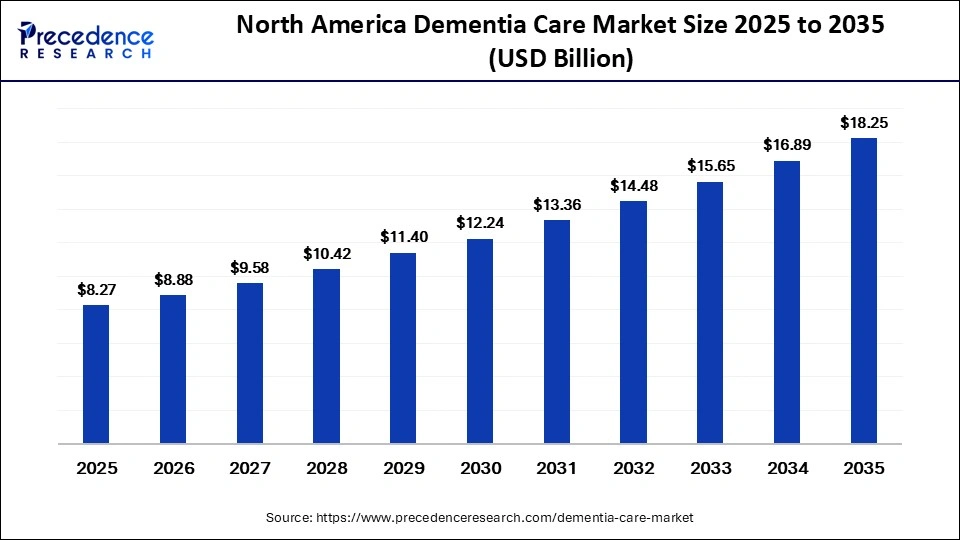
The North America dementia care market size was exhibited at USD 8.88 billion in 2026 and is projected to be worth around USD 18.25 billion by 2035, growing at a CAGR of 7.70% from 2026 to 2035.
North America: The Dominant Region
North America led the dementia care market by holding a major share of 39.00% in 2026. This is mainly due to the high prevalence of Alzheimer's disease, strong reimbursement coverage for dementia care, and high adoption of advanced therapeutics. Significant investments in R&D activities and favorable government initiatives have contributed to the development and regulatory approval of novel therapies, which include disease-modifying drugs. Moreover, high awareness and diagnosis rates bolstered the regional market dominance.
U.S. Dementia Care Market Size and Growth 2026 to 2035
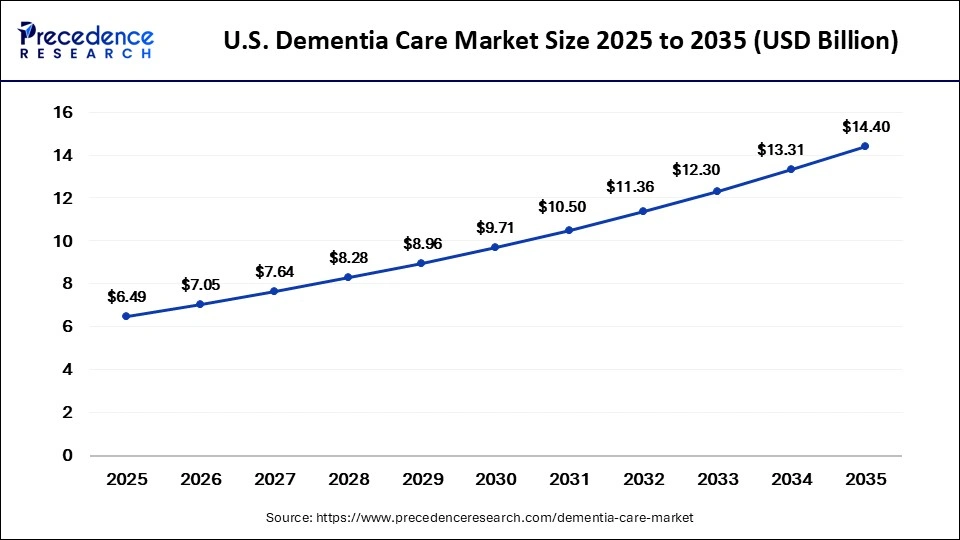
The U.S. dementia care market size was evaluated at USD 7.05 billion in 2026 and is projected to reach around USD 14.40 billion by 2035, growing at a CAGR of 7.78% from 2026 to 2035.
U.S. Market Analysis
The U.S. is a major contributor to the North American dementia care market, driven by a rapidly aging population, along with the high prevalence of Alzheimer's disease. The country hosts a well-established healthcare sector, along with the presence of specialized care facilities, which further drive market growth.
Europe: The Second-Largest Market
Europe held the second-largest market share of 29.00% in 2026 and is expected to grow at a notable CAGR of 7.9% during the projection period, driven primarily by the rapidly aging population, expansion of public dementia care programs, and rising healthcare expenditure on elderly care. The market is accelerating because of the integration of AI-driven monitoring systems, smart home technologies, and digital cognitive platforms. Additionally, the rising demand for disease-modifying therapies and early detection of disease supports market growth.
UK Market Analysis
The dementia care market in the UK is experiencing exponential growth due to the country's rapidly aging population, which is leading to a higher prevalence of Alzheimer's disease and other forms of dementia. In addition, increasing demand for specialized care services, rising healthcare awareness, and greater reliance on both formal care facilities and home-based support systems are driving market expansion.
Asia Pacific: The Fastest-Growing Region
Asia Pacific held a 23.00% share of the market in 2026 and is expected to grow at the fastest CAGR of 10.5% during the projection period, driven by the rising geriatric population, increasing prevalence of dementia in China and Japan, and rising investments in healthcare infrastructure. Expanded public health campaigns, greater access to specialty clinics, and advances in diagnostic technologies are contributing to earlier detection of cognitive disorders, thereby increasing the demand for dementia care services.
China Market Analysis
China's dementia care market is fueled by the world's largest aging population and an increasing prevalence of dementia. There is a high demand for advanced treatments and diagnostic services, supported by government initiatives that promote early screening and the integration of advanced therapeutic solutions into the national healthcare system.
What Drives the Market in Latin America?
Latin America held a 6.00% share of the market in 2026 and is expected to grow at a strong CAGR of 7.8% during the projection period, driven by the increasing elderly population, increasing diagnosis rates of cognitive disorders, and growth of home care services. Improving healthcare infrastructure and digital health adoption are further supporting market expansion.
Brazil Market Analysis
The Brazilian dementia care market is driven by the rising prevalence of Alzheimer's disease. There is also growing interest in digital health solutions and dementia care applications that support symptom tracking, patient monitoring, and cognitive stimulation, aligning with the broader expansion of the global dementia care app ecosystem.
How is the Opportunistic Rise of the Middle East & Africa in the Market?
The Middle East & Africa held a 3.00% share of the market in 2026 and are expected to grow at a lucrative CAGR of 7.4% during the projection period, driven by rising life expectancy and increasing investments in elderly care infrastructure. The integration of digital health solutions, wearable monitoring devices, and advanced cognitive training tools has improved the quality of life and safety of dementia patients across the region.
UAE Market Analysis
The UAE leads the dementia care market in the MEA. This is mainly due to a growing aging population and government-backed digital health initiatives. There is a rapid expansion of home care services, long-term care facilities, and advanced diagnostic solutions, supporting the market growth.
Competitive Landscape
The dementia care market is highly competitive, driven by rising disease prevalence, aging populations, and the rising need for specialized care services. Major players include healthcare providers, pharmaceutical companies, senior living communities, home healthcare agencies, and digital health companies offering cognitive monitoring and remote care solutions.
Companies in the market compete through technological integration, caregiver support services, personalized care programs, and strategic partnerships. AI-based diagnostics, telehealth innovations, and advancements in memory care facilities are shaping overall market dynamics. Market participants are also focusing on geographic expansion, service diversification, and regulatory compliance to strengthen their positions and address evolving patient and caregiver needs.
Dementia Care Market Companies
- Eli Lilly and Company
- Eisai
- Biogen
- Roche
- Novartis
- AbbVie
- Otsuka Pharmaceutical
- TauRx Pharmaceuticals
- BioArctic
- Alzheon
- Anavex Life Sciences
- Cassava Sciences
- AC Immune
- Neurocentria
- Cognito Therapeutics
Recent Developments Dementia Care Market (2025-2026)
- In June 2026, Eisai Inc. expanded its Magnolia Meals at Home program, which was originally designed for cancer households, to support people living with Alzheimer's disease and related dementias (ADRD) and their care partners. Developed with CaringKind, the initiative provides simple, practical nutrition resources tailored to their needs.(Source: https://www.prnewswire.com)
- In March 2026, Alzheon, Inc., a clinical-stage biopharmaceutical company developing investigational therapies and diagnostic assays for Alzheimer's disease and other neurodegenerative disorders, announced that it presented new efficacy, imaging, safety, biomarker, and quantitative systems pharmacology data for its lead candidate, valiltramiprosate (ALZ-801), at the 2026 International Conference on Alzheimer's and Parkinson's Disease (AD/PD) in Copenhagen, Denmark.(Source: https://alzheon.com)
Segments Covered in the Report
By Care Type
- Home-based Care
- Adult Day Care
- Assisted Living Facilities
- Nursing Home Care
- Memory Care Centers
By Dementia Type
- Alzheimer's Disease
- Vascular Dementia
- Lewy Body Dementia
- Frontotemporal Dementia
- Mixed Dementia
- Others
By Service Type
- Medical Care Services
- Cognitive Therapy Services
- Rehabilitation Services
- Palliative & Supportive Care
- Remote Monitoring & Digital Care
By End-Use
- Hospitals
- Specialty Neurology Clinics
- Long-term Care Facilities
- Homecare Settings
By Therapy & Support
- Pharmacological Care
- Non-pharmacological Care
By Region
- North America
- Latin America
- Europe
- Asia-pacific
- Middle and East Africa
For inquiries regarding discounts, bulk purchases, or customization requests, please contact us at sales@precedenceresearch.com
Frequently Asked Questions
Tags





Ask For Sample
No cookie-cutter, only authentic analysis – take the 1st step to become a Precedence Research client
 Get a Sample
.webp)



 sales@precedenceresearch.com
 Schedule a Meeting
