



Dimethyl Carbonate Market Size, Key Companies, Company Production Capacity, Manufacturing Efficiency, Capacity Utilization, Raw Material Consumption, Cost Structure, Export Trends, Company Expansion Strategies, and Competitive Landscape
Dimethyl Carbonate Market (By Grade: Battery Grade, Industry Grade, Pharmaceutical Grade; By End-use: Pharmaceutical, Agrochemicals, Paints & Coating, Battery, Plastics, Others) - Global Industry Analysis, Size, Trends, Leading Companies, Regional Outlook, and Forecast 2026 to 2035
Source: https://www.precedenceresearch.com/dimethyl-carbonate-market
 Get a Sample
 Table Of Content


What is the Dimethyl Carbonate Market Size?
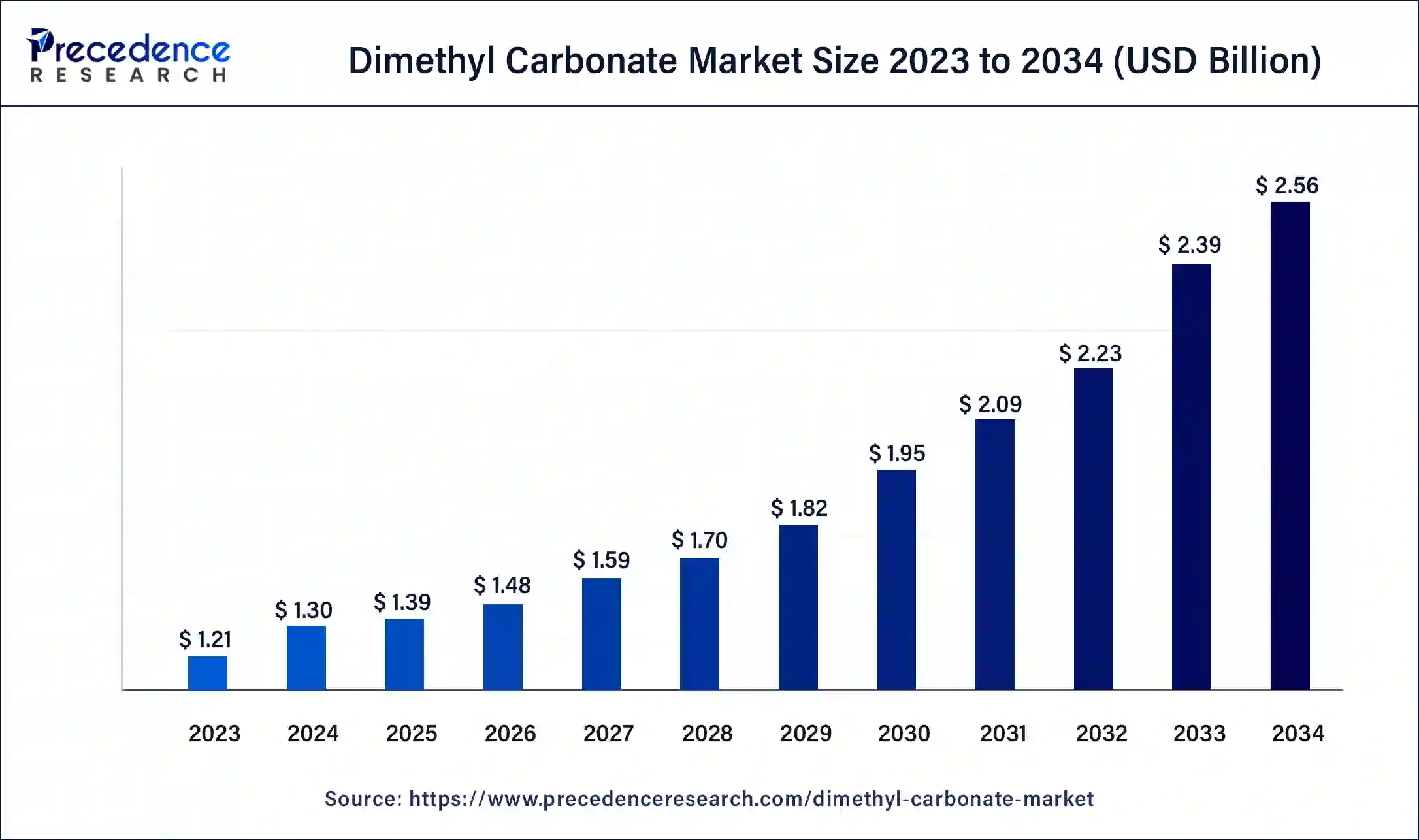
The global dimethyl carbonate market size is accounted at USD 1.39 billion in 2025 and predicted to increase from USD 1.48 billion in 2026 to approximately USD 2.72 billion by 2035, expanding at a CAGR of 6.94% from 2026 to 2035. Considering its low volatility and lack of toxicity, dimethyl carbonate (DMC) is regarded as a green chemical as opposed to conventional solvents.
Dimethyl Carbonate Market Key Takeaways
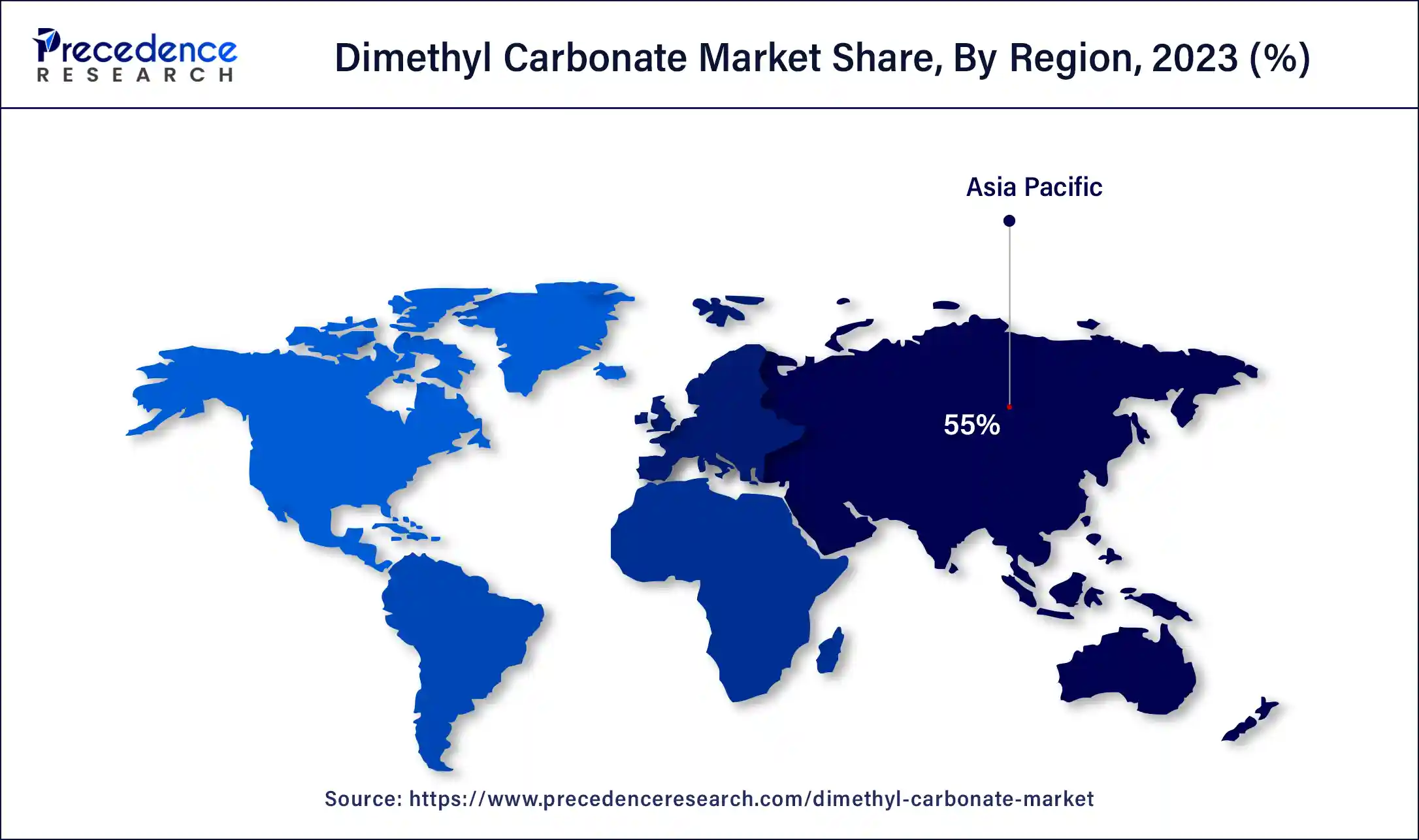
- Asia Pacific dominated the dimethyl carbonate market with the largest revenue share of 52% in 2025.
- North America is expected to host the fastest-growing market over the forecast period.
- By grade, the industry segment has contributed more than 45% of revenue share in 2025.
- By grade, the pharmaceutical segment is expected to show the fastest growth in the market during the forecast period.
- By end use, the plastics segment has held a major revenue share of 34% in 2025.
- By end use, the paints & coating segment is anticipated to grow at a higher CAGR in the global market during forthcoming years.
What is the Dimethyl Carbonate Market?
The industry that produces distributes, and uses dimethyl carbonate a chemical molecule with a wide range of applications—is referred to as the dimethyl carbonate market. Dimethyl carbonate is frequently utilized as a gasoline additive, solvent, and chemical synthesis intermediate. It is prized for being more ecologically benign than conventional solvents and for being able to substitute more dangerous compounds in a variety of applications. The dimethyl carbonate market includes producers, suppliers, distributors, and consumers from a variety of sectors, including the pharmaceutical, paint and coating, electronics, and automotive industries.
Because DMC is less toxic and more biodegradable than standard solvents, it is becoming more and more popular as an environmentally friendly methylating agent and solvent. The demand for the dimethyl carbonate market is fueled by its importance as an intermediary in the synthesis of polycarbonates, which are utilized in the electronics, construction, and automotive industries. The synthesis of many organic molecules, such as plastics, agrochemicals, and medicines, acts as a flexible chemical intermediary.
Due to a thriving chemical manufacturing industry, Asia Pacific, particularly China, is a major producer and consumer of chemicals. The dimethyl carbonate market is particularly influenced by North America and Europe, where adoption is fueled by strict environmental legislation. DMC is utilized in medicines, lithium-ion battery electrolytes, and organic synthesis processes as a methylating agent in addition to being produced as polycarbonate.
How is AI Contributing to the Dimethyl Carbonate Market?
The Dimethyl Carbonate industry is supported by AI through its capability to optimize production processes, raise the level of quality control, forecast demand, and speed up the innovations of products. By machine learning and automation, it cuts down on resource wastage, guarantees uniformity, and helps create sustainable formulations, thus making chemical manufacturing processes greener and more efficient in terms of AI-powered innovation.
Dimethyl Carbonate Market Growth Factors
- The dimethyl carbonate market is in higher demand than traditional solvents because of stricter rules that support environmentally friendly chemicals and solvents.
- The demand for dimethyl carbonate in the market has increased because it is a safer substitute for hazardous substances like ethylene glycol ethers and methyl ethyl ketone (MEK).
- Because of its qualities as a solvent, methylating agent, and polycarbonate precursor, DMC finds use in a variety of industries, including pharmaceuticals, paints & coatings, electronics, and the automotive sector.
- The rise of industry, urbanization, and growing environmental concerns are driving tremendous growth in Asia-Pacific, especially in China and India.
- Technological developments in production are reducing production costs and increasing market competitiveness. Examples of these developments include enhanced catalytic processes and effective recycling systems.
- DMC's widespread use is being fueled by companies' and customers' growing consciousness of environmental impact and sustainability.
Key Factors Influencing Future Market Trends
- Rising demand for electric vehicles: This surge in the production of EVs is creating a lot of impetus for the market of DMC market. This increase in the EV industry, due to the promotion from governments all over the world of cleaner modes of transport, is expanding the industry and putting forth greater demand for high-quality battery materials such as DMC.
- Increasing need for eco-friendly chemicals: With increasing concern for the environment and becoming more stringent, industries are relocating to greener options. Dimethyl carbonate is a low-toxicity, biodegradable solvent and chemical intermediate. Adoption of an ever-widening web of countries trending towards reducing carbon footprints is very likely to expand demand for DMCs in many economic areas.
- Technological advancements: Improvements in battery technology, green chemistry processes, and a variety of high-performance materials are driving DMC's use outside of established markets. Such innovations increase both the commercial interest in this technology in the industrial sphere and reinforce its position in facilitating the energy and manufacturing approach to sustainable production.
Market Outlook
- Industry Growth Overview: The market has seen very significant growth, which is mainly due to the great demand for battery electrolytes and eco-friendly solvents among the different industrial sectors.
- Sustainability Trends: The use of green chemistry, the move to non-phosgene methods of production, the use of carbon dioxide as a raw material, and the creation of bio-based materials aimed at environmental sustainability are all trends in sustainability.
- Global Expansion: The Asia-Pacific area still holds the position of the largest and the quickest growing market, simultaneously with the passage of time; it is being supported by substantial investments and enlargements of capacity in critical manufacturing locations.
- Major Investors: Top players are increasing their production capacity and putting funds into modernizing the technologies, thereby always maintaining the product quality while cutting down the carbon footprint.
- Startup Ecosystem: Newly formed startups are coming up with production methods that produce very low carbon emissions, and they are also looking into electrochemical synthesis that uses captured carbon dioxide and renewable methanol for the sustainable production of DMC.
Market Scope
| Report Coverage | Details |
| Market Size by 2035 | USD 2.72 Billion |
| Market Size in 2025 | USD 1.39 Billion |
| Market Size in 2026 | USD 1.48 Billion |
| Market Growth Rate from 2026 to 2035 | CAGR of 6.94% |
| Largest Market | Asia Pacific |
| Base Year | 2025 |
| Forecast Period | 2026 to 2035 |
| Segments Covered | Grade, End-use, and Regions |
| Regions Covered | North America, Europe, Asia-Pacific, Latin America, and Middle East & Africa |
Market Dynamics
Driver
Growing demand for pharmaceuticals
Due to its low toxicity and environmental friendliness when compared to more conventional solvents like methanol, acetone, and dichloromethane, DMC is being employed as a solvent in the pharmaceutical industry more and more. DMC is an essential component in the synthesis of APIs, which is how pharmaceuticals are made. Its methylating and carbonylation properties make it especially useful in the production of pharmaceuticals.
Another important element is the economicality of DMC when compared to other conventional solvents. Manufacturers find it to be an appealing option due to its efficiency in pharmaceutical procedures and comparatively reduced pricing. The dimethyl carbonate market can increase a pharmaceutical process's yield and efficiency.
Restraint
Raw material price volatility
Since natural gas is a necessary component for the manufacturing of methanol, fluctuations in the price of natural gas can affect the price of methanol, which is a fundamental raw material for the production of DMC. A supply chain disruption could result from anything from natural catastrophes to pandemics to geopolitical tensions. These disruptions could also create abrupt changes in the price and availability of raw materials.
Environmental laws that have an effect on carbon monoxide and methanol production can raise production costs, which in turn can have an impact on DMC pricing. The price of energy used to produce raw materials, especially electricity and natural gas, can have an effect on the dimethyl carbonate market dynamics.
Opportunity
Battery electrolytes
Lithium-ion battery performance and efficiency are greatly dependent on battery electrolytes, among which dimethyl carbonate is a major player in this market. Because of its strong polarity, DMC works well as a solvent for the lithium salts found in battery electrolytes. By doing this, effective ion transport within the battery is ensured.
The steady electrochemical window that the dimethyl carbonate market offers is crucial to the functionality and security of lithium-ion batteries. To maximize the electrolyte's characteristics, DMC is frequently combined with other carbonate solvents such as ethylene carbonate (EC) and propylene carbonate (PC). This combination may enhance the battery's longevity and performance.
Segment Insights
Grade Insights
The industry segment dominated the global dimethyl carbonate market in 2025. Due to its numerous uses in a variety of industrial processes, the dimethyl carbonate market industry-grade sector is essential. Because of its exceptional solubility and low toxicity, DMC is frequently employed as a solvent in industrial applications. It is frequently used in adhesives, varnishes, and paints. DMC is used as a methylating agent in the synthesis of agrochemicals, specialty chemicals, and pharmaceuticals. It raises the octane number and increases combustion efficiency in gasoline compositions. The need for DMC is fueled by the automotive and aerospace sectors' drive to lightweight materials, which increases demand for polycarbonates.
The pharmaceutical segment is expected to show the fastest growth in the dimethyl carbonate market during the forecast period. Because of its exceptional purity and adaptable chemical characteristics, pharmaceutical grade dimethyl carbonate, or DMC, is essential to the manufacturing of many medications. It functions as a methylating agent throughout the pharmaceutical manufacturing process. Because DMC has less of an adverse effect on the environment and is less hazardous than conventional methylating chemicals like methyl iodide and dimethyl sulfate, it is recommended. The adoption of DMC is accelerated in pharmaceutical applications by favorable regulatory frameworks and approvals. The safety and effectiveness of pharmaceutical-grade DMC are guaranteed by regulatory agencies such as the FDA and EMA. Because of its low toxicity and biodegradability, DMC is a desirable substitute for conventional solvents, supporting the industry's transition to more environmentally friendly and sustainable production methods.
End-use Insights
The plastics segment led the dimethyl carbonate market in 2025. DMC is an essential starting material for the production of polycarbonates, which are widely utilized in the plastics industry. Because of their excellent impact resistance and transparency, polycarbonates are used in a variety of products, such as electronic equipment, automobile parts, and eyeglass lenses. New potential for market expansion will arise from advancements in production methods and the creation of new applications for DMC in polymer processing. Finding more effective and environmentally friendly production techniques can result from funding research and development (R&D) for the creation of new and enhanced DMC uses in the plastics sector.
The paints & coating segment is anticipated to grow at a higher CAGR in the global dimethyl carbonate market during forthcoming years. Dimethyl carbonate is becoming more and more popular in the paint and coatings sector because of its beneficial qualities and adaptability. Due to its great biodegradability and low toxicity, DMC is regarded as a green solvent. Compared to conventional solvents like xylene and toluene, it has a less detrimental effect on the environment. Because DMC can be utilized as a solvent, reagent, and intermediary in the synthesis of different chemicals, formulators in the coatings sector have a flexible option. DMC contributes to architectural paints by enhancing the finish and longevity of coatings used on infrastructure and structures. Due to its great solvency and quick drying times, DMC is used in industrial coatings. These qualities are crucial for a number of production processes.
Regional Insights
What is the Asia Pacific Dimethyl Carbonate Market Size?
The Asia Pacific dimethyl carbonate market size is exhibited at USD 720 million in 2025 and is projected to be worth around USD 1,427 million by 2035, poised to grow at a CAGR of 7.08% from 2026 to 2035.
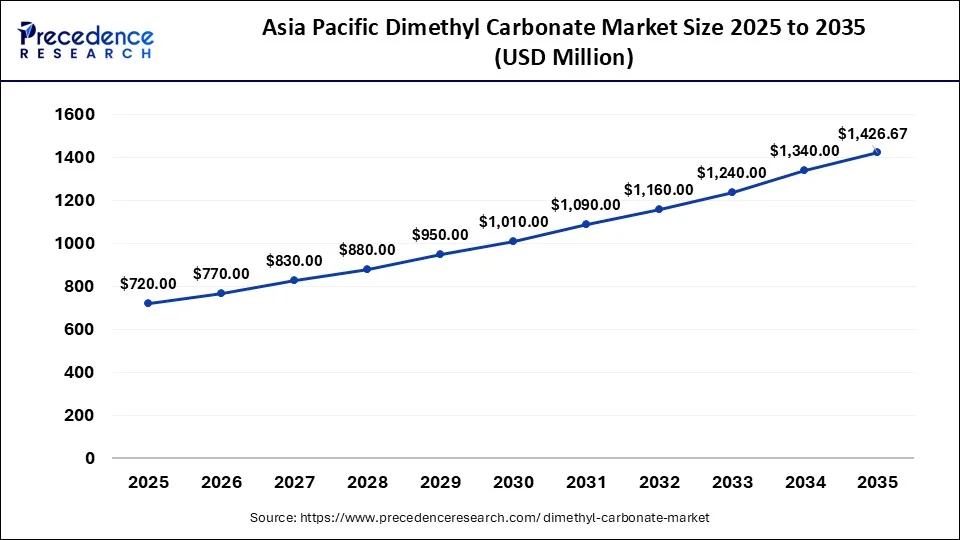
Asia Pacific held the largest share of the dimethyl carbonate market in 2025. A number of reasons are contributing to Asia Pacific's notable rise in the dimethyl carbonate market. The need for DMC, a solvent used in many industries, including electronics, paints and coatings, and medicines, is being driven by rising industrialization, particularly in nations like China, Japan, India, and South Korea.
How is Asia-Pacific Leading in the Dimethyl Carbonate Market?
The Asia Pacific region is the leader in the global market and is supported by the strong industrial base of the region and the increasing adoption of green chemical processes. The expansion of manufacturing capabilities and government policies that are good for business are also responsible for the growth of the region's different end-use sectors.
The dimethyl carbonate market is expanding because of environmental legislation that supports eco-friendly chemicals since DMC is thought to be a safer choice than conventional solvents. Investments in the energy storage and renewable energy sectors further increase the need for DMC in battery applications.
How is North America Performing in the Dimethyl Carbonate Market?
The North American market is consistently growing due to a strong demand from the industrial and automotive sectors. Market development is boosted by the increasing emphasis on sustainable practices and chemical applications.
The U.S. market is characterized by a growing demand as a result of its advanced manufacturing facilities and a strong industrial presence. The development of DMC for use as a green solvent and the adoption of DMC in battery technologies are among the factors driving the expansion.
North America is expected to host the fastest-growing dimethyl carbonate market over the forecast period. Dimethyl carbonate applications in a variety of industries, including electronics, paints & coatings, and pharmaceuticals, have been driving the market's expansion in North America. Growing consumer demand for clean energy sources, stricter laws encouraging eco-friendly products, and growing environmental concerns are all factors driving market expansion.
The rise of dimethyl carbonate in the market is additionally supported by its use in manufacturing processes and its function as a solvent. Growing environmental concerns, regulatory backing for environmentally friendly chemicals, and its use as a versatile solvent and methylating agent are some of the factors driving the market's expansion. A large portion of the global dimethyl carbonate market is accounted for by North America, particularly the United States, because of its strong industrial infrastructure and ongoing research into sustainable chemicals.
China Dimethyl Carbonate Market Trends:
China is at the forefront of the production and consumption markets owing to its strong manufacturing ecosystem and government policies that are conducive to that. To a great extent, the use of green chemistry and the large-scale adoption of sustainable materials are among the contributors to the expansion of the market.
What are the Driving Factors of the Dimethyl Carbonate Market in Europe?
The European market is expanding as a result of the strict environmental regulations that require the use of sustainable materials. The high acceptance of DMC in the coatings, automotive, and electronics industries is a major factor in the development and transformation of the industry.
Germany's focus on the use of sustainable manufacturing and innovation is a major factor in the adoption of DMC. The country's automotive and coatings industries are increasingly using green solvents that not only enhance their efficiency but also help them to stay within the limits of the environmental regulations.
What are the Advancements in the Dimethyl Carbonate Market in Latin America?
Latin America is expected to have substantial growth in the market, driven by rapid industrialization and increasing demand for eco-friendly solvents. The growing automotive and electronics sectors are key growth drivers, alongside government initiatives that are aimed at promoting green chemistry and sustainable practices. Countries such as Brazil and Mexico are leading players.
Brazil Market Trends
The country's market landscape is steadily evolving, with both domestic and international players competing for market share. The region also has a high focus on innovation, and sustainability is expected to enhance DMC adoption across various applications.
How is the Middle East and Africa Region Growing in the Dimethyl Carbonate Market?
The Middle East and Africa region is anticipated to have notable growth throughout the forecast period, driven by increasing industrial activities and a focus on sustainable chemical solutions. The region benefits from the presence of abundant natural resources and government initiatives that are aimed at diversifying economies, which helps to propel the market forward even more. Countries like South Africa and the UAE are leading players.
Saudi Arabia Market Trends
The country's market landscape is characterized by a mix of local and international companies, with a growing emphasis on research and development practices in order to enhance product offerings.
Value Chain Analysis
- Feedstock Procurement: Securing and taking raw materials of high quality as the foundation of the production process.
Key Players: Petronas and SABIC - Chemical Synthesis and Processing: Carrying out reactions under control to produce dimethyl carbonate in more than one method.
Key Players: UBE Corporation, Shandong Hualu Hengsheng Group Co., Lotte Chemical - Compound Formulation and Blending: DMC obtained through synthesis is blended with various chemical substances corresponding to the respective industrial applications.
Key players: Guangzhou Tinci Materials Technology Co., Ltd. - Quality Testing and Certification: Product standards are made through strict analysis and compliance checks, and final approval for each batch.
Key Players: Thermo Fisher Scientific Inc. and SGS - Packaging and Labelling of Dimethyl Carbonate: Proper labeling and secure containment are done to ensure that the product is safe during transport and handling.
Key players: Vizag Chemical, Shakti Chemicals
Dimethyl Carbonate Market Companies
- Shandong Shida Shenghua Chemical Group Co. Ltd.
- Ube Industries Ltd.
- Guangzhou Tinci Materials Technology Co. Ltd.
- Kowa Company Ltd
Segment Covered in the Report
By Grade
- Battery Grade
- Industry Grade
- Pharmaceutical Grade
By End-use
- Pharmaceutical
- Agrochemicals
- Paints & Coating
- Battery
- Plastics
- Others
By Geography
- North America
- Asia Pacific
- Europe
- Latin America
- Middle East & Africa
For inquiries regarding discounts, bulk purchases, or customization requests, please contact us at sales@precedenceresearch.com
Frequently Asked Questions
Tags





Ask For Sample
No cookie-cutter, only authentic analysis – take the 1st step to become a Precedence Research client
 Get a Sample




 sales@precedenceresearch.com
 Schedule a Meeting
